
A lot of Bay Area homeowners start in the same place. They have a corner that needs a bookcase with exact proportions, a dining room that deserves more than a temporary table, or a living room where every sofa seems almost right until it lands in the space. Online photos help with inspiration, but they rarely answer the important questions. How does the finish look in natural light? Does the drawer glide feel solid? Will the piece still make sense years from now?
That gap between inspiration and confidence is where a good custom wood furniture maker earns trust. A made-to-order piece can solve size problems, style problems, and quality problems all at once. It can also reflect how a household lives, whether that means daily family dinners, extra storage in a compact room, or a statement piece that doesn't feel borrowed from a catalog.
For shoppers considering Furniture South San Francisco options and the broader Bay Area Interior Design scene, a key advantage of custom work isn't just uniqueness. It's fit. Fit for the room, fit for the routine, and fit for the long haul. In a family business rooted in South San Francisco since 1933, that conversation has always mattered more than a quick close. The right piece should feel considered, not pushed.
The Search for Furniture That Truly Fits Your Home
Clients often don't begin by stating a need for a custom wood furniture maker. They start by saying something more practical. The wall is an awkward length. The breakfast nook needs a table with gentler corners. The media console has to hold real equipment, not just look tidy in a photo.
Mass-produced furniture does a decent job when the room is standard and the need is simple. Bay Area homes often aren't either. Older homes have alcoves, uneven walls, narrow passages, and room proportions that don't cooperate with off-the-shelf sizing. Newer remodels bring their own demands, especially when homeowners want one piece to bridge architecture, storage, and design.
Where standard furniture falls short
A floor sample can look excellent under showroom lighting and still fail the moment it reaches the house. The depth may crowd a walkway. The stain may fight the flooring. The seat height may feel wrong for how the room is used.
A custom approach changes the conversation from "Will this work?" to "How should this be built?"
A lifetime piece should solve a real problem first. Style is important, but function is what keeps furniture in a home for decades.
That matters even more when the purchase is intended to stay with the home through renovations, growing families, and changing tastes. Custom Furniture isn't only about special orders. It's about removing compromise where compromise will be noticed every day.
What a better process feels like
The strongest projects usually begin with a simple discussion about use. Will the piece see heavy daily wear? Does it need concealed storage? Should it read formal, relaxed, or somewhere in between? Those answers shape everything that follows, from wood choice to finish to edge profile.
A few practical signs often point toward custom work being the right path:
- The room has unusual dimensions that make standard widths, heights, or depths feel off.
- The household needs a specific function such as hidden storage, durable surfaces, or family-friendly materials.
- The visual goal is precise and the piece needs to coordinate with existing flooring, textiles, or architecture.
- The buyer wants investment pieces rather than a cycle of replacing furniture every few years.
In South San Francisco and across the Bay Area, that kind of decision usually has less to do with luxury than with clarity. People get tired of buying placeholders. They want something that belongs.
Defining Your Vision and Lifetime Investment
The best custom orders usually get clearer before they get more detailed. Measurements matter, but measurements alone don't create a piece worth keeping. A homeowner needs a working vision first. That means understanding how the piece should function, what it should feel like in the room, and where flexibility matters most.
Start with use before style. A dining table for large gatherings needs different priorities than a quiet breakfast table. A bedroom dresser for daily access has to perform differently than an accent chest. Once the function is clear, visual references become more useful instead of more confusing.
Build a brief before you shop
A simple folder of inspiration works better than a vague idea board. Save photos of silhouettes, finishes, hardware, leg shapes, and room settings. Then narrow the group by asking a few blunt questions.
- What must this piece do every day. Hold electronics, seat guests, hide clutter, or anchor a room.
- What can't happen. Sharp corners, delicate finishes, shallow drawers, or oversized scale.
- What should age well. Grain pattern, color tone, upholstery texture, and hardware style.
- What part deserves flexibility. Finish depth, dimensions, cushion feel, or fabric choice.
For readers sorting through chair ideas and comfort details, Sofa Cover Crafter's expert tips offer a useful outside perspective on how wood-arm seating balances appearance and everyday practicality.
It also helps to understand construction choices before falling in love with a look. A quick review of solid wood and veneer differences can sharpen the conversation and prevent mismatched expectations later.
Budget for value, not just purchase price
At this point, many people either gain confidence or stall out. Solid wood often costs more upfront, and that reality shouldn't be softened. But the more useful question is what that premium buys over time.
Recent 2024 industry data says solid wood furniture is 30 to 40% more expensive upfront than mass-market engineered options, yet it retains 85% of its value after 15 years, while engineered furniture often devalues to less than 10% according to the cited Forest Products Association data summarized here.
That changes the framing. The purchase stops being about comparing two price tags on one day. It becomes a decision about replacement cycles, long-term satisfaction, and sustainability. A buy-it-for-life mindset usually creates less waste and fewer regrettable purchases.
Practical rule: If a piece is expected to carry daily use for years, budget for construction and materials first, then decorative details.
A rough planning guide helps keep priorities straight:
| Priority | Why it matters |
|---|---|
| Construction quality | This determines whether the piece stays tight, stable, and usable over time |
| Correct dimensions | Even a beautiful piece disappoints if the scale is wrong |
| Material choice | Wood species and upholstery affect wear, repairability, and appearance |
| Finish and details | These personalize the piece after the fundamentals are right |
A clear vision doesn't make the decision harder. It makes every later decision easier.
How to Find the Right Bay Area Furniture Maker
A homeowner can learn a lot about a furniture business before discussing a single finish sample. The first question isn't what styles they carry. It's whether they operate in a way that supports careful decisions. Custom work needs patience, clarity, and accountability. That's easier to judge when the business has real roots, a physical showroom, and people who aren't rushing the process.
Trust signals that matter in person
Longevity matters because furniture problems don't always show up on day one. A business with local history has usually seen changing tastes, housing cycles, and generations of repeat customers. That's a different kind of credibility than polished marketing.
Giorgi Bros. Furniture has been continuously family-owned and operated in South San Francisco since 1933, beginning when Alfred and Guido converted their father's grocery store into a home furnishings business, as described on the company history page. For Bay Area homeowners, that kind of continuity says something practical. The business didn't appear overnight, and it isn't built around a temporary trend.
A physical showroom matters for the same reason. Wood tone, seat comfort, scale, and finish depth are all easier to judge in person than on a screen. That's especially important when the goal is to buy for life rather than buy for now.
What to look for during your search
The strongest local options usually share a few habits:
- They invite real evaluation. You can sit, open drawers, examine corners, and compare materials side by side.
- They explain customization clearly. Wood species, fabrics, leathers, and finish options are discussed in plain language.
- They offer guidance without pressure. A good consultant helps narrow choices instead of pushing a quick decision.
- They support the whole project. Measurements, ordering details, delivery planning, and setup are treated as part of the service.
In a market full of online inspiration, that no-pressure structure is worth a lot. A non-commission environment usually leads to better questions and better listening. It also gives homeowners room to slow down, which is often the difference between a confident order and an expensive compromise.
For shoppers who want that kind of support, free design services in a furniture showroom can be part of the process rather than an add-on.
Good Bay Area Interior Design decisions rarely come from speed. They come from seeing the piece, testing the comfort, and asking enough questions before signing anything.
Your Showroom Visit A Checklist for Success
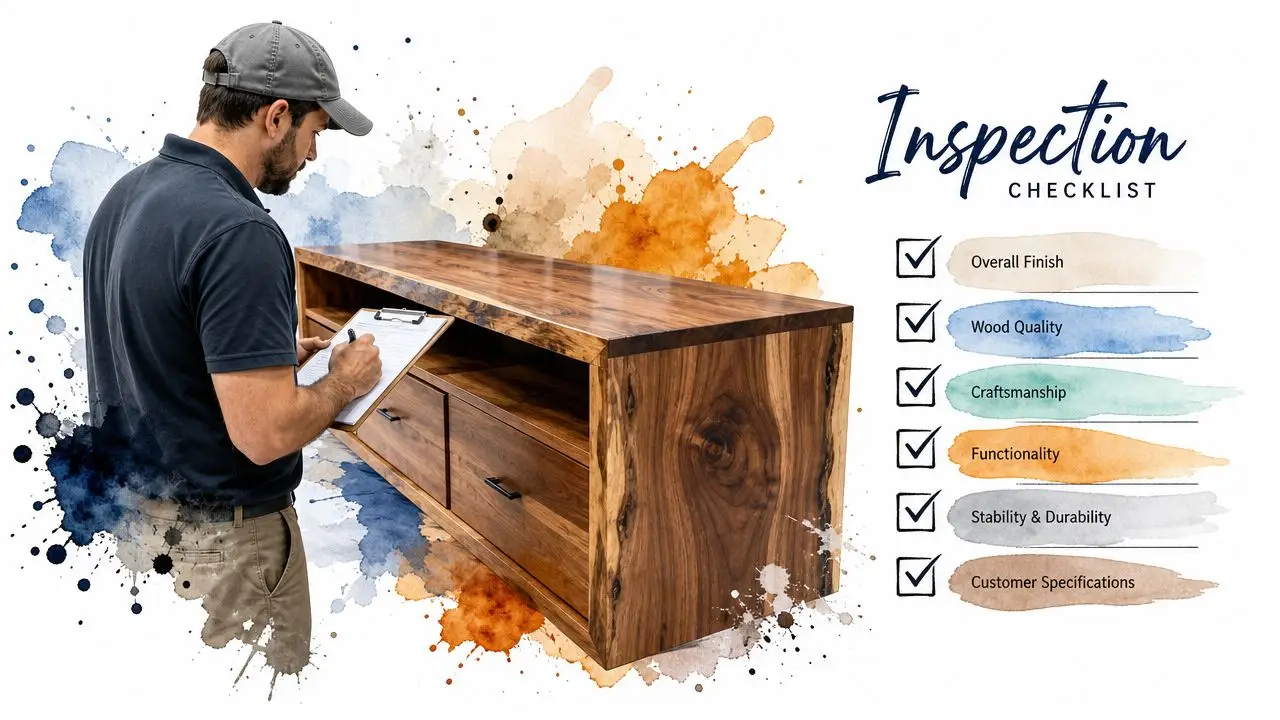
A showroom visit should feel less like browsing and more like an inspection. A beautiful finish can distract from mediocre construction, and a strong design can hide weak details unless the buyer knows where to look. Walking in with a checklist keeps the visit grounded.
What to touch, open, and test
Start with the parts that move. Open drawers fully. Check whether doors hang square. Run a hand along edges and undersides. Lift a chair slightly. Sit down, then shift your weight. A well-made piece usually feels settled, not flimsy.
Then look at the quiet details:
- Joinery. Ask how the piece is connected, not just what it looks like from the front.
- Surface feel. A finish should feel intentional, not sticky, overly plastic, or rough at transitions.
- Weight and steadiness. Heft alone doesn't prove quality, but wobble is a warning sign.
- Interior workmanship. The inside of drawers and the back of case pieces often reveal the maker's standards.
One common point of confusion involves Amish Furniture and other American-made categories. Buyers often assume those labels describe the same construction methods, but they don't. A 2024 report noted that only 28% of custom wood furniture listings clearly distinguish between Amish workshops, which use traditional hand-cut joinery like mortise-and-tenon, and generic American factories, which may rely on dowel-and-glue methods, according to the American Woodworking Guild reference summarized here. That distinction matters because the label can sound reassuring even when the build method isn't what the customer expected.
Questions worth asking the consultant
A strong consultant won't mind specific questions. In fact, the best conversations usually start there.
- How is this piece built. Ask about joinery, drawer construction, and what parts are solid wood.
- What can be customized. Dimensions, wood species, finish, leather, fabric, hardware, and cushion feel.
- Where do material choices affect durability. Some finishes hide wear better, and some woods show character more quickly.
- How should the room be measured. Entryways, stair turns, and wall clearances matter just as much as floor dimensions.
For buyers who want to arrive prepared, this furniture measuring guide helps avoid one of the most common problems in custom orders. A perfect piece still has to fit through the front door.
Bring photos of the room, flooring, nearby upholstery, and wall color. A consultant can make sharper recommendations when the full context is visible.
A productive showroom visit leaves the buyer with fewer mysteries. That's the goal.
Navigating Wood Species Finishes and Fabrics
Customization is where a piece stops being generic and starts feeling personal. It can also become overwhelming if every sample starts to blur together. The simplest way to make good choices is to treat wood, finish, and upholstery as three separate decisions that need to cooperate.
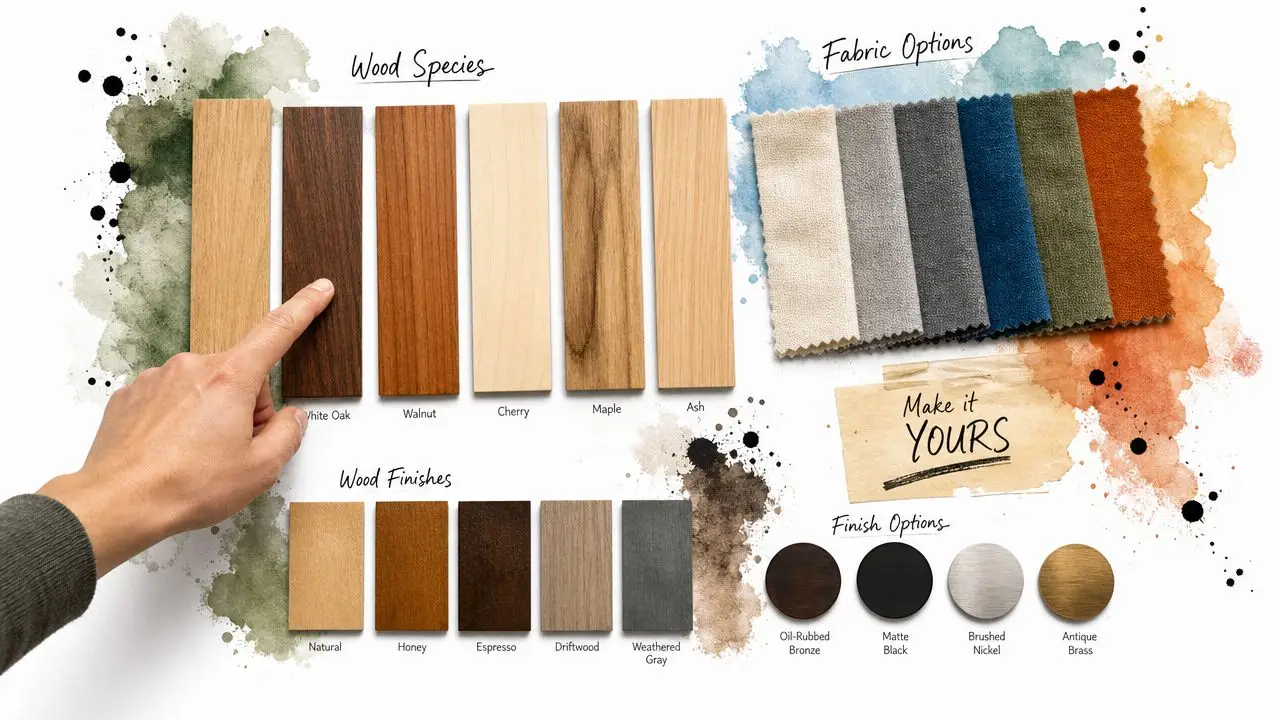
The Giorgi Bros. showroom spans 50,000 square feet in South San Francisco and offers custom order services that let customers choose specific wood species, finishes, high-grade leathers, and designer fabrics, as shown on the showroom website. That matters because comparison gets easier when materials can be seen and touched in one place rather than guessed from thumbnails.
Choosing the wood first
Wood species sets the tone. Some buyers want visible grain and natural variation. Others want a smoother, more formal look. Some homes benefit from a lighter wood that keeps the room airy. Others need warmth and depth to balance stone, metal, or cooler wall colors.
A few practical selection principles help:
- Match the room's mood. Cleaner grain patterns often read calmer, while stronger grain can feel more rustic or architectural.
- Think about wear. Busy households may prefer finishes and species that age gracefully rather than show every mark.
- Coordinate, don't copy. Existing floors and cabinetry don't need an exact match. They need harmony.
Finishes and fabrics that age well
Finish changes more than color. It affects sheen, maintenance, and how much the wood grain comes forward. A lower-sheen finish often feels quieter and hides small signs of daily life better. A richer, deeper stain can add formality, but it also changes how the grain reads from across the room.
Fabric and leather deserve the same level of attention. Texture, hand feel, color depth, and cleanability all shape satisfaction over time. That's especially true for dining chairs, family room seating, and bedroom benches where comfort and durability need to coexist.
For homeowners comparing upholstery choices, this guide to upholstery materials is a helpful starting point.
A useful way to narrow options is to ask one question of every sample. Will this still make sense after years of use? If the answer is yes, the design is usually moving in the right direction.
From Final Order to White-Glove Delivery
Once the design is approved, the project becomes a matter of coordination. This is the stage where expectations need to be realistic and specific. Custom furniture isn't a shelf item pulled from stock. It moves through production, updates, scheduling, and home delivery. Buyers who understand that flow tend to feel much more at ease.

What happens after you place the order
The final order should reflect more than the silhouette and finish. It should confirm dimensions, orientation if relevant, material selections, and any room-specific concerns such as access or placement. This is also the right time to ask how updates are communicated and what happens if a detail needs clarification before production moves too far.
Lead times are where many misunderstandings begin. Makers often underestimate the 4 to 24 week lead times required for production updates and white-glove delivery, according to this custom furniture business reference. That range doesn't mean every order takes the same amount of time. It means custom work has variables, and honest scheduling matters.
The smoothest custom projects aren't always the fastest ones. They're the ones where the timeline, materials, and delivery plan were discussed clearly from the start.
Delivery, setup, and practical planning
Professional delivery should include more than dropping a carton at the curb. White-glove service usually means the team brings the piece into the home, places it properly, and handles setup with care. That's especially important for larger case goods, dining tables, bedroom furniture, and delicate finishes.
A few final checkpoints help the process stay smooth:
- Confirm access paths early. Doorways, elevators, stairwells, and tight turns matter.
- Ask about placement prep. Rugs, wall clearances, and old furniture removal should be discussed ahead of time.
- Review payment timing. Some buyers prefer to explore whether financing options are available for larger investment pieces.
- Learn the care basics. Every finish and upholstery material has its own maintenance rhythm.
For homeowners planning the final step, white-glove furniture delivery information gives a clearer sense of what full-service setup should include.
A good delivery experience should feel uneventful in the best possible way. The piece arrives, fits, gets placed correctly, and begins its life in the room without drama.
Your Home Your Legacy Start the Conversation
A well-made custom piece does more than fill a space. It becomes part of how the home works and how it feels to live there. The right table hosts holidays. The right bed becomes part of a nightly routine. The right cabinet solves a storage problem so cleanly that it feels like it always belonged there.
That kind of confidence usually comes from an in-person process. Bay Area homeowners can look at photos all day, but furniture still has to be touched, tested, and understood at full scale. A real showroom helps people compare grain, comfort, construction, and finish without guessing. It also gives them room to ask practical questions without pressure.
The old-fashioned part of this business is still the useful part. Clear guidance. Honest answers. Consultants who listen. A family-owned showroom in South San Francisco with Non-Commission Sales Staff, custom order flexibility, and a long local history can make the process feel approachable instead of intimidating. For households furnishing a full home, updating one room, or even pairing case goods with Premium Mattresses, the best outcome is usually the same. Buy carefully once, then enjoy the piece for years.
A visit to Giorgi Bros. Furniture gives Bay Area homeowners a chance to explore 50,000 square feet of inspiration in South San Francisco, compare Custom Furniture options in person, and get no-pressure guidance from Design Experts. For anyone ready to evaluate wood, finishes, fabrics, comfort, and fit the right way, the next step is simple. Visit the showroom or book a Design Consultation and start the conversation.