A sofa often looks like a simple purchase until it arrives in a living room that feels suddenly smaller. A deep sectional may be perfect for movie nights but crowd a narrow Bay Area layout, while a beautifully designed sofa can leave a family searching for extra seating during gatherings. The right choice has to support the way people sit, talk, relax, host, and move through the room.
That makes a sofa more than a decorative anchor. It's an investment piece that affects comfort, traffic flow, durability, and the usefulness of every other furnishing nearby. Giorgi Bros. Furniture has helped households make those decisions in South San Francisco for more than 90 years, with a family-owned, non-commission approach centered on no-pressure guidance. The goal is simple, quality furniture that serves the household for a long time, reduces replacement waste, and can cost less over its useful life than repeatedly replacing short-lived pieces.
The guide below looks at sofa silhouettes, modular flexibility, room scale, posture, upholstery performance, custom order choices, styling, and delivery. For a broader foundation on selecting pieces that work together, the living room furniture selection guide offers a useful starting point.
Finding Your Starting Point for Sofa Designs for Living Room Comfort
A household may begin by searching for a color, a shape, or a popular silhouette. The better starting question is practical: what must the sofa do every day?
Consider a living room where one person reads in the afternoon, children spread out after school, and friends gather around the coffee table on weekends. That room needs more than visual appeal. It needs supportive seats for conversation, enough depth for relaxed lounging, upholstery that can handle regular use, and proportions that leave a clear path through the space.
A fixed sofa can provide a clean, composed foundation. A sectional can create a generous corner for shared lounging. A modular design can adapt when the room changes. None of those options is automatically right. The best selection depends on the household's posture, room dimensions, traffic pattern, and plans for the future.
Practical rule: Choose the sofa around the household's daily behavior first, then choose the style that expresses it.
This approach also supports a buy-it-for-life mindset. A well-built sofa may require a larger initial commitment than a temporary piece, but its value comes from continued comfort, repairability, adaptable upholstery, and a design that remains useful after a room refresh. A frame, suspension system, and fabric selected carefully can keep the sofa relevant through changing rugs, wall colors, and accent chairs.
That long view matters in a region where living spaces vary widely. A compact urban room may need a raised-leg sofa with a lighter visual profile, while a larger open-plan home may benefit from a sectional that defines the seating zone without adding walls. A sofa that fits the current room but blocks circulation isn't a successful purchase, even if its silhouette looks appealing in a showroom.
Giorgi Bros. Furniture brings a helpful-peer perspective to this process. The family-owned South San Francisco showroom offers non-commission guidance, allowing shoppers to test seating, compare construction, and discuss custom order possibilities without pressure. Quality furniture becomes an investment when the selection reflects real life rather than a passing trend.
How Sofa Silhouettes Work and Why Modularity Matters
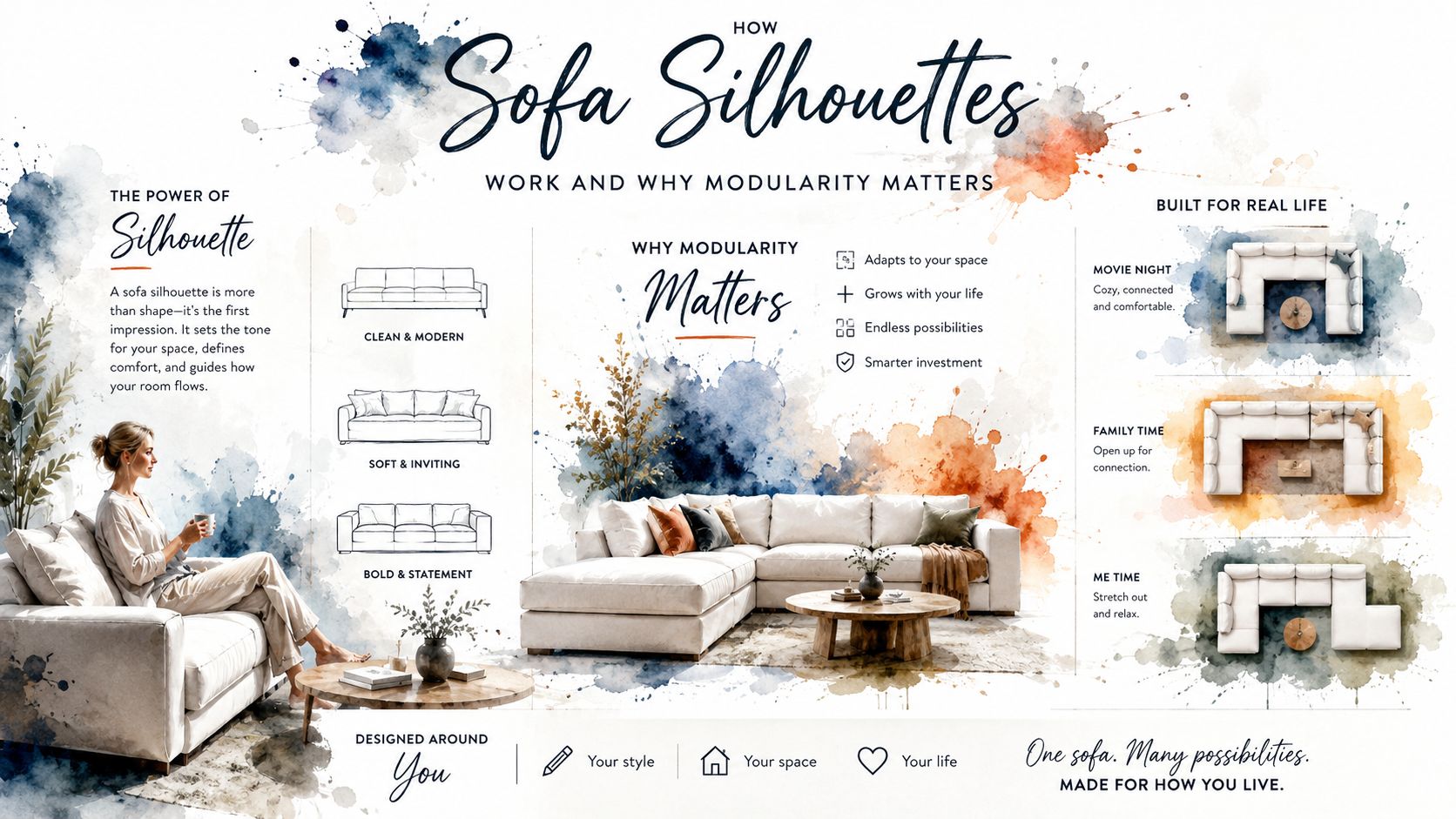
Sofa silhouettes become easier to compare when each one is treated as a room-planning tool. A fixed sofa acts like a stable foundation. It has a defined width, arm position, and seat arrangement, which makes it straightforward to place against a wall or opposite another seating piece.
A sectional adds a connected return, usually forming an L or U shape. It gathers people naturally and makes a large room feel more intentional, but its footprint can be difficult to change. A modular sofa breaks that arrangement into movable components. The pieces can be separated, reversed, or reconfigured, depending on the design.
Upholstered lounging furniture has roots reaching back to ancient Egyptian and Greek times, while the modern living-room sofa developed later as interiors shifted toward more private, comfort-oriented seating. The sectional can be traced to the 19th century, when it was associated with regional use in the United States before becoming broadly popular. That history helps explain why contemporary sofa designs often focus on corner seating, adaptability, and efficient use of space. (Historical sofa overview)
Modularity and the real meaning of flexibility
Modularity works much like a flexible floor plan. Instead of committing every seat to one permanent position, the household can adjust the arrangement as needs change. A corner can become a chaise, separate pieces can face one another for conversation, or a room can be opened for a gathering.
That flexibility explains the strong preference recorded in a 2024 Living Spaces survey, where 46% of consumers preferred modular sofas over other styles. The appeal is especially clear in multipurpose homes, where a living room may serve as a television area, reading space, guest zone, and place for informal work.
Flexibility still has trade-offs. Modular pieces can create more visual bulk, occupy more floor area, and require a larger budget than a simple fixed sofa. The connection system also deserves attention, because separated modules should remain aligned during ordinary use.
A practical comparison should ask:
- Will the room layout change? Frequent rearrangement favors modular construction.
- Does the room have a tight footprint? A compact fixed sofa may preserve more circulation.
- Does the household host often? A sectional can provide connected seating without multiple unrelated chairs.
- Is a move likely? Modular pieces may adapt more easily to a future room.
The sectional buying guide can help shoppers examine connected seating more closely. The essential point is that modularity is valuable when the room or household will use it. Adaptability shouldn't become an excuse to accept excessive depth or bulk.
Comparing Popular Sofa Designs for Every Living Room Layout
Different sofa designs solve different living room problems. A mid-century silhouette may make a smaller room feel lighter through a raised base and restrained arms, while a deep sectional prioritizes shared lounging. A sleeper adds guest functionality, but its mechanism and mattress area can affect weight, depth, and everyday comfort.
The most useful comparison starts with the room and lifestyle rather than the label.
| Sofa Design | Best For | Space and Flexibility Trade-off |
|---|---|---|
| Modern sofa | Clean-lined rooms and adaptable interiors | Often offers a clear profile, but minimal styling can make comfort depend heavily on cushion design |
| Mid-century sofa | Smaller rooms and homeowners who want visual lightness | Raised legs can improve the sense of openness, though seating may feel less expansive than a deep lounge sofa |
| Sectional | Families, frequent hosting, and shared television viewing | Creates generous connected seating but takes a defined footprint and can be difficult to reposition |
| Loveseat | Compact rooms, apartments, or a secondary conversation area | Uses floor space efficiently, but provides less capacity for larger gatherings |
| Sleeper sofa | Guest spaces and multifunctional rooms | Adds overnight utility, though the bed mechanism can increase weight and affect daily seating comfort |
| Chaise sofa | One-person lounging and relaxed reading | Offers a dedicated reclining zone but can reduce flexible seating and complicate placement |
Matching the silhouette to the room
A small urban living room often benefits from a loveseat or compact modern sofa paired with an occasional chair. This arrangement can provide conversational balance without filling every wall with upholstery. A large open-plan room may need a sectional to define the seating area, especially when there isn't a separate architectural boundary.
A chaise works well when one person regularly stretches out, but the chaise side must align with the room's traffic pattern. If it projects into the main walking route, the comfort benefit quickly becomes a daily obstruction. A sleeper can make sense when guests need a proper place to stay, provided the room allows enough clearance to open it without moving half the furniture.
The modern couch styles collection provides a useful way to study how line, arm shape, leg profile, and cushion arrangement change the character of a room. Shoppers should compare those visual details with actual seat height, depth, and support.
The flexibility versus footprint decision
Modularity often wins when a household expects changing layouts, relocations, or multiple uses. A fixed sofa can win when the room is narrow, the arrangement is settled, or visual simplicity matters most. There's no universal winner because flexibility has a physical cost in floor area and visual weight.
The most versatile sofa isn't the one with the most pieces. It's the one that solves the household's likely changes without overwhelming the room today.
A decision matrix like the one above prevents a common mistake: choosing a silhouette because it photographs well, then discovering that its depth, arm width, or return doesn't suit ordinary life.
How to Measure Scale and Plan Your Living Room Layout
A sofa should be measured twice, once for the room and once for the route into the room. A beautiful piece that cannot pass through a hallway, stairwell, doorway, or elevator becomes a logistical problem before anyone can enjoy it.
Start with the wall where the sofa will sit. Record the usable length, including the space needed for side tables and circulation. Then mark the proposed sofa on the floor with painter's tape. This simple outline reveals visual bulk more accurately than looking at a small sample image.
Build the layout before ordering
Measure the depth as carefully as the width. A deep sofa can project farther into a walkway than expected, especially in a compact Bay Area home. Mark the coffee table, chairs, rug, and major traffic paths as well, so the seating zone can be judged as a complete arrangement.
Check three practical relationships:
- Conversation flow: Seating should face one another without forcing people to twist or shout.
- Movement: Main routes should remain open rather than passing through the center of the seating area.
- Focal point: The sofa should support the fireplace, artwork, or entertainment wall instead of competing with it.
The living room layout guide offers additional planning context, but the tape outline remains one of the most useful in-home tests. Sit inside the marked area, walk around it, and check whether doors and drawers can open normally.
Choose seat depth for posture, not appearance
Seat depth directly affects posture. A standard upright living-room sofa typically falls within 20 to 24 inches, while medium-depth lounge seating commonly measures 25 to 30 inches. Deeper seats of 31 to 39 inches suit lounging and television viewing, while extra-deep seats of 40 to 48 inches are generally designed for napping or reclining. (Sofa ergonomics and seat depth)
Shallower seats support a more vertical pelvis and spine position, which helps during conversation. Deeper seats support more of the thighs during reclining, but shorter users may experience a gap beneath the thighs or lose lumbar support. A household with mixed heights should test several depths rather than selecting based only on a low, relaxed appearance.
Before ordering, verify the sofa's overall dimensions, interior seat dimensions, removable legs, packaging size, and required delivery access. Measurement verification protects the investment and prevents a room plan from failing at the doorway.
Choosing Fabrics Leathers and Frames That Last
Color attracts attention first, but performance determines whether a sofa remains appealing after years of use. Upholstery should match the household's actual conditions, including children, pets, frequent guests, sunlight, and the amount of daily sitting.
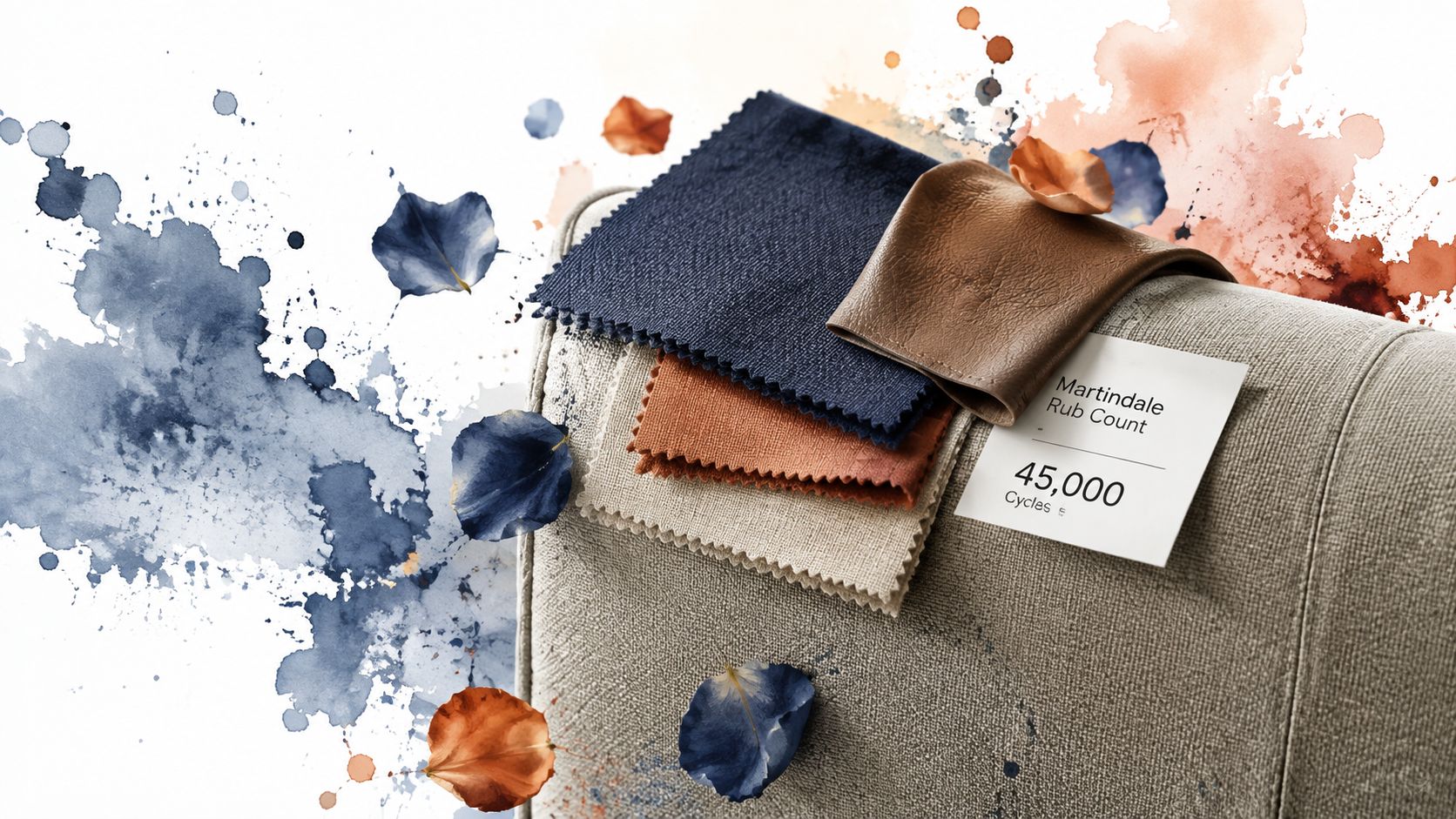
The most useful durability specification is often the Martindale abrasion count, which measures resistance through rub testing. General domestic fabrics commonly fall around 15,000 to 25,000 Martindale cycles, heavy-duty residential fabrics around 25,000 to 30,000 cycles, and commercial-grade materials at 30,000 or more cycles. Another residential benchmark identifies 15,000 double rubs as a minimum, with 30,000 or more recommended for high-traffic homes. (Fabric rub testing guidance)
Higher counts generally indicate stronger resistance to surface fuzzing, yarn breakage, and visible wear. They don't answer every question, however. Cleaning codes, weave structure, color, texture, and the manufacturer's care instructions also matter.

Look beyond the upholstery surface
Leather can develop character through use, while fabric offers a broad range of textures, patterns, and performance finishes. A helpful resource for comparing upholstery characteristics is this best sofa fabric guide from The Sofa Cover Crafter. It can support early research, while an in-person showroom visit allows shoppers to handle the actual material.
The frame and suspension deserve equal attention. A sturdy frame should feel stable when someone sits down or shifts position. Cushion support should distribute weight without an abrupt collapse, and joints should feel secure rather than loose or noisy. These construction details affect comfort over time and can reduce the likelihood of replacing the entire sofa because the structure failed before the upholstery looked worn.
Custom order choices support long-term relevance
A custom order can prevent the compromise of selecting a sofa only because its floor model has the right shape. Custom furniture makers may offer 100 or more upholstery fabrics and leathers, alongside wood species such as oak, walnut, ash, acacia, rubberwood, pine, teak, cherry, and maple. Finish choices can include matte, semi-gloss, high-gloss, distressed, natural, lacquer, stain, and hand-rubbed treatments. (Custom upholstery and wood options)
Designer-oriented lines can offer exposed wood in dozens of hand-applied finishes, including stains, paint colors, and hand-distressed patinas. Another materials workroom lists over 450 designer fabrics and 50 quality leathers.
These options let a household coordinate the sofa with existing woodwork, select upholstery suited to daily use, and create an investment piece that remains relevant through future decorating changes.
Styling Color and Care Tips to Keep Your Sofa Beautiful
A long-lasting sofa should feel timeless without becoming anonymous. Neutral upholstery can provide a calm foundation, while pillows, throws, art, and rugs introduce personality that can change more easily. A richer color may work beautifully when the room already has restrained walls and flooring, but it needs enough visual support from nearby materials.
Think in layers rather than matching every item. One upholstery tone can connect to a rug, a wood finish can repeat in a side table, and a contrasting accent chair can keep the room from looking overly coordinated. The aim is balance, not a showroom display where every surface competes for attention.
Use proportion to make the room feel intentional
Pillows should support the sofa's scale instead of swallowing the seat. A deep sofa can handle larger layered cushions, while a compact sofa often looks better with fewer, more carefully sized accents. Throws add softness, but placing too many items across the seating area can make the sofa harder to use.
Wood and metal finishes also benefit from repetition. A warm wood frame can connect with a table or shelving, while a restrained metal accent can echo lighting or hardware. The room doesn't need identical finishes. It needs a visual conversation between materials.
Care protects the investment
Care should follow the upholstery code and manufacturer guidance. Regularly remove loose debris with an appropriate vacuum attachment, rotate or reverse cushions when the design allows, and address spills according to the fabric or leather instructions rather than applying an untested product.
A simple seasonal check can include:
- Cushions: Inspect seams, compression, and alignment.
- Upholstery: Review cleaning codes and look for early surface wear.
- Wood elements: Dust gently and use only suitable care products.
- Room placement: Watch for direct conditions that may affect color or material aging.
These habits don't replace quality construction, but they help preserve it. A sofa that remains comfortable and visually cared for continues to earn its place in the room, which supports both long-term value and a more sustainable furnishing approach.
Budget Custom Options and Delivery Made Simple in the Bay Area
A sofa budget becomes clearer when households think in investment tiers instead of sticker price alone. The first tier covers the room's essential requirements, including suitable scale, posture, and adequate construction. The next considers performance upholstery, stronger customization, and a finish that coordinates with the broader home. The highest level may include custom dimensions, premium leather or designer fabric, specialized finishes, and a complete design plan.
That framework helps buyers spend on what affects daily use. A custom fabric may matter more than an elaborate detail if children and pets use the sofa constantly. A durable frame may matter more than a trend-driven shape if the household expects to keep the piece through several room updates. Flexible financing options are available for shoppers who want to manage the purchase without reducing the quality needed for long-term use.
Giorgi Bros. Furniture offers custom order services for fabrics, leathers, wood species, and finishes rather than limiting shoppers to floor models. The team also provides full-service interior design, custom reupholstery, floor coverings, carpeting, and other whole-home support when the sofa purchase is part of a larger Bay Area Interior Design project.

Understand delivery before placing the order
White-glove delivery is usually priced by delivery area rather than by each individual piece. RH lists sample flat rates of Local $299, Extended $399, National $599, and Alaska/Hawaii $1,699, while another major retailer describes flat-rate delivery based on where the customer lives, not how much is purchased. Eligible furniture service may include unpacking, in-room placement, full assembly, and packaging removal. (Delivery area and flat-rate examples)
Consumer Reports says shoppers can expect white-glove delivery to cost between $60 and $400, depending on proximity to the store or total bill. Its examples include a service starting at $199 within 50 miles for one retailer and another charging $70 to $261 based on location and size. (Consumer delivery guidance)
The practical questions are straightforward. Confirm the delivery area, access requirements, room placement, assembly, packaging removal, and return terms before ordering. Giorgi Bros. Furniture operates its own white-glove delivery service across much of the Western United States with location-based flat rates rather than per-piece fees, and a trusted nationwide carrier network supports destinations beyond the direct delivery zone.
The custom upholstered sofa service gives shoppers a way to begin discussing custom materials and finishes. A visit to a 50,000-square-foot showroom also lets households sit in different depths, handle upholstery samples, and compare construction before making a long-term decision.
Giorgi Bros. Furniture offers custom sofas, upholstery, leathers, wood species, and finishes alongside no-pressure guidance from non-commission Design Experts in South San Francisco. Visit Giorgi Bros. Furniture to test sofa designs for living room layouts in person or book a Design Consultation for help creating a comfortable, buy-it-for-life space.