
A Bay Area homeowner often starts the sofa search with a simple goal. Find something comfortable, attractive, and durable enough to survive daily life. Then the vocabulary starts flying around. Modern. Contemporary. Low-profile. Modular. Track arm. Deep seat. Suddenly, a piece of furniture feels like a design exam.
That confusion is normal. A sofa is one of the biggest visual and practical decisions in a living room, and it's rarely a short-term purchase. It needs to fit the room, support the way the household lives, and still feel right years from now when paint colors, rugs, and routines change.
Since 1933, families in South San Francisco have turned to a local showroom experience for exactly that reason. A long history matters because trust matters. Family-owned furniture retailers operating for 90+ years maintain a 4.3x higher trust score among local consumers than big-box competitors, with 89% of Bay Area shoppers citing heritage and continuity as a primary decision factor in selecting a furniture store. For shoppers trying to make a careful home investment, that kind of continuity removes some of the guesswork.
This guide is built to make the language of modern couch styles easier to understand. It also keeps the focus where it belongs. Not on chasing a trend, but on choosing an investment piece that can serve a home well for years. For readers comparing layouts, fabric options, and room proportions, this primer on how to choose living room furniture is a helpful companion.
Table of Contents
- Finding Your Sofa Soulmate in the Bay Area
- Why a Quality Modern Couch Is a Lifetime Investment
- Iconic Silhouettes Mid-Century and Scandinavian Styles
- The New Classics Contemporary and Modular Sofas
- Exploring More Modern Couch Styles
- Custom Furniture for Your Bay Area Home
- Experience the Difference at Our South San Francisco Showroom
Finding Your Sofa Soulmate in the Bay Area
A common Bay Area scene goes like this. One person wants a sofa that looks clean and current. Another wants something soft enough for movie nights. Both want it to fit a condo, a classic Peninsula home, or a remodeled family room without swallowing the space. The search starts online, then stalls when every product description sounds like a variation of the same buzzwords.
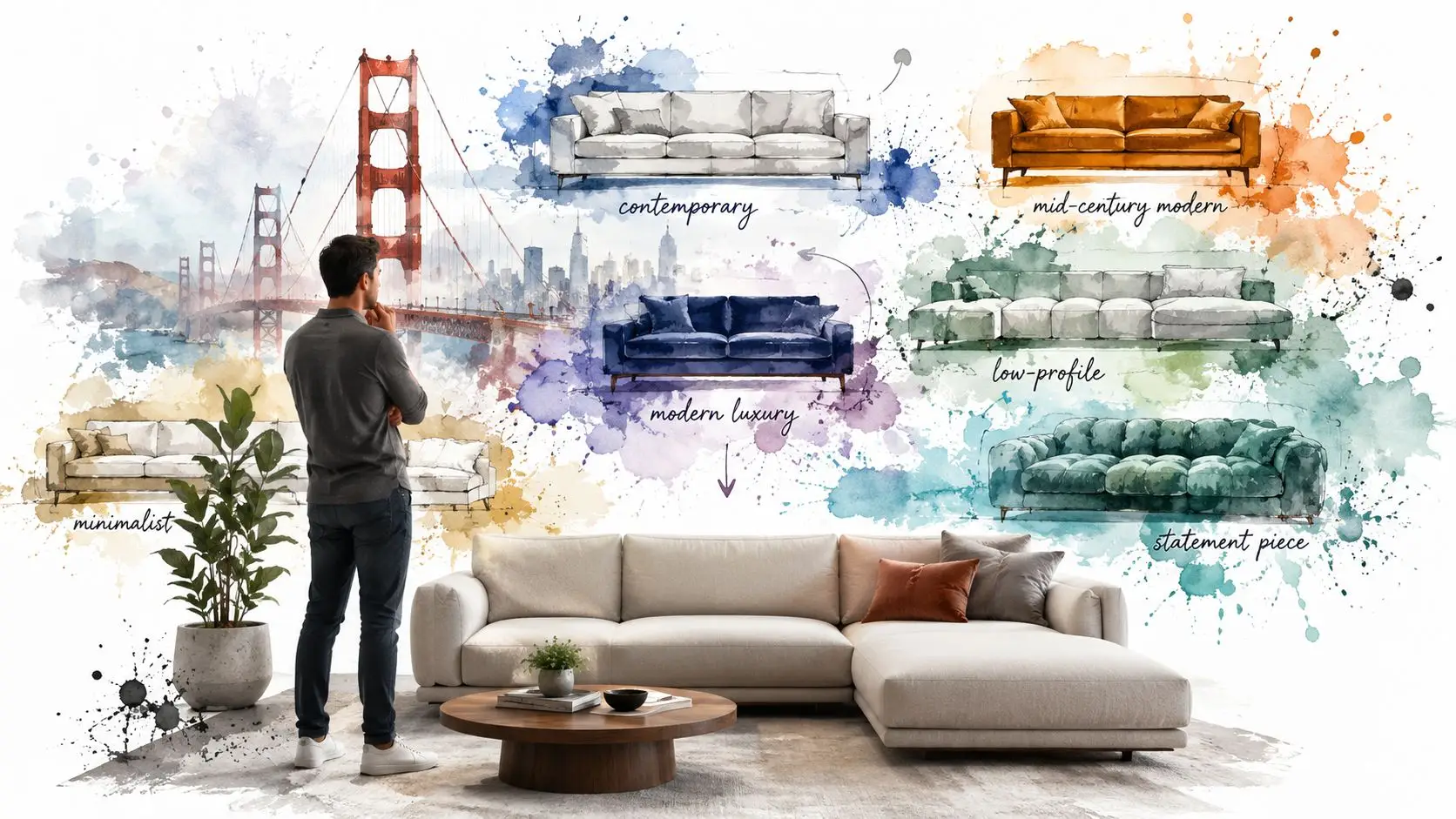
That's where a seasoned, local perspective helps. In South San Francisco, generations of families have looked for more than inventory. They've looked for calm, practical guidance from people who understand proportion, durability, and how a sofa has to work in real homes with kids, guests, pets, and changing routines.
Why trust matters in a major purchase
A sofa is personal, but it's also structural. It shapes traffic flow, conversation, posture, and the room's visual weight. That's why heritage still carries weight with Bay Area shoppers. Family-owned furniture retailers operating for 90+ years maintain a 4.3x higher trust score among local consumers than big-box competitors, with 89% of Bay Area shoppers citing heritage and continuity as a primary decision factor in selecting a furniture store.
A well-chosen sofa doesn't just fill a blank wall. It sets the tone for how the room is used every day.
The helpful difference is a non-commission environment. Instead of pressure, the better experience feels like a conversation. Questions get answered. Tradeoffs get explained. A shopper can sit, compare, leave, come back, and make a decision with a clear head.
What confuses most shoppers first
Most confusion starts with labels. “Modern” sometimes refers to a specific design language rooted in clean lines and purposeful shapes. “Contemporary” usually means what feels current right now. Then there are details like arm shape, seat depth, base style, and cushion construction, all of which affect comfort more than many people expect.
A useful first step is simple:
- Start with the room: small-scale city spaces need different proportions than open suburban great rooms.
- Name the daily use: conversation seating feels different from an all-day lounging sofa.
- Think past this season: the right piece should still feel relevant after the next paint color or rug change.
Why a Quality Modern Couch Is a Lifetime Investment
A quality sofa changes the buying question. Instead of asking, “What looks good right now?” the better question becomes, “What will still serve this home beautifully years from now?” That shift matters in style, budget, and sustainability.
Modern and contemporary are not the same thing
Shoppers often use the two terms interchangeably, but they don't mean the same thing. Modern usually points to a cleaner design language with disciplined lines, visible structure, thoughtful proportions, and a focus on function. Contemporary is broader. It describes what's current at the moment, which means it can evolve as tastes change.
That distinction helps when a buyer wants something lasting. Modern couch styles often age well because they rely on proportion and restraint rather than short-lived novelty. Wood details, precisely finished upholstery, balanced silhouettes, and uncluttered forms tend to keep working even as surrounding decor changes.
Why quality pays off over time
The strongest case for buying well is practical, not sentimental. Furniture produced with high-quality materials and craftsmanship that lasts 20–30 years reduces replacement frequency by 75% compared to mass-produced items that average 5–8 years, yielding long-term cost savings of $1,200–$1,800 per piece over a lifetime.
That's why a well-built sofa belongs in the category of investment pieces. It creates less waste, avoids the cycle of replacing sagging cushions and tired upholstery every few years, and usually feels better to live with over the long run.
Practical rule: If a sofa is meant to anchor daily life, evaluate it by lifespan, repair potential, and adaptability, not just by the initial price tag.
There's also a moving-day reality that shoppers don't always consider early enough. A durable sofa deserves careful handling from the moment it leaves the floor. For anyone planning a remodel, downsizing, or a room-to-room shift, Voodoo Moving's guide to loading and unloading offers useful logistics advice that helps protect larger investment pieces during transport.
A buy-it-for-life mindset also pairs naturally with Custom Furniture. If a household can choose the right fabric, leather, wood species, or finish from the start, there's a better chance the piece will keep fitting the home instead of feeling like a compromise from day one.
Iconic Silhouettes Mid-Century and Scandinavian Styles
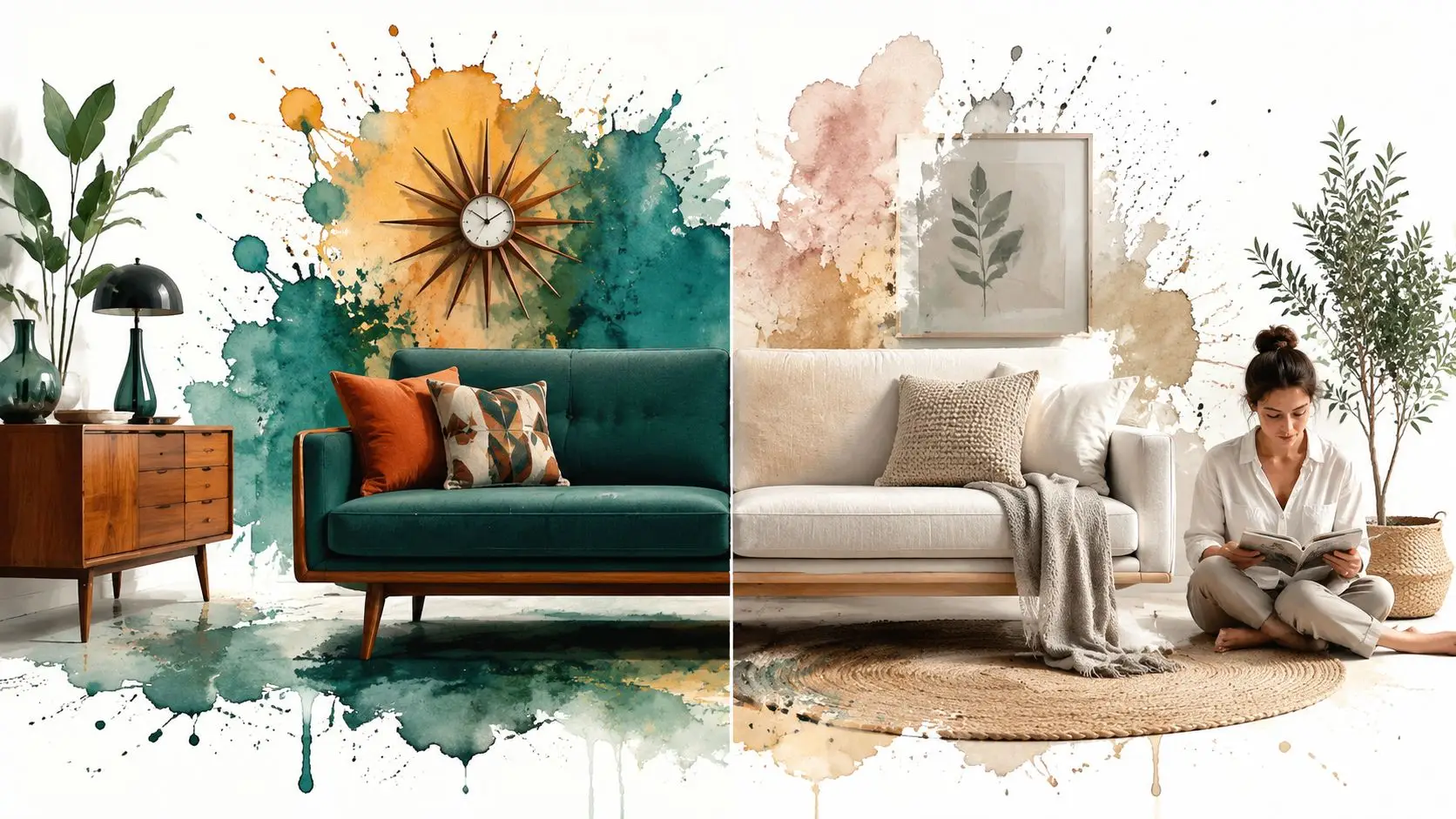
Some modern couch styles last because they're easy to live with. Two of the clearest examples are Mid-Century and Scandinavian silhouettes. They look different in subtle ways, but both rely on simplicity, proportion, and honest materials.
How to spot Mid-Century style
Mid-Century sofas usually have a crisp outline. Tapered legs lift the frame off the floor. Arms are often slim. Wood details may be visible. The overall effect is neat, architectural, and a little refined.
These sofas work well for people who want visual lightness. In a smaller Bay Area living room, exposed legs can help a room feel more open because more floor remains visible. Mid-Century pieces also pair easily with other styles, which is part of their long-term value.
A few signs a shopper is looking at Mid-Century influence:
- Raised profile: the sofa sits up on legs rather than hugging the floor.
- Defined frame: edges are cleaner and more structured than plush lounge styles.
- Wood presence: warm wood tones often soften the silhouette.
What makes a Scandinavian sofa different
Scandinavian sofas also look clean, but they feel softer in spirit. The lines are pared back, yet the mood is warmer and more relaxed. Pale woods, soft neutrals, textured upholstery, and functional shapes are common. The room feels calm rather than formal.
Many shoppers like Scandinavian style because it doesn't compete with the rest of the space. It supports natural light, works beautifully with layered textiles, and often suits both apartments and family homes. For readers drawn to that look, this overview of Scandinavian sofa designs offers a useful visual reference.
Comfort can also surprise people here. Modern couch styles are biomechanically optimized through low-profile silhouettes with seat heights of 15–16 inches and narrow seat depths of 24–26 inches, which force the user to maintain a more upright lumbar posture compared to traditional deep-set seating that encourages spinal slumping, as noted in this modern sofa ergonomics reference.
A sofa that looks minimal isn't automatically less thoughtful. In many cases, the tighter dimensions are what make it easier to sit, talk, read, and get up comfortably.
For households that entertain often, that upright posture can be a strength. Guests don't disappear into the cushions. For people who prefer sprawling, all-evening lounging, it may feel firmer or more upright than expected. That's not a flaw. It's a different job.
The New Classics Contemporary and Modular Sofas
Some styles earn staying power because they solve modern problems better than older forms. That's what's happening with contemporary and modular sofas. They don't just look current. They respond to the way people use rooms now.
Contemporary style brings movement into the room
Contemporary sofas tend to be more sculptural than classic modern silhouettes. Curves, rounded corners, fuller forms, and softer edges create a room that feels less rigid. Instead of a hard rectangle against the wall, the sofa can feel like part seating, part visual anchor.
That shift isn't minor. The most significant structural evolution in modern couch styles is the dominance of curved and modular designs, with fluid, sculptural sofas featuring elegant curves remaining a top trend in 2025 and continuing their reign with even more pronounced lines in 2026. By 2026, modular sofas have become the leading style category, according to this 2026 sofa trend overview.
Modular design adapts as life changes
Modular sofas are especially appealing in Bay Area homes because flexibility matters. A household may move from an apartment to a larger home, rearrange around a new media wall, create a better conversation layout, or need separate seating pieces later. A modular design keeps those options open.
Instead of one fixed footprint, modules can often be arranged in different ways. That means a buyer can prioritize longevity not only in construction, but also in use.
Common reasons people choose modular layouts:
- Changing rooms: a sofa can adapt when a family room becomes a mixed-use space.
- Entertaining needs: separated components can improve conversation zones.
- Move planning: flexible parts are easier to rethink than one rigid shape.
Modern Couch Style At-a-Glance
| Style | Key Features | Best For |
|---|---|---|
| Mid-Century | Tapered legs, cleaner lines, visible structure, wood accents | Smaller rooms, tailored looks, timeless mixed-style spaces |
| Scandinavian | Soft minimalism, light finishes, calm palette, practical comfort | Bright rooms, relaxed interiors, simple layered decor |
| Contemporary | Curves, sculptural forms, fuller silhouettes, artistic presence | Statement living rooms, softer visual flow |
| Modular | Reconfigurable sections, adaptable layout, flexible footprint | Evolving homes, open plans, multipurpose family spaces |
For readers comparing sculptural shapes with cleaner linear profiles, this visual guide to contemporary furniture styles helps clarify the differences.
Exploring More Modern Couch Styles
A shopper doesn't need to memorize every furniture term, but a small design vocabulary makes the process much easier. Several modern couch styles show up again and again because each one solves a specific problem.
Four useful terms worth knowing
Low-profile sofas sit closer to the floor and usually look relaxed and architectural. They help a ceiling feel taller and can make a room feel wider. They're a strong fit when a space already has enough visual weight and needs more breathing room.
Track-arm sofas have straight, clean arms with very little ornament. They read crisp and orderly. For buyers who want a sofa to support modern art, strong lighting, or a more precisely designed room, track arms usually work well.
Tufted sofas add texture and rhythm through stitched or buttoned upholstery. In a modern room, tufting can keep a simple silhouette from feeling flat. It's a good option when the space needs detail without adding lots of extra accessories.
How these styles solve everyday problems
Sleeper sofas have improved because many households need one room to serve more than one job. A guest room may double as an office. A den may need occasional overnight function. The key is to treat the sleeper as a real sofa first, then confirm the bed function fits the household.
A quick way to think about these styles:
- Choose low-profile when the room needs openness and a grounded look.
- Choose track-arm when the goal is clean structure with minimal fuss.
- Choose tufted when the space needs texture and visual character.
- Choose sleeper when flexibility matters as much as everyday seating.
The most useful sofa term is often the one that tells a shopper how the piece will live, not just how it will look.
At this point, confusion often eases. Instead of asking which label sounds best, a buyer can ask which problem the sofa needs to solve.
Custom Furniture for Your Bay Area Home
A Bay Area family can fall in love with a sofa in seconds, then live with the consequences for 15 years. That is why custom work matters. A modern couch is not only a style decision. It is a long-term household tool, and the right one should fit your room, your routines, and the way your home may change over time.

Fit comes before fabric
Start with the room itself. Buyers often focus on color first because it feels concrete, but size and proportion decide whether a sofa will feel comfortable for years or irritating by the end of the first month. A couch that is too deep can make conversation awkward. One that is too wide can crowd walkways and make the whole room feel tense.
Measure the room, then measure the path into it. That means wall length, coffee table clearance, traffic lanes, door openings, stair turns, and elevator limits. A sofa has to work like a good houseguest. It should belong in the room without taking over the entire space.
Helpful checkpoints include:
- Entry access: measure doors, halls, corners, staircases, and elevator dimensions before choosing a piece.
- Room balance: keep clear walking space so the sofa supports the room instead of blocking it.
- Seating purpose: choose depth and shape based on how the household lives, whether that means reading, watching movies, entertaining, or a mix of all three.
A sectional can feel generous and welcoming in one home, then look oversized in another. A compact apartment sofa can preserve flow beautifully, but it may not satisfy a household that wants deep, all-evening lounging. Proportion is what turns a sofa from a temporary answer into a lasting investment.
Custom choices make long-term value possible
Custom furniture gives buyers more control over that investment. Instead of accepting a close-enough option, you can choose a version that suits your room and your daily life more precisely. That affects more than appearance. It shapes comfort, durability, maintenance, and how well the piece still serves you years from now.
For many households, that is the difference between a sofa they replace too soon and one they keep, refresh, and enjoy for decades.
One practical starting point is custom furniture made simple, which explains how to organize decisions about size, materials, and finish without turning the process into guesswork.
A thoughtful custom order can include:
- Fabric choices: performance fabrics for active households, textured weaves for added character, or leather that develops personality over time.
- Wood details: species and finish selections that relate naturally to flooring, tables, and storage pieces nearby.
- Scale and configuration: dimensions that respect Bay Area floor plans, from compact city rooms to larger family spaces.
The long-term benefit is straightforward. When the size feels right, the material suits the household, and the finish belongs with the rest of the room, the sofa is less likely to be replaced because of an early mistake. That protects the budget. It also supports a more sustainable way to furnish a home, which has always mattered to families who want to buy well once and enjoy it for years.
Experience the Difference at Our South San Francisco Showroom
Buying a sofa online can narrow options, but it can't replace the moment when someone sits, leans back, checks the arm height, studies the fabric in person, and sees how the frame is built. For a purchase meant to last, that step still matters.
Why no-pressure guidance matters
A showroom experience is strongest when the advice isn't tied to commission. Non-commission design consultants in family-owned showrooms deliver 34% more personalized consultations and achieve 28% higher client retention than commission-based sales models, as they prioritize no-pressure guidance over transactional urgency.
That matters because sofa decisions are layered. One household may be comparing a modular layout to a fixed silhouette. Another may be balancing upholstery durability with a very specific Bay Area Interior Design palette. Good Consultants slow the process down enough for those details to get sorted properly.
What shoppers can expect in the showroom
A well-run showroom gives buyers room to test, compare, and refine. In South San Francisco, that means seeing living room options in person, exploring Custom Furniture, asking about Financing options are available, and browsing beyond seating if a whole-home update includes Amish Furniture or Premium Mattresses as well.
For readers planning an in-person visit, the furniture and mattress showroom overview is the easiest place to start.
The larger message is simple. A sofa isn't just a purchase for this season. It's one of the home's hardest-working pieces, and the right one should still feel right after years of daily use, rearranging, and living.
For Bay Area shoppers ready to compare modern couch styles in person, Giorgi Bros. Furniture offers a South San Francisco showroom where families can touch, feel, and test quality before they decide. A Design Consultation can help narrow the right silhouette, size, fabric, leather, wood species, and finish, all within a no-pressure setting shaped by decades of local service.