A lot of Bay Area homeowners are in the same spot right now. They want a home that feels warm, well made, and responsible, but the furniture market makes that harder than it should be. One tag says “eco-friendly.” Another says “engineered wood.” A third talks about clean finishes without explaining what that means in daily life.
The confusion usually starts with one simple question. What makes a piece sustainable. Is it the material, the factory, the finish, or how long the piece stays in the home before it needs replacement?
For anyone shopping for Furniture South San Francisco, planning Bay Area Interior Design updates, or comparing Custom Furniture options, the best answer is broader than a label. Sustainable furniture materials matter, but so do durability, repairability, indoor air quality, and whether the piece is worth keeping for decades. That buy-it-for-life mindset has guided thoughtful furniture shopping since long before sustainability became a marketing term.
Table of Contents
- Beyond the Label Why True Sustainability Is an Investment
- A Guide to Common Sustainable Furniture Materials
- The Hidden Health Factor Low-VOC Finishes and Air Quality
- How to Read the Labels Certifications You Can Trust
- The Giorgi Bros Approach to Sustainable Furniture
- Your Guide to Shopping for Furniture in the Bay Area
- Frequently Asked Questions About Sustainable Furniture
Beyond the Label Why True Sustainability Is an Investment
A family buys a new sofa because the price looks good, the fabric looks current, and the tag uses all the right green words. Three years later, the cushions sag, the frame creaks, and the piece is headed for the curb. On paper, it may have sounded sustainable. In a real home, furniture that wears out early usually creates more waste, more expense, and often more concerns about what your family lives with every day.

True sustainability starts with staying power. A dining table, bed, or sofa does more good when it remains sturdy, comfortable, and worth keeping for many years. That longer life means fewer replacement purchases, fewer discarded pieces, and fewer materials used up in a constant cycle of buying and tossing.
There is a health side to this too.
Lower-quality furniture often relies on inexpensive composites, foams, glues, and finishes that can break down faster or off-gas more noticeably, especially in the first stretch of life at home. A better-made piece is often built with more care in both structure and material selection. For a household, that can mean fewer regrets and a more comfortable indoor environment, not just a nicer silhouette in the room.
The money math follows the same pattern. Cheap furniture behaves like a budget appliance you replace again and again. Quality furniture works more like a roof or a good set of windows. The upfront cost may be higher, but the value shows up over time through durability, repairability, and daily comfort.
Practical rule: The most sustainable furniture is often the piece you still want, and are still able, to use ten or twenty years from now.
That shifts the shopping question. Instead of asking only, “What is it made from?” ask, “Will this frame stay solid? Can this upholstery be renewed? Will this finish age well in my home?” Those are the questions that separate a short-term purchase from a long-term solution.
Repair matters here. A chair with a sound frame can be refinished. A sofa with quality construction can be updated through professional reupholstery services, which extends its life without starting over from scratch. Customization helps for the same reason. When a piece fits your room, your routine, and your taste, you are far more likely to keep it, care for it, and pass it along instead of replacing it at the first change in style.
That long-view approach has guided Giorgi Bros. since 1933. Trends come and go. Materials get renamed. Marketing language changes every few years. What lasts is simple. Furniture that is well made, healthier to live with, and worth keeping is one of the smartest sustainability choices a home can make.
A Guide to Common Sustainable Furniture Materials
A sustainable material earns its place in your home in a few different ways. It may come from a better-managed source. It may reuse what already exists. It may last longer, repair more easily, or avoid some of the chemical load that can make a room less comfortable to live in. For furniture, those differences matter because the material affects both the life of the piece and the feel of the home around it.
Reclaimed wood and FSC-certified wood
Wood is still one of the best places to start, but the label alone does not tell the full story.
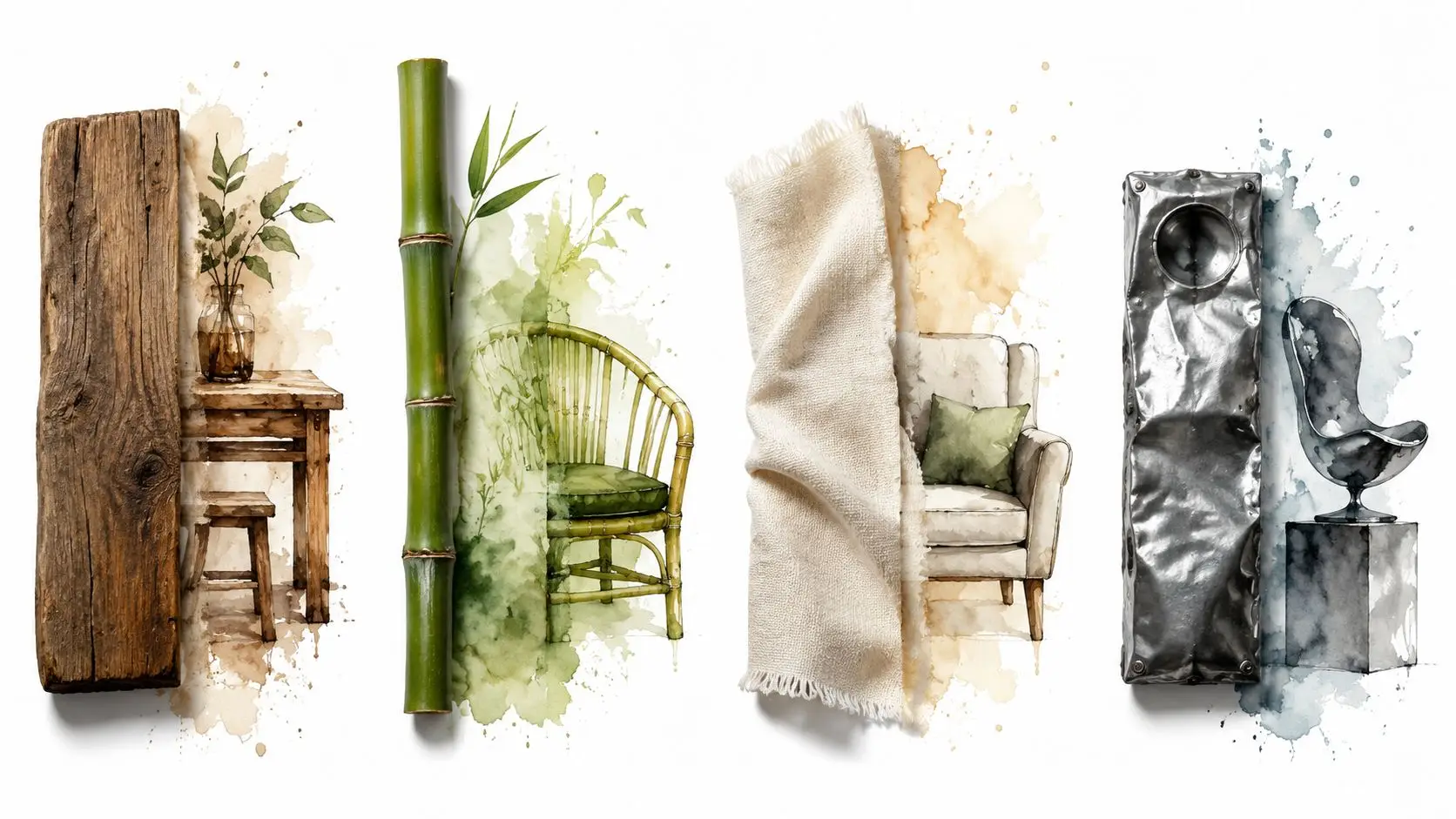
Reclaimed wood gives existing timber a second life. Old beams, floorboards, and structural lumber can become dining tables, case pieces, and accent furniture with a depth of grain and patina new boards rarely match. That character is not just decorative. It often helps a piece stay appealing for years, which lowers the urge to replace it when styles shift. Shoppers exploring reclaimed wood furniture for dining and living spaces usually respond to that mix of warmth, individuality, and long service life.
FSC-certified wood addresses a different part of the puzzle. FSC stands for Forest Stewardship Council. In plain terms, it is a chain-of-custody standard for responsibly sourced wood. It helps you separate solid wood that came through a better-managed supply chain from wood sold with vague green language and little proof behind it. For a homeowner, the benefit is practical. You get a material that can be refinished and repaired, with more confidence about where it came from.
Engineered wood, judged carefully
Engineered wood tends to confuse shoppers because the category includes both well-made panels and bargain-grade boards that can create problems.
High-quality plywood can be a sensible choice for cabinet boxes, shelving, and some seating components because it uses wood efficiently and stays dimensionally stable. Particleboard and low-grade fiberboard are different materials with different trade-offs. They often rely on heavier adhesive content, and that matters if indoor air quality is one of your priorities. If you have ever opened a boxed furniture package and noticed a sharp chemical smell, you have already met the issue.
The material itself is only half the story. Ask what panel was used, what adhesive binds it together, and whether the maker pairs it with low VOC finishes. A better-built engineered piece can serve well for years. A poorly made one can look tired quickly and bring unwanted odors into the room.
Bamboo and other fast-renewing plant materials
Bamboo works a bit like a fast-growing grass that is pressed into furniture-grade form. Its appeal starts with renewability, but shoppers should also pay attention to construction quality. A well-made bamboo piece can feel light, clean-lined, and surprisingly strong. A poorly made one can feel thin or overly processed.
That makes bamboo a good fit for casual seating, smaller tables, and accent pieces where a lighter visual footprint suits the room. It can be a smart option for households that want a plant-based material without waiting on slow-growing hardwoods. Still, the same rule applies here as with engineered wood. The glue, finish, and joinery matter just as much as the headline material.
Natural fibers and recycled materials
Frames get most of the attention, yet upholstery often has more day-to-day contact with your body and your air. Natural fibers such as cotton, wool, and linen can wear beautifully when the underlying upholstery is well made. Removable covers also help, because a sofa or chair that can be cleaned or refreshed is more likely to stay in service instead of heading to the curb.
Natural latex and other lower-chemical cushioning choices can also appeal to households sensitive to odors. Comfort is part of sustainability. If a piece feels stuffy, traps smells, or breaks down early, it rarely stays in the home long enough to be a responsible purchase.
Recycled metals and plastics have a place as well, especially in outdoor furniture, utility pieces, and designs where moisture resistance and easy cleaning matter more than warmth under hand. They solve a different problem than wood or natural upholstery, and sometimes they are exactly the right answer.
A simple way to compare the common options:
| Material | Best fit | Main benefit |
|---|---|---|
| Reclaimed wood | Dining, storage, statement tables | Reuse, character, repairability |
| FSC-certified solid wood | Long-term investment pieces | Responsible sourcing and long service life |
| High-quality plywood | Case goods and select seating components | Efficient use of wood and structural stability |
| Bamboo | Casual seating and accent pieces | Fast renewability and light visual weight |
| Natural fabrics | Upholstery and cushions | Comfort, refreshability, and easier everyday living |
The common thread is durability with fewer compromises inside the home. A material is more sustainable when it wears well, can be renewed, and supports a healthier room to live in. That long-view standard has guided good furniture making since long before sustainability became a marketing term.
The Hidden Health Factor Low-VOC Finishes and Air Quality
Many shoppers stop at the frame material. That's understandable, but it misses one of the biggest comfort issues in a home. A piece can look natural and still introduce unwanted chemicals through finishes, adhesives, and composite components.

Why the surface matters as much as the frame
The health conversation often centers on “green” materials like bamboo or reclaimed wood. That's useful, but incomplete. This article on eco-friendly furniture materials and restoration makes an important point: up to 90% of indoor air pollution can stem from low-quality particleboard and synthetic finishes containing high VOCs.
That's the overlooked trade-off. A product may have an eco-friendly look while still relying on construction methods that off-gas into the room. For Bay Area households with kids, pets, allergies, or simple sensitivity to odors, that's not a small detail.
What low-VOC means in a real home
VOCs, or volatile organic compounds, are chemicals that can release into indoor air from certain finishes, glues, and manufactured boards. In plain language, low-VOC means fewer of those emissions inside the spaces where people eat, sleep, and relax.
Shoppers who want a more practical explanation often benefit from learning how low VOC finishes are discussed in adjacent parts of the home. The same common-sense principle applies to furniture. Cleaner finishes support a more comfortable indoor environment.
A helpful screening checklist looks like this:
- Ask about the finish: Is it low-VOC, and can the showroom explain what that means in plain terms?
- Check the core material: Solid hardwood and better-grade engineered wood usually deserve a closer look than low-quality particleboard.
- Notice the smell: A strong chemical odor is a cue to ask harder questions.
- Think room by room: Bedrooms, nurseries, and smaller enclosed rooms benefit most from cleaner material choices.
For shoppers comparing options, low-VOC furniture guidance can help connect the chemistry to everyday comfort. Sustainability isn't only about what the planet can tolerate. It's also about what the household breathes every day.
How to Read the Labels Certifications You Can Trust
Green labels can help, but only if shoppers know what the labels are signaling. Some speak to forestry practices. Others focus on air quality. A few suggest a broader life-cycle approach.
FSC and SFI for wood sourcing
FSC stands for Forest Stewardship Council. On furniture, that usually points to wood sourced under standards for responsible forest management and chain-of-custody tracking. For a shopper, the benefit is less mystery about where the wood came from.
SFI, or Sustainable Forestry Initiative, also relates to responsible forest practices. It's another signal that the company is paying attention to sourcing rather than treating wood as an anonymous commodity.
Neither label means a piece is automatically perfect. It means the wood story is stronger and more transparent than an unlabeled alternative.
A certification should answer a real question. If a label doesn't help explain sourcing, emissions, or long-term material use, it isn't very useful at the showroom level.
GREENGUARD and Cradle to Cradle
GREENGUARD is the kind of label many health-conscious shoppers appreciate because it relates to chemical emissions. If indoor air quality matters, this is often the label worth asking about on upholstered goods, finishes, and composite components.
Cradle to Cradle points to a broader design philosophy. It generally signals attention to safer material choices, reuse, and more circular product thinking.
A simple way to read certifications:
- FSC or SFI: Better questions answered about wood sourcing.
- GREENGUARD: Better questions answered about indoor emissions.
- Cradle to Cradle: Better questions answered about the product's full life cycle.
That framework helps cut through greenwashing. Instead of asking whether a piece sounds sustainable, shoppers can ask what the certification verifies.
The Giorgi Bros Approach to Sustainable Furniture
A couple walks into the showroom after replacing a peeling dining set and a sagging sofa in less than ten years. They are not only tired of wasting money. They are tired of bringing short-lived materials and heavy chemical odors into the house again. That is the practical side of sustainability people often miss.
Since 1933, Giorgi Bros. has watched furniture styles cycle in and out, from fast trends to heirloom classics. The pieces that earn a long life in a home usually share the same basic strengths. They are well built, sized correctly, comfortable to live with, and chosen carefully enough that the owner still wants them years later.
That last point matters more than it may seem. A sustainable piece is not merely one made from a better material on paper. It is one you do not need to replace after a few seasons of frustration. Long-lasting quality, repair potential, and the ability to tailor a piece to the room are what keep furniture out of the discard pile.
Customization supports long-term ownership
Customization helps solve the problem at the front end. If a sofa is too deep for the room, if the fabric fights with the light, or if the finish shows every fingerprint in a busy household, that piece often has a short future. A well-chosen custom piece works more like a fitted coat than an off-the-rack guess. It sits better, wears better, and gets kept.
That is especially important in Bay Area homes, where room sizes, natural light, and daily use can vary widely. Choosing the right fabric, leather, wood tone, and scale can reduce the urge to replace furniture for purely practical reasons. For shoppers comparing wood case goods, this guide to solid wood and veneer differences helps clarify what will age well in real daily use.
There is a health angle here too. Furniture that lasts longer often avoids the cycle of repeatedly bringing lower-grade composite materials and fresh finishes into the home. Fewer replacements can mean fewer periods of off-gassing, fewer disposal headaches, and fewer regrettable purchases.
Why construction quality still matters
Good construction is quiet. You notice it years later when drawers still glide properly, chairs stay tight, and a table keeps its balance through moves, humidity shifts, and daily family life.
That is one reason Amish Furniture remains part of the sustainability conversation. It often centers on solid wood, careful joinery, and classic proportions that do not feel dated after one trend cycle. Those traits support a keep-it-for-decades mindset, which is often more sustainable than buying a cheaper piece twice.
A large showroom also serves a real purpose. In a 50,000 square foot showroom, shoppers can test seat depth, feel the difference between wood surfaces, compare cushion support, and see how finishes read under actual light. That hands-on process helps people choose with more confidence, which usually leads to fewer mistakes and fewer replacements.
The Giorgi Bros approach has stayed steady for a reason. Help customers choose better materials, better construction, and better fit for the life they live. That creates homes that feel healthier, look better over time, and waste less in the long run.
Your Guide to Shopping for Furniture in the Bay Area
Shopping for Furniture South San Francisco should feel less like decoding marketing language and more like having an informed conversation. The right questions make that possible.
Questions worth asking in any showroom
These questions quickly separate durable furniture from short-term furniture:
- What is the actual core material: Is it solid wood, veneer over hardwood, plywood, or low-grade composite?
- How is the frame joined: Screws, corner blocks, dowels, or something lighter-duty?
- What finish is used: Is it a cleaner finish, and how should it age in daily use?
- Can the upholstery be customized: Fabric choice matters, especially for sunlight, pets, and routine wear.
- Can the piece be serviced later: Replaceable cushions, repairable joints, and reupholstery potential all extend life.
For wood case goods, solid wood versus veneer guidance can help shoppers ask sharper questions without assuming one answer fits every piece.
What a no-pressure visit should feel like
A good showroom conversation doesn't rush the buyer. It gives room to sit, compare, ask follow-up questions, and leave to think if needed. That's especially important when the goal is selecting investment pieces instead of impulse buys.
Shoppers also shouldn't feel boxed into what's on the floor. Strong custom-order programs matter because many homes need a different finish, a better-performing fabric, or a specific size. That's as relevant to dining and bedroom furniture as it is to upholstery.
The best Design Consultation usually feels calm. The buyer learns something, sees the trade-offs clearly, and never gets pushed into a piece that doesn't fit the home.
That same practical mindset carries into other categories as well, including Premium Mattresses and adjustable sleep pieces, where materials and long-term comfort matter every bit as much as appearance. And when budget timing matters, it helps to know that financing options are available.
Frequently Asked Questions About Sustainable Furniture
Is sustainable furniture always more expensive
Price and value are not the same thing.
A well-built piece often costs more at the start because the buyer is paying for stronger joinery, better wood, safer finishes, and materials that can handle real daily use. Over time, that can mean fewer replacements, fewer repair headaches, and less chance of bringing low-grade materials into the home.
That long view matters. The most sustainable sofa or dining table is often the one that still serves the family beautifully ten or twenty years from now, especially if it can be customized well enough to keep fitting the home as tastes change.
How should solid wood furniture be cared for
Solid wood likes steady conditions, much like a wood floor or a good musical instrument. Keep it reasonably clean, wipe up spills promptly, and avoid long exposure to direct sun or strong heat. Those simple habits help the wood and finish age gracefully instead of drying, fading, or moving more than they should.
Perfection is not the goal. Consistent care is.
A quality solid wood piece usually develops a richer look with use, and that is part of its appeal. Since 1933, that kind of longevity has been one of the clearest signs that a piece was worth bringing home in the first place.
Can engineered wood ever be a good sustainable choice
Yes, if the shopper knows which kind is being used.
Engineered wood is a broad category, and that is where confusion starts. High-quality plywood or other well-made engineered panels can use wood efficiently and perform very well in the right application. Low-grade particleboard is a different story, especially if it relies on weaker construction or adhesives that may contribute more noticeable off-gassing.
For the home, the practical question is simple. Will this piece hold up, and will it keep the indoor air more comfortable? A well-designed engineered wood piece with better substrates and lower-emission materials can be a sensible sustainable choice. A cheaply made one usually is not.
Is secondhand furniture part of a sustainable plan
Often, yes.
Buying a well-made used piece keeps good furniture in use and can be one of the smartest ways to avoid waste. Still, shoppers should inspect more than the style. Check the frame, smell the piece, test drawers or springs, and look closely at cushions and fabric. A handsome silhouette means very little if the materials are tired or the piece carries odors that are hard to remove.
For households exploring pre-owned options, local estate sales can be a practical starting point. Resources like DIYAuctions for Bay Area estate sales can help shoppers understand where secondhand pieces surface in the region.
Upholstery often decides whether an older piece is a bargain or a project that never quite pays off. This guide to upholstery materials for furniture shoppers can help buyers judge whether a sturdy frame is worth reupholstering for another long chapter of use.