
The new television arrives, the family gathers for movie night, and one problem shows up the moment the screen is in place. The picture looks better than ever, but the stand underneath it suddenly feels too small, too shallow, or plainly wrong for the room. Wires sit in plain view. Components stack awkwardly. What should feel finished still looks temporary.
That moment is often what starts the search for custom TV stands. A well-made piece brings the whole wall into balance. It supports the screen at a comfortable height, gives each device a proper home, and turns clutter into calm. In many Bay Area homes, where floor plans can be compact, older rooms have quirks, and every piece needs to justify its footprint, that kind of problem-solving matters.
A custom stand also works like a long-term investment, not a short-term patch. Instead of buying around a room's limitations, you commission a piece that answers them. Families dealing with narrow living rooms, open-plan spaces, or a mix of modern electronics and traditional architecture often need more than an off-the-shelf box. They need furniture built to last and designed to belong.
For families in South San Francisco seeking reliable furniture, heritage still matters. Giorgi Bros. Furniture has been family-owned and operated since 1933, serving Bay Area households with non-commission design guidance that keeps the process thoughtful and low-pressure. If you want a practical starting point before visiting the showroom, this guide to shopping for TV stands helps clarify what to look for. Homeowners planning a larger entertainment space may also find useful ideas in this homeowner's guide to home theaters.
Table of Contents
- The Search for the Perfect Media Center
- Measure for the Perfect Ergonomic Fit
- Choosing Your Style and Materials for Life
- Integrating Smart Functional Features
- Your Custom Order Journey with Giorgi Bros
- Understanding Your Investment and Long-Term Care
- Common Questions for Bay Area Homeowners
The Search for the Perfect Media Center
A common scene plays out the same way. A household upgrades the television, places it on the existing console, then steps back and realizes the room no longer feels balanced. The stand may be too narrow for the screen, too low for comfortable viewing, or too generic for the rest of the home. What looked acceptable before now feels like a placeholder.
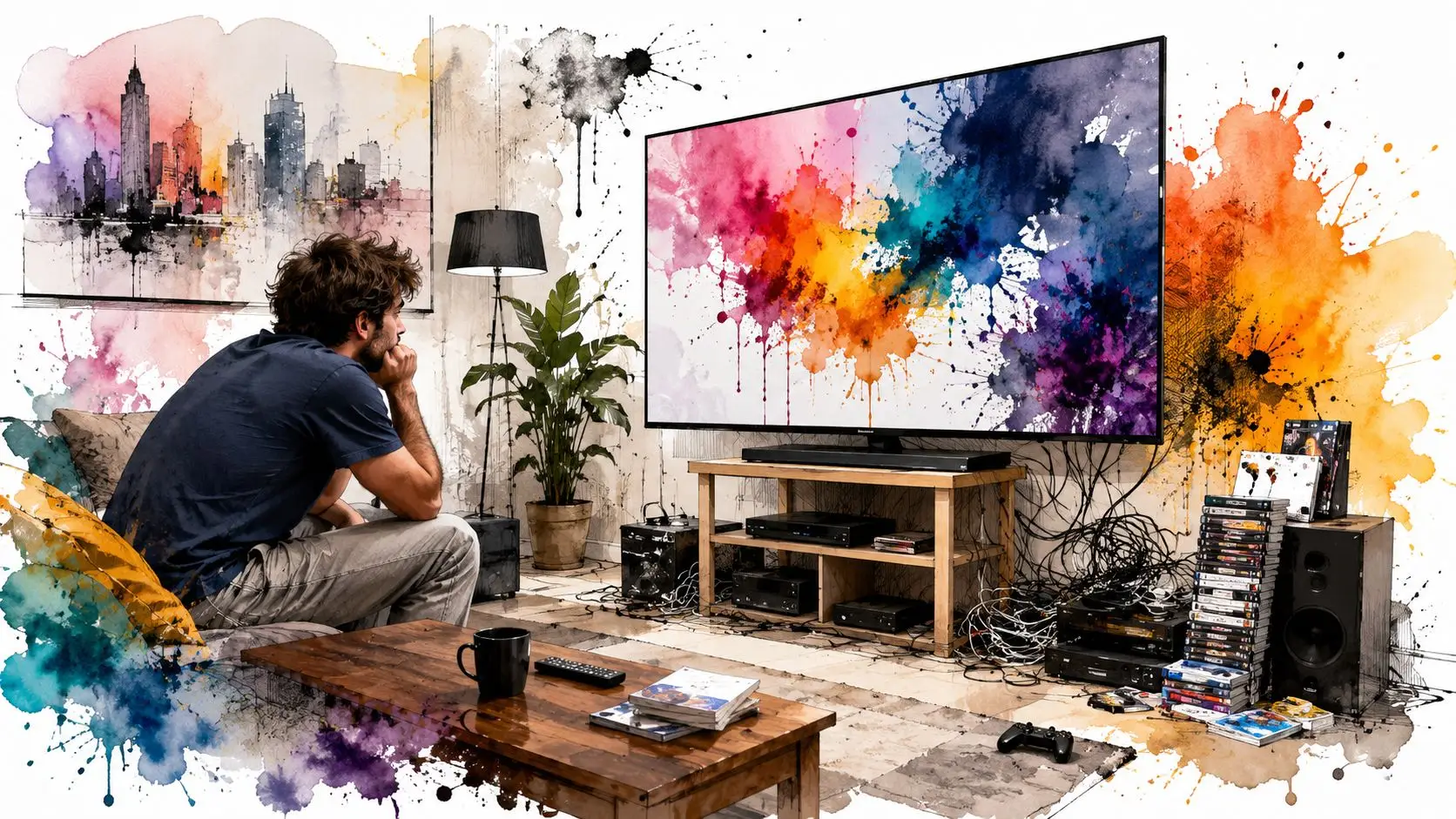
That frustration usually isn't about the television at all. It's about the room asking for a better answer. A media center needs to support daily life, not just the screen. It should make space for devices, keep the view clean, and feel as if it belongs with the architecture and the rest of the furnishings.
For many Bay Area households, the smarter move is to stop treating the TV stand as an afterthought. A custom piece can be sized for the wall, adjusted for the seating, and finished to suit the home's character. That's especially useful in rooms with tighter footprints, open-plan layouts, or a mix of traditional and modern elements.
A good media center makes the television feel integrated, not dropped into the room at the last minute.
Shoppers who want a broader planning framework often find it helpful to review a homeowner's guide to home theaters before choosing furniture. It helps place the stand within the bigger picture of sightlines, room flow, and how the space will be used.
Those practical questions are easier to answer in a no-pressure setting. Families exploring options for Bay Area Interior Design often start with a planning resource like this guide to shopping for TV stands, then bring measurements and photos into the showroom. That approach keeps the process calm and focused.
Why custom matters in a real home
A stock stand asks the room to adapt. A custom stand adapts to the room.
That distinction matters when a family wants deeper drawers, a narrower footprint, a warmer wood tone, or a finish that works with existing case goods. It also matters when the goal is long-term value. Since 1933, South San Francisco shoppers have returned to a family-owned showroom because furniture decisions feel different when Design Experts work on a non-commission basis. The conversation stays centered on fit, quality, and how a piece will live in the home over time.
Measure for the Perfect Ergonomic Fit
A family can spend months choosing the right television, then feel a little sore halfway through the first movie night. In many Bay Area homes, the problem is not the screen. It is the height, the depth, or the way the stand sits in the room.
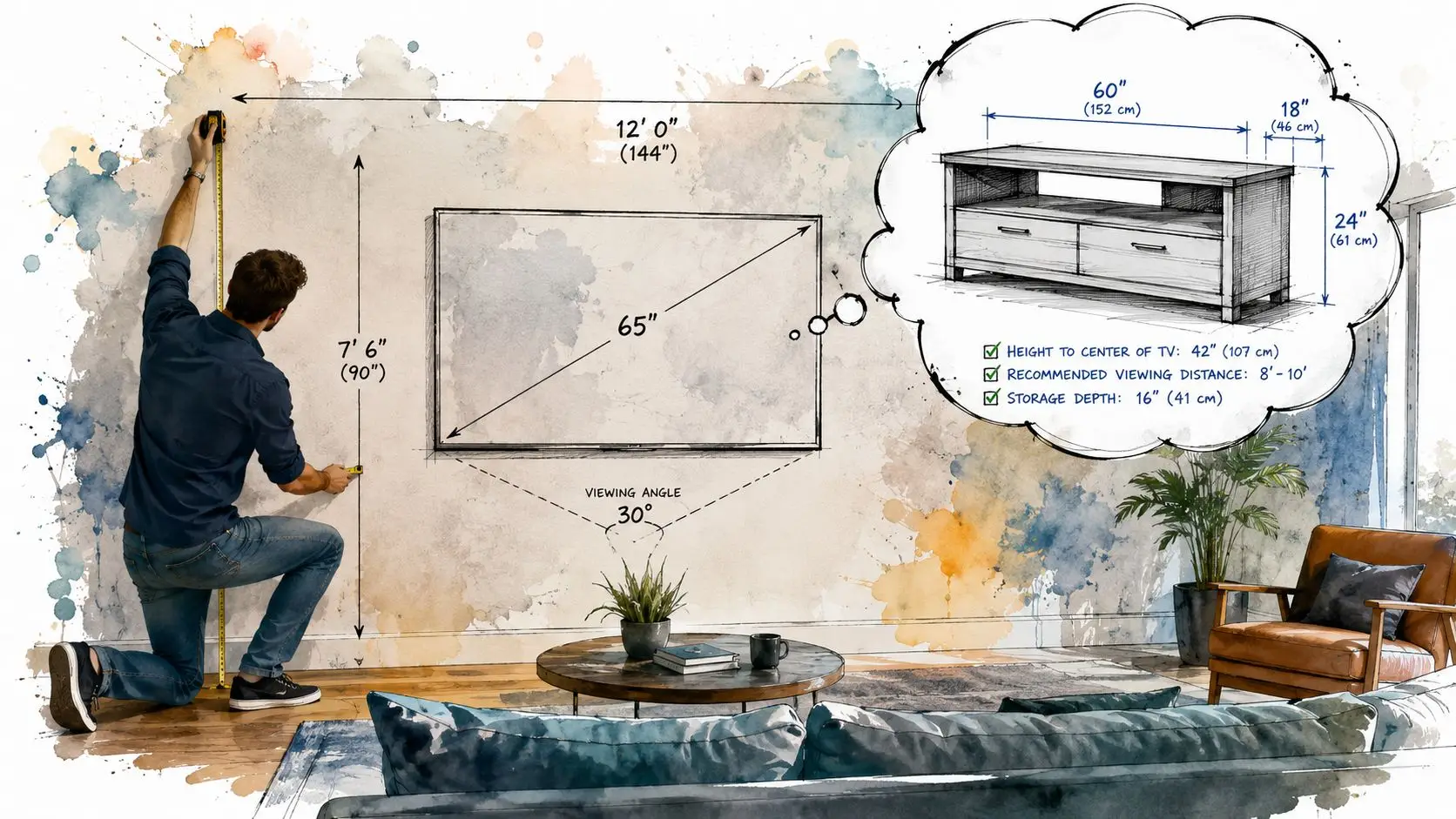
A well-made custom TV stand should fit the body as well as the room. That is one reason families looking for an investment piece take measurements before they choose wood species, finish, or hardware. Comfort comes first. The beauty lasts longer when the piece also feels right to use every day.
Start with seated eye level
The guiding principle is straightforward. The center of the screen should sit close to the viewer's seated eye level. If the screen is too high, people tend to tip their chin upward. If it is too low, they slump forward. Either habit gets tiring over the course of a long game, a double feature, or an evening of streaming.
The easiest way to check this is to measure from the floor to your eyes while seated in the spot where you watch most often. Then compare that height to the center point of the television screen. The stand should bring the TV into that comfortable range.
That sounds more technical than it is.
Use this simple process:
- Sit in the primary viewing seat. Use the sofa or chair you typically watch from, with your usual cushion support.
- Measure your seated eye height. This gives you the target area for the middle of the screen.
- Measure your television. Find the distance from the bottom edge of the TV to the center of the screen.
- Estimate stand height. The stand should raise the television so the screen center lands near your seated eye line.
A good comparison is a reading lamp placed beside a favorite chair. If it is just a little off, you notice it every evening. A television stand works the same way, only on a larger scale and with a bigger visual presence in the room.
Custom sizing matters here because standard heights are built for averages, and real homes rarely behave like averages. A low-slung contemporary sofa in San Francisco, a deeper traditional sectional in Burlingame, and a mixed-use family room in Marin all create different sightlines. A made-to-order piece lets the cabinet height answer the room you live in.
Measure the stand, not just the wall
Homeowners often start with wall width. That makes sense, but it is only the first layer of planning. The stand also needs the right depth, interior clearance, and enough surrounding space for doors, drawers, and comfortable traffic flow.
A useful way to evaluate fit is to check four dimensions:
- Width: The stand should look proportional under the screen and feel settled within the furniture grouping.
- Depth: The top needs enough surface area for the TV base, with space that feels secure rather than crowded.
- Interior space: Components, sound equipment, and everyday items need shelves or drawers sized for real use.
- Clearance around the piece: Cabinet doors and drawers should open fully without clipping a walkway or bumping another piece.
Bay Area homes often ask for smarter tailoring. A condo may need a shallower profile so the room keeps breathing. An older home with alcoves or uneven walls may need exact dimensions to avoid awkward gaps. An open-plan great room may call for a longer stand that visually anchors the television without making the space feel heavy.
For homeowners refining placement before ordering Custom Furniture, this complete guide to finding optimal TV positioning offers helpful planning detail. It connects viewing comfort, room layout, and screen placement so your final piece feels considered from day one.
A custom stand earns its keep when these measurements are handled early. Instead of asking the family to adapt around the furniture, the furniture is built to suit the family, the room, and the years ahead.
Choosing Your Style and Materials for Life
A Bay Area family often starts with a simple goal: find a TV stand that looks right today. A few years later, the room changes, the television changes, children grow up, and the piece is still there. The question becomes whether it still belongs. The best custom tv stands are chosen with that second moment in mind.
Style matters, but materials decide how gracefully a piece lives through those changes. A well-made media cabinet should feel like an investment piece, not a placeholder. It should age with the home, accept daily use without complaint, and still feel worth keeping when paint colors, rugs, and seating are updated around it.
Why material choice shapes the long-term value
Furniture materials work much like the foundation of a house. You may first notice the color and architecture, but the structure underneath determines how well everything holds up over time.
Solid wood remains the standard many families return to for that reason. It has weight, character, and a kind of visual depth that printed surfaces cannot imitate for long. It can also be refinished or repaired more successfully than lower-grade manufactured materials, which matters if you want one piece to serve for decades rather than a few design cycles.
Different woods bring different personalities into a room.
Oak tends to feel steady and familiar. Maple reads cleaner and brighter. Cherry develops warmth and richness as it ages. Walnut often suits modern or transitional interiors because it adds depth without looking overly formal.
That choice becomes especially important in Bay Area homes, where one piece may need to bridge styles. A media stand in a Berkeley Craftsman, a San Francisco condo, or a Walnut Creek open-plan home should not feel generic. It should answer the architecture around it.
Made in America craftsmanship also carries real value here. Many shoppers who come to Giorgi Bros. are not looking for fast furniture. They are looking for careful joinery, thoughtful finishing, and the kind of consistency often associated with well-made Amish Furniture. Those details are easy to miss in a showroom at first glance, but they are exactly what make a piece satisfying to own year after year.
Good wood furniture tends to look more settled and more at home as time passes.
Material Comparison for Custom TV Stands
| Material | Best For | Durability | Aesthetic |
|---|---|---|---|
| Solid oak | Busy family rooms, classic interiors | High | Timeless, grounded |
| Solid maple | Clean-lined spaces, lighter palettes | High | Smooth, fresh, understated |
| Cherry | Traditional and transitional rooms | High | Warm, deep, refined |
| Walnut | Modern and mixed-style homes | High | Rich, sophisticated |
| Veneer over quality core | Large surfaces with controlled movement | Moderate to high | Consistent grain, tailored look |
| MDF or particleboard | Short-term or budget-first setups | Limited | Simple, serviceable |
Customization is where good construction becomes personal taste. One homeowner may want a softer finish that blends quietly into the room. Another may prefer visible grain, a plinth base, tapered legs, or hardware that feels more polished than rustic. Those decisions sound small on paper, but together they shape whether the stand feels borrowed from a catalog or made for a specific home and family.
This is also where a heritage furniture store offers something online filters cannot. Instead of guessing from a product page, you can compare woods in person, see how finishes react to light, and talk with non-commission design experts who help you choose for the long term. That guidance can save a family from ordering a piece that matches a trend but misses the room.
For homeowners drawn to clean lines and lasting restraint, these Scandinavian TV stands show how understated design and quality materials can work together. A calm silhouette often gives the wood itself room to shine, which is one reason this style continues to age well.
Integrating Smart Functional Features
A well-designed media cabinet earns its keep on an ordinary evening. The television is on, a game console is running warm, someone is charging a phone, and no one wants to stare at a tangle of cords under the screen. Good custom work plans for that real-life moment before the piece is ever built.
Hide the cords without trapping the heat
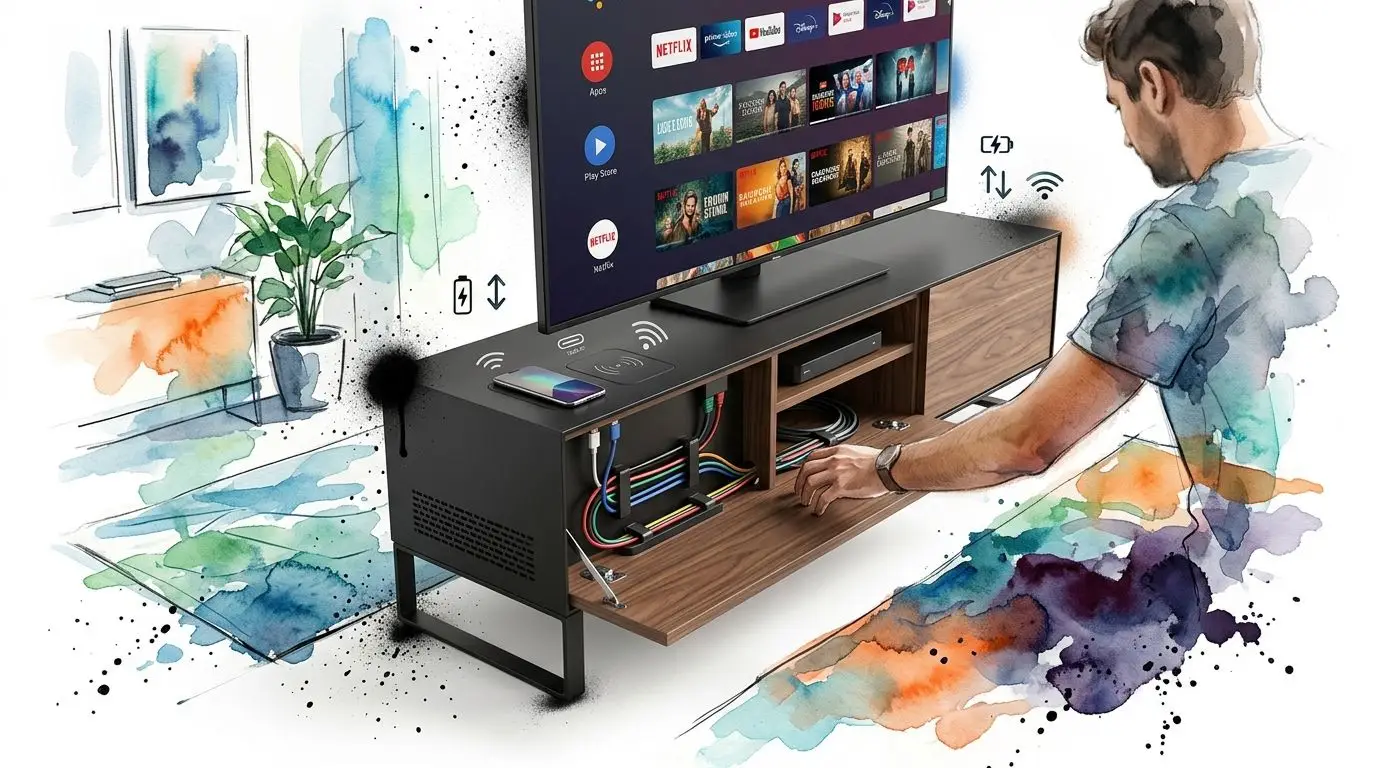
Cable management and airflow are part of good furniture design, not bonus features. A custom TV stand should give each device a clear path for cords and enough breathing room to release heat. That matters in Bay Area homes where media walls are often asked to do more in less space, especially in condos, older homes with limited outlets, and family rooms where every visible surface affects the sense of calm.
The goal is simple. Keep wires out of sight, keep equipment accessible, and keep warm electronics from sitting in a closed box.
A thoughtful layout often includes:
- Rear access points: Cords pass directly behind the shelf where the device sits.
- Internal routing channels: Wires stay grouped and controlled instead of falling into a visible knot.
- Vented backs, slatted doors, or open sections: Air can circulate around cable boxes, receivers, and gaming systems.
- Space for surge protection: Power strips and adapters have a planned home instead of ending up on the floor.
For homeowners preparing the full setup, it also helps to understand cables for optimal TV performance so the cabinet and the electronics work together cleanly.
The details that make daily use easier
Storage should match the way a household lives. One family may want drawers for remotes, chargers, and board game pieces. Another may want open shelves for streaming devices and speakers, with doors to keep the room visually quiet. Shelf height, door swing, and soundbar clearance can feel minor in a showroom. At home, they decide whether the piece is pleasant to use or mildly irritating every day.
That is why custom furniture works like a well-planned kitchen. The value is not just in the materials. It is in putting the right thing in the right place.
Several features are worth asking for:
- Soft-close hinges and drawer glides: They reduce noise and wear during daily use.
- Steady construction: The cabinet should feel planted and dependable under the weight of a television and components.
- Adjustable levelers: They help the piece sit properly on floors with slight variation.
- Finished interiors: Shelves and cabinet walls feel cleaner, look more complete, and hold up better over time.
- Access for service and installation: A custom piece should allow cords, components, and future upgrades to be handled without struggle. Giorgi Bros. can also coordinate professional furniture installation services for homeowners who want the final setup handled with care.
A strong custom stand does more than hold a screen. It reduces visual clutter, supports the electronics you already own, and leaves room for the way technology changes over time. That is part of what makes it an investment piece. It serves the room well now, and it keeps serving when your devices, your family, or your home setup shifts in the years ahead.
Your Custom Order Journey with Giorgi Bros
A Bay Area family often reaches this point the same way. The television is mounted, the seating is in place, and the room still feels unresolved because the furniture beneath the screen never quite fits the home or the way the household lives. A custom order solves that last stubborn problem by turning a blank wall into a piece that feels settled, useful, and built to stay.
At Giorgi Bros., the process is meant to feel clear from the start. You can walk the showroom, compare finishes in real light, open drawers, study proportions, and talk through ideas with design staff who are not working on commission. That changes the conversation. Instead of being steered toward a quick sale, homeowners get guidance on what will suit the room for many years.
Seeing furniture in person matters more than many shoppers expect. Wood color shifts under different lighting. Hardware can feel either refined or distracting. A cabinet that looks generous online may feel too shallow once you stand in front of it. The showroom gives you enough range to compare styles and then adjust the details, whether that means a different finish, a revised width, or a storage plan that better suits the room.
For the final media setup, many homeowners also review cables for optimal TV performance so the completed space looks orderly and functions well from day one.
The order itself usually comes together in a few practical steps:
- Bring the room with you: Photos, wall measurements, and notes about electronics help the design team understand how the stand needs to work in your home.
- Refine the look: You can compare silhouettes, wood tones, and hardware against the character of the room, whether the home leans traditional, clean-lined, or somewhere in between.
- Set the details: Size, storage layout, finish, and other construction choices are selected with daily use in mind, not just showroom appeal.
- Plan delivery carefully: Placement, access into the home, and final setup are considered early so the piece arrives without surprises.
That step-by-step structure helps remove the uncertainty people sometimes associate with custom furniture. It works much like tailoring a good suit. The broad style comes first, then the measurements, then the finishing details that make it feel like it belongs to you.
For Bay Area homeowners, that guidance is especially helpful. Older homes often have unusual wall dimensions, tighter entries, or architectural details worth respecting. Newer homes can present the opposite issue, with open layouts that need a media piece substantial enough to hold its place. A custom order lets the stand answer the room you have.
And once the piece arrives, proper setup protects the investment. Homeowners who want help with placement and final assembly can use professional furniture installation services to make sure everything is handled with care.
Understanding Your Investment and Long-Term Care
People often ask whether a custom stand is worth the added cost. The better question is what the piece is expected to do over time. If the goal is a short-term placeholder, the answer will be different. If the goal is to buy once, live with it well, and avoid replacing it every few years, quality changes the math.
What drives the price
Cost usually rises with better materials, stronger construction, more refined finishes, and more specialized storage or sizing. A simpler manufactured stand may answer a temporary need. A custom piece answers a longer one. It's built around the room and selected with more intention.
That's why the phrase investment pieces fits so well here. The value isn't only in appearance. It's in repairability, structural integrity, and the fact that the stand can continue working even as the room changes around it. Families may change rugs, seating, wall color, or electronics over the years. A well-made case piece often remains.
For shoppers weighing options, it also helps to understand the differences in materials and construction quality through this comparison of solid wood vs veneer. That decision has a direct impact on longevity, appearance, and how the furniture ages.
There's also a practical side. Financing options are available, which can make it easier to choose the right piece instead of settling for the quickest one.
The most sustainable furniture purchase is often the one that doesn't need replacing.
How to protect the piece for the long run
Long-term care doesn't need to be complicated, but it does need to be consistent.
- Dust gently: Use a soft cloth and keep abrasive cleaners away from the finish.
- Protect the surface: Avoid dragging accessories or setting rough items directly on top.
- Manage heat and airflow: Electronics should have the clearance they need.
- Clean spills promptly: Moisture left to sit can damage even quality finishes.
- Check hardware occasionally: A quick tightening helps drawers and doors keep working smoothly.
This is one reason heritage showrooms still matter. Design Experts can help homeowners choose a finish that matches the household's daily reality, whether that means children, pets, frequent entertaining, or a calmer formal space. That kind of guidance supports value long after delivery day. It's also why many shoppers furnishing more than one room often return for other needs, from dining pieces to Premium Mattresses, because the same buy-it-for-life mindset applies.
Common Questions for Bay Area Homeowners
Bay Area living rooms rarely follow a simple template. A beautiful old fireplace may sit on one wall, tall windows may claim another, and an open floor plan may ask one piece of furniture to serve several purposes at once. That is why custom TV stands matter here in a very practical way. They help a room feel settled, not forced.
How do smaller homes handle a custom stand well
In a smaller home, scale matters as much as storage. A media stand should support the screen and the room around it. If it feels too bulky, the whole space can start to feel crowded, even if the measurements technically fit.
The best approach is usually restraint with purpose. A lower silhouette keeps sightlines open. Closed storage hides the everyday items that make a room feel busy. A raised base or slimmer case piece lets more floor show, which often makes the room feel calmer and larger.
It also helps to give the piece more than one job. In many Bay Area homes, a custom stand may hold media components, family games, table linens, or work-from-home overflow. A well-planned piece handles all of that without looking overworked.
What should homeowners know about corner layouts
Corner layouts deserve more care than people expect. On paper, the corner can look like the easiest answer. In practice, it changes viewing angles, cable paths, and the apparent height of the screen.
A good custom corner stand accounts for those shifts from the start. The goal is comfortable viewing from a seated position, not just filling the corner. That often means keeping the cabinet lower than a homeowner first imagined, making sure the TV angle feels natural from the main seat, and leaving enough breathing room for electronics.
A strong corner plan usually includes:
- A height chosen for seated comfort: The screen should feel easy to watch during a full movie, not just acceptable for a quick glance.
- Intentional placement into the corner: A few inches can change the whole viewing experience.
- Ventilation room: Corners can trap heat if components are packed in too tightly.
- Built-in cable management: Without a plan, cords tend to collect and distract from the room.
Families are often surprised by how much better a corner setup feels when it is built for the room instead of adapted after the fact.
Does Amish furniture only fit traditional rooms
Amish furniture works in far more homes than many people assume. Its real value is not tied to one decorating style. It comes from disciplined construction, quality materials, and details that hold up over time.
That makes it a smart fit for Bay Area homeowners who want an investment piece rather than a short-term purchase. A clean Shaker influence can look right at home in a quiet modern space. A Mission-inspired case piece can add warmth to a transitional room with softer upholstery and simpler lines. The wood species, finish, hardware, and proportions shape the final feel.
The importance of experienced guidance becomes evident. A family may love walnut but need a lighter visual effect. Another may want storage for modern components without losing the character of a handmade piece. Those are specific design decisions, and they are easier to get right when you can talk them through with a knowledgeable, non-commission expert who is focused on the home, not the upsell.
For Bay Area homeowners looking for Furniture South San Francisco families have trusted across generations, Giorgi Bros. Furniture offers a place to explore custom options in a family-owned, non-commission setting. Visiting the South San Francisco showroom gives you the chance to compare materials in person, study proportions at full scale, and speak with Design Experts about a custom TV stand that fits the room, the home, and the years ahead. A Design Consultation is also available for those ready to start planning.