
A couple in a renovated Eichler home in Sunnyvale has a clear vision: a 96-inch walnut dining table centered between the kitchen island and a wall of glass. The problem is equally clear. Most stock tables stop at 72 or 84 inches, and the available finishes clash with the existing cabinetry and mid-century furniture.
That's where custom wood dining tables make sense. Custom ordering isn't automatically a luxury indulgence. It's a way to solve a room's actual constraints, from unusual Bay Area floor plans to precise seating needs and difficult wood-tone combinations. The process still demands trade-offs, especially around lead time, price, delivery access, and construction choices.
Giorgi Bros. Furniture has served South San Francisco and the wider Bay Area for more than 90 years, since 1933. Its family-owned, non-commission environment gives homeowners room to compare materials, ask difficult questions, and decide whether a custom piece fits the household rather than forcing a purchase.
When a Stock Table Just Won't Cut It
The Sunnyvale couple isn't chasing a showpiece for its own sake. The 96-inch length gives the table the right proportion beside the island, leaves the walkway visually balanced, and accommodates the household without crowding guests around a smaller top. A 72-inch table would fit physically, but it would make the open-concept room feel underscaled. An 84-inch table would be closer, yet still wouldn't solve the seating and proportion problem.
Bay Area homes create these situations regularly. Older housing stock often includes narrow dining rooms, angled walls, compact breakfast areas, and additions that don't follow standard furniture dimensions. Open-concept remodels create a different constraint. The table must relate to the island, circulation paths, lighting, and adjoining living furniture, not just fit between two walls.
Custom solves several problems at once
Wood tone creates another common impasse. New flooring may carry a honey undertone, existing cabinets may lean orange or red, and mid-century furniture may introduce darker walnut. A stock table can look close in a showroom and still feel wrong at home. A custom order allows a household to choose the wood species, stain, sheen, edge, base, and size as one coordinated decision.
Still, custom isn't automatically practical for every home. A San Francisco condo may have tight square footage, elevator rules, HOA delivery restrictions, or parking limitations that affect the table's dimensions and delivery method. A large top that works beautifully in a suburban open plan can become a logistical problem in a narrow building.
Practical rule: Custom furniture manages constraints. It doesn't eliminate them.
The important decisions come in sequence: wood species, tabletop dimensions, shape, edge profile, joinery, finish, delivery access, cost, and waiting time. Buyers who understand those trade-offs can decide with confidence. Buyers who focus only on the photograph often discover too late that the table doesn't fit the room, the budget, or the schedule.
Custom vs Stock Dining Tables
Stock furniture wins on immediacy and price. Custom furniture wins when the room, finish, or expected lifespan matters more than speed. The right choice depends less on taste than on the homeowner's constraints.
| Factor | Custom | Stock |
|---|---|---|
| Fit | Built to exact room dimensions and seating needs | Available dimensions may force compromises |
| Lead time | Often requires a production and finishing schedule | Usually available for prompt delivery |
| Cost | Higher initial investment, with selected materials and construction | Lower upfront price, with limited specifications |
| Finish flexibility | Species, sheen, stain, edge, and base can be coordinated | Finishes and profiles are limited to available options |
A stock table priced at $1,800 can be the sensible answer for a renter, a temporary home, or a buyer who needs a table within two weeks. A comparable custom build at $4,500 may be the better choice for a homeowner staying put, especially when an awkward room makes standard dimensions look visibly wrong.
The lead-time gap deserves honest attention. Stock furniture can often ship in days. Custom work commonly runs 8 to 16 weeks when design approval, material preparation, construction, and finishing are included. Independent maker FAQs show an even wider spread, from 2 to 6 weeks for some orders to 4 to 6 months for larger professional builds, which is why a written production schedule matters. A custom furniture FAQ from a table maker offers a useful reminder that the word “custom” doesn't describe one universal timeline.
The annual-use question
The price comparison changes when the table serves a household for decades rather than a short period. A custom table can cost more at checkout, but its value comes from exact fit, repairable materials, finish control, and construction intended for long use. A stock table can still be a sound purchase when budget and delivery timing come first.
Homeowners furnishing hospitality spaces can also learn from the broader discipline of choosing furniture for restaurants, where traffic, cleanability, proportions, and durability must be considered together.
Stock is the clear recommendation for renters, budgets under $2,000, and anyone who needs a table within two weeks. Custom is the stronger recommendation for owners planning to stay, households with non-standard rooms, and buyers whose existing wood tones refuse to match anything available on the floor.
Choosing the Right Wood Species and Finish
Wood species changes more than color. It affects grain movement, dent resistance, aging, finish behavior, and the way the table relates to the rest of the room.
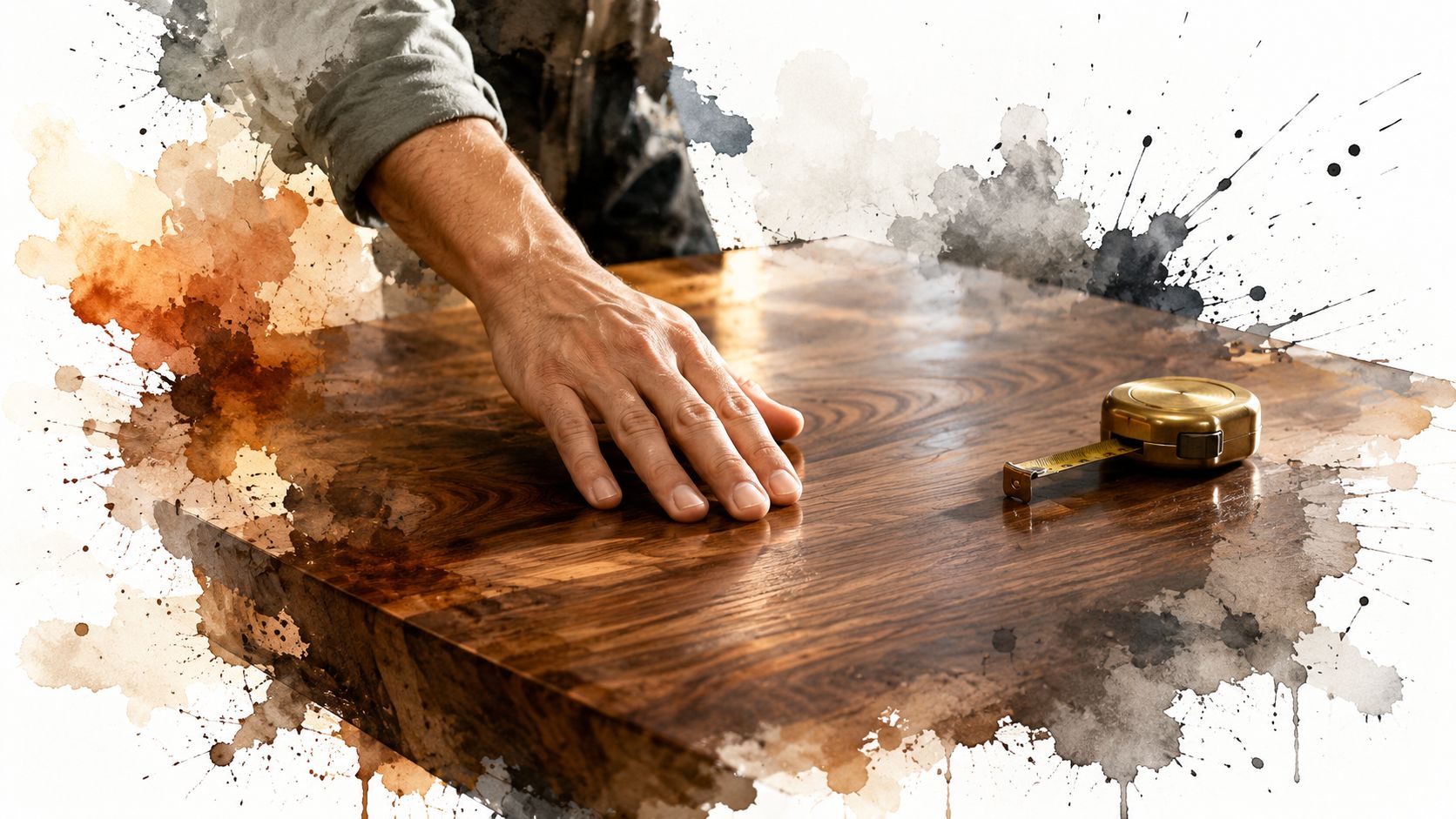
Start with the household, not the sample board
- Walnut: Rich and mid-toned, walnut photographs warmly and suits contemporary, mid-century, and traditional rooms. Its Janka hardness is 1,010, so it accepts daily use well but can show dents sooner than harder choices.
- White oak: Pronounced grain gives white oak visual structure. At 1,360 Janka, it offers a stronger resistance profile for busy dining rooms and takes light finishes particularly well.
- Maple: Clean and contemporary, maple is the hardest of these common choices at 1,450 Janka. Its pale surface can make scratches and marks easier to see, even though the wood itself resists denting.
- Cherry: Cherry starts warm and develops a deeper tone with sunlight. It suits homeowners who want a table that changes character rather than staying visually static.
Cabinetry deserves equal attention. Warm walnut generally sits comfortably beside honey oak flooring, while white oak works well with cooler gray tones. Exact matching often looks forced. Coordinated undertones matter more than identical color.
Homeowners comparing reddish woods with painted or engineered cabinetry may find the discussion of cherry vs MDF cabinets useful for understanding why material comparisons need to include appearance and construction, not just price.
Grain and finish control the experience
Plain-sawn boards create broader cathedral patterns and a more expressive surface. Rift- and quarter-sawn boards produce straighter grain, with quarter-sawn material often offering added dimensional stability. The choice is visual first, but it also affects how the tabletop reads across a long span.
Film finishes, including conversion varnish and polyurethane, create a continuous protective layer. Laboratory abrasion and stain testing indicates that waterborne polyurethane generally outperforms traditional oil-based varnishes, while film finishes resist spills and wear more effectively than penetrating oils. Penetrating oils and hard waxes feel more natural under the hand, but they require periodic maintenance, commonly every 1 to 2 years.
The finish should match the table's workload. A family eating at the table daily, doing homework, and hosting often benefits from a durable film finish. A lightly used formal table may justify the softer tactile quality of oil or hard wax. A practical overview of wood finishes for furniture can help buyers compare sheen and maintenance before approving a sample.
Sizing, Shape, and Style for Real Dining Rooms
The most expensive table mistake is ordering by visual appeal before measuring the circulation around it. Every occupied chair needs usable clearance behind it. A safe planning rule leaves 36 inches behind each chair, increasing to 48 inches when the table sits directly in a walkway.
Measure the room with chairs pulled out, not pushed under the table. Check the path from the entry, kitchen, and living area. Confirm ceiling height and light-fixture placement before finalizing the tabletop, especially in an open-concept space where a long table can sit beneath a substantial pendant or chandelier.
Length should accommodate the household plus two occasional guests without turning everyday meals into a reach across empty space. Extensions and leaves can preserve flexibility, but the storage method matters. A guide to dining room tables with leaves stored in the table addresses that practical issue directly.
| Room Layout | Recommended Shape | Typical Seats | Best Use |
|---|---|---|---|
| Long dining room | Rectangular | Varies by length | Maximum seating and strong visual anchoring |
| Square nook | Round | Varies by diameter | Easier conversation and softened corners |
| Transitional layout | Oval | Varies by length | A compromise between rectangular efficiency and round circulation |
| Tight floor plan | Rectangular or oval with pedestal base | Varies by size | More legroom and fewer base obstructions |
Let the base and edge do the styling
Rectangular tables anchor long rooms and seat the most people. Round tables soften square areas and keep conversation close. Ovals bridge those qualities, while pedestal bases free up legroom in compact Bay Area layouts. Buyers considering a larger circular design can use this 10 person round table guide to think through diameter, seating, and circulation.
An eased square edge feels clean and leaves more usable elbow space. A live edge brings character and uses the natural boundary of the slab, but irregular curves can reduce practical chair spacing. The table should coordinate with flooring, cabinets, and neighboring furniture without copying them exactly. A 10 to 20 percent contrast can read as intentional, while identical tones may look like a failed attempt at matching.
Mid-century, farmhouse, and contemporary styles usually come through the base, leg angle, apron, and edge profile more than the species alone. The same white oak top can look architectural on a pedestal, relaxed on trestle legs, or distinctly mid-century on tapered supports.
Construction and Joinery That Actually Last
A durable tabletop starts before the first finish coat. Interior furniture should use kiln-dried stock acclimated to roughly 6 to 8 percent moisture content in most U.S. interiors, because wood continues to respond to humidity after milling. A 12-inch-wide flat-sawn tabletop can move about one-quarter inch across the grain between dry winter and humid summer conditions, so a rigidly fixed top is a design error, not a sign of strength. This explanation of wood movement shows why the builder must plan for movement instead of trying to prevent it.
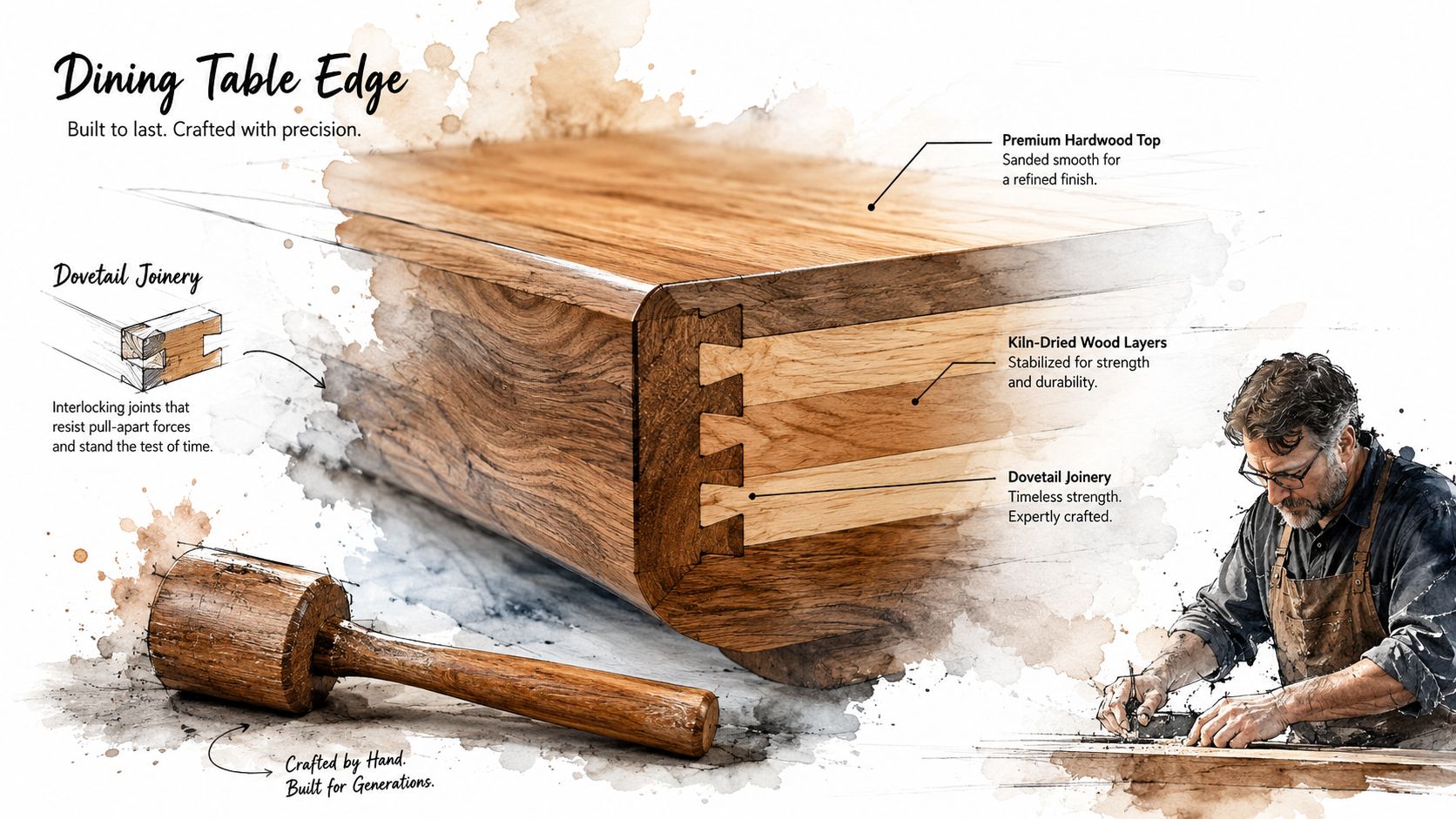
Ask how the top is allowed to move
The tabletop's joinery matters more than decorative details at the base. Breadboard ends with elongated mortises can let the main panel expand and contract across its width while keeping the end grain aligned. Properly fitted dowels or similar alignment methods at long seams help keep the panel flat without trapping it.
A buyer doesn't need to become a woodworker. The useful questions are straightforward:
- Ask about moisture content: Kiln-dried, acclimated stock is more dependable than green or poorly stabilized material.
- Ask about attachment points: The top should be secured with hardware or joinery that allows seasonal movement.
- Ask about the base: Mortise-and-tenon construction handles repeated seating loads better than fasteners that can loosen over time.
- Ask about the finish system: The chemistry should match spills, heat, cleaning, and daily contact.
A rigidly attached top can split or cup as humidity changes. Wood furniture guidance notes that a tabletop can still change size by a few millimetres between seasons in a stable home, which is why makers may use expansion allowances or adjustable joinery.
For buyers weighing solid construction against layered alternatives, the comparison of solid wood vs veneer clarifies where each material makes sense.
Finish chemistry changes daily ownership. Conversion varnishes and other catalyzed film systems generally protect against water, abrasion, heat, and stains more effectively than penetrating oil and wax. Oil-and-wax surfaces can feel beautiful, but they demand a more active maintenance routine. The builder should state the finish, care products, repair process, and expected maintenance before the order is approved.
What Custom Really Costs and How Long It Takes
Custom should never mean “the price will be revealed later.” Buyers need a working budget before they spend time refining a design. In 2026 Bay Area dollars, a custom solid hardwood table typically falls into several broad build tiers.
| Build Tier | Typical Price Range | Lead Time | Best For |
|---|---|---|---|
| Standard custom build | $2,800 to $4,500 | 8 to 12 weeks | Domestic walnut or white oak in standard sizes |
| Larger or figured build | $4,500 to $7,500 | 16 to 24 weeks | Larger tops, live edges, or premium figured slabs |
| Statement build | $7,500 to $12,000+ | 16 to 24 weeks, plus finishing | Wide bookmatched slabs or mixed-media bases |
These ranges are working planning figures, not promises. Material availability, top width, slab selection, base complexity, edge treatment, hardware, delivery access, and finish schedule can move an order within or beyond a tier. A builder should separate the table price from delivery, installation, and any unusual site requirements.
Independent custom-table FAQs illustrate why timelines vary so sharply. One maker reports typical production of 2 to 6 weeks, while another lists 4 to 6 months and $12,000 to $20,000 or more for an 8-foot professional table. That spread makes a confirmed production slot more valuable than a vague “made to order” label.
What the premium pays for
Mass-market tables of similar size can cost 40 to 60 percent less upfront, but that lower price usually comes with fewer choices and less control over construction. A custom table may use a hardwood plywood base with solid edging to manage cost, or all-solid construction with a hand-rubbed finish when the brief calls for a more traditional build. The latter can justify a higher price and longer schedule.
The right question isn't whether custom costs more. It does. The right question is whether the exact fit, selected material, repairability, and long service justify the difference for that household. Buyers exploring related made-to-order pieces can also review custom wood bedroom furniture to see how material and finish decisions carry across a home.
A useful budget rule is simple: if the household can't tolerate the quoted wait or the fully landed price, the design needs to become simpler. Reducing slab complexity or choosing a standard domestic species often protects the essential custom benefits without pretending every option costs the same.
How Giorgi Bros. Handles a Custom Order
A well-run custom order starts with conversation, not a deposit. At the South San Francisco Showroom, a homeowner can discuss room dimensions, seating, wood samples, edge profiles, and base styles with a Consultant without a commission-driven push toward one option.
The first visit should answer practical questions. How wide is the room? Where does the table enter the home? Will a lift, stairwell, hallway, or building rule affect delivery? For difficult Bay Area layouts, an in-home or virtual Design Consultation can be more useful than relying on memory or a rough sketch.
The order develops in visible stages
- Discovery: The household describes how the table will be used, from daily meals to larger gatherings.
- Material review: Wood species, grain direction, finish samples, edge profiles, and base options are compared together.
- Quote and drawing: Dimensions and specifications are written into a quote and shop drawing so the buyer can review the design before production.
- Schedule confirmation: The workshop's current capacity determines the realistic lead time, rather than an optimistic estimate given before the build is placed.
- Construction updates: The buyer receives a progress check during the build when the design or material warrants one.
- Delivery and setup: White-glove delivery includes placement, leveling, and attention to the room's access conditions.
The Amish collection at Giorgi Bros. Furniture includes built-to-order dining tables in solid hardwoods with choices around wood type, finish, size, and style. That gives Bay Area homeowners a path to customization without requiring every decision to begin from a blank sheet.
A shop drawing is not paperwork to rush through. It's the point where a beautiful idea becomes a measurable object.
The family-owned model also matters after the order. A regional showroom gives the homeowner a local point of accountability instead of leaving every question to a remote online checkout process. Giorgi Bros. Furniture also offers custom order services across wood species, finishes, leathers, and designer fabrics, so the dining table can coordinate with a broader Bay Area Interior Design plan.
The showroom's Non-Commission Sales Staff, properly called Consultants or Design Experts, should help the buyer understand trade-offs rather than manufacture urgency. Financing options are available for households that choose to spread out a larger furnishing investment, but financing shouldn't replace a realistic budget.
Caring for a Custom Table and Next Steps
A custom table earns its value over years of meals, work, celebrations, and repairs. That buy-it-for-life mindset also supports sustainability. Choosing a durable, repairable piece reduces the need to replace furniture whenever a surface develops ordinary wear. The larger wood furniture market remains substantial, with one estimate valuing it at USD 235.3 billion in 2023 and projecting USD 327.7 billion by 2033, while another estimate placed it at USD 300.2 billion in 2025 and forecast USD 434.9 billion by 2034. The global wood furniture market overview places those projections in the context of a mature worldwide category.
Custom furniture is also moving beyond niche commissions. One estimate valued customized furniture at USD 39.55 billion in 2025 and projected USD 110.12 billion by 2034, while another estimated USD 38.78 billion in 2026 and projected USD 66.49 billion by 2033. Wood was estimated to represent 40.5 percent of the custom-furniture mix by the end of 2026. Customized furniture market projections help explain why made-to-order specifications are becoming a more familiar premium choice.
Simple habits protect the investment
- Control the room: Aim for indoor relative humidity between 35 and 45 percent, and keep the table away from radiators and concentrated heat.
- Blot spills promptly: Don't let moisture sit on the surface. Blot first, then use the cleaning method recommended for the finish.
- Reduce surface friction: Use coasters under drinks and felt pads beneath decorative objects.
- Dust with care: A slightly damp microfiber cloth works for routine dusting. Move with the grain, not against it.
- Follow the finish schedule: Use paste wax or hardwax oil only when the specific finish calls for it, and select products recommended by the builder.
Solid wood will respond to the seasons. Small gaps, minor checking, or slight changes in alignment can occur as the tabletop absorbs and releases moisture. That movement isn't automatically a defect. A properly built table accommodates it through its joinery and attachment system. Practical guidance on wood furniture protection can help owners preserve the surface without applying the wrong product.
Sustainability deserves more than a vague “eco-friendly” claim. FSC certification uses a chain-of-custody system that traces wood and wood-based materials through the supply chain from the forest onward, without mixing non-certified material at any stage. FSC certification guidance gives buyers a more specific question to ask than whether a seller considers the wood green.
Reclaimed wood can reduce demand for newly harvested material, but it may bring more variation in grain, color, and dimensional behavior. Certified new hardwood can provide more predictable performance and finish consistency. The responsible choice weighs sourcing, durability, repairability, and actual fit together.
A practical next step is to visit the South San Francisco Showroom with room measurements, photographs, flooring or cabinet samples, and a clear delivery path. Homeowners can request wood samples to evaluate in natural light or book a Design Consultation for a difficult layout. During busy Bay Area remodeling seasons, response times and workshop availability should be confirmed early rather than assumed.
Giorgi Bros. Furniture offers custom-order dining tables with choices in wood species, sizes, styles, and finishes, supported by no-pressure Design Experts in a family-owned South San Francisco showroom. Visit Giorgi Bros. Furniture to compare materials in person or book a Design Consultation for a custom wood dining table built around the home's actual constraints.