The worst bedroom purchases are the ones that look fine on the showroom floor and fail the minute they meet a real room. A bed lands too close to the wall, the dresser crowds the doorway, the finish clashes with the flooring, and the mattress sits at a height that feels wrong every night after that. Custom wood bedroom furniture exists to fix those problems before anyone signs the order.
In the Bay Area, that matters more than most buyers admit. Homes rarely offer generous, perfectly square rooms, and standard suites often ask people to compromise on proportion, storage, and long-term durability. Giorgi Bros. Furniture has been helping buyers make those decisions since 1933 in South San Francisco, and the best advice is still the simplest one, buy the piece that fits the room and the life it has to live in, not the piece that merely looks right under showroom lights.
Why Most Bedroom Sets Don't Quite Fit
A buyer can walk into a big display floor, see a dozen polished bedroom suites, and still leave without a real answer. The problem usually isn't taste. It's that the room at home has different dimensions, different trim, and different traffic patterns than the staged floor model.

Fit beats prettiness every time
A standard suite can leave a useless gap beside the dresser, force a nightstand into a door swing, or make a bed feel oversized in a narrow room. That is where custom becomes practical instead of indulgent. The point is not to chase luxury for its own sake, it is to stop paying for compromises that keep showing up every day.
Practical rule: if the room needs measuring tape and guesswork to make a ready-made set work, the room probably wants custom sizing.
Custom wood bedroom furniture also helps when the mattress, rug, or flooring already exists and the new pieces have to work around them. A well-planned custom order gives the room one coherent scale instead of a collection of almost-right parts. A quick measuring pass can save a lot of expensive regret, and a buyer who wants a clean layout should start with this furniture measuring guide.
Standard sizing creates hidden trade-offs
Ready-made furniture often asks buyers to accept awkward proportions just to get the purchase done. That might mean a bed that feels too low for a thicker mattress, or a dresser that blocks a vent, outlet, or closet door. Those are not minor nuisances. They're the kinds of fit issues that turn a bedroom into a daily irritation.
Custom wood bedroom furniture solves the room first, then the look. That's the right order. A bedroom should feel planned, not forced.
What Custom Wood Bedroom Furniture Means
Custom wood bedroom furniture is not a fancier finish on a standard catalog piece. It is a bedroom set built around the room, the way it will be used, and the buyer's choices. Dimensions, wood species, hardware, finish, and sometimes upholstery are all specified before the piece is made.
A buyer who wants long-term value should care about how the piece is built, not just how it looks on the floor. That is where custom earns its keep. A room that gets measured, planned, and built correctly avoids the kind of expensive compromise that comes from forcing a standard set to fit.
Structural choices and cosmetic choices are not the same
The structural side matters most. Solid wood, plywood construction, core type, and joinery determine how the furniture holds up over time. Decorative choices like stain color, paint, sheen, and hardware shape the look, but they do not carry the same weight for durability.
That distinction is where buyers should stay sharp. Solid hardwood can be the right call for long service life, while veneer over an underbuilt core can look good early and disappoint later. The earlier section on fit already showed why standard pieces miss the mark, and construction is the other half of the problem. This is the part that separates a buy-it-for-life purchase from furniture that gets replaced too soon.
Ask what is being built
A custom order should be discussed in plain terms, not showroom jargon. Buyers should know whether the frame is solid wood, whether any panels are veneered, what the core material is, and which parts are fixed versus adjustable. If upholstery is involved, fabric or leather becomes part of the order too, along with tufting, welt, or trim details.
A buyer who cannot name the build details is still shopping by appearance, not by value.
That is the point of a consultative showroom visit and a real workshop conversation. At Giorgi Bros. Furniture custom wood furniture maker, the discussion should cover what is being built, how it will be built, and which choices matter most for durability and long-term use. For a clearer breakdown of how construction choices change the final piece, use this solid wood versus veneer guide as a starting point.
Custom Versus Ready-Made at a Glance
Some buyers need speed. Others need a bedroom that fits a difficult room and lasts a long time. Those are different goals, and the furniture choice should reflect that.
A simple side-by-side view
| Consideration | Custom Wood | Ready-Made |
|---|---|---|
| Fit | Sized for the room, including awkward layouts | Built to standard dimensions |
| Materials | Buyer can specify species, core, and finish details | Materials are preset |
| Lifespan | Built for long-term use when specified well | Usually cheaper up front, often less durable |
| Repairability | Easier to refinish or service if built solidly | Often harder to repair cleanly |
| Style control | High, with more control over proportion and tone | Limited to what is already made |
| Best use case | Long-term households, tricky spaces, tailored design | Fast moves, tight budgets, simple rooms |
The table is blunt on purpose. Ready-made furniture has a place. It can be the right answer for short timelines or temporary housing. But when a bedroom is meant to serve for years, the custom path usually makes more sense because the piece is designed around the room instead of the other way around.
The real question is not price alone
Upfront cost matters, but it should not be the only lens. A cheap set that wears out early, fits badly, or gets replaced after a move is rarely cheap in the end. Custom wood bedroom furniture asks for more discipline at the start and usually pays that back through use, durability, and less churn.
The Choices You Get to Make
Custom orders get easier once the decisions are grouped by function. Buyers do not need to know every detail of furniture construction. They do need to know which choices shape daily use, which ones shape the look, and which ones protect the long-term value of the piece.
Start with the wood, then move to the details
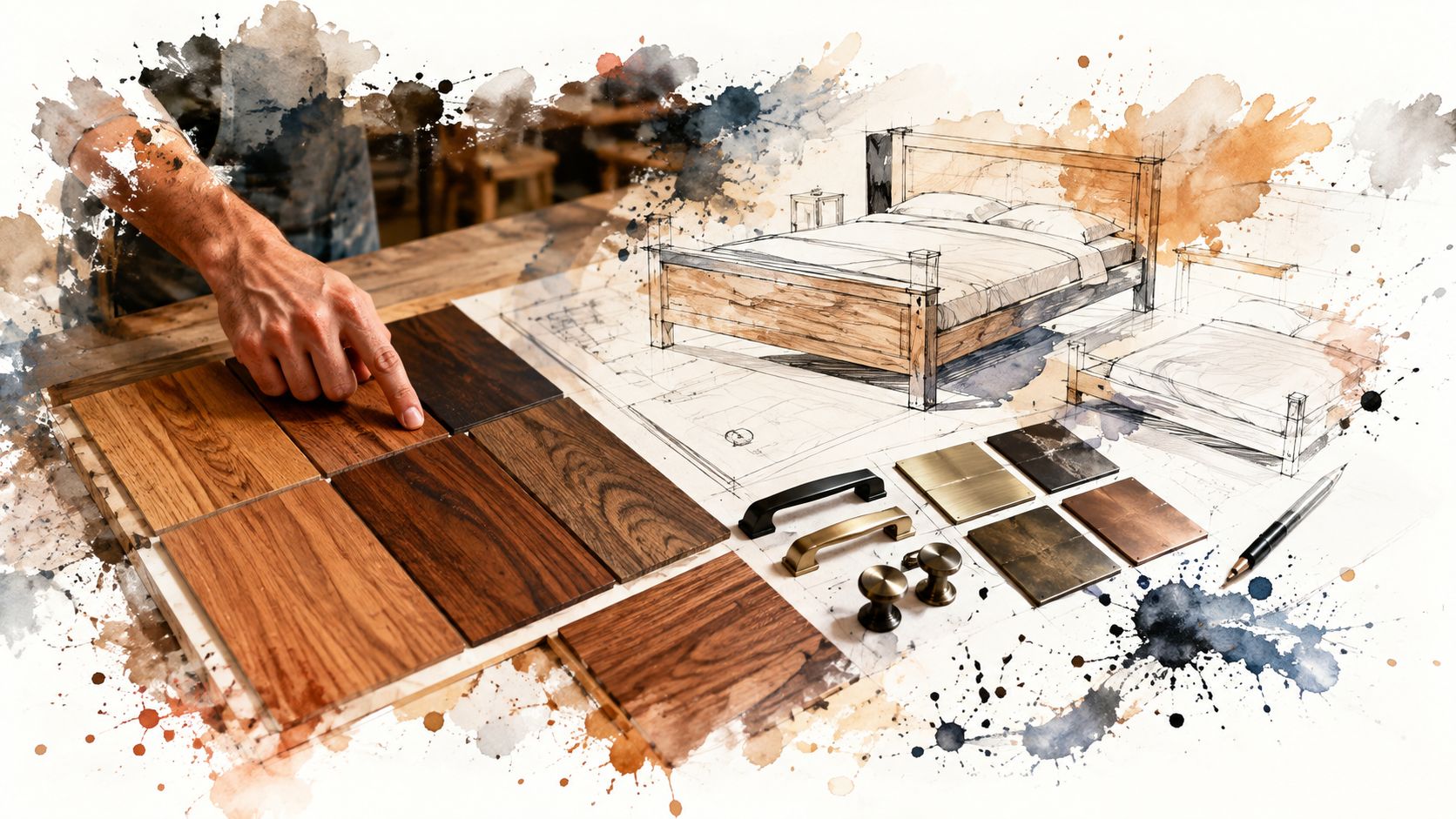
Species changes the feel of the room. Oak reads differently from maple, cherry deepens over time, and walnut carries more visual weight. Solid hardwood also gives the buyer more confidence when the goal is long service, not a short-lived first impression. For a useful overview of finish and species choices, this custom wood finishes resource is worth a look because those decisions should be made together, not treated as separate afterthoughts.
Joinery matters too. Mortise-and-tenon construction is one of the clearest signs that the maker is building for strength, while simpler fastener-driven assembly usually belongs in lower-tier furniture. The buyer does not need to become a carpenter, but the buyer should ask how the frame is put together and how it will hold up under real use.
Spend budget where the furniture works
Hardware, stain, paint, and sheen are the visible decisions. They matter, but they should come after the structure. A beautiful drawer pull will not rescue a weak frame, and a trendy stain will not make a shallow bed more useful.
For upholstered pieces, fabric or leather choice affects comfort and the room's overall tone. Tufting, welt, and accent trim are mostly aesthetic, but they still change the character of the bedroom. A good consultant will help the buyer separate durable build decisions from style decisions so the budget lands in the right places.
Good rule of thumb: pay first for structure, second for finish, third for flourishes.
That order keeps the purchase honest. It also keeps the room from becoming a string of expensive but disconnected choices.
Matching the Pieces to Your Room and Style
Style only works when the scale works. A tall headboard can look elegant in one room and overpowering in another. A roomy dresser can feel balanced in a primary suite and clumsy in a smaller guest room. Proportion is not decorative trivia, it is what makes a bedroom feel calm.
Measure the room like the furniture has to live there
Ceiling height should be part of the first conversation, especially if the buyer wants a tall bed or a substantial headboard. Door swing, window clearance, baseboard depth, and circulation paths matter just as much. The room does not care how attractive a piece looked in the showroom if it interrupts the way people move.
Custom helps most in awkward rooms. Sloped ceilings, alcoves, narrow footprints, and odd corners are exactly where standard bedroom furniture usually stumbles. The main thing is to fit the room as it is, not as a catalog assumes it should be.
Decide whether the furniture should blend or contrast
Some rooms need wood tones that echo the floor and trim. Others need a stronger contrast so the bedroom doesn't feel flat. The right answer depends on the architecture, not on a trend cycle.
A practical method is simple, pick the bed first, then decide how much visual weight the dresser and nightstands should carry. That keeps the suite coherent. It also prevents the common mistake of buying beautiful individual pieces that argue with each other once they're all in place.
Pricing, Lead Times, and Realistic Expectations
Custom is not cheap, and pretending otherwise helps no one. The price reflects the fact that someone is building to order, not clearing a finished shelf. The timeline reflects the same reality.
Expect patience, not instant gratification
One documented custom-process model starts with the customer stating what they need, then the maker confirms the quote, and production follows. In handcrafted hardwood beds, lead times commonly fall in a 16 to 20 week window because the work includes CNC cutting, frame assembly, and hand-tufting. That wait is part of the product, not a sign that something is wrong.
For broader market context, the custom furniture category is clearly expanding. One estimate places the global market at USD 38.78 billion in 2026 and projects growth to USD 66.49 billion by 2033 at a 9.4% CAGR. Another estimate puts it at USD 44.76 billion in 2026 and USD 115 billion by 2035 at an 11.2% CAGR. Those figures come from independent market views, and they point in the same direction, custom is a growing category, not a niche indulgence. See the market overview from Coherent Market Insights.
Think in years, not weekends
A good bedroom set should not be judged only by the purchase month. It should be judged by how long it stays useful, how easily it can be repaired, and whether it still fits the household after tastes change. That is why a higher upfront price can make sense when the furniture is meant to stay in use for decades.
For readers comparing payment structures, Genpire pricing plans are a useful reminder that financing is often part of how households handle larger purchases. The important point is simple. If financing helps a buyer choose the right piece instead of settling, the budget is being used intelligently.
Sustainability and the Buy-It-for-Life Mindset
A bedroom suite is one of the most serious furniture commitments a household makes. It uses material, labor, and transport, so the sustainability case starts with service life. The longer a piece stays in use, the lower its cost per year and the less often it needs replacing.
Longevity is the first sustainability metric
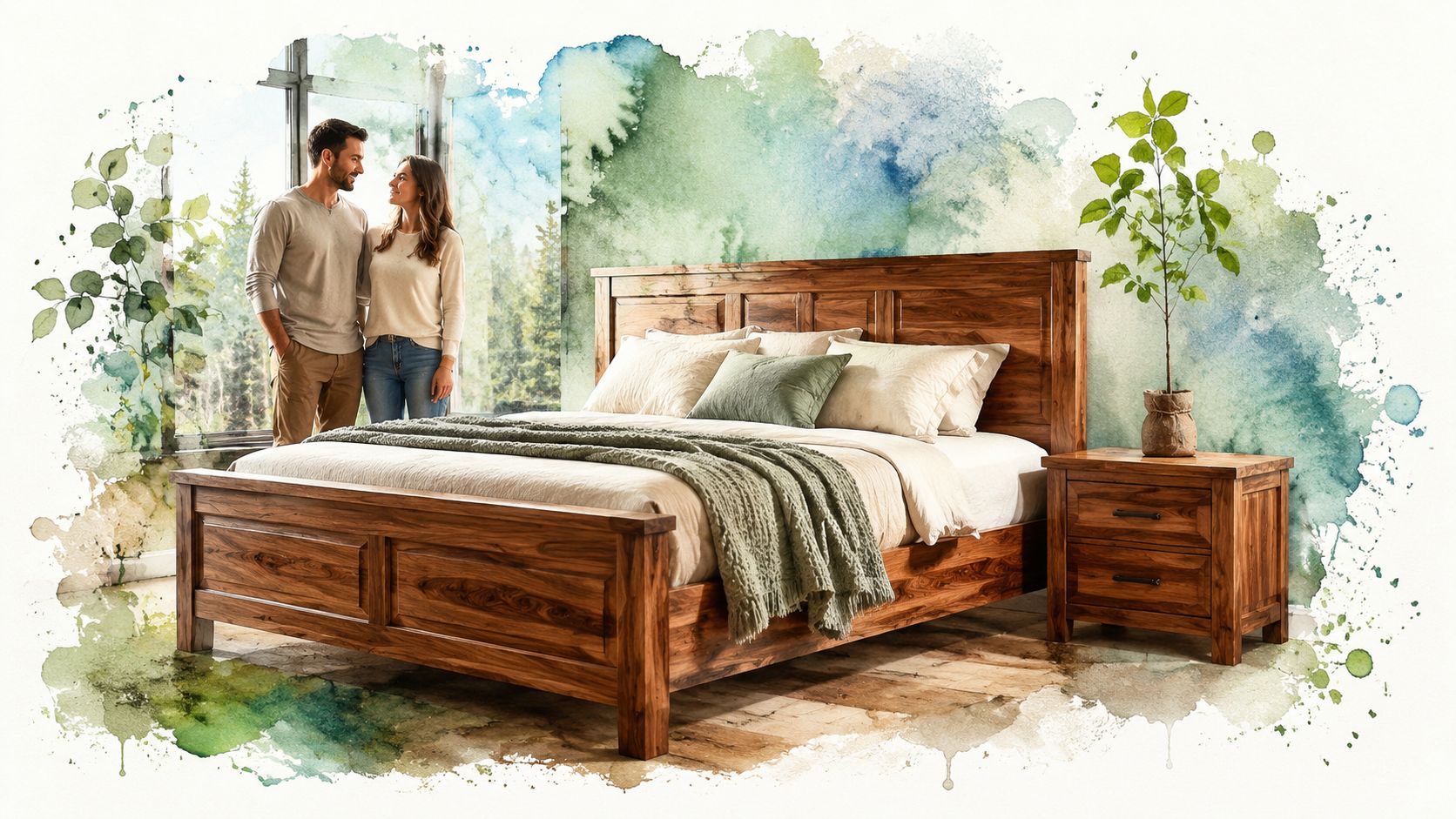
Solid hardwood furniture can be repaired, refinished, and kept in service long after cheaper built-to-replace pieces start failing. That matters because a sanded top, a touched-up edge, or a tightened joint is very different from a full replacement. The buy-it-for-life idea is not sentimental. It is practical resource stewardship.
Wood that is built well also avoids the waste spiral that comes with disposable furniture. A piece that lasts longer reduces the cycle of buying, discarding, and replacing. That is the sustainability argument in plain language.
Repairability changes the whole equation
Scratches do happen. So do water rings, loose joints, and wear at the drawer front. Solid wood gives a buyer more options when that happens, because refinishing and repair remain on the table.
That is the big difference between furniture that is used and furniture that is consumed. One gets maintained. The other gets thrown away. Buyers who want a bedroom that ages well should think in terms of stewardship, not just style.
How the Giorgi Bros. Custom Order Process Works
The process should feel human, not transactional. That's the point of a real showroom experience. A buyer walks in, looks at the actual materials, talks through the room, and gets guidance without pressure from a non-commission consultant.
Start in the showroom, not in a cart
A South San Francisco visit gives buyers a place to touch wood samples, compare finishes, and evaluate proportion in real life. Giorgi Bros. Furniture spans 50,000 square feet of showroom space, and that scale matters because custom decisions are easier when the materials are in front of the buyer instead of trapped on a screen. The company also supports bedroom planning with custom order services across wood species, finishes, leathers, and designer fabrics, including lines such as Amish.
That matters for the Bay Area buyer who wants information before commitment. A consultation is less about selling a package and more about translating room needs into a spec sheet that can be built. It's also where premium mattresses can be discussed alongside the bed frame, because sleep surface height and support should be considered together.
Let the order follow the room
The best process is straightforward. First, a consultant listens to what the room needs. Then the buyer reviews dimensions, material options, and finish choices. After that, the order moves into production and final delivery planning.
A custom order should leave the showroom with fewer questions, not more.
That's also where the practical support matters. Giorgi Bros. offers white-glove delivery and setup, and its consultative approach keeps the ordering process grounded in the actual room rather than in vague promises. Buyers who want to compare bedroom fit, mattress height, or storage layout can also use the store's Mattress Guide as part of the planning process.
Keep the decision focused on four things
Custom wood bedroom furniture is worth serious consideration when four advantages line up. It fits the room. It uses better materials. It lasts longer. It looks like it belongs to the household, not to a catalog.
Those are the reasons buyers choose custom, and they're the reasons a well-built bedroom set stops feeling like a purchase and starts feeling like a long-term fixture. For Bay Area homeowners who want direct guidance without sales pressure, the next move is simple, visit the South San Francisco showroom or schedule a Design Consultation, then let a consultant walk the room, the wood, and the finish choices with real samples in hand.
Giorgi Bros. Furniture helps Bay Area buyers plan custom wood bedroom furniture with real materials, no-pressure guidance, and a showroom experience built around fit, finish, and long-term value. Visit Giorgi Bros. Furniture to see the options in South San Francisco and book a Design Consultation when the room needs a better answer than standard sizing.