A Bay Area living room often has to do several jobs at once. It may host morning coffee, family movie nights, visiting relatives, and quiet evenings, while still looking polished enough for guests. A leather sofa with exposed wood, a wood-framed chair, or a sectional paired with carefully finished tables can solve that tension by bringing durable comfort and natural structure into one setting.
That combination also deserves a closer look before purchase. The most important questions aren't limited to color or silhouette. Buyers need to know where the leather is located, whether other panels use matched materials, how the leather and wood will age together, and what the frame, finish, adhesives, and upholstery can handle over time.
The strongest approach is to treat the purchase as an investment piece, not a temporary room filler. Quality construction can support comfort, repairability, and long-term value, while thoughtful material choices can help the room feel connected to its Bay Area surroundings. A visit to a showroom makes that evaluation easier because hands can test cushion support, eyes can compare grain and finish, and the body can experience the difference between catalog descriptions and real furniture.
Introduction to Leather and Wood Living Room Sets
A busy South San Francisco family room can reveal the appeal quickly. A household may need seating that feels welcoming after a long day, resists the ordinary friction of daily use, and works with both modern architecture and older homes. Leather provides a smooth, substantial surface, while wood adds warmth through visible grain, legs, arms, tables, or frame details.
The pairing works because the materials balance one another. Leather can make a room feel refined without relying on ornate decoration. Wood keeps the arrangement from feeling visually flat by introducing texture, color variation, and a sense of craftsmanship. Together, they can support a relaxed room that still looks intentional.
Why the combination feels timeless
Leather and wood don't depend on a narrow decorating trend. A warm brown leather sofa can work with traditional casegoods, while a darker leather chair and clean wood frame can suit a more contemporary interior. Earth tones and green tones also pair naturally with both materials, giving Bay Area homeowners room to change rugs, art, and textiles without replacing the main seating.
The long-term appeal matters because well-built furniture can reduce the cycle of replacing pieces that no longer look or feel right. Neutral materials allow a room to evolve, and natural aging can become part of the design rather than a reason to discard the furniture.
A useful buying mindset: The best set should look appropriate on delivery day and remain comfortable, serviceable, and visually relevant as the household changes.
Why touching the furniture matters
Online photographs can show color, but they can't reveal how a cushion responds, how a finish feels under the hand, or whether a leather surface has the character a buyer expects. In person, shoppers can also inspect seams, exposed wood, panel transitions, and the relationship between hard and soft surfaces.
That kind of no-pressure evaluation is central to the experience at a family-owned showroom. Giorgi Bros. Furniture has served South San Francisco and the Western United States continuously for more than 90 years, with its family-owned history dating to 1933. (Giorgi Bros. Furniture's history) Its non-commission Consultants can help households compare materials without turning the decision into a rushed transaction.
This guide focuses on the practical details that deserve attention before ordering, including construction, customization, air quality, abrasion resistance, layout, and long-term care. The aim is simple: help buyers choose a set that fits the room and earns its place there for years.
What Makes a Leather and Wood Living Room Set
A leather and wood living room set is best understood from the frame outward. The frame provides the underlying structure, the suspension and cushioning shape comfort, the leather covers high-contact seating areas, and wood may appear in exposed arms, legs, table surfaces, panels, or accent pieces.
A useful analogy is a well-built house. The leather is part of the visible experience, but the frame and joinery act like the foundation. If the structure lacks stability, an attractive surface can't solve the problem. If the leather is durable but the finish or wood movement isn't properly managed, the materials may age at different rates.

Reading the material description
Product descriptions deserve careful reading because “wood” can refer to different components. Solid wood has a different construction role from wood-based boards, veneers, or engineered substrates. A table may use solid wood in visible areas and a wood-based panel elsewhere, while a sofa may feature an engineered component beneath a wood exterior.
The finish matters just as much as the species. It influences how the color appears, how the surface is protected, and how maintenance should be handled. Buyers looking more closely at finishing choices can review this guide to wood finishes for furniture.
Leather placement needs the same level of detail. On a sofa or sectional, leather may cover the seat, back, arms, and visible exterior, while less visible panels may use a matched material. On a chair, the seat and back may be leather while the frame remains exposed wood. The description should identify those locations instead of relying on a broad label such as “leather seating.”
How the materials work as a system
Wood has long been the dominant material in living room furniture. One market report estimated that wood accounted for 42.3% of the living room furniture market, while leather represented 12.3% and upholstery materials including leather, fabric, and synthetic alternatives together held 35.7%. Those figures illustrate the practical split between wood as a structural or framing material and leather as a surface material. (Living room furniture market material data)
The right evaluation therefore considers the entire assembly. A buyer should ask about the frame, wood species, substrate, finish, upholstery placement, cushion construction, and the way those elements meet at seams and joints. That conversation makes the purchase clearer than judging leather grade or wood color alone.
Choosing Your Materials the Smart Way
Material selection should begin with the household, not a showroom label. A home with pets, strong natural light, frequent guests, or seasonal humidity changes may need a different combination from a quieter formal room. Giorgi Bros. offers custom order services involving fabrics, leathers, wood species, and finishes, so the final piece doesn't have to be limited to the exact combination displayed on the floor.
Leather choices and everyday character
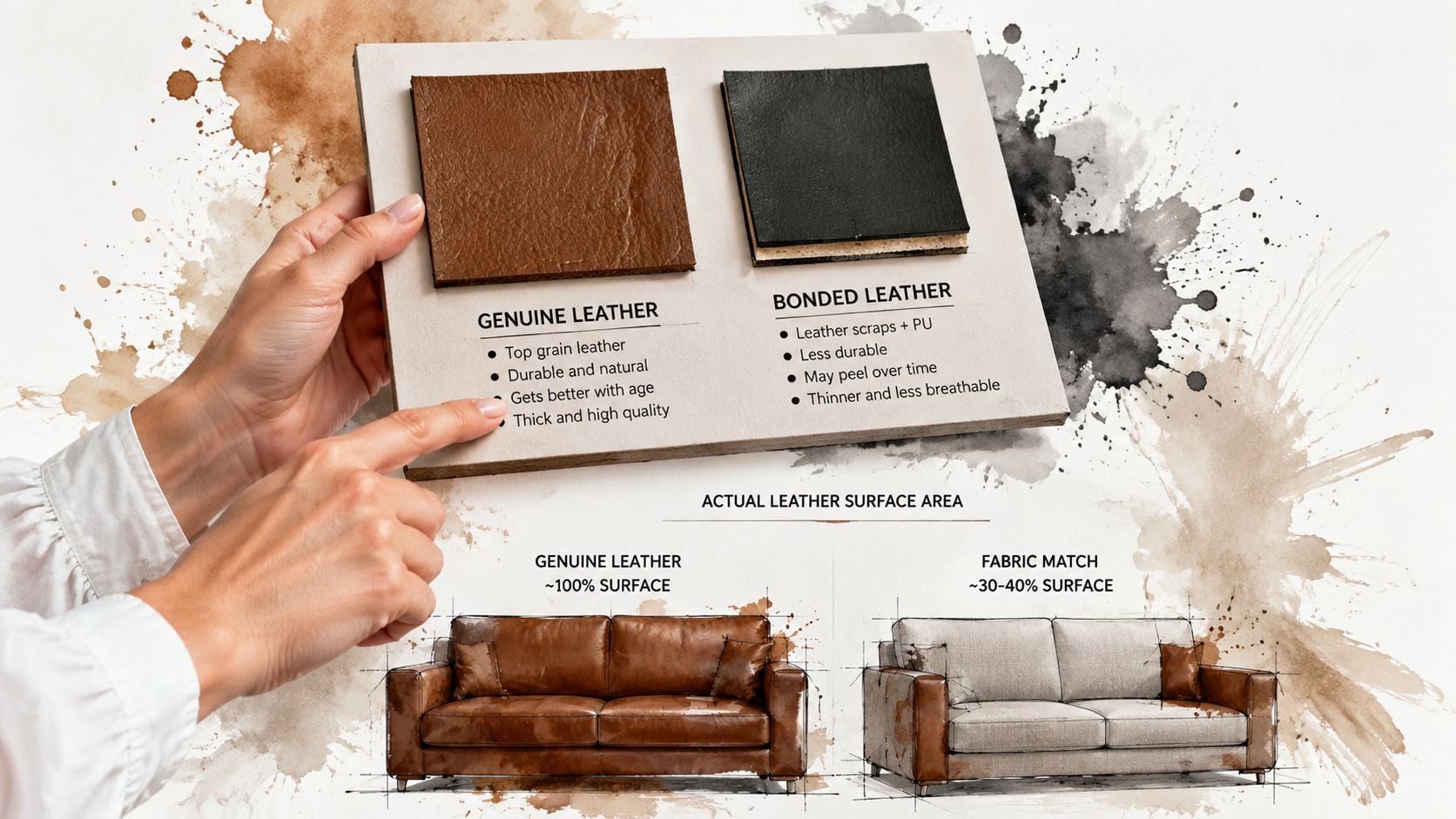
Full-grain and top-grain leather can offer a more natural surface and a distinct aging pattern. Full-grain generally preserves more of the hide's original character, while top-grain is refined to create a more consistent appearance. Buyers who enjoy patina may prefer a surface that develops visible character, while households seeking a more uniform look may favor a corrected or protected finish.
Cleanability also depends on the specific finish, not only the word “leather.” Some surfaces are designed for easier everyday wiping, while others emphasize natural feel and variation. A Consultant can explain the care expectations for the actual hide and finish rather than treating all leather as identical. A deeper explanation of the differences appears in this guide to leather grades.
Wood species and finish choices
Wood species affects hardness, grain pattern, color, and durability. A harder species can better resist some dents, while a more expressive grain may become the visual focal point of a table or exposed frame. Species selection isn't merely decorative. It changes how the piece looks and how it responds to daily use.
Finish selection affects color, protection, and maintenance requirements. A more protective finish may suit a high-use table, while a finish chosen for a softer visual effect may require more careful placement and upkeep. Solid-wood furniture is routinely specified by both species and finish for that reason.
Matching materials to the room
A practical comparison can help narrow the choices:
| Decision | What it changes | Useful question |
|---|---|---|
| Leather surface | Feel, visual variation, aging pattern | Should the leather develop visible character or remain more uniform? |
| Protective finish | Surface protection and care routine | Will the piece sit in a high-contact area? |
| Wood species | Hardness, grain, and color | Should the wood recede or become a central design feature? |
| Finish sheen | How light reflects from the surface | Does the room need warmth, contrast, or a quieter appearance? |
Light exposure and placement deserve attention as well. A Consultant can help coordinate leather tone and wood finish with existing floors, rugs, walls, and windows. The goal isn't to make every material identical. It's to make the differences feel deliberate.
Pros and Cons You Should Weigh Before You Buy
Leather and wood sets offer a strong combination, but they aren't the right answer for every room. Their appeal comes from the balance between durability, visual warmth, and long-term style. Their trade-offs usually involve cost, temperature feel, weight, and the need to understand exactly how each surface should be maintained.
The advantages in daily life
Leather can give a sofa or chair a polished appearance while offering a surface that many households find straightforward to wipe after ordinary spills. Wood adds visual structure and can connect seating to tables, flooring, shelving, and architectural details. Because both materials have natural variation, a set can feel more individual than a fully uniform arrangement.
Well-built leather furniture also supports a buy-for-life approach. Neutral leather and wood can adapt as a room changes, while a quality frame may remain useful through more than one decorating phase. Industry guidance commonly places well-built top-grain or full-grain leather pieces at roughly 15 to 30 years of life, while lower-grade leather or lightweight frames may show major wear in about 5 to 10 years. (Leather furniture lifespan guidance)
The broader category sits firmly in the premium segment. One industry report valued the global leather furniture market at USD 10.97 billion in 2023 and projected a 4.4% CAGR through 2031. Another estimate placed leather furniture revenue at USD 12,168.9 million in 2022 within a wider leather home decor and furnishing market. (Leather furniture market data)
The trade-offs that deserve honesty
Leather can feel cooler at first in a chilly room and warmer against the body in a heated space. Some finishes show scratches more readily than others, and natural surfaces may need care that a buyer shouldn't overlook. Wood can also be heavy, which affects delivery planning and future rearrangement.
The largest risk isn't the material pairing itself. It's buying without understanding the specifications. A set that uses leather only on touch points may age differently from one covered more extensively. A finish that looks beautiful in the showroom may need a different maintenance routine from a highly protected surface.
When the investment makes sense
Leather and wood make particular sense when the living room is used often, the household values material authenticity, and the buyer expects the set to stay for many years. The initial price may be higher than that of a lighter, lower-grade arrangement, but long-term value depends on how well the furniture holds comfort, appearance, and function.
The best choice may be different for a room that changes frequently or a buyer who prioritizes a softer textile feel and a wider pattern selection. No-pressure guidance means acknowledging that distinction rather than treating one material as universally superior.
Customization Quality and Healthy Home Considerations
A custom order should begin with a specification conversation. Buyers need more than a leather color and a wood stain. They should ask where the leather is used, which panels use matched material, what the frame contains, how the finish is applied, and whether the materials are expected to age together.

Ask where the leather actually is
A product page may call a piece leather seating even when leather covers only selected surfaces. That isn't automatically a problem, but the buyer should know which areas are true leather and how the other panels will age beside it. Touch points such as seats, backs, arms, and headrests deserve particular attention because they receive the most contact.
A clear material breakdown also helps households compare value. The relevant question isn't whether a set contains leather. It's whether the placement matches the intended use, appearance, and care expectations.
Sustainability deserves the same practical treatment. Certified or reclaimed wood, disclosure about leather tanning, repairability, packaging, and expected service life all matter. A natural-looking finish alone doesn't prove that a set has a lower overall impact. A durable piece that remains useful and repairable for many years can support a more responsible buying pattern.
Translate air-quality science into buying questions
Leather upholstery and wood furniture can both contribute to indoor VOC emissions, but the major sources vary by material and manufacturing process. Dry materials such as leather and boards can emit VOCs continuously during use, while wet materials such as paints and adhesives may drive higher emissions. Temperature, relative humidity, and air exchange can also change emission rates. (Research on VOC emissions from upholstered furniture)
That information leads to practical questions rather than alarm. Buyers can request material disclosure for coatings, adhesives, and board products, and they can ask about low-emission finishes and solvent use. Proper ventilation after delivery also supports a healthier indoor environment. Guidance on lower-emission choices is available through low-VOC furniture information.
Use abrasion and humidity as durability tests
Abrasion resistance provides a more useful durability signal than appearance alone. EN 15185:2023 evaluates furniture surface resistance by rotating a specimen against abrasive wheels and recording the revolutions required to produce a defined degree of wear. (EN 15185:2023 abrasion standard)
For a busy seating area, buyers can ask for abrasion information for high-contact upholstery. Wood requires a parallel question about movement. Because wood responds to changes in humidity and temperature, stable joinery, suitable finishing, and humidity-aware placement can help reduce cracking, loosening, and stress over time.
Styling and Layout Ideas for Bay Area Living Rooms
A leather and wood set can work in a compact condominium, a narrow townhome, or an open living area, but the layout should follow the room's circulation first. The sofa usually acts as the anchor. Chairs, tables, and ottomans should then support conversation without creating a path that feels squeezed.
In a smaller room, a slim sofa and one wood-framed chair may create more breathing room than several deep pieces. In a larger open plan, a sectional can define the living area without requiring walls. The shape should follow the room, not force the room to accommodate a piece that blocks doors or interrupts movement.
Balance visual weight
Dark leather can anchor a room, while lighter wood may keep the arrangement from feeling heavy. Conversely, a pale leather can benefit from deeper wood tones that add definition. Earth tones and green tones create an especially natural relationship with wood grain and leather patina.
Layering textiles can soften the harder visual edges without competing with the main materials. A textured rug, woven accent, or carefully chosen pillow can add warmth while allowing the leather and wood to remain the central elements.
Practical rule: Choose one dominant visual weight, then use the other material to balance it. A dark leather sectional may need lighter wood and textiles, while a pale leather sofa may welcome richer wood accents.
Protect the flow and the materials
Rug scale should define the seating group rather than leave each piece floating at the edge. Tables need enough clearance for movement, and the room should preserve a comfortable route between entrances and other frequently used areas.
Wood placement also matters. Direct light, heat, and changing humidity can affect finishes and wood movement, so exposed wood should receive thoughtful placement. A local Design Expert can help coordinate these decisions with windows, room orientation, and the home's existing surfaces. More planning guidance appears in this living room furniture layout guide.
Before ordering, households can mark the proposed footprint with painter's tape. That simple test reveals whether a sectional blocks circulation, whether a chair crowds a table, and whether the intended conversation zone feels natural.
Your Buying Checklist and Next Steps in South San Francisco
A good purchase becomes easier when the questions are written down before the showroom visit. The following checklist keeps attention on construction, transparency, and long-term value:
- Frame and joinery: Ask what supports the seating and how exposed wood components connect.
- Leather placement: Confirm which surfaces use real leather and which use matched materials.
- Abrasion information: Request the available wear information for high-contact upholstery.
- Wood species: Compare grain, hardness, color, and how each species suits the room.
- Finish selection: Learn how the finish affects protection, maintenance, and appearance.
- Air-quality details: Ask about coatings, adhesives, board products, and low-emission options.
- Room fit: Measure doorways, circulation paths, wall lengths, and the planned rug area.
- Delivery planning: Confirm access, placement, setup, and how the furniture will enter the home.
- Budget support: Ask which financing options are available before finalizing the order.
The buy-for-life approach isn't only about lasting longer. A durable, repairable piece can reduce replacement costs, avoid unnecessary disposal, and provide value across many years of use. That makes quality furniture an investment rather than a short-term purchase, especially when the materials and dimensions are selected for the actual household.
Giorgi Bros. Furniture offers custom wood furniture choices alongside leather and fabric upholstery, helping buyers specify the materials that suit their rooms. Its family-owned, non-commission environment supports a slower decision process, with Consultants available for a Design Consultation rather than a high-pressure sales conversation. Readers exploring made-to-order options can review the custom wood furniture maker information.
For Bay Area homeowners, the South San Francisco Showroom offers a practical way to compare leather placement, wood species, finishes, comfort, and scale in person. The broader showroom also includes Amish Furniture, Premium Mattresses, and custom order services, so a whole-home project can receive consistent guidance without losing the personal attention of a family-owned business.
Giorgi Bros. Furniture offers leather seating, wood-framed living room pieces, custom leathers, fabrics, wood species, and finishes with no-pressure guidance from non-commission Design Experts. Visit Giorgi Bros. Furniture in South San Francisco to touch, test, and compare investment pieces, or book a Design Consultation for a leather and wood living room set shaped around the home.