Most leather advice starts with the wrong premise. Shoppers are told to memorize a tidy ladder of “best to worst” terms, then buy the highest one they can afford. That sounds helpful, but it hides the part that matters most in a home: how the leather was cut, how it was finished, how it will wear, and what it will cost over the years you live with it.
That's why leather grades explained needs a reset. In furniture, the smartest decision usually isn't about chasing a label. It's about understanding what the material is, how it behaves in a busy household, and whether the piece will still feel worth owning a decade from now. Good leather can become one of those investment pieces that stays in the family instead of heading to a landfill after a short run.
For a family business that has served South San Francisco since 1933, that distinction matters. No-pressure guidance only works when the advice is honest. Buyers deserve the plain version, not the marketing version.
Table of Contents
- Why Most Leather Grades Are a Marketing Myth
- Understanding Full-Grain and Top-Grain Leather
- How Leather Finishes Affect Durability and Feel
- The Truth About Split Corrected and Bonded Leather
- Comparing Leather Types for Your Furniture
- How to Inspect Leather Furniture Yourself
- Find Your Perfect Leather Piece at Giorgi Bros
Why Most Leather Grades Are a Marketing Myth
The most common leather ranking consumers hear, full-grain, top-grain, genuine, bonded, sounds official. It isn't. The term “leather grades” is a marketing myth with no official standard, while tanneries grade hides by cosmetic blemishes such as scars and bug bites on proprietary scales, as explained in this guide to the sovereignty of quality and supported by the industry discussion at Popov Leather's article on the leather grade myth.
That's where a lot of confusion starts. Shoppers see “genuine leather” and assume it must mean premium because the word sounds reassuring. In practice, that label often points to a lower cut of the hide, with heavy processing standing in for the natural surface people think they're buying.
What tanneries actually grade
A tannery looks at the hide itself. It judges visible blemishes, scars, brands, and other marks. Other trade references note that these are typically handled with letter or number systems such as A through D or #1 through #4, and those systems are about the hide's appearance, not the simplified consumer chart that gets passed around online.
Practical rule: If a label sounds polished but tells nothing about cut, finish, or construction, it isn't telling enough.
The important distinction is simple. Terms like full-grain and top-grain describe how the hide is cut and processed. They are not a universal report card.
Why this matters for furniture buyers
Furniture shoppers don't need tannery jargon. They do need to know when a salesperson is collapsing three different questions into one label.
Those questions are:
- What part of the hide is this: The top surface, a split layer, or a reconstructed material.
- How was it processed: Left natural, sanded, embossed, coated, or glued together.
- How will it live in the home: Develop character, resist spills, or crack and peel.
That's the framework. It's more useful than memorizing a fake hierarchy, and it leads to better decisions for anyone shopping for Furniture South San Francisco, planning Bay Area Interior Design updates, or selecting Custom Furniture that should still look good years from now.
Understanding Full-Grain and Top-Grain Leather
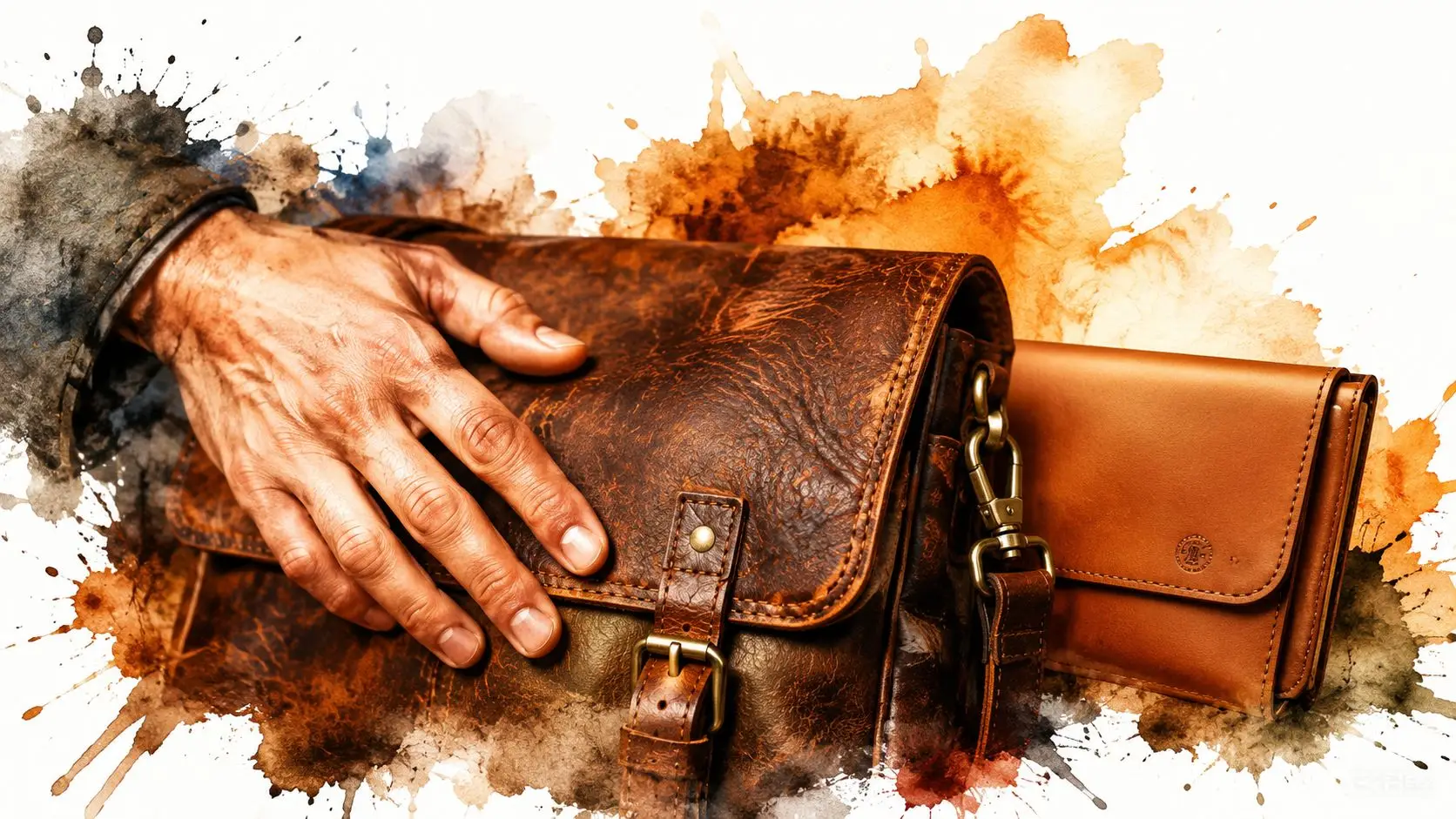
At the top of the conversation are two terms that people often blur together. They're related, but they aren't interchangeable. For furniture, the difference affects appearance, maintenance, and how much natural character the buyer wants to see every day.
A helpful comparison is solid wood. An unsanded plank with visible grain, mineral streaks, and variation has more of its original character intact. A more refined board can still be excellent, but some of that raw surface has been shaped for consistency. Leather works much the same way.
What full-grain actually means
Full-grain leather is defined by the Tanners' Council of America as the outer cut from the hair side of the hide where only the hair and epidermis are removed, preserving the natural grain structure entirely, according to American Leather's explanation of leather types and this deeper look at upholstery materials.
Because that natural grain stays intact, full-grain keeps the dense fiber structure that gives leather much of its strength and breathability. It also keeps the signs of a real hide. Subtle wrinkles, tonal shifts, and natural markings aren't defects in this category. They're evidence that the surface hasn't been sanded into sameness.
That's why full-grain is often chosen for premium furniture. It develops patina. It changes with use. It doesn't stay frozen in showroom condition, and that's part of its appeal.
Natural variation is often the mark of better leather, not worse leather.
Where top-grain fits
Top-grain leather still comes from the top portion of the hide, but the surface is typically sanded or corrected to reduce visible imperfections. The result is a cleaner, more uniform appearance.
For many households, that trade-off makes sense. Top-grain can look more refined and more predictable from panel to panel. In a room with crisp lines, cleaner silhouettes, or a more controlled design palette, that consistency can be a virtue.
Buyers should also know that “top grain” is a broad term. Some trade discussions point out that it refers to the top layer, not a single quality level. That means both more natural and more corrected versions can fall under the same umbrella.
Which one works better at home
The better choice depends on the household, not on bragging rights.
- Choose full-grain if natural character is part of the appeal, aging is welcome, and the piece is meant to become richer over time.
- Choose top-grain if a more uniform look matters, easier day-to-day living is important, and the household wants durability with a more controlled surface.
- Look closely at the finish too because cut alone doesn't tell the whole story. A heavily protected leather and a more open leather can behave very differently even when they come from similar parts of the hide.
That's where many buyers get tripped up. They've learned one label, but not the full recipe. For leather furniture, cut and finish work together.
How Leather Finishes Affect Durability and Feel
The finish is what many people notice first, even if they don't realize it. It affects softness, color depth, stain resistance, and whether the leather feels warm and natural or more sealed and uniform.
Two sofas can both be top-quality leather and still behave very differently because one has a lighter finish and the other has a heavier protective coat. That's why leather grades explained without finishes is only half the conversation.
Aniline, semi-aniline, and pigmented
Aniline leather is dyed without a heavy surface pigment. It shows the hide's natural variation more clearly and tends to have the most open, organic feel. It's often the most beautiful option for buyers who love depth, softness, and a lived-in look.
Semi-aniline leather adds a light protective layer. It keeps much of the natural appearance while offering more practical resistance to daily wear. For many homes, this is the middle ground that balances beauty with usability.
Pigmented leather has a more opaque protective coating. It usually offers the highest resistance to stains, scuffs, and routine household traffic. It can be the most forgiving choice in active family rooms.
| Finish Type | Look and Feel | Best For | Main Trade-Off |
|---|---|---|---|
| Aniline | Most natural, rich, open feel | Lower-traffic rooms, buyers who want patina | Less forgiving |
| Semi-aniline | Natural look with added protection | Everyday living with some softness preserved | Slightly less raw character |
| Pigmented | Most uniform and protected | Busy households and frequent use | Can feel more coated |
Choosing the finish for real life
A beautiful leather that doesn't fit the household becomes a frustrating purchase. A family with kids, pets, frequent guests, or heavy daily use often benefits from more protection, even if the leather feels a little less raw.
That doesn't mean protected leather is “bad.” It means the right material matches the room.
- For formal spaces: aniline can be a pleasure to own.
- For mixed-use rooms: semi-aniline often earns the nod.
- For the busiest seats in the house: pigmented finishes tend to hold up best.
When stains happen, smart care matters as much as the material. Homeowners who want practical upkeep guidance can review these professional leather cleaning services, and households dealing with pets should also look at ways to stop cats scratching leather furniture.
The best leather for a home isn't always the most natural one. It's the one that still looks good after normal life happens.
The Truth About Split Corrected and Bonded Leather
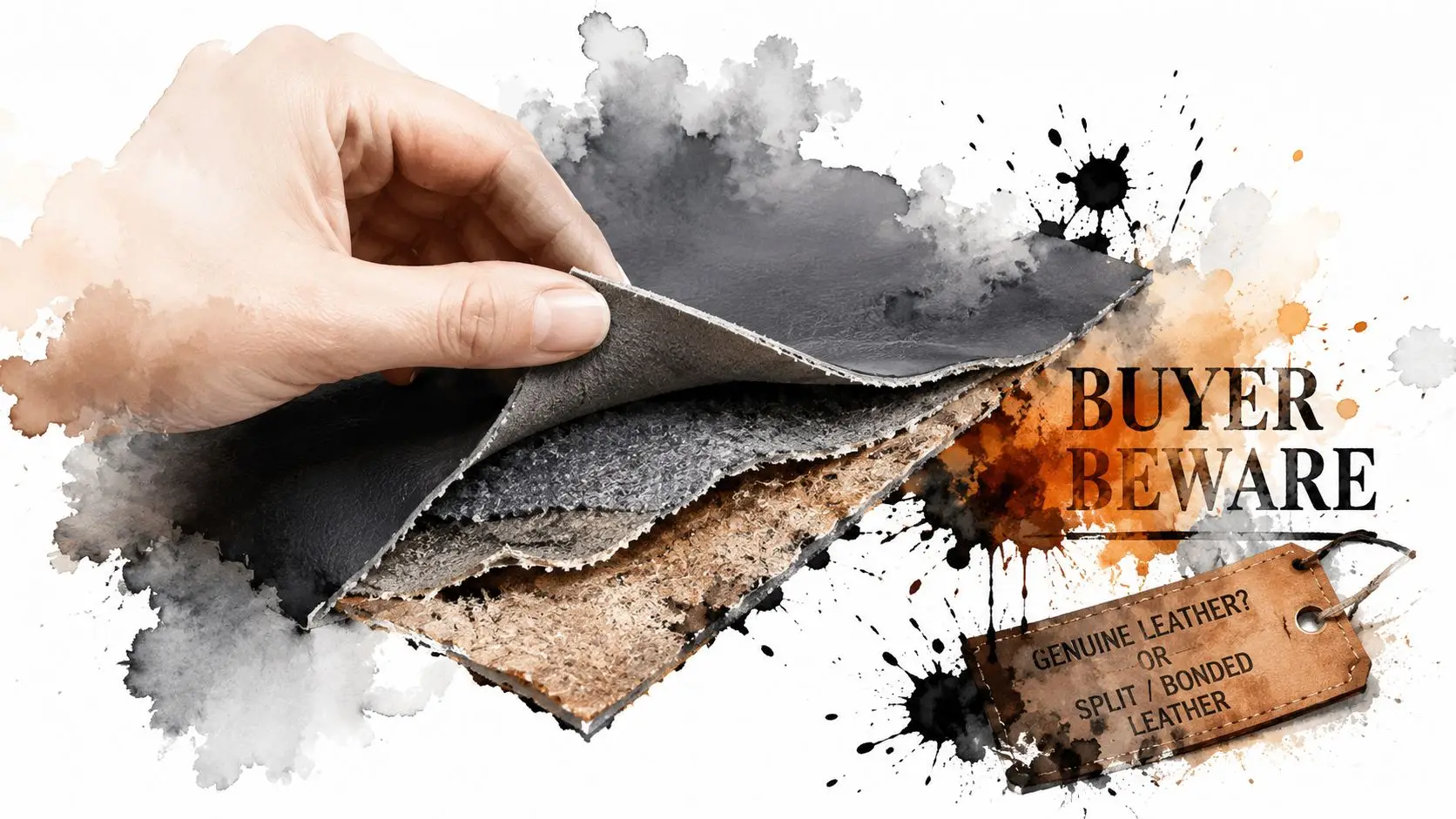
Situations like this often lead buyers to disappointment. Lower-priced leather furniture can look convincing at first glance because coatings, embossing, and color uniformity hide what the material is.
The issue isn't that every budget option is worthless. The issue is that many shoppers are told they're getting the same thing for less, when they're really getting a different material with different performance.
Why genuine leather confuses buyers
Genuine leather is one of the most misleading labels in furniture. It technically refers to split leather, the lower layers of the hide, rather than the high-quality outer portion. It is often bonded with glue and painted to mimic grain, which leads to cracking and peeling over time, while top grain comes from A and B grade leathers from the top layer where imperfections are removed but full thickness is retained, as outlined in Von Baer's discussion of leather grades.
That single label causes a lot of expensive misunderstandings. The word “genuine” sounds like a quality badge. In reality, it often means the opposite of what the buyer assumes.
Corrected leather adds another layer of confusion. It may be sanded, embossed, and coated to create a consistent appearance. Sometimes that can be a reasonable value choice for furniture. It won't offer the same natural grain or aging qualities as a higher-quality cut, but it can serve practical needs if expectations are clear.
Why bonded leather disappoints
Bonded leather sits in a category of its own. It's better understood as a reconstructed sheet than as a true hide.
Trade references describe bonded leather as an amalgam of leather dust, scraps, vinyl, plastic, and glue pressed into sheets. It's often the lowest grade in consumer discussions, and one source notes that it can crack or peel in under 3 years in furniture use, according to this overview of leather grade terminology.
A simple analogy helps. Bonded leather is to full-grain leather what particle board is to solid hardwood. Both may look acceptable at first. Only one has the underlying structure to age well.
- Split leather: lower layer of the hide, weaker structure
- Corrected leather: altered surface for consistency
- Genuine leather: often a marketing-friendly name for lower-tier split leather
- Bonded leather: scraps and fibers pressed together with synthetic binders
If a buyer wants a short-term look for the lowest entry price, bonded leather may seem tempting. If the goal is buy-it-for-life value, it usually misses the mark.
That matters for sustainability too. Replacing a failing sofa every few years costs more in the long run and creates more waste than choosing a better-made piece once.
Comparing Leather Types for Your Furniture
The easiest way to judge leather for furniture is to stop looking only at sticker price. A sofa lives in cost per year, not just cost on delivery day. That's why the long view matters.
One market comparison estimates that full-grain leather products last up to 50% longer than top-grain alternatives, with full-grain aniline luxury furniture priced at $3,000–$10,000+ and expected to last 30+ years, or about $115 per year, while bonded leather at $300–$700 may fail in 3 years, or about $167 per year, based on Galen Leather's leather grade cost and lifespan breakdown. Buyers comparing upholstery budgets can also get a practical maintenance-cost perspective from this J.G. Carpet Cleaning LLC service guide and weigh whether it's smarter to replace or reupholster a sofa.
Leather Type Comparison Guide
| Leather Type | What It Is | Durability & Lifespan | Pros | Cons | Avg. Long-Term Value (Cost/Year) |
|---|---|---|---|---|---|
| Full-Grain | Outer layer with natural grain intact | Longest-lasting. Market data places furniture at 30+ years | Strong, breathable, develops patina | Higher upfront cost, shows natural variation | ~$115/year |
| Top-Grain | Top layer with surface corrected for uniformity | Lasts less than full-grain, but still strong | Cleaner look, durable, practical for many homes | Less natural character | Qualitatively strong value |
| Split or Genuine | Lower hide layers, often coated or embossed | Moderate durability | Lower entry cost, uniform look | Less natural grain, can crack or peel over time | Qualitatively mixed value |
| Bonded | Leather scraps and fibers mixed with binders | Market data places furniture at about 3 years | Low upfront price | Peeling, cracking, poor aging | ~$167/year |
The table points to a simple truth. Cheap leather often isn't cheap once replacement enters the picture. The better material can cost more now and still cost less over the years.
That's the same logic many buyers apply to Amish Furniture, Custom Furniture, and other long-term home purchases. A piece that stays useful is usually the more sustainable choice.
How to Inspect Leather Furniture Yourself
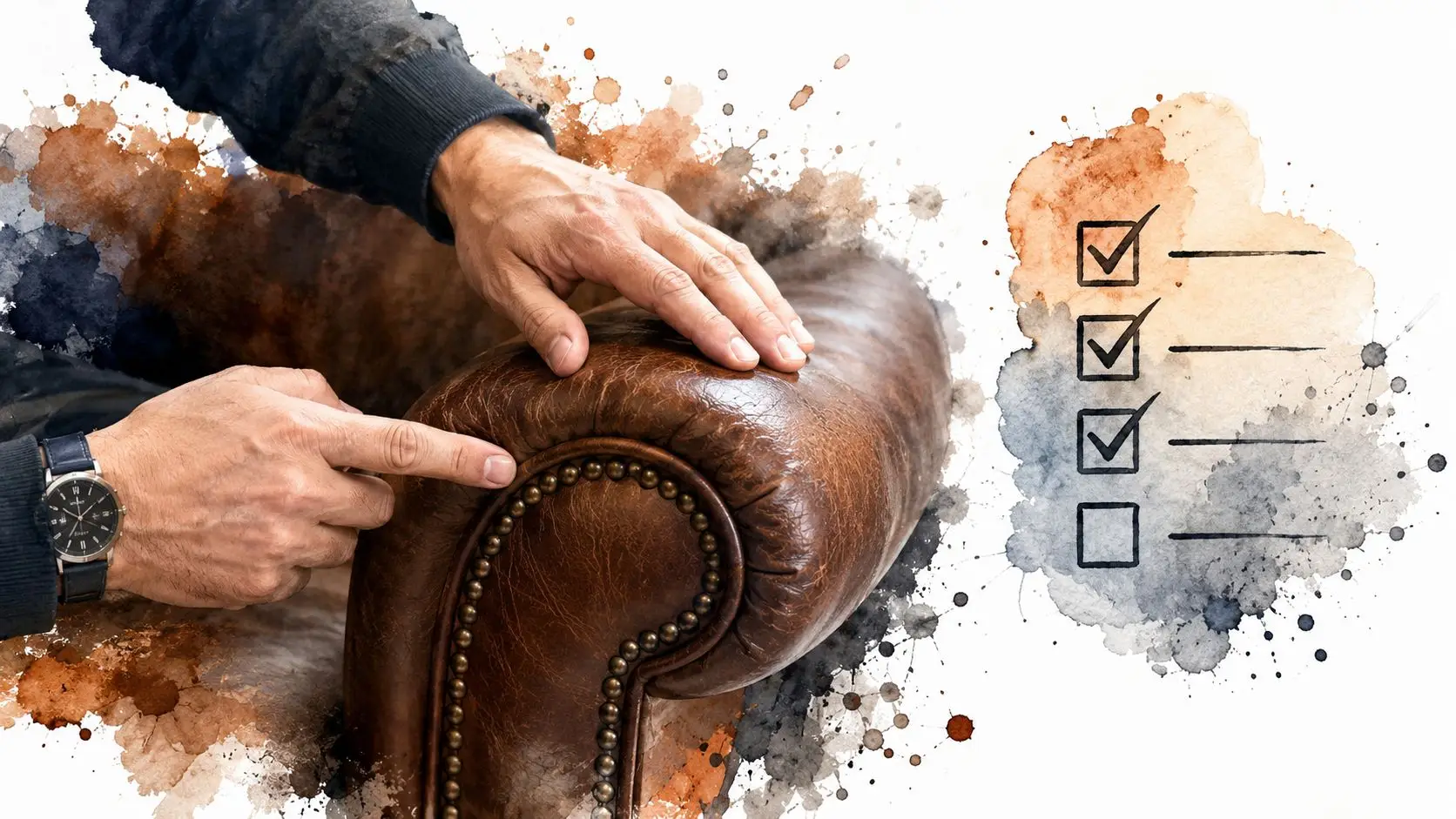
A buyer doesn't need a tannery background to spot quality. A careful look and a few smart questions can separate honest materials from polished marketing.
Price can offer one clue. One cost comparison puts Full Grain leather at about $80–$140 per meter, Top Grain at $40–$79, Genuine or Split at $9–$39, and Bonded at $1–$9 per meter, which reflects big differences in material integrity, according to Gentcreate's leather type and cost breakdown. That doesn't tell the whole story of a finished sofa, but it does explain why wildly low “leather” pricing deserves scrutiny.
What to look for in the showroom
Shoppers should trust their eyes and hands first.
- Check the grain pattern: Real, higher-quality leather usually has variation. Repeating embossed patterns can signal heavier correction.
- Look for natural marks: Small wrinkles, tonal shifts, and irregularities can be signs of authenticity rather than flaws.
- Feel the surface: Better leather tends to feel supple and warm, not cold or plasticky.
- Notice the finish: A heavily coated leather may feel slick and uniform. That can be useful in a busy home, but it should be an informed choice.
A light scratch test on an inconspicuous area can also reveal a lot when a consultant allows it. More natural leathers may show a temporary mark that blends back in with gentle rubbing. More coated surfaces tend to respond differently.
Questions worth asking a consultant
Good consultants won't dodge direct questions. In a Non-Commission Sales Staff environment, those questions usually lead to better answers.
Ask these:
- Is this full-grain, top-grain, split, or bonded
- What finish is on the leather
- Will this leather develop patina or stay more uniform
- How will it handle kids, pets, and daily use
- Is the same leather used on all touch points and all outside panels
Showroom advice: If the answer stays vague and keeps circling back to “it's genuine leather,” keep asking.
That inspection habit pays off in every category, whether someone is shopping Furniture South San Francisco, selecting a reading chair, or pairing leather seating with wood tones in a larger Bay Area Interior Design plan.
Find Your Perfect Leather Piece at Giorgi Bros
Knowing the language helps. Touching the material helps more. Leather is one of those categories that becomes clearer the moment a buyer can compare surfaces, finishes, softness, and construction side by side.
That's where a long-established showroom makes a difference. Since 1933, Giorgi Bros. has helped Bay Area households make better furniture decisions in South San Francisco with a family-owned approach built on patience, product knowledge, and no-pressure guidance. In a 50,000-square-foot showroom, shoppers can do what online charts can't provide. They can touch, feel, and test the difference for themselves.
Why the showroom experience matters
Leather buying improves when a person can compare several realities at once:
- Natural versus corrected surfaces
- Soft, open finishes versus more protected finishes
- Color variation across hides
- Scale, comfort, and seat depth in actual living room settings
That matters for more than sofas. It shapes recliners, sectionals, accent chairs, dining host chairs, and whole-room plans tied to Bay Area Interior Design goals.
Better choices come from better guidance
Giorgi Bros. also offers something big-box stores often miss. The consultants are there to guide, not pressure. That Non-Commission Sales Staff model changes the tone of the conversation. Buyers can ask blunt questions about leather, wear, maintenance, room size, and budget without feeling pushed toward the highest ticket.
Customization is another major advantage. The floor is a starting point, not the limit. Shoppers can special order pieces in different leathers, fabrics, wood species, and finishes, whether they're designing around a classic living room, a refined modern space, or handcrafted Amish Furniture for a buy-it-for-life home. That same long-view mindset carries into other categories as well, including dining, bedroom, and Premium Mattresses.
A buyer considering motion seating can start with pieces such as the Arlo Leather Power Reclining Sofa and compare how leather choice changes comfort, look, and durability. For households balancing quality with budget, it also helps that financing options are available.
The larger point is simple. A leather purchase shouldn't be rushed, and it shouldn't be based on a misleading label. It should fit the household, the room, and the years ahead. That's how furniture becomes an investment piece instead of a temporary fix. It's also how a more sustainable home comes together, one lasting purchase at a time.
Visit Giorgi Bros. Furniture in South San Francisco to compare leather options in person, explore custom order choices in leathers, fabrics, wood species, and finishes, and work with Design Experts who offer no-pressure guidance. For Bay Area homeowners looking for lasting value, thoughtful design, and investment pieces chosen for real life, the showroom is the best place to start. Design Consultation appointments are also available.