
A dining room can look balanced in photos and still feel wrong the moment someone sits down. The table might be handsome, the chairs might match the finish, and the room might be beautifully styled. Yet guests shift in their seats, knees brush the underside, and dinner ends sooner than anyone expected.
That kind of discomfort usually comes down to proportion, not taste. The missing piece is chair height for dining table fit. When the seat sits at the right level in relation to the table, the whole room changes. People relax, linger, and settle into conversation.
Families across the Bay Area often run into this during remodels, moves, or piecing together inherited furniture with newer chairs. After more than 90 years in South San Francisco, furniture professionals have seen the same pattern again and again. A well-furnished room starts with comfort, and comfort starts with measurement.
Table of Contents
- The Unspoken Secret to a Comfortable Dining Room
- The Golden Rule of Dining The 10 to 12 Inch Gap
- How to Measure Your Space for the Perfect Fit
- Navigating Special Cases Armchairs Benches and Cushions
- Why Custom Furniture Is the Ultimate Solution
- Experience True Comfort at Our South San Francisco Showroom
The Unspoken Secret to a Comfortable Dining Room
A common scene plays out in beautifully furnished homes. The dining set arrives, everything looks polished, and the first meal feels promising. Then someone crosses their legs and bumps the apron. Another person feels too low at the table. By dessert, everyone is leaning, shifting, and wishing the chairs felt better.

That discomfort isn't a sign that the room was decorated poorly. It usually means the table and chair were chosen for appearance first and fit second. Dining comfort depends on simple ergonomics. The body needs enough space to sit naturally, move freely, and reach the tabletop without hunching the shoulders or lifting the elbows awkwardly.
Beauty doesn't fix bad proportions
A chair can have a lovely silhouette and still be wrong for the table. A table can be crafted from solid wood and still sit too low at the apron for the chairs paired with it. These situations often cause difficulty for many homeowners, especially when mixing older pieces with new ones.
A comfortable dining room feels effortless because the measurements are doing quiet work in the background.
For readers also comparing overall table styles and room mood, the Everti table selection guide offers useful design perspective on choosing a table that suits the way a home is used.
Comfort is the real foundation
A dining room earns its place in the home through use. It hosts weeknight meals, long holiday dinners, homework, visiting relatives, and everyday conversations. If the seat height is off, all of that gets less enjoyable.
That is why chair height for dining table planning deserves attention before fabrics, finishes, and centerpiece ideas. The room should invite people to stay. Good proportion is what makes that happen.
The Golden Rule of Dining The 10 to 12 Inch Gap
The single most useful rule in dining furniture is simple. The seat and the table need breathing room between them.
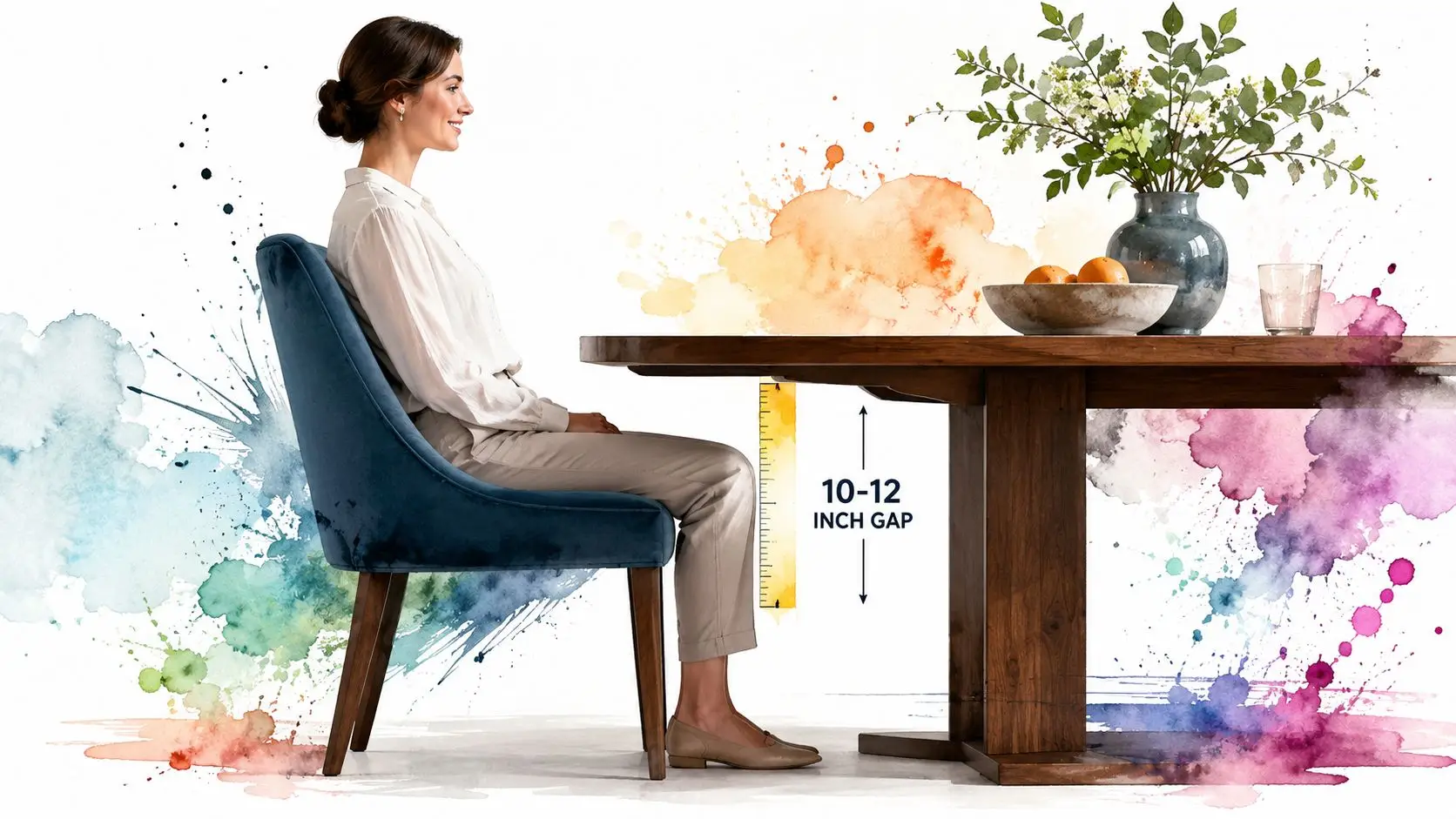
According to Hernest's dining chair height guide, the standard seat height for a dining chair is 18 to 20 inches to provide approximately 10 to 12 inches of vertical clearance under a standard 28 to 30-inch dining table, and interior designers use a simple formula: Chair Seat Height = Table Height – 10 to 12 inches.
Why the gap matters more than style
That gap is what keeps a dining setup from feeling cramped. If the space is too tight, knees and thighs press upward. If the gap is too large, diners feel low and disconnected from the tabletop.
A helpful way to think about it is this. The table shouldn't hover over the lap, and it shouldn't tower above the plate. The right distance creates a natural working height for eating, talking, and sitting comfortably through a full meal.
For readers comparing dining dimensions more broadly, this guide to dining table heights adds useful context around common table categories and proportions.
Practical rule: Start with the table height, subtract 10 to 12 inches, and the chair seat height usually falls into the comfort zone.
A simple formula that works
This formula helps remove guesswork:
| Table height | Subtract | Target seat height |
|---|---|---|
| Standard dining table | 10 to 12 inches | Dining chair range |
| Counter-height table | 10 to 12 inches | Counter stool range |
| Bar-height table | 10 to 12 inches | Bar stool range |
The exact table number matters, but the principle stays steady. Seat height should serve the body first. Visual harmony comes after that.
A buyer who understands this rule shops more confidently. Product listings become easier to read. Mismatched sets become easier to spot. Even custom orders become simpler because the goal is clear. The furniture should support the way people sit, not just the way a room looks when no one is using it.
How to Measure Your Space for the Perfect Fit
A dining set can look beautiful in a showroom, then feel tiring at home by the second long meal. That usually starts with one small mistake. The measurements were taken from the wrong place, or one detail, like a thick apron, was missed.
Good measuring works like fitting a well-made pair of shoes. The outside size matters, but the inside room is what decides comfort over time. If you want dining furniture that earns its place for decades, start with the clearances your body uses, then choose the style.
Start with the table you already have
Measure the table first. That sounds simple, but many homeowners begin by shopping chair styles and only later check whether the seat height fits.
Take one measurement from the floor to the tabletop. Then take a second from the floor to the underside of the table, where knees need room. That underside number is often the one that decides whether a chair feels comfortable or cramped, especially on tables with thicker tops or an apron.
If the room is being planned for gatherings, rentals, or temporary layouts, the Lower Mainland event table planning resource can help with table shape and traffic flow.
A practical measuring routine
You only need a tape measure, a notepad, and a few quiet minutes.
- Measure floor to tabletop. This tells you the full table height.
- Measure floor to the underside. This shows the true legroom.
- Measure seat height on the current chair or target chair. Go from the floor to the top of the seat at its center.
- Compare the seat height to the underside clearance. The chair needs to leave comfortable room for thighs, knees, and natural movement.
- Sit for more than a moment. A one-minute test can hide problems that show up halfway through dinner.
Readers who want a fuller room-planning process can use this furniture measuring guide to avoid fit mistakes throughout the home.
Measure the space the body uses, not just the outline the eye sees.
That single habit changes buying decisions. A chair with a slim frame can still sit too high. A broader upholstered chair can fit well if the seat lands at the right level and the table underside leaves enough room.
Custom furniture becomes much easier to plan once these numbers are clear. Instead of hoping a standard size will work, you can choose dimensions that suit your family, your table, and the way you linger after a meal. That is how comfort turns into long-term value. The right height is not just a measurement. It is the foundation of a dining room you will still enjoy years from now.
Navigating Special Cases Armchairs Benches and Cushions
A dining set often looks settled on paper, then feels off the first time everyone sits down. The side chairs fit, but the host chair will not slide in. The bench looks clean and simple, but guests shift around halfway through the meal. The upholstered seat seemed right in the showroom, yet at home it sits higher than expected once the cushion stops compressing.

These are the details that separate a dining room that merely looks good from one that still feels good years later. Special seating asks you to measure one layer deeper. The goal stays the same. Comfortable posture, easy movement, and furniture that earns its place for the long haul.
Armchairs need seat clearance and arm clearance
An armchair has two jobs under a dining table. The seat has to land at a comfortable height, and the arms have to pass under the table without bumping the apron. If either measurement is off, the chair becomes awkward to use no matter how handsome it looks.
That is why armchairs work best when you check these points together:
- Seat height: It should still preserve comfortable space between the sitter and the underside of the table.
- Arm height: Measure from the floor to the top of the arm and compare it to the table underside, not the tabletop.
- Real-world movement: Leave a little margin so the chair glides in and out without rubbing wood or fabric.
- Placement: Armchairs usually feel best at the heads of the table, where they have more room to breathe.
A good way to picture it is a key fitting a lock. The seat height is only part of the shape. The arms have to fit too.
Benches ask for a different kind of comfort
A bench follows the same basic height logic as a chair, but people use it differently. They slide in from the side. They sit closer together. They shift posture more often because there is no separate frame supporting each person. Small sizing mistakes show up faster on a bench than many homeowners expect.
Height is only one part of that comfort. Depth matters too, especially if you want support without forcing people to perch near the edge. Our bench depth and seat comfort guide explains how those proportions work together.
Benches are also a smart place to think about long-term value. A well-sized bench can serve a dining room for decades, then move to an entry, hallway, or foot of the bed later on. That kind of flexibility is part of what makes well-made furniture worth buying once and buying well.
Cushions change the lived height
Cushions can confuse even careful shoppers because the listed seat height and the seated height are not always the same. A firm cushion holds you higher. A softer cushion lets you sink more. Two chairs with matching specs can feel very different after ten minutes at the table.
That is why upholstered dining seating should be judged by use, not by numbers alone.
A cushioned seat should be judged by how it feels after you settle in, not just by the measurement tag.
For families planning a buy-it-for-life dining room, this matters more than it seems. Foam density, fabric tension, and construction quality all affect how the seat will age. The right height on day one should still feel right after years of dinners, holidays, and long conversations.
Counter and bar seating belong in their own group
Counter stools and bar stools are built for taller surfaces. They are not interchangeable with dining chairs, even if the style looks close. Put a stool at a dining table and the sitter ends up too high. Use a dining chair at a counter and the person sits too low to eat comfortably.
Here is the simple rule:
| Table type | Seating guideline |
|---|---|
| Counter-height table | Use stools sized for counter-height surfaces, with enough space below the top for knees and relaxed posture. |
| Bar-height table | Use taller stools made for bar-height surfaces, again preserving comfortable clearance under the table or top. |
Matching the seating family to the table family prevents a lot of expensive mistakes. It also points back to the bigger lesson in this guide. Good proportions are not just about getting through one purchase. They are how you build a dining room that feels welcoming now and still feels right many years from now, especially when custom sizing lets each piece fit your home and your habits.
Why Custom Furniture Is the Ultimate Solution
Standard measurements are useful because they create a reliable starting point. But homes aren't built around averages alone. Floors vary. Table aprons vary. Family members vary. One household may want a formal dining room with host chairs, while another needs a hardworking table that handles school projects during the day and dinner at night.
That is where custom furniture becomes more than a design upgrade. It becomes the practical solution.

Standards help, but homes aren't standard
A custom approach lets homeowners refine more than size. They can choose wood species, finishes, fabrics, and leathers that suit the room, the household, and the way the piece will age over time. That matters in Bay Area Interior Design, where scale, architecture, and personal style often need to work together instead of following a one-size-fits-all template.
For readers exploring how this process works, custom furniture made simple outlines how customized pieces come together without turning the process into guesswork.
Amish Furniture often appeals to buyers who want that level of craftsmanship and flexibility. The same is true for other American-made Custom Furniture lines that allow thoughtful decisions on proportion, finish, and construction. Those details don't just make a piece look better. They make it live better.
Buy-it-for-life starts with fit
The strongest argument for customization isn't luxury. It's longevity.
A dining set that fits correctly is more likely to stay in daily use for decades. It doesn't get replaced because the chairs feel awkward or the proportions never worked. That makes the purchase more sustainable and more cost-conscious over time. Quality furniture is an investment, and proper fit protects that investment from day one.
This is also where no-pressure guidance matters. In a non-commission environment, Design Experts and Consultants can focus on helping a household get the measurements, materials, and function right. That kind of support is especially valuable when shoppers are balancing style goals with practical questions about comfort, durability, and long-term value.
Furniture South San Francisco shoppers often want pieces that will move with them through different homes and different seasons of life. The best investment pieces do exactly that. They look good, hold up, and keep feeling right years later.
Experience True Comfort at Our South San Francisco Showroom
The best dining rooms don't ask people to tolerate them. They welcome people in, support relaxed posture, and make it easy to stay a little longer at the table. That comfort starts with proportion, and chair height for dining table fit is one of the most important places to get it right.
South San Francisco homeowners often benefit from testing furniture in person because comfort is easier to feel than to predict from a product tag. A seat can seem right on paper and still land differently once someone sits, reaches the tabletop, and slides the chair in and out.
For readers furnishing more than one room, this furniture and mattress showroom overview offers a helpful sense of the broader selection available, including dining, living, bedroom, and Premium Mattresses. Financing options are available, which can make well-made investment pieces easier to plan for over time.
A showroom visit also gives shoppers the chance to compare finishes, explore Custom Furniture options, and speak with Non-Commission Sales Staff who can guide the process without pressure. That kind of hands-on confidence matters when choosing pieces meant to serve a home for years.
For anyone ready to test dining comfort in person, Giorgi Bros. Furniture welcomes visitors to its South San Francisco showroom. With 90+ years of family-owned service since 1933, a 50,000-square-foot showroom, custom order options in fabrics, leathers, wood species, and finishes, and complimentary Design Consultation support from Consultants in a no-pressure environment, it's a practical place to find buy-it-for-life furniture for the Bay Area home.