A lot of shoppers start in the same place. They open a dozen tabs, compare a dozen mattresses that seem to promise the same thing, and end up less certain than when they began. Every bed looks plush in photos. Every product page says it relieves pressure. Every review claims one model is the answer for side sleepers, hot sleepers, couples, or anyone with back discomfort.
That approach works for some purchases. It doesn't work especially well for a mattress meant to support the body night after night for years. A bed isn't just another box arriving at the front door. It's part of the home, part of health, and part of a longer-term plan to buy well once instead of replacing too soon.
That difference matters in a region like the Bay Area, where many homeowners are furnishing carefully, remodeling thoughtfully, and looking for investment pieces instead of disposable ones. A mattress deserves the same mindset. The best memory foam mattress isn't the softest one or the one with the loudest marketing. It's the one built well, matched correctly, and supported properly from day one.
A family business that has served South San Francisco since 1933 tends to see the same lesson repeat itself. Shoppers feel more confident when they can test materials, ask direct questions, and get guidance from non-commission consultants who aren't pushing a quick close. That's where memory foam gets easier to understand. Strip away the hype, and it becomes a practical category with clear strengths, clear trade-offs, and a few specs that matter much more than the label on the tag.
Table of Contents
- Navigating the World of Memory Foam Mattresses
- The Science of Comfort What Is Memory Foam
- How to Choose Your Memory Foam Mattress A Buyer's Checklist
- Memory Foam vs Other Mattress Types
- The In-Store Advantage Testing a Mattress Before You Buy
- Completing Your Sleep System Foundations and Accessories
- An Investment in Rest Why Your Mattress Choice Matters
Navigating the World of Memory Foam Mattresses
Online mattress shopping has created a strange kind of overload. More choice should make buying easier, but it often does the opposite. One major mattress review database says it has cataloged 600 foam mattresses and put the top 30 through in-depth testing, which says a lot about how crowded and confusing the category has become according to Sleep Foundation's memory foam mattress roundup.
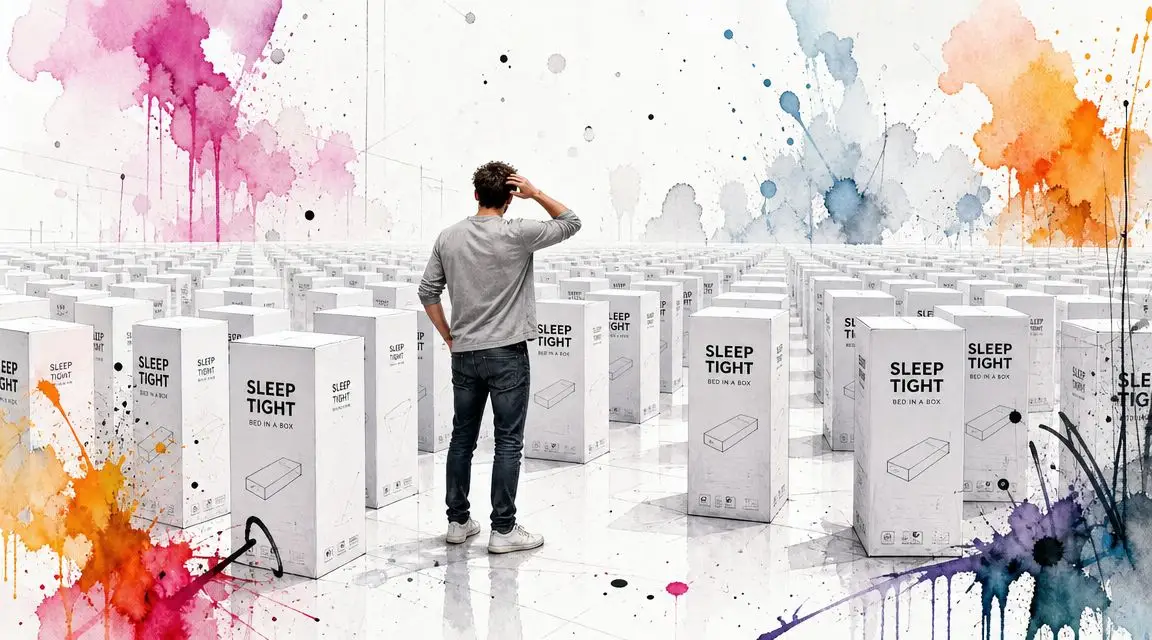
A shopper might read five reviews in one evening and still not know whether the problem is firmness, heat, support, or durability. One mattress feels comfortable for a few minutes. Another sounds better on paper. A third has more layers but fewer usable details. The result is often a leap of faith, not an informed decision.
That's where a slower approach helps. The best memory foam mattress should be judged less like a trend item and more like an investment piece. The right one should fit the body, the bed frame, the room, and the buyer's expectations for how long it should last.
Why the buying experience matters
A no-pressure showroom experience changes the conversation. Instead of relying on brand language, a shopper can compare how different foams respond, how quickly they recover, and whether the surface supports the shoulders and hips without letting the midsection sink too far.
Buying a mattress for life starts with eliminating the models that only sound good online.
That practical mindset fits especially well for households upgrading a primary bedroom, furnishing a guest suite that should hold up over time, or pairing a new mattress with custom bedroom furniture. A thoughtful purchase often outlasts a bargain purchase by a wide margin in satisfaction, even when the initial price is higher.
A longer view from South San Francisco
In a family business with roots in South San Francisco going back to 1933, the pattern is familiar. People rarely regret asking more questions before they buy. They do regret buying too fast, especially when the mattress starts to show weak support, poor edge stability, or a mismatch with the foundation underneath it.
Memory foam can be an excellent category. It just rewards careful selection. The sections that follow focus on what matters: material behavior, density, support, feel, testing, and long-term value.
The Science of Comfort What Is Memory Foam
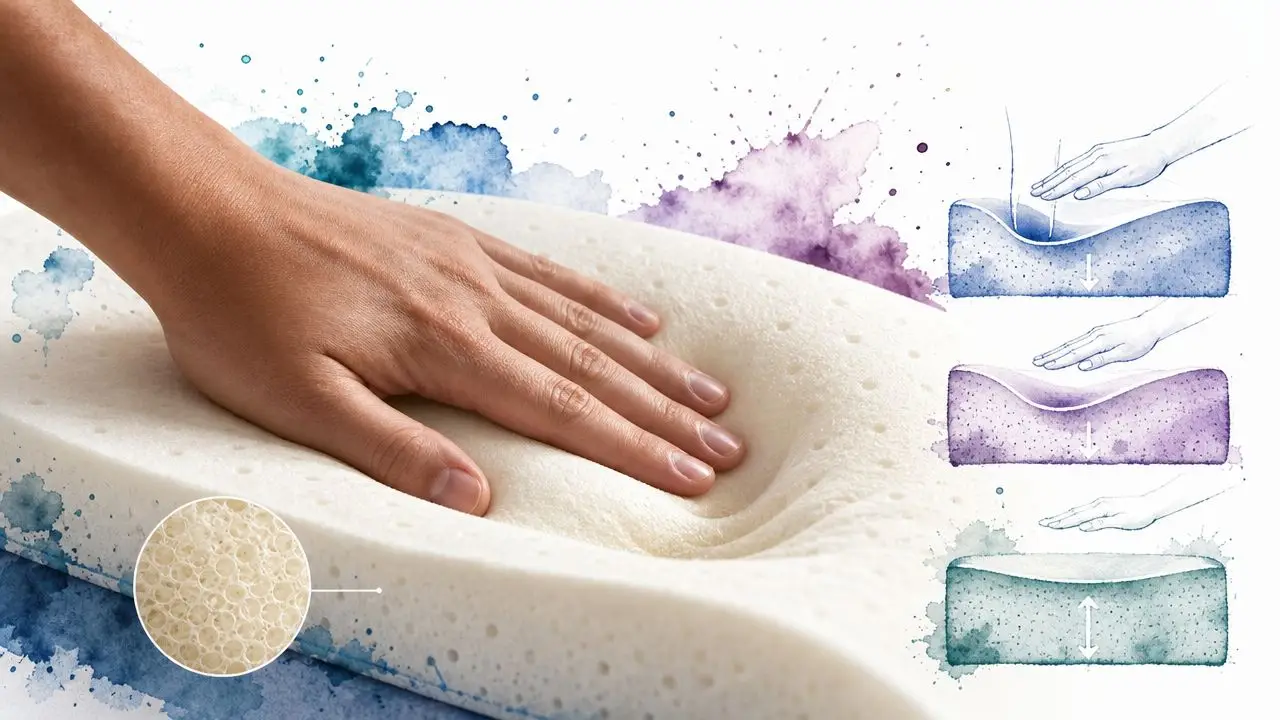
Memory foam gets talked about as if it were magic, but its behavior is pretty straightforward. It's a viscoelastic material, which means it responds slowly to pressure and then slowly returns to shape when the pressure is removed. That delayed response is what creates the familiar contouring feel many people either love immediately or need time to understand.
Why memory foam feels different
A simple way to think about it is a hand pressed into soft dough. The surface yields, holds the shape for a moment, and then gradually rises back. Sleep Foundation notes that memory foam's slow viscoelastic recovery typically takes 5 to 10 seconds, which helps it redistribute body weight and reduce peak pressure on areas like the hips and shoulders in its explanation of memory foam.
That's the core reason memory foam has remained popular. It doesn't just cushion the body. It spreads load across a wider area, which can make a mattress feel gentler on prominent joints. For couples, that same slow response also helps reduce the sensation of a partner shifting during the night.
For readers interested in how this material behavior developed over time, this short overview of the history of mattresses from straw mats to memory foam gives useful context.
Where memory foam shines and where it falls short
The strengths are clear:
- Pressure relief: Memory foam is especially good at cushioning shoulders, hips, and other high-load areas.
- Motion isolation: It absorbs movement rather than sending it across the bed.
- Compact shipping: Its structure works well for compressed delivery, which helped memory foam become widely available.
The trade-offs are just as real:
- Heat retention: Dense foam tends to hold more warmth than more breathable mattress types.
- Slower movement: Some sleepers enjoy the hug. Others feel stuck when turning or getting out of bed.
- Feel preference: Memory foam has a distinct sensation. People usually respond to it strongly one way or the other.
Practical rule: If a sleeper wants a close, contouring cradle, memory foam is often a strong fit. If that sleeper wants bounce and quick pushback, another category may be a better match.
Manufacturers often use open-cell structures or gel-infused foams to address temperature concerns, and those features can help. But the basic character of the material doesn't disappear. Traditional memory foam still tends to sleep warmer than more breathable constructions.
That same contouring behavior also explains why memory foam appears in other sleep products. The same pressure-distributing qualities that benefit people can also help pets settle more comfortably, which is why resources like Nandog pet bed recommendations often focus on memory foam for rest and joint support.
How to Choose Your Memory Foam Mattress A Buyer's Checklist
The best memory foam mattress usually reveals itself through a handful of specs and a few honest comfort checks. Marketing language doesn't help much here. Construction does.
Start with sleeper position and feel
Sleep position should shape the first round of choices.
Side sleepers usually need enough surface comfort to cushion the shoulders and hips. If the mattress feels too firm, those areas take the hit first. Back sleepers often do best on a feel that supports the lower back while still allowing some contouring. Stomach sleepers need to be more careful with soft all-foam designs because too much sink under the midsection can throw alignment off.
That doesn't mean one firmness solves everything. It means the mattress should keep the body reasonably level in the sleeper's usual position.
A useful starting point is to compare personal preferences against a clear mattress firmness guide. Then test outside the usual comfort zone by one step softer and one step firmer. Many people discover their assumed preference isn't their best match.
Check density before anything else
If one specification deserves extra attention, it's foam density. Density is one of the cleanest ways to evaluate the quality and likely durability of a memory foam build.
Saatva's memory foam guide notes that many major buying guides recommend at least 3 pounds per cubic foot for memory foam, while premium memory foam is commonly 4 to 5 pounds per cubic foot, making density one of the foundational ways to compare models in the market as explained in its memory foam guide.
For long-term performance, Comfort Option says comfort layers in the 2.5 to 3.9 lb/ft³ range are a strong benchmark, and base layers should be 2.0 lb/ft³ or higher because that level is considered high-end and better able to resist the permanent compression that leads to sagging in its foam specification guide.
What that means in plain language:
- Lower-density foam: Often feels good at first, but may break down faster.
- Better-density comfort foam: Usually balances contouring, durability, and cost more effectively.
- Higher-quality support core: Helps the mattress keep its shape over the long haul.
A shopper doesn't need to memorize every number. But if a retailer can't explain what the comfort layers and base layers are made of, that's a warning sign.
Pay attention to the comfort stack
The thickness of the upper layers matters almost as much as density. A mattress can use decent foam and still feel underbuilt if the comfort and transition layers are too thin.
Here's the practical issue. If the upper section doesn't provide enough depth, the sleeper can push through the pressure-relieving portion too quickly and feel the firmer support core underneath. That's when a mattress feels nice at first touch but disappointing once someone lies on it for a while.
When evaluating profile and build, focus on these questions:
- Is there enough upper-layer depth to cushion pressure points?
- Does the body feel gently supported, or does it bottom out?
- Does the mattress feel consistent from center to edge?
A mattress isn't comfortable because it feels soft under a hand. It's comfortable because its layers work together under the full weight of a body.
Look beyond cooling claims
Cooling features are worth considering, but they shouldn't distract from the fundamentals. A gel swirl in the foam sounds impressive. It matters less if the mattress still traps heat because the structure is overly dense and the sleeper sinks too far down.
Better cooling usually comes from several factors working together:
- Foam design: Open-cell or specialty foams can improve airflow.
- Cover materials: Some covers feel cooler at the surface.
- Overall construction: Less engulfing designs often feel less warm.
- Bedroom environment: Sheets, protectors, and room temperature affect comfort too.
Cooling language is easy to overstate. Real-world comfort depends on the whole system, not one label stitched into the cover.
Don't overlook edge support and everyday use
Edge support rarely gets top billing in online roundups, but it affects daily life more than many shoppers expect. A weak edge makes a mattress feel smaller. It can also make getting dressed, sitting, or getting in and out of bed less stable.
Memory foam mattresses vary widely here. Some all-foam designs compress heavily at the perimeter. Others use firmer side construction that feels much more secure. For households that sit on the edge often, share the bed, or want the full sleeping surface to be usable, this feature deserves a hands-on test.
A practical checklist helps:
- Sit on the side: Notice whether the edge collapses sharply or stays reasonably level.
- Lie near the perimeter: Check whether it feels supportive enough to use the full width.
- Change positions: Good memory foam should contour without making movement feel like work.
- Think past the first minute: Initial softness is easy to like. Lasting support is what matters.
The best memory foam mattress usually isn't the one with the longest feature list. It's the one with the right density, the right layering, the right feel for the sleeper, and the right build quality to justify staying in the room for years.
Memory Foam vs Other Mattress Types
Memory foam works beautifully for some sleepers and frustrates others. The easiest way to know whether it belongs on the shortlist is to compare it with the main alternatives by feel and function, not by marketing category.
For shoppers deciding between all-foam and other constructions, this overview of memory foam vs innerspring is a useful starting point.
Mattress Type Comparison
| Feature | Memory Foam | Innerspring | Latex | Hybrid |
|---|---|---|---|---|
| Pressure Relief | Excellent contouring | Moderate, depends on top layers | Good, with a buoyant feel | Good to very good, depends on foam depth |
| Bounce Responsiveness | Low | High | High | Moderate to high |
| Motion Isolation | Strong | Usually lower | Moderate | Moderate to strong |
| Temperature Regulation | Often warmer | Usually cooler | Often cooler | Varies by construction |
| Edge Support | Varies widely | Often strong | Often better than all-foam | Often stronger than all-foam |
| Durability | Depends heavily on foam density | Varies by coil and upholstery quality | Often strong | Depends on both foam and coil quality |
| Average Cost | Wide range | Wide range | Often higher | Wide range |
How the differences play out in real homes
Memory foam is usually the best fit for sleepers who want a close, body-conforming surface and strong motion control. It's often a good choice for couples with different sleep schedules or for anyone who wants a more cushioned, less springy feel.
Innerspring mattresses tend to suit people who want lift, airflow, and a more traditional sleeping surface. They're easier for many sleepers to move around on. They also often feel sturdier at the edge.
Latex appeals to shoppers who want pressure relief without the deep hug of memory foam. It has a more buoyant, on-the-bed sensation. For some people, that's the sweet spot. For others, it doesn't provide the same cradling comfort.
Hybrids try to bridge categories. They can offer foam comfort with coil support, but the result depends completely on how the layers are balanced. Some feel almost like memory foam. Others feel much closer to an innerspring with extra cushioning.
The right comparison question isn't which mattress type is best overall. It's which one solves the sleeper's actual comfort problem without creating a new one.
That's why category alone never settles the decision. A shopper choosing the best memory foam mattress should also ask whether memory foam is the right category in the first place.
The In-Store Advantage Testing a Mattress Before You Buy
A shopper walks into a showroom after weeks of reading reviews, convinced they want memory foam. Ten minutes later, important questions show up. Is the pressure relief helping the shoulders, or are the hips sinking too far? Does the bed feel supportive after a few quiet minutes, or only impressive on first contact?
That is the value of in-person testing. A mattress is a long-term household purchase, not a box to check off online. The goal is not to find a bed that feels good for 30 seconds. It is to choose one that still feels right after years of use, on the right foundation, for the way the body sleeps.
A simple showroom testing routine
Good testing is slow and specific.
- Wear normal, comfortable clothing. Heavy coats, stiff jeans, and full pockets change what the surface feels like.
- Lie in the position used most often at home. Side sleepers should stay on the side. Back sleepers should settle flat, with arms where they usually rest.
- Stay there for several minutes. Memory foam changes as it responds to heat and pressure. A quick sit on the corner tells very little.
- Pay attention to two things at once. Check whether the mattress cushions pressure points and whether it keeps the body from hammocking.
- Change positions. Some memory foam beds relieve pressure well but make turning harder than expected.
- Sit at the edge and get in and out of bed. This shows more than edge firmness alone. It shows how the mattress will behave every day.
- If two people share the bed, test it together. Motion transfer, personal space, and comfort often change once both sleepers are on the mattress.
Shoppers sometimes feel self-conscious doing this in a store. They should not. A mattress should be tested the same way it will be used at home, calmly and without being rushed.
What a good consultant should help you sort out
A skilled, non-commission consultant does not talk a shopper into a mattress. The consultant helps rule out the wrong ones.
The conversation should stay practical:
- Does this mattress keep the spine in a healthier position for the sleeper's build and sleep posture?
- Is the comfort layer soft enough for pressure relief without letting the body drop out of alignment?
- Will the mattress work on the buyer's current support system, or is a different base the better match?
- Does the sleeper want a close memory foam cradle, or would a lighter contouring feel be easier to live with?
That last point matters more than many shoppers expect. Plenty of people ask for memory foam when what they really want is pressure relief with easier movement. Others want the full body-hug feel and do not realize that some memory foam models are built to feel much flatter and firmer. Those differences are much easier to sort out in person.
For buyers considering articulation, it also helps to test how the mattress responds on an adjustable base and review what features matter in the best adjustable base for a mattress.
A full showroom visit can also answer a broader question. Is this mattress right for the bedroom being built for the next decade, not just for this month? In a store, buyers can judge mattress height against the bed frame, see how foundation choices affect comfort, and make decisions with the benefit of real guidance instead of guesswork.
Giorgi Bros. Furniture offers that kind of in-person testing in a showroom setting where the mattress can be evaluated as part of a complete sleep setup, not as an isolated online transaction.
Completing Your Sleep System Foundations and Accessories
A mattress doesn't perform in isolation. Put a well-built memory foam mattress on the wrong foundation, and the sleeper may blame the bed for problems the support system created.
Why the foundation matters more than most people think
Foundation compatibility is one of the most overlooked parts of mattress buying. Many shoppers keep an older frame, older slat base, or older platform and assume the new mattress will adapt. Sometimes it will. Sometimes that decision shortens the life of the mattress and changes how it feels from the first week.
A practical rule from mattress guidance is that slats should be sturdy and spaced no more than 3 inches apart to help avoid sagging and possible warranty issues as explained in this slat compatibility guide. That single detail gets missed often.
What tends to work best with memory foam:
- Solid platform bases: These offer even support and simple compatibility.
- Properly spaced slatted bases: These can work well if the slats are close enough and strong enough.
- Adjustable bases: Many memory foam mattresses pair nicely with articulation when the construction is designed for it.
For buyers considering head and foot adjustability, this guide to the best adjustable base for a mattress helps clarify what to look for.
A premium mattress can't correct a weak support system underneath it.
The rest of the sleep system
The foundation gets most of the structural attention, but accessories matter too.
A mattress protector helps preserve the surface and keep the comfort materials cleaner over time. The right pillow matters because even a supportive mattress can feel wrong if the neck angle is off. Bedding choices can also change the temperature experience, especially for sleepers already sensitive to warmth.
A good sleep system should work as a unit:
- Foundation: Stable, compatible, and properly supportive.
- Protector: Protective without changing the feel too much.
- Pillow: Matched to sleep position and shoulder depth.
- Bedding: Comfortable enough not to undo the mattress's strengths.
A buy-it-for-life mentality proves practical. Longevity usually comes from a series of good choices, not one heroic purchase.
An Investment in Rest Why Your Mattress Choice Matters
A mattress is one of the few household purchases used every single day and judged every single morning. That's why the cheapest acceptable option often turns out not to be the best value. When a mattress loses support, sleeps uncomfortably, or was never the right fit to begin with, the savings fade quickly.
Price matters but value matters more
Memory foam mattresses span a broad range. Neutral guidance notes that budget models often fall in the $400 to $700 range, while premium beds can exceed $1,600, and the difference often comes down to density and durability rather than surface styling alone as discussed in this memory foam buying guide. That doesn't mean every higher-priced model is worth it. It does mean price has to be weighed against what's inside.
A better buying question is this: what is the shopper paying for?
Sometimes the answer is useful. Better foam density. Better base support. Better long-term shape retention. Better compatibility with the sleeper's body and foundation. Sometimes the answer is mostly branding and feature language.
That distinction matters for anyone furnishing a home carefully. A mattress should be treated like other durable bedroom investments. If it's going to stay in the room for years, then build quality, comfort consistency, and support integrity deserve more weight than a temporary discount.

Why a showroom still matters for a long-term purchase
An old-fashioned advantage still holds strong, as a real showroom allows a buyer to connect the technical side of memory foam with the lived side of it. Density, contouring, temperature feel, edge stability, and foundation compatibility all become easier to judge when the mattress is right there in front of the shopper.
That's especially valuable in South San Francisco, where many buyers are planning whole-room updates and want their mattress to fit into a larger vision for the home. A family-owned showroom that has served the area since 1933 tends to approach that conversation differently. The point isn't to rush someone into whatever is easiest to deliver. The point is to help the person buy correctly.
For buyers who care about sustainability, that approach matters too. Purchasing a mattress with stronger materials and a better support plan is often the more responsible choice than replacing a lower-quality one too soon. Buy-it-for-life thinking isn't only about craftsmanship in custom furniture. It applies to sleep as well.
The best memory foam mattress is the one that still feels like a smart decision years after delivery.
That's why expert guidance matters. So does a non-commission environment. So does the ability to compare premium mattresses in person, ask direct questions, and think beyond the current sale cycle. Long-term health, comfort, and value all benefit from a slower, more informed decision, especially when paired with guidance like this overview of why investing in a high-quality mattress is essential for long-term health.
For Bay Area homeowners focused on quality, design, and durability, the mattress shouldn't be the rushed part of the room. It should be one of the most considered.
For readers ready to compare premium mattresses in person, Giorgi Bros. Furniture welcomes visitors to its 50,000-square-foot showroom in South San Francisco for no-pressure guidance from non-commission consultants. It's a practical place to test comfort, review bedroom layouts, explore custom furniture options, and make a long-term decision with confidence. Those planning a remodel or furnishing project can also book a Design Consultation and build a bedroom that feels right now and continues to work beautifully for years.