A lot of living rooms start with good intentions. A neutral sofa goes in, a coffee table follows, a few decor pieces land on every surface, and before long the room feels busy without feeling finished. Many homeowners aren't looking for more things. They're looking for more calm.
That's where living room Scandinavian design has lasting appeal. It offers order, lightness, and clarity, but the version worth bringing home isn't the sterile one. A successful Scandinavian room feels edited, comfortable, and ready for daily life. It makes space for conversation, reading, stretching out and unwinding, and the practical realities that come with family living.
That balance matters, especially for Bay Area homes where one room often needs to do several jobs well. It also helps to approach the style as a long-term design language, not a passing look. Since 1933, families in South San Francisco have relied on thoughtful guidance and quality furnishings that hold up over time. The same principle applies here. The room should look calm today and still make sense years from now.
For homeowners trying to keep things simple without making the room feel empty, this related guide on personalizing a minimal space without clutter is a useful companion.
Table of Contents
- Your Guide to a Calm and Beautiful Living Space
- Understanding the Foundations of Scandinavian Style
- Building Your Palette with Color and Texture
- Selecting Timeless Scandinavian Furniture Pieces
- Arranging Your Room for Abundant Light and Flow
- The Art of Hygge Adding Warmth and Personality
- Begin Your Design Journey with Expert Guidance
Your Guide to a Calm and Beautiful Living Space
A well-designed Scandinavian living room doesn't ask a family to live carefully around it. It should support real habits. Shoes get kicked off, books collect on a side table, pets claim corners, and evenings settle into the sofa. The room still needs to feel composed.
That's why the strongest version of living room Scandinavian design starts with restraint, then adds comfort on purpose. Clean lines matter. So do softness, storage, and durable materials that age well. Without those, the room can look polished in a photo and feel unforgiving in daily use.
There's also a practical reason this style has held up for decades. It favors pieces that do their job well and continue doing it. That mindset fits a buy-it-for-life approach. Better construction, better materials, and better proportions often cost more upfront, but they tend to save homeowners from replacing underbuilt furniture every few years.
A Scandinavian room should feel easy to maintain, not difficult to inhabit.
The most successful spaces rarely come from copying a showroom scene piece for piece. They come from making careful decisions about what belongs in the room, what needs to be hidden, and what deserves to stay visible. That's where design becomes personal, and where quality and customization make the difference.
Understanding the Foundations of Scandinavian Style
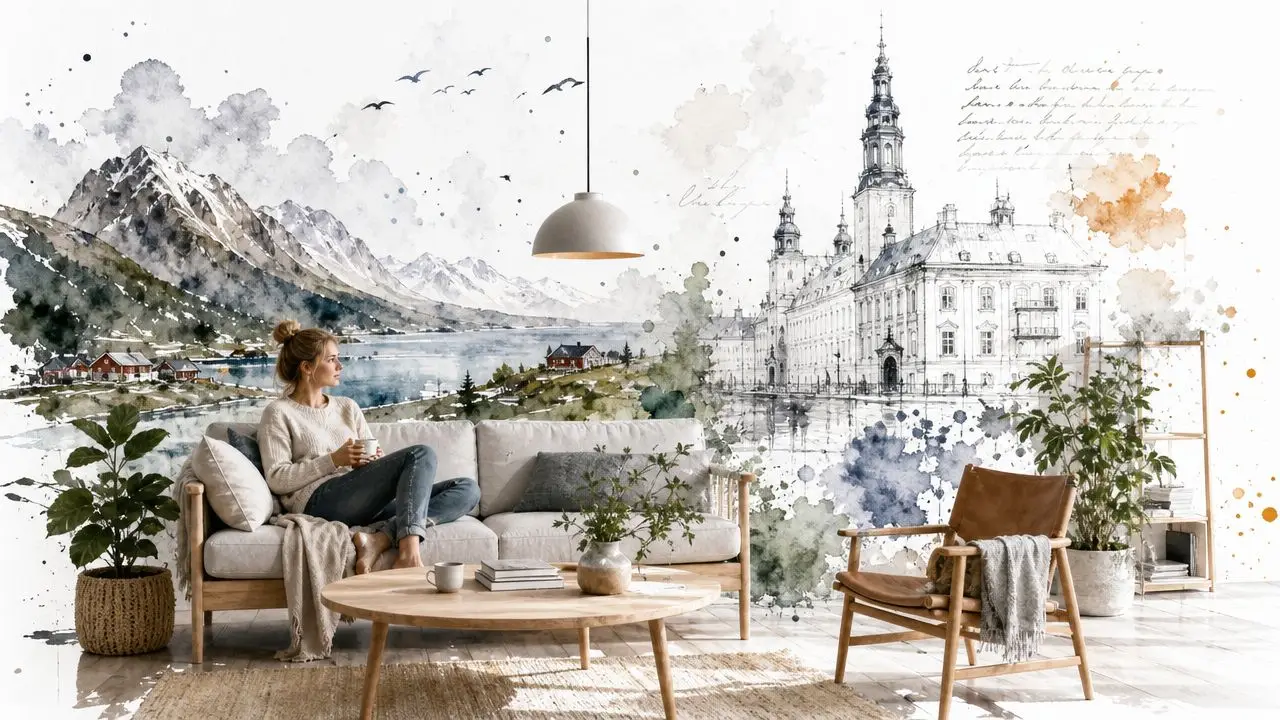
Scandinavian design has depth because it grew from necessity. According to this overview of Scandinavian design history and principles, the style emerged from the Nordic countries in the 20th century and is widely traced to the 1930s. Its focus on simplicity, functionality, and light-colored interiors was shaped by long, dark winters, which made maximizing daylight a practical goal.
Why the style still works
That origin explains why Scandinavian living rooms don't rely on excess to feel complete. Pale walls, natural materials, uncluttered layouts, and restrained ornamentation weren't arbitrary choices. They helped rooms feel brighter, calmer, and more useful.
It also explains the warmth people respond to when the style is done well. The room isn't minimal for minimalism's sake. It balances clean architecture with tactile comfort. Wood underfoot, wool and linen in upholstery and accessories, and a general preference for lasting craftsmanship all support that mix.
A good room in this style usually carries three clear ideas:
- Function comes first. Every major piece should earn its place.
- Light matters. Finishes and layout should help the room feel open.
- Nature softens the room. Wood, textile texture, and greenery keep simplicity from turning severe.
What people often miss
The common mistake is treating Scandinavian design as just a pale color scheme with sparse furniture. That strips out the purpose behind it. The better approach is to understand the room as a system. Shape the atmosphere first, then choose the objects.
For homeowners refining the decorative layer, this Scandi wall art guide is a useful resource because it shows how art can support the style without overpowering it.
Practical rule: If a piece adds visual noise but no comfort, storage, or meaning, it probably doesn't belong in a Scandinavian living room.
That's one reason the style has stayed relevant across decades. Its foundation is durable. It adapts because the underlying values are still useful.
Building Your Palette with Color and Texture
A Scandinavian palette should calm the room before it decorates it. That doesn't mean every surface has to be white. In fact, the warmer version of the style often feels more elegant and more livable.
Recent coverage of the style points to a shift toward a warmer, less sterile approach that uses tactile materials, deeper neutrals, contrast, cozy textiles, and mixed-material furniture, rather than staying with the old all-white formula, as noted in this overview of modern Scandinavian decorating.
Start with a quiet base
The base palette should stay simple enough to support the rest of the room. Think soft whites, warm grays, mushroom tones, sand, oat, or muted taupe. Those colors still reflect light, but they don't feel clinical.
A room like this benefits from disciplined repetition. If the walls are pale and the upholstery stays within a close neutral range, the eye relaxes. Then the room can carry more texture without feeling busy.
A useful way to test the palette is to ask whether each finish adds one of these qualities:
| Element | What it should contribute |
|---|---|
| Upholstery | Softness and visual quiet |
| Wood tone | Warmth and organic character |
| Rug | Grounding and texture |
| Accent finish | Subtle contrast |
Add warmth through materials
A room's vitality or lack thereof often hinges on its design. Scandinavian interiors often rely on contrast through materials rather than strong color. A light wood table against a wool rug, a textured sofa against a smooth ceramic lamp base, or a leather chair beside a nubby throw all create depth without visual clutter.
A few combinations work especially well:
- Birch or pale oak with wool. Clean, soft, and classic.
- Bouclé with a smoother wood grain. Good for adding softness to structured furniture.
- Linen with matte metal accents. Quiet contrast without shine taking over.
- Leather in a warm neutral. Useful when a room needs durability and a little visual weight.
For homeowners refining tones before buying furniture, this guide to the perfect color palette offers a helpful framework.
The room should never depend on accent color to feel finished. If the materials are right, the room already has depth.
One of the biggest advantages of customization is control over these subtleties. A slightly deeper wood finish, a warmer cream fabric, or a more textured weave can shift the room from cold to welcoming without abandoning Scandinavian principles. That's often the difference between a room that looks styled and one that feels settled.
Selecting Timeless Scandinavian Furniture Pieces
Furniture does most of the essential work in a Scandinavian living room. The style depends on shape, proportion, and construction more than decoration. If the furniture is underbuilt or oversized, the room loses its clarity fast.
Industry guidance for a technically sound Scandinavian layout recommends slimline furniture with exposed legs, light woods such as birch, spruce, and pine, and closed storage or built-ins to preserve an uncluttered look and reduce visual noise, as described in this Scandinavian living style guide.
Choose fewer pieces, but choose better
The strongest rooms usually have a clear hierarchy. The sofa leads. The storage supports. The occasional tables and chairs fill specific needs without crowding the floor.
That means selection matters more than quantity.
- Sofa. Look for clean lines, good seat support, and legs that let the room feel open underneath. A sofa that sits too low and bulky can make the room feel heavy.
- Coffee table. Choose one with a simple profile and enough surface for daily use, not just styling.
- Storage pieces. Closed storage is essential in a real home. Media components, chargers, remotes, toys, and pet items need a place to disappear.
- Accent seating. Add a chair only if it improves function. An empty corner doesn't always need one.
This is also where durability becomes part of the design language. Scandinavian rooms ask furniture to hold visual simplicity for a long time. That only works when the construction underneath is sound.
Where customization makes the room work harder
Customization helps solve the part most trend-driven guides skip. Real living rooms need to fit real bodies, routines, and floor plans. A homeowner may need a warmer fabric because the room lacks softness, a more forgiving leather because pets use the sofa, or a wood species that better suits long-term wear.
For example, custom upholstery can tune the mood of the room without changing its structure. The silhouette can stay Scandinavian, while the fabric introduces warmth or resilience. Wood furniture can also shift from pale and airy to richer and more grounded depending on the finish.
One option homeowners may consider is the Scandinavian Designs sofa collection, along with custom order possibilities in fabrics, leathers, wood species, and finishes. That flexibility matters in rooms that need to look refined and still handle everyday use.
Buy the frame, not just the look. Fabric can soften a room, but construction is what carries the piece for years.
For a family-owned business that has served South San Francisco since 1933, this is familiar ground. Quality furniture isn't just about appearance. It's about choosing investment pieces that continue to perform. That approach is also more sustainable. When a sofa or cabinet lasts, the room needs fewer replacements and fewer compromises.
A Scandinavian living room should feel edited. It shouldn't feel temporary.
Arranging Your Room for Abundant Light and Flow
Layout is where the style either feels calm or starts to fight itself. A beautiful sofa won't rescue a room if the furniture blocks movement or leaves the space feeling disconnected.
One important context shift matters here. A design source notes that the average American home is 2.4 times larger than the compact apartments in Copenhagen and Stockholm that originally influenced the style. In larger living rooms, Scandinavian design is often arranged through zones while keeping a consistent neutral palette so the room doesn't feel empty or cold, as explained in this guide to Scandinavian design for large spaces.
Let the room breathe
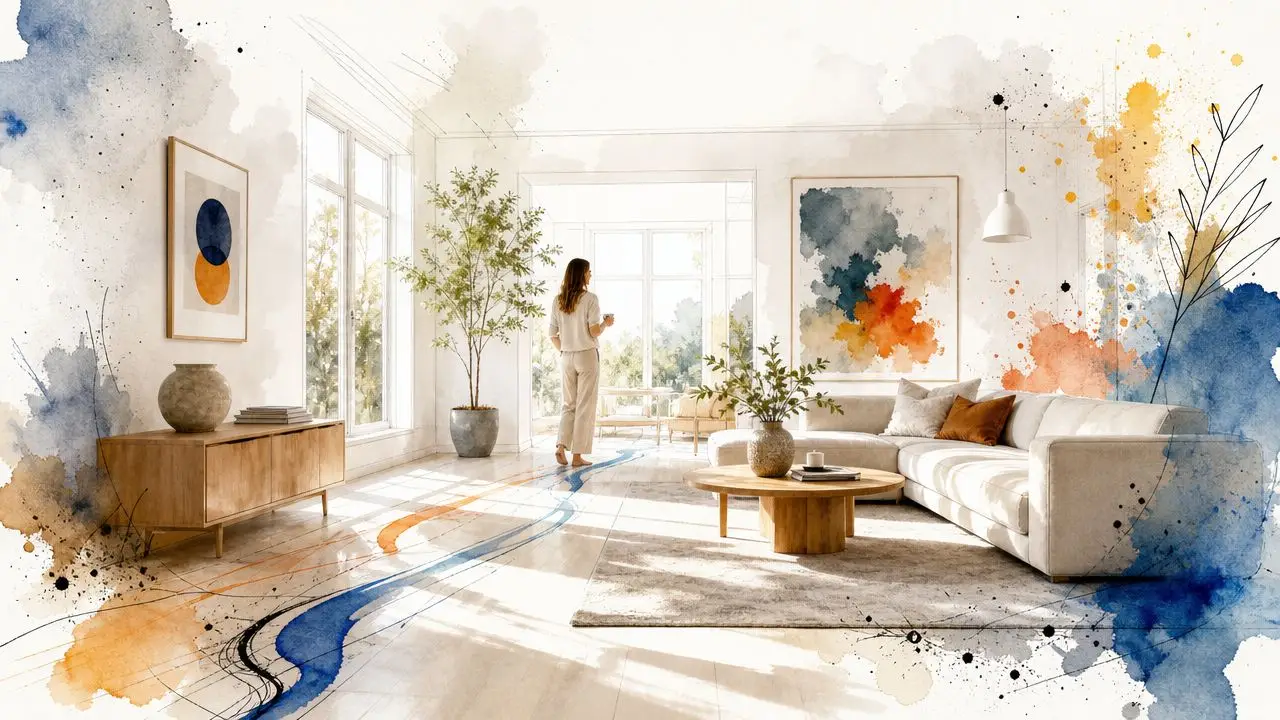
The first priority is openness. Leave enough space around major furniture so the eye can move through the room without interruption. Pieces with exposed legs help, but spacing matters just as much.
A few layout habits consistently work:
- Keep the center readable. Don't let small accent pieces fragment the room.
- Float key furniture when needed. Pushing everything to the wall can make a larger room feel less intentional.
- Maintain clear paths. Walking routes should feel natural, not squeezed between corners and table edges.
Homeowners who want a broader framework for furniture placement may find this guide on how to layout living room furniture helpful.
Use zones in larger living rooms
Zoning is often the difference between a room that feels expansive and one that feels unfinished. A large living room can hold a main conversation area, a reading corner, or a quieter media spot, as long as the palette and materials stay consistent.
A simple zoning plan might look like this:
- Anchor the main seating area with the largest rug and primary sofa.
- Add a secondary function such as a reading chair with a floor lamp and small table.
- Repeat finishes so each area belongs to the same room.
For homeowners thinking broadly about brightness in addition to layout, this practical article on how to maximize natural light indoors offers useful ideas.
A Scandinavian room should feel generous with space, even when every area has a job to do.
The result should be gentle structure. The room needs definition, but not hard divisions.
The Art of Hygge Adding Warmth and Personality
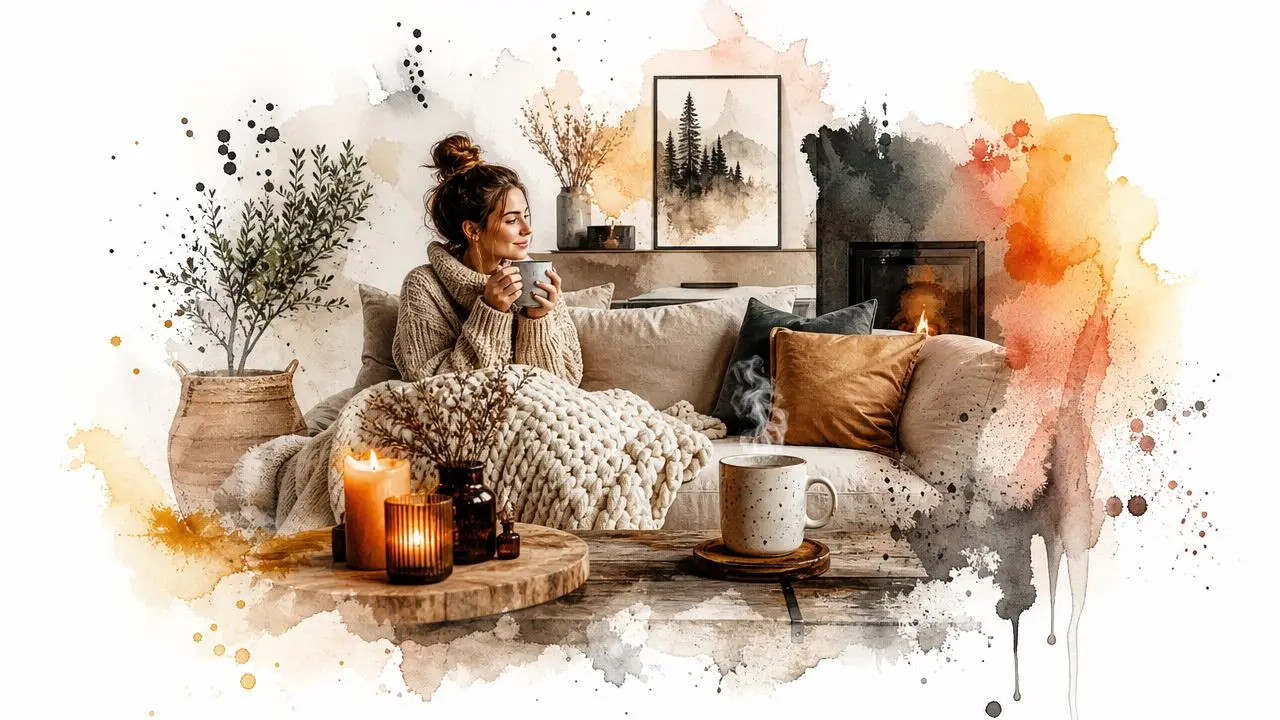
The most common failure in Scandinavian living rooms is over-minimalism. A room gets stripped back so far that it loses comfort. Expert guidance recommends balancing neutral foundations with soft textures, natural fibers, greenery, and limited accent color to preserve the hygge effect. It also notes that contrast should come from materials, not heavy ornamentation, in this discussion of Scandinavian living room mistakes and solutions.
Softness is not clutter
Warmth should be layered with intention. One heavy-handed move can make the room feel overdone, but too little softness makes it feel unfinished.
Good additions tend to be tactile and useful:
- A substantial rug that softens the floor and anchors the seating area
- Throws in wool, linen, or faux fur that make the room feel inhabited
- Greenery that breaks up hard lines and brings life into the palette
- Low-key accent color used sparingly through textiles or ceramics
For homeowners styling the sofa itself, this guide to Pandemonium's faux fur draping is a practical example of how to add softness without making the furniture look messy.
Personal details that still feel restrained
A Scandinavian room doesn't need to be anonymous. It just needs editing. A stack of books, a handmade bowl, a few ceramics, or one meaningful artwork can do more than a dozen filler accessories.
The same goes for floor layering. An area rug shouldn't just match the room. It should soften the architecture and support the furniture placement. This guide on how to choose an area rug for a living room is useful for getting the scale right.
Leave some surfaces quiet. Personality lands better when it has room around it.
That's the art of hygge in this context. It isn't about adding more. It's about adding the right softness in the right places.
Begin Your Design Journey with Expert Guidance
A lasting Scandinavian living room comes down to disciplined choices. The palette should feel light but not washed out. The furniture should look clean but still offer comfort and durability. The layout should stay open while giving the room structure. Most of all, the space should support the way people live.
That's where expert guidance matters. It helps homeowners avoid buying pieces that photograph well but don't wear well. It also helps them make better long-term decisions about scale, upholstery, wood finishes, storage, and customization. In Bay Area interior design, those details often separate a calm room from a frustrating one.
For homeowners shopping for custom furniture in South San Francisco, it helps to see materials in person, compare textures, and test proportions before making a final decision. A non-commission environment also changes the experience. The conversation becomes about fit, function, and longevity rather than pressure.
For homeowners ready to create a warm, livable version of Scandinavian style, Giorgi Bros. Furniture offers a practical next step. Visit the South San Francisco showroom to explore quality living room pieces, compare custom fabrics, leathers, wood species, and finishes, and work with non-commission Consultants in a no-pressure setting. A Design Consultation is also available for those who want help shaping a room that feels calm, durable, and made for daily life.