
Most rooms don't need a dramatic renovation. They need a better plan. A living room feels off because the seating floats without purpose. A bedroom never becomes restful because the mattress, bed, and storage don't work as one. A dining room stays underused because the table is the wrong shape for the space.
That's where lasting room transformation ideas differ from trend-driven decorating. The best transformations improve how a room works every day, and they do it with pieces that can stay with the home for years. Since 1933, families in South San Francisco have turned to thoughtful, no-pressure furniture guidance to build homes gradually, with fewer throwaway purchases and more investment pieces that still look right a decade later.
That approach matters beyond style. In home staging, about 80% of buyers' agents say staging helps buyers visualize a property as their future home, and roughly one-third say it can increase the dollar value offered. A well-planned room changes how people read space, function, and value. Homeowners dealing with larger remodels often benefit from practical coordination too, especially when juggling furniture decisions alongside how to manage remodel contractors.
Table of Contents
- 1. Custom Upholstered Sectional as Room Anchor
- 2. Bedroom Suite Refresh with Premium Mattress Upgrade
- 3. Dining Room Centerpiece with Custom Wood Table and Coordinating Pieces
- 4. Home Office Redesign with Custom Workspace Furniture
- 5. Living Room Entertainment Zone with Media Console and Seating Arrangement
- 6. Sustainable Transformation with Eco-Conscious Furniture Selection
- 7. Master Bedroom Luxury Retreat with Upholstered Bed and Coordinated Pieces
- 8. Open-Concept Living and Dining Integration with Unified Furniture Plan
- 9. Guest Bedroom Makeover with Quality Bed and Welcoming Amenities
- 10. Family Room Functionality with Durable Furniture for Active Living
- 10-Point Room Transformation Comparison
- Your Forever Home Transformation Starts Here
1. Custom Upholstered Sectional as Room Anchor
A strong living room usually starts with one decision made well. In many homes, that's the sectional. Instead of treating it as one more seat to squeeze in, it works better as the piece that sets the room's scale, traffic flow, and visual center.
Custom upholstery changes the result. A sectional ordered in the right depth, arm style, fabric, and finish looks intentional in a way stock sizing often doesn't. That matters in Bay Area homes, where rooms can be narrow, open-concept, or shaped around older architectural quirks.
Choose the sectional before the accents
The best order of operations is simple. Pick the largest seating piece first, then place the rug, tables, and accent chairs around it. That keeps the room from becoming a collection of attractive items that don't relate to each other.
A leather sectional can bring structure and age gracefully in a busy household. A well-designed fabric sectional often softens a room and makes it feel more welcoming. Both can work, but the wrong scale won't. A sectional that's too deep can choke circulation. One that's too small makes the room feel unfinished.
Practical rule: Measure the room, the wall lengths, and the doorways before ordering. The right sectional should define the room without blocking the natural path through it.
A few details separate a lasting purchase from a frustrating one:
- Check entry access: Hallways, stair turns, and front-door clearance matter just as much as floor dimensions.
- Test fabric in real light: Samples should be viewed in morning and evening light, not only under showroom lighting.
- Plan around use: Movie watching, daily lounging, and formal entertaining each call for a different layout.
For homeowners comparing sizes, configurations, and fit, this guide to what you should know before buying a sectional is a practical starting point.
2. Bedroom Suite Refresh with Premium Mattress Upgrade
A bedroom makeover often stalls because too much attention goes to the headboard and not enough to sleep. If the mattress is wrong, the room may look polished and still fail at its most important job.
That's why one of the smartest room transformation ideas is to refresh the whole bedroom suite around comfort first. A premium mattress, a bed with the right visual weight, and coordinated case pieces create a room that feels calmer because the essentials are working together.
Build the room around sleep first
A large bed frame in a modest bedroom can make nightly movement awkward. A mattress that feels good for five minutes in a hurry can feel very different after months of use. This is one room where testing matters.
Coordinating the mattress with the bed, nightstands, and dresser creates visual quiet. Matching everything exactly isn't necessary. What matters is consistency in scale, finish, and mood. Warm wood tones can make the room feel grounded. Upholstered elements can soften it. A mix often works best.
Since the 2010s, room transformation thinking has expanded from one-time decorating into a repeatable strategy across home, retail, and educational settings. In one classroom example, teachers used 6 challenge stations tied to 6 problem sets to completely reset how a room felt and functioned. The lesson for the bedroom is similar. A full-room reset works better than one isolated upgrade.
A bedroom rarely feels transformed when only one piece changes. The mattress, bed, storage, and lighting need to pull in the same direction.
Homeowners exploring better sleep setups can compare premium mattress brands before choosing the rest of the suite around them.
3. Dining Room Centerpiece with Custom Wood Table and Coordinating Pieces
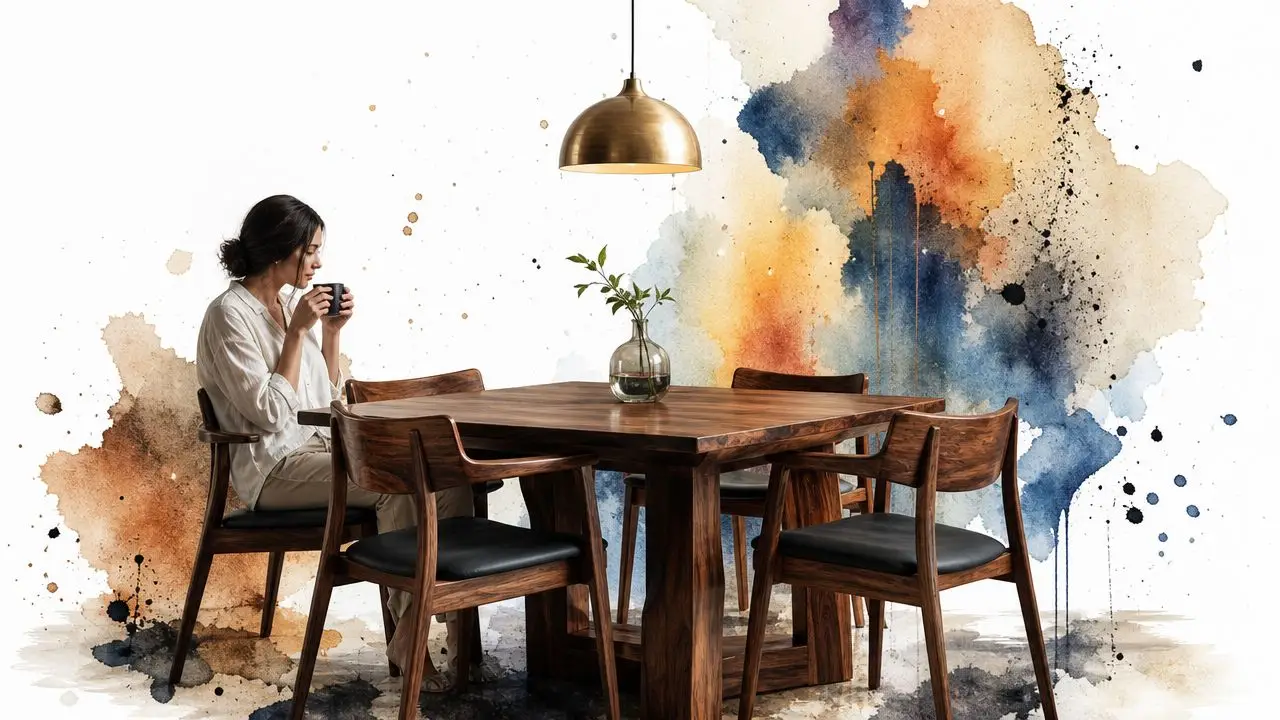
The dining table is one of the easiest places to buy once and buy well. A custom wood table doesn't just fill the center of the room. It becomes the piece that hosts weeknight meals, holidays, homework, and long conversations.
That kind of room transformation works best when the table is chosen for how the household lives. Some homes need a solid top for everyday use. Others benefit from an expandable design that stays compact most of the year and opens when guests arrive.
Get the proportions right before choosing the finish
The finish gets attention because it's visible. Proportion matters more because it affects every meal. A heavy farmhouse profile can feel grounded in a generous room but crowd a tight footprint. A slim table can look elegant and still leave enough clearance for chairs and movement.
Custom wood species and finishes help connect the dining room to nearby spaces. That's especially useful in homes where the dining area is visible from the entry or living room. Coordinated chairs and a buffet can complete the room, but they shouldn't compete with the table.
Helpful planning points include:
- Leave enough movement space: Chairs should pull out comfortably without turning the room into an obstacle course.
- Choose practical upholstery: Leather and easy-care fabrics usually serve family dining better than delicate materials.
- Think about extension early: It's easier to plan for guests now than to replace the table later.
For shape, size, and practical fit, this guide on how to pick the right dining room table helps narrow the choices.
4. Home Office Redesign with Custom Workspace Furniture
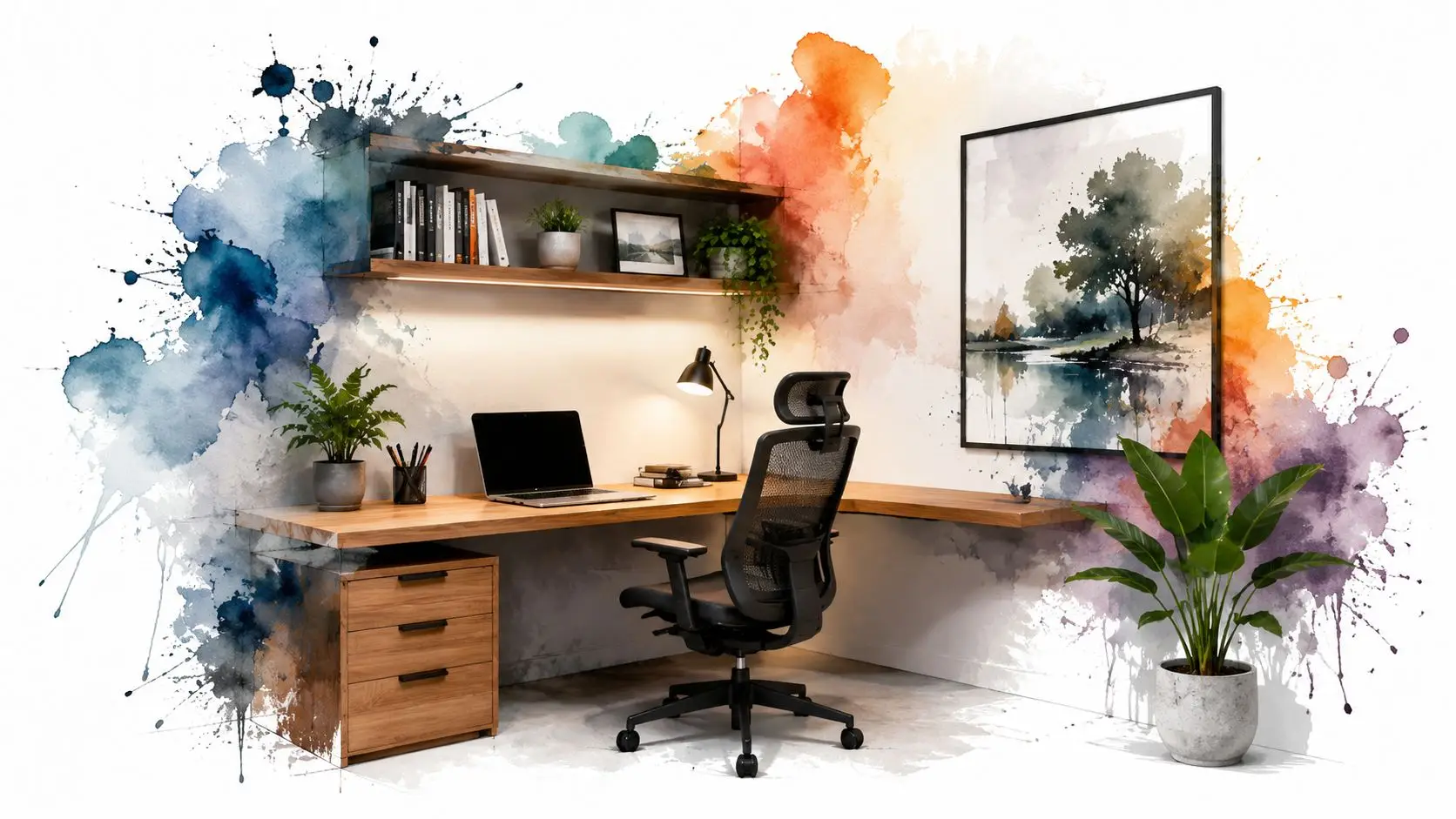
A home office doesn't need to look corporate to work hard. In fact, the best ones feel like part of the home while still supporting long hours of focused use. That usually means a desk sized to the room, proper seating, and storage that keeps clutter from taking over.
Many underused guest rooms, alcoves, and bedroom corners can become productive workspaces with the right furniture plan. The mistake is treating the office as temporary. Temporary rooms often stay uncomfortable for years.

Design for working hours, not just appearances
A beautiful desk with no cable management or storage quickly becomes frustrating. A stylish chair with poor support can make a full workday feel longer than it should. Custom furniture proves its value, because dimensions, finish, and function can be tuned to the room and the person using it.
Published guidance on room planning repeatedly comes back to a few layout rules: maintain clear circulation, face seating toward its purpose, and scale furniture to the room so it doesn't overpower or disappear within the space, as outlined in this discussion of space-planning benchmarks for room transformations. Those rules apply to offices as much as living rooms.
A practical office setup often includes:
- Supportive seating: The chair should support daily posture, not just fill a corner attractively.
- Task-specific storage: Files, devices, and supplies should be reachable without covering the desktop.
- Light control: Desk placement should reduce screen glare and support concentration.
For homeowners building a room that works as well as it looks, creating an inspiring home office offers useful planning ideas.
5. Living Room Entertainment Zone with Media Console and Seating Arrangement
Some living rooms fail because the television becomes the only organizing principle. Others fail because the room ignores entertainment entirely, leaving the screen awkwardly placed and the seating disconnected. The right answer sits in the middle.
A media console with enough storage and the proper seating arrangement can turn an unfocused room into a comfortable entertainment zone. The key is making the room good for movie nights without making it feel like a theater all day.
Layout matters more than gadgets
A well-sized media console gives electronics a place to live and keeps cords from taking over the room visually. It also helps anchor the wall so the screen doesn't feel like it's floating by itself. Wood finish matters here, especially when the console needs to connect with nearby tables or built-ins.
The seating should support both viewing and conversation. A sectional or sofa pair often works well when the chairs still angle inward. If every seat faces only the screen, the room can feel cold when the television is off.
Place the screen where it can be watched comfortably, then arrange seating so people can still talk to each other without dragging chairs around.
For households balancing work and entertainment zones under one roof, this outside guide to home office design can also help clarify how adjacent spaces should function together. Inside the living room itself, how to layout living room furniture offers the more important step: getting the seating plan right before buying the accent pieces.
6. Sustainable Transformation with Eco-Conscious Furniture Selection
A sustainable room usually starts with one hard question at the purchase stage: will this piece still earn its floor space in ten or fifteen years?
That standard changes how a room comes together. Instead of filling gaps with fast pieces that solve a short-term styling problem, it pushes the plan toward furniture with lasting structure, repairable parts, and finishes that can live through changing paint colors, rugs, and family routines. In practice, the greener choice is often the one that avoids replacement.
Buy less, choose better, keep it longer
Empty space does not always mean a room is unfinished. Sometimes it means the room still has breathing room, clear paths, and enough restraint to let a few strong pieces do their job. This discussion of how to make empty spaces functional without crowding them reflects that practical point well.
For homeowners who want a lasting transformation, I usually suggest judging furniture by four filters before looking at color trends.
- Timeless form: Clean lines and balanced proportions stay useful longer than highly themed shapes.
- Material honesty: Solid wood, quality veneer work, full-grain or well-finished top-grain leather, and durable upholstery fabrics tend to age with more dignity than cheaper substitutes.
- Customization: Choice of wood species, finish, cushion feel, fabric, or leather helps a piece fit the house instead of chasing a showroom look.
- Repairability: Better furniture can often be reupholstered, refinished, or serviced, which makes ownership more responsible over time.
The room matters too. Sustainable choices work best when furniture and architectural surfaces are considered together. Homeowners planning a broader update can compare green flooring options so the furniture, flooring, and maintenance demands support the same long-range goal.
For a family business serving South San Francisco since 1933, that approach has always been straightforward. Buy with care, customize where it counts, and choose pieces you would be glad to hand down rather than haul out.
7. Master Bedroom Luxury Retreat with Upholstered Bed and Coordinated Pieces
An upholstered bed can change the entire mood of a primary bedroom. It adds softness, height, and a clear focal point without relying on excessive decoration. When paired with the right nightstands and storage pieces, it can make the room feel quieter and more resolved.
The trick is restraint. A luxurious bedroom shouldn't feel crowded or overly staged. It should feel restful from the doorway.
Softness should still earn its place
Fabric and leather both bring advantages. Fabric can feel warmer and more put-together. Leather can look refined and wear beautifully over time, depending on the grade and finish selected. Either one benefits from testing samples in the room itself, because bedroom lighting shifts dramatically from day to night.
A coordinated bedroom doesn't require a full matching set. It needs pieces that share a common logic. Similar wood tones, compatible lines, and balanced scale matter more than sameness. That's especially true in Bay Area homes where primary bedrooms range from compact urban layouts to larger suburban suites.
Design note: The bed should be the focal point, but not the only point. If the headboard is dramatic, keep the surrounding case pieces disciplined.
This is also a room where quality compounds. A well-built bed, a strong mattress, and durable nightstands do not only look better. They reduce the urge to refresh the room every few years just to fix what never worked properly in the first place.
8. Open-Concept Living and Dining Integration with Unified Furniture Plan
Open-concept spaces often look easier to furnish than they are. Without walls doing the zoning, furniture has to carry that job. When it doesn't, the room feels scattered. The living area drifts into the dining area, and neither side feels complete.
A unified furniture plan solves that. Instead of buying room by room, the stronger approach is to choose pieces that relate across the whole shared space.
Use zoning without breaking the flow
Rugs can define conversation and dining zones without closing the room off. Consistent wood tones help the eye move from one area to the next. Repeating one or two upholstery colors often creates enough cohesion without making everything match.
There's also a long-term planning issue here. Many households want rooms that can change function over time, especially in homes with multipurpose needs. Guidance on repurposing rooms increasingly focuses on odd shapes, long rooms, and layouts that can evolve, while also noting the value of zoning and furniture choices that suit unusual spaces, as described in this article on how to repurpose rooms in your home. Flexibility matters.
Open spaces usually work best when homeowners avoid these common mistakes:
- Oversized dining sets: They can choke circulation and make the living zone feel secondary.
- Underscaled seating: Small pieces get lost in a large shared footprint.
- Too many finishes: Variety can quickly turn into visual noise.
Custom furniture is especially useful here because one plan can carry across both zones, with coordinated finishes and dimensions that make the entire room feel settled.
9. Guest Bedroom Makeover with Quality Bed and Welcoming Amenities
A good guest room doesn't need to feel formal. It needs to feel easy. Guests remember whether the bed was comfortable, whether there was a place to set a bag, and whether the room felt considered instead of leftover.
That's why this room benefits from quality fundamentals. A proper bed, dependable mattress, night lighting, and a small amount of storage do more than decorative excess ever will.
Comfort is what guests remember
Guest rooms are often asked to do double duty. They may also serve as a reading room, office overflow area, or future family space. The smartest setup acknowledges that. A bed with a timeless silhouette, movable storage, and a calm palette keeps the room adaptable.
Simple additions make a difference. A bench or small dresser gives visitors a place to unpack. Nightstands with usable surface area support real overnight comfort. Good lighting matters because nobody wants to find their way around an unfamiliar room in the dark.
A welcoming guest room usually includes:
- A quality sleep surface: Guests may never mention the mattress, but they'll notice if it's poor.
- Useful storage: Luggage support and drawer space keep the room from feeling temporary.
- A calm visual tone: Neutral or softened color palettes help the room suit different visitors over time.
Among room transformation ideas, this one often delivers outsized value because it improves hospitality and flexibility at the same time.
10. Family Room Functionality with Durable Furniture for Active Living
The family room has the hardest job in the house. Children play there. Pets sprawl there. Snacks migrate there. It hosts everyday life, which means every material choice gets tested.
That doesn't mean the room should look utilitarian. It means the furniture should be chosen for real use from the start. Durable upholstery, strong frames, and well-planned layouts make the room easier to live with and easier to keep looking good.
Durability starts with construction choices
Performance fabrics, quality leather, and sturdy wood frames each solve different problems. Leather can be a strong choice for frequent use because it's easy to maintain and tends to gain character. Performance fabrics can soften the look while still handling activity better than delicate textiles. Removable cushions and washable covers are worth seeking out when available.
There's also a digital planning angle. The global room planner software market was estimated at about USD 1.43 billion in 2025 and is projected to exceed USD 2.67 billion by 2032, reflecting roughly 9.3% CAGR. For homeowners, that growth points to a practical habit: more people are pre-visualizing furniture layouts before they buy, especially for larger whole-room decisions.
Use that thinking in the family room:
- Map traffic paths first: Don't place the coffee table where everyone cuts through.
- Choose forgiving finishes: Mid-tone and darker upholstery often hides daily wear better than very light options.
- Invest in the frame: Surface materials matter, but weak construction shortens the life of the whole room.
A family room should feel relaxed, not precious. The best version is one that holds up beautifully because it was planned realistically.
10-Point Room Transformation Comparison
A side-by-side comparison helps clarify where to spend more, where to keep things simple, and which upgrades tend to earn their keep over time. The strongest room transformations usually center on a few well-made pieces that can be customized to the home, then lived with for years without feeling dated.
| Item | Implementation complexity | Resource requirements | Expected outcomes | Ideal use cases | Key advantages |
|---|---|---|---|---|---|
| Custom Upholstered Sectional as Room Anchor | Moderate to high, due to custom sizing and room planning | High, with premium materials, delivery, and design guidance | Defined living area, stronger focal point, lasting comfort | Large living rooms, entertainment spaces, family homes | Custom fit, long service life, modular flexibility |
| Bedroom Suite Refresh with Premium Mattress Upgrade | Low to moderate, with mattress testing and furniture coordination | Moderate to high, including mattress, delivery, and old mattress removal | Better sleep, more cohesive bedroom design | Primary bedrooms or guest rooms where rest is the priority | Sleep support, longer usable life, coordinated look |
| Dining Room Centerpiece with Custom Wood Table and Coordinating Pieces | High, because sizing, finish, and chair pairing all matter | High, due to craftsmanship, lead time, and ongoing care | Heirloom-quality focal point, better seating capacity, stronger daily use value | Formal dining rooms, frequent hosts, multigenerational gatherings | Natural warmth, expandability, durability, lasting character |
| Home Office Redesign with Custom Workspace Furniture | Moderate, with ergonomic planning, layout decisions, and technology needs | Moderate, including desk, chair, storage, and lighting | More productive, organized workspace suited to workflow | Remote workers, study spaces, dedicated home offices | Better ergonomics, improved use of space, professional appearance |
| Living Room Entertainment Zone with Media Console and Seating Arrangement | Moderate, with AV planning, sightlines, and cable management | Moderate to high, including console, seating, and installation | Better viewing comfort, cleaner storage, clearer room function | Media-focused living rooms, movie nights, shared family spaces | Hidden technology, optimized viewing angles, organized storage |
| Sustainable Transformation with Eco-Conscious Furniture Selection | Moderate, because material sourcing and finish choices take care | High, often tied to better materials and longer production times | Lower environmental impact, fewer replacement cycles, furniture that can stay in the home for decades | Homeowners buying for the long term and trying to reduce waste | Responsible sourcing, lower-toxicity finishes, durable construction |
| Master Bedroom Luxury Retreat with Upholstered Bed and Coordinated Pieces | Moderate to high, with fabric choice and scale coordination | High, with premium upholstery and matching case goods | Restful retreat, a more luxurious room ambiance, stronger visual unity | Primary suites, major bedroom updates, long-term home investments | Refined comfort, custom fabric options, cohesive design |
| Open-Concept Living and Dining Integration with Unified Furniture Plan | High, since proportion, flow, and finish consistency all need planning | High, with several coordinated pieces and design support | Better visual flow, larger perceived space, easier entertaining | Open-plan homes, remodeled main living areas | Visual continuity, multi-use zones, smoother circulation |
| Guest Bedroom Makeover with Quality Bed and Welcoming Amenities | Low to moderate, with straightforward furnishing and mattress selection | Moderate, including bed, mattress, bedding, and storage | More comfortable and welcoming guest setup | Homes that host often, in-law spaces, short-term guest stays | Dependable comfort, practical function, better hospitality |
| Family Room Functionality with Durable Furniture for Active Living | Moderate, with careful material and layout choices | Moderate to high, including performance upholstery and stronger frames | Hard-wearing, easy-care space that still feels comfortable | Families with children or pets, busy everyday rooms | Durability, easier cleaning, long-term value |
The trade-off is straightforward. Rooms built around investment-quality furniture cost more upfront, but they usually ask for fewer replacements, fewer compromises on fit, and less regret a few years down the line. That is the difference between decorating for a season and furnishing a home for the next generation.
Your Forever Home Transformation Starts Here
The best room transformations don't come from chasing a look. They come from choosing pieces that solve real problems, fit the home properly, and still deserve their place years from now. A sectional that anchors the living room, a custom dining table that gathers the family, a premium mattress that improves nightly rest, or a durable family-room layout that handles daily wear all have something in common. They support life as it is lived.
That mindset has guided thoughtful furniture buying for generations. Since 1933, homeowners in South San Francisco and across the Bay Area have looked for more than quick decorating fixes. They've wanted quality craftsmanship, honest guidance, and pieces that can evolve with the household. That's why custom order options matter so much. The ability to choose fabrics, leathers, wood species, and finishes helps a room feel personal without forcing it into a short-lived trend.
There's value in taking a slower approach. It usually means buying fewer filler pieces, making better layout decisions, and investing in furniture that won't need to be replaced the moment needs change. That's good for the budget over time, and it's a more sustainable way to furnish a home. Rooms built around investment pieces often feel calmer because they aren't trying to do too much.
No-pressure guidance matters too. Homeowners make better decisions when they can test comfort, compare materials, and ask practical questions without being rushed. That's especially important for whole-home projects, open-concept spaces, and rooms with awkward dimensions. A non-commission consultant can help weigh trade-offs clearly, from sectional depth to dining-table size to the right upholstery for pets, kids, or frequent entertaining.
For anyone exploring room transformation ideas with longevity in mind, Giorgi Bros. Furniture is one practical place to start. The South San Francisco showroom offers the chance to touch, feel, and compare quality in person across living room, bedroom, dining, office, and home entertainment furnishings, along with premium mattresses and custom-order possibilities. The goal isn't pressure. It's clarity.
Visit Giorgi Bros. Furniture in South San Francisco to explore custom furniture, premium mattresses, and whole-home design ideas in person, or book a Design Consultation for no-pressure guidance from non-commission consultants who can help shape a home that lasts.