A living room can have plenty of furniture and still lack a comfortable place for two people to talk. A standard sofa points everyone in the same direction, while two separate chairs can feel scattered. In a smaller apartment, an open-plan home, or a transitional area near an entry, the challenge is often less about adding seating and more about creating the right conversation zone.
A sofa tête-à-tête addresses that problem with an unusual but practical shape. It gives two people a defined place to sit, keeps them oriented toward each other, and can separate one activity from another without building a wall. For Bay Area homeowners considering Custom Furniture, the important questions aren't limited to appearance. Scale, traffic flow, frame construction, upholstery, delivery access, and long-term care all matter.
What a Sofa Tête-à-Tête Actually Is
A sofa tête-à-tête is easiest to understand as two armchairs that gently lean into each other instead of sitting side by side. The seats usually face one another at opposing angles, forming an S-shaped profile, or they meet around a central divider that may function like a small table or shared armrest. This geometry gives both sitters a clear line of sight without requiring either person to twist around.
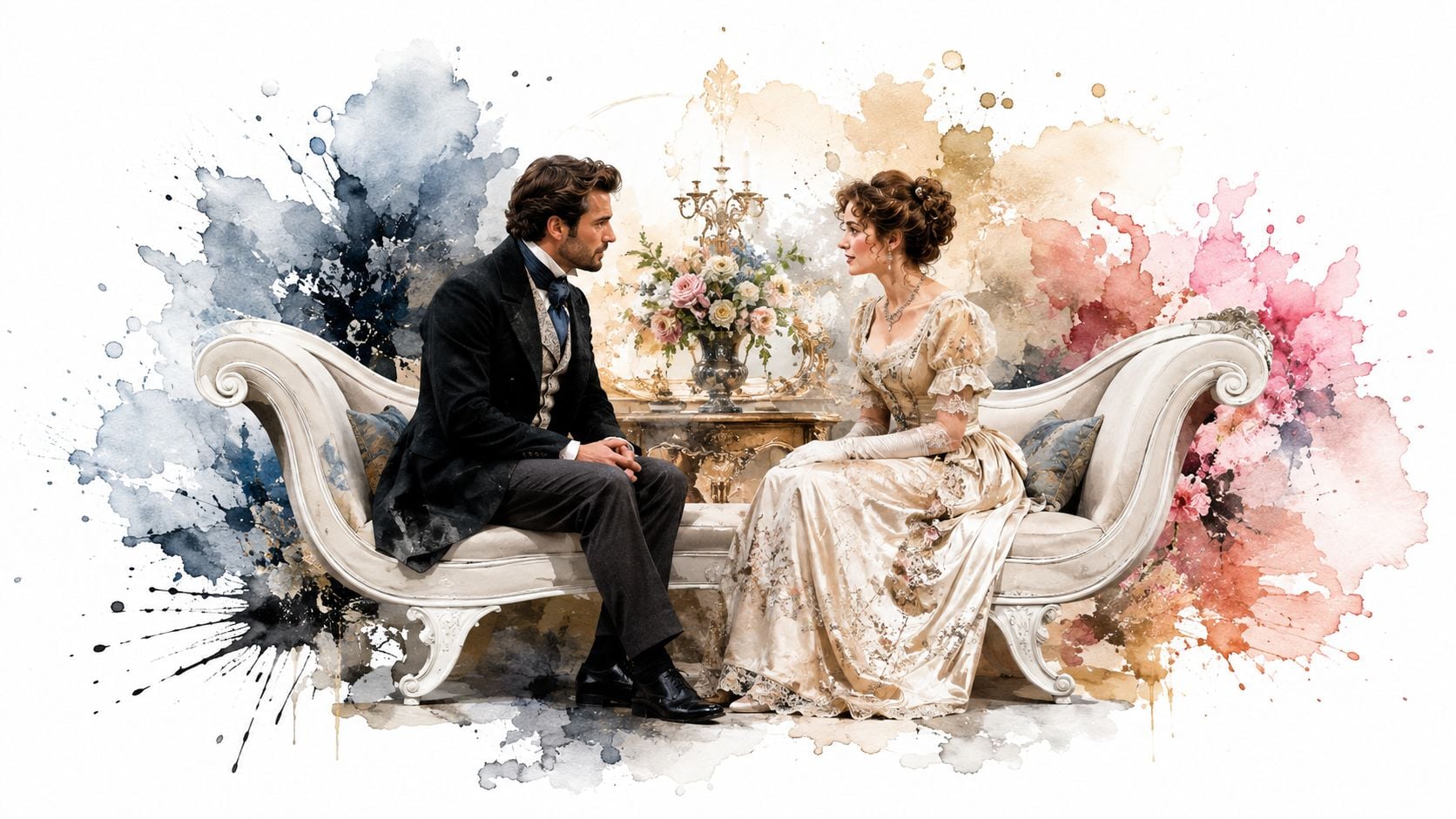
The defining feature isn't only that it seats two. A compact loveseat also seats two, but both people generally face forward. A tête-à-tête makes conversation the central use, which is why furniture references describe it as a two-seat form arranged with facing seats or a central divider, preserving eye contact and arm's-reach proximity (Houzz's overview of the tête-à-tête form).
How to Recognize the Shape
At a showroom, the easiest details to check are:
- Opposite-facing seats: The cushions angle toward each other rather than pointing toward a television or coffee table.
- A shared center: Many versions include a raised arm, narrow table-like section, or structural divider between the sitters.
- Two outer backs: These backs can make the piece look sculptural from behind and help define a room zone.
- A compact footprint: The form offers dedicated seating without the length of a conventional sofa.
The result feels more intentional than a bench and more social than a standard two-cushion sofa. It suits a pair of readers, visiting friends, or anyone who wants a quiet place for conversation without arranging an entire room around a large sectional.
How the Tête-à-Tête Evolved Across Centuries
The tête-à-tête grew out of changing European social habits rather than appearing as one isolated invention. Early examples emerged in 18th- and 19th-century Europe, first as two chairs joined together and later as curved settees. France became especially associated with the form, and the name means “head-to-head.” The design suited interiors where private conversation mattered, but etiquette also encouraged a measured amount of physical distance. It later reached peak popularity in Victorian England during the 19th century (the historical account of the tête-à-tête's development).
The vocabulary around two-person seating changed along with the furniture. A historical record defines the tête-à-tête in 1854 as a sofa for two people that curves so the sitters face each other, while a 1877 definition describes two joined chairs arranged in an S shape. Those descriptions show that the name could refer to related constructions, not one rigid pattern (the historical dictionary discussion of tête-à-tête seating).
A Family of Related Forms
The dated terminology makes the evolution easier to follow:
| Date | Recorded name |
|---|---|
| 1793 | Conversation chair |
| 1794 | Confidante |
| 1844 | Causeuse |
| 1864 | Tête-à-tête |
| 1876 | Cosy |
| 1891 | Two-seater |
These milestones don't describe a single designer's breakthrough. They trace a family of related two-person seats that furniture makers adapted for different rooms, manners, and patterns of entertaining. A formal parlor needed a different silhouette from a private sitting room, even when both spaces needed seating for two.
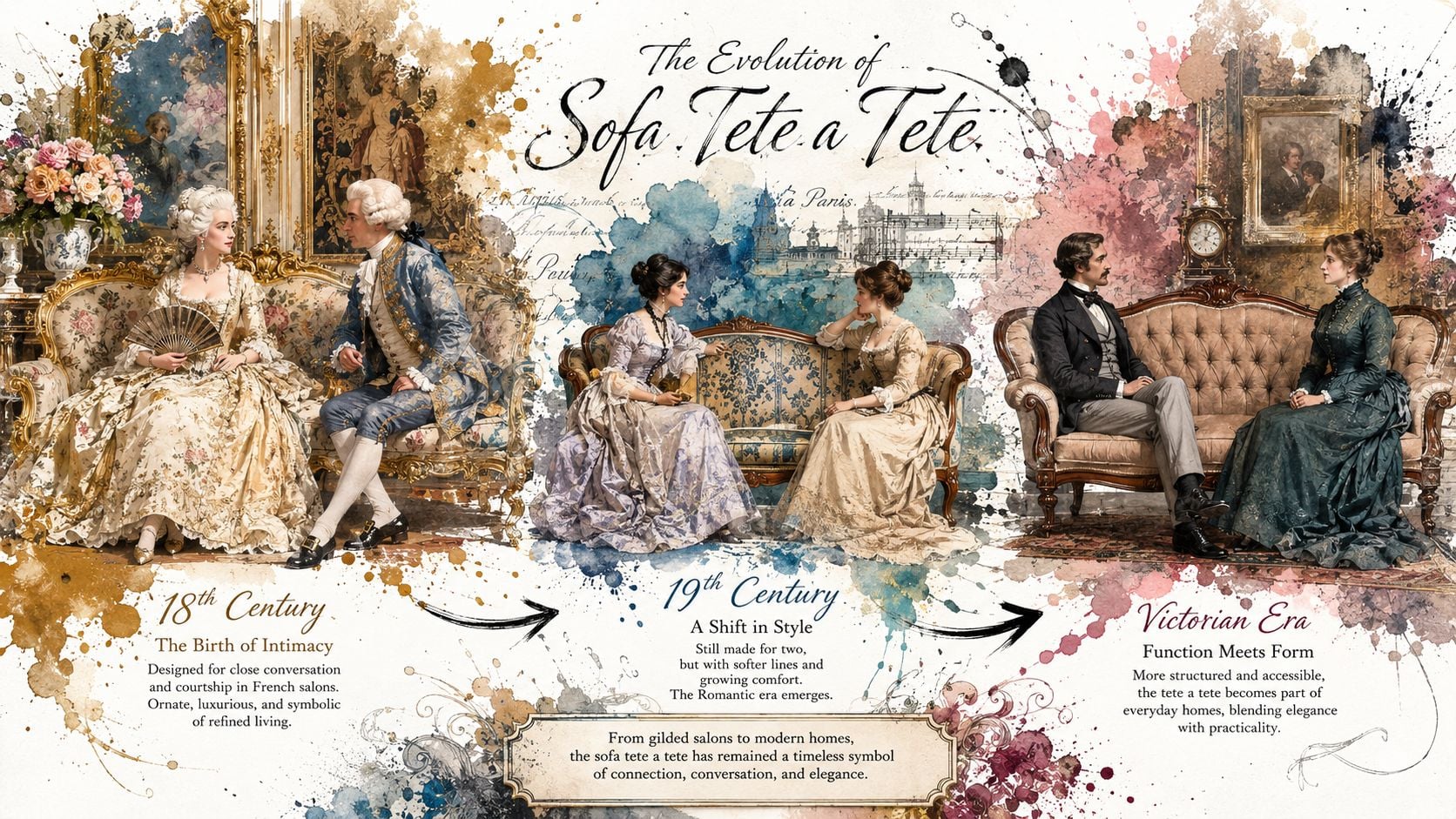
That history explains why the form can feel both antique and current. Its ornament may recall Victorian interiors, but its underlying idea is modern room planning. In a 2026 living room, the silhouette can create a distinct social area without depending on nostalgia or romance as the only story.
Tête-à-Tête vs Loveseat vs Settee vs Causeuse
Furniture names often overlap, so the structure matters more than the label. A tête-à-tête is defined by its conversation geometry. A loveseat is generally a shortened sofa with two seats facing one direction. A settee usually describes a bench-like upholstered seat that may sit against a wall, while a causeuse is a French two-person form that can be more conventional and less dramatically curved.
Two-Person Seating at a Glance
| Form | Seat Orientation | Typical Footprint | Best Use |
|---|---|---|---|
| Tête-à-tête | Facing inward or separated by a central divider | Compact but often deeper than it looks | Direct conversation and room zoning |
| Loveseat | Side by side, facing forward | Longer and more linear | Television viewing, reading, or pairing with a sofa |
| Settee | Usually side by side on a bench-style frame | Linear and often wall-friendly | Entryways, bedrooms, and accent seating |
| Causeuse | Two seats with a French conversational character, often without a full S curve | Small to moderate | Formal or decorative two-person seating |
The best choice depends on the activity. A loveseat works naturally in front of a television because both sitters face the screen. A settee can fill a hallway, bedroom, or window wall where a deep conversational seat would interfere with circulation. A causeuse can provide a refined two-person perch without the pronounced opposing angles of a traditional tête-à-tête.
Decision rule: Choose the tête-à-tête when face-to-face interaction and room separation matter more than forward-facing flexibility.
The piece earns its place when a room needs two different zones. For example, an open-plan living area might use a conventional sofa toward the television and a tête-à-tête nearer a window, fireplace, or entry path. The two backs help establish a boundary, while the seats keep a separate conversation area from feeling like leftover space.
A loveseat remains the safer choice when the main requirement is side-by-side lounging. The tête-à-tête wins when the room needs a small social destination, especially where two chairs would look disconnected or where a longer sofa would consume too much visual and physical space.
Sizing, Scale, and Placement in Real Rooms
A tête-à-tête may look compact in a photograph yet occupy surprising floor space. Documented antiques show why measurements should come before a purchase. One Victorian example measures 123 cm wide by 111 cm deep, with a 40 cm seat height. Another 18th-century example measures 104 cm wide by 54 cm deep and 61 cm high (documented antique tête-à-tête dimensions).
These proportions serve different rooms. The deeper form creates a generous conversation zone, while the slimmer one suits tighter layouts. Angled backs can extend farther into a circulation path than the upholstery suggests, so a piece that fits an apartment image may still obstruct a doorway.
Start With Tape, Not a Catalog Image
Use painter's tape to mark the complete width and depth on the floor. Include the outer backs, arms, central divider, and feet that project beyond the upholstery. Walk around the outline along the routes residents and guests will use.
A 3-foot-deep tête-à-tête needs roughly 6 to 9 feet of room depth for passage on both sides, according to the cited placement guidance. That space protects door swings and walking routes while giving the arrangement enough visual breathing room.
In a Bay Area open-plan home, those clearances can turn the piece into a practical room-planning tool. Its two backs can separate a conversation zone from television viewing, dining, or an entry path without adding a full wall. The result is a defined social area rather than seating placed in leftover space.
Good Locations for the Form
- Open-plan living rooms: Set the outer backs between a conversation area and a television or dining zone.
- Entryways: Choose a shallower design where brief seating will not narrow the main arrival path.
- Primary suites: Place it near a window or at the foot of the bed only after confirming that drawers and doors open freely.
- Reading nooks: Use the facing seats to create a companionable corner without two unrelated chairs.
- Apartment living rooms: Favor slimmer proportions when depth is limited, then check that the central divider does not intrude into the route.
Access requires its own measurement check. Measure the front door, interior doors, stair turns, elevator openings, and tight hallway corners. This guide for Boston movers on furniture fitting offers a useful way to review the route from delivery vehicle to final room, even for homes elsewhere.
Before ordering, mark the intended position and test every approach. Good scale preserves circulation today and protects the piece's long-term usefulness as the room changes.
Materials, Joinery, and Finishes That Decide Longevity
A tête-à-tête can look timeless in a showroom and still age poorly if its frame is weak. Upholstery supplies the visible color, texture, and comfort, while the structural skeleton carries the repeated loads of sitting, standing, shifting, and moving the piece.
Solid hardwood often forms the main frame. Curved backs may use shaped wood or engineered components selected for the design. Seat comfort can come from resilient foam, down blends, or traditional spring systems. These materials create different sensations, but the first inspection should begin at the frame connections.
Joinery Is the Quiet Test
Interlocking methods, including mortise-and-tenon construction, spread stress through the joint and help limit movement during daily use. The parts work more like one structural unit than a group held together by surface fasteners. This explanation of furniture joinery and structural longevity shows why the connection method matters as much as the material itself.
Solid wood furniture can remain in service for 20 to 50 or more years with basic care, and properly maintained pieces may exceed 100 years. Traditional joinery may support service lives of 50 to 100 years or more, while fastener-dependent construction may fail in roughly 5 to 15 years, according to this solid wood furniture lifespan guidance.
The cover is the wardrobe. The frame is the house.
That comparison gives Bay Area buyers a practical way to judge upholstery. Full-grain leather can develop character, while top-grain leather has a more uniform surface. Bonded leather belongs to a different construction category and should not be expected to age in the same manner. Performance fabrics can simplify care in active households. Natural fibers may offer a distinctive hand and appearance, but their use and placement deserve closer attention.
Sun exposure, coastal air, and everyday spills shape the finish and textile decision. A bright room may need materials chosen with light exposure in mind. A home near the coast may benefit from finishes and upholstery suited to that environment. No fabric is maintenance-free.
A replaceable or recoverable cover can refresh the appearance later, much like changing a room's outer layer. A weak frame is harder to repair and may limit the piece's useful life. For a 2026 conversation zone, durable construction protects more than appearance. It helps the tête-à-tête remain useful as household routines, layouts, and seating needs change, reducing the material and financial burden of premature replacement.
Why Custom Order Is the Smart Path for Bay Area Buyers
A sofa can look right in a showroom and feel wrong at home. The seat height may strain the knees, the upholstery may appear harsh beside a bright window, or the wood tone may compete with existing floors and tables. Those mismatches become more noticeable when the tête-à-tête serves as a visual anchor and helps define a conversation zone.
Custom ordering changes the starting question from “Can this one work?” to “Which combination fits this room?” Custom furniture programs commonly separate the choices for fabrics, leathers, wood species, and finishes, rather than limiting buyers to one fixed configuration (an example of custom furniture selections).
Fit Means More Than Dimensions
Bay Area homes often pair older architectural details with open-plan renovations. A tête-à-tête must connect those elements without making the room feel assembled from unrelated parts. A warm wood species may support traditional trim, while a quieter finish can sit comfortably beside contemporary flooring. Upholstery can emphasize the sculptural shape or allow the geometry to recede.
The practical value comes from solving several fit questions together:
- Scale: Select a form that respects the taped floor plan and walking routes.
- Comfort: Confirm that the seat height and cushion feel suit the people who will use it.
- Color: View fabric, leather, and wood samples under the room's actual light.
- Character: Decide whether the piece should act as a focal point or a quiet architectural divider.
- Adaptability: Consider whether the selected materials will remain appropriate as the room's use or arrangement changes.
A custom order works like tailoring. The room supplies the measurements, while the materials and construction choices determine how the finished piece behaves over time. That distinction matters for Bay Area buyers managing strong daylight, varied architecture, and rooms that may serve more than one purpose.
Giorgi Bros. Furniture offers a 50,000-square-foot showroom in South San Francisco, where buyers can touch, feel, and test furniture before discussing custom options. Its non-commission Design Consultants can explain construction, upholstery, and finish choices without tying recommendations to a commission. Buyers can compare alternatives at a measured pace and focus on how the piece will function in the home.
The result is a tête-à-tête selected for the room, rather than a piece chosen only because it looked suitable under showroom lighting. That planning can help the furniture support distinct conversation zones while preserving its usefulness as household routines, layouts, and design preferences change.
Buying Checklist, Care Routine, and Local Next Steps
You have taped the footprint, checked the walking routes, and found a tête-à-tête that suits the room. Before placing an order, shift attention from appearance to access, construction, daily care, and future use. This final check helps a Design Consultant understand the home and helps you judge the piece on its own terms.
Before the Showroom Visit
- Tape the footprint. Mark the full width and depth on the floor, including angled backs and the central divider. Walk from the main entrance to the proposed location.
- Check traffic paths. Allow approximately 30 to 36 inches for primary movement. Test the route with doors open and people passing. This range guides room planning, rather than defining a universal furniture specification.
- Record room conditions. Note window direction, afternoon glare, nearby heat sources, flooring, rugs, and finishes already in the space.
- Measure delivery access. Check the front door, turns, stairs, elevator, and interior openings. A piece cannot serve the room if it cannot reach it.
- Bring photographs and samples. Room photos, rug fragments, paint cards, and flooring samples make color decisions more dependable than memory.
These details also clarify whether the tête-à-tête can create a distinct conversation zone without narrowing the room's main route. For Bay Area homes with strong daylight or multiple uses, that practical test matters as much as the silhouette.
Inspect the Piece, Not Only the Upholstery
Ask the consultant to explain the frame materials, support system, warranty terms, and maintenance requirements in plain language. Run a hand along accessible frame areas, check that the piece feels stable, and ask how the central section is supported.
Look for interlocking joinery, including mortise-and-tenon construction. These joints can distribute stress and limit movement during ordinary use. Sit in both positions, because the two sides may feel different when their angles change the way the arms, back, and seat support the body.
Test swatches in the room's conditions. Place them near the strongest window, under evening lighting, and beside the existing rug or flooring. A neutral textile may appear warm in one room and gray in another. Wood finishes also change character beside different surfaces.
A Simple Care Routine
- Vacuum gently: Use a soft upholstery brush on a regular schedule to remove surface dust without pulling at the weave.
- Rotate cushions: Change cushion positions when the design allows, helping distribute ordinary wear.
- Protect placement: Keep the piece 12 inches from heating vents and out of direct afternoon sun to reduce stress on materials.
- Condition leather: Apply an appropriate leather conditioner twice a year, following the maker's care instructions.
- Blot spills: Press with a clean absorbent cloth instead of rubbing, which can spread the mark or disturb fibers.
- Follow the maker's instructions: Fabrics, finishes, and leathers may require different products and methods.
A sound frame can support updated upholstery or a refreshed finish when the original covering no longer suits the room. That approach can reduce replacement spending and keep the furniture useful beyond one decorating cycle. It also connects material and construction choices with long-term ownership value, especially when a tête-à-tête continues dividing conversation areas as household routines change.
Giorgi Bros. Furniture has served South San Francisco and the Greater Bay Area for over 90 years, with family-owned service, non-commission Consultants, custom order options, premium mattresses, and financing options available. At the showroom, shoppers can test a tête-à-tête, compare it with other seating forms, and discuss a Design Consultation without pressure.
Giorgi Bros. Furniture offers a South San Francisco showroom where Bay Area homeowners can test conversation seating, explore Custom Furniture options in fabrics, leathers, wood species, and finishes, and receive guidance from non-commission Design Consultants. Visit Giorgi Bros. Furniture to plan a showroom visit or book a Design Consultation for a sofa tête-à-tête that fits the room and supports long-term ownership.