A lot of furniture disappoints people in the same way. A dining chair starts to wobble. A dresser drawer sticks. A sofa cushion develops that telltale dip right where everyone sits. The room still looks fine from a distance, but daily use starts exposing the shortcuts hidden under the fabric and finish.
That frustration usually isn't about style. It's about construction. People thought they were buying something for their home, but they were really buying a replacement schedule.
Families in the Bay Area have wrestled with that tradeoff for generations. Since 1933, South San Francisco shoppers have come to a family-run showroom looking for straight answers, not pressure. The conversation hasn't changed much. What lasts. What doesn't. What feels good in the store but fails in real life. And what makes a piece worth keeping for decades.
Table of Contents
- From Disposable to Durable Why Invest in Long Lasting Furniture
- The Anatomy of a Lifetime Piece What Quality Looks Like
- How to Shop for Furniture Like an Expert
- The True Cost of Furniture A Lifetime Value Comparison
- Making It Yours Why Custom Furniture Is a Lifetime Investment
- Your Partner in Quality The Giorgi Bros Experience
- Begin Your Legacy of Quality Today
From Disposable to Durable Why Invest in Long Lasting Furniture
Most households don't decide to care about long lasting furniture because of a design trend. They care because something failed too soon. A family buys a budget sofa for a first home. A few years later, the seat sags, the arm loosens, and the fabric no longer looks clean no matter how often it's vacuumed. Then comes the second purchase, and the lesson gets expensive.
That pattern is one reason quality matters so much. A consumer survey summarized by Civil Space's furniture statistics overview reported that 81% of consumers ranked quality as the top factor in furniture purchases. That doesn't describe a niche buyer. It describes the mainstream shopper who wants furniture to handle real life and stay useful for the long haul.
Daily use reveals what a showroom glance can miss
A piece can look attractive on the floor and still be built for a short life. The weak points usually don't appear under bright lights. They show up after years of kids climbing onto seats, pets turning corners too tightly, guests leaning back in dining chairs, and repeated moves from one room to another.
Practical rule: A good furniture purchase should get calmer with time, not more annoying.
That's why the buy for life mindset appeals to practical people, not just collectors. Strong construction brings peace of mind. A solid dining table doesn't make a household wonder whether one more holiday dinner will leave another scratch, another wobble, or another regret.
The same thinking applies to the rest of the home. People who invest in surfaces and furnishings that can be refreshed instead of replaced often spend more wisely over time. Homeowners thinking about longevity beyond furniture may also appreciate Buff & Coat's hardwood floor advice, which shows the same principle at work. Maintain quality materials well, and they keep serving the home.
Long lasting furniture changes how people buy
When shoppers switch from "What costs less today?" to "What will still work years from now?" the shortlist changes fast. Materials matter more. Construction details matter more. So does emotional staying power. If a piece is made well and still suits the home years later, it becomes part of the household instead of temporary décor.
That is one reason many buyers gravitate toward natural materials and time-tested designs such as reclaimed wood furniture. The appeal isn't only appearance. It's the sense that the piece has substance, character, and a reason to stay.
For a family business that has served South San Francisco since 1933, that shift in mindset is familiar. The wisest buyers aren't chasing the lowest ticket. They're trying to avoid buying the same category twice.
The Anatomy of a Lifetime Piece What Quality Looks Like
A well-made piece usually gives itself away once someone knows where to look. It feels steadier. It sounds quieter. Drawers move with more confidence. Seats recover their shape better. The clues aren't mysterious, but many shoppers were never taught how to read them.
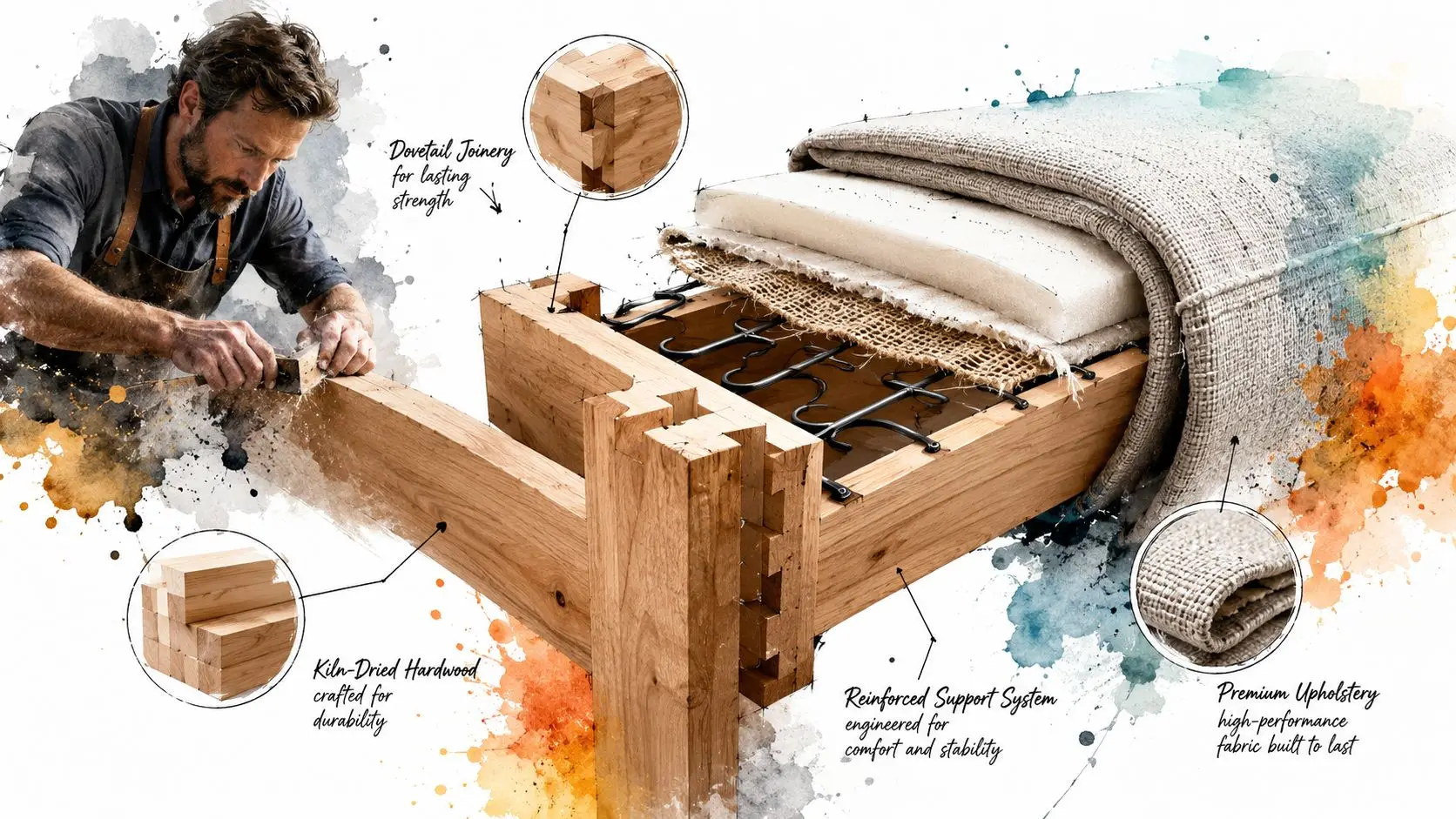
High-quality construction centers on solid hardwood frames, kiln-dried lumber, and mechanically strong joinery such as dovetail or mortise-and-tenon joints, according to this guide to high-end furniture characteristics. Those features help prevent warping and joint loosening, and they create furniture that stays stable under repeated use.
Start with what sits under the surface
The hidden frame does most of the long-term work. On upholstered seating, that's the skeleton. On bedroom and dining furniture, it's the body that keeps the piece square and strong.
A simple way to think about materials:
| Material choice | What it usually means in practice |
|---|---|
| Solid hardwood | Better strength, repair potential, and long-term stability |
| Kiln-dried lumber | Less moisture-related movement over time |
| Low-grade composite parts | More risk of loosening, swelling, or fatigue under daily use |
Many shoppers get confused by veneers, because veneer itself isn't automatically a bad sign. The key issue is what lies underneath. A quality veneer over stable construction can perform well. A thin decorative surface over weak substrate usually won't age the same way. That distinction matters, and this explanation of solid wood vs veneer furniture helps separate the marketing language from the actual structure.
Joinery tells the truth
Joinery is where furniture makers show their seriousness. If a piece relies on better methods, it can resist the little forces that wear furniture down over the years. Pulling, twisting, leaning, shifting weight, opening drawers, and moving a chair across the floor all test the joints.
Here are the signs worth recognizing:
- Dovetail joints in drawers show that the corners are meant to hold together under repeated opening and closing.
- Mortise-and-tenon joints connect parts in a way that distributes stress more securely than quick hardware alone.
- Corner blocks and reinforced attachment points help upholstered frames stay square when people drop into seats instead of lowering themselves gently.
A furniture joint should behave like a house foundation. If the structure moves too much, every visible part starts suffering.
Shoppers interested in upholstery construction can also learn from superior 8-way hand-tied craftsmanship, especially when comparing seating that feels comfortable on day one versus seating designed to keep its support.
Comfort materials matter too
A strong frame isn't enough if the comfort layers collapse early. Seat cushions, suspension systems, and upholstery all affect how long a piece remains pleasant to use. These factors often lead to disappointment with fast purchases. The sofa still stands, but no one enjoys sitting in it.
A lasting upholstered piece usually gets three things right:
Support below the cushion
The seat base should distribute weight evenly and recover well after daily use.Cushion materials with resilience
Good cushions shouldn't flatten quickly or drift out of shape after regular sitting.A cover selected for real life
Fabric and leather choice should match the household. Pets, children, sunlight, and heavy use all call for different decisions.
The insider lesson is simple. Long lasting furniture isn't one magic feature. It's a chain. Strong wood, proper drying, sound joinery, dependable support, and sensible upholstery all have to work together.
How to Shop for Furniture Like an Expert
Saturday afternoon, a showroom is full, and two sofas can look equally convincing from ten feet away. One will still feel good years from now. The other will start showing its shortcuts much sooner. The difference usually reveals itself only after a buyer stops shopping with their eyes alone.
That is the expert habit. Slow the process down enough to inspect how a piece is meant to live in a real home, not how it performs under showroom lighting.
What to do in the showroom
A good showroom visit works a bit like buying a used car from a trusted mechanic's point of view. The finish matters, but the hidden structure matters more. Sit, open, lift, and look where hurried shoppers rarely look.
Start with movement. Put a hand on the back of a dining chair or the arm of a sofa and apply light pressure. A little give can be normal depending on the design, but wobble is a message. Furniture should feel settled, the way a staircase feels settled when it was framed properly.
Then use every part that is supposed to move. Open drawers all the way. Close doors. Test extension leaves, reclining actions, and sleeper mechanisms. Good motion feels controlled and repeatable. If something bangs, catches, scrapes, or rattles on day one, age usually does not improve it.
Weight can help too, although it should be read with some common sense. A piece does not need to be heavy for the sake of heaviness, but it should feel proportionate to its job. A large case piece that feels almost hollow often raises the same concern as a front door that shuts like thin plywood. Substance tends to announce itself.
One more habit separates careful buyers from casual browsers. Kneel down.
Look at the back, the underside, the drawer interiors, and the rear corners. Honest construction often shows itself in those quiet places. For shoppers comparing case goods, browsing solid wood furniture for the living room can help train the eye to notice grain, thickness, joinery, and the difference between applied surface appeal and real structure.
Good furniture welcomes inspection. Poorly made furniture depends on nobody looking underneath.
The showroom itself can help if it gives you room to compare one build style against another. Side by side testing teaches quickly. Seat depth that feels comfortable for ten minutes may feel tiring after an hour. A drawer that seems fine by itself may feel rough once you have opened a better one nearby.
Questions that reveal quality
A skilled shopper asks questions that get past styling language and into construction. The point is not to sound technical. The point is to learn whether the piece was built to stay useful, repairable, and satisfying over a long stretch of life.
Useful questions include:
- What wood species is used in the frame or case piece?
- Was the lumber kiln-dried?
- How are the joints constructed?
- What supports the seat under the cushion?
- Can this piece be ordered in different fabrics, leathers, wood species, or finishes?
- What does the warranty cover?
Those questions tend to change the whole conversation. They shift attention from trend and surface to lifespan and maintenance. They also reveal whether the person helping you understands the product or is repeating a tag line.
That matters for buy-for-life thinking. A well-made piece is rarely an impulse purchase. It is closer to choosing a set of tools you expect to keep. You want to know what it is made of, how it goes together, and whether it can be serviced, refreshed, or reupholstered instead of discarded.
Red flags worth noticing
Some warning signs show up immediately. Others appear only when you touch the piece and pay attention to how it responds.
A short list of concerns:
- Visible staples in key structural areas suggest speed mattered more than careful assembly.
- Thin, flimsy back panels often point to cost cutting where rigidity should be doing real work.
- Loose fabric, uneven seams, or puckering can signal rushed upholstery.
- Rattling hardware or rough drawer travel usually stays annoying.
- An overly light frame for a large piece can mean less material where strength counts.
No-pressure guidance still has value, especially for whole-home purchases, but the best help should clarify your standards rather than rush your decision. A local showroom team, interior designer, or product specialist can be useful if they answer plainly and let the construction speak for itself. That is how experienced buyers shop. They touch, test, ask, compare, and choose with a long horizon in mind.
The True Cost of Furniture A Lifetime Value Comparison
Sticker price tells only part of the story. The more useful question is this: what will the piece cost over the years it stays in the home, performs well, and still feels worth keeping?
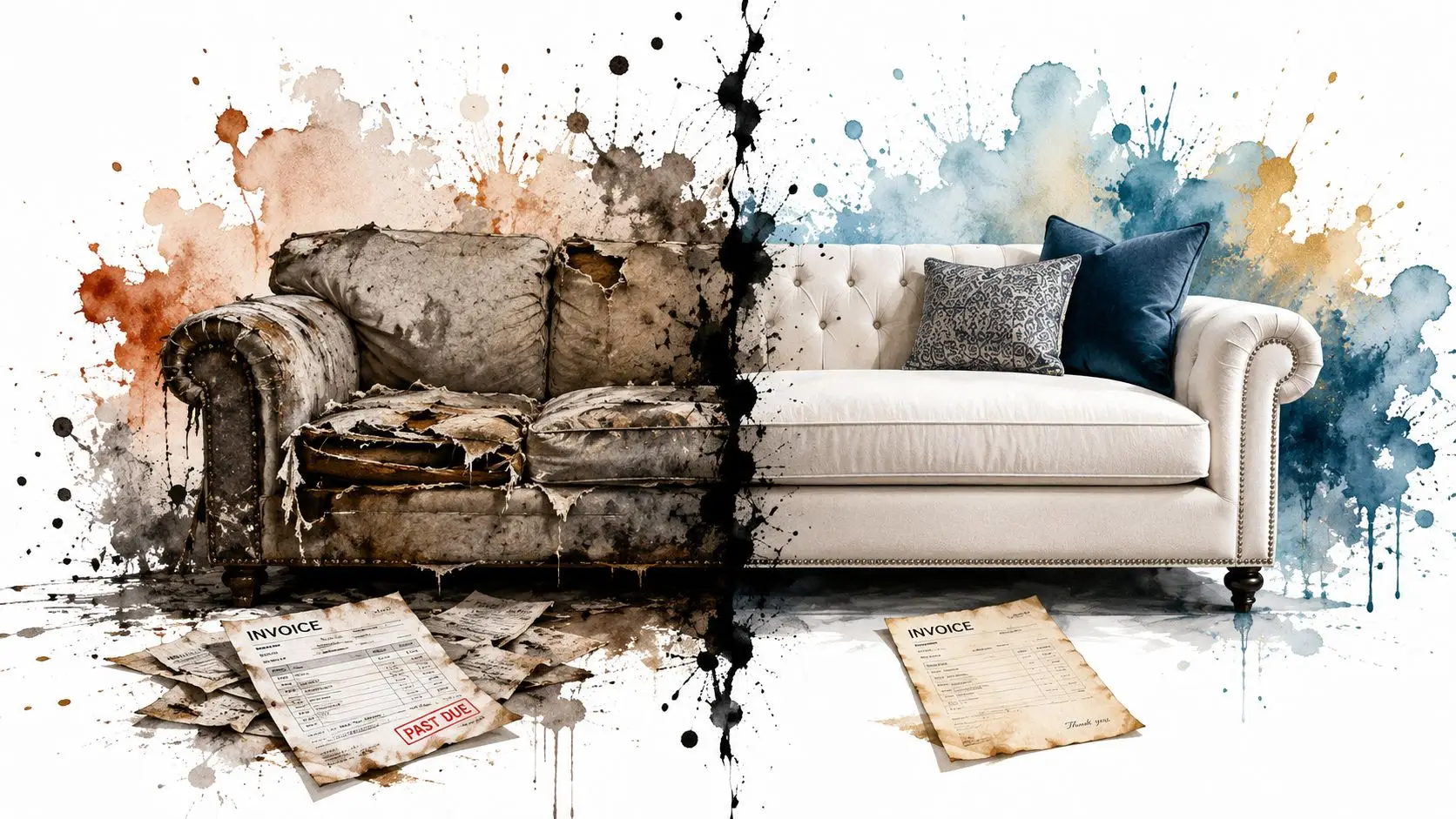
Cheap twice costs more than good once
A low initial price can feel efficient. But repeated replacement changes the math. Every short-lived purchase brings another round of shopping, delivery, setup, disposal, and compromise. People don't just spend money again. They spend time, attention, and patience again.
That is why the phrase investment pieces matters. It doesn't mean every room must be furnished with the highest-end option. It means a buyer identifies the pieces that take the most daily stress and buys those categories with a longer horizon in mind.
A sofa in the main living room is a good example. So is a dining table that serves homework, weeknight meals, and holidays. So is a bed frame expected to stay square through years of use and at least a few moves.
Worth remembering: A bargain stops being a bargain when the household has to solve the same problem again.
Long-lasting furniture also protects design continuity. A room built around stable, well-made anchors ages more gracefully than one built around temporary stand-ins. When the bones of the room are dependable, smaller updates can carry the freshening work.
For households focused on living spaces, browsing categories such as solid wood furniture for living rooms often helps clarify where durability has the biggest payoff.
Waste is part of the price
The environmental side of this conversation matters because disposal is not an abstract issue. The U.S. EPA data cited in this Business of Home article on furniture waste reported that furniture generated 12.1 million tons of municipal solid waste in 2018, and only 2.5 million tons were recycled. The rest was landfilled or combusted.
That fact changes how many people think about replacement cycles. A short-lived purchase doesn't vanish when it leaves the house. It becomes part of a much larger waste stream.
A buy for life approach isn't only about thrift. It's also about stewardship. Choosing stronger materials, repairable construction, and timeless design reduces the churn that fills trucks, transfer stations, and landfills. Sustainability starts to look less like a slogan and more like a practical household habit.
Making It Yours Why Custom Furniture Is a Lifetime Investment
A piece lasts longer in a home when the household still loves using it. Construction keeps furniture standing, but customization often keeps it wanted. That is why custom furniture belongs in any serious conversation about long lasting furniture.
Fit and function keep furniture in the home
People often replace furniture that isn't technically broken. The scale is wrong. The fabric shows every mark. The finish clashes with the remodel. The sectional doesn't suit a new layout. In those cases, poor fit shortens the life of an otherwise usable piece.
Customization solves that problem early.
A custom order can help with choices such as:
- Fabrics and leathers that match the household's wear patterns and cleaning tolerance
- Wood species and finishes that coordinate with floors, cabinetry, and existing heirlooms
- Dimensions and configurations that suit a particular room instead of forcing the room to suit the furniture
This matters in Bay Area Interior Design, where homes vary widely in scale, architecture, and use. A downtown condo, a hillside home, and a busy family house don't ask the same things from a sofa or dining set. A custom-fitted piece has a better chance of staying relevant through renovations and lifestyle changes.
Why Amish Furniture fits the buy for life mindset
Custom Amish Furniture often appeals to shoppers looking for long-term value because the logic is straightforward. The buyer isn't settling for whatever happens to be in stock. The buyer is choosing durable construction and then shaping the details to fit daily life.
That combination is powerful. It reduces the urge to replace a piece merely because taste evolved or a room changed. If the foundation is strong and the design was chosen thoughtfully, the furniture can move through many chapters of the home.
Some shoppers are surprised by how manageable the process can be. A useful starting point is custom furniture made simple, which shows how selecting materials and finishes can be more practical than intimidating.
There is also a quieter benefit. Custom furniture tends to create attachment. People keep what feels personal. They maintain it, move it carefully, and repair it when needed. That mindset is exactly what turns a purchase into a lifetime investment.
Your Partner in Quality The Giorgi Bros Experience
Buying long lasting furniture gets easier when the advice is calm, informed, and not tied to a commission. People make better decisions when nobody is pushing them toward the fastest close.

Guidance works better when nobody earns a commission
A non-commission environment changes the tone of the entire visit. The conversation can stay where it belongs: room size, household habits, comfort preferences, wood choices, upholstery practicality, and how long the piece is expected to serve.
That kind of guidance matters in a very large market. Grand View Research projected the U.S. furniture market would reach USD 292.26 billion by 2033 in its U.S. furniture market report. In a market that large, shoppers don't need more options thrown at them. They need help filtering for craftsmanship, durability, and fit.
A seasoned consultant also knows when to slow the process down. If a buyer is torn between two seat depths, uncertain about leather versus fabric, or trying to coordinate wood finishes across rooms, a patient conversation prevents costly mistakes.
A big showroom helps people buy more carefully
A substantial showroom gives people a chance to compare rather than guess. They can sit in a firmer sofa and then a softer one. They can open a drawer built with better joinery and then a cheaper version. They can see how finishes read under real light and how scale changes from one collection to the next.
That matters for whole-home shoppers. It also matters for people furnishing one room at a time but trying to keep a consistent standard. A large South San Francisco showroom can support both goals because the decision becomes tactile, not theoretical.
Services around the purchase matter too. Delivery, setup, follow-through, and clear expectations all affect whether a quality piece arrives and performs the way it should. So do practical protections such as furniture warranty information, which helps buyers understand what is covered and why that coverage fits the product category.
The old-fashioned version of good furniture retail still works. Give people space. Answer important questions. Let them test quality in person. Offer financing options when needed. Then let the piece prove itself.
Begin Your Legacy of Quality Today
A family buys a dining table for a first apartment. Years pass. It becomes the table where homework gets done, birthdays are celebrated, and one more chair is squeezed in for holidays. Furniture at its best works this way. It stays useful, steady, and familiar as life changes around it.
Long lasting furniture rewards clear judgment. Good wood, honest upholstery, well-made joints, and thoughtful sizing are not luxury details. They are the parts that decide whether a piece settles into your home for decades or starts asking for replacement far too soon. In a buy for life mindset, that difference matters twice. You spend less time replacing things, and you live with something that feels right every day you use it.
There is a satisfaction that comes from knowing why a piece is good. It is the same confidence an experienced mechanic has when hearing a well-built engine, or a carpenter has when closing a solid wood drawer. You stop guessing. You know what you are looking at, and you know what it is likely to do over time.
For Bay Area households, the next useful step is to see construction up close in person. Sit in the seating long enough to notice support, not just softness. Open drawers and feel whether they glide squarely. Look at the finish in real light. Ask the kind of questions that separate furniture made to pass a quick first impression from furniture made to keep its shape, comfort, and purpose over many years.
Giorgi Bros. Furniture has served South San Francisco since 1933, with a large showroom and non-commission guidance that keeps the focus on fit, construction, and long-term value. It is a practical place to compare custom furniture, Amish furniture, and premium mattresses without pressure, so the choice you make now can still feel wise many years from now.