
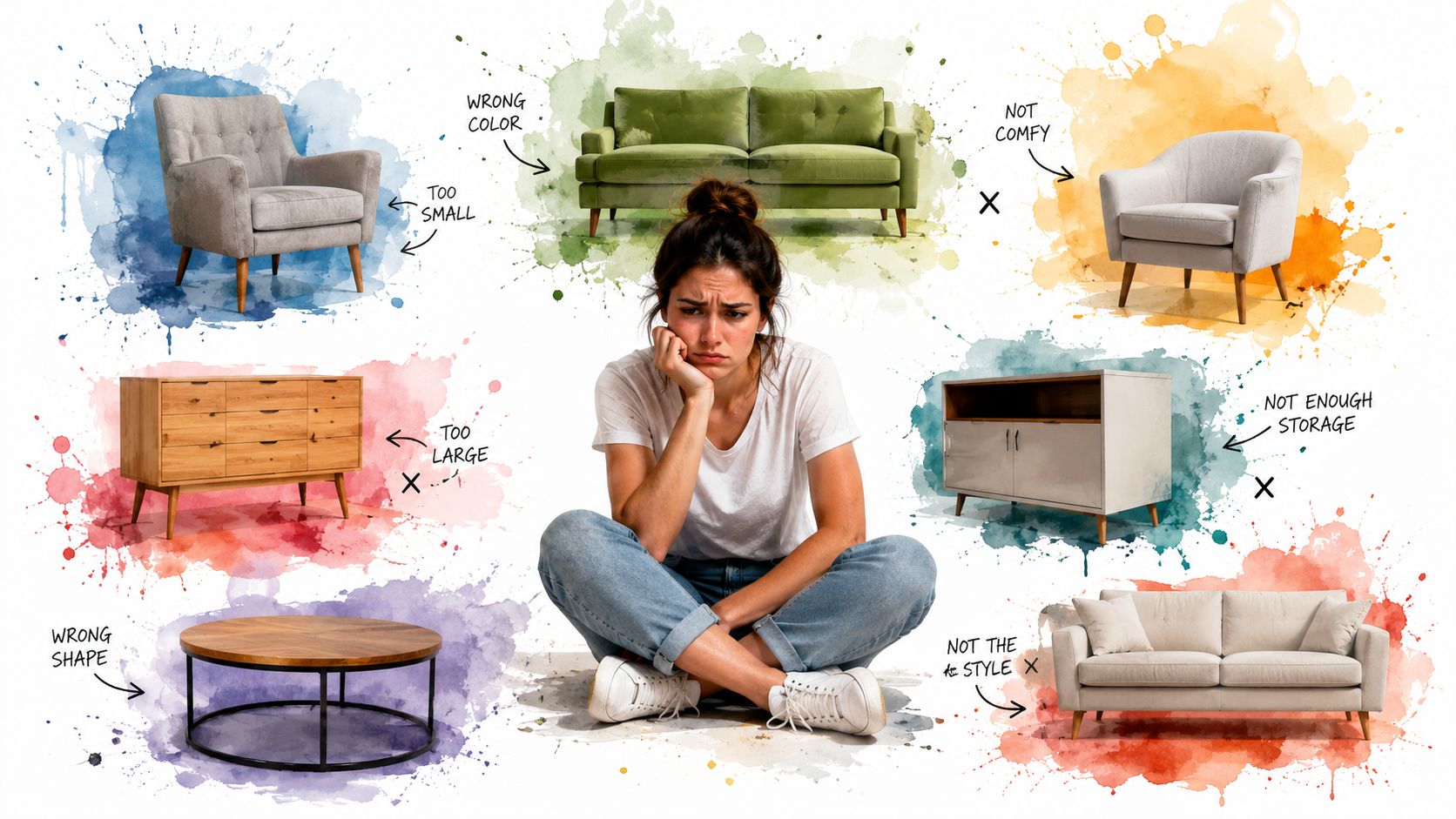
A Bay Area homeowner often starts in the same place. The dining room needs a table that won't crowd the walkway. The living room has a wall that's a little too narrow for standard case goods and a little too prominent for a compromise piece. The bedroom calls for warmth and storage, but every ready-made option feels either too large, too flimsy, or out of step with the house.
That search can drag on for months. One piece is the right style but the wrong depth. Another fits the room but uses materials that don't inspire confidence. A third looks fine online and disappoints the moment the drawers are opened or the finish is seen in daylight.
Custom made wood furniture enters the picture when “close enough” stops feeling acceptable. It gives families a way to match a piece to the room, the household, and the years ahead. That might mean a sideboard built to follow an older home's unusual proportions, a dining table sized for daily life instead of a catalog standard, or a bedroom piece made in a wood species that grows more beautiful with age.
In the Bay Area, that matters more than many people expect. Homes vary widely. So do tastes, routines, and climate conditions from neighborhood to neighborhood. A good custom piece doesn't just fill space. It solves a problem with intention.
Families in South San Francisco have been having those conversations for generations. Since 1933, Giorgi Bros. has helped Bay Area households think past the quick purchase and focus on lasting satisfaction. The value in that kind of guidance isn't pressure. It's clarity. A well-made piece should suit the home now, wear gracefully, and still make sense years from today.
Table of Contents
- Introduction The Search for Furniture That Truly Fits
- Beyond the Big Box The Lifelong Value of Custom Furniture
- The Language of Wood Species Finishes and Character
- Designing Your Vision A Guide to Customization Options
- Understanding the Investment Costs and Timelines
- The Giorgi Bros Process A Partnership in Crafting Your Furniture
- Caring For Your Lifetime Investment Piece
- Frequently Asked Questions About Custom Wood Furniture
Introduction The Search for Furniture That Truly Fits
A family renovating an older Bay Area home often discovers that standard furniture assumes standard rooms. But many local homes aren't standard. Alcoves run shallow. Stairways tighten the delivery path. Breakfast nooks ask for one exact table size and nothing else will do.
That's where frustration starts. A mass-produced piece can be attractive, but if it blocks circulation, overwhelms the room, or wears out too quickly, the household pays for the compromise every day. The eye notices it. So does the body. Chairs sit a little awkwardly. Storage never quite works. The room feels unfinished.
Custom made wood furniture changes the conversation from “What can fit?” to “What should live here?” That one shift helps people make better decisions. Instead of forcing a room to adapt to a fixed product, the piece is shaped around the way the home is used.
A common Bay Area scenario
Consider a dining room in a hillside house. The owners want seating for family dinners, enough clearance for movement, and a style that doesn't fight with older trim details. Ready-made tables are either too long, too heavy in appearance, or missing the right finish tone.
A custom table solves several issues at once. The length can be adjusted. The leg placement can work with the seating plan. The wood can be chosen to complement the floor rather than compete with it.
Custom furniture works best when it answers a room problem first and a style preference second.
That's why education matters so much in this category. Buyers aren't just selecting color and shape. They're choosing materials, construction, and scale that have to perform for years.
Why trusted guidance matters
For a household making an investment piece decision, no-pressure guidance often matters as much as selection. Families want room to compare wood species, ask practical questions, and think through options without being rushed toward a quick close.
In South San Francisco, that steady approach has been part of the conversation since 1933. A family business with long roots tends to see furniture the way many homeowners do. Not as a short-term transaction, but as part of the home's life.
Beyond the Big Box The Lifelong Value of Custom Furniture
Custom furniture earns its place when a family wants more than temporary convenience. The strongest case for it isn't status. It's usefulness over time.
When fit changes everything
The first advantage is physical fit. A room can look balanced on paper and still feel off once furniture arrives. Depth, height, and visual weight all matter. A custom piece can be scaled to the architecture instead of borrowed from a one-size-fits-most catalog.
That's especially relevant in homes with narrow dining areas, older moldings, window placements, or open-plan rooms where one piece has to do more than one job. Buyers weighing similar decisions in bath spaces may also find this overview of custom vs pre-fabricated vanities useful because it shows how made-to-measure thinking solves layout problems before they become daily annoyances.
A well-fitted living room piece also tends to read as calmer and more intentional. For examples of construction-focused options, solid wood furniture for living room settings can help buyers think through what belongs in high-use spaces.
Ownership feels different
The second advantage is personal connection. A piece chosen in the right species, finish, size, and detail often becomes part of the household story. That doesn't happen often with furniture bought only because it was available quickly.
There's also the durability question. Quality custom furniture is often built with repairability in mind, which changes the ownership equation. According to Sentient Furniture's discussion of durability per year of use, the value of custom furniture can be framed by durability per year of use. By focusing on repairable construction and high-quality materials, the long-term environmental and financial cost is significantly lower than that of cheaper, disposable furniture, which often has a high replacement cycle and relies on less sustainable manufacturing processes.
That idea helps buyers move past the sticker shock that sometimes surrounds custom work. The more useful comparison isn't custom versus bargain furniture on day one. It's one lasting piece versus repeated replacement.
A practical way to think about value:
- Perfect fit: The piece works with the room instead of forcing workarounds.
- Personal meaning: Materials and details reflect the household, not a trend cycle.
- Long service life: Better construction supports years of daily use.
- Less waste over time: Keeping and repairing one piece is often a more responsible path than replacing several.
Practical rule: If a family expects to keep a piece through moves, remodels, and changing routines, custom furniture often becomes easier to justify.
The Language of Wood Species Finishes and Character
Many buyers know they like “wood,” but that word covers a lot of ground. Two tables can share a silhouette and feel completely different once species and finish enter the picture.
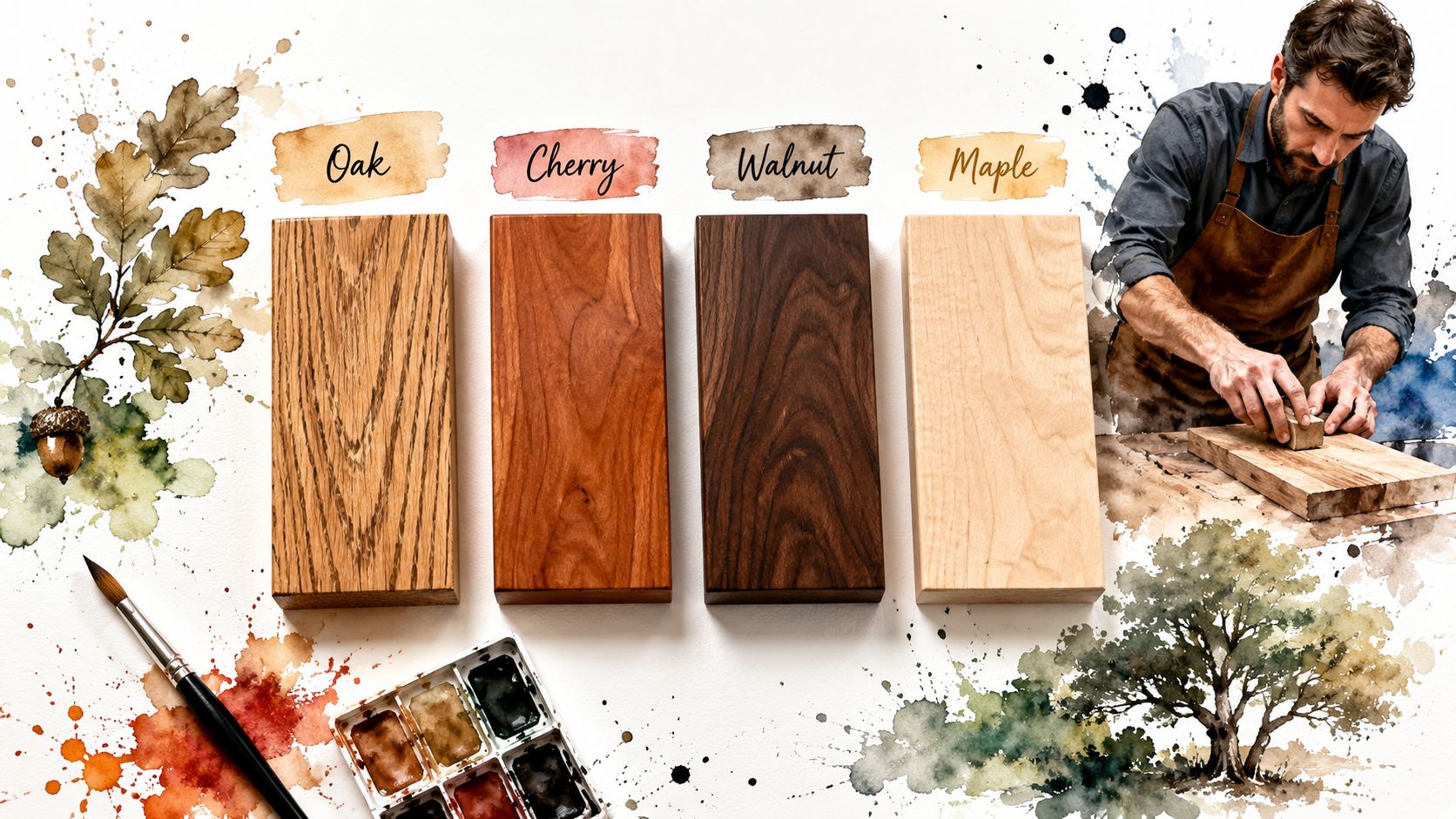
How common hardwoods tend to feel in a room
Oak often appeals to buyers who want visible grain and a grounded look. It can read traditional or clean-lined depending on the design.
Cherry usually brings warmth and a more classic elegance. Many people choose it when they want richness without heavy visual texture.
Walnut tends to feel deeper and more architectural. It's often favored for statement pieces because its color naturally adds presence.
Maple usually looks smoother and more understated. In lighter finishes, it can support a simpler, brighter interior.
For readers comparing wood categories in broader building and design contexts, this guide to wood types for your cladding project can help sharpen the eye for how wood choices affect appearance and performance.
A useful next step for furniture buyers is understanding surface construction, especially when comparing natural wood looks. This overview of solid wood vs veneer helps clarify what each approach can offer.
Why finish and construction matter
Finish changes both appearance and daily maintenance. Some finishes highlight a natural, low-sheen look. Others create more surface build and a more polished visual effect. Families with children, frequent entertaining, or heavy everyday use often need to think about touch, cleanability, and scratch visibility just as much as color.
Construction matters just as much as species. According to Minimal and Modern's explanation of custom furniture engineering, solid wood expands and contracts across the grain with humidity changes, so quality construction has to allow for that movement. Techniques such as floating panels or frame-and-panel construction help prevent splitting or warping over time.
That point confuses many shoppers because solid wood sounds like the obvious answer in every situation. It isn't always. Large carcass parts may call for more dimensionally stable construction choices when stability matters most.
| Material choice | What buyers should think about |
|---|---|
| Solid hardwood | Natural character, repair potential, and the need for proper movement allowance |
| Veneered core | Surface beauty with greater dimensional stability in some applications |
| Finish selection | Color, sheen, touch, and how the piece will age in daily use |
The right question isn't “Which material is best?” The better question is “Which construction suits this room, this use, and this household?”
Designing Your Vision A Guide to Customization Options
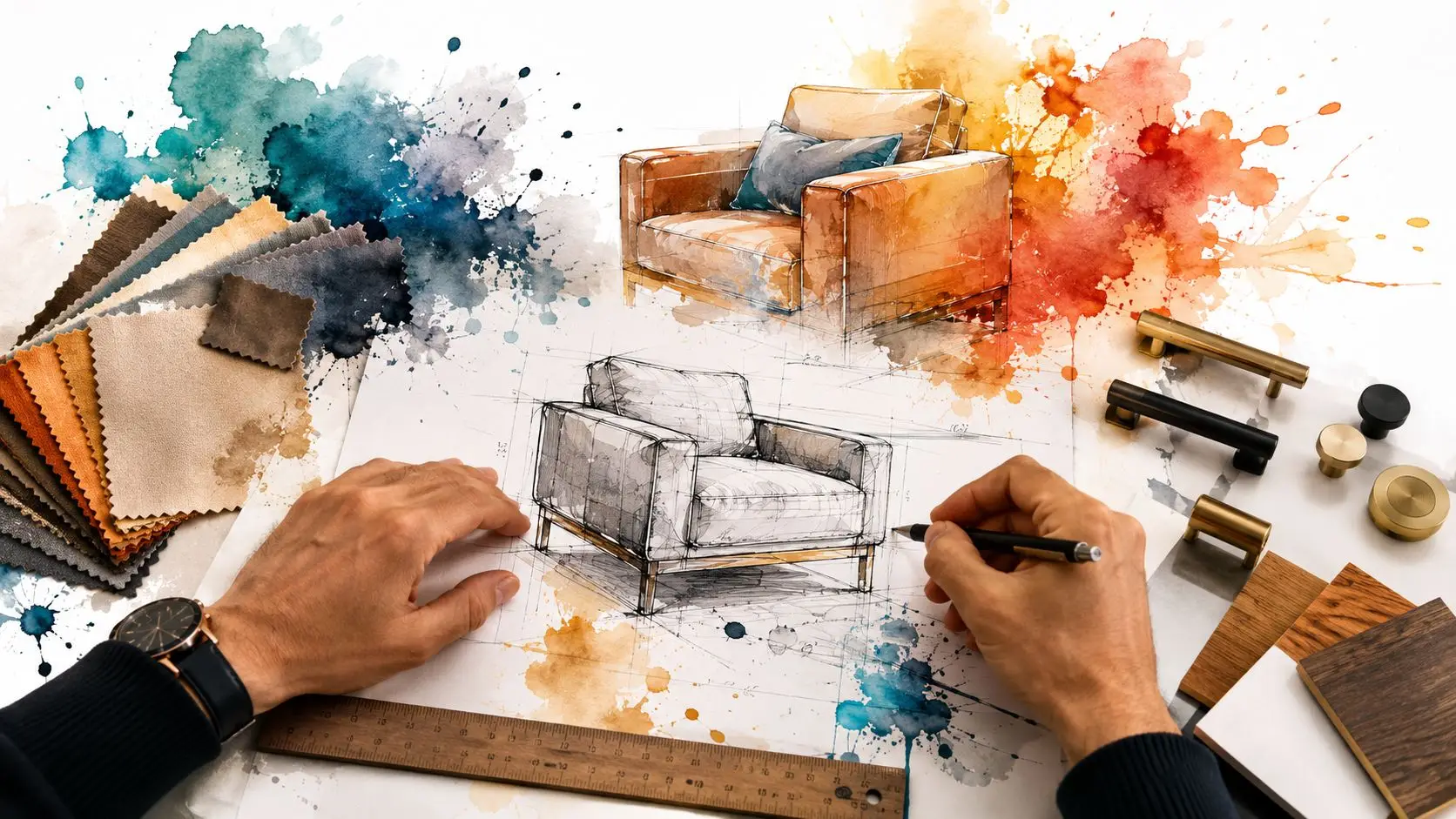
“Custom” means far more than selecting a stain color. A thoughtful piece is usually the result of many small decisions that work together.
Dimensions that serve the room
Dimensions come first because they shape comfort and function. A sideboard that's too tall can interrupt sightlines. A dining table base that's too bulky can make seating awkward. A bookcase with the wrong shelf depth can become decorative rather than useful.
This is where made-to-measure thinking pays off. Buyers can work through practical questions such as:
- Walking space: Will people move around the piece easily?
- Reach and use: Can drawers, doors, and shelves be used without strain?
- Visual scale: Does the piece belong with the ceiling height and nearby architecture?
- Purpose: Is it meant for display, daily storage, family meals, or a mix?
Custom built-ins and freestanding storage often benefit from the same careful planning. Buyers exploring room-specific ideas may find custom shelving in wood a helpful reference point for scale and utility.
The details that separate good from forgettable
Joinery is one of those details many buyers don't notice until they've lived with poor furniture. Then they notice it all the time. According to Chris Curtis Custom Woodworks on the custom build process, structural integrity and longevity depend heavily on joinery precision. Strong joints such as mortise-and-tenon or dovetails rely on accurately milled lumber, and that precision supports long-term stability under years of use.
Hardware and upholstery choices also carry surprising weight.
- Hardware: Knobs, pulls, hinges, and slides affect both look and daily feel.
- Fabric: Upholstered seats can soften a wood piece and make long meals more comfortable.
- Leather: Often chosen for a custom appearance and a surface that develops character with use.
- Edge profiles: A small change at the tabletop or drawer front can shift a piece from formal to casual.
Good customization doesn't pile on options. It edits them until the piece feels inevitable.
The strongest custom results usually come from balance. One family might choose expressive wood grain and quieter hardware. Another might keep the wood understated and use fabric to bring personality. The goal isn't to maximize features. It's to make each decision support the way the piece will live in the room.
Understanding the Investment Costs and Timelines
Buyers usually ask two practical questions first. What determines the price, and how long will the piece take? Those are the right questions.
What usually changes the price
The cost of custom made wood furniture often shifts because of choices that directly affect labor, materials, and complexity. Species matters. Size matters. A simple rectangular table and a highly detailed cabinet don't demand the same amount of work, even if they use similar wood.
Price often changes with factors such as:
- Wood selection: Some species are chosen for a specific look, grain pattern, or character.
- Piece size: Larger dimensions require more material and often more handling.
- Construction complexity: Doors, drawers, shaped components, and specialized joinery add labor.
- Finish requirements: A straightforward natural finish and a highly tuned color match involve different levels of effort.
- Customization level: Altering dimensions is one thing. Building a fully original design is another.
That's why “expensive” isn't always the most useful label. For many households, the better frame is investment piece. The buyer is paying for fit, durability, and long-term satisfaction, not just immediate possession.
Why custom work takes time
Lead time exists because custom furniture passes through a sequence of decisions and hands. Many retailers focus on craftsmanship but skip the practical conversation around timing, price drivers, and how natural wood changes over time. Wooden Whale Workshop notes that setting clear expectations from design to delivery and aftercare is central to buyer satisfaction, especially in climates with humidity variation.
A custom order often includes design review, material selection, milling, joinery, surface preparation, finishing, curing, inspection, and delivery planning. None of that should feel mysterious. Buyers deserve transparency about where time goes.
A few expectations help:
- Early decisions save headaches: Confirm dimensions, finish direction, and placement before production begins.
- Natural material needs patience: Wood and finish work reward care, not rushing.
- Aftercare should be discussed before delivery: The household should know what to expect once the piece settles into daily life.
Financing options are available, which can help families choose quality on a realistic timeline without turning the process into a pressured decision.
The Giorgi Bros Process A Partnership in Crafting Your Furniture
A custom furniture project tends to go more smoothly when the buyer can see materials in person, compare options side by side, and ask questions in a calm setting. That's one reason the process still matters so much.
From inspiration to decisions
In South San Francisco, a showroom visit often gives buyers a clearer starting point than online browsing ever can. Giorgi Bros. Furniture has served the Bay Area since 1933, and the showroom spans 50,000 square feet of living room, dining, bedroom, office, and sleep selections. That scale lets households compare styles, proportions, woods, fabrics, and finishes with context rather than guesswork.
For buyers beginning the process, getting started with custom order furniture outlines how a project can move from idea to specifics.
The strongest part of this kind of process is the conversation itself. In a non-commission environment, design consultants can spend time on the useful questions. How will the room be used every day? Which finish direction makes sense with the flooring? Does the household need softer edges, more storage, or easier maintenance?
From order to home
Once the design direction is clear, buyers can handle samples directly. That matters. Wood tone on a screen isn't the same as wood tone under Bay Area daylight. Fabric texture also changes the feel of a piece far more than many people expect.
A steady custom process often looks like this:
- Inspiration in the showroom: Buyers identify shapes, scale, and materials that feel right.
- Design consultation: Consultants refine dimensions, construction direction, and finish choices.
- Sample review: Woods, fabrics, leathers, and hardware are compared in person.
- Order placement: The project moves into production with agreed specifications.
- Delivery and setup: The piece is placed properly in the home, ready for use.
A good custom experience feels less like shopping and more like solving a home problem with experienced guidance.
That partnership approach tends to suit Bay Area families well. Homes are varied, tastes are personal, and people want to feel confident they've made a wise long-term decision rather than a rushed one.
Caring For Your Lifetime Investment Piece
A well-made wood piece doesn't need fussy treatment, but it does benefit from steady habits. Most long-term care comes down to protecting the finish and respecting the material.
Simple habits that protect wood
Dust with a soft, clean cloth rather than anything abrasive. Wipe spills promptly. Use protection under hot dishes, wet glasses, planters, and anything that can trap moisture against the surface.
Placement matters too. Keep furniture away from prolonged direct sun when possible, and avoid positioning it right beside strong heat sources. Surface damage often starts subtly with repeated exposure, not one dramatic event.
For more room-by-room advice, this guide on protecting wood furniture from scratches and stains offers practical maintenance tips.
A simple care routine often includes:
- Weekly dusting: Use a dry or lightly damp soft cloth.
- Fast spill cleanup: Don't let water, wine, or oil sit on the finish.
- Surface barriers: Coasters, trivets, and felt pads prevent avoidable wear.
- Gentle cleaning: Use products appropriate for fine wood finishes.
When professional help makes sense
Minor marks don't always require panic. Many can be reduced with proper touch-up guidance. Deep gouges, finish failure, or structural looseness deserve skilled attention rather than improvised fixes.
For upholstered seating paired with wood frames, households may also want occasional deeper textile care. Readers outside the Bay Area who are comparing maintenance methods may find this article on how to deep clean your Birmingham furniture useful as a general example of when routine care and deep cleaning serve different purposes.
Frequently Asked Questions About Custom Wood Furniture
Some questions come up in almost every custom conversation. Clear answers can save a family from second-guessing later.
| Question | Answer |
|---|---|
| What's the difference between custom and semi-custom furniture? | Fully custom furniture usually starts with more freedom around dimensions, materials, and details. Semi-custom often begins with an existing design that can be adjusted in selected ways, such as finish, fabric, wood species, or size range. |
| Can a furniture maker work from an inspiration photo? | Often, yes. A photo usually works best as a starting point rather than a strict blueprint. It helps identify style direction, proportions, and details the buyer responds to. |
| Is solid wood always the right choice? | Not automatically. The best construction depends on the piece, the room, and how the furniture will be used. Some applications benefit from more dimensionally stable construction choices. |
| Why does custom furniture take longer than buying from the floor? | Because the piece is being specified, built, finished, and prepared for delivery rather than pulled from stock. Careful work takes time, especially when dimensions and materials are being tailored. |
| Is custom made wood furniture worth the cost? | For households planning to keep a piece for many years, it often is. The value usually comes from better fit, stronger construction, repairability, and the fact that the furniture continues to serve instead of being replaced. |
| Can custom include upholstery and hardware choices too? | Yes. Many projects allow buyers to choose fabrics, leathers, pulls, knobs, and other finishing details so the final piece feels complete in the room. |
| What should a buyer bring to a consultation? | Room measurements, photos, inspiration images, and a sense of how the piece needs to function. Finish samples from flooring or adjacent furnishings can also help. |
A good custom project usually starts with honest needs, not fancy language. If the room has a problem to solve, the household has a style direction, and the buyer wants a piece made to last, the process becomes much easier.
Bay Area homeowners who want no-pressure guidance can visit Giorgi Bros. Furniture in South San Francisco to explore custom furniture options, compare wood species, finishes, fabrics, and leathers in person, or book a Design Consultation. With a family history dating back to 1933, non-commission Consultants, flexible financing options, and a showroom built for thoughtful decision-making, it's a practical place to start choosing investment pieces for life.