
A lot of Bay Area homeowners reach the same point at once. The remodel is moving, paint colors are chosen, the layout finally makes sense, and now the furniture decision feels bigger than expected. A dining table isn't just a surface. A bed frame isn't just structure. These are the pieces that absorb daily life, from weeknight meals to holiday gatherings to years of moving things around a room until it feels like home.
That's where solid wood still stands apart, and where Sheesham often enters the conversation. For families who want warmth, strength, and value in the same piece, Sheesham wood for furniture has a lot going for it. It also comes with practical considerations that matter in the Bay Area, where foggy coastal air, dry inland heat, and tightly climate-controlled interiors can all affect how wood behaves over time.
Since 1933, South San Francisco has seen generations of homeowners make the same basic choice. Buy something temporary, or buy something that can stay with the home for decades. For anyone weighing custom furniture, remodeling details, and long-term value, even adjacent storage choices can influence the final room plan, including resources on understanding appliance garage cabinets when kitchen and living spaces need to work together. The same thinking applies to seating, case goods, and dining pieces. Good decisions up front save frustration later, especially when paired with thoughtful planning for living room furniture selection.
Table of Contents
- Your Guide to Choosing Furniture That Lasts a Lifetime
- What Exactly Is Sheesham Wood
- The Properties That Make Sheesham a Durable Choice
- Pros and Cons of Sheesham Wood Furniture
- How Sheesham Compares to Other Popular Woods
- Buying Guidance and Caring for Your Sheesham Investment
- Frequently Asked Questions for Bay Area Homeowners
Your Guide to Choosing Furniture That Lasts a Lifetime
The hardest furniture choices usually happen when a homeowner is trying to balance three things at once. They want the room to feel finished, they want the piece to hold up, and they don't want to replace it in a few years because the first purchase looked better online than it performed at home.
That tension is especially common in the Bay Area. A condo near the coast may stay cool and damp for much of the year. A home farther inland may feel noticeably drier. Add forced air, radiant heat, or direct afternoon sun, and wood selection starts to matter more than style boards suggest.
The buy-it-for-life mindset matters
A good furniture purchase should age well in both structure and appearance. That's why solid wood still appeals to homeowners who see furniture as investment pieces, not disposable decor. The upfront choice may take longer, but the long-term reward is simpler ownership, fewer replacements, and a more sustainable way to furnish a home.
Practical rule: If a piece needs to survive daily use, occasional rearranging, and years of climate shifts, the material choice matters as much as the design.
Sheesham often fits that mindset because it brings visual richness without feeling overly formal. It works in dining rooms, bedrooms, and living spaces that need substance. It also adapts well to custom orders, which matters when dimensions, finishes, and surrounding materials need to align with an existing remodel.
Why Bay Area homeowners keep circling back to solid wood
People rarely regret buying better construction. They do regret wobbling chairs, thin tops, weak joinery, and finishes that don't forgive real life. The Bay Area has plenty of design-conscious homeowners, but function still decides whether a piece earns its place.
For households working with Bay Area Interior Design goals, the best furniture choices don't just match the room. They support the way the room is lived in. That's why conversations around Custom Furniture tend to become conversations about wood movement, durability, and maintenance, not just color and silhouette.
What Exactly Is Sheesham Wood
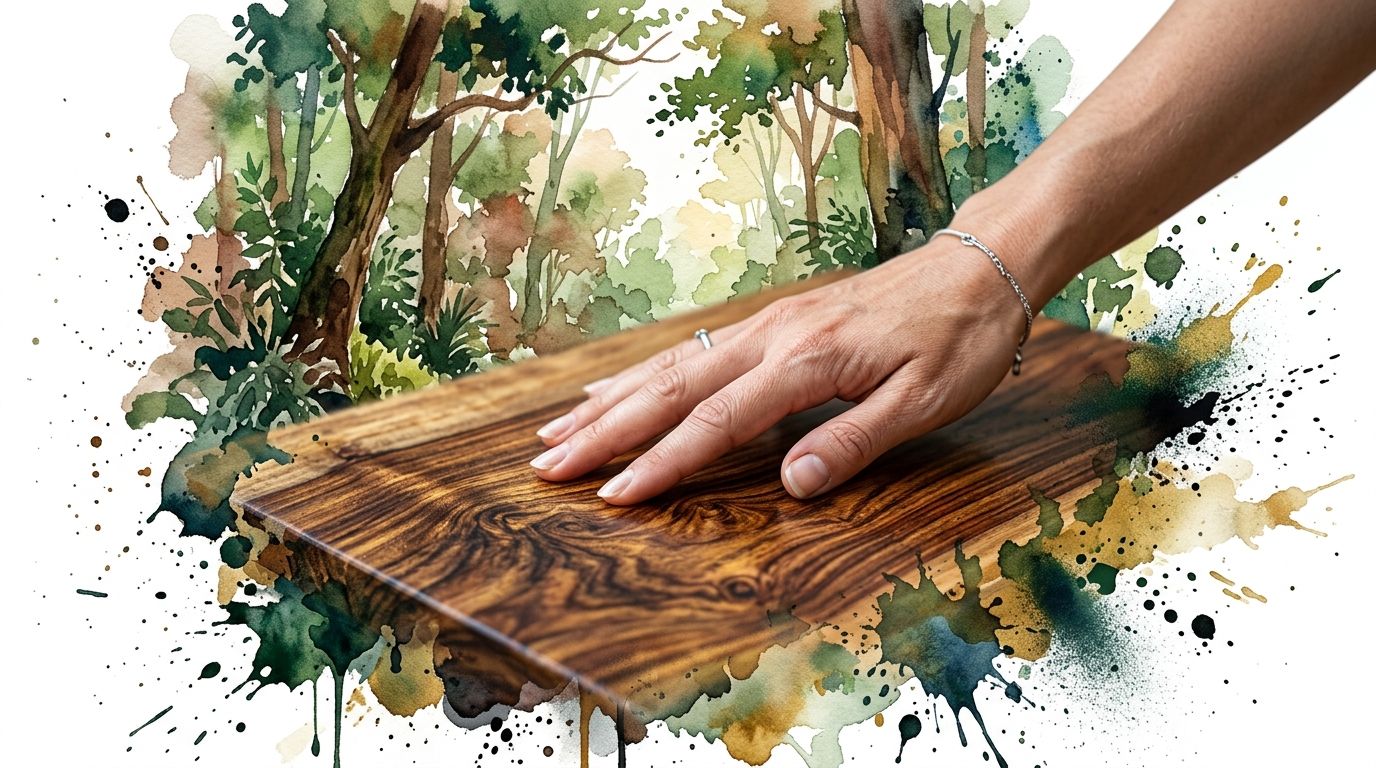
Sheesham is Dalbergia sissoo, often marketed as Indian rosewood. It's a dense hardwood long used for residential furniture, especially pieces that need both strength and visual personality. The color can range from warm golden brown to deeper reddish-brown, often with darker streaking that gives the surface contrast and depth.
A wood with character built in
The grain is one of the first things people notice. It doesn't read flat or generic. In many pieces, the grain looks almost hand-drawn, with movement and variation that make each tabletop, bed, or cabinet front feel individual.
That variation is part of the appeal. Homeowners looking for a perfectly uniform surface may lean another direction, but those who want a natural material that feels alive usually respond well to Sheesham. In a showroom, it tends to reward a close look.
A simple way to think about it is this:
- Color depth: It brings warmth without feeling yellow or washed out.
- Natural contrast: Dark streaking adds visual interest without needing heavy distressing.
- Individuality: No two boards look exactly alike, so the finished piece has its own identity.
Why it shows up so often in solid-wood furniture
Sheesham hasn't become popular by accident. It has become a dominant hardwood species in the global indoor solid-wood furniture supply chain, and some industry reports indicate it accounts for roughly 60 to 70% of all solid-wood furniture production in major hubs like Pakistan according to the Pakistan furniture sector report.
That level of use says something important. Manufacturers and craftspeople return to woods that perform reliably, machine well when handled correctly, and produce furniture customers want to keep.
The best-looking wood still has to function. Sheesham earns attention because it combines visual character with the structure needed for everyday furniture.
For anyone shopping Furniture South San Francisco showrooms or planning custom case goods, that combination matters. A wood can be beautiful and still be wrong for the job. Sheesham's appeal is that it usually isn't.
The Properties That Make Sheesham a Durable Choice
Beauty may start the conversation, but performance closes the sale. Sheesham wood for furniture has a reputation for toughness because it's dense, hard, and naturally suited to pieces that get touched, bumped, leaned on, and lived with every day.
What hardness means in daily use
One of the clearest measures is the Janka hardness rating. Properly seasoned Sheesham typically falls around 2,000 to 2,500 lbf, making it significantly more resistant to denting and wear than many domestic hardwoods. That's one reason it's such a strong candidate for dining tables, chairs, and other high-use furniture, as explained in this overview of Sheesham wood hardness and machining characteristics.
That number matters because daily wear doesn't arrive dramatically. It shows up as belt buckle taps on chair backs, serving dish contact on tabletops, and years of use around edges and corners. A harder wood gives those moments less power.
Wood Hardness Comparison Janka Rating
| Wood Type | Average Janka Hardness (lbf) |
|---|---|
| Sheesham | 2,000–2,500 |
| Oak | Not cited here numerically |
| Walnut | Not cited here numerically |
For readers comparing materials more broadly, a deeper look at hardwood choices for longevity and style helps frame where density and hardness matter most.
Strength beyond the surface
Hardness is only part of the story. Sheesham is also a dense hardwood with specific gravity typically in the 0.74 to 0.83 range and average density of about 700 to 800 kg/m³. That contributes to strong frames, stable tops, and furniture that feels grounded rather than flimsy.
Its interlocked grain and structural strength allow refined profiles without sacrificing integrity. That's useful in furniture design because homeowners often want cleaner lines without losing substance. A table can look elegant without becoming delicate.
Still, dense wood asks more of the maker. Sheesham's grain can tear out if it's machined carelessly, and its drying shrinkage means the material must be seasoned and acclimated properly. Good construction handles that. Poor construction hides it until the piece reaches a home with different humidity conditions.
A durable wood doesn't excuse careless building. Strong material and disciplined craftsmanship have to work together.
For Bay Area homes, that point is especially important. A piece might leave one climate, travel through another, and land in a house with HVAC running year-round. When a maker respects the wood, Sheesham rewards that discipline with long service and strong day-to-day performance.
Pros and Cons of Sheesham Wood Furniture
Every wood has a personality. Some are easier to move. Some are more uniform. Some ask for less attention. Sheesham brings real advantages, but it also asks the buyer to respect what dense solid wood does and doesn't like.
Where Sheesham earns its reputation
The biggest advantage is longevity. Sheesham heartwood is classed as moderately to highly durable against decay fungi and moderately resistant to termites, largely because of its natural extractives. That biological resistance helps explain why solid Sheesham frames can last multiple decades with routine maintenance in indoor environments, as noted in this discussion of Sheesham durability and natural resistance.
That durability supports the buy-it-for-life mentality many Bay Area homeowners already prefer. A well-made piece doesn't just stay functional. It often gets better looking as the finish settles into use and the room around it evolves.
Other strong advantages include:
- Visual depth: The wood has enough grain movement to feel special without requiring ornate styling.
- Long-term value: It often lands in a more approachable range than some premium tropical hardwoods while still feeling substantial.
- Customization potential: It works well for custom orders, especially when buyers want specific sizes, finish tones, or mixed-material designs.
The trade-offs worth respecting
The first trade-off is weight. Dense wood feels reassuring once it's in place, but that same density makes large Sheesham dining tables, bed frames, and storage pieces harder to move. Anyone who rearranges often should keep that in mind.
The second is climate sensitivity. Sheesham can handle normal indoor life well, but it doesn't like abrupt swings in humidity. In the Bay Area, that matters because a piece can move from a fog-influenced neighborhood to a dry interior environment with heating or air running hard.
A balanced buying view looks like this:
- Excellent for: Dining rooms, bedrooms, and living spaces where the furniture is meant to stay and serve for years.
- Less ideal for: Homes where furniture gets moved constantly or rooms with unmanaged moisture and heat extremes.
- Best outcome: Solid construction, proper finishing, and enough planning to match the piece to the room.
That's the practical answer. Sheesham isn't flawless because no wood is. It's a strong choice when buyers want substance, natural beauty, and service life, and when they're willing to treat furniture like a lasting household asset instead of a temporary fix.
How Sheesham Compares to Other Popular Woods
Most buyers don't choose wood in the abstract. They're deciding between a few real options on the floor, each with a different look, weight, feel, and price position. Sheesham sits in a useful middle ground. It isn't the lightest, and it isn't the most premium-priced tropical hardwood. It earns its place by balancing strength, appearance, and value.
Sheesham compared with teak
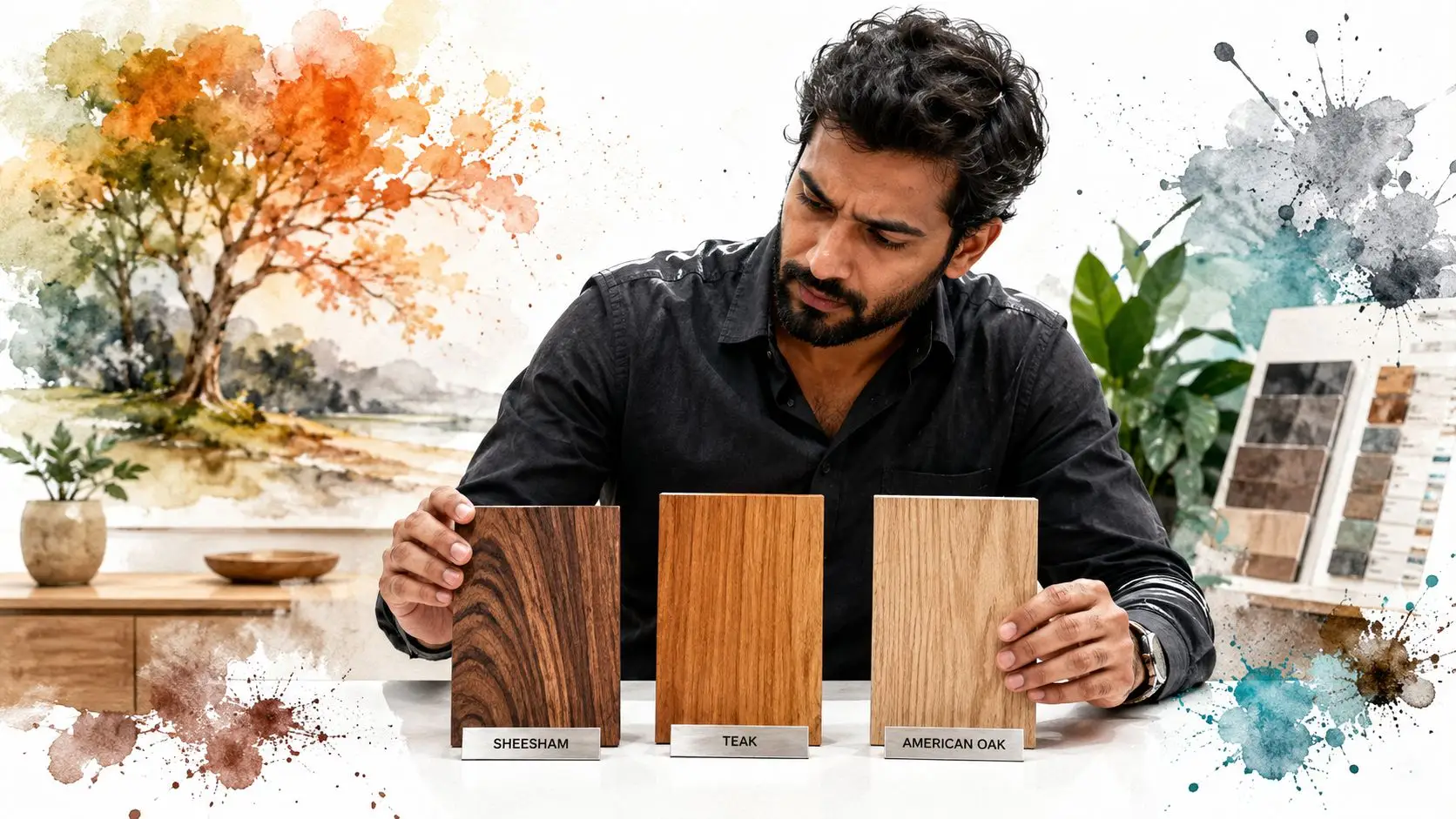
Teak has a long reputation, especially where moisture resistance matters. For indoor use, though, many homeowners don't need to pay for properties that matter more outdoors than around a dining table or bed.
Within the global wooden furniture market, Sheesham is positioned as a mid-tier solid-wood option that balances durability and cost-effectiveness, offering a more affordable price point than high-end tropical hardwoods like teak according to this review of teak versus Sheesham furniture positioning.
That makes the choice fairly straightforward:
- Choose Sheesham when indoor durability, distinctive grain, and value are the priority.
- Choose teak when the setting demands a wood known for higher-end tropical performance and a different visual character.
Sheesham compared with oak and other familiar choices
American oak feels more familiar to many buyers. Its grain reads more traditional and usually more uniform. Sheesham looks bolder. It often has more contrast and a more dramatic surface, which can help a simple design feel richer without extra ornament.
Mango and other lighter-feeling woods can suit relaxed or casual spaces, but they won't always deliver the same sense of solidity. Sheesham tends to feel more grounded, both visually and physically. That matters for anchor pieces such as dining tables, media consoles, and bedroom furniture.
For anyone also deciding between construction methods, the bigger issue isn't just species. It's whether the piece is solid wood where it counts, and how that choice compares with veneered construction. This guide to solid wood versus veneer helps clarify that decision.
Some buyers pick wood by color alone and regret it later. The better approach is to match the species to the room, the use pattern, and the amount of upkeep the household will realistically provide.
In practical terms, Sheesham suits homeowners who want something warmer and more expressive than oak, less premium-priced than teak, and more substantial than softer or lighter alternatives.
Buying Guidance and Caring for Your Sheesham Investment
A good Sheesham piece should arrive ready for a long life, but long life still depends on two things. The first is how well the furniture was built and finished. The second is how well it's introduced to the home it will live in.
What to check before buying
Bay Area buyers should ask practical questions before falling in love with a silhouette.
- Look at the joinery: Tight, clean joinery matters more than decorative details. Drawers, chair joints, and table bases should feel settled and deliberate.
- Inspect the finish: The surface should feel even and protective, not gummy, cloudy, or thin at edges.
- Ask about acclimation: Few guides address Sheesham's performance in North American climates, but for Bay Area homes with varied humidity, proper acclimation and finishing are key to preventing movement and protecting long-term stability.
- Confirm the customization options: Wood species, finish tone, and upholstery pairings can all affect how well the final piece fits the room and the household.
That last point matters because Custom Furniture works best when function drives the specification. A family that hosts often may want a tougher finish. A compact dining area may need adjusted dimensions. A mixed-material design may benefit from pairing Sheesham with engineered support elements in the right places.
Care habits that work in Bay Area homes
Sheesham doesn't ask for fussy maintenance, but it does respond well to consistency. Guidance on care for this wood notes that moderate indoor humidity, roughly 40 to 45% RH, supports lower-maintenance performance, and periodic oil- or wax-based treatments can help reduce warping and splitting over time according to this advice on caring for Sheesham wood furniture.
A few habits make a real difference:
- Keep indoor conditions steady: Wood prefers consistency more than perfection.
- Wipe spills promptly: Especially on dining and side tables.
- Avoid harsh cleaners: They can degrade the finish before the wood itself is ever at risk.
- Protect during storage or projects: If a room is being painted or renovated, well-fitted protection matters. Resources such as The Box Warehouse furniture covers can help homeowners shield finished wood from dust and accidental contact during transitions.
For more practical upkeep habits, this guide to protecting wood furniture from scratches and stains is worth bookmarking.
Well-built wood furniture usually doesn't fail all at once. It shows stress first through finish wear, small movement, and neglected surfaces. Small care habits prevent bigger repairs.
There's also a sustainability angle here. Buying one strong, repairable, long-lasting piece is often the more responsible choice than cycling through shorter-lived furniture. That's good design, and over time it's often good economics too.
Frequently Asked Questions for Bay Area Homeowners
Is Sheesham a good choice for coastal Bay Area homes
Yes, if the piece is properly finished and the home maintains reasonably stable indoor conditions. Coastal moisture isn't automatically a problem. Sudden swings between damp air and very dry heated interiors are usually harder on wood than a consistently cool environment.
Does Sheesham work for custom furniture orders
It does. Sheesham is a strong candidate for specific dining, bedroom, and storage pieces because it offers character, strength, and finish flexibility. That matters for homeowners working through Bay Area Interior Design plans where dimensions and tone have to be exact.
Is it too heavy for everyday living
For large pieces, it can be heavy. That's often part of what gives Sheesham furniture its grounded feel. Buyers who move furniture often may want to think carefully about room layout before delivery.
Is Sheesham a sustainable buy-it-for-life option
It can be a smart sustainability choice because long service life reduces replacement cycles. That's one reason durable investment pieces often make more sense than cheaper furniture that gets discarded quickly.
What should buyers pair with Sheesham if indoor air quality matters
Finish selection matters. For households thinking carefully about materials, finishes, and overall indoor comfort, it helps to review guidance on low-VOC furniture choices.
For Bay Area homeowners looking for thoughtful, no-pressure guidance, Giorgi Bros. Furniture offers a family-owned showroom in South San Francisco that has served the region since 1933. With Non-Commission Sales Staff, extensive Custom Furniture order options in wood species, finishes, fabrics, and leathers, and a wide selection that includes Amish Furniture and Premium Mattresses, the focus stays on helping customers choose pieces that fit their home for the long run. Financing options are available for those planning larger furnishing projects. Visit the showroom to explore quality in person, or book a Design Consultation to plan a room around lasting investment pieces.