A familiar Bay Area story plays out every day. One child has outgrown a toddler room, another needs a shared bedroom, and the guest room suddenly has to do double duty for cousins, grandparents, or weekend visitors. The room isn't getting bigger, but the demands on it keep growing.
That's where a Twin Over Full bunk bed tends to earn its place. It doesn't just stack two sleep spaces. It solves a practical problem in a way that can still feel thoughtful, comfortable, and worth living with for years.
For families who want no-pressure guidance, that balance matters. Since 1933, Giorgi Bros. has helped households in South San Francisco make furniture decisions that work for real life, not just for the next season. A twin over full often fits that same philosophy. It's a flexible choice for homes that need one room to do more, without making the room feel temporary.
Table of Contents
- The Smart Solution for Shared Spaces
- Understanding Twin Over Full Dimensions
- Is a Twin Over Full Right for Your Family
- How to Plan Your Room Layout
- Prioritizing Safety and Lasting Quality
- Choosing Mattresses and Customizing Your Bed
The Smart Solution for Shared Spaces
A shared bedroom often starts with good intentions and ends with compromise. One child wants floor space to play. Another needs a bed that doesn't feel too small. Parents want guests to have a comfortable place to sleep without giving up an entire room to a full-time bed setup.
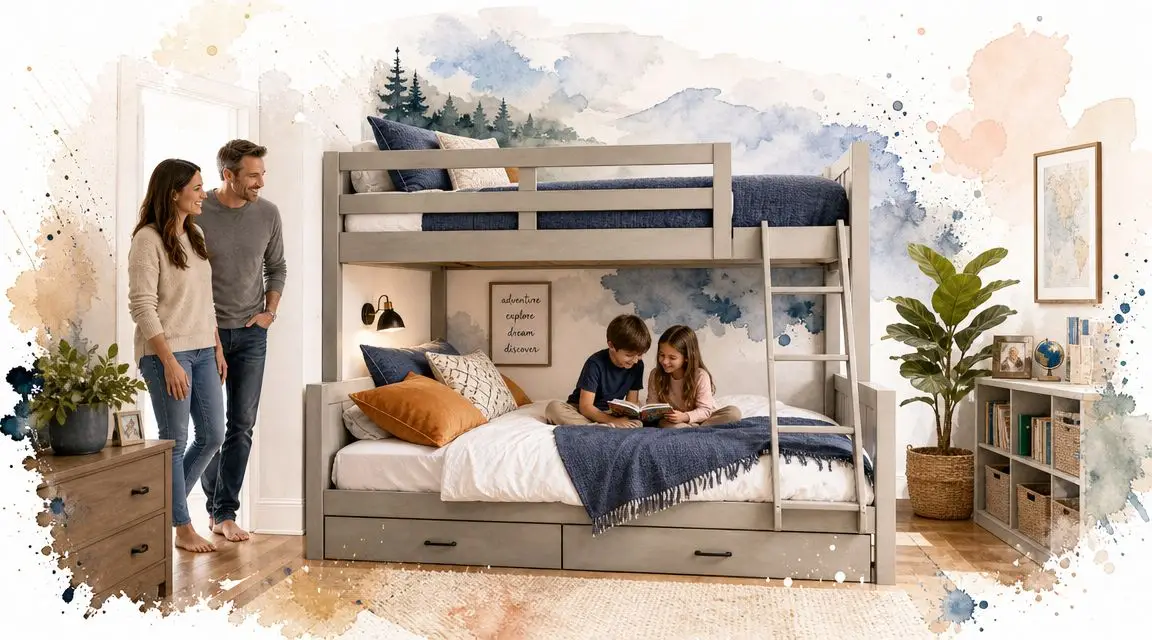
A twin over full works well in exactly that kind of room. The upper bunk keeps one sleep space compact, while the wider lower bunk gives the second sleeper more comfort. In everyday use, that means the room can support siblings with different needs or switch easily between family use and guest use.
Why families keep coming back to this layout
Some layouts look efficient on paper but feel cramped once the room is in use. A twin over full tends to avoid that problem because it acknowledges that not every sleeper needs the same amount of space.
- For siblings of different ages: A younger child often fits comfortably on top, while the older child gets a roomier lower bunk.
- For guest flexibility: One room can welcome a single guest, a visiting child, or a pair of overnight visitors more easily.
- For everyday living: The room still leaves space for storage, a desk, or circulation around the bed.
Families who are also thinking through routines, privacy, and personality in a shared room may find helpful ideas in this guide to harmonious shared living.
A bunk bed works best when it solves more than one problem at once. Sleeping space is only the beginning.
In smaller homes, a twin over full often becomes part of a bigger furnishing plan. Pieces that earn their footprint matter, especially where every wall and walkway counts. For households comparing layouts for tighter rooms, Giorgi Bros. also offers ideas for small space furniture solutions that help a bedroom stay functional instead of overcrowded.
Understanding Twin Over Full Dimensions
The phrase Twin Over Full sounds simple, but it often causes many shoppers to pause. They know it means one bunk is smaller than the other, but they're not always sure how that changes comfort, fit, or mattress shopping.
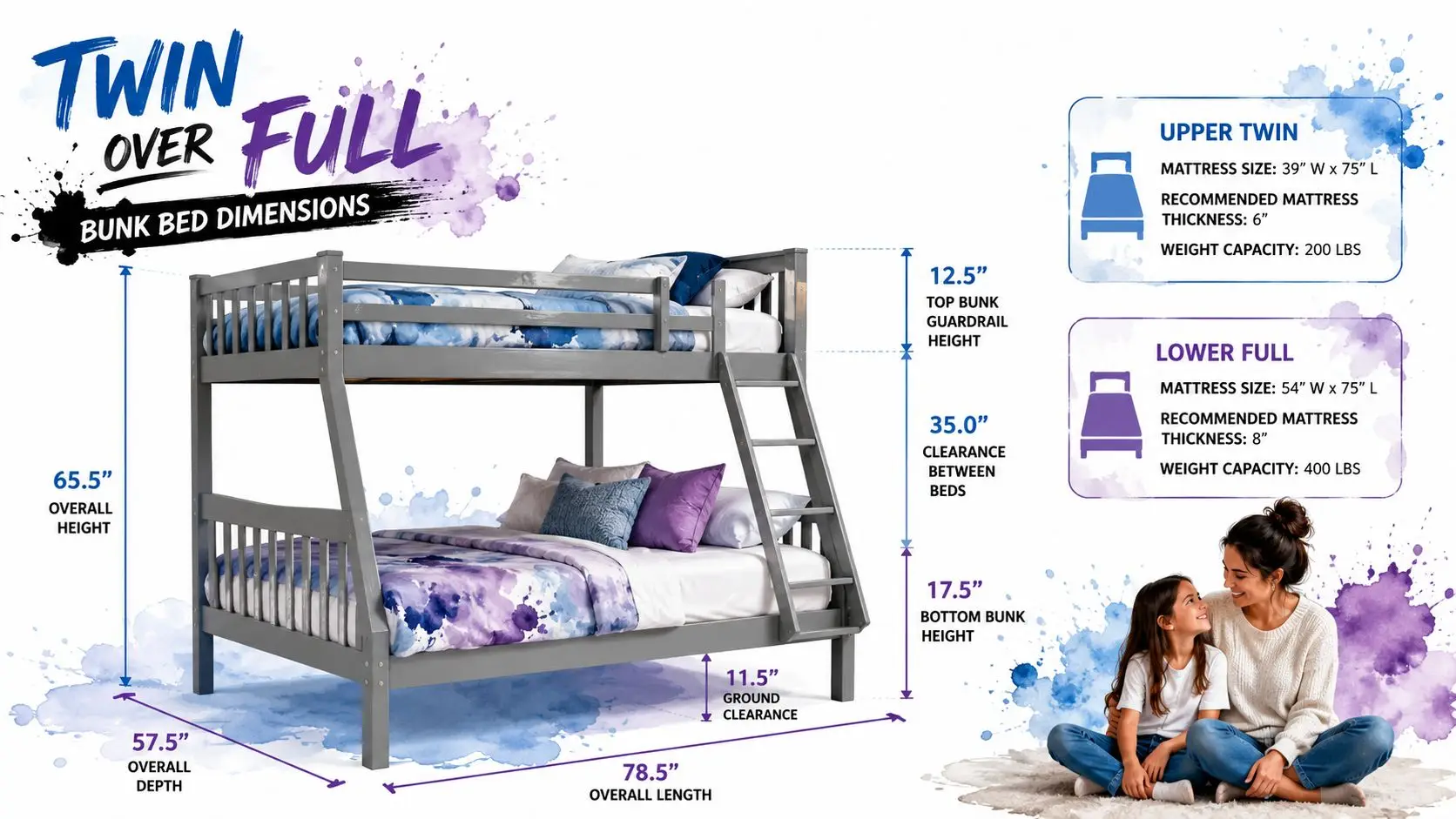
According to bunk bed mattress sizing guidance, a twin over full bunk bed uses a 38-inch by 75-inch twin mattress on top and a 54-inch by 75-inch full mattress below. That gives the lower bunk about 16 more inches of width than a standard twin, while both mattresses stay 75 inches long. The same guidance also notes that top-bunk mattresses are often recommended to be around 8 to 9 inches thick so the mattress stays below the guard rail.
What the name actually means
The easiest way to picture it is this. The top bunk is a standard twin bed. The bottom bunk is a standard full bed. Length stays the same, but the lower sleeper gets more side-to-side room.
That matters because people often assume the lower bunk is longer. It isn't. It's wider, not longer.
A simple comparison helps:
| Bunk position | Mattress size | What it changes |
|---|---|---|
| Top bunk | 38 in x 75 in twin | Keeps the upper sleeping area compact |
| Bottom bunk | 54 in x 75 in full | Adds width and more stretch-out room |
| Shared trait | 75 in long on both | Length does not change between bunks |
Why the bottom bunk feels more usable
That extra width on the lower bunk changes how the room performs. A child can use it comfortably, but so can a teen or an adult guest who would feel cramped on a second twin. That's one reason this configuration stays popular in rooms with changing needs over time.
Practical rule: When a family wants one bunk bed that can serve children now and still feel useful later, the wider lower bunk usually does the heavy lifting.
Mattress shopping gets easier once the dimensions are clear. Instead of guessing, buyers can shop for one twin mattress and one full mattress, then check the top-bunk thickness carefully. For anyone sorting through basic mattress terminology before making a purchase, this overview of how to choose the right mattress size can help clarify the language.
Accurate measuring matters just as much as mattress sizing. Before ordering any bed for a tighter room, it helps to follow a step-by-step measuring process like Giorgi Bros.’ guide on how to measure furniture for a room.
Is a Twin Over Full Right for Your Family
Not every bunk bed solves the same problem. Some are mainly for young children. Some are designed around occasional sleepovers. A twin over full stands out because it's often useful across more stages of family life.
That wider lower bunk gives the room more flexibility. A younger child may enjoy the top bunk, while the bottom bunk can serve an older sibling who wants more elbow room. In another home, the same bed might anchor a guest room that hosts one visitor at times and a small family at others.
Where this layout makes the most sense
This format tends to work well in homes that need one room to shift roles without a full furniture reset.
- Mixed-age siblings: The upper space feels scaled for a child, while the lower bunk offers a less cramped everyday sleep surface.
- Grandchildren and guests: A room can stay kid-friendly without becoming too specialized.
- Homes planning ahead: The room doesn't need to be refurnished as quickly when needs change.
The appeal isn't only about function. It's also about avoiding short-term buying. A family that buys too narrowly often ends up replacing furniture sooner than expected.
Why it can be a smarter long-term purchase
The market itself reflects how broad this category has become. According to pricing and category guidance for twin-over-full and twin-over-twin bunk beds, basic bunk beds are often found in the $150 to $400 range, while premium made-in-USA twin over full designs can reach about $3,995. That wide spread says something important. Buyers aren't all shopping for the same kind of product.
Some households need a short-term solution. Others want an investment piece with stronger materials, more thoughtful construction, or custom details that help the bed last in both style and usefulness. The full-size lower bunk supports that long view better than a second twin because it stays more versatile as children grow or guest needs change.
Furniture that adapts usually costs less over time than furniture that has to be replaced when life changes.
That's also where a buy-it-for-life mindset connects to sustainability. When a bed continues to serve the household for years, fewer pieces are cycled in and out of the home. For Bay Area families trying to furnish responsibly, that kind of durability matters as much as style.
How to Plan Your Room Layout
A bunk bed can be the right idea and still be the wrong fit if the room plan is rushed. Good layout work starts before anyone picks a finish, a ladder style, or matching storage.
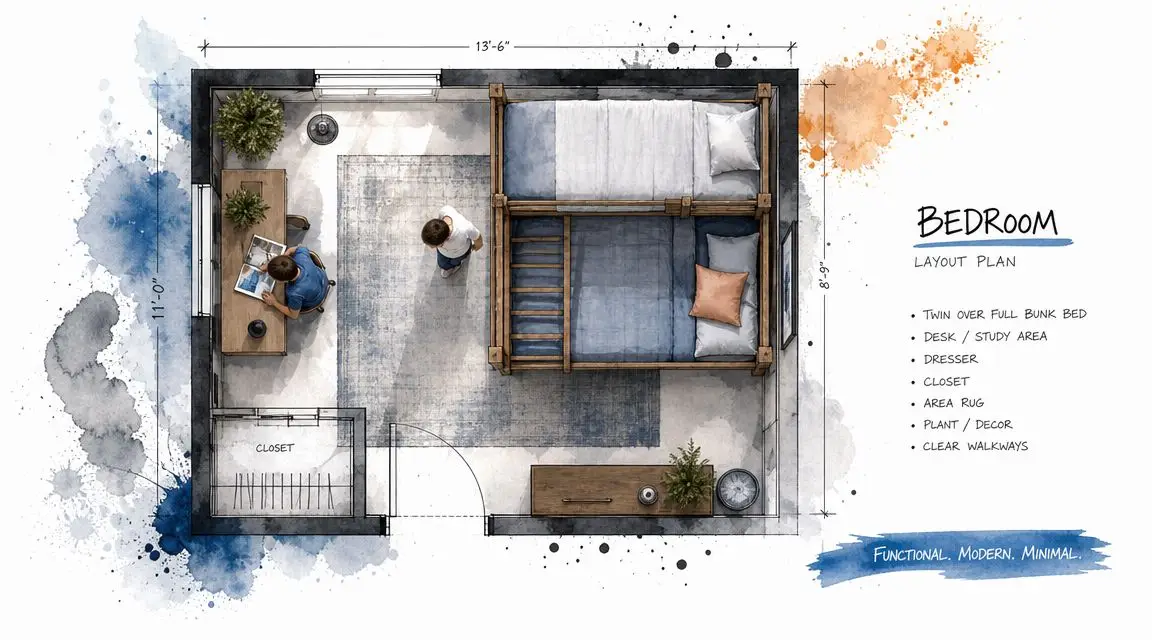
One useful reference point comes from a product footprint overview for a twin-over-full frame, which notes that these beds can measure about 78 to 84 inches in length and 56 to 58 inches in width, depending on ladder placement and overall design. That same reference gives examples such as 78 in x 56.5 in and 81.5 in x 57.75 in. In plain terms, the bed may take up floor area similar to a full bed, but it still needs extra clearance for access and movement.
Measure the room the practical way
A tape measure alone isn't enough. The room has to work once people are living in it.
A practical planning checklist usually includes:
- The bed wall: Measure the wall where the bed will sit, including baseboards and trim that can affect fit.
- The approach path: Check whether doors, closet openings, or other furniture interfere with the ladder side.
- The ceiling feel: The top sleeper should be able to sit up comfortably, and the room shouldn't feel closed in.
- Daily tasks: Leave space for making the bed, changing sheets, and helping a younger child climb safely.
Think beyond the bed footprint
Many layout mistakes happen because shoppers only compare mattress sizes. The primary issue is often room circulation.
- Ladder location: A ladder can change how a room opens up, especially near a door or dresser.
- Storage access: Drawers under nearby furniture need room to extend.
- Window placement: The bed shouldn't crowd light, views, or easy access to the room's natural airflow.
- Visual balance: A bunk bed carries visual weight, so the rest of the room should stay simple and scaled.
Measure for movement, not just for placement.
A small room can still feel generous when traffic paths stay open and furnishings don't compete with one another. Families planning around tighter bedrooms can use Giorgi Bros.’ tips on how to make a small room feel big to keep the space from feeling overloaded.
For trickier layouts, no-pressure help matters. Non-Commission Sales Staff can often spot issues that don't show up on a floor plan, like awkward drawer clearance or a ladder landing that pinches the room.
Prioritizing Safety and Lasting Quality
Safety isn't a finishing touch with bunk beds. It's the foundation of the purchase. Style, finish, and storage all matter, but none of them should come before solid engineering and a bed that's built for how the room will be used.
One manufacturer's assembly instructions, available in this bunk bed engineering document, cap the top twin bunk at 250 lbs and the lower full bunk at 350 lbs. The same instructions reflect stricter assumptions for the upper bunk, including mattress thickness limits tied to guardrail safety.
What safety details deserve close attention
Those load limits highlight an important point. The top and bottom bunks don't serve the same role, and they aren't meant to be treated exactly the same.
Buyers should pay close attention to:
- Guardrail relationship to mattress height: The top mattress has to sit low enough for the guardrail to do its job.
- Ladder attachment: The ladder should feel secure, steady, and easy to use in the room's actual layout.
- Frame stability: The bed shouldn't wobble under normal movement.
- Clear assembly guidance: Well-documented construction often signals that the piece was engineered with real use in mind.
A safe bunk bed doesn't rely on guesswork. It relies on clear limits, proper mattress fit, and sound construction.
Support under the mattress matters too, especially when buyers are pairing a bunk bed with Premium Mattresses. This article on proper support for luxury mattresses offers a helpful overview of why the base below the mattress deserves as much attention as the mattress itself.
Why quality construction matters over time
A bunk bed gets used hard. Children climb it. Guests use it. Families move it from one room to another. That's why material quality matters so much.
Solid wood, durable joinery, and well-made hardware generally hold up better over time than lighter construction that feels fine on day one but loosens with regular use. That's also why many shoppers looking for investment pieces consider Amish Furniture or other carefully built wood furniture categories. The value isn't only visual. It's structural.
For anyone comparing materials, Giorgi Bros. provides a useful guide to solid wood vs veneer furniture. That distinction can help families understand what they're paying for and what kind of long-term performance they can reasonably expect.
Choosing Mattresses and Customizing Your Bed
A twin over full bunk works best when the mattress and the bed are planned as one system, not as two separate purchases. That is the difference between a setup that fits the room today and one that continues to work as children grow, sleep preferences change, and the room takes on new jobs over time.
Match the mattress to the bunk design
Start with the top bunk. Its mattress has to fit the frame properly and stay within the height range the bed was designed for, so the guardrail can do its job. The lower bunk usually gives you more freedom, which makes it a good place to focus on the sleeper's comfort, body type, and sleep position.
A practical way to choose is to treat each level differently because each level does a different job.
- Upper bunk: Choose a mattress height that works with the bunk's guardrail and keeps the sleep surface at a safe level.
- Lower bunk: Choose for comfort and support, especially if one child, a teen, or frequent guests will use it most often.
- Whole-room consistency: Bedding, wood finish, and nearby storage pieces should feel like they belong together, so the room looks settled rather than assembled in stages.
If you are comparing comfort levels, this mattress firmness guide for different sleep preferences can help narrow the field.
Build flexibility into the room from the start
Customization is where a twin over full often proves its long-term value. The right wood species, finish, and companion pieces can help the bed feel appropriate in a child's room now, then continue to make sense later in a guest room, shared room, or multigenerational home. That kind of flexibility matters in Bay Area homes, where one room often has to serve more than one purpose over the years.
The bed frame is only part of the plan. Matching case goods, underbed storage, and coordinated finishes give the room a finished look and make future updates easier. It works like designing a good foundation for a house. If the base is well chosen, you can change the surface details without starting over.
Giorgi Bros. Furniture offers twin over full youth bed options, along with Custom Furniture services and a dedicated sleep gallery. For families, that means the bed can be paired with matching bedroom pieces, finish choices that suit the home, and mattress guidance from experienced consultants who help people make decisions they can live with for a long time.
That approach reflects a buy-it-for-life mindset. Choose fewer pieces. Choose better-made pieces. Choose furniture that can adapt as children get older, guests stay over, or a spare room becomes a shared bedroom. Financing options can also help households spread out the investment while still choosing quality meant to stay in the home.
For anyone planning a shared bedroom, a guest room, or a more flexible family space, Giorgi Bros. Furniture offers no-pressure guidance in its South San Francisco showroom. Families can explore Custom Furniture options, compare Premium Mattresses, and work with Design Experts on a room plan that fits both the home and the long term. A visit to the showroom or a Design Consultation is a practical next step for anyone who wants to touch, test, and plan before buying.