The living room asks a lot of its furniture. It has to welcome guests, hold up to daily use, support quiet evenings, and still look like it belongs in the home years from now. That's why living room furniture trends matter, but only up to a point. The better question is which trends deserve a place in a long-term home, and which ones will feel tired once the novelty wears off.
Since 1933, families in South San Francisco have turned to Giorgi Bros. Furniture for that kind of practical guidance. The value isn't just in seeing what's current. It's in learning how to choose investment pieces with staying power, how to customize them in the right fabric or finish, and how to avoid costly mistakes in rooms that need to work hard every day. For Bay Area homeowners, that often means balancing style with square footage, traffic flow, pets, kids, entertaining, and that a home should feel personal, not staged.
A quick scan of the market helps explain why this category gets so much attention. Living room furniture is projected at US$223.40 billion in 2026 in Statista's worldwide furniture outlook, which reinforces how central sofas, sectionals, coffee tables, and media units remain in household spending.
For readers planning an update, this guide pairs trend direction with real trade-offs. It's designed to help homeowners make choices that feel current now and still make sense later. For added planning ideas, this homeowner's guide to living room makeovers is a useful companion.
Table of Contents
- 1. Modular and Sectional Seating Systems
- 2. Sustainable and Eco-Conscious Materials
- 3. Mid-Century Modern and Retro Revival
- 4. Performance Fabrics and Durable Upholstery
- 5. Low-Profile and Floor-Hugging Furniture
- 6. Neutral Color Palettes with Bold Accents
- 7. Recliners and Power Mobility Features
- 8. Mixed Materials and Eclectic Styling
- 9. Curved Furniture and Organic Shapes
- 10. Technology Integration and Smart Furniture
- Living Room Furniture Trends, 10-Point Comparison
- Bring Your Vision to Life in Our South San Francisco Showroom
1. Modular and Sectional Seating Systems
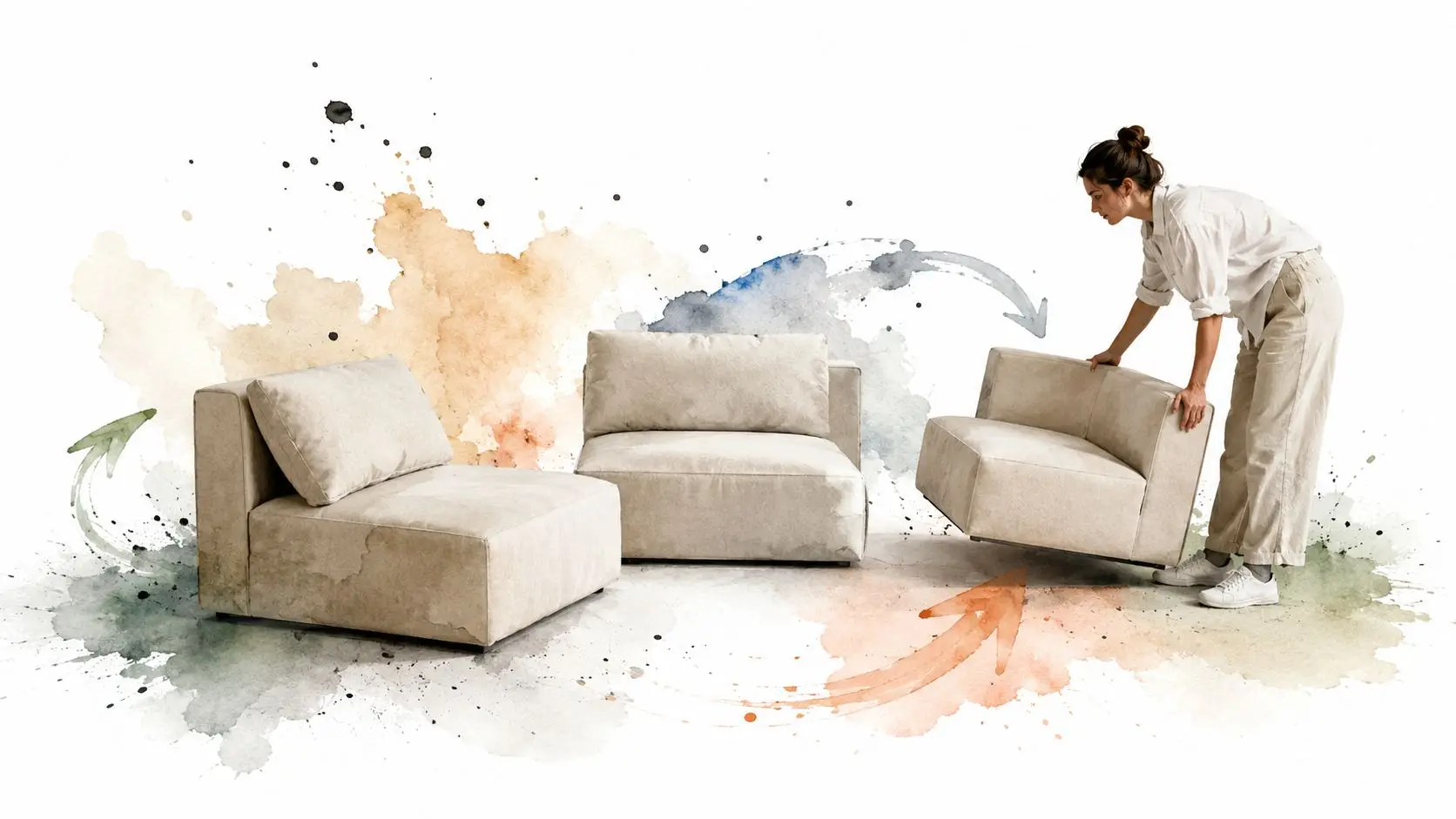
Some trends are easy to dismiss as temporary. Modular seating isn't one of them. It answers a real need in modern homes, especially in Bay Area spaces where one room may need to support movie nights, visiting family, and everyday lounging without feeling locked into a single layout.
The appeal is practical. A modular sectional lets homeowners start with the footprint they need now, then rework the arrangement if the room changes, the family grows, or a move reshapes the floor plan. That's a better long-term strategy than buying a fixed sofa that only works in one exact position.
Why flexibility matters more than novelty
Industry analysis identifies modular furniture as a major living room trend, and Technavio also projects that the home furniture market will add USD 95.7 billion between 2023 and 2028 at a 4.72% CAGR, with rising online sales cited as a key driver. For homeowners, that means flexibility isn't a niche preference anymore. It's becoming part of how people expect furniture to perform.
A modular piece still has to pass the quality test. Good systems need strong frames, secure connectors, and cushions that keep their shape. Cheap modular seating can drift apart, sag early, and look disjointed within a short stretch of daily use.
Practical rule: Buy the frame and configuration first. Treat pillows and accent color as the changeable layer.
For a room with an open-plan layout, a sectional can also create zones without needing extra furniture. The key is scale. A large sectional can anchor a generous family room beautifully, but it can also overwhelm a tighter condo if the chaise blocks circulation.
A planning guide like Sectionals 101 what you should know before buying a sectional helps homeowners think through corner orientation, walkways, and seat depth before placing a custom order.
- Measure the full footprint: Include ottomans, chaises, and the room needed to walk around them.
- Think one move ahead: A modular design should still work if the furniture rotates, expands, or shifts to another home.
- Keep the base versatile: Neutral upholstery makes future reconfiguration easier.
2. Sustainable and Eco-Conscious Materials
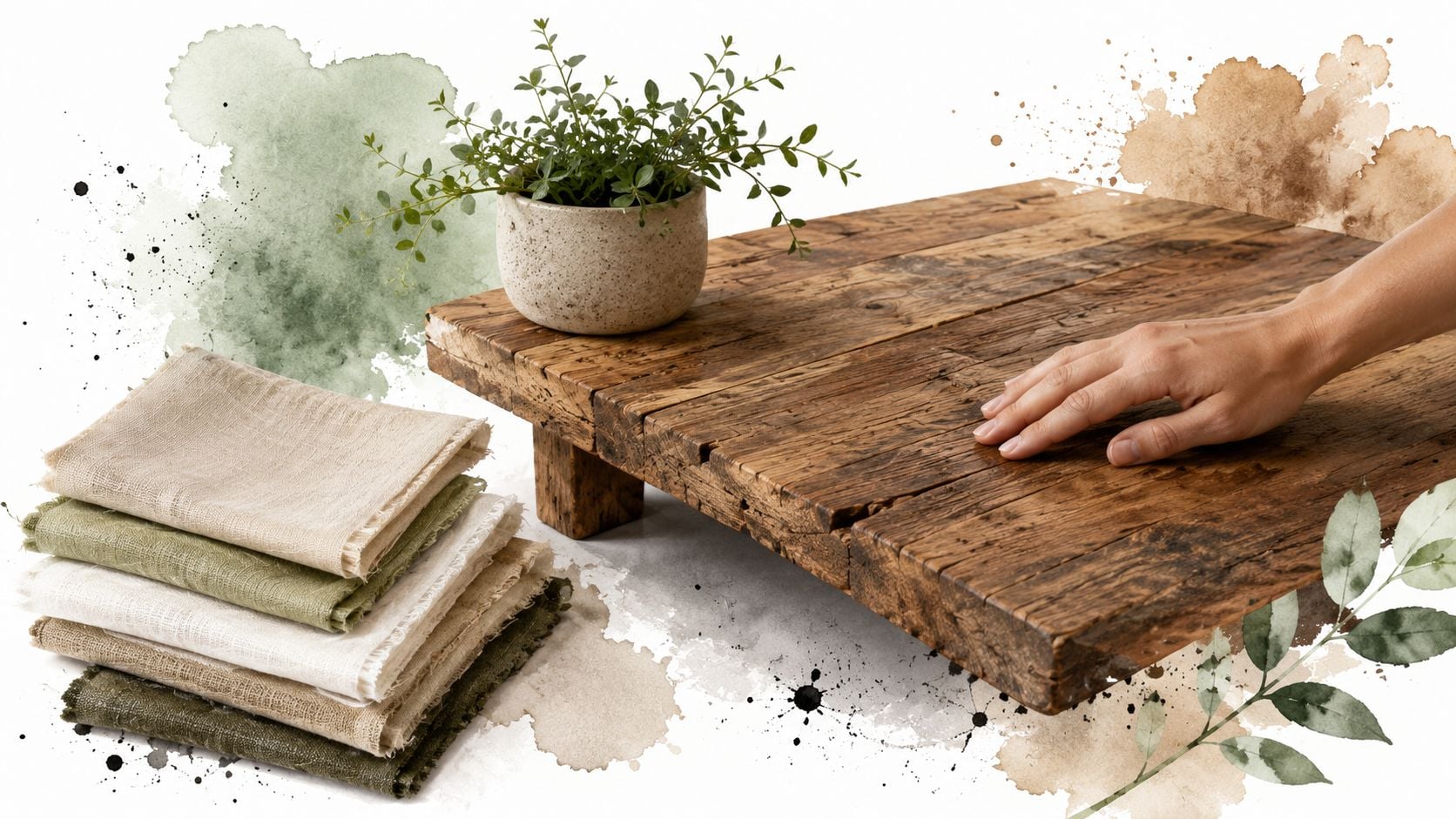
A Bay Area living room often has to do more than look good. It may sit in full afternoon sun, handle everyday family use, and still feel right ten years from now. Sustainable furniture matters in that setting, but the definition needs to be stricter than a recycled tag or a trendy label.
The better question is whether the piece will last.
A sofa built with cleaner materials, replaceable cushions, and a well-made frame usually does more for the home, and for the environment, than a cheaper piece marketed as green but headed for replacement in a few years. The same goes for tables and case goods. Responsibly sourced wood and lower-emission finishes matter, but so do joinery, surface protection, and the ability to refinish or repair the piece later.
Industry research from the National Retail Federation and IBM Institute for Business Value on consumer sustainability purchasing found that many shoppers consider environmental impact in their buying decisions, and a meaningful share will pay more for products they see as sustainable. In the furniture category, that usually shows up as better questions. Homeowners ask where the wood came from, what is in the foam, whether the finish has a strong odor, and how the piece will age under daily use.
That shift is a healthy one.
In our experience, the strongest long-term choices are usually quieter visually. Clean lines age better than novelty shapes. Good leather develops character. Solid wood can be touched up, repaired, and handed down. For clients furnishing a Bay Area home they plan to keep, customization often makes the difference between a short-term purchase and a lasting one. The right wood tone, cushion fill, fabric, or finish can help a classic piece live comfortably in the room for decades. Our guide to modern furniture classics that hold their value in real homes is a useful starting point for that approach.
Low-VOC finishes and healthier material choices also deserve attention, especially in homes with children, pets, or anyone sensitive to odors. A resource like low VOC furniture guidance gives homeowners a more grounded way to evaluate those options.
- Ask what the frame is made from: Solid hardwood or high-quality engineered construction usually holds up better than lighter, disposable builds.
- Check repair potential: Removable cushion cores, replaceable seat decks, and refinishable wood extend a piece's useful life.
- Choose customization with restraint: A timeless silhouette in a personal fabric or finish stays relevant longer than a trend-heavy statement piece.
- Look past marketing terms: Certifications, material details, and construction methods tell you more than a hangtag does.
3. Mid-Century Modern and Retro Revival
A Bay Area living room often has to do several jobs at once. It may sit in a compact condo, an Eichler, a renovated bungalow, or a newer open-plan home. Mid-century modern keeps showing up because it handles that reality well. The lines stay clean, the scale is usually efficient, and the wood details add warmth without making the room feel heavy.
That staying power matters more than trend appeal. In our experience, clients return to mid-century and retro-inspired shapes when they want furniture that feels current now and still looks appropriate ten or fifteen years from now. A well-proportioned sofa with a slim arm, visible wood base, or tapered leg can bridge older architecture and newer finishes without forcing the whole room into one style.
The best rooms use the influence selectively.
How to keep it from looking staged
A few strong references work better than a full set bought to match. One chair with a sculptural walnut frame, a low media cabinet, or a clean-lined sofa can carry the idea. Once every piece repeats the same decade, the room starts to feel decorated around a theme instead of arranged for daily life.
Customization keeps the look personal. Walnut gives depth and contrast, but white oak can feel softer in foggy Bay Area light. Boucle and heavily textured fabrics push the look in a more fashion-driven direction, while a tighter woven fabric usually ages subtly. Anyone comparing those options should spend time with different upholstery materials for living room furniture before committing to a finish or fabric.
The best retro influence is quiet. It gives a room character without turning it into a period set.
For homeowners drawn to iconic lines but unsure how to translate them into a personal space, modern furniture classics offers a useful starting point.
- Choose one anchor piece: Let the sofa, lounge chair, or cabinet set the tone instead of repeating the style across the entire room.
- Watch the wood tone: Walnut, teak-inspired finishes, and lighter oak each change the mood. They do not all belong in equal amounts.
- Balance profile with comfort: A trim silhouette looks refined, but seat depth, back angle, and cushion support still decide whether the piece gets used every day.
- Mix old and new carefully: Mid-century forms pair well with contemporary lighting, quieter rugs, and art that is not tied to the same era.
4. Performance Fabrics and Durable Upholstery
Beautiful upholstery that can't handle normal life isn't a good investment piece. That's why performance fabrics have become one of the most useful living room furniture trends, especially for households with children, pets, frequent guests, or even a sofa that gets used every day instead of admired from across the room.
The strongest performance fabrics don't look overly technical. They feel soft, come in refined textures, and help homeowners stop making choices out of fear. A lighter fabric becomes far less intimidating when it's selected with real-world use in mind.
Where performance fabric pays off
This trend works best on the pieces that take the most abuse. Family sofas, sectionals, and frequently used chairs benefit the most. Accent seating that rarely sees heavy use can be more adventurous in material.
The trade-off is worth stating clearly. Not every performance fabric feels identical to a natural fiber, and not every stain-resistant surface ages the same way. Some households still prefer the hand, drape, or patina of more natural materials. That's why fabric samples matter. They let homeowners compare texture, cleanability, and color in their actual light.
A practical resource like everything you need to know about upholstery materials helps narrow those choices before a custom order is placed.
- Match the fabric to the seat: Everyday seating needs different protection than a formal accent chair.
- Test the color realistically: Cream, oatmeal, charcoal, and patterned neutrals all behave differently in a busy home.
- Ask about care, not just stain resistance: Some materials spot clean easily, while others need more specific treatment.
A good fabric choice doesn't just protect the furniture. It protects the homeowner from regretting a beautiful piece after the first real spill.
5. Low-Profile and Floor-Hugging Furniture
Low-profile furniture continues to appeal because it changes how a room feels without requiring more square footage. Lower backs, deeper seats, and strong horizontal lines can make a living room feel calmer and more architectural. In homes with large windows or open sightlines, that restraint often helps the room breathe.
It's also a useful counterpoint to heavier traditional interiors. A lower sofa can visually quiet a room that already has bold art, substantial built-ins, or a strong fireplace wall.
Who should be careful with this look
This trend isn't universal. A low sofa may look refined in a photo, but comfort depends on who's using it. Older adults, taller family members, and anyone with mobility concerns may find very low seating harder to get in and out of. That doesn't make the style wrong. It just means the room has to serve the people living in it, not the image on a screen.
Independent design guidance also points out something trend roundups often skip. In awkward rooms, smaller-scale seating, rounded coffee tables, and furniture with taller legs can improve flow and keep the space from feeling cramped, particularly in narrow rooms, fireplace-centered spaces, and open plans with through-traffic, as discussed in this layout-focused design video on living room flow.
That's the ultimate test. If a low-profile piece improves the room's openness without making daily use harder, it's working. If it forces people into uncomfortable posture or blocks circulation, it's the wrong version of the trend.
- Check seat height in person: Visual lightness doesn't always equal physical comfort.
- Pair low seating with the right tables: Standard side tables can feel awkwardly tall next to very low arms.
- Use the look selectively: One low sofa can modernize a room without requiring every piece to sit near the floor.
6. Neutral Color Palettes with Bold Accents
A Bay Area living room often has to do several jobs at once. It needs to feel calm at the end of a long day, polished enough for guests, and flexible enough to handle changing tastes over time. That is why neutral upholstery keeps earning its place. It gives the room a steady foundation while the personality comes through in art, lighting, textiles, and smaller pieces that are easier to update.
The long-term value is practical. A well-made sofa in cream, taupe, stone, camel, or a warm gray usually holds up better stylistically than a large piece upholstered in a color that feels exciting for one season and tiring by the third year. In our showroom, homeowners rarely regret choosing a timeless body fabric. They are far more likely to regret making their largest purchase the most trend-driven one in the room.
Why this approach works in real homes
Neutral does not mean bland. Good rooms use contrast. Boucle next to smooth leather, matte wood against metal, a quiet sofa paired with a strong rug, or a single rust, olive, ink, or saffron accent chair can carry plenty of character without locking the whole room into one moment.
This approach also makes customization easier. If the main upholstery stays grounded, accent pieces can do more of the talking. Pillows can shift with the season. Art can get bolder. A bench, swivel chair, or ottoman can introduce color without forcing a full redesign a few years later.
That balance matters even more for homeowners who begin their search online and finish it in person. Photos flatten undertones, and what reads as soft ivory on a screen can arrive looking yellow or stark once it sits next to your flooring. Reviewing a recliner buying guide that also helps with scale, placement, and long-term comfort decisions can sharpen the same kind of judgment you need here. Proportion, finish, and daily use matter as much as color.
A neutral sofa gives you more freedom later. That freedom is what makes it a smart investment.
The strongest version of this trend has also warmed up. Cooler grays dominated for years, but many rooms feel more inviting with mushroom, oat, sand, putty, and soft brown undertones, especially in homes that already have wood floors, natural light, or older architectural details.
- Choose one anchor neutral first: Match it to the fixed finishes you cannot easily change, such as flooring, stone, or millwork.
- Limit bold accents to a few clear moves: One chair, a rug, and artwork usually read better than color scattered everywhere.
- Use texture to prevent a flat result: Linen weaves, wool rugs, leather, wood grain, and ceramic surfaces give the room depth without adding visual noise.
7. Recliners and Power Mobility Features
For years, many homeowners treated recliners as a separate category from good design. That divide has narrowed. Today's better motion furniture can look refined, scaled, and appropriate in a well-designed living room while still offering the comfort features people use.
That shift matters in real homes. People want support for reading, television, recovery, aging in place, and long evenings with family. They also want a room that doesn't look overly mechanical.
Comfort no longer has to look bulky
The most useful power features are usually the least flashy. Adjustable headrests, smoother reclining action, better lumbar positioning, and cleaner silhouettes do more for daily comfort than oversized cupholders and heavily padded forms. In a shared living room, subtlety wins.
This is also where shopping in person matters. A power recliner can look compact online and still need meaningful clearance in a room. Seat pitch, leg extension, and arm height all need to be tested by the person who will use it. A motion piece isn't successful just because it reclines. It has to support the body well in both upright and relaxed positions.
Homeowners comparing options can benefit from the ultimate recliner buying guide, especially when balancing comfort, scale, and placement near power access.
Choose the motion feature that solves a daily problem. Skip the one that only sounds impressive in a spec sheet.
A well-designed recliner can also anchor a reading corner or pair with a sofa in a mixed seating plan. That often works better than trying to make every seat in the room recline.
- Measure fully open depth: Motion furniture needs space behind and in front.
- Test the controls: The switch location and ease of use matter more than many buyers expect.
- Consider the room's visual balance: One motion chair can coexist beautifully with more refined stationary seating.
8. Mixed Materials and Eclectic Styling
One of the healthiest shifts in living room furniture trends is the move away from rooms that look purchased in a single afternoon. Matching sets can feel easy in the moment, but they often age quickly because they leave no room for personality, contrast, or gradual evolution.
A better room usually blends materials and eras. Leather next to woven texture. A cleaner-lined sofa with a more character-rich wood table. A contemporary chair with an older-looking cabinet. That mix creates depth and makes the room feel lived in rather than assembled from one script.
Why matched sets feel dated
Editorial guidance now flags matching furniture sets, too much gray, and overly mirrored accents as choices that can make a living room feel dated, while recommending a mix of eras, materials, patterns, and finishes instead, as described in this Real Simple article on decor choices that date a living room. That advice tracks with what design professionals have seen for years. Rooms gain longevity when they resist perfect sameness.
Custom furniture becomes especially valuable. A homeowner can choose the exact leather, fabric, wood species, or finish needed to bridge existing pieces instead of starting over. That's often a smarter investment than replacing everything to chase a single trend story.
Mixing materials does require discipline. The room still needs repetition. If one piece introduces black metal, another small detail can echo it. If warm wood appears in one major piece, it helps to repeat that warmth somewhere else.
- Repeat at least one element: A finish, shape, or tone should appear in more than one place.
- Let one piece lead: The sofa, rug, or cocktail table can establish the room's direction.
- Avoid trying to make every item stand out: Contrast works best when some pieces are quiet.
9. Curved Furniture and Organic Shapes
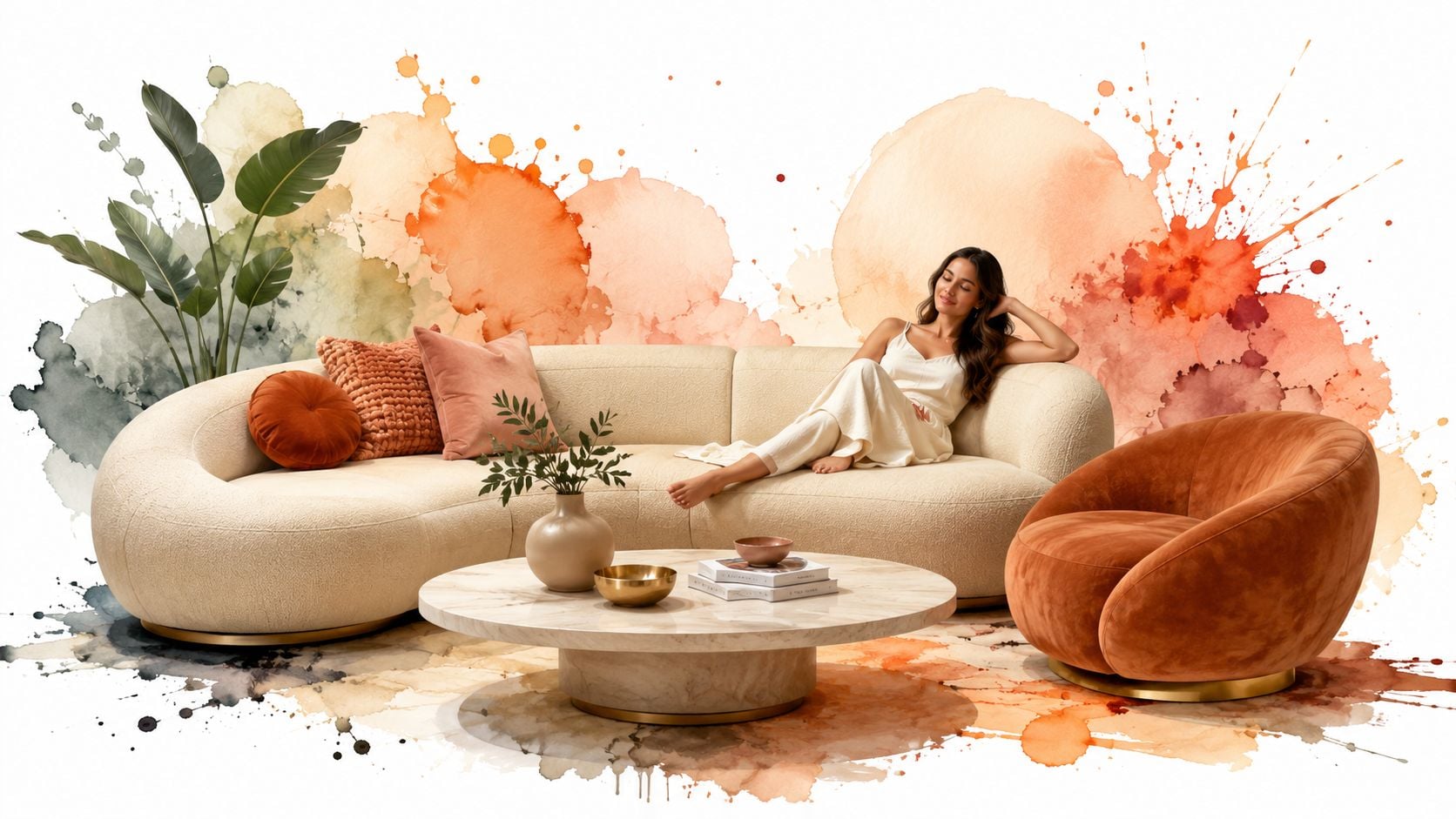
Curved furniture has become one of the most visible style shifts in recent years, and for good reason. It softens a room quickly. A rounded sofa arm, barrel chair, or oval cocktail table can take the edge off a boxy floor plan and make a living space feel more inviting.
The appeal isn't only visual. Organic shapes can also improve movement. In rooms where people constantly pass between seating and a hallway, kitchen, or exterior door, fewer sharp corners often make the layout feel easier.
Use curves where the room needs relief
Curves work best when they're used with intent. A single sculptural chair or a softly rounded sofa can create a strong focal point. Too many curved pieces at once can make the room feel overly stylized and leave it without visual structure.
There's also a practical side. Curved upholstery requires careful tailoring, and curved frames need quality construction. If the workmanship isn't strong, the shape can wrinkle, distort, or lose refinement faster than a simpler straight-lined piece.
For difficult layouts, curved forms can be especially helpful when paired with the right scale. Rounded coffee tables often improve circulation in tighter rooms, while a slightly curved sofa can soften a fireplace-centered plan that might otherwise feel rigid.
In a narrow or high-traffic room, a rounded table often does more good than a dramatic curved sofa.
Homeowners should measure these pieces carefully. Curves can project farther into the room than expected, even when they look visually light.
- Use one statement curve first: Let the room react before adding more organic shapes.
- Balance with straighter forms: A curved sofa often looks best with cleaner side tables or a rectilinear rug.
- Watch traffic paths: Curves should help movement, not interrupt it.
10. Technology Integration and Smart Furniture
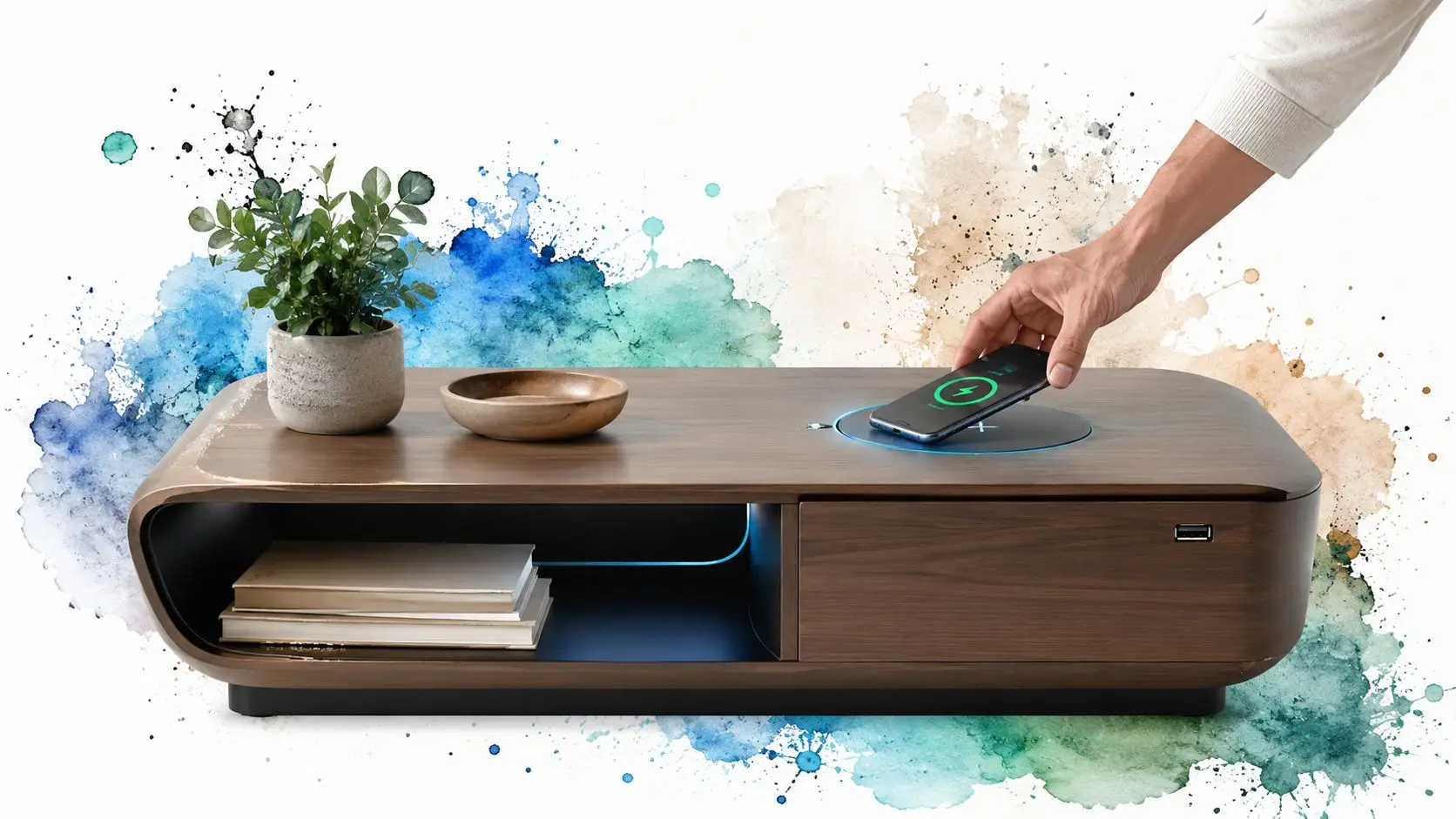
A living room can look calm and settled while doing a lot of work. One seat charges a phone. Another reclines with the touch of a button. The media cabinet hides the cable clutter that usually builds up around a television. The room still needs to read as furniture first.
That principle matters if you want a piece to earn its place for the next ten or twenty years. In Bay Area homes, I often see clients weigh the same question. How much technology adds real comfort, and how much will feel dated once the next device cycle arrives? The best answer is usually restraint. Build in the features you will use every day, and leave room for the technology around the furniture to change.
Analysts covering the category projected steady growth in demand for living room furniture, with the market estimated at USD 231.8 billion in 2025 and projected to reach USD 339.6 billion by 2035 at a 3.9% CAGR. That kind of long buying cycle supports a more careful approach. A well-made sofa, recliner, or media console should still feel right after chargers, remotes, and control systems have changed.
The safest technology choices are usually the least flashy. Integrated charging, power motion with dependable controls, and media storage that handles cords cleanly tend to hold up better than specialized features tied to one short-lived format. Good furniture should not become obsolete because a port changed.
Placement matters as much as the feature list. Powered seating needs outlet access that does not force cords across a walkway. Media pieces need rear clearance, ventilation, and enough interior flexibility to handle the next set-top box or sound component. These are small decisions, but they affect whether the room feels thoughtful or improvised.
For homeowners planning a broader update, our homeowner's guide to living room makeovers can help frame the larger decisions around function, layout, and finish selection before you commit to built-in tech details.
A related comfort category many homeowners research is Smart Tek features for mobility, especially when comparing motion seating meant for long-term daily use.
- Choose the frame and comfort first: If the furniture is not worth owning without the electronics, it is not the right long-term buy.
- Ask how repairs are handled: Accessible motors, switches, and power components are easier to service and less frustrating to live with.
- Plan power before delivery: A beautiful room loses its order quickly when extension cords become part of the design.
Living Room Furniture Trends, 10-Point Comparison
| Trend | Implementation complexity | Resource requirements | Expected outcomes | Ideal use cases | Key advantages |
|---|---|---|---|---|---|
| Modular and Sectional Seating Systems | Medium, requires planning for configurations and connectors | Moderate space and budget; modular pieces and joinery | Highly flexible, reconfigurable seating that adapts over time | Renters, growing households, variable room layouts | Scalable, replaceable components; customizable layouts |
| Sustainable and Eco-Conscious Materials | Medium–High, verification of certifications and sourcing | Higher upfront cost, longer lead times, certified materials | Lower environmental impact, healthier indoor air, durable pieces | Sustainability-focused buyers and long-term investors | Reduced footprint, transparency in sourcing, longevity |
| Mid-Century Modern and Retro Revival | Low–Medium, selection and styling of classic forms | Moderate, authentic pieces can be premium | Timeless, curated aesthetic with strong resale value | Design-focused homeowners, transitional or eclectic interiors | Enduring style, quality craftsmanship, versatile pairings |
| Performance Fabrics and Durable Upholstery | Low, choose upgraded textiles and treatments | Moderate, higher-cost performance textiles; samples recommended | Stain-resistant, long-wearing upholstery with low maintenance | Families, pet owners, high-traffic living rooms | Exceptional durability, easy care, broad style options |
| Low-Profile and Floor-Hugging Furniture | Low–Medium, requires careful spatial planning | Moderate, may need custom scaling for small spaces | Open, airy rooms with modern sightlines and visual lightness | Condos, lofts, modern architecture and open plans | Maximizes perceived space; contemporary minimalist look |
| Neutral Color Palettes with Bold Accents | Low, primary strategy is styling and accessory choices | Low, mostly accessories and textiles for updates | Versatile, timeless foundations that are easy to refresh | Buyers seeking longevity and broad resale appeal | Flexible styling, easy seasonal updates, wide appeal |
| Recliners and Power Mobility Features | Medium–High, electrical needs and mechanism planning | High, motors, wiring, maintenance, and space for extension | Enhanced ergonomic comfort, wellness support, adjustable seating | Aging-in-place households, media rooms, multi-generational homes | Superior comfort, adjustable support, integrated tech options |
| Mixed Materials and Eclectic Styling | Medium–High, requires design skill to maintain cohesion | Variable, sourcing diverse pieces across budgets | Unique, personality-driven interiors that mix eras and textures | Design-forward homeowners and sustainable upcyclers | Highly individual results, flexible sourcing, layered interest |
| Curved Furniture and Organic Shapes | Medium, careful measurement and custom construction often needed | Moderate–High, specialty joinery and upholstery may be required | Inviting, sculptural focal pieces that soften interiors | Conversation areas, contemporary and biophilic-inspired spaces | Sculptural aesthetics, ergonomic comfort, distinctive impact |
| Technology Integration and Smart Furniture | High, integration, installation, and future compatibility | High, electronics, installation, possible professional setup | Greater convenience, reduced cord clutter, app/automated control | Tech-savvy professionals, smart-home households | Built-in charging, automation, improved organization and functionality |
Bring Your Vision to Life in Our South San Francisco Showroom
A Bay Area living room often has to do several jobs at once. It may need to handle weeknight family time, weekend guests, an open floor plan, and changing mobility needs over the years. Trend lists can point you in a direction, but the right furniture decision comes from measuring the room carefully, sitting in the pieces, and choosing construction and customization that will still make sense long after this year's look fades.
That is why showroom shopping still matters for an investment purchase. Scale reads differently in person. Seat depth, cushion support, arm height, motion clearance, and wood finish are all easier to judge on the floor than on a screen. A sectional that looks balanced online can feel oversized in a city living room. A recliner can offer excellent support, but only if the mechanism, wall clearance, and silhouette fit the way the room is used.
Good furniture buying is part design decision and part long-term planning.
For Bay Area homeowners, customization often makes the difference between a piece that works for now and one that earns its place for decades. The ability to choose fabric, leather, wood species, finish, scale, and configuration allows a room to reflect the home's architecture and the household's habits instead of settling for a close match. That matters in spaces where durability, entertaining, comfort, and personal style all need to coexist.
Since 1933, Giorgi Bros. Furniture has helped customers make those decisions in South San Francisco with a no-pressure approach. Our non-commission consultants are there to guide, not rush. Customers can compare cushions side by side, test motion seating, review custom options, and ask practical questions about wear, maintenance, delivery access, and how a piece will age. For households planning around comfort and accessibility, it also helps to understand features such as Smart Tek features for mobility before choosing a chair that will see daily use.
Seeing furniture in person adds another layer of confidence. In a 50,000 square foot showroom, homeowners can assess comfort, proportions, finish, and construction more accurately than they can through photos alone. That is especially useful for custom furniture, Amish furniture, motion seating, and premium mattresses, where feel and fit matter as much as appearance.
The goal is a living room that welcomes people in, works hard every day, and still looks right years from now. Financing options are available for customers who want to make thoughtful, lasting choices on a practical timeline.
Visit Giorgi Bros. Furniture in South San Francisco to explore living room furniture trends in person, compare custom options, and get no-pressure guidance from non-commission design experts who've helped Bay Area homeowners furnish for life since 1933.