
A lot of Bay Area households know this problem well. A parent is turning a home office into a guest room for a weekend. A condo owner wants family to stay over comfortably, but there isn't a spare bedroom. Someone needs seating every day and a bed only now and then, and both jobs have to happen in the same footprint.
That's where the search for a sofa air bed couch usually begins. On the surface, the choice looks simple. One path offers quick setup and easy storage. The other asks for more thought up front, but gives the room a permanent sense of purpose. The key question isn't whether a guest solution is temporary or permanent. It's whether the home is being furnished for occasional convenience or for lasting hospitality.
In a family furniture business that has served South San Francisco since 1933, that distinction matters. A guest bed isn't just a backup item. It shapes how a room works, how guests sleep, and how well a purchase holds up over time.
Table of Contents
- The Modern Guest Room Dilemma
- What Exactly Is a Sofa Air Bed Couch
- The Enduring Alternative Traditional Sleeper Sofas
- Comparing Your Options Comfort Durability and Value
- Investing in a Lifetime of Hospitality
- Your Bay Area Solution The Giorgi Bros Experience
The Modern Guest Room Dilemma
A common Bay Area setup goes like this. The second bedroom is already working as an office, hobby room, or nursery. The living room has to stay polished for daily life, but there's still a real need to host parents, college kids coming home, or friends in town for a few nights.

In that moment, the quick answer can feel very attractive. An inflatable sofa that becomes a bed sounds flexible. It can come out when needed and disappear when guests leave. For smaller rooms, that's a tempting promise. Homeowners browsing ideas for small-space furniture solutions often start there because the idea matches the pressure of modern floor plans.
Convenience solves one problem
The short-term appeal is easy to understand. A sofa air bed couch can make a room do more without a remodel, and it can help when hosting is occasional rather than weekly. For holiday visitors, temporary arrangements often seem perfectly reasonable.
That's also why the emotional side of hosting matters. Thoughtful details such as soft layers, warm lighting, and a room that feels welcoming can make even a compact setup feel generous. Households looking for seasonal hosting ideas may enjoy these tips on inviting guest environments for winter, especially when the goal is comfort without adding another dedicated room.
Practical rule: The best guest solution is the one that works on an ordinary Tuesday, not just when company arrives.
Hospitality is a design decision
A guest arrangement affects more than sleeping space. It changes how the room looks every day, how easy it is to reset after visitors leave, and whether the furniture still feels right years later. That's where many households pause. They aren't only buying a place for someone to sleep. They're deciding how much value they want one piece of furniture to carry over time.
A well-furnished home usually handles both daily living and unexpected guests gracefully. That balance is the primary challenge. The question isn't just, “Where will someone sleep?” It's, “What kind of home function does this room need to support for the long haul?”
What Exactly Is a Sofa Air Bed Couch
A sofa air bed couch is an inflatable seating piece that unfolds or converts into a sleep surface. In practical use, it behaves more like a shaped air mattress than a traditional upholstered sofa. It's meant to provide temporary seating, then switch into a bed when needed.
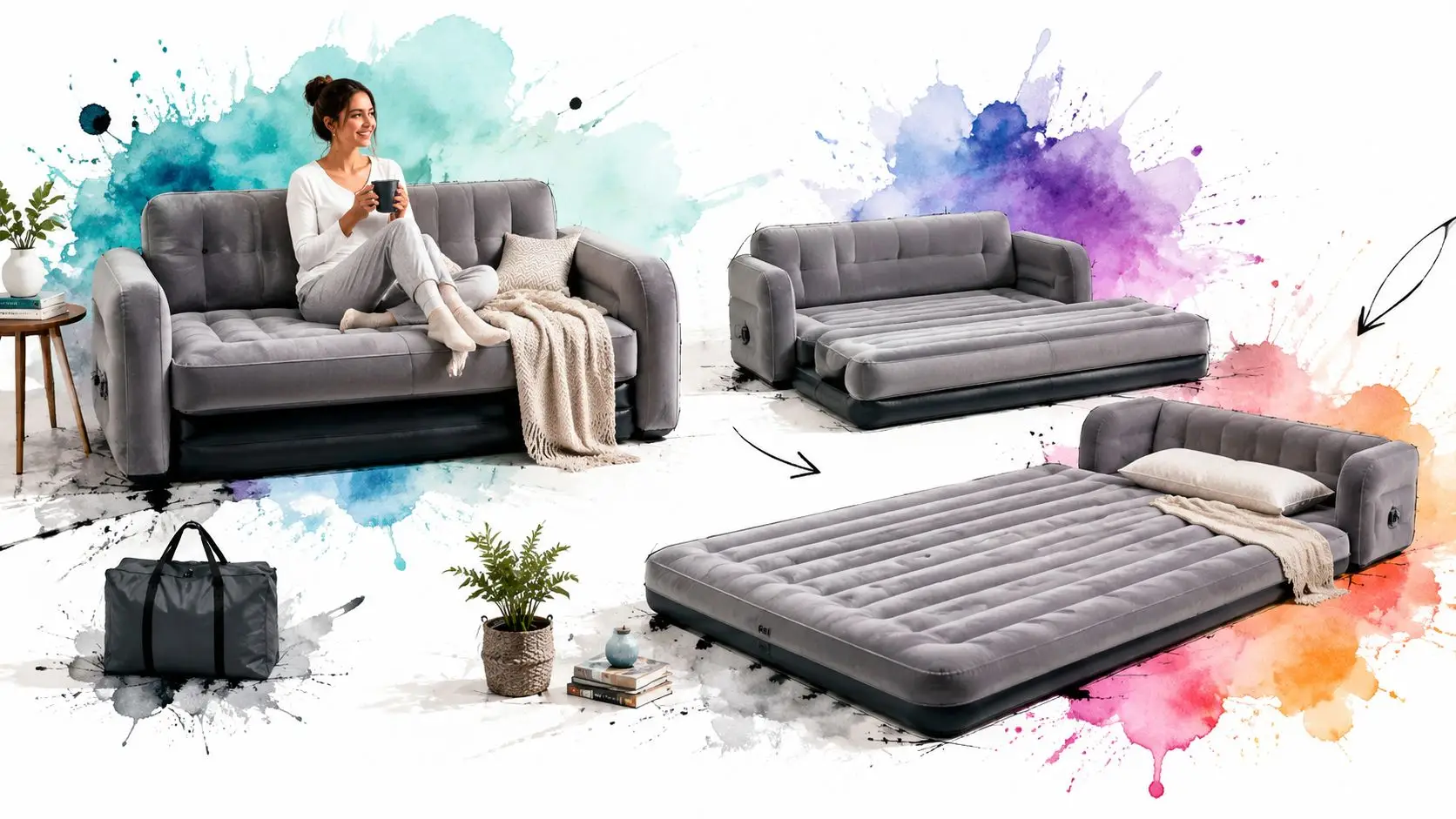
Some versions use a pull-out style form. One widely listed example describes a dual-chamber inflatable design with 2-in-1 valves, a 4-chamber structural design, an 80 x 88 x 26-inch sofa footprint, a 20-pound product weight, and a 660-pound capacity when used as a bed, according to the product specifications for an inflatable pull-out sofa. Those details explain the appeal. The product is portable, fast to set up, and easy to move compared with a conventional sleeper.
How the category took shape
Inflatable furniture is much newer than traditional sleeper seating. Design history places its first presentation in Sweden in the 1970s by the company Innovator, with deeper material roots in 1940s military technology, as noted by the IKEA Museum's history of inflatable design. That origin says a lot about the category. It comes from experimentation, portability, and new materials, not from the long furniture tradition of building a sofa to serve a household for decades.
That doesn't make it useless. It just defines its lane more clearly.
What it does well
For the right situation, this type of product can be practical.
- Guest overflow: It helps when company is staying for a short visit and there's no dedicated bed.
- Portable use: It can fit households that need something easy to store between visits.
- Flexible spaces: It suits rooms that must stay open most of the time and only turn into sleep space occasionally.
A buyer sorting through multi-functional furniture for modern homes should think of the sofa air bed couch as a convenience piece first. It's useful when portability matters more than customized support, upholstery quality, or long-term room design.
The biggest mistake is expecting inflatable furniture to perform like a full-time sofa and a full-time bed at once.
Its weaknesses are the ones most homeowners already suspect. It depends on inflation. It can feel less grounded than framed furniture. It may be fine for a short stay, but it isn't usually the piece people build a living room around.
The Enduring Alternative Traditional Sleeper Sofas
A traditional sleeper sofa solves the same problem in a very different way. It starts as a real sofa, built for regular seating, then hides a bed mechanism inside. In common usage, this category is also called a sleep sofa, sleeper sofa, hide-a-bed, bed-couch, or pullout sofa. The defining feature is a hidden metal frame with a thin mattress that unfolds into a bed, as described in the history of the sofa bed.
Built as furniture first
That distinction matters in day-to-day living. A sleeper sofa has to look right in the room when nobody is sleeping on it. It has to sit comfortably during normal life. It also has to open and close repeatedly without feeling like an afterthought.
A good model gives the room a finished look all year. It doesn't have to be pulled from storage. It doesn't need inflation. It remains in the space and does its second job when needed. That's why many homeowners who begin with a temporary fix eventually move toward a dedicated sleeper, such as a customizable sleeper sofa option, once they decide the room needs to perform more gracefully.
Why history still matters
Sleeper sofas have been answering the space problem for a long time. Widely cited histories place major development in the mid-1800s, and Sarah E. Goode's 1885 patent for a folding cabinet bed is often linked as an important milestone in convertible sleeping furniture. That history matters because it shows the purpose hasn't changed. One piece must serve seating and overnight sleeping needs without requiring a separate guest room.
Since 1933, family furniture businesses in South San Francisco have seen the same pattern repeat across generations. Homes change. Rooms take on double duty. The families who stay happiest with their purchase usually choose pieces that work hard every day, not just when visitors arrive.
A sleeper sofa earns its keep when the bed stays hidden and the sofa still feels like it belongs in the room.
The long-term appeal isn't nostalgia. It's function. Traditional sleepers were developed to be integrated household furniture, and that design intention still gives them an edge when a room has to be both polished and practical.
Comparing Your Options Comfort Durability and Value
Most buyers don't need a lecture on features. They need an honest answer to a few practical questions. Will guests sleep well? Will the piece hold up? Will the purchase still make sense after years of use?
Where comfort starts to separate
The categories diverge quickly. Inflatable models often emphasize portability, quick inflation, backrests, or armrests. What they usually don't explain well is how the bed feels after several nights in a row. Independent discussion around sleeper bed performance shows recurring complaints about uneven support, including reports that some bed frames can feel “not level” at the head area in unfolded use, which highlights the broader comfort issue around long-term sleeping quality in this category, as seen in this discussion of sleeper sofa bed support problems.
That issue matters most for two groups. Guests staying more than one night. Anyone with back sensitivity.
A traditional sleeper sofa and a futon approach support differently. A sleeper uses a frame and mattress system. A futon relies on a folding pad structure that can be simpler, but often feels firmer and more direct. An inflatable sofa bed relies on air chambers, which can be convenient but less consistent.
Sofa Air Bed vs. Sleeper Sofa vs. Futon at a Glance
| Feature | Sofa Air Bed Couch | Traditional Sleeper Sofa | Futon |
|---|---|---|---|
| Everyday seating | Works for occasional use, but often feels more temporary | Designed to function as a primary sofa | Usually functional, often more casual in look |
| Guest sleep comfort | Best suited to short stays | Better suited to multi-night use because of its frame-and-mattress design | Can work well for guests who like a firmer sleep surface |
| Setup | Requires inflation and deflation | Pull-out mechanism is built in | Converts by folding or flattening |
| Durability | Better for occasional use than constant daily duty | Built for repeated sitting and sleeping over time | Depends heavily on frame and mattress quality |
| Room appearance | Can look temporary or utilitarian | Integrates into a finished living room | Leans more casual, studio, or secondary-room |
| Storage needs | Often stored away between uses | Lives in the room full time | Lives in the room full time |
| Best fit | Overflow guests, temporary housing, travel-minded use | Homes that want long-term hospitality and everyday function | Flexible rooms where firmness and simplicity are acceptable |
A buyer also has to think about the true cost of comfort. The wrong mattress feel can turn a useful guest solution into something people tend to avoid. That's why mattress feel shouldn't be treated as a side issue. A practical starting point is understanding how soft, medium, and firm sleep surfaces affect different sleepers, and a good mattress firmness guide can help frame that decision.
Key judgment: If the piece will be used more than occasionally, comfort and support matter more than novelty.
Value follows the same logic. A lower-effort purchase can be the right one for infrequent need. But when a room has to function beautifully every day and welcome guests with confidence, a more durable solution usually proves wiser.
Investing in a Lifetime of Hospitality
A guest arrives late, the office has to become a bedroom again, and the room still needs to look like part of the home in the morning. That is where this decision starts to matter. A sleeper sofa earns its keep by helping a room serve daily life well and welcome people comfortably for years, not just by offering a place to sleep once in a while.
An inflatable sofa can solve a short-term hosting problem. A well-built sleeper sofa supports a better long-term one. The difference shows up in how the piece sits every day, how it opens after years of use, and whether guests wake up feeling cared for or merely accommodated.
That long view matters. Good hospitality is not only about having an extra bed. It is about giving one room two honest jobs, without asking the room to look temporary the rest of the year.
What to look for in a quality sleeper
The best sleepers usually reveal themselves in a few practical details:
- Frame integrity: Hardwood or other durable frame construction helps the sofa stay steady, quiet, and square through years of opening, closing, and daily seating.
- Mechanism quality: The bed should pull out with control and close without a struggle. If the action feels light-duty on the showroom floor, it rarely improves at home.
- Mattress comfort: Guests notice this first. A proper mattress gives the sleeper real value because people can rest well, not just lie down.
- Seat comfort in sofa mode: The piece will spend far more time closed than open. Daily sitting comfort should be part of the buying decision from the start.
Shoppers looking at solid wood furniture for the living room are often already asking the right question. Will this piece still serve the house well years from now? Better materials usually mean fewer replacements, steadier performance, and less waste.
Why customization changes the return on the purchase
A stock sleeper can fill a gap. A custom sleeper can solve a room.
In Bay Area homes, that difference is easy to feel. One room may handle work, family time, and overnight guests in the same week. Size, arm shape, cushion support, fabric durability, leather choice, and wood finish all affect whether the sofa feels like a permanent part of the room or a backup plan parked in the corner.
A showroom with custom order services, like those offered at Giorgi Bros. Furniture, can help match the sleeper to the room's scale and the household's habits. That includes choosing fabrics, leathers, wood species, and finishes that make sense for daily wear, not just showroom appeal.
Buy for the room's daily life first. The guest bed should feel built in from the beginning.
That is the investment here. An air bed offers convenience. A quality sleeper sofa offers years of comfortable seating, dependable hosting, and a room that works harder without looking like it is trying to.
Your Bay Area Solution The Giorgi Bros Experience
A Bay Area home rarely has a spare room sitting idle. One space may serve as the family room all week, then turn into sleeping space when relatives visit. That is why this choice works best as a decision about hospitality and home function, not just about where someone will sleep for one night.
A portable air bed setup can cover occasional overflow. A well-built sleeper sofa serves the room every day, supports guests with more dignity, and holds its place in the home for years. The trade-off is simple. Air beds win on short-term convenience. Custom sleepers return more value through daily use, better appearance, and longer service life.
Choose for the room you live in
In the Bay Area, square footage is expensive, and each piece needs to earn its footprint. A living room may need to host movie night, homework, and overnight guests without looking like a spare-bedroom backup plan. The right piece keeps the room comfortable and pulled together in all three situations.
That is where quality matters.
If the sofa will be seen and used every day, build quality, cushion support, fabric wear, and the opening mechanism deserve close attention. An inflatable option still has a place for short-term housing, travel, or rare guest overflow. It just should not be asked to do the job of a permanent furniture piece.
Why local guidance still matters
I have seen plenty of shoppers narrow the field online, then change their minds after sitting on the pieces in person. Seat depth feels different from one frame to another. Mattress support can vary more than buyers expect. The motion of opening and closing the bed matters too, especially if guests will use it often.
That is why a local showroom still has real value. In South San Francisco, Giorgi Bros. offers a family-owned approach that began in 1933, with non-commission staff, custom ordering, and the chance to compare upholstery, construction, and comfort side by side. Households furnishing with traditional handcrafted furniture, premium mattresses, or a full living space often benefit from that kind of practical guidance. Readers can learn more about the family business and its history.
Flexible purchasing matters as well. If a sleeper sofa is meant to become part of the home for the long haul, financing options can make it easier to buy the right piece once instead of replacing a cheaper solution later.
For Bay Area homeowners weighing a sofa air bed couch against a more lasting guest solution, the best next step is to test the difference in person. Visit Giorgi Bros. Furniture in South San Francisco to explore the showroom, compare sleeper styles, and speak with a design consultant about custom fabrics, leathers, wood finishes, and room-fit options. A Design Consultation can help turn one room into a space that welcomes guests comfortably and serves daily life for years to come.