
A living room rarely serves one purpose anymore. It holds movie nights, laptop hours, takeout dinners, charging cords, blankets, and the small daily clutter that never seems to stay put. A standard coffee table looks fine in a catalog, but in real life it often becomes a flat surface that's too low for work, too open for storage, and too limited for the way people live.
That's why a lift coffee table with storage deserves a closer look. It isn't a gimmick when it's well made. It's a practical piece that can help one room handle several roles without feeling crowded or chaotic. The catch is simple. A bad one gets loose, wobbly, and annoying. A good one becomes part of the room for years.
In South San Francisco, families have been choosing furniture with that longer view since 1933. That perspective matters. A furniture purchase shouldn't solve this month's clutter and create next year's repair problem. It should adapt to daily life, hold up to repeated use, and still belong in the room after styles shift.
Table of Contents
- Why Your Living Room Needs More Than Just a Table
- Understanding the Lift Coffee Table with Storage
- How to Choose a High-Quality Lift Mechanism
- Finding the Right Size and Style for Your Space
- Exploring Materials Finishes and Customization
- Your In-Showroom Evaluation Checklist
- An Investment in Quality and a Lifetime of Function
Why Your Living Room Needs More Than Just a Table
A common Bay Area setup looks something like this. The sofa faces the television. The coffee table holds remotes, mail, a candle, and maybe yesterday's mug. By evening, someone needs a place for a laptop. Later, the same spot needs to hold dinner plates. The room starts doing extra work, but the furniture doesn't.
That's the key advantage of a lift coffee table with storage. It gives the room flexibility without asking for more square footage. Instead of adding another side cabinet, another tray, or another small desk that clutters the layout, one table can carry more of the load.
A living room works better when the furniture adapts to daily habits instead of forcing everyone to work around it.
This is also where many trend-driven buying decisions go wrong. Buyers often focus on the photo, the finish color, or the price tag. They forget to ask whether the table helps the room stay calm and usable on an ordinary Tuesday.
A better approach starts with function first:
- Daily clutter control: Hidden storage keeps the visible surface cleaner.
- Flexible use: A raised top can support casual tasks that a fixed table can't.
- Less furniture crowding: One adaptable piece can reduce the need for extra accent storage.
- Longer usefulness: A well-built table is less likely to be replaced when routines change.
For households trying to simplify, it also helps to study a few broader stylish storage solutions that support a more organized home overall. The strongest rooms don't rely on one miracle piece. They combine good furniture choices with smart storage habits.
That said, the right lift-top table should never feel like a compromise piece. It should still anchor the room, suit the seating, and look intentional. The function matters. The dignity of the design matters too.
Understanding the Lift Coffee Table with Storage
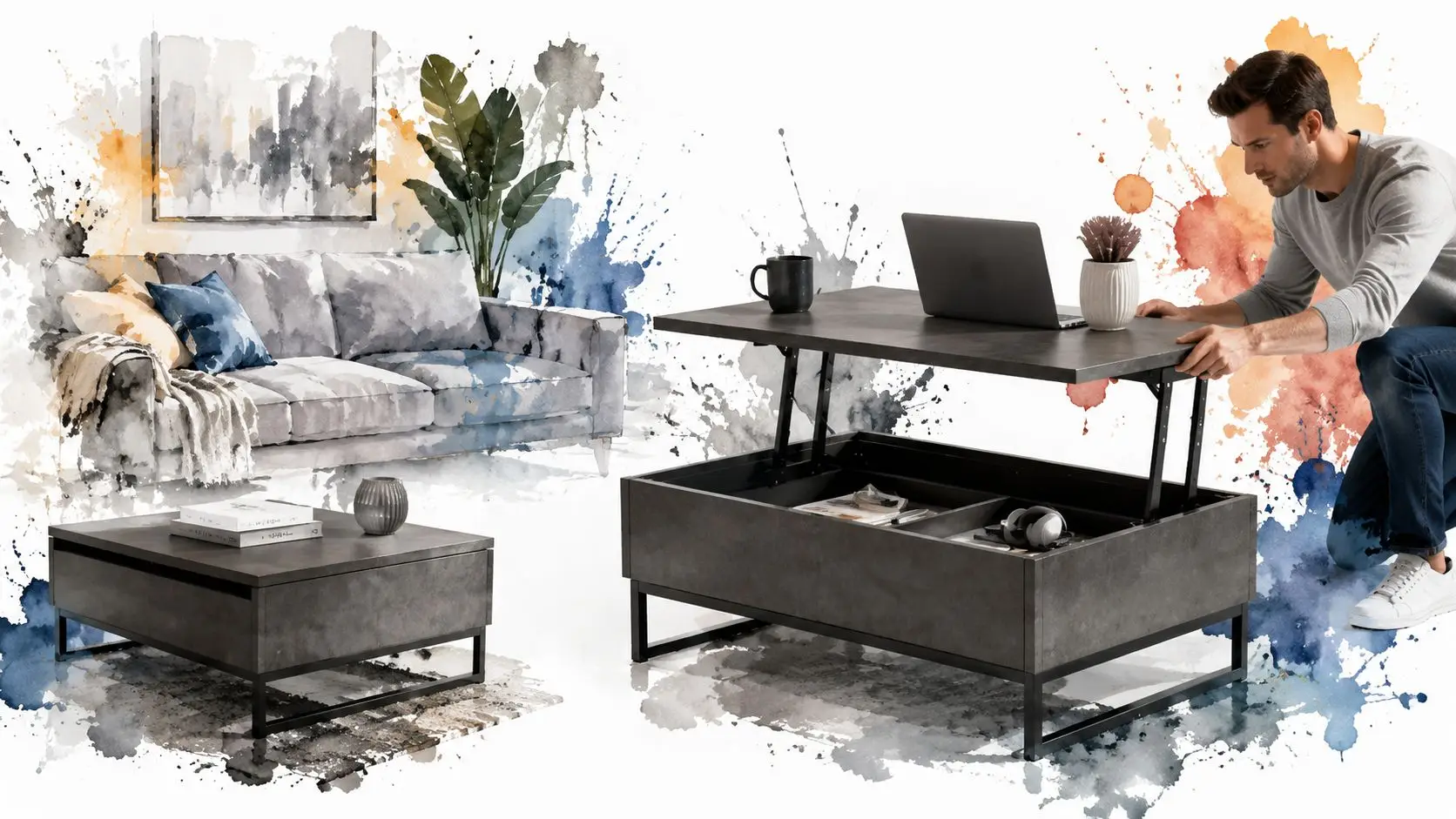
A lift coffee table with storage does two things at once. The top surface rises and moves toward the sofa, and the body of the table conceals an interior compartment underneath. That combination is what makes the form useful rather than novel.
Two jobs in one footprint
The mechanics are straightforward. In typical models, the top panel rises 6 to 12 inches and slides forward, while the hidden compartment often offers 3 to 6 cubic feet of interior storage. In a typical 40-inch × 22-inch unit, that space can hold a 15-inch laptop, two folded throw blankets, a small stack of board games, and charging cables, according to this lift-top coffee table storage guide.
Those details matter because they turn an abstract feature into a real use case. A buyer isn't just getting “hidden storage.” A buyer is getting a place to clear the room fast and reclaim the top surface when company comes over.
One straightforward example is the Amish coffee table collection, where buyers can compare more traditional coffee table construction with pieces designed for stronger long-term use and better craftsmanship.
Why this matters in smaller homes
This category makes special sense in homes where one room carries several responsibilities. The same source notes that this design has become especially practical in apartments under 700 square feet and in living rooms used for both work and leisure. That rings true in many urban and suburban homes where spare rooms aren't available.
Practical rule: If a room has to function as lounge, workspace, and catch-all zone, furniture with concealed storage usually earns its keep faster than furniture that only looks good from across the room.
The value isn't just what the table stores. The value is what it prevents. Less visible clutter. Fewer duplicate surfaces. Fewer moments when the room feels like it's losing control.
How to Choose a High-Quality Lift Mechanism
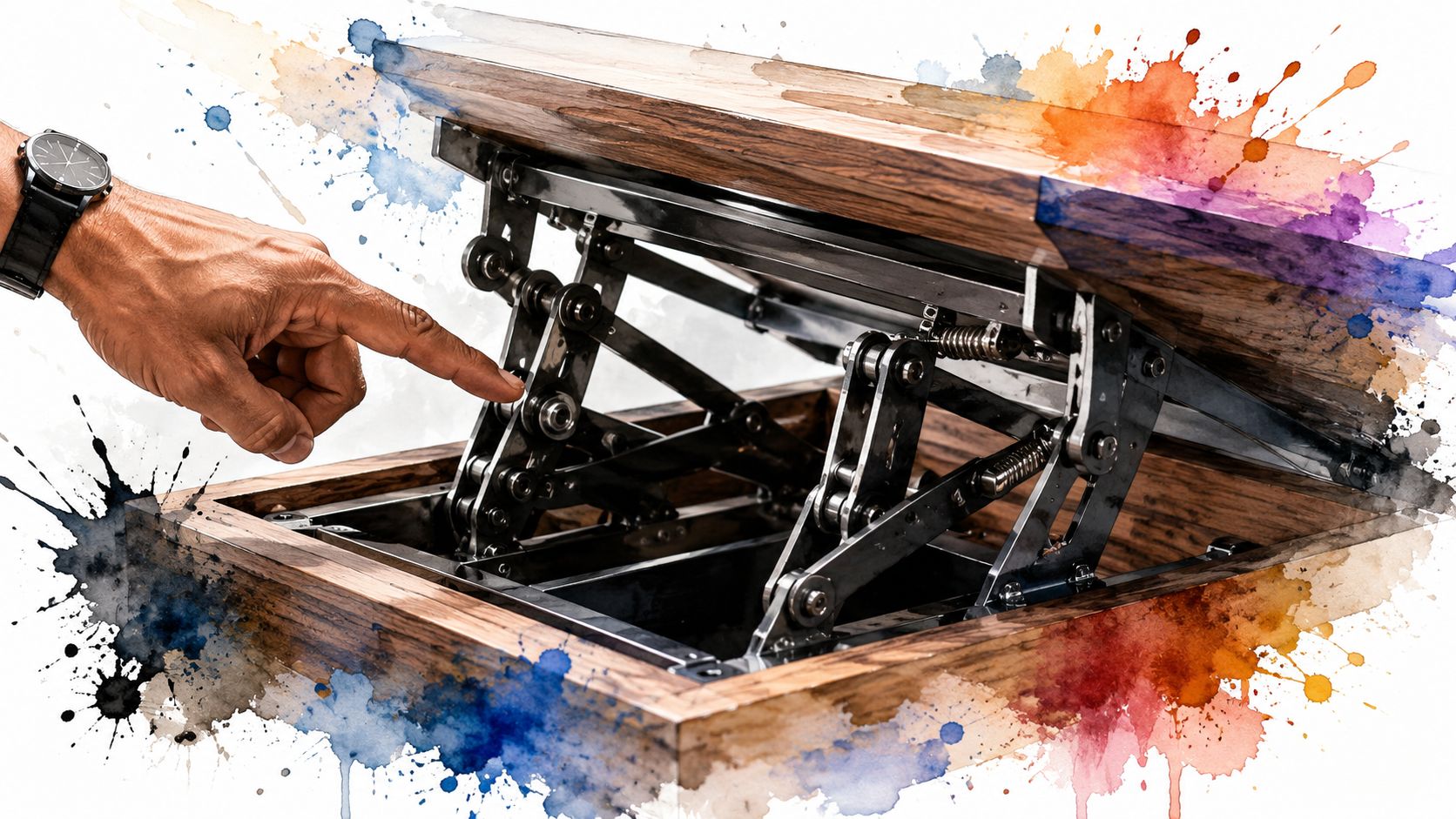
The mechanism is the heart of the piece. If the hardware is weak, the table is weak. Finish color won't save it. Clever storage won't save it. Buyers who ignore the lift action usually regret it first.
Mass-market coverage often skips the hard questions. It rarely discusses hinge durability, wobble, load limits, or whether the lift hardware remains smooth after repeated use, even though this category is now sold widely at low price points where attention can shift toward appearance and price rather than durability, as noted in this retail category overview.
The hardware decides the lifespan
A high-quality lift should feel controlled. It shouldn't jerk upward. It shouldn't drift sideways. It shouldn't make the top feel precarious once raised. A table can look substantial from the outside and still hide flimsy metalwork underneath.
Buyers should favor mechanisms that show these traits:
- Smooth travel: The top should rise without sticking or sudden resistance.
- Stable position: Once open, it should stay put and feel trustworthy.
- Solid attachment points: The hardware should meet the wood body cleanly and firmly.
- Consistent alignment: The top should close evenly without rubbing, dropping, or shifting off center.
A related category worth noticing is the lift-top ottoman, which shows the same basic principle. The moving top has to earn confidence every time it's used. If it feels awkward in a showroom, it won't improve at home.
What to test in person
A buyer should open and close the table several times. Not once. Several times. The first lift can be misleading. Repetition reveals binding, uneven motion, and looseness.
Use this quick test:
| Check | What to look for |
|---|---|
| Raise the top slowly | The motion should feel controlled, not jumpy |
| Rest hands on the open top | The surface should feel steady |
| Close it without force | It should settle cleanly into place |
| Look underneath | Hardware should appear substantial and well mounted |
Cheap mechanisms often advertise convenience. Better mechanisms deliver confidence.
That's why showroom testing matters so much. A screen can show dimensions. It can't show whether the table feels dependable in motion.
Finding the Right Size and Style for Your Space
A lift coffee table with storage can solve clutter and still be wrong for the room. Size mistakes are common. So are ergonomic mistakes. Buyers often focus on whether the top lifts at all and forget to ask whether it lifts to a comfortable working position.
Measure the room before choosing the shape
Start with the seating area, not the table. The sofa width, seat height, and available walking space should drive the decision. A table that dominates the rug or blocks movement will feel cumbersome no matter how useful the lift feature seems.
For buyers trying to refine proportions before shopping, this guide to understanding coffee table scale can help frame the relationship between table size and seating layout.
A simple in-room checklist helps:
- Map the table footprint: Use painter's tape on the floor before buying.
- Account for the open position: The top moves toward the sofa, so the usable clearance changes when raised.
- Walk the path: Make sure people can still move around the table naturally.
- Check nearby pieces: Recliners, sectionals, and storage benches can interfere with the motion.
For tighter layouts, browsing small space furniture ideas can help narrow the right shape and scale before committing to a larger piece.
Ergonomics matter more than most buyers expect
Many guides stop too soon, but a useful contrarian point is that extra function can be a tradeoff. Lift-top tables solve clutter, but they may not solve workstation ergonomics for taller users or longer sessions, so buyers should compare table height, lift range, and knee clearance before assuming the design is a true home-office substitute, according to this lift-top comfort review.
That advice is exactly right. A raised surface may be fine for answering emails, eating lunch, or paying bills. It may be poor for full workdays.
Buyers should sit on the actual sofa or on one with a similar seat height and ask:
- Are the elbows comfortable? If shoulders rise, the surface is too high.
- Is there knee room? If knees crowd the apron or underside, the design will irritate fast.
- Does the top come close enough? If the user still has to lean forward, the lift feature isn't doing enough.
- Does it feel natural for the intended task? Eating and occasional laptop use ask less of the body than extended desk work.
A table should match habits, not fantasies. If the household wants occasional flexibility, a lift-top design makes sense. If the household needs a full-time workstation, it's better to admit that upfront and choose accordingly.
Exploring Materials Finishes and Customization
Material choice determines how a table ages. It affects the feel of the top under the hand, the appearance of wear, the ease of touch-up, and whether the piece still has dignity after years of use. Buyers shopping only by color miss the deeper question. What will this look like after real life happens to it?
What the material choice changes
Solid wood has lasting appeal because it carries visual depth and can age gracefully when built well. Veneer can also be an intelligent choice when it's used properly over a stable substrate and finished with care. The problem isn't veneer by itself. The problem is low-grade construction pretending to be something it isn't.
A useful comparison appears in this guide to solid wood vs veneer. The right choice depends on how the table is built, how it will be used, and whether the owner values long-term repairability and character.
Material decisions should be tied to the room:
- Family-heavy spaces: Favor surfaces and finishes that can handle repeated daily contact.
- Formal sitting rooms: A finer finish may make sense if use is lighter.
- High-use mixed rooms: Prioritize durability over a delicate look that requires constant caution.
The finish should support the household's habits. A beautiful table that makes everyone nervous isn't a good fit.
Why customization makes sense
Customization is where a lift-top table stops feeling generic. Wood species, finish tone, hardware style, and overall silhouette all shape whether the piece blends with the room or looks like a late addition. That matters in open-concept homes and collected interiors where a coffee table has to speak to several other furnishings at once.
This is one place where a physical showroom still has a real advantage. Buyers can compare stains against existing floors, decide whether the room needs a warmer or cleaner wood tone, and look beyond whatever happens to be on the floor that day. Since 1933, that custom-order mindset has helped Bay Area households choose investment pieces that don't date themselves quickly.
One factual example within the category is Giorgi Bros. Furniture, which carries lift-top coffee table options and also offers custom order services in materials and finishes. That's useful for buyers who want function without settling for a one-note look.
Good customization isn't indulgence. It's restraint. It helps buyers get the right piece once instead of replacing a close-enough piece later.
Your In-Showroom Evaluation Checklist
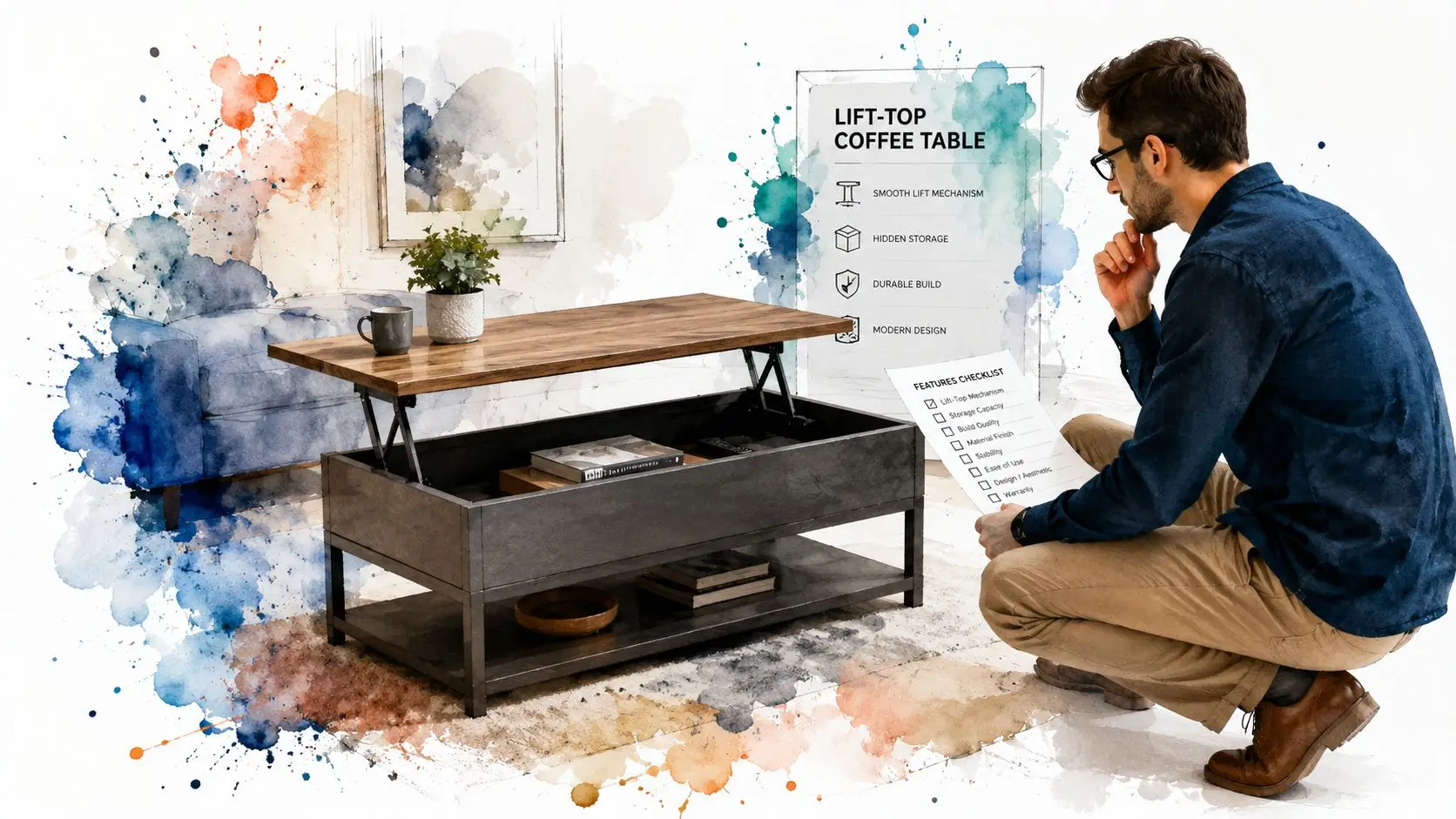
A showroom visit should answer practical questions, not just confirm that the finish looks nice under good lighting. Buyers get the most value when they test the table the way it will be used at home.
What to do at the table
Sit down. Reach forward. Open the top. Close it again. Then repeat the process. A table should feel easy to understand without needing careful handling.
Use this checklist while standing next to the piece:
- Lift it more than once: Consistency matters more than first impression.
- Lean on the open top lightly: The surface should feel stable, not tentative.
- Look into the storage area: Make sure the compartment is practical, not just technically present.
- Close it gently: A good mechanism shouldn't demand force.
What to inspect before deciding
Then shift attention to the construction. Sight lines, edges, interior finish quality, and fit all reveal how seriously the piece was made. Buyers who want extra guidance can also work with design experts offering free furniture design services to evaluate fit, finish, and room compatibility without pressure.
A short inspection list keeps the process honest:
| Area | What deserves attention |
|---|---|
| Top alignment | Does it sit flush when closed |
| Inside compartment | Is it finished cleanly and easy to access |
| Corners and edges | Do they feel intentional and well shaped |
| Base stability | Does the table stay grounded during use |
A showroom test should remove doubt, not create it. If a table feels questionable in a controlled setting, it will feel worse at home.
An Investment in Quality and a Lifetime of Function
A lift coffee table with storage can be one of the hardest-working pieces in a living room. It can support daily routines, reduce visible clutter, and help a smaller home function with more ease. But only if the buyer treats it like an investment piece instead of a shortcut purchase.
The better choice usually isn't the flashiest one. It's the one with dependable hardware, sensible proportions, comfortable use, durable materials, and a finish that belongs in the room for the long haul. That's how furniture earns its place over time. It serves the household well, avoids premature replacement, and supports a more sustainable buy-it-for-life approach.
In a family business that has served South San Francisco since 1933, that standard still matters. Good furniture shouldn't pressure anyone. It should invite careful testing, thoughtful comparison, and confident ownership. A lift-top coffee table is worth buying when it solves today's needs and still makes sense years from now.
Those who want no-pressure guidance can visit Giorgi Bros. Furniture in South San Francisco to explore 50,000 square feet of inspiration, compare materials in person, and work with non-commission Consultants. For buyers planning a full room update or a custom piece, a Design Consultation is also available.