Oak end tables have a way of exposing every mistake in a living room. They look too small beside a big sofa, too bulky next to a slim armchair, or too fussy when the room already has enough visual noise. The right piece does the opposite. It solves the daily problems, gives the lamp a home, keeps the drink within reach, and stays useful long after the trend that inspired it has faded.
That is why oak end tables for living room spaces deserve a serious look, not a rushed one. Oak brings the kind of durability that suits a piece touched every day, and a good table can serve a family for years instead of a season. In a family-owned showroom that has helped Bay Area homes since 1933, the conversation always starts with fit, function, and long-term value. No-pressure guidance matters here, because a table like this is an investment piece, not a throwaway accent.
Getting the Scale Right for Your Space
The most common mistake is simple, the table looks fine in the showroom and wrong at home. A living room has its own proportions, and a piece that feels elegant in isolation can feel clumsy once it sits beside a sofa, a chair, a rug, and a walking path. Start with the furniture that already lives in the room, then measure around it instead of guessing.
Use height and clearance as your first filter
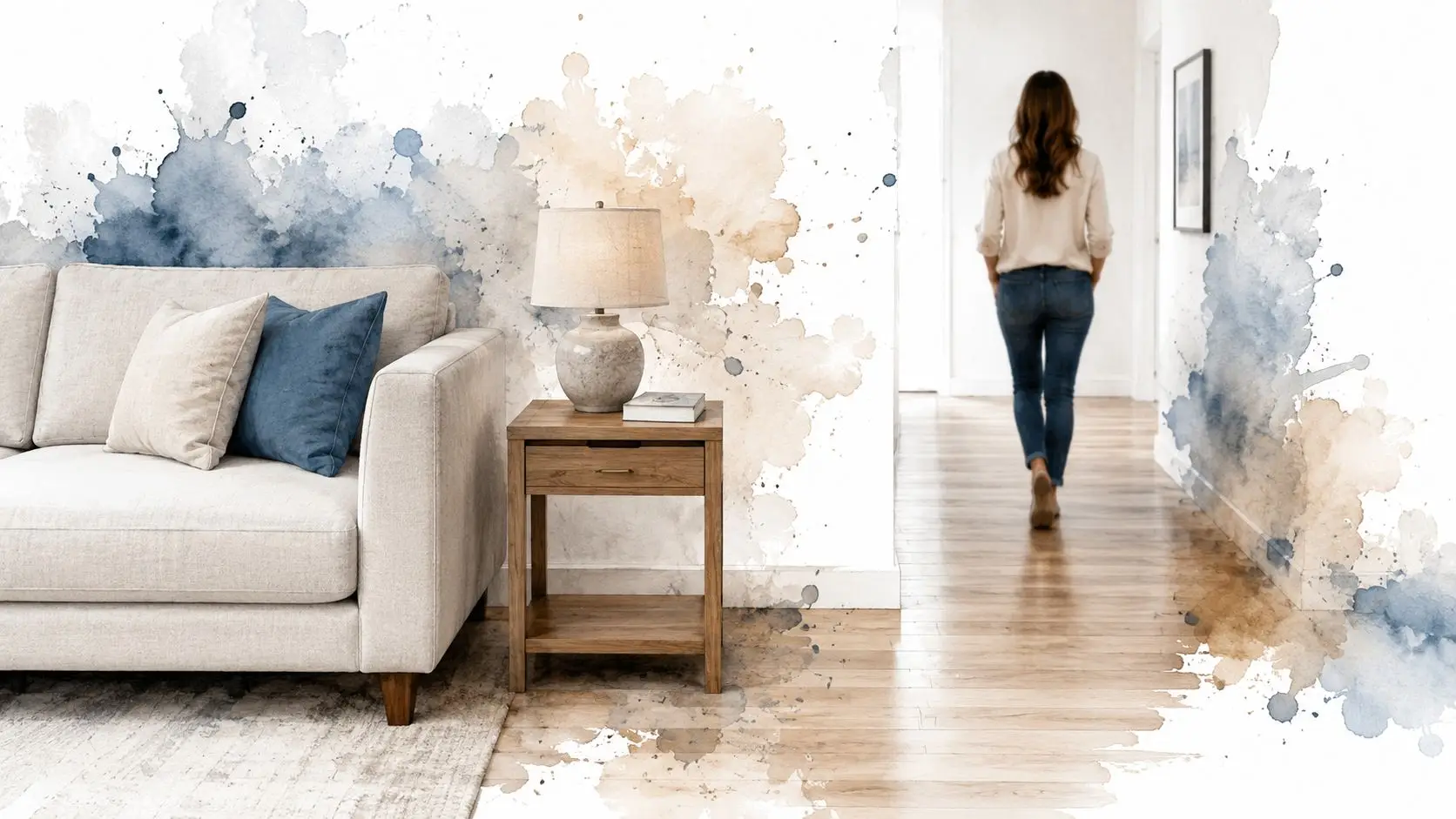
A practical rule is to match the table height to the arm height of the adjacent sofa or chair, with the tabletop landing about 1 to 2 inches within that arm height. Since sofa arms are commonly around 24 to 32 inches tall, end tables often land in the 22 to 28 inch range, and the room still needs about 18 to 24 inches of clearance to nearby furniture or walls for traffic flow. That spacing keeps the room comfortable and makes the table feel like part of the seating group instead of an obstacle.
Practical rule: if the table is hard to reach from the seat, it is the wrong size, no matter how handsome it looks.
A good layout also keeps the table close enough to serve the seat. One useful recommendation is to leave 18 to 24 inches between an end table and nearby seating, and to place the table about 2 to 3 inches from the arm of the sofa or chair it serves. That makes the surface easy to use for a lamp, a book, or a cup without forcing anyone to lean awkwardly.
Match visual weight to the rest of the room
Scale is not only about inches. A round oak table with a thick base can feel substantial, while a narrow-legged version can read lighter even at the same footprint. That is why one table can look perfect in a compact den and overwhelming in a room with delicate upholstery, low arms, and lots of open floor.
A smart way to think about it is to let the table echo the room's strongest visual cue. If the sofa has generous arms and a deeper seat, a sturdier oak piece usually feels right. If the room is airy and restrained, a simpler silhouette keeps the table from taking over.
For layout help, the room arrangement ideas in this living-room furniture guide are useful because they push the same idea, furniture should support circulation, not block it. If the room already feels tight, size down before styling up.
Understanding Wood Construction and Durability
Oak is not a single experience. Buyers often see the word oak and assume every table will age the same way, but the construction matters as much as the species. For a high-use living room, the difference between solid wood, veneer, and MDF is not academic, it changes how the table handles daily life, weight, and moisture.
Solid oak, veneer, and MDF are not equal
Solid oak is the safest bet for a long-life table because the material itself carries the structure. It is the most honest option when the goal is durability, and it usually has the most reassuring weight and stability in the room. A technically sound spec for a small living room often includes a solid-wood top around 1.5 to 1.75 inches thick, a footprint near 18 to 24 inches in diameter for round tables, and a stable three-leg or similarly braced base, because that combination supports everyday use.
Oak veneer can look excellent, but the performance depends on what sits underneath. Veneer belongs in the conversation when the design is good and the buyer understands the tradeoff. MDF is the least forgiving in a family room because moisture exposure is more problematic for MDF and veneer, and the construction affects durability, weight, and price in a real, material way. An independent guide that focuses on small oak side tables makes the same basic point, solid wood or solid-wood tops are preferable for high-use areas, and moisture is the enemy of weaker construction. For buyers who want a deeper comparison of wood families, this oak versus maple guide is a useful complement.
What to inspect before paying a premium
Buyers should look at the base before falling for the finish. A narrow, underbraced base can make a table feel flimsy even when the top is attractive. A table meant for a living room should have enough mass to stay put when a lamp, books, and daily use all land on it.
If the table rocks in the showroom, it will not get better at home.
A good habit is to lift one side slightly and notice how the piece responds. Solid joinery, a braced base, and a top that feels appropriate to the body of the table signal seriousness. For readers comparing hardware and construction choices in wood pieces, compare hardwood hardware options can help sharpen the eye, especially when the goal is to separate durable build quality from decorative styling.
Oak earns its place in a living room because it is meant to be touched. That is the whole point. A table that can handle years of books, lamps, remotes, and the occasional scuffed shoe is a far better buy than one that only photographs well.
Choosing Finishes and Hardware That Work for Your Lifestyle
Finish choice changes how a table lives in the room. The wood can be the same, yet one finish will forgive spills and fingerprints while another will ask for more attention. Families with kids, pets, and busy evenings should treat finish selection as a practical decision, not a decorative afterthought.
Choose the finish for maintenance, not just color
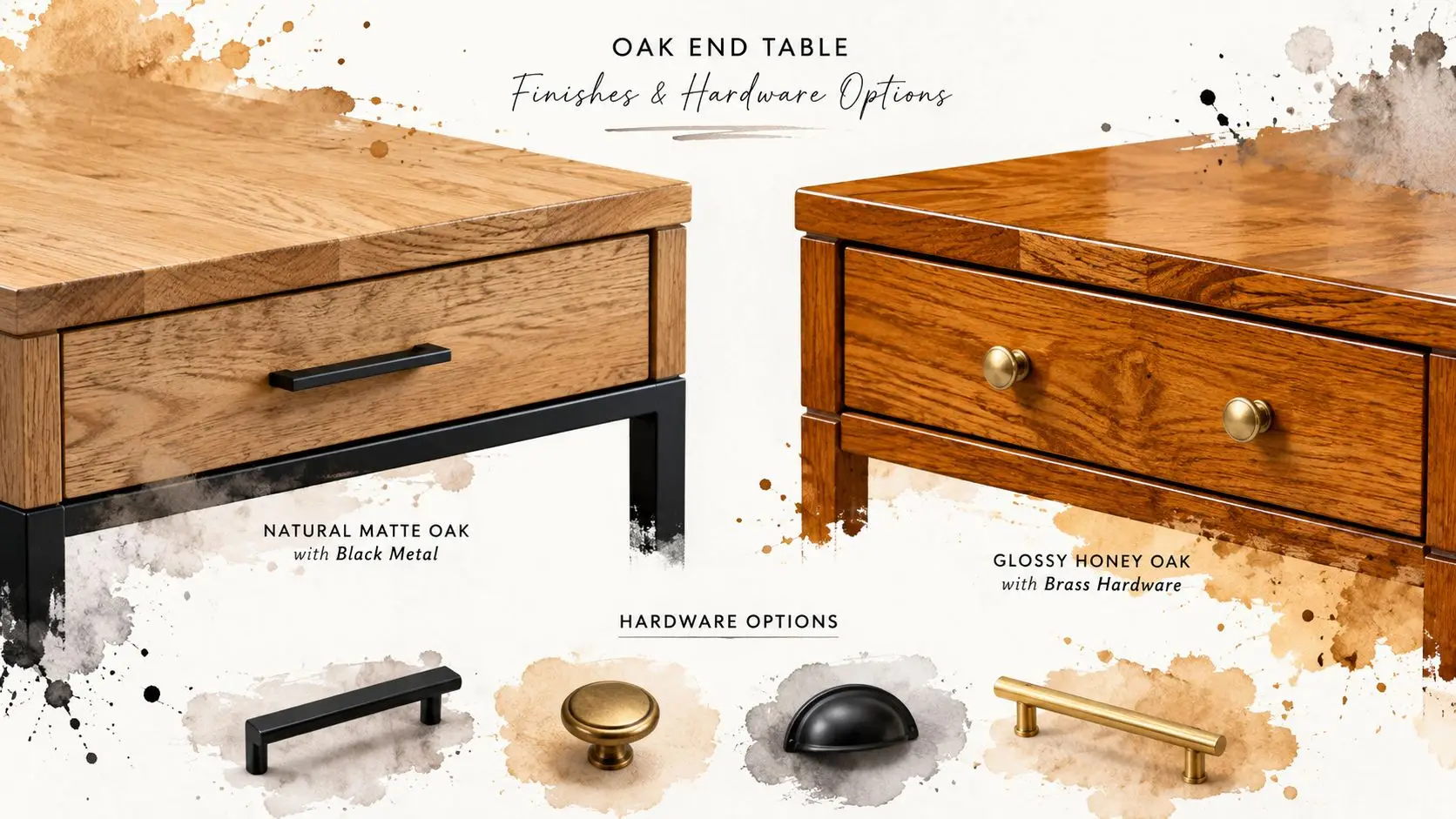
Natural oils give oak a softer, more tactile look, but they usually need periodic reapplication. That makes them appealing for buyers who like patina and are willing to maintain it. Polyurethane coatings are more resistant to water rings and scratches, which is why they make sense in homes where the table gets used hard every day. If the room sees snacks, homework, and a lot of traffic, a more protective finish usually wins.
Color matters too. Oak can lean warm, golden, or muted depending on the finish, and the best choice is the one that fits the wood tones already in the room. A table does not need to match every cabinet, floorboard, or frame. It needs to sit comfortably alongside them.
Hardware should help the table work harder
Drawer pulls and knobs are not just decoration. They affect how easy the table is to open, how the piece reads in the room, and whether it feels personal or generic. Simple hardware suits restrained rooms. More expressive hardware can add character, especially when the table is part of a larger custom order.
For homes that already use a lot of wood, the best move is usually to vary the finish slightly instead of forcing a match. That keeps the room from looking flat. If a buyer wants a more polished result, custom finish options are worth asking about, because the right tone can make the same oak form feel lighter, richer, or more grounded.
A practical design resource on custom wood finishes can help buyers understand how much the surface treatment changes the final look. For a smaller living room, that detail matters more than people expect, because finish can make a piece feel visually quieter without shrinking its usefulness.
Styling Oak End Tables in Your Living Room
The best oak end tables do not shout for attention. They settle into the room and make everything around them feel more intentional. That works across styles, whether the room leans mid-century, farmhouse, or contemporary, because oak naturally brings warmth without demanding a matching set.
Use the table as a balancing tool
In a mid-century room, a simple oak table with clean lines can echo the leggy shape of the sofa and keep the room from feeling too rigid. In a farmhouse setting, oak feels grounded and familiar, especially when paired with soft textiles and a quieter palette. In a more contemporary room, the same table adds warmth to harder surfaces and sharper silhouettes.
That flexibility is why the styling should stay disciplined. A lamp, a book stack, and one grounded object are usually enough. Once the surface starts carrying too many things, the table loses its job as a support piece and turns into clutter.
A well-styled end table should look lived in, not crowded.
Let the room's materials talk to each other
Oak plays well with upholstery fabrics because the wood gives the eye a resting point. A teal cushion, a neutral sofa, or a textured chair can all sit comfortably beside it if the table's finish is calm. Mixing wood tones is fine, and often better than forcing sameness, because contrast creates depth.
For a practical styling example, a living room with a clean-lined sofa can use a round oak table to soften the edges, while a room with more angular furniture may benefit from a table with a slightly heavier base. The key is balance, not symmetry. If the room already has a strong center table or console, the end table should support the group.
For more ideas on working with solid wood in the living room, this guide to solid wood furniture fits nicely with the same buy-it-for-life mindset. If the room also needs a little sensory warmth, a wooden accessory care guide like wooden diffuser care and oils can be helpful for understanding how wood finishes respond to regular upkeep.
Caring for Oak Furniture Over the Long Term
Oak rewards routine care. It does not need fussing every day, but it does need a little respect if it is going to stay handsome through years of sunlight, spills, and temperature changes. A strong maintenance habit is one of the easiest ways to protect an investment piece.
Keep the care routine simple and consistent
Daily dusting should be light and dry. A soft cloth is enough for most routine cleaning, and that keeps grit from scratching the surface. When the table needs more than dusting, use a cleaner appropriate for the finish, not a harsh all-purpose product that can dull the wood or leave residue.
Water rings and scratches are easier to manage when addressed early. The longer moisture sits, the more likely it is to leave a mark. Sun fading is another quiet problem, especially if the table sits near a bright window, so rotating accessories and shifting the table's exposure when possible can help the finish age more evenly.
Protect the wood from the room itself
Humidity, direct sunlight, and heat sources all influence oak's longevity. A table beside a vent, radiator, or sunny window works harder than one in a more stable part of the room. That is one reason buyers who plan to keep furniture for decades should think about placement as part of care.
Wax and polish are not interchangeable. Wax is useful when a finish calls for a bit of surface protection and sheen, while polish is better treated as a maintenance product rather than a fix for deeper damage. For older pieces, professional refinishing makes sense when the wear is beyond surface cleanup and the structure is still worth preserving.
For a more detailed maintenance checklist, this wood furniture protection guide is a strong companion piece. The main idea is simple, clean gently, protect from harsh conditions, and treat the table like something meant to stay in the family.
Working with Design Consultants for Custom Solutions
Custom furniture is not about making things complicated. It is about making them fit. That matters in a living room, where the wrong table can throw off circulation, style, and comfort all at once. A good design consultant solves for the room first, then the piece.
Ask for the right kind of guidance
A non-commission design consultant is useful because the conversation stays focused on fit instead of inventory pressure. That kind of guidance matters for buyers who want Custom Furniture, Amish Furniture, or a specific finish that big-box retail floors rarely support. It also matters when the table needs to coordinate with other investment pieces in the home.
Custom order services can include wood species, finishes, fabrics, and leathers, which gives buyers a real path to a living room that feels personal rather than generic. For homeowners comparing a fully custom route with a more guided process, custom interior for Twin Cities homeowners is a useful example of how personalized planning changes the result.
See, touch, and decide with confidence
A showroom visit helps because wood reads differently in person than it does on a screen. A 50,000 square foot showroom gives space to compare textures, test quality, and see how a finish changes under real light. That matters most for buyers who want longevity, not just a fast purchase.
Financing options are available, which can help turn a better piece into a realistic one. That said, the bigger savings come from buying for life instead of replacing a cheap table again and again. Quality furniture is an investment, and a well-made oak end table usually pays back in daily use, durability, and fewer regrets.
For buyers who want a made-to-order route, this custom wood furniture maker resource is relevant because it reflects the same idea, a table should be built around the room and the family using it. Giorgi Bros. Furniture also carries living-room furniture in a South San Francisco showroom, along with non-commission sales staff, premium mattresses, and the kind of no-pressure guidance that helps people choose once and choose well.
If you are ready to choose an oak end table that fits your sofa, your room, and your long-term plans, visit Giorgi Bros. Furniture in South San Francisco and speak with a Design Consultant. The showroom is set up for hands-on comparisons, custom orders, and practical advice that helps you buy for life, not for the next move.