A Bay Area family usually starts this decision the same way. They stand in a showroom, hold two samples, one oak, one maple, and ask which one will still feel right in ten or twenty years, not just which one looks best under the lights today.
That's the right question. Oak vs maple furniture isn't really a style quiz, it's a lifetime-ownership decision about grain, finish, repairability, and how a piece will age in a real home. In a family-owned, no-pressure setting, that conversation gets simpler because the goal is clarity, not a quick sale. Since 1933 in South San Francisco, that's been the point of good furniture advice, buy once, buy well, and choose pieces that keep earning their place.
| Trait | Oak | Maple |
|---|---|---|
| Grain | Open, prominent, more textured | Tight, smooth, more uniform |
| Visual feel | Traditional, warm, familiar | Clean, modern, restrained |
| Hardness | Durable, but softer than hard maple | Harder surface, better scratch resistance |
| Finish behavior | Reads well with stain, especially deeper tones | Better for painted or lighter finishes |
| Best use | Statement pieces, traditional rooms | Busy surfaces, smooth modern looks |
Why the Wood You Choose Matters More Than the Style
A dining table can look right on day one and still be the wrong long-term choice. A homeowner might love the finish on a showroom floor, but the key issue is whether the wood underneath can live through family meals, homework, holiday traffic, and the occasional repair years later. Species choice drives that outcome more than the silhouette does.
Oak carries an older reputation as an heirloom material because it's associated with very long service life. One independent furniture guide says oak can last over 100 years with proper care, while maple is typically estimated at 75 to 100 years depending on use and maintenance, which still puts both woods squarely in the buy-it-for-life category. That matters for buyers who don't want to replace a piece every time a trend shifts.
Practical rule: choose the wood that still makes sense after the room changes, the paint color changes, and the kids get taller.
That's why the best furniture decisions happen in a showroom, not on a screen. Grain, sheen, and finish all behave differently once they're scaled up into a real table, cabinet, or chair. A knowledgeable buyer should also treat the wood species as part of the room design, not an afterthought, especially when the rest of the home needs to flow with solid hardwood selection for longevity and style.
The Bay Area homeowner who gets this right is not choosing between “pretty” and “practical.” They're choosing a material relationship that can age with the home instead of fighting it. That's the buy-it-for-life mindset in plain terms.
Oak and Maple at a Glance
Oak and maple solve different design problems. Oak leans into warmth, visible texture, and a classic feel that suits homes where the furniture should add character. Maple comes off smoother and cleaner, which is why it often fits more contemporary rooms and painted pieces better.
What the hand and eye notice first
Oak's open grain gives it movement. The surface reads as more rustic or craftsman-friendly, even when the design itself is simple. Maple's tighter grain feels calmer and more uniform, which is why it often looks sharper in modern dining rooms, minimalist bedrooms, and coastal interiors.
That difference shows up in the room, not just on the sample board. A dining set in oak tends to feel grounded and traditional. Maple tends to disappear a bit more into the architecture, which can be exactly what a homeowner wants when the rest of the space is already doing the visual work.
For a deeper visual reference on how oak tone can shape a room, Selecting perfect oak floor finishes is a useful companion read because floor and furniture tone usually need to work together, not compete. For a more specific look at seating proportions and maple's clean character, see maple dining room chairs.
| Oak vs Maple Furniture Quick Comparison | Oak | Maple |
|---|---|---|
| Grain pattern | Open, prominent, textured | Tight, smooth, even |
| Color feel | Warmer, more traditional | Cleaner, more understated |
| Surface character | More visual movement | More uniform appearance |
| Design fit | Craftsman, farmhouse, traditional | Modern, coastal, minimalist |
| Aging look | Grain can soften minor wear visually | Smooth surfaces show marks more plainly |
The easiest mistake is picking a finish first and the wood second. The wood should lead, because it controls how the finish reads.
Oak usually wins when the goal is character. Maple usually wins when the goal is calm, clean surfaces. That's the split, and it's the one that matters.
Hardness and Durability in Real Households
A family table gets tested fast. Chairs scrape across the floor, kids drop utensils, laptops get dragged on and off the surface, and pets brush past the legs every day. In that kind of real use, maple earns its reputation for toughness.
Hard maple has a Janka rating of about 1,450, compared with 1,290 for red oak and 1,360 for white oak, so it is roughly 12% harder than red oak and about 6.6% harder than white oak. That extra hardness matters most on tabletops, desk surfaces, and other pieces that take repeated contact. For shoppers who want a plain explanation of how solid wood versus veneer changes long-term wear, solid wood versus veneer is the right place to start, because the core material affects repairability as much as the finish does.
What those numbers mean in a lived-in home
Maple takes scratches and dents better because its surface is harder and more resistant to impact. That makes it the smarter pick for active households, office desks, and furniture that gets handled constantly. Oak is still very durable, and it holds up well in daily use, but it wears in a different way.
Oak has one practical advantage that matters in busy rooms. Its open grain can hide small dents and light wear more naturally than maple's smoother surface. On maple, those marks tend to stand out more because there is less texture to break up the eye. That difference shapes how a piece looks after years of use, not just on delivery day.
For a more specific look at what finish work demands, sanding between coats of paint shows why surface prep matters so much before a piece is sealed, painted, or refinished. A custom order built around the right species and finish avoids a lot of correction later.
Practical rule: pick maple for surfaces that get handled hard, and oak for pieces where a little visual wear should blend into the grain.
That does not make oak weak. It does not make maple fussy. It means each wood ages differently, and the right choice depends on whether the room needs a harder working surface or a more forgiving, character-rich one.
Staining, Painting, and Finishing Behavior
Finish choice changes everything. A wood that looks wrong in one stain can look perfect in another, and the species underneath decides how forgiving the process will be. Oak and maple behave differently enough that the wrong pairing shows quickly.
How each wood takes color
Oak's open grain drinks in stain and usually reads darker, richer, and more textured. That makes it a natural fit for warm, traditional looks, especially when the goal is visible grain and a sense of depth. Maple's tighter grain resists uneven stain absorption, so it's the safer choice when a homeowner wants a smoother, more uniform result.
That same behavior matters for paint. Maple is generally the better canvas for painted, light, or gray-washed finishes because the surface stays cleaner under coatings. Oak can be painted, but its grain can telegraph through the finish, which is a real issue when a client wants a crisp, contemporary look.
For the people who like to understand the craft behind the result, sanding between coats of paint is a helpful reminder that finish quality depends on patience as much as product. A custom order built around the right species and finish avoids a lot of correction later, which is why custom wood finishes matter so much in custom furniture.
Maple is the safer pick for smooth, light, and painted finishes. Oak is the stronger visual choice when grain is part of the design.
There's one more practical point. Maple can yellow over time, so buyers who want a very pale look should plan for that from the start. Oak's grain gives it more room to age gracefully because the texture itself stays interesting even as the finish softens. That's the core finishing difference, not just “light versus dark.”
Cost Differences and Where the Premium Pays Off
A buyer feels the price gap fastest in plain, practical terms. Red oak usually gives you the lower entry point, while maple asks for more because it brings a harder surface and a cleaner finish on parts that need to look precise. A market guide on plywood pricing notes that maple plywood can run noticeably above red oak, which is why value-oriented builds often start with oak.
The question is where that extra money earns its keep. On a dining table, maple is worth the premium when the top will take constant use and the owner wants a smoother, more controlled surface for the long haul. On a bedroom set, oak usually delivers better value because it gives presence and warmth without paying for surface perfection that the piece may never need. For built-ins and case goods, the finish decides the winner. Painted or pale finishes usually look cleaner on maple, while visible grain often makes oak the better purchase because the wood itself carries more of the design.
That judgment lines up with broader furniture pricing patterns. Oak and brown maple sit in the lower-cost end of the hardwood range, with oak often a little cheaper than brown maple. That keeps both woods within reach for families who want solid furniture without moving into a fragile or fussy material.
Custom ordering gives that price gap a purpose. A buyer should not pay maple pricing for a piece where oak already meets the need, and should not try to save a little on oak when the finish goal depends on maple's smoother surface. Custom made wood furniture forces that decision to be deliberate instead of accidental.
The better question is simple. Which wood still feels like a smart purchase after years of use, cleaning, refinishing, and repair, when the surface stops looking new and starts living with the house?
Best Uses by Room and Furniture Type
Room placement makes the oak versus maple decision easier. Some pieces need warmth and presence. Others need a clean work surface and visual restraint. The room usually tells the truth faster than the spec sheet does.
Where oak belongs
Oak earns its keep in farmhouse dining tables, mission-style bedroom sets, library cabinets, and statement pieces that should add texture to a room. Its grain brings life to larger surfaces, which helps when the furniture itself is supposed to anchor the space. In a traditional family room or dining area, oak often feels settled rather than trendy.
Where maple is the stronger pick
Maple belongs in modern dining tables, kid-friendly bedroom furniture, painted vanities, and office desks. The smoother surface supports writing, handling, and cleaning better in everyday use, and the tighter grain gives painted pieces a more controlled finish. For households that want a lighter visual feel, maple usually reads cleaner.
When mixing species makes sense
A hybrid approach can work well. Maple tops with oak bases create contrast without making the room feel busy, and that mix can help a whole-home plan feel curated instead of matched. The same is true when one room needs a warmer statement and the next room needs quieter furniture. The species should support the room, not force every room into the same look.
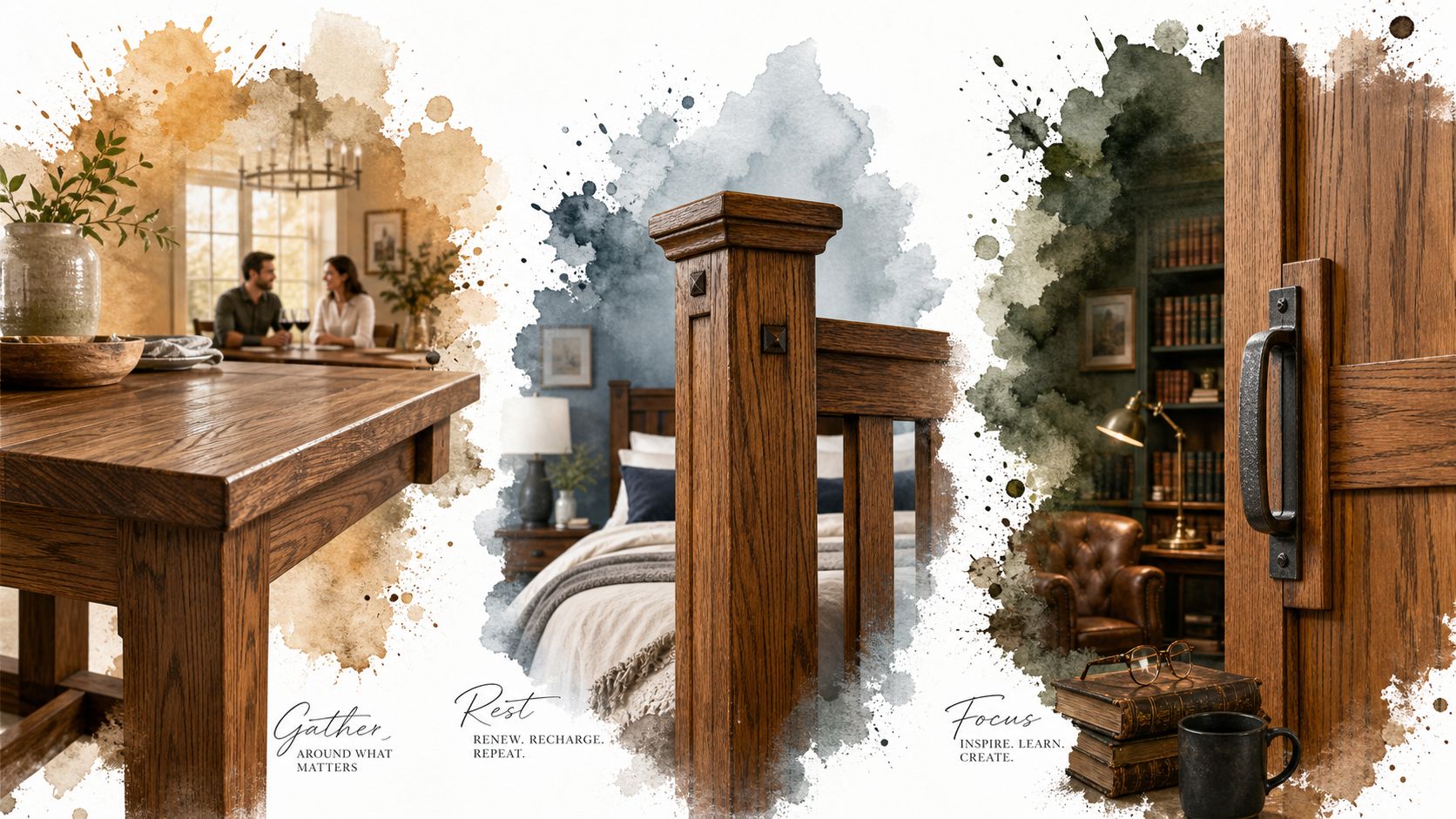
For a home that mixes traditional and cleaner-lined pieces, oak and maple can absolutely live together. The trick is to repeat the idea of warmth in one space and precision in another, not to force one species to do every job.
Custom Ordering and the Giorgi Bros Showroom Experience
The best oak versus maple decision usually happens with samples, not guesses. A custom order lets the wood species, finish, fabric, and leather work together for one specific home instead of forcing the home to adapt to whatever happens to be on the floor. That matters because a finish that looks rich on oak may look completely different on maple, and a family should see that before committing.
A non-commission design consultant can stay focused on fit rather than steering anyone toward whatever is convenient. That's the value of a no-pressure environment. The conversation stays on grain, color, surface behavior, and how the piece will live in the room, not on closing a sale quickly.
Since 1933, South San Francisco shoppers have had a place to compare pieces in a full-service showroom, and that history still matters because it means advice comes from long familiarity with how furniture holds up in Bay Area homes. A 50,000 square foot showroom gives buyers space to touch, feel, and compare options side by side, which is the only reliable way to judge species, finish, and scale before ordering.
The right showroom visit isn't about being sold. It's about seeing what lasts, what fits, and what feels right in the actual home plan.
Common Questions Bay Area Shoppers Ask
Coastal Bay Area homes usually do well with both woods, but the better choice depends on finish and use. For humid or variable rooms, the more important question is how the piece is built and finished, not just whether it says oak or maple on the tag. A buyer should ask how the surface will age, how visible wear will look, and whether the finish supports the room's style.
Refinishing decades later usually depends more on the original finish condition than the species alone. That said, oak's open grain can be more forgiving visually as it ages, while maple's smoother surface gives a cleaner look when the goal is a fresh, uniform refinish. Families with kids and pets usually lean maple for high-contact surfaces, then choose oak where they want grain to hide everyday wear a little more naturally.
Before a showroom consultation, a buyer should bring room photos, rough dimensions, finish samples from the home, and a clear idea of how hard the piece will work. That makes the species conversation fast and useful instead of abstract. It also helps the design expert match wood, finish, and scale to the room instead of treating each choice in isolation.
A smart purchase here is an investment piece, not a throwaway buy. Good guidance saves money over time because the right wood choice is the one that still fits the home years from now.
Visit Giorgi Bros. Furniture in South San Francisco to compare oak and maple in person, ask about custom wood species and finishes, and get no-pressure guidance from non-commission design consultants. For Bay Area families choosing furniture meant to last, a showroom visit is the clearest next step.