
A room can look finished on paper and still feel wrong the minute a solid wood shelf arrives. The empty corner by the sofa suddenly looks honest, and the question gets sharper, buy the flat-pack piece that disappears in a few years, or bring in a solid wood shelving unit that earns its space and stays useful for the long haul.
That is the choice Bay Area homeowners face. Not style versus style, but a buy-it-for-life decision versus a temporary fix. A shelf made well can steady a room, support daily use, and age into the home instead of out of it. A family-owned showroom that has served South San Francisco since 1933 tends to look at furniture that way, with no-pressure guidance and a focus on what still makes sense ten years from now.

Why a Solid Wood Shelf Changes How a Room Feels
A good shelf does more than hold objects. It changes the way a room stands up around them. In a small Bay Area home, a flimsy unit can make a corner feel temporary. A heavier solid wood piece settles the room, gives the eye a place to land, and makes books, frames, and decor look intentional instead of improvised.
That matters because shelving lives in plain sight. It is not tucked away like storage in a closet. It has to look right every day, and it has to keep working when the room changes from guest space to office to family hangout.
Solid wood also makes sense as a long-term purchase. Families who buy carefully spend less replacing bent shelves, weak joints, and finishes that wear out too fast. The upfront cost is higher, but the piece keeps doing its job while cheaper units get pulled apart, repaired, or tossed. That is the plain truth of buy-it-for-life furniture, and shelving is one of the best places to apply it.
The market for shelving is broad, and the spread in price reflects the difference between short-term and long-term use. Entry-level ready-to-assemble pieces sit far below the range for high-end and custom work, where solid wood and better finishes belong. A market research on bookcases and shelving report points to that gap clearly, and it matches what you see in a showroom. The lower end fills a need for now. The higher end pays off over years.
That price spread tells the truth. Solid wood is not the cheapest route, and it should not be. It belongs in the investment piece category, where durability, craftsmanship, and customization matter more than shelf count.
Practical rule: if the shelf will be seen every day, touched often, or asked to carry real weight, buy the piece that can age with the room.
Families who think this way usually end up happier with the result. They are not shopping for filler. They are choosing furniture that can keep serving the home after paint colors change, kids grow, and the room gets a new purpose.
Reading Wood Species and Grain Like a Showroom Regular
Wood species are not just names on a tag. They tell the buyer how the shelf will live. Grain is the fingerprint, it shows the wood's character. Hardness is the work ethic, it hints at how well the shelf will handle dents, movement, and daily use.
A shopper who can read those clues walks into a showroom with better questions. That is how the right shelf gets chosen, not by guessing, but by matching the species to the job.
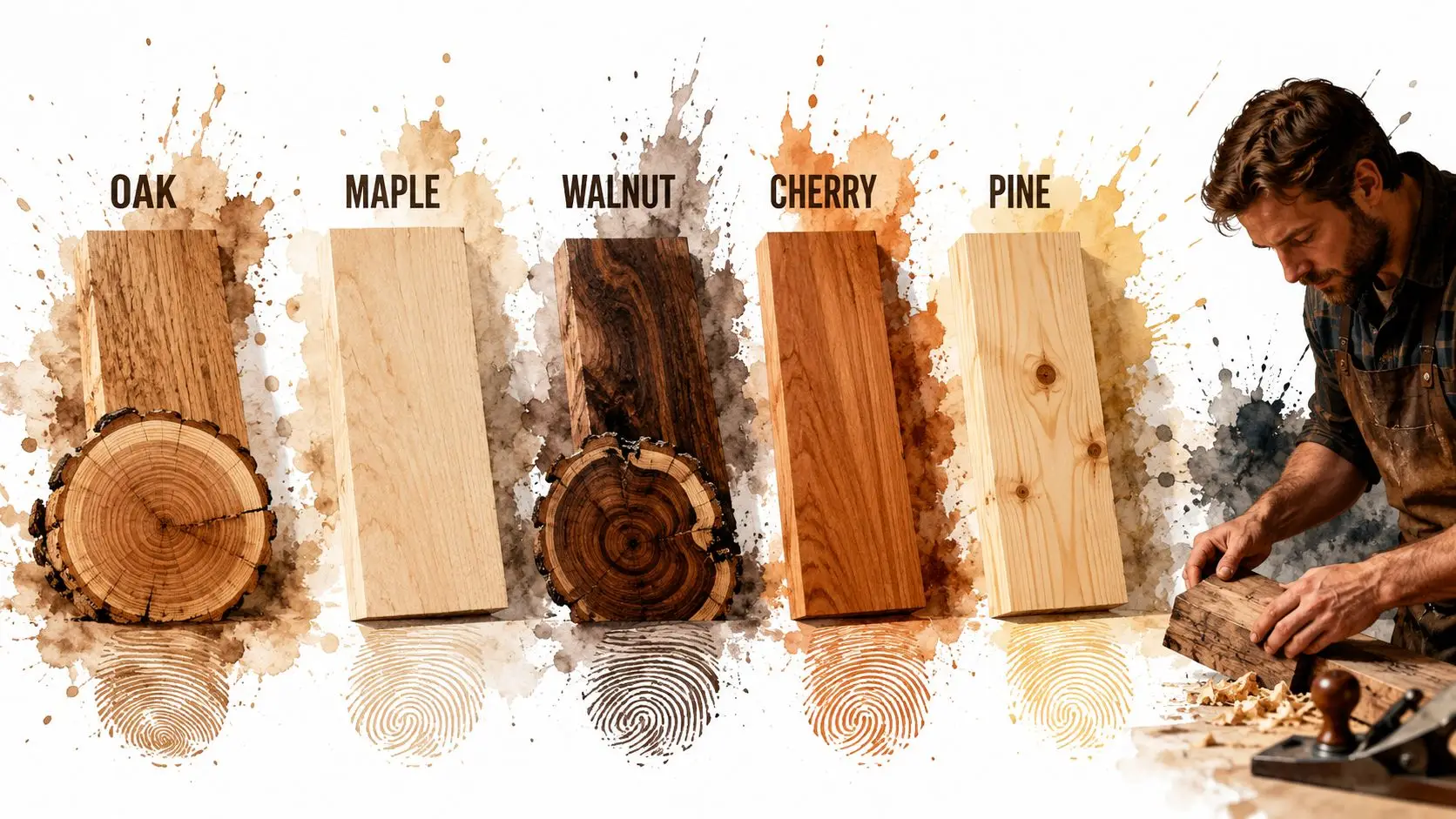
What Each Common Species Does Best
Oak brings a visible grain and a classic look. It feels steady and familiar, which suits traditional living rooms, media walls, and homes that want a grounded presence.
Maple looks smoother and more restrained. It works well when the room needs a clean, quiet backdrop for books and decor.
Walnut gives a richer, darker tone. It fits a more dramatic interior and tends to look strongest in spaces where the shelf itself is meant to read as a design feature.
Cherry starts lighter and deepens over time. That aging quality makes it appealing in formal rooms and reading spaces that are meant to feel warm rather than flashy.
Pine is softer and more prone to dents, so it makes the most sense for lighter decor, casual use, or rooms where a worn-in look is acceptable.
A Bay Area home often mixes old and new, so the species should do the same. Oak and walnut feel right in homes that already have some visual weight. Maple and cherry suit lighter, more flexible rooms. Pine is the budget-minded choice, but it asks for a gentler life.
A good showroom conversation should also cover grain consistency, finish absorption, and whether the shelf is going to carry heavy books or mostly decorative pieces. That kind of talk is more useful than a glossy label. It gives the buyer a clear sense of how the piece will age, which is the whole point of buying solid wood in the first place.
Solid Wood Versus Engineered Construction Explained
The label matters less than the build. Solid wood shelving units use real wood members, which gives them repairability, a natural look, and real value over time. That matters in a home where a shelf is expected to do more than sit pretty for a season.
Engineered options still have a place. Plywood, veneer, MDF, and particleboard each solve a different problem, and the right call depends on load, moisture exposure, and how visible the shelf will be in the room.
The Honest Trade-Offs
Solid wood is the right choice when the shelf will be seen, used hard, or kept in service for years. It handles refinishing better than most alternatives, and the grain gives it depth that flat surfaces cannot match. It still needs careful construction and proper finishing to stay stable, because real wood moves with the seasons.
Plywood-core builds make sense when dimensional stability matters and the buyer wants a lighter structure with a clean appearance. A wood veneer can give the look of solid lumber while the core helps control movement, which is a practical trade in busy homes.
MDF and particleboard are budget-first materials. They can work for light-duty use, but they are not the right answer for shelves that need to stay straight under real weight or deal with moisture over time.
If you are trying to judge whether a price makes sense, compare the build, not the marketing. A similar long-term cost view shows up in the flooring cost guide for Richmond homes, which is useful for anyone weighing upfront expense against how long a material will stay in service.
Solid wood makes sense when the piece will be repaired, refinished, or kept for years. Engineered construction makes sense when stability, weight, or price needs to come first.
The cleanest way to read a product page is to ask three questions. What is solid, what is engineered, and where does each one sit in the build? That habit keeps a buyer from paying solid-wood money for a mostly engineered piece.
For a fuller material comparison, the solid wood versus veneer guide is worth reading before you make a final call.
Sizing, Load, and Reach That Works Daily
A shelf can look right and still frustrate a room if the proportions are off. Span, depth, spacing, and reach all shape whether a piece feels useful or fussy. Solid wood does not forgive sloppy sizing, because a shelf that runs too long, sits too shallow, or lands too high becomes annoying fast.
The Numbers That Shape Daily Use
Shelf deflection climbs quickly as span grows, because beam deflection rises with the cube of the span. In plain language, a small increase in unsupported length can create a much larger increase in sag under the same load. Practical shop guidance says to improve stiffness by adding a front or back lip, increasing thickness, or shortening the span instead of relying only on a harder species stronger shelves guidance.
Reach and spacing need to work for real people, not just for a display photo. Bookshelf spacing is commonly 8 to 12 inches, oversized books may need 15 inches, and the highest shelf in a sitting position should be no more than 60 inches above the floor wood shelving layout guidance. That same guidance says average-sized adults can reach the top shelf of a 72- to 78-inch bookcase, which is why tall units can still work if the shelf layout is honest.
The smartest move before buying is simple. Cut a cardboard mock-up. Set it in the room. Check the corner angle, traffic path, and sightline before the piece comes home.
Why Fit Matters More In Bay Area Rooms
Smaller rooms expose mistakes fast. An open-plan space can turn one oversized unit into a pinch point, and a corner that looks square on a floor plan may behave differently in the room. Good corner planning means checking the interior angle, mapping circulation, and using a mock-up before buying so the piece does not crowd the path or block the view. That matters most where clear movement zones need to stay open.
If a shelf blocks movement or sightlines, it is too big for the room, no matter how good it looks in the showroom.
For compact walls or narrow alcoves, a shorter unit is often the better starting point than a taller one. A good place to begin is the 30-inch bookcases collection because it keeps the focus on proportion first, not hype.
For buyers who also need storage planning, it helps to explore effective cabinet storage ideas. Shelf sizing does not stop at the bookcase. It shapes how the whole room works day after day.
Finishes, Stains, and Customization Choices
A finish changes how a shelf looks on day one, but it also changes how the piece ages, how often it needs attention, and whether it still feels right after years of use. Oil keeps the grain open and honest, with a warmer, more natural look. Wax gives a softer surface and a traditional hand-finished feel. Lacquer creates a smoother, more polished appearance. Conversion varnish is the harder shell when the shelf sits in a busier room or needs more protection.
The room should decide the finish, not the other way around. A sunlit reading nook asks for a different surface than a darker office wall, because light changes how grain and color read at eye level. Humid rooms need a finish that can hold up without constant fuss, while a dry interior corner can usually live with a gentler treatment. If you want a cleaner starting point, Giorgi Bros. can help you explore custom wood finishes and match the surface to the room instead of forcing the room to work around the finish.
Finish Options at a Glance
| Finish Type | Feel and Look | Durability | Best Fit |
|---|---|---|---|
| Oil | Natural, warm, easy to read grain | Moderate | Quiet living rooms, display shelves |
| Wax | Soft sheen, classic hand-finished feel | Moderate to lower | Light-use pieces, traditional interiors |
| Lacquer | Smooth, polished, refined | Good | Formal spaces, bookcases with daily visual use |
| Conversion varnish | Harder, more protective surface | Strong | Busier rooms, brighter spaces, pieces that need more protection |
If storage matters too, explore effective cabinet storage ideas to see how finish choice and room function work together. A good finish should support the way the shelf will be used, not just how it photographs.
Customization is where solid wood stops being generic furniture and starts acting like a built-in that still has room to breathe. Giorgi Bros. can shape the shelf around the wall, the alcove, or the corner that never quite fit standard pieces, with the width, height, depth, compartment layout, doors, drawers, and hardware all planned as one unit. That is the strength of custom work. The stain is only one part of it.
A shelf for an awkward space should be measured and built as a full answer, not as a rough compromise. Width, depth, height, storage layout, and hardware all need to work together so the piece feels like it belongs there from the start. If the finish and the proportions are right, the shelf looks settled instead of forced.
Where Solid Wood Shelving Belongs in Your Home
A shelf earns its place when it changes how the room functions. In a living room, it can anchor a media wall and keep cords, books, and decor from looking scattered. In a bedroom, it can turn one corner into a calm reading spot. In a dining room, it can hold display pieces without making the space feel crowded.
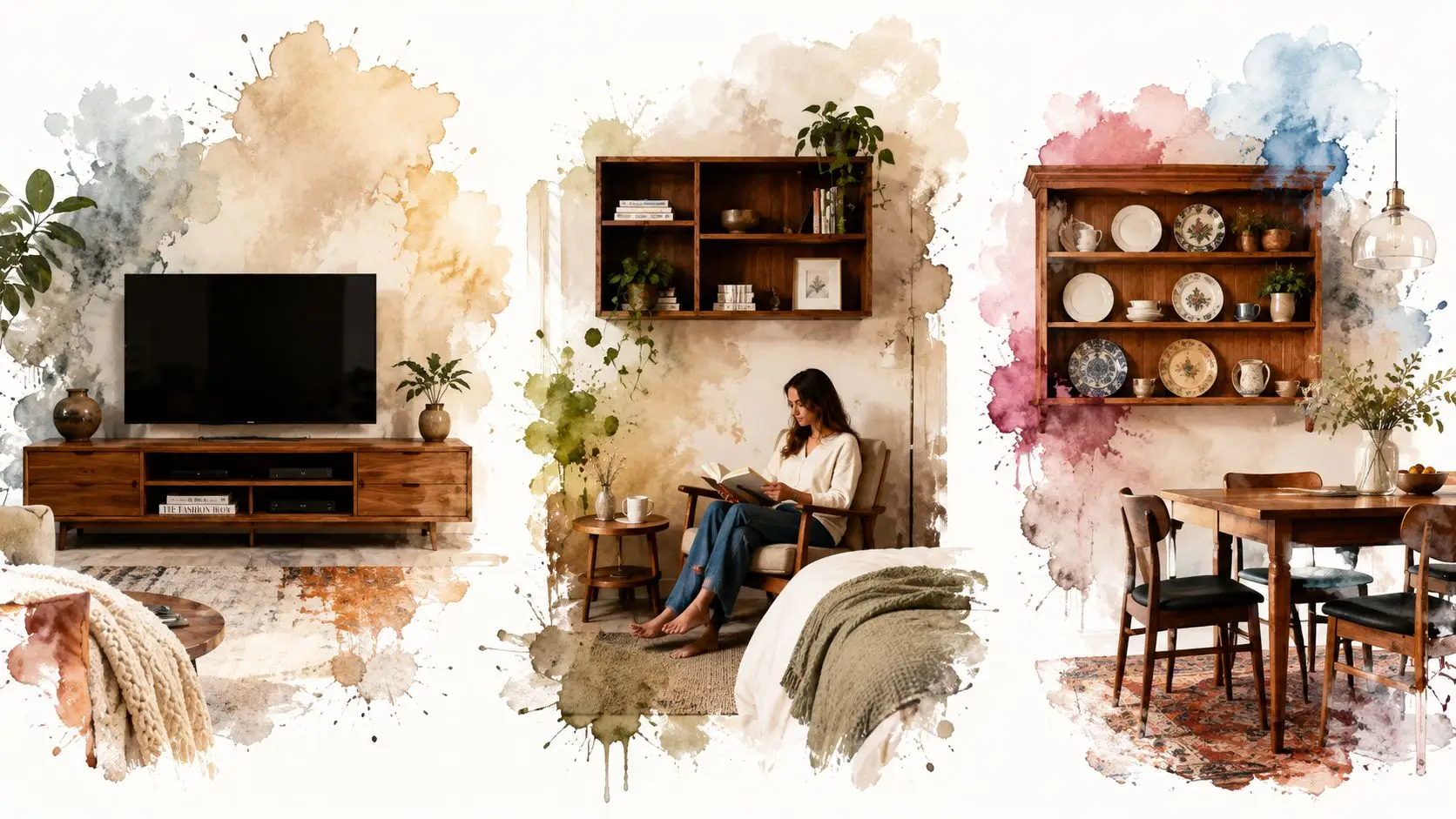
Three Placements That Work For Real Homes
A living room media wall benefits from weight. Solid wood gives the wall some visual structure, which helps the television, books, and framed pieces feel intentional instead of floating on a blank surface. The shelf should not crowd the room, though, so the walk path still needs breathing space.
A bedroom reading nook wants a smaller footprint and easy reach. A lower unit can hold books, a lamp, and one or two personal objects without making the room feel busy.
A dining room display can handle taller shelves if the piece stays proportionate to the table and side walls. The goal is to give the eye rhythm, not create a storage wall that swallows the room.
One Small Office Benefit
A small office is often the hardest place to get right. A shelf has to hold reference books, paper, and decor while leaving enough clearance for a chair and a path to the door. That is where a solid wood unit earns its keep, because the mass feels deliberate rather than flimsy.
The placement rule stays simple. If the unit interrupts sightlines or tightens a path that should stay open, it is in the wrong spot. If it frames a zone and helps the room read clearly, it is doing its job.
Installation, Anchoring, and Seasonal Care
A solid shelf should be treated like real furniture, not a prop. It needs a proper wall connection, especially in homes with children, pets, or uneven floors. Stud finding, anti-tip anchoring, and the right fasteners matter because the weight of solid wood leaves little room for guesswork.
The basic rule is straightforward. Anchor it securely, then check it again after the room settles.
The Steps That Protect The Piece
Before installation, let the shelf acclimate to the room's humidity so the wood can settle before it is fixed in place. That helps reduce cracks and unwanted movement later. Once it is ready, fasten it to studs wherever possible, and use hardware that matches the load and wall type.
A helpful DIY homeowners bracket guide can give homeowners a better sense of how brackets support wall-mounted pieces, but the key point is more basic. The shelf should not depend on cosmetic hardware alone.
Practical rule: if a shelf can tip, twist, or rack under a small shove, the anchoring is not finished yet.
Seasonal care does not need to be fussy. Light dusting keeps grit from dulling the finish. A controlled indoor environment helps the wood stay stable. An annual check of fasteners catches small loosening before it becomes a real problem.
For installation support, the furniture installation page is a useful reference point for buyers who want the piece set up correctly from day one.
Sustainability, Longevity, and the Giorgi Bros. Difference
A shelf that stays in service for years is usually the greener choice. Replacement carries its own cost, in waste, packing material, labor, and the hassle of starting over. That is the sustainability case for solid wood shelving units, and it is why buy-it-for-life thinking belongs here.
The savings add up over time. A cheaper shelf that sags, chips, or gets replaced twice is not cheap at all. Solid wood holds its value better because it keeps doing the job, and that matters in a home where every square foot has to earn its keep. For readers who want a plain-language look at material choices, the sustainable furniture materials guide is a useful reference.
Why The Showroom Matters
A custom order protects the investment because the piece is sized and finished for the room instead of forced into it. That matters in Bay Area homes, where corners, alcoves, and open plans rarely follow a tidy catalog layout.
A family-owned showroom in South San Francisco has spent 90+ years helping people make those calls with non-commission design consultants and a no-pressure approach. The setting matters too. A 50,000 square foot showroom lets buyers touch, feel, and test quality before they commit, which is smarter than buying a shelf from a screen and hoping the measurements were kind.
The custom side is where long-term value becomes obvious. Wood species, finishes, and dimensions can be matched to the room, so the piece works better and stays useful longer. That is the kind of buying that reduces waste and avoids the false savings of replacing furniture that never fit well in the first place.
Quick Buyer Questions
What price range should a buyer expect? Prices vary widely, but the important split is between short-life pieces and furniture built to stay in the home. The better shelf usually costs more up front, then saves money by avoiding repeat replacements and repairs.
How much weight can a shelf hold? It depends on span, thickness, and mounting. Solid wood has real strength, but the structure still needs to match the load and the wall.
How do custom orders work? Good custom orders start with the room, then move to size, species, finish, and layout, so the furniture solves a real problem instead of creating one.
Giorgi Bros. Furniture keeps that process calm, practical, and rooted in long-term value. The point is not to sell a shelf. The point is to help the buyer bring home a piece that fits, functions, and lasts.