
A Bay Area homeowner can have the same argument with the same sofa twice in one afternoon. It looks right on the showroom floor, then the measuring tape comes out and the trouble starts, because the recline needs space, the doorway turns are tight, and the living room never feels as roomy as it looked in the store. That is why the best reclining sofa brands for this market are not just the ones with the softest cushions, they are the ones that fit the room, the stairs, and the way the home gets used.
The market itself is broad enough to reward careful shopping. Recent buying guides consistently place La-Z-Boy, Flexsteel, Southern Motion, Catnapper, Ashley Furniture, Palliser, and Man Wah among the most frequently cited names, which shows the category is spread across several tiers rather than controlled by one brand alone. Pricing also stretches widely, from budget pieces around $600 to $700 to premium custom builds around $4,000 to $4,500, with real-world retail listings showing even wider movement in the market, from $449.99 to $2,599.00 in separate examples. For a Bay Area home, that spread matters because the right sofa is often the one that can be delivered, cleared, and lived with without regret. best reclining sofa brands pricing overview
| Brand | Best For | Mechanism | Customization | Price Tier | Warranty |
|---|---|---|---|---|---|
| American Leather | Compact rooms and clean modern lines | Power options, often built for tighter footprints | Strong custom order potential | Mid to premium | Check model specifics |
| Hancock & Moore | Heirloom feel and deep personalization | Often manual or power depending on build | Very high | Premium | Check model specifics |
| Stressless | Ergonomic comfort and body-conforming recline | Power-oriented comfort systems | More limited than custom craft brands | Mid to premium | Check model specifics |
| Simply Amish | Solid-wood craftsmanship and flexible room planning | Manual and power options vary by build | Strong wood and finish choices | Mid to premium | Check model specifics |
Why Reclining Sofas Deserve a Closer Look in the Bay Area
A compact San Mateo living room can make a reclining sofa look like a bad idea until the right one slides into place. The problem is rarely the sofa category itself. The issue is that the room, the clearance behind the piece, and the path from curb to living room all have to cooperate. In dense Bay Area homes, that planning comes first, and style comes after.
A recliner is a room planning decision
That is why the best buying habit is to treat a reclining sofa like part furniture, part layout tool. One independent guide specifically tells shoppers to measure room size, recline space, doorways, and hallways, then ask about delivery and setup, which is exactly the sort of practical step that gets skipped when people shop by cushion feel alone. In a home with narrow turns or stairs, a beautiful sofa that cannot get inside is not a good purchase.
Practical rule: the “best” recliner is the one that fits the home, not the one that wins on a listicle.
Reclining sofas have also moved well beyond the old stereotype of oversized family-room seating. They now cover cleaner silhouettes, tighter wall-recline designs, power controls, and custom upholstery choices that can work in a formal living room as easily as a media den. That broader range is why the category deserves a serious look instead of a quick yes-or-no reaction.
The market rewards shoppers who think in terms of fit, function, and finish. A buyer who wants a furniture piece to last for years should care about what happens after delivery, not just what happens during the showroom sit. That mindset leads to better choices, fewer returns, and a sofa that earns its place in the home.
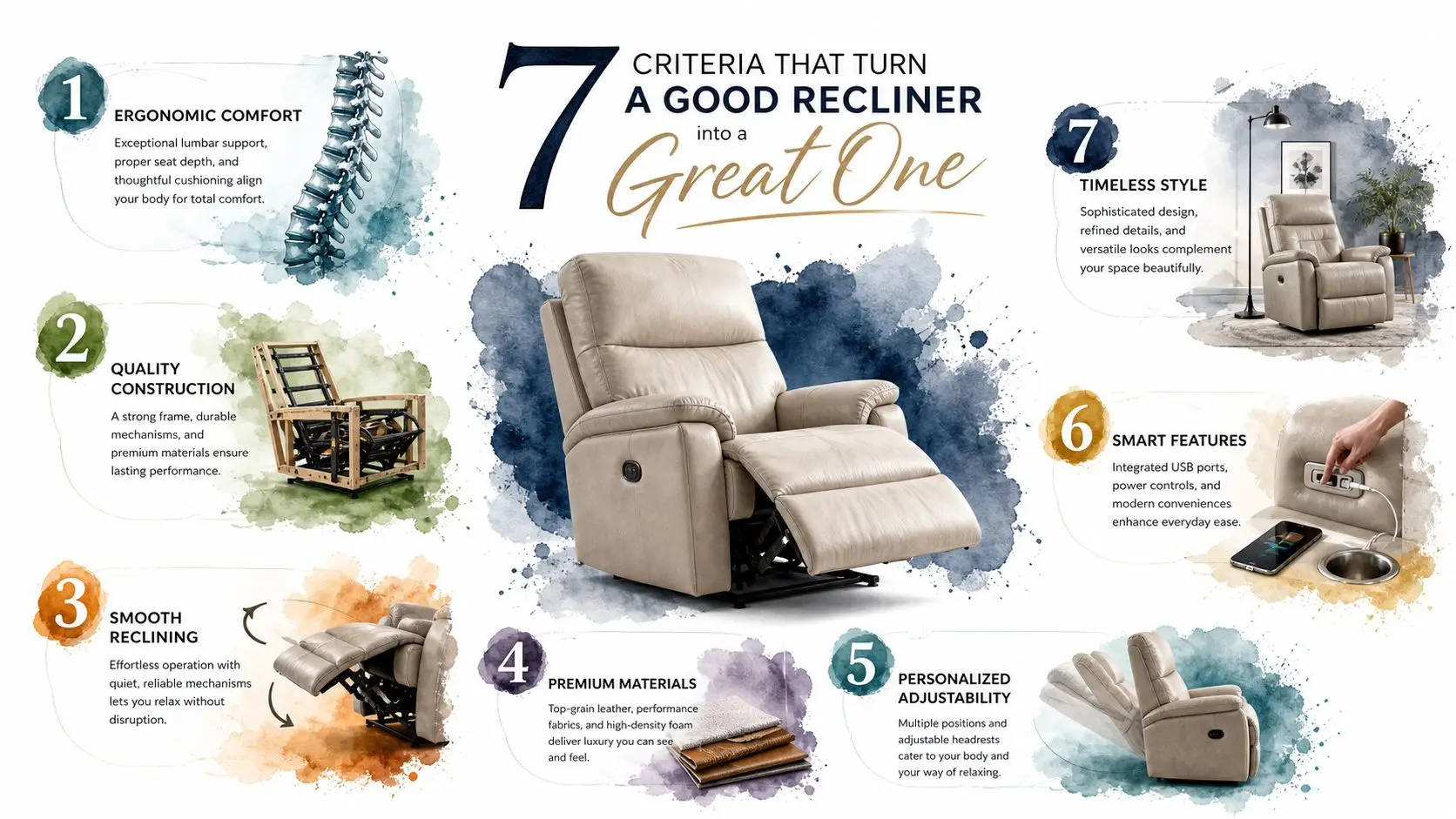
Seven Criteria That Separate a Good Recliner From a Great One
A reclining sofa should pass seven tests before it passes the front door. The first is frame construction, because reputable guidance consistently points buyers toward hardwood or steel frames for better long-term support under repeated reclining use. Soft upholstery can hide a weak structure, and a weak structure always shows up later.
Start with the bones, then judge the comfort
Next comes cushioning and suspension. The sofa should feel supportive after more than one sit, not just plush during the first minute. After that, check the reclining mechanism, because manual and power systems solve different problems. Manual recliners are usually the more economical and dependable route, while electric recliners add push-button convenience, multiple angles, and memory settings for people who want easier personalization.
The fourth test is upholstery and leather quality. Fabric choice affects cleaning, comfort, and how formal the piece reads in the room. Leather changes the feel again, especially for homes that want a more refined look. The fifth is customization options, because a sofa that can be adjusted in size, finish, or covering often fits the home better than an off-the-floor compromise.
The sixth is warranty coverage. A solid warranty does not make a sofa durable by itself, but it does show how confidently the maker stands behind the work. The seventh is dimensional fit, and for Bay Area homes this one matters more than most guides admit.
A sofa can feel excellent in the store and still fail at home if the clearance, doorway swing, or hallway turn was never measured.
The smartest shoppers score each sofa against those seven points before they fall in love with the look. That keeps the decision grounded in function, not showroom theater.
How American Leather, Hancock & Moore, Stressless, and Simply Amish Stack Up
American Leather makes sense for buyers who want a cleaner silhouette and a sofa that can work in tighter rooms without looking oversized. It tends to appeal to people who want a modern profile, practical function, and the kind of fit that works in a condo or smaller family room. For buyers comparing it with other custom lines, the question is simple, does the shape solve the room problem without giving up comfort.
Hancock & Moore sits at the other end of the personality scale. It is the choice for people who want an heirloom feel and are willing to pay for deeper craft details and stronger personalization. That kind of sofa suits a living room where the furniture is expected to age in place and still look substantial years later. It is not the casual pick, but it is a serious one.
Stressless is the ergonomic specialist. Its appeal is body-conforming comfort and a reclining experience built around support rather than just softness. That makes it a strong fit for readers who value seated posture, smooth adjustment, and a more technical comfort story than a traditional lounge-first sofa.
Amish brings a different kind of value, one rooted in solid-wood craft and customizable wood finishes. It is a strong option for households that want North American craftsmanship and flexibility in how the room is configured. For someone planning around a sectional layout or wanting a piece that feels substantial without looking fussy, it deserves a hard look.
| Brand | Best For | Mechanism | Customization | Price Tier | Warranty |
|---|---|---|---|---|---|
| American Leather | Compact modern homes | Power-focused options | Strong | Mid to premium | Model-specific |
| Hancock & Moore | Heirloom presentation | Manual or power depending on build | Very strong | Premium | Model-specific |
| Stressless | Ergonomic seating | Power comfort systems | Moderate | Mid to premium | Model-specific |
| Simply Amish | Solid-wood craftsmanship | Varies by model | Strong | Mid to premium | Model-specific |
For a closer look at one of the cleaner modern options, see the American Leather collection.
Understanding Price Tiers Without Chasing the Lowest Number
A sticker price can fool you fast. A sofa that looks affordable in the showroom can climb once you choose a better mechanism, upgraded upholstery, custom dimensions, or a more complex layout that fits a narrow Bay Area room. Delivery also matters. A lower-priced sofa that needs white-glove handling, stair carry, or careful maneuvering through tight halls can end up costing more than the number on the tag suggests. The comparison is the total cost in your home, not the number in the ad.
Price ranges still help, but only if you read them correctly. Entry-level reclining sofas usually buy a simpler build and fewer choices. Mid-range pricing usually gives a more balanced mix of appearance, mechanism choice, and everyday durability. Premium custom pricing should buy better materials, stronger construction, and more control over fit, though price alone never guarantees the right result. The pricing tier reference is useful as a starting point, but it should not be treated like the final word.
What each tier usually buys
American Leather often lands in the mid-to-premium conversation because customization changes the final number as much as the base model does. A compact silhouette, upgraded leather, power options, or special sizing can move the price up quickly, and that is normal. Hancock & Moore and Amish usually sit on the premium side of the equation when the buyer wants more craft and more room to tailor the piece. Stressless can move across tiers depending on the build, so brand name alone never tells the whole story.
Custom work changes the bill in ways shoppers ignore until the quote arrives. Seat depth, arm style, upholstery grade, contrast stitching, power headrests, and console features all push the price higher. Bay Area delivery is another line item that deserves attention, especially in older buildings, narrow stairwells, and homes where the sofa has to be brought in by hand. A buyer who asks about delivery constraints early avoids paying for a sofa that is cheap on paper and expensive by the time it reaches the room.
Bottom line: the higher ticket does not automatically mean the better sofa. Frame quality, mechanism quality, room fit, and the cost of getting the piece into the house matter more.
Buyers should start with budget, then ask what the sofa is made of, how it reclines, what upgrades are included, and whether the path into the home has been measured. That habit protects the money already being spent and usually leads to a better long-term result. For households thinking in terms of long-lasting furniture, the goal is not the cheapest seat, it is the one that keeps earning its keep. For a deeper look at what makes that happen, see this guide to long-lasting furniture choices.
Mechanisms, Frames, and the Parts That Decide How Long a Sofa Lasts
A sofa that reclines smoothly in year one should still work smoothly in year ten. That depends less on the showroom look and more on the parts hidden inside the frame. The first decision is the mechanism, and the second is the frame.
Manual and power do different jobs
Manual recliners are the straightforward choice. They are usually simpler, more economical, and easier for households that want fewer moving parts. Power recliners bring push-button convenience, more precise positions, and memory settings, which can be worth the extra cost for people who want easier adjustment or who use the seat throughout the day.
The frame is where durability begins. Guidance on reclining sofas consistently points buyers toward hardwood or steel frames because those structures are more likely to hold up under repeated movement than lighter alternatives. That matters because reclining is not a static use case. Every footrest cycle asks more of the structure than a fixed sofa would.
A soft sit can hide a weak frame. The smarter buyer tests the mechanism, then lifts a corner and feels the structure before deciding.
That simple habit changes the purchase. A shopper who only sits down may fall for a cushy first impression. A shopper who checks the weight, the return action, and the stability of the piece is already shopping like someone who expects the sofa to live a full life in the house.
If the household is leaning toward powered seating, types of power reclining seating is a useful place to compare how the moving parts differ. The more specific the mechanism choice, the fewer surprises later.
Matching the Right Brand to Real Bay Area Living Scenarios
A family in a San Mateo split-level and a couple in a Pacific Heights condo are shopping for two very different pieces, even if both call them a reclining sofa. The family wants a sectional that can handle movie nights, spills, and frequent use without looking fragile. The condo couple wants a compact sofa that reads as polished, not bulky, and can get through a narrow living room without crowding the space.
The family room case
For the split-level home, the better fit is usually the brand that offers stronger customization, easy-clean upholstery choices, and a build that can stand up to regular use. That is where Simply Amish or American Leather often make the most sense, depending on whether the priority is solid-wood craft or a cleaner modern footprint. The deciding factors are not just comfort, they are sectional geometry, door clearance, and whether the reclining action demands extra rear space.
The condo case
For the smaller urban home, the favorite should be the sofa that solves clearance first. American Leather tends to fit that conversation well because compact proportions and cleaner lines can make a reclining piece feel less intrusive in a tighter room. If the buyer wants a more refined, substantial presentation and the path inside is manageable, Hancock & Moore can also work, but only if the measurements and delivery plan are nailed down first.
The common mistake is choosing a sofa because it feels best in the first five minutes. The better move is to measure the room, the doorway turns, the hallway width, and the recline clearance, then match those limits to the brand. In Bay Area housing, those numbers decide the winner before the cushion ever gets touched.

The best reclining sofa brand is the one that fits the actual home. Comfort scores do not matter if the sofa cannot turn the corner or open fully.
For a modular, craftsmanship-forward option, the Simply Amish line is worth reviewing in the context of room layout and finish choices.
A Situational Recommendation Framework for Confident Decisions
American Leather fits best when the room is tight, the look needs to stay clean, and the buyer wants a reclining sofa that doesn't dominate the space. Hancock & Moore makes more sense for someone treating the sofa as a lasting statement piece and wanting deeper customization. Stressless is the practical answer for buyers who care most about ergonomic support and a smoother seated experience.
Amish belongs with the shopper who values craft, solid materials, and flexible room planning. That buyer often cares less about chasing the lowest number and more about getting a piece that holds up as a true investment piece.
For anyone who also wants better pressure support in a recliner, it helps to review find the right recliner seat cushion before making the final call. Cushion choice can change the feel of a good sofa, especially for long sitting sessions.
The buy-it-for-life mindset makes sense here. Quality furniture is not just a purchase for today, it is a piece of the home that should save money over time by lasting longer and fitting better from the start. That is the right way to think about reclining sofas in a market where price alone tells only part of the story.
Visiting the Showroom and Designing the Right Sofa for Your Home
A reclining sofa should be handled like a long-term home decision, not a quick cart checkout. That means touching the materials, testing the recline, checking the seat depth, and confirming whether the scale works in the actual room. It also means asking for help from non-commission design experts who can talk about fit instead of pushing a single floor model.
Why custom order options matter
Custom order services make a real difference on a piece this large. Fabric, leather, wood species, and finishes change how the sofa looks, how it ages, and how easily it blends with the rest of the home. For Bay Area homeowners who want the recliner to feel deliberate rather than oversized, those choices are not extras, they are part of the purchase.
A showroom visit also helps with the practical side of the deal. Delivery, setup, and financing options are easier to discuss in person, and that matters when the sofa is meant to serve for years. A careful, no-pressure consultation usually saves more money than a rushed online buy, because the right selection avoids costly mistakes.
The broader point is simple. When a household invests in quality, it is buying comfort, durability, and fewer replacements down the road. That is the sustainability angle that matters in furniture, because the piece that lasts is the piece that does not need to be replaced.
For a relaxed, no-pressure visit, use the free design services to talk through room fit, customization, and delivery before making a final decision. Then stop by the South San Francisco showroom or book a Design Consultation and let the right sofa earn its place in the home.
A CTA for Giorgi Bros. Furniture.