A rug can look perfect on the showroom floor and still land in the wrong place at home. The problem usually isn't the pattern, the color, or the quality. It's the way the rug relates to the furniture, the walls, and the traffic paths people use every day.
That's why how to place area rugs matters more than most buyers expect. A well-chosen rug can make a room feel finished, calm, and intentional. A slightly off-size rug can make even beautiful furniture feel stranded.
In a family-owned Furniture South San Francisco showroom that has helped Bay Area homeowners since 1933, that difference becomes obvious fast. Good Bay Area Interior Design decisions are rarely about guessing. They come from laying out the room, testing scale, and choosing Custom Furniture and rug placement that fit the way the home works.
Why Most Rugs End Up in the Wrong Spot
A rug usually goes wrong for one of two reasons. It's either too small to anchor the room, or it's placed as though the room were empty instead of furnished. Both mistakes make the space feel less settled, even when every chair and sofa is a quality piece.
The rug is not the decoration, it is the frame
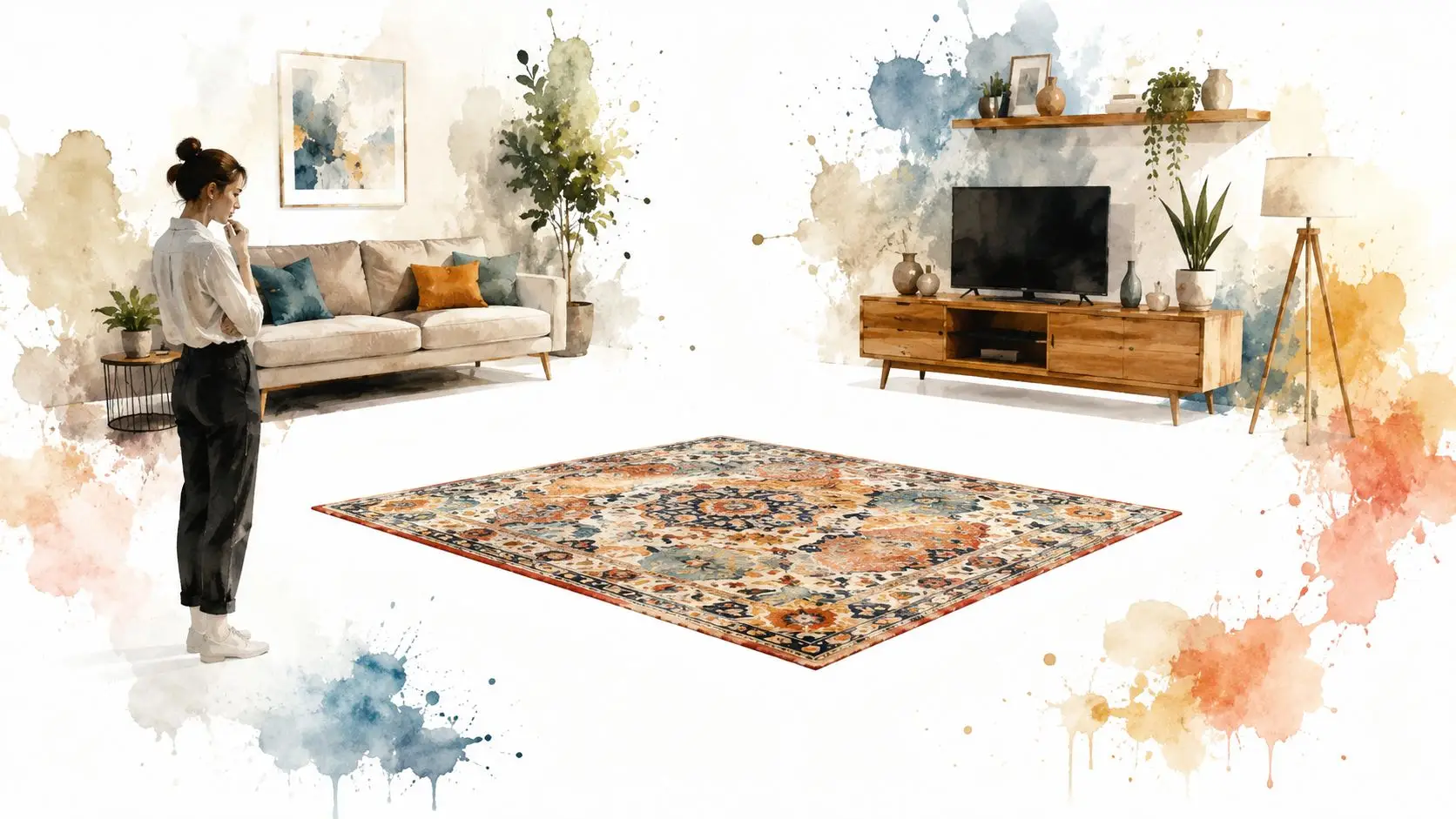
A rug does a job. It defines where people sit, where they walk, and where the eye should rest first. In open-plan homes, that framing matters even more because the rug helps create a conversation zone without shutting down the route to the kitchen, entry, or hallway. The classic 18-inch border rule, or a smaller visible floor reveal in tighter rooms, exists for the same reason. It preserves circulation and keeps the rug from looking like wall-to-wall carpet.
That's why showroom guidance is so useful. A large display floor lets a homeowner see scale instead of just reading it from a label. A room vignette shows what happens when the rug sits under furniture, which is very different from imagining it in the middle of a room.
For a practical layout example, this living room furniture arrangement guide helps show how furniture grouping and rug placement work together.
Why the wrong spot feels wrong fast
A rug floating in the center of a room often feels accidental. A rug pushed too close to the walls can feel like a mistake, especially when there's no breathing room around it. Both choices weaken the visual boundaries that make a room feel composed.
Practical rule: if the rug doesn't connect to the furniture, it usually isn't in the right place.
That's the core idea that carries through every room. The next decisions are less about style and more about measurement, proportion, and how the room gets lived in.
Measure First, Tape the Floor, Then Choose the Rug
The most reliable way to size a rug is also the least glamorous. Measure the room, map the furniture footprint with painter's tape, and walk around it before buying anything. That one habit turns rug shopping from a guess into a real test of scale.
Start with the furniture, not the rug
In a living room, the rug should respond to the seating group, not the room's center point. In a bedroom, it should relate to the bed and bedside traffic. In a dining room, it has to account for chairs moving in and out, not just the table alone. That's why a tape outline matters, it shows what the rug has to support in daily use.
The border around the rug is the next check. Many designers use about 18 inches of visible floor from rug edge to wall as a general benchmark, with smaller rooms sometimes working at about 8 inches. For living rooms, a common furniture reveal is 10 to 12 inches, while tighter layouts can work with 6 to 8 inches so the room doesn't feel cramped. Those are starting points, not rigid rules, because furniture scale and room shape change the result.
Walk the room before the rug arrives
Once the tape is down, people should do the most important thing, walk the paths. Doors need clearance. Chairs need room to pull out. A hallway to the kitchen can't get pinched by a beautifully placed rug. That test catches the problems a product photo never will.
A taped outline does for a rug what a floor plan does for a remodel. It exposes the mistake before delivery day.
That's also where professional delivery and setup teams add real value. They're not just carrying a roll into the house. They're confirming the placement the tape already proved.
For measuring furniture proportions before the rug purchase, this how to measure furniture guide gives a useful starting point.
Living Room Rules That Actually Anchor the Room
A living room rug has a harder job than it looks. It has to hold the seating group together, keep walking paths open, and still let the room feel lived in instead of staged.
Two placement patterns work best
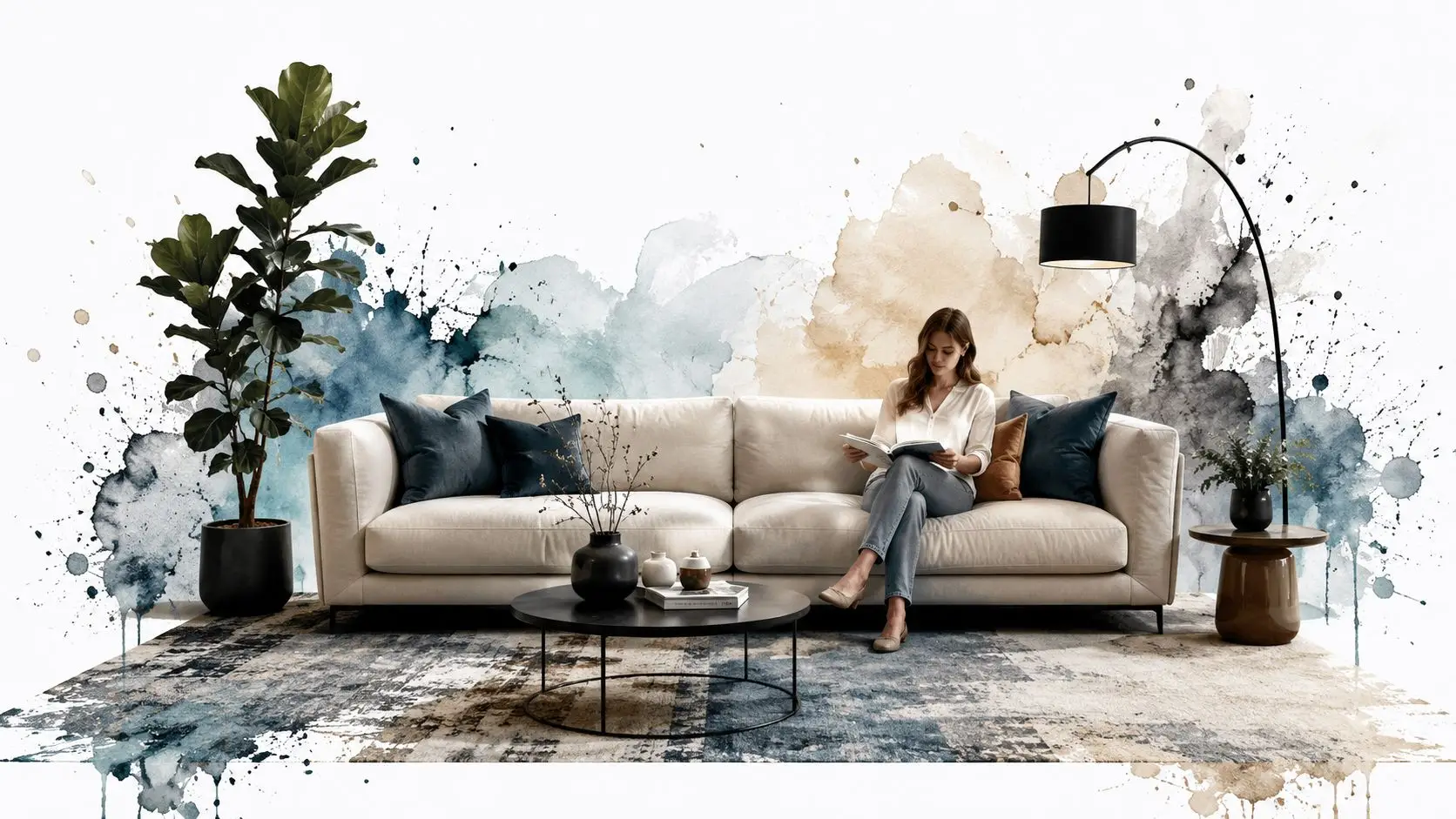
The strongest layout is to get all legs of the seating group on the rug. That works well in larger rooms and in open-plan homes where the rug has to define one clear zone. The other workable option is to place at least the front legs of each connected seating piece on the rug. That approach gives more flexibility and often suits real Bay Area living rooms better, especially when the room also has to flow toward a kitchen, entry, or staircase.
Consistency matters more than perfection. A sofa on the rug and a chair off the rug breaks the grouping. The same problem shows up when the coffee table is centered but the rug stops short of the seating. The rug should read as one frame around the conversation area, not as a loose accessory under part of it.
Keep the room open without making the rug disappear
A living room rug usually needs visible floor around it so the room can breathe. A common reveal is 10 to 12 inches from wall to rug in average rooms, while tighter rooms can work with 6 to 8 inches if a smaller border keeps the space from feeling boxed in. The right amount depends on furniture scale, the shape of the room, and how much visual weight the rug already carries.
If the rug stops too early, the room often gets a postage stamp look. It feels like the rug was dropped into the space instead of chosen for it. For homeowners comparing pattern and color, the guide to choosing a grey and teal is a useful visual reference, because it shows how tone can support the seating area without taking it over.
For a room-specific layout perspective, this living room furniture layout guide helps when the room has to work around a fireplace, window, or media wall.
A living room checklist that keeps the room grounded
- Anchor the seating group first: The rug should support the sofa, chairs, and table as one zone.
- Preserve pathways: Keep the rug from interrupting the route to the next room.
- Check the reveal: Leave enough visible floor around the rug so the room does not feel crowded.
- Match shape to the room: Rectangular rooms usually suit a rectangular rug, while awkward corners may need a different size or placement to feel natural.
When the rug can be ordered to fit the room, the whole choice gets easier. That is where Custom Furniture thinking helps, because the rug can be sized around the actual seating plan instead of forcing the room into a standard setup.
Bedroom, Dining Room, and the Spaces Most Guides Skip
The bedroom and dining room each need their own logic. They're not just smaller versions of the living room. A bedroom rug has to feel good underfoot at the sides of the bed, and a dining rug has to stay calm when chairs move in and out all day.
Bedroom placement should support the bed, not just decorate it
A queen bed usually works best with a rug extending 2 to 3 feet beyond both sides and the foot of the bed. If the room is tighter, the fallback is to place at least the front two legs of the bed on the rug, or to make sure roughly one-third of the bed base sits on it. That keeps the bed from looking like it's floating.
A runner can also solve the bedside problem when space is tight or when each side of the bed needs its own footing. That choice is often better than forcing a small area rug into a room that can't support it. In bedroom layouts, the goal is comfort first, then symmetry.
Dining rooms need chair movement built into the measurement
Dining rugs need more clearance than many buyers expect. The rug should extend 24 to 36 inches beyond the table on all sides so chairs stay on the rug when they're pulled out and occupied. Some guides also frame it as choosing a rug that is 1 to 2 feet larger than the table dimensions. Either way, the point is the same. Chairs should not catch the edge.
For homeowners who want to compare the room at a glance, this table keeps the logic simple.
| Room | Key Rule | Border Around Rug |
|---|---|---|
| Living room | Front legs of seating on rug, or all legs in larger rooms | About 10 to 12 inches, or 6 to 8 inches in smaller rooms |
| Bedroom | Rug extends 2 to 3 feet beyond bed, or at least front legs of bed on rug | Visible floor on both sides if the room allows |
| Dining room | Rug extends 24 to 36 inches beyond table on all sides | Enough room for chairs to stay fully on the rug |
| Home office | Rug extends beyond chair movement path | Enough clearance for rolling chair motion |
The office corner and the small den deserve the same care
A home office has a different problem. A rolling chair needs space to move without catching a rug edge. Expert guidance points to about 60 to 70 cm of clearance behind the chair so movement stays smooth. That matters in bedrooms used as offices, corner desks, and hybrid work nooks where the chair is in motion all day.
For a broader room-furniture view, this how to choose an area rug for living room guide is a useful companion when thinking through scale and function together.
Choosing the Right Rug Pad and Finish
A rug in a Bay Area home can look right on day one and still fail in daily use if the pad is wrong. The pad is not an accessory. It controls grip, cushioning, and how the rug sits on the floor, which is why it deserves the same attention as size and placement.
Match the pad to the room and the floor
Felt, rubber, and felt-and-rubber blends each solve a different problem. Felt adds cushion under a dining chair or beside a bed. Rubber holds the rug in place on hard surfaces. A felt-and-rubber blend gives a balanced result in many rooms because it adds support without making the rug feel loose underfoot. The right choice depends on the floor type and the weight of the rug, so the pad should be selected after the rug size and placement are set.
Pad thickness matters too. Thicker padding can make a rug feel more comfortable, but it can also create door clearance problems or change how a rolling chair moves across the surface. In rooms with low-clearance doors, tight walkways, or steady foot traffic, a slimmer pad is the cleaner choice.
For hardwood floors, the rug and pad need to protect the finish without sliding around. A practical overview like best area rugs for hardwood floors helps homeowners think through that pairing before they buy.
Why a slightly smaller pad works better
A pad cut about 1 to 2 inches smaller than the rug on each side keeps the edge hidden and helps the rug lie flatter. That small detail matters because curled edges make a room look unfinished and wear out faster under daily use.
For homeowners comparing floor surfaces and long-term wear, this best LVP tile laminate comparison gives useful context for how different floors handle everyday traffic. Rug placement should work with the floor underneath it, not fight against it.
A beautiful rug can still fail if the pad is wrong. The pad is what keeps the placement believable day after day.
That standard matters in a home that is meant to be lived in, not staged and forgotten. When people invest in quality furnishings, they are choosing pieces that need to hold up over time, and the pad should match that same expectation.
Common Rug Mistakes and the Better Trade-Off
The most common rug mistake is undersizing, and it usually starts with a homeowner trying to save space visually. Instead, the room loses scale. The second mistake is pushing the rug too far toward the walls, which can make the room feel boxed in or overly formal.
What usually goes wrong
A rug that stops short of the front legs disconnects the seating. A rug that sits flush to the wall erases the visible border that helps the room breathe. A high-pile rug under a rolling office chair can create drag and wear. Each of those mistakes comes from skipping the floor-tape test and judging by instinct alone.
The better trade-off in a small room is not always a larger rug. A slightly smaller rug with a consistent border can make the room feel more intentional, especially in urban homes where circulation matters. That's the counterintuitive part many buyers miss. The goal isn't maximum coverage. The goal is the best proportion the room can live with.
Layering can solve awkward layouts
Open-plan homes and odd corners often benefit from layering two rugs or using an angled placement to define zones. That can separate a reading area from a conversation area without blocking the path through the room. It also works when a single large rug would crowd the furniture or compete with a doorway.
The same rule applies to the furniture around the rug. Scale, proportion, and traffic flow should be decided first. A rug should support the room, not force the room to bend around it.
Your Room-by-Room Rug Checklist and Next Step
A rug decision gets easier once the room is measured and the floor is marked. Tape the outline, place the seating or table where it will live, keep a visible border, match the pad to both the floor and the rug, and walk the traffic path before ordering. That approach works in the living room, bedroom, dining room, office, and the awkward corner that needs a job instead of another guess.
Bring room photos, floor measurements, and any fabric or finish swatches to the showroom. A design conversation is sharper when the scale is already in front of you, especially if you are trying to compare the rug against the sofa, bed, dining table, or desk that will sit on it. If you want another pass on sizing and placement, this area rug selection guide for living rooms gives a useful check before you buy.
If the room needs more flexibility, financing options are available, which can help when one room turns into a full-house project or when more than one rug is part of the plan. Delivery and setup support also matter, because the rug should land where the tape said it would, not somewhere close enough.
Bring the room into the conversation, not just the product. If you want help with the layout, book a Design Consultation, and if the room needs more than a rug, ask about the custom furniture options in the showroom so the pieces work together from the start. That is how a rug becomes part of the home instead of one more item to shift around later.
Giorgi Bros. Furniture can help you compare rug placement with the furniture that lives on top of it, from living room seating to bedroom and dining layouts. Visit Giorgi Bros. Furniture in South San Francisco to explore the showroom, talk with non-commission design consultants, and book a Design Consultation that fits your room, your style, and the way you live.