You're choosing a mattress, comparing comfort levels, and then facing the decision that often gets treated as an afterthought: adjustable base vs box spring. That foundation influences how the mattress flexes, how high the finished bed sits, and whether the setup remains comfortable and supported over time.
The lower-priced option isn't automatically the better value. A base that doesn't suit the mattress can create uneven support, reduce comfort, or put warranty coverage at risk. A quality foundation is an investment piece, and the buy-it-for-life approach means choosing support that works for the mattress you have now and the way the household uses the bed.
The Bed Foundation Dilemma Homeowners Face Every Day
The confusion is understandable. A box spring has been part of the standard bedroom setup for generations, while an adjustable base looks more like a piece of engineered equipment. Both sit beneath a mattress, but they solve different problems.
A box spring provides a fixed support plane with spring response. An adjustable base changes the angle of that plane, usually by raising the head, the foot, or both. The right choice depends less on appearance or initial price than on mattress construction, daily comfort, bed height, mobility, and manufacturer requirements.
| Consideration | Box spring | Adjustable base |
|---|---|---|
| Primary function | Passive support and spring response | Motorized head and/or foot articulation |
| Best mattress pairing | Compatible traditional innerspring designs | Flexible foam, latex, and many hybrid designs |
| Sleep surface | Fixed | Position can change |
| Power requirement | None | Electrical outlet required |
| Setup character | Simple and easy to move | Heavier, with mechanical components |
| Separate box spring needed | It is the foundation | No, the mattress sits directly on the base |
A homeowner who prefers a classic bed height and straightforward setup may be well served by a compatible box spring. Someone who reads in bed, needs easier positioning, or wants to change the sleeping angle may find that an adjustable base provides value every night.
The long-term question is more important than the short-term price. A foundation should support the mattress without forcing it to work outside its intended design. That protects comfort and helps prevent the kind of premature replacement that makes a supposedly inexpensive purchase cost more over time.
Giorgi Bros. Furniture has served South San Francisco and the wider Bay Area for more than 90 years, with a family-owned, non-commission environment built around no-pressure guidance. That same mindset applies here. A good recommendation starts with the mattress and the household, not with a push toward the most feature-heavy option.
Understanding the Core Differences Between Bases
A foundation is a long-term mattress decision, not just a way to raise the bed. The support system affects how the mattress flexes, how comfortable it remains, and whether its design can hold up over years of use.
The box spring predates the adjustable base by well over a century. Historical accounts place its origin in the late 18th century, followed by wider adoption in the 1890s as coil-spring mattresses became more common. It remained the standard mattress companion for more than 100 years (historical background on box springs).
A traditional box spring provides passive support. Its internal structure gives under compression and was designed to work with an innerspring mattress. The surface stays level, with no powered movement beneath the sleeper. That fixed design can feel stable and familiar, provided the mattress is built for it.
An adjustable base works through powered articulation. Separate mechanisms raise the head, the foot, or both, allowing the sleeper to change position instead of using one fixed plane. The mattress must bend with those movements, so its materials, flexibility, and construction determine whether the pairing will work well.

Why the market moved beyond the traditional setup
Around 2004, bed-in-a-box products changed how mattresses were sold and supported. Foam and other flexible designs could sit on solid foundations or adjustable systems, reducing reliance on traditional box springs in many homes.
The broader U.S. market now includes both foundation types. One estimate places the mattress-bases market at USD 2.18 billion in 2026, up from USD 2.02 billion in 2025, with adjustable bases holding 41.00% of market share in 2025 and projected to grow at a 7.38% CAGR through 2031 (U.S. mattress bases market estimate).
The practical distinction is clear:
- Box spring: fixed support, spring response, no motor.
- Adjustable base: powered movement, variable posture, direct mattress support.
For a closer explanation of the moving foundation, read this guide to what an adjustable base is. Choosing correctly protects the mattress investment and preserves comfort long after the initial purchase.
Evaluating Pros and Cons of Each Foundation
A box spring earns its place through simplicity. It needs no electricity, remote control, or mechanical adjustment. For a compatible traditional innerspring mattress, that straightforward support can preserve the familiar feel many sleepers prefer while keeping the setup easy to operate and maintain.
Height is another practical advantage. Common low-profile box springs are about 5 to 5.5 inches tall, while high-profile versions are about 9 inches tall. That difference changes the finished bed height, which can affect how easily someone gets in or out and how the mattress sits with the headboard and surrounding furniture.
The trade-off is a fixed sleep surface. A box spring cannot raise the upper body for reading or change the angle beneath the legs. It may also provide the wrong type of support for foam, latex, or some hybrid mattresses. The right foundation protects the mattress investment, while the wrong one can shorten its useful life and reduce comfort.
Where the adjustable base earns its keep
An adjustable base usually costs more at the outset and adds practical requirements. It needs an outlet, may be heavier to move, and includes motors and hinges that should be covered by clear warranty terms.
Its value comes from changing how the bed is used. A sleeper can raise the head for reading, lift the feet, or choose a position that feels better during periods of back discomfort or reduced mobility. Those benefits matter most when the positions are used regularly, rather than treated as occasional features.
| Factor | Box spring strength | Adjustable base strength |
|---|---|---|
| Maintenance | Minimal moving parts | Requires attention to motors and moving sections |
| Flexibility | Fixed sleeping plane | Variable head and foot positions |
| Mobility | Generally easier to handle | Heavier and more difficult to relocate |
| Long-term value | Strong when correctly paired | Strong when used frequently and matched correctly |
Durability depends on construction, use, and compatibility, not the foundation label alone. Compare the entire setup, including the mattress, frame, electrical access, and expected frequency of movement. Guidance on why a box spring may be needed is especially relevant when evaluating traditional mattress designs.
A box spring makes sense when its fixed support and simple construction suit the mattress. An adjustable base makes sense when regular positioning improves sleep comfort or helps with mobility. The foundational decision should account for long-term mattress support, not only the purchase price.
Mattress Compatibility and Warranty Considerations
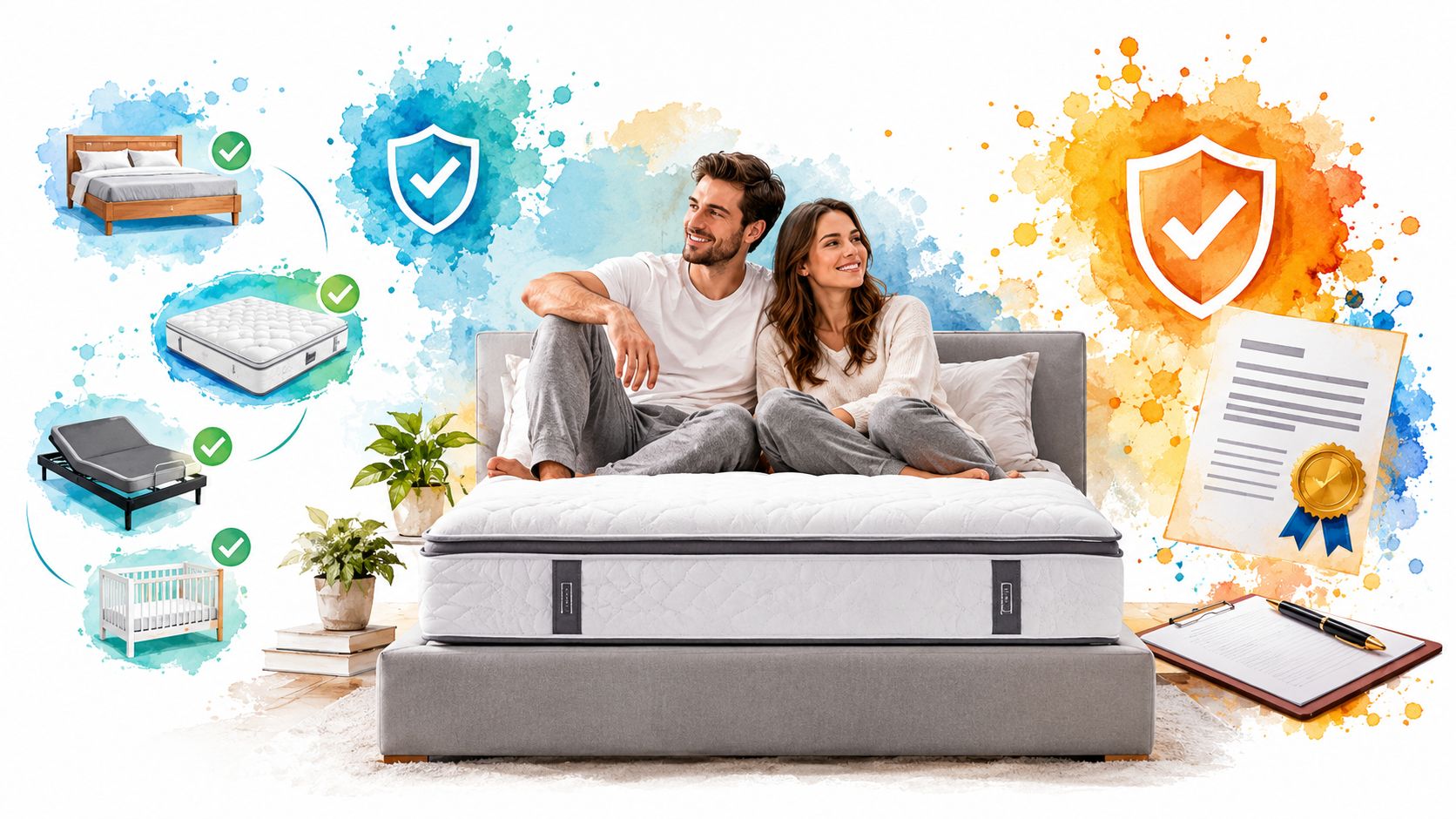
A mattress can feel comfortable on the showroom floor yet perform poorly on the wrong foundation. Check the manufacturer's requirements before buying either base. This foundational decision protects the mattress investment, because support affects durability, comfort, and warranty coverage over time.
Begin with the mattress construction, then read the warranty for approved foundation types and support requirements.
A practical compatibility check
Identify the construction. All-foam, latex, and many pocketed-coil hybrids generally flex well with adjustable bases. Traditional connected-coil innerspring mattresses can resist bending, making repeated articulation unsuitable for some designs.
Check thickness and flexibility. Mattresses above about 14 inches may articulate poorly because they do not conform cleanly to the base's bend angles, according to adjustable-bed mattress guidance.
Review approved support. Modern foam, latex, and many hybrid mattresses often work on flat foundations or adjustable bases. Traditional innerspring designs are more likely to require a box spring. Some wrapped-coil systems may work, while Bonnell or Verticoil systems may not, so confirm the mattress maker's specifications through its warranty documentation.
Confirm warranty conditions. Look for rules covering foundation type, support structure, center support, and slat spacing. An unapproved base can affect comfort, contribute to structural problems, and void warranty coverage.
Load and flex matter together
An adjustable base must carry the combined weight of the sleepers and mattress. Check the manufacturer's stated capacity, including whether the limit applies to distributed load and whether heavier mattresses reduce available capacity. The powered frame must also flex without binding, shifting, or placing uneven stress on the mattress.
A box spring serves a different purpose. It provides responsive give beneath a compatible innerspring mattress, but it does not create adjustable positions. Placing a separate box spring between an adjustable base and mattress interferes with articulation and is not needed.
For a practical overview of support options, review these mattresses without a box spring. Choose the foundation that matches the mattress design, preserves warranty terms, and supports comfortable use for years.
Health Benefits and Comfort Advantages
A foundation shapes more than the first night's comfort. It also affects how fully the mattress can perform over time. A static box spring gives a compatible mattress a fixed surface, while an adjustable base changes the sleeper's position for reading, back discomfort, easier bed entry, or recovery.
An adjustable base can raise the head, feet, or both independently. That lets sleepers test a posture instead of permanently adding pillows behind the upper body. It is not medical treatment and does not replace professional advice, but it can make everyday rest and mobility easier. The foundational decision should match a recurring need, because unused motors add cost and complexity without improving sleep.
Comfort is personal, but positioning is practical
For nightly snoring discomfort, try 10 to 15 degrees of head elevation for one week and note morning comfort. For tired legs after standing, try 20 to 30 degrees of foot elevation for 30 minutes before sleep. These are practical starting points, not medical prescriptions. Stop if a position causes pain or worsens symptoms.
Head elevation may also feel better during nighttime upper-body discomfort. Foot elevation can suit sleepers who prefer support beneath tired legs. The value comes from adjusting the sleep surface to the person rather than accepting one fixed angle.
Couples may benefit when their preferences differ. One sleeper can use a gentle incline while the other stays flatter, provided the mattress and base support that configuration. Check the mattress design before treating this flexibility as a benefit.
Practical rule: Choose articulation for a recurring comfort or mobility need, not because a control panel looks impressive in a showroom.
People assessing positioning during travel or recovery can review these air bed recovery tips Aspen Falls. For more detail on how an adjustable base may affect comfort and sleep routines, see this guide to adjustable bed health benefits. The long-term test is simple: does the base help you use the mattress comfortably night after night? If not, a compatible fixed foundation may protect the mattress investment with less equipment.
Cost Analysis and Installation Insights
A box spring usually has the lower starting price because its job is narrower and its construction is simpler. An adjustable base requires motors, controls, hinges, and a frame built to carry a distributed load while moving. Comparing only the price tag misses the value of using those functions every night.
A foundation is part of the mattress system, not a disposable accessory. If the household wants head and foot positioning for reading, rest, or mobility, an adjustable base may justify its higher starting price through regular use. If those features won't be used, a compatible box spring may deliver better value by avoiding unnecessary complexity.
Count the full ownership cost
The budget should include more than the base itself:
- Installation: A box spring is generally straightforward to place. An adjustable base may require assembly, alignment, remote setup, and access to a nearby outlet.
- Movement: A powered base is typically heavier and less convenient to relocate. That matters for frequent movers or rooms that are rearranged often.
- Maintenance: A box spring has fewer mechanical parts. An adjustable base can require attention to motors, hinges, wiring, and warranty support.
- Delivery: Professional placement can reduce the risk of lifting damage and ensure the base sits correctly within the bedroom layout.
- Financing: Flexible financing options may help a household spread the cost of a quality sleep system, subject to the provider's terms.
The best long-term value comes from buying the right level of function. Paying for articulation that never gets used isn't a quality decision. Neither is choosing a low-cost foundation that conflicts with the mattress and creates an early replacement problem.
For households that want help with placement and setup, Giorgi Bros. Furniture describes its furniture installation service. The team provides white-glove delivery across much of the Western United States at flat rates based on location rather than per-piece fees, with packaging removal and setup included in the service. Outside that direct delivery area, a trusted nationwide carrier network can support delivery.
Making the Right Choice for Your Lifestyle
The right foundation depends on how the bed is used, not just how it looks. A household that treats the bedroom as a place for sleep alone has different priorities from one that reads, watches television, works through recovery, or needs easier positioning.
A traditional innerspring mattress with a manufacturer-approved box spring is a natural match for the classic setup. The box spring supplies familiar height and responsive give without requiring power or managing moving parts.
Match the base to the household
Choose a box spring when:
- The mattress is a compatible traditional innerspring design.
- A fixed sleep surface feels comfortable.
- The household values simple setup and easy relocation.
- Added bed height helps with daily access.
- No one expects to use head or foot positioning.
Choose an adjustable base when:
- The mattress is flexible foam, latex, or an approved hybrid.
- Reading or relaxing in bed is a regular routine.
- Head or foot elevation improves personal comfort.
- Mobility needs make positioning and getting in or out more important.
- The household accepts the weight, outlet requirement, and mechanical complexity.
Couples should test the finished height and sleeping position together. The mattress, base, frame, and headboard create one combined system, so a choice that looks suitable on paper may feel too tall, too low, or awkward to access in the room.
Design matters, too. A traditional bedroom may suit the visual proportions of a box spring, while an adjustable base can work well when the foundation remains concealed within an appropriate bed frame. Custom Furniture and broader Bay Area Interior Design planning can help coordinate the bed's scale with surrounding Investment Pieces.
The buy-it-for-life approach doesn't mean choosing the most elaborate base. It means selecting a foundation that remains useful, supports the mattress properly, and fits the household's habits for years.
Expert Guidance and Final Recommendations
A sound foundation choice starts with the mattress, not the price tag. Identify its construction, read the manufacturer's foundation and warranty requirements, measure the finished bed height, and check outlet access before comparing bases. The foundation affects how well the mattress performs, how long that investment remains useful, and whether the setup stays comfortable as household needs change.
Test the complete setup in person when possible. Sit on the edge, check the height, try head and foot positions, and operate the controls. A base that looks suitable online may feel awkward to enter, leave too little clearance beneath the headboard, or offer positions no one will use.
Before visiting a showroom, bring the mattress warranty sheet and measure the finished bed height, including the mattress, base, and frame. Compare that measurement with the headboard height. This preparation makes testing more useful and helps identify compatibility problems before delivery.
Protect the larger furniture investment
The foundation should also suit the bedroom's broader design and the furniture's expected service life. Giorgi Bros. Furniture provides custom order services across fabrics, leathers, wood species, and finishes, allowing the bed and surrounding furnishings to coordinate rather than compete. Amish Furniture and other quality-focused Investment Pieces are also available for homeowners who value construction and lasting use.
A durable choice includes more than appearance. Consider support, repairability, mattress compatibility, room access, and whether the base fits the household's daily habits. Paying less at purchase can offer poor value if an unsuitable foundation shortens mattress life or leaves sleepers uncomfortable.
The final recommendation is direct. Choose a box spring when the mattress requires compatible spring support and the household wants a fixed sleep surface. Choose an adjustable base when the mattress is approved for articulation and head or foot positioning will improve comfort or access. Do not place a box spring beneath an adjustable base, because the adjustable base is designed to support the mattress directly and the extra layer can interfere with movement.
Giorgi Bros. Furniture offers premium mattresses, adjustable bases, compatible traditional foundations, custom order services, and flexible financing options. Visit Giorgi Bros. Furniture in South San Francisco to test support, confirm compatibility, and arrange a Design Consultation for a setup built around long-term comfort.