
The popular advice is simple: remove the box spring, place the mattress on any flat surface, and move on. That advice is incomplete. The best mattress without a box spring still needs a foundation designed for its construction, weight, flexibility, and warranty requirements. A flat surface can be the wrong surface if it bends, leaves wide gaps, or cannot carry the combined load of the mattress and sleepers.
A mattress and its foundation should be treated as one sleep investment piece. Foam, latex, and many hybrid mattresses work exceptionally well on platform beds or adjustable bases, but traditional spring designs may not tolerate repeated articulation. The right decision protects comfort, reduces premature sagging, and supports a buy-it-for-life approach rather than a quick replacement cycle.
| Foundation option | Best match | Main advantage | Main caution |
|---|---|---|---|
| Rigid platform bed | Foam, latex, and compatible hybrids | Stable support with strong design flexibility | Slat spacing must meet mattress requirements |
| Closely slatted foundation | Modern mattresses designed for slats | Direct support without a traditional box spring | Wide gaps can cause sagging or warranty problems |
| Adjustable base | Flexible foam, latex, and pocketed-coil hybrids | Articulation for personalized positioning | Mattress size, weight rating, and flexibility must match |
| Traditional box spring | Certain older-style innerspring mattresses | Springy shock absorption | Often unsuitable for modern foam and adjustable setups |
| Flat foundation | Mattresses approved for static foundations | Simple, firm support | It may add less flex and less height than a box spring |
Rethinking the Modern Mattress Foundation
A mattress does not perform independently of its base. Its internal layers react to pressure, movement, and the support beneath them. A surface that appears flat and solid can still bend, create unsupported zones, or conflict with the mattress manufacturer's requirements.
The move away from traditional box springs has a clear history. Pocketed coils were invented in 1899 and later mass-produced for major U.S. mattress manufacturers by 1925. By the 2000s, platform and slatted beds had become increasingly common in the United States. The bed-in-a-box model was fully underway by the mid-2010s, as outlined in this history of mattress bases and modern support systems.
Older steel bed frames often required a box spring because they offered little built-in support. Modern frames can allow a mattress to rest directly on the frame, but suitability still depends on construction. The base must stay stable, spread weight evenly, and follow the mattress's permitted support pattern.
The foundation is part of the mattress purchase
A premium mattress can lose its intended feel when the base bows beneath it. Foam may develop uneven impressions, a hybrid may respond inconsistently, and an adjustable system may strain when the mattress cannot flex naturally. The visible problem may seem like a mattress defect even when the foundation created the conditions for it.
Review this practical mattress support advice before reusing an existing frame. The right question is whether the base supplies the correct support, not whether a box spring is present.
Practical rule: “No box spring” means direct support from an approved platform, slatted foundation, rigid foundation, or adjustable base. It still requires a defined structural standard.
Design and storage features do not change that requirement. A platform bed with integrated bookshelves can complete a bedroom composition, but its appearance says nothing about mattress compatibility. Evaluate any platform bed with bookshelves by its slat layout, center support, load capacity, and warranty requirements. A no-box-spring setup protects a costly mattress only when the foundation meets those structural demands.
Matching Mattress Construction to Base Support
The mattress type determines how safely it can sit on a foundation without a box spring. The most dependable pairings are memory foam, latex, and hybrids with individually wrapped coils. These constructions can usually conform to a rigid platform and, when approved by the manufacturer, flex at the head and foot of an adjustable base.
Traditional Bonnell and continuous-coil innersprings deserve more caution. Their interconnected coil structures are designed around a flatter, more stable position and can experience structural stress when repeatedly bent. A mattress may feel comfortable on a static platform yet fail to perform correctly on a motorized base.
Match the internal design to the movement
Memory foam generally handles articulation well because the material bends without relying on a connected spring grid. Latex also offers useful flexibility, although its weight and resilient feel can affect how easily the adjustable mechanism moves the mattress. Hybrid mattresses vary widely, so the coil design matters more than the word “hybrid” on the label.
Individually wrapped coils move more independently than interconnected spring systems. That separation helps the mattress adapt as the base raises or lowers. It doesn't create automatic compatibility, however. The mattress manufacturer still controls the warranty and may specify an approved base, weight limit, or minimum profile.
Use the following construction check before choosing a foundation:
- Memory foam: Usually a strong candidate for platform and adjustable configurations, provided the base offers even support.
- Latex: Often suitable for direct support and articulation, but the mattress's weight and flexibility should be confirmed.
- Pocketed-coil hybrid: A reliable modern option when the coils and comfort layers are designed to flex together.
- Bonnell innerspring: Better suited to a stable, flat foundation unless the manufacturer explicitly approves articulation.
- Continuous-coil innerspring: Treat as a poor adjustable-base match because repeated bending can stress the connected support structure.
The mattress comparison chart can help organize differences in construction and feel before a foundation is selected. The goal isn't to choose the softest or firmest mattress in isolation. The goal is to pair comfort materials with a base that lets those materials work as designed.
Why flexibility matters more than firmness
A firm foundation isn't automatically a good foundation. Adjustable compatibility depends on controlled flexibility, not brute rigidity. The mattress must articulate with the base, return to a flat profile, and avoid delamination, cracking, or permanent distortion during repeated movement.
A static platform has a simpler job. It needs to remain flat and distribute weight evenly. An adjustable base has a more demanding job because it changes the mattress's shape, so construction, size, clearance, and weight rating all become part of the decision.
Evaluating Slat Spacing and Foundation Rigidity
“Platform bed compatible” isn't a complete answer. Slat spacing can determine whether a mattress receives continuous support or sinks between the slats. Wide openings concentrate pressure on the mattress layers and may create the very sagging that shoppers hoped to avoid by removing a box spring.
Independent guidance identifies a practical concern around gaps above about 2.75 inches, while another recommendation places most modern mattress slats under 3 inches apart. These are useful screening thresholds, but the mattress warranty remains the final authority. A manufacturer may require tighter spacing or a specific foundation design.
A practical inspection sequence
- Measure every gap. Don't estimate by sight. Measure the open space between adjacent slats across the entire sleep surface.
- Inspect the slats for bowing. A slat that bends under hand pressure may not provide the stable support a foam or hybrid mattress needs.
- Check the center structure. Full, queen, and king frames need dependable center support, with legs that reach the floor.
- Look for movement. Shake the frame gently and listen for shifting joints, loose fasteners, or twisting.
- Confirm the mattress warranty. Read the foundation section before placing the mattress on the frame.
Rigidity should be even, not merely hard
A foundation can feel solid at the edges while leaving the center unsupported. That arrangement creates uneven loading, particularly for larger mattresses and heavier combined sleepers. The mattress needs support across its full footprint, not only along the perimeter.
Solid platforms offer continuous support, but ventilation and manufacturer requirements still matter. Closely spaced slats can provide an excellent alternative when they remain straight, secure, and properly supported. A springy or damaged base introduces movement that modern foam and hybrid mattresses may not be built to absorb.
Foundation test: Place a straightedge across several slats. If the support surface visibly dips, shifts, or leaves large unsupported areas, the frame needs repair or replacement before it receives a premium mattress.
A custom furniture piece makes this inspection especially important. A bed can be built around room dimensions, storage needs, wood species, and finishes, but the support specifications should be documented before the order is finalized. The most attractive frame is still the wrong choice if it places a valuable mattress at risk.
Platform Beds Versus Adjustable Bases
Platform beds and adjustable bases both eliminate the need for a traditional box spring, but they serve different priorities. A platform bed provides a stable architectural foundation for the room. An adjustable base adds movement and positioning, which can make the sleep system feel more responsive to individual routines.
The choice should follow the sleeper's habits and the bedroom's design. A static platform suits shoppers who want a grounded appearance, dependable support, and fewer moving parts. An adjustable base suits sleepers who value head or foot elevation and want to change the bed position without replacing the mattress.
| Feature | Platform Bed | Adjustable Base |
|---|---|---|
| Support style | Static, even support | Motorized articulated support |
| Mattress requirement | Approved for direct platform or slatted support | Flexible construction approved for articulation |
| Height | Determined by frame and mattress profile | Determined by base, legs, and mattress profile |
| Appearance | Strongest furniture and design presence | More functional, often concealed beneath the mattress |
| Movement | None | Head and foot positions can change |
| Maintenance | Minimal mechanical complexity | Requires motor, remote, and weight compatibility |
| Best use | Stable bedroom design and direct support | Personalized positioning and adjustable comfort |
Platform beds suit a composed room
A well-made platform bed can anchor a bedroom without the visual bulk of a tall box spring. It also offers an opportunity to coordinate the bed with other Custom Furniture, including wood species, finishes, storage, and scale. For a design-led bedroom, that integration matters as much as the mattress feel.
Platform beds also simplify the support question when their slats, center rails, and load capacity meet the mattress requirements. They won't, however, change the feel of the mattress through movement. That makes them a strong choice for shoppers who prefer a consistent sleep surface.
Adjustable bases suit changing needs
Adjustable bases support a more active sleep setup. The mattress must match the base exactly, with no overhang or gap, and the base itself replaces the box spring or separate foundation. A mattress protector should also flex with the system rather than bunching or restricting movement, which is why this adjustable bed protection guidance is useful when planning the complete setup.
The category has become a substantial part of the mattress support market. Adjustable bases held 40.96% of the U.S. bed-bases market in 2025 and are forecast to grow at a 5.05% CAGR through 2031, with an estimated USD 248 million in incremental market size, according to independent adjustable-base market data. The broader U.S. mattress bases market was estimated at USD 2.77 billion in 2026, up from USD 2.66 billion in 2025, and projected to reach USD 3.4 billion by 2031, representing a 4.19% CAGR from 2026 through 2031 in the same source.
That growth doesn't make an adjustable base right for everyone. It does show why shoppers should evaluate motion compatibility, exact sizing, warranty language, and room height before buying. A deeper guide to what an adjustable base does can help clarify whether the movement justifies the added complexity.
Optimizing Thickness and Edge Support
Mattress thickness affects both comfort and mechanical performance. A very thin mattress may lack the internal structure needed for repeated articulation, while a thick mattress can make a low platform feel overly tall and reduce the visual balance of a bedroom.
Expert guidance commonly cautions that mattresses under roughly 8 inches may lack enough structural integrity for repeated flexing. Many adjustable-base pairings perform best in the 10 to 14 inch range, though the approved range depends on the mattress design and the base mechanism. These figures come from adjustable-base mattress guidance, and they should be treated as selection benchmarks rather than universal rules.
Choose thickness by foundation first
For a static platform bed, thickness is mainly a comfort, proportion, and ease-of-use decision. A low platform paired with a very thick mattress can make sitting down and standing up awkward, while a thin mattress on a low frame may leave the entire bed feeling visually underscaled.
For an adjustable base, thickness becomes a performance issue. The mattress must bend without separating its layers or developing a permanent crease. A middle-range profile often provides a useful balance between flex and support, but the manufacturer's compatibility list matters more than a generic thickness target.
Edge support changes everyday usability
Edge support matters most for sleepers who sit on the side of the bed, share the mattress, or use the perimeter when getting up. A weak edge can compress under repeated sitting, making the mattress feel smaller and less stable. A reinforced edge can improve the usable surface and make transitions easier.
The base can't fully correct weak mattress edges. A rigid platform may prevent the entire mattress from sagging, but it won't create reinforcement where the mattress construction lacks it. An adjustable base adds another consideration because the edge must move with the rest of the mattress without folding awkwardly.
A practical selection process looks like this:
- For frequent edge sitting: Prioritize a mattress with a deliberate perimeter support system.
- For adjustable positioning: Confirm that the edge construction is approved for repeated articulation.
- For a low platform: Balance mattress thickness against the finished bed height.
- For heavier combined loads: Verify the mattress and base ratings together, not separately.
A focused guide to mattresses with strong edge support can help shoppers compare perimeter performance alongside surface comfort. The best setup feels stable when sleeping, sitting, turning, and rising.
Protecting Your Sleep Investment
A premium mattress needs a foundation that preserves its structure. Paying for better materials while placing the mattress on a bowed or unstable frame defeats that investment. The wrong base can reduce comfort, speed wear, and create a warranty dispute that proper planning would have prevented.
Warranty language identifies the approved foundation type, support spacing, center reinforcement, and weight limits. These requirements determine whether the manufacturer will stand behind the mattress. Read them before choosing a bed frame, platform, or adjustable base.
Avoid unstable combinations
A box spring on an adjustable base is a poor configuration. The box spring can block the base's movement, shift during articulation, and create an unstable stack. It may also affect warranty coverage, even when the mattress itself is approved for adjustable positioning.
One major mattress manufacturer states that an adjustable base must support at least 750 pounds and warns that box springs may not provide proper support for its mattresses, potentially affecting warranty coverage. The exact rating varies by manufacturer. Verify the combined load of the mattress, sleepers, bedding, and any accessories instead of relying on a general assumption.
Buy for useful life, not immediate convenience
A buy-it-for-life approach changes the decision. Choose a sturdy platform or properly rated adjustable base that matches the mattress requirements from the start. More planning at purchase can reduce premature replacement of mismatched components. Durable furniture also remains useful through room changes, renovations, and different life stages.
Protect the mattress after selecting the foundation. A mattress protector can help guard against damage and support warranty compliance when coverage excludes stains, moisture, or other preventable harm. Review this guide to protecting a mattress investment alongside the foundation requirements.
The strongest setup is not automatically the most expensive. It keeps the mattress level, carries the required load, permits approved movement, and suits the room visually. A no-box-spring design still demands disciplined structural planning. Removing the box spring is only an improvement when the replacement foundation provides the support the mattress requires.
Expert Guidance at Giorgi Bros. Furniture
Mattress compatibility is easier to judge when shoppers can test the feel and inspect the foundation options in the same place. Giorgi Bros. Furniture has served South San Francisco and the wider Bay Area for over 90 years, with roots reaching back to 1933. Its 50,000-square-foot showroom includes a dedicated sleep gallery where homeowners can compare Premium Mattresses, adjustable bases, bedroom furniture, and related sleep accessories in person.
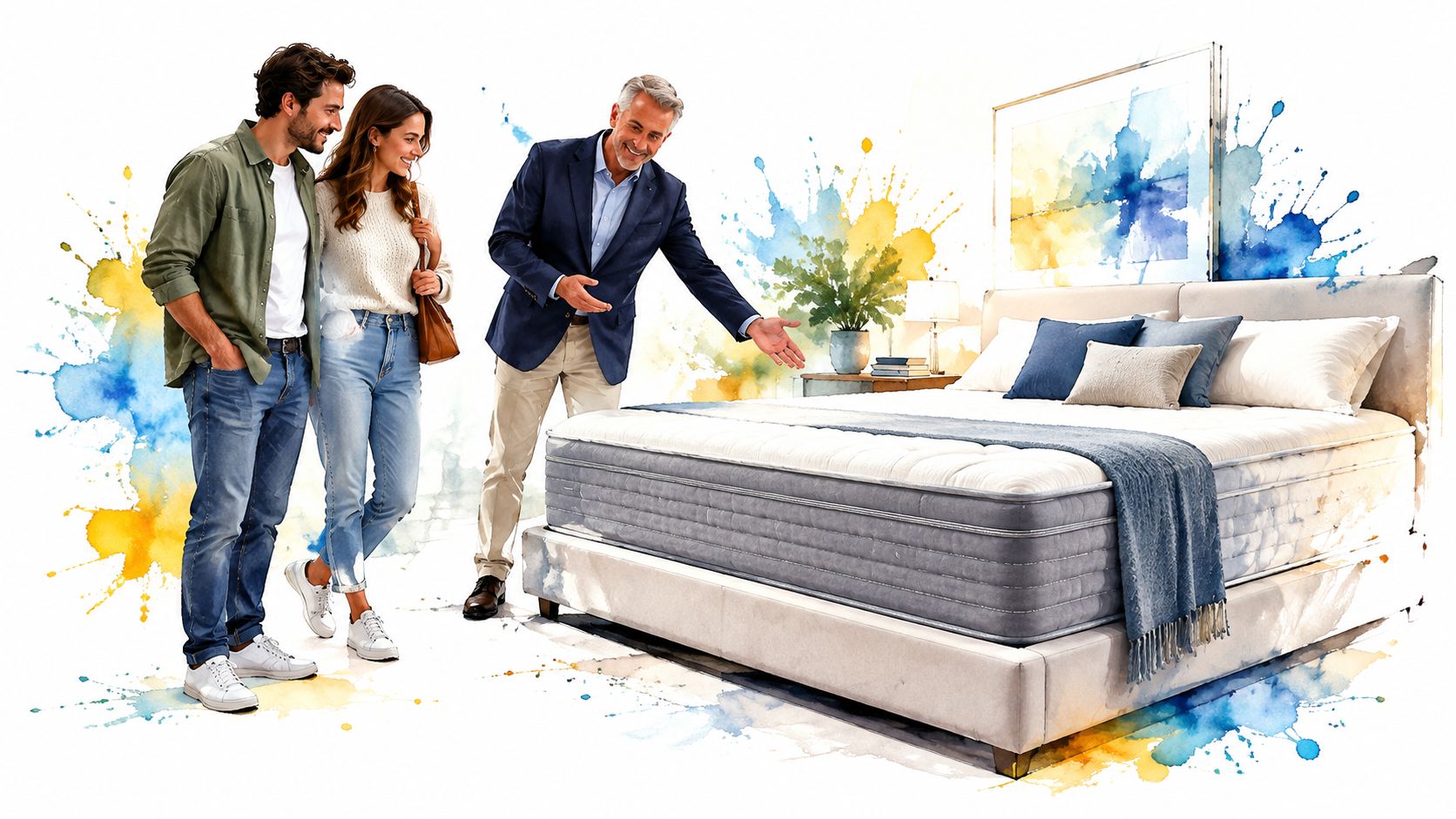
The experience begins with the sleeper's needs rather than a preset package. A Design Expert can discuss sleep position, preferred firmness, edge support, mattress thickness, platform requirements, and whether an adjustable base fits the room. Non-Commission Sales Staff can also explain foundation compatibility without tying recommendations to a commission structure.
A complete room plan
The team doesn't limit the conversation to pieces already on the floor. Giorgi Bros. Furniture offers Custom Furniture orders with choices in fabrics, leathers, wood species, and finishes. That service includes options associated with Amish Furniture, as well as bedroom pieces that can be coordinated with the mattress height and foundation type.
This approach benefits homeowners planning a broader Bay Area Interior Design project. A platform bed can be selected for its support layout and then refined for the room's proportions. An adjustable base can be planned around finished height, clearance, and the visual relationship between the bed and surrounding furnishings.
Support after selection
Delivery remains part of the investment. Giorgi Bros. Furniture operates its own white-glove delivery service across much of the Western United States, with flat rates based on location rather than per-piece charges. The team unpacks, delivers, assembles, and sets up furniture in the home, then removes the packaging. Customers outside the direct delivery area can use a trusted nationwide deluxe carrier network, and in-store pickup is also available.
Flexible financing options are available for qualified purchases. The point isn't to push a larger order. It is to give homeowners enough information to choose a structurally compatible sleep system, durable furniture, and finishes that can remain useful for years.
Giorgi Bros. Furniture offers Premium Mattresses, adjustable bases, platform beds, and Custom Furniture with no-pressure guidance from Non-Commission Sales Staff. Visit the Giorgi Bros. Furniture showroom in South San Francisco or book a Design Consultation to test compatible foundations and plan a buy-it-for-life bedroom.