
A Bay Area homeowner can stand at a furniture display table with three handsome samples in hand and still feel no closer to a decision. Red oak looks familiar and dependable. Cherry feels quieter and more refined. Hickory has the kind of dramatic grain that makes a room feel grounded. The central question isn't which wood is “best.” It's which one will behave well in the room, with the people, routines, and design choices that matter at home.
That distinction matters with Amish furniture, because a custom piece is selected for more than its appearance on delivery day. Grain, color change, hardness, finish response, and maintenance all shape how the investment will look years later. A family-owned showroom with a non-commission environment can help translate those technical differences into a practical choice, without turning the consultation into a sales pitch.
Choosing Between Amish Oak and Cherry Hickory
At a Giorgi Bros. display table in South San Francisco, the homeowner places the three samples beside a photograph of the dining room. The room has an open-plan layout, a busy household, and enough natural light to reveal every surface. The question sounds simple: which wood should become the dining table?
A helpful consultant starts with the room rather than a favorite species. The decision usually turns on five questions:
- Grain appearance: Should the furniture show bold, visible movement, or should it read as smooth and restrained?
- Color behavior: Should the wood stay close to its starting tone, or is a deeper patina part of the appeal?
- Hardness and durability: Will the surface face constant meals, homework, pets, and movement?
- Finish response: Does the buyer want broad stain flexibility or a finish that highlights natural variation?
- Daily use: Is the piece a high-contact workhorse, a formal dining table, or a quieter case good?
Red oak is the dependable workhorse. Its open grain and approachable color suit dining tables, bookcases, beds, and Mission-style furniture. Black cherry is the refined case-goods choice, with a smoother surface and a color that grows warmer over time. Hickory is the rugged performer, valued for high hardness, shock resistance, and striking contrast between light sapwood and darker heartwood.
Showroom rule: A sample board shows a wood's starting point. A consultation should also explain how that wood will feel after years of ordinary use.
The Simply Amish furniture collection gives buyers a useful way to act on that guidance, because species and finish decisions can be considered alongside dimensions and design. The following comparison treats oak, cherry, and hickory as distinct tools for a lived-in home, not as competitors in a beauty contest.
What Red Oak Brings to Amish Furniture
Red oak earns its reputation through predictability. Its pronounced open grain creates visible texture, while flatsawn boards can show a cathedral pattern that gives a tabletop an unmistakable sense of movement. The color commonly runs from pinkish tan to warm wheat, and it generally stays relatively close to that original family rather than shifting as dramatically as cherry.
Its hardness also fits everyday furniture well. The Janka scale places red oak at about 1,290 lbf, a level that supports regular family use while remaining practical for milling and finishing. Technical wood references describe the Janka scale as a measure of resistance to indentation, so the number is best treated as a comparison tool, not a promise that a tabletop cannot be marked.
Why workshops use red oak so often
Red oak dries and machines predictably, and its open pores accept pigment readily. That gives a workshop considerable finish flexibility, from a light natural wheat to a deeper Mission brown. The grain remains visible through darker colors, although a strong stain can make the surface feel more traditional and visually active.
That character makes red oak a natural fit for dining tables, chairs, beds, bookcases, china cabinets, and Mission-style case goods. It feels more casual and expressive than cherry, which is why it often works especially well in Shaker, Craftsman, and family dining settings.
A homeowner planning a painted kitchen renovation may also benefit from practical guidance on painting oak kitchen cabinets, particularly when deciding whether to celebrate the grain or create a smoother painted appearance. Furniture and cabinetry aren't identical projects, but both reward careful attention to open grain and surface preparation.
| Property | Detail |
|---|---|
| Grain | Open, pronounced, often cathedral-patterned on flatsawn boards |
| Color | Pinkish tan to warm wheat |
| Hardness | About 1,290 lbf on the Janka scale, USDA Forest Service research provides regional context for oak's importance in hardwood furniture production |
| Finish response | Broad stain range with strong pigment absorption |
| Best fit | Dining, storage, bedroom, and Mission-style furniture |
For buyers considering storage, an oak china cabinet can show how the species balances visible grain with dependable structure. Red oak won't disappear into a quiet room, but it brings warmth, familiarity, and a forgiving finish platform.
Why Cherry Is the Refined Case-Goods Choice
Black cherry makes a different first impression. The grain is generally fine and closed, with subtle gum pockets and pin knots that add interest without creating the strong visual rhythm associated with oak. Freshly cut cherry can look light pinkish blonde, then deepen into the warm reddish-mahogany tone many buyers associate with heirloom furniture.
That color shift is central to the species' appeal. Black cherry averages about 950 lbf Janka, making it materially softer than red oak and much softer than hickory, as summarized in technical hardwood comparisons. A pointed object or concentrated load can mark it more readily, but the same relative softness helps it machine and sand cleanly.
Where cherry's trade-off makes sense
Cherry works especially well for bedroom suites, sideboards, hutches, bookcases, office pieces, and formal dining tables. These pieces still need care, but they often face fewer sharp impacts than a kitchen table used for homework, meal preparation, and constant family activity.
Its smooth surface also supports a quieter design language. A cherry sideboard can carry visual warmth without competing with artwork, rugs, or architectural details. In a Bay Area living or dining room, that restrained grain can feel more settled than the pronounced texture of oak.
Cherry accepts carefully selected stains, though the wood's natural behavior deserves respect. Lighter, warmer finishes usually let the grain and developing patina remain visible. Heavy pigment can obscure the subtle character that makes cherry distinctive, and sunlight accelerates the color change. A finish that looks balanced in the showroom may appear richer after extended exposure near a bright window.
Cherry isn't the choice for maximum dent resistance. It's the choice for a smooth surface, an elegant starting color, and an aging process that becomes part of the furniture's identity.
Giorgi Bros. can discuss those variables through its custom-made wood furniture service, where the wood choice can be considered with proportions, hardware, and the room's overall palette. The practical test is simple: if the homeowner values a formal, warm appearance more than absolute resistance to point impacts, cherry deserves serious consideration.
Where Hickory Outperforms Oak and Cherry
Hickory belongs in a different conversation because it combines force resistance with a highly expressive appearance. Its Janka hardness is roughly 1,820 lbf, placing it well above red oak and black cherry in dent resistance. The USDA Forest Service material on hickory describes hickory as about 30% stronger than white oak and 100% more shock-resistant, which helps explain its traditional use in demanding components.
A hickory board may place pale sapwood beside reddish-brown heartwood. Depending on the cut and the surrounding design, that contrast can feel rustic, dramatic, or unmistakably natural. Unlike cherry, which offers a relatively controlled visual field, hickory makes board-to-board variation part of the finished piece.
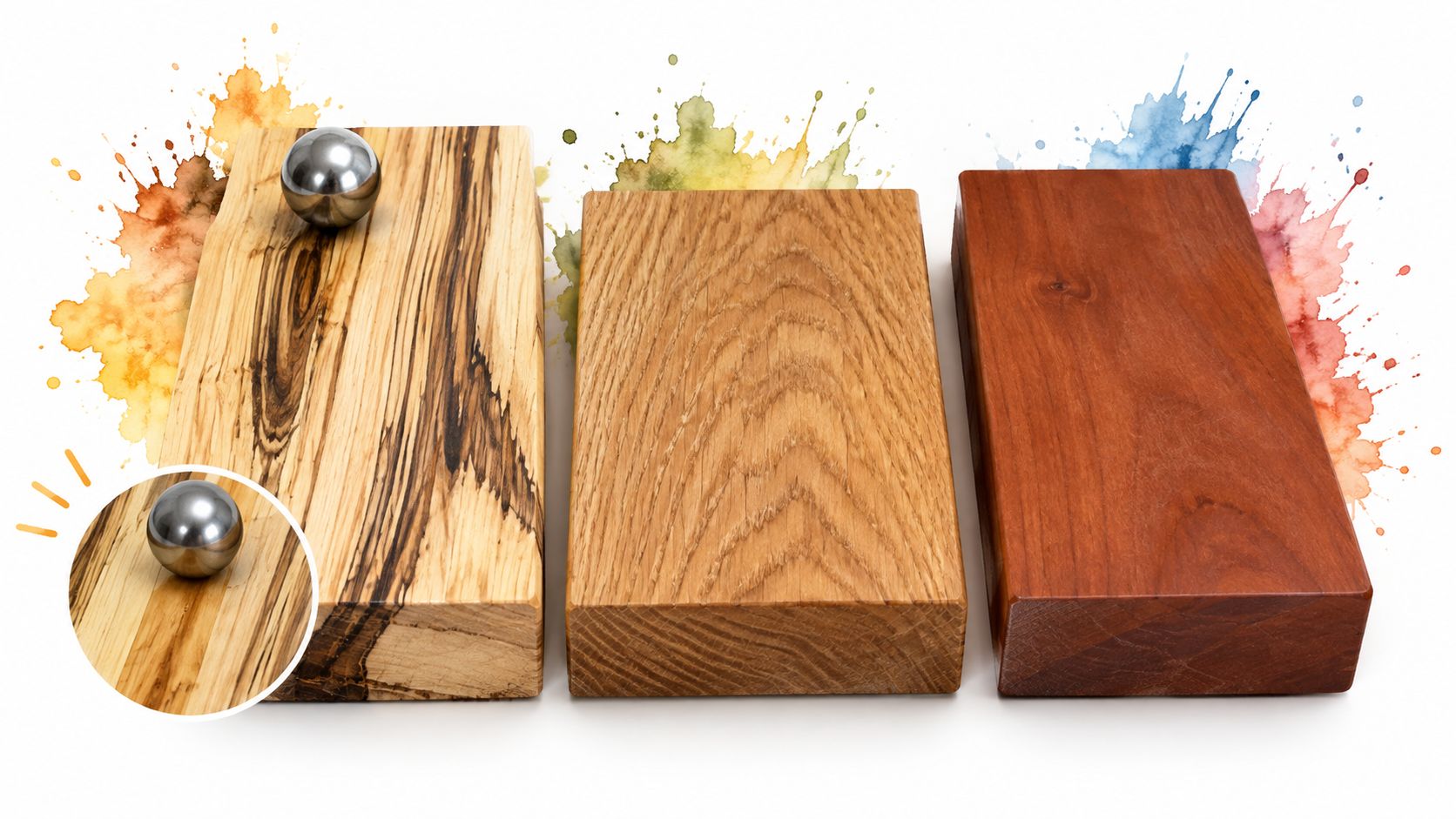
Why shock resistance matters at home
Hickory's traditional association with tool handles, ladder rungs, and Windsor chairs reflects how the wood handles impact. In furniture, that quality suits dining tables, benches, beds, and other pieces that face repeated contact or heavy use. A household with active children, frequent gatherings, or a preference for durable materials may appreciate hickory's structural confidence.
The wood isn't effortless in every setting. Hickory boards are heavier, which can make future rearranging more difficult. The grain can also compete with a quiet, minimalist décor, and the strong sapwood-to-heartwood contrast limits the range of finishes that look natural.
A clear finish can amplify the variation for a rustic result. A tinted finish can moderate the contrast, but it won't make every board uniform. Homeowners considering hardwood floors should also understand that species selection is only one part of long-term care, and guidance from Savera Wood Floor Refinishing 20748 can provide useful context about maintaining finished wood surfaces.
Hickory is the candid choice for buyers who want the furniture to show its construction and natural variation. It doesn't pretend to be quiet. It offers durability and character in equal measure.
Comparing Oak, Cherry, and Hickory Side by Side
A Bay Area dining table may face homework, dinner parties, and everyday spills in the same week. Set the three samples together, and their different home behaviors become easier to read. Red oak has an open, familiar grain and a practical daily-use feel. Black cherry looks smoother and more restrained, with color that develops over time. Hickory has the hardest surface here, along with the strongest visual contrast.
| Attribute | Red Oak | Black Cherry | Hickory |
|---|---|---|---|
| Janka hardness | About 1,290 lbf | About 950 lbf, hardness reference | Roughly 1,820 lbf, with hickory's strength and shock resistance described by the USDA Forest Service |
| Typical color | Pinkish tan to warm wheat | Light pinkish blonde, aging toward reddish mahogany | Pale sapwood beside reddish-brown heartwood |
| Grain character | Open, pronounced, often cathedral-patterned | Fine, closed, and comparatively smooth | Bold, contrasting, and highly variable |
| Relative service feel | Durable daily-use workhorse | Refined but more vulnerable to point dents | Very hard and resistant to impact |
| Strongest room fit | Dining rooms, libraries, bedrooms, storage | Formal dining, living rooms, bedrooms, offices | High-traffic dining, family rooms, benches, active households |
Reading the comparison correctly
Hardness is only one part of the decision. Red oak is softer than hickory, yet it is not fragile. It offers a dependable middle ground, broad stain flexibility, and a grain many homeowners can evaluate easily at the display table.
Cherry's lower hardness reflects a different priority. Its smoother grain and gradual color development suit statement case goods and rooms where visual refinement matters more than resistance to every dropped object.
Hickory leads on hardness and impact resistance, though its louder pattern will not suit every interior. Pale upholstery, subtle rugs, and a quiet room may pair more comfortably with cherry or restrained oak. A farmhouse, Craftsman, or busy family room can make better use of hickory's visual energy.
The choice becomes clearer when you match the wood to the household, not just to the sample's appearance.
Decision prompt: Which two factors matter most, resistance to dents, a quieter appearance, visible grain, color change, or stain flexibility?
That answer often narrows the field faster than ranking all three species. A tile that resembles hardwood can show why appearance alone does not answer questions about touch, aging, or construction. At Giorgi Bros., a custom order lets you discuss those priorities alongside the room, intended use, and preferred finish. A real wood sample remains the soundest basis for that decision.
Stains, Finishes, and Custom Order Options
Stain changes color. Finish protects the surface. Keeping those jobs separate makes the selection process much clearer.
Oak's open pores accept pigment, which helps produce an even result across a large tabletop. Cherry's tighter grain responds more gracefully to lighter, warmer tones, allowing the wood's natural color development to remain visible. Hickory presents a different challenge because its sapwood and heartwood begin with strong contrast before any stain is applied.
Matching the finish to the species
A clear coat on hickory can emphasize its rustic variation. A tinted finish can soften the difference between light and dark boards, although it won't erase the wood's underlying character. Cherry may need a finish plan that anticipates sunlight, because its appearance can become richer after installation.
Common finish systems serve different purposes:
- Catalyzed conversion varnish: A durable choice for many tables and frequently used surfaces.
- Hand-rubbed oil: A lower-sheen approach for case goods where tactile grain and a softer appearance matter.
- High-performance polyurethane: A protective option often considered for flooring and surfaces exposed to repeated wear.
Finish selection also affects sheen, cleaning feel, and how clearly the grain reads. The right choice depends on the piece, the room, and whether the homeowner wants a low-maintenance surface or a more tactile, natural presentation.
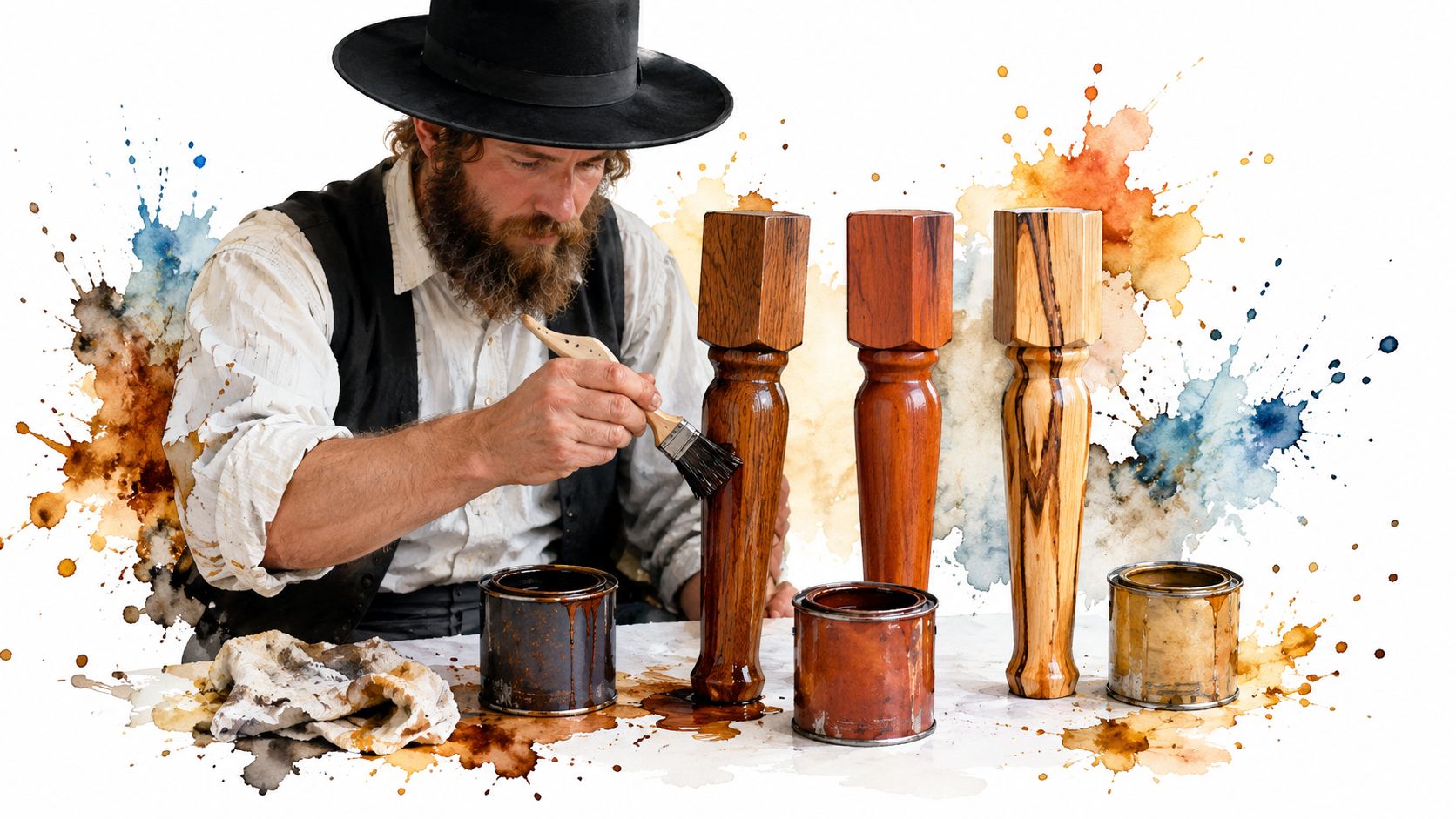
Turning a species choice into a custom piece
Amish furniture customization commonly includes wood species, stain, fabric, leather, and added features on the same order, as described by custom furniture design guidance. Buyers may also review mailed stain samples before committing, which is useful because a finish can look different on oak than on cherry or hickory.
Giorgi Bros. Furniture offers custom order services through which homeowners can coordinate species, stain, sheen, hardware, dimensions, fabrics, and leathers. The custom wood finishes process gives the design team a way to connect the finish with the intended room instead of treating it as a generic color choice.
A good consultation should address the entire surface system, not just the stain name. Ask how the finish will respond to dining use, window light, cleaning, and future touch-ups before the order is finalized.
Maintenance and the Buy It for Life Mindset
Solid hardwood furniture rewards consistent care, but each species has a different reason for needing attention. Oak benefits from protection against ordinary spills and abrasion. Hickory's hardness helps it resist dents, yet its finish still needs protection from moisture and grit. Cherry deserves special attention near bright windows because light contributes to its color development.
A Bay Area home should also avoid extreme indoor swings. A practical target for solid hardwood is 35% to 50% relative humidity, with the wood furniture protection guidance serving as a useful starting point for protecting surfaces and construction. A small hygrometer can show whether a room stays within that range instead of relying on comfort alone.
A manageable care routine
- Dust gently: Use a slightly damp microfiber cloth, then dry the surface rather than leaving moisture behind.
- Protect contact points: Coasters, felt pads, and soft barriers reduce concentrated wear from objects and accessories.
- Control sunlight: Rotate décor and avoid leaving one portion of a cherry surface exposed while another remains covered.
- Choose cleaners carefully: Hickory can be cleaned with mild soap and water, followed by thorough drying.
- Refresh thoughtfully: Cherry may benefit from paste wax every 12 to 18 months, provided the existing finish is compatible with waxing.
Direct sunlight matters for every wood finish, but cherry's visible darkening makes uneven exposure especially noticeable. A dining table near a bright window should receive consistent light across the top whenever possible.
Independent furniture guidance commonly places well-made solid hardwood pieces at 50 to 100 years or more with proper care, including tables, chairs, beds, and dressers, as summarized by durability guidance for Amish furniture. That doesn't mean every surface remains untouched. Refinishing, repairs, and careful use remain part of ownership.
Buy-it-for-life thinking works because the household keeps one well-built piece in service rather than replacing a disposable version repeatedly. It can reduce long-term replacement costs, conserve materials through extended use, and give the furniture a history that new products can't reproduce. Quality matters, but maintenance and room placement matter just as much.
Putting It All Together at the South San Francisco Showroom
A productive consultation starts before the homeowner enters the showroom. Room photographs, approximate dimensions, intended use, household composition, and a few style references help a design consultant distinguish between a formal cherry sideboard and a hard-working hickory dining table.
The team can then evaluate the practical combination:
- Room and routine: Identify traffic, sunlight, pets, children, entertaining, and expected surface contact.
- Species: Match the desired grain and hardness to the furniture's job.
- Finish: Compare stains and sheen on the actual wood, not only on a screen.
- Construction details: Review edge profiles, hardware, storage, extensions, chair design, and dimensions.
- Delivery planning: Walk through the custom-order process from specifications through delivery.
The custom-order timeline is typically discussed as roughly 8 to 12 weeks when the project is quoted, but the team should confirm the current schedule for the selected workshop and specifications. That conversation matters because custom work depends on more than the furniture category. Species, finish, construction, and delivery requirements can all affect the order.
Why physical samples matter
Cherry can deepen with light, and hickory can vary substantially from board to board. Photographs can't fully show those changes, the tactile difference between open and closed grain, or how a stain interacts with the species beneath it.
A showroom visit lets Bay Area homeowners compare samples under real lighting, sit at dining furniture, open drawers, test proportions, and consider the piece within a larger Bay Area interior design plan. Giorgi Bros. Furniture has served South San Francisco for more than 90 years, and its family-owned, non-commission environment is designed around guidance rather than pressure. The 50,000-square-foot showroom also supports broader whole-home planning, including living, bedroom, dining, office furnishings, and a dedicated sleep gallery with premium mattresses.
Flexible finishing options are available, and white-glove delivery is offered across much of the Western United States with location-based flat rates, while a nationwide carrier network supports areas outside the direct delivery zone. Those service details should complement the wood decision, not replace it. The right investment piece is the one that suits the room, the household, and the way the furniture will be used.
Visit Giorgi Bros. Furniture in South San Francisco to compare oak, cherry, and hickory samples with a non-commission Design Consultant. Bring room photos and measurements, schedule a Design Consultation, and take finish samples home before choosing a custom piece designed to serve the household for life.