
You've found a leather couch that looks inviting, but the showroom test leaves one question unresolved. It feels cool and supportive for a few minutes, yet daily life means movie nights, afternoon reading, guests, and long stretches of sitting. The honest answer to are leather couches comfortable is yes, provided the sofa's leather, cushions, suspension, proportions, and room conditions suit the people using it.
At Giorgi Bros. Furniture, a family-owned South San Francisco showroom with roots reaching back to 1933, design consultants focus on that complete experience rather than pushing a particular upholstery category. A quality sofa is an investment piece, and the most comfortable choice is the one that supports daily living for years, not merely the one that feels soft during a quick trial.
The Reality of Leather Couch Comfort
A shopper may sit on a leather sofa, lean back, and decide within seconds that it feels either wonderfully supportive or too firm. Both reactions can be accurate. Leather can provide a smooth, structured surface, but the full seating experience depends on what lies beneath it and how the sofa fits the body.
Leather seating has a long comfort-related history. Records indicate that leather chairs were used in ancient Egypt between 3100 and 2686 B.C., while the first recorded leather couch in Greece dates to the late 7th century B.C. By the 19th century, leather sofas had moved beyond elite households into middle-class homes, and by the 1960s, they had become a major style trend in modern interiors. The history of leather furniture shows why the material continues to attract homeowners who want lasting character as well as practical use.
The first sit test isn't enough
A sofa can feel plush at first touch yet create pressure at the lower back after an extended sitting session. Another can feel firm on day one but offer stable support, better posture, and a more satisfying break-in experience over time. That distinction matters for Bay Area homeowners furnishing a room used every day.
Comfort comes from several connected elements:
- Surface feel: Leather grain, finish, softness, and grip determine the first tactile impression.
- Microclimate: Breathability affects heat, perspiration, and stickiness between the body and seat.
- Suspension: The support system controls how evenly the sofa distributes weight.
- Cushion fill: Foam, down, feather, and blended constructions create different balances of softness and resilience.
- Ergonomics: Seat depth, seat height, back angle, and arm placement determine whether the sofa suits upright sitting or lounging.
Showroom rule: A leather couch should be tested in the position it will serve at home. Sit upright, lean back, stretch out, and remain seated long enough to notice pressure points.
The best recommendation isn't automatically the softest model. For many households, a well-constructed leather sofa with supportive cushions and a breathable finish offers comfort that remains dependable while the hide gradually develops its own character.
How Leather Types and Finishes Dictate Feel
Leather isn't a single comfort category. The hide's treatment and surface finish influence how it feels against the skin, how it responds to room temperature, and how effectively it manages moisture. A breathable aniline leather generally offers a more natural hand-feel, while finished and corrected-grain leathers use more surface treatment and may feel smoother, warmer, or less absorbent.
A study cited by a furniture retailer found that 65% of respondents said a sofa's texture and softness heavily influenced their perception of comfort. The relationship between leather surfaces and comfort also discusses quantitative visual-and-tactile testing in which the most comfortable sample outperformed the least comfortable sample. Grain, finishing, and hand-feel materially affect whether a leather couch feels inviting.

Breathability controls the seating microclimate
The core question is what happens after the initial touch. A peer-reviewed study of upholstered seats found that coated leather has much poorer water-vapor transport than fabric. Leather's water-vapor resistance measured about 19 times higher than fabric, and humidity at the seat interface remained uncomfortably high for more than 150 minutes after a sweat event. The upholstered-seat water-vapor study explains why smooth leather can feel sticky during warm rooms or long sitting sessions.
That doesn't mean every leather sofa becomes hot. Perforation, lighter surface finishes, and higher-breathability constructions can help moisture dissipate and support evaporative cooling. Room airflow, clothing, body temperature, and sunlight also shape the experience.
Match the finish to the household
Finished and corrected-grain leathers generally breathe and absorb moisture less readily than aniline leather. They can offer practical surface protection, but they may feel warmer and less forgiving during extended use. Aniline leather tends to preserve more of the hide's natural character and tactile openness, although it requires a household comfortable with visible variation and careful care.
A thermal-contact study found that as relative moisture increased, thermal resistance dropped rapidly and the sensation of coolness intensified, making leather feel less comfortable in damp conditions. The thermal properties of upholstered leather furniture supports a practical conclusion: comfort depends on the leather's moisture state and finish, not on whether the sofa is leather.
For a custom order, shoppers should ask about:
- Surface finish: Matte, lightly finished, or heavily protected.
- Breathability: How the leather handles heat and moisture during extended use.
- Hand-feel: Smooth, supple, textured, or more structured.
- Lifestyle fit: Whether the household values natural character or easier surface protection.
Giorgi Bros. Furniture offers a guide to leather grades so shoppers can compare material choices before selecting a custom sofa.
The Hidden Engineering of Suspension and Fill
Leather gets the visual attention, but the sofa's internal architecture determines whether the body feels supported after the novelty wears off. A beautiful hide can't compensate for weak suspension, an underbuilt frame, or cushions that collapse beneath normal use.
Start with the frame and suspension
A dependable sofa begins with a rigid, properly joined frame. The frame should hold the seating geometry steady so the cushions don't carry more structural responsibility than they should. Suspension then distributes weight across the seat rather than allowing pressure to concentrate in isolated areas.
Mass-produced sofas often rely on basic webbing. That construction can feel acceptable initially, but the seating experience may change as the support stretches. Premium sofas may use more durable spring systems, including eight-way hand-tied springs, which connect the springs in multiple directions to create a more controlled, supportive platform.
The goal isn't to choose a particular construction because it sounds impressive. The goal is consistent support. A well-designed suspension system helps the sofa resist premature sagging and gives the cushions a stable base.
Design expert guidance: Ask what supports the seat, not just what covers it. A consultant should be able to explain the frame, suspension, cushion core, and intended seating posture.
Cushion fill sets the balance
High-density foam cores wrapped in down or feather blends can combine structure with a softer surface. Foam supplies resilience and shape retention, while the wrap creates a more relaxed, luxurious feel. Other constructions may use firmer foam, fiber, or different down-and-feather proportions.
The right fill depends on how the sofa will be used:
- For upright daily sitting, choose a cushion that supports the hips without allowing the body to sink too far.
- For lounging, consider a softer crown and enough seat depth to let the legs extend comfortably.
- For frequent entertaining, look for cushions that recover their shape and don't require constant rearranging.
- For a formal room, a more fitted cushion may preserve a neater appearance while still providing support.
Seat depth and back angle deserve equal attention. A deep sofa can feel wonderful for curling up but leave shorter users without proper foot contact. A shallower seat may encourage upright posture, while a taller or angled back can provide better support during long sitting.
A custom upholstered sofa allows these decisions to be coordinated rather than treated as separate details. Giorgi Bros. Furniture provides custom upholstered sofa options for shoppers who want the leather, dimensions, cushion feel, and finish selected as one complete seating solution.
Embracing the Break-In Period for Custom Fit
A premium leather couch shouldn't always feel perfectly relaxed on delivery day. Initial firmness can signal that the materials still have resilience, particularly when the sofa uses durable leather and substantial cushion construction. Expecting a new investment piece to feel like a decades-old favorite immediately can lead shoppers to mistake quality for stiffness.
Leather gradually adjusts and molds to the body's shape. Depending on the hide, cushion construction, and regularity of use, the softening timeline can range from several weeks to several months. Many premium pieces reach noticeable suppleness in about three to six months of regular use, according to guidance on leather couch softening.
Firmness can be part of durability
An overly soft sofa may feel comfortable in a short showroom test because the body sinks quickly. That sensation isn't always a sign of long-term support. A more resilient cushion can initially feel structured, then become more accommodating as the materials respond to regular seating.
The break-in process has two parts:
- The leather relaxes: The hide becomes more supple as it responds to movement and contact.
- The cushions settle: The fill develops a more lived-in feel, especially when cushions are rotated or fluffed as directed.
- The body adapts: Users learn the sofa's natural support pattern and settle into the positions that fit its proportions.
- The surface gains character: Natural variation and gradual softening can make the sofa feel more personal rather than factory-perfect.
This is the buy-it-for-life mentality in practice. A sofa chosen for durable construction can become more comfortable with use instead of being replaced when a short-lived piece loses its shape. The long-term value isn't just financial. Keeping a quality frame and upholstery in service also reduces the waste associated with repeatedly replacing furniture.
Judge the starting point carefully
Break-in doesn't repair poor design. If the seat forces the knees too high, the back leaves a gap, or the cushion bottoms out, regular use won't solve the underlying problem. A new sofa should feel supportive and correctly proportioned even if the leather and cushions remain firmer than they will later.
The right question is whether the couch offers a sound foundation for softening. If it does, initial firmness can be a benefit rather than a flaw.
Weighing the Pros and Cons of Leather Seating
Leather and fabric create different daily experiences. Leather usually feels more structured and polished, while fabric often offers a softer, warmer first impression. Neither material guarantees comfort because both depend on cushion quality, suspension, proportions, and the way the room is used.
Leather can suit households that want a surface that is straightforward to wipe after ordinary spills and less likely to hold loose pet hair in textile fibers. It also develops a distinct visual character over time. Fabric offers broader tactile variety, including nubby, woven, plush, and performance-oriented surfaces that may feel more consistent across changing room temperatures.
A practical comparison
| Feature | Premium Leather | High-End Fabric |
|---|---|---|
| First-touch feel | Smooth, structured, and influenced by finish | Often softer and more textile-like |
| Temperature response | More sensitive to room conditions and moisture | Usually offers a steadier textile surface |
| Moisture management | Depends strongly on leather type and finish | Generally offers better water-vapor transport than coated leather |
| Daily maintenance | Surface spills and loose hair can be easier to manage | Cleaning depends on the weave, finish, and care instructions |
| Visual aging | Can develop patina and character | Can preserve color and texture when properly maintained |
| Design expression | Ranges from tailored to relaxed through grain and finish | Offers extensive color, pattern, and texture choices |
| Lifestyle fit | Strong for structured support and a polished room | Strong for softness, warmth, and textile variety |
Where leather works best
Leather is a sensible choice for a living room that needs to look composed while handling regular use. It can support a refined Bay Area Interior Design plan, particularly when paired with natural wood, custom upholstery, or relaxed architectural forms. The material also works well for households that prefer a couch with a firmer, more defined seat rather than a deep, sink-in feel.
The drawbacks deserve equal attention. Smooth finished leather may feel warm or sticky in humid conditions, and a leather sofa placed in direct sunlight can age unevenly. Leather also requires appropriate conditioning and thoughtful placement if the goal is to preserve suppleness.
For homes with children or pets, the decision should reflect the specific finish and care expectations, not a blanket assumption that leather is automatically indestructible. Pet-friendly furniture fabrics can help shoppers compare textile alternatives when a fabric surface better matches the household.
Lifestyle test: Choose leather for structured, lasting comfort. Choose fabric when first-touch softness, warmth, and textile texture matter more than a tailored surface.
Non-Commission Sales Staff can make this comparison more useful because the conversation can stay focused on the room, habits, and long-term satisfaction rather than a commission-driven material preference.
Maintenance Practices That Preserve Suppleness
Leather comfort changes when the hide loses its natural oils. Heat, sunlight, unsuitable cleaners, and neglect can leave the surface dry and stiff, which affects both appearance and tactile quality. Maintenance isn't complicated, but it must be consistent.
Protect the sofa's position
Keep a leather investment piece away from direct sunlight whenever possible. Furniture-care guidance recommends keeping leather at least 2 feet from heat sources, because excessive heat can dry natural oils and contribute to stiffness and cracking over time. Furniture care and maintenance guidance supports this simple placement rule.
A practical care routine includes:
- Control sunlight: Use the room's layout to reduce prolonged exposure to strong UV rays.
- Create distance from heat: Keep the sofa clear of heaters, vents, fireplaces, and other concentrated heat sources.
- Dust gently: Remove surface dust with a soft cloth or the method recommended for the specific finish.
- Clean deliberately: Use a leather cleaner intended for that upholstery type, and test any unfamiliar product in an inconspicuous area.
- Condition appropriately: Apply conditioner according to the manufacturer's guidance rather than coating the hide excessively.
- Respond to spills promptly: Blot instead of rubbing, then follow the care instructions for the leather finish.
Match care to the finish
Aniline, semi-aniline, corrected-grain, and protected leathers don't respond identically to cleaning products. A conditioner suitable for one finish may darken or alter another. The care label and upholstery maker's instructions should take precedence over generic household advice.
Giorgi Bros. Furniture maintains a resource on leather sofa cleaner and conditioner to help owners select care products with the upholstery finish in mind. For ingrained soil, unfamiliar marks, or a valuable investment piece that needs specialized attention, vet leather cleaning experts can provide a useful professional resource.
Regular care protects more than the hide's appearance. Supple leather flexes more naturally, feels less rigid against the body, and remains better suited to the cushion and suspension system beneath it. A small amount of attention can extend the useful life of a sofa and support the cost savings that come from keeping quality furniture rather than replacing it.
Choosing the Right Leather Sofa for Your Home
The right leather sofa should pass three tests: it must feel comfortable in the positions the household uses, fit the room's proportions, and offer materials that can be maintained for the long term. A showroom test should include upright sitting, relaxed lounging, and a full-body stretch. Feet should find a natural position, the lower back should feel supported, and the arms shouldn't force the shoulders upward.
Use a clear buying sequence
Begin with the body, not the color. Seat height and depth determine whether the sofa supports upright conversation or encourages lounging. Cushion firmness reveals whether the body rests on stable support or sinks into the frame. The back angle and height then determine whether the sofa works for reading, television, conversation, or occasional naps.
Next, evaluate the upholstery sample in the same way the sofa will be used. Touch the grain, compare matte and smoother finishes, and ask how the leather manages warmth and moisture. Custom Furniture services make it possible to coordinate fabrics, leathers, wood species, and finishes rather than settling for whatever happens to be on the floor.
Giorgi Bros. Furniture serves the South San Francisco market with a 50,000-square-foot showroom where shoppers can touch, feel, and test investment pieces in person. The ultimate sofa buying guide can help organize measurements, seating preferences, and room planning before a visit.
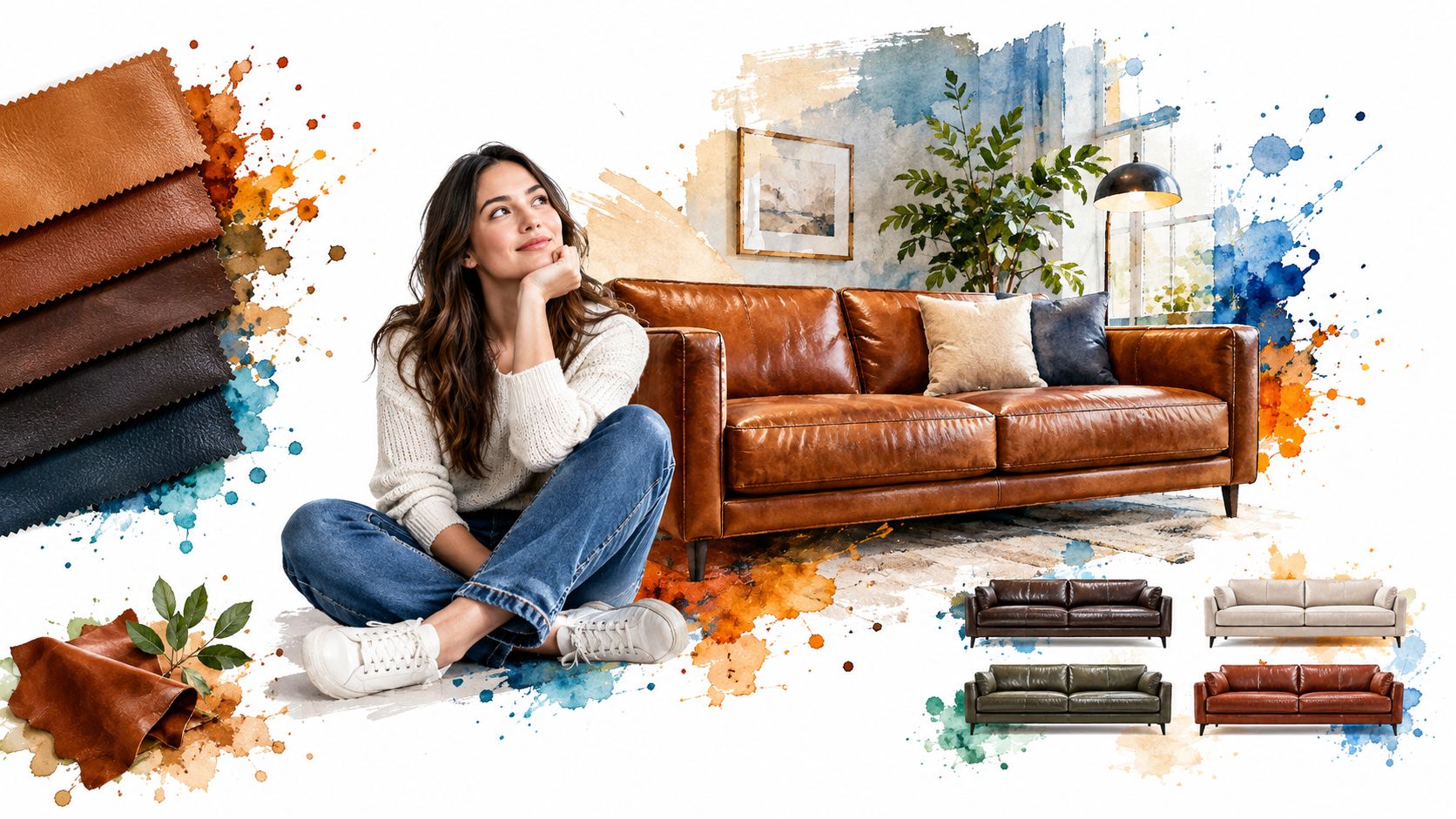
A custom order is especially valuable when the household needs a specific seat depth, leather hand-feel, wood finish, or cushion profile. Giorgi Bros. Furniture also offers full-service design support, Amish Furniture, Premium Mattresses, and flexible financing options, giving Bay Area homeowners a way to coordinate a broader furnishing plan without treating each purchase as an isolated decision.
For buyers who value longevity, the strongest choice is rarely the fastest or softest option. It's the sofa with sound construction, appropriate breathability, supportive suspension, and a finish that can age gracefully in the intended room.
Giorgi Bros. Furniture offers custom leather sofas, a selection of fabrics, wood species and finishes, non-commission design guidance, and white-glove delivery from its South San Francisco showroom. Visit Giorgi Bros. Furniture to test leather seating in person or book a no-pressure Design Consultation for a lifetime investment piece that fits the way the home is lived in.