
A sofa can look perfect in a showroom, then feel less convincing after a few years of family use. Cushion edges soften, arms show wear, and the original finish may no longer suit the room. That moment often reveals decision behind a purchase: not which color looks right today, but whether the furniture can remain useful, comfortable, and attractive for decades.
American made leather furniture deserves a closer look because its value depends on more than a country-of-origin label. Leather grade, frame construction, stitching, suspension, wood selection, finish, and maintenance all affect how an investment piece performs. A well-chosen piece can support a buy-it-for-life approach, reducing the need for repeated replacements, deliveries, and disposal.
For Bay Area homeowners, the choice also includes how much guidance feels appropriate. A family-owned, non-commission showroom can make room for questions without turning the visit into a race to close a sale. Since 1933, Giorgi Bros. Furniture has served South San Francisco with that practical, no-pressure spirit, helping customers compare materials, configurations, and custom options.
A useful starting point is this guide to choosing leather furniture, especially for shoppers comparing softness, protection, color, and everyday use. The right process begins with understanding what “American made” means, then moves through leather grades, construction, origin verification, customization, and care.
Introduction to American Made Leather Furniture and Why It Matters Today
A living room usually has to do several jobs at once. It may be the place where a child reads, a dog naps, guests gather, and someone watches a film at the end of a long day. A leather sofa chosen only for its appearance can struggle under that routine. A sofa chosen for its materials and construction has a better chance of becoming part of the home's story.
That's the appeal of American made leather furniture. The strongest pieces combine durable upholstery, carefully selected frames, thoughtful proportions, and repairable construction. They're not disposable purchases. They're investment pieces intended to serve the household for a long time, with comfort and appearance that can mature rather than decline.
The market provides context for that decision. The U.S. leather furniture market was estimated at USD 3,300.4 million in 2022 and is projected to reach USD 4,769.3 million by 2030, implying a 4.7% CAGR from 2023 to 2030, according to Data Bridge Market Research's U.S. leather furniture market overview. Leather furniture was identified as both the largest revenue-generating type in 2022 and the fastest-growing segment over the forecast period.
Buying for life instead of replacing by habit
That growth doesn't make every leather sofa a wise purchase. It does show that leather furniture is a substantial, expanding part of the American home-furnishings market. Buyers still need to distinguish a durable, well-built frame from a piece that merely carries a premium appearance.
The sustainability argument is practical. Furniture that remains serviceable for decades can reduce the number of replacement purchases and the manufacturing, shipping, and disposal cycles attached to them. A higher initial price may make sense when it supports longer use, easier maintenance, and the possibility of repair.
A useful question: Will this piece still make sense for the household after the room, lifestyle, or decorating preference changes?
Giorgi Bros. Furniture approaches that question through no-pressure guidance. Its family-owned showroom serves Bay Area homeowners with non-commission Consultants and Design Experts who can explain tradeoffs without steering a customer toward the most expensive option. That matters because lifetime value comes from choosing the right construction for the home, not from choosing a label alone.
What American Made Really Means for Leather Furniture
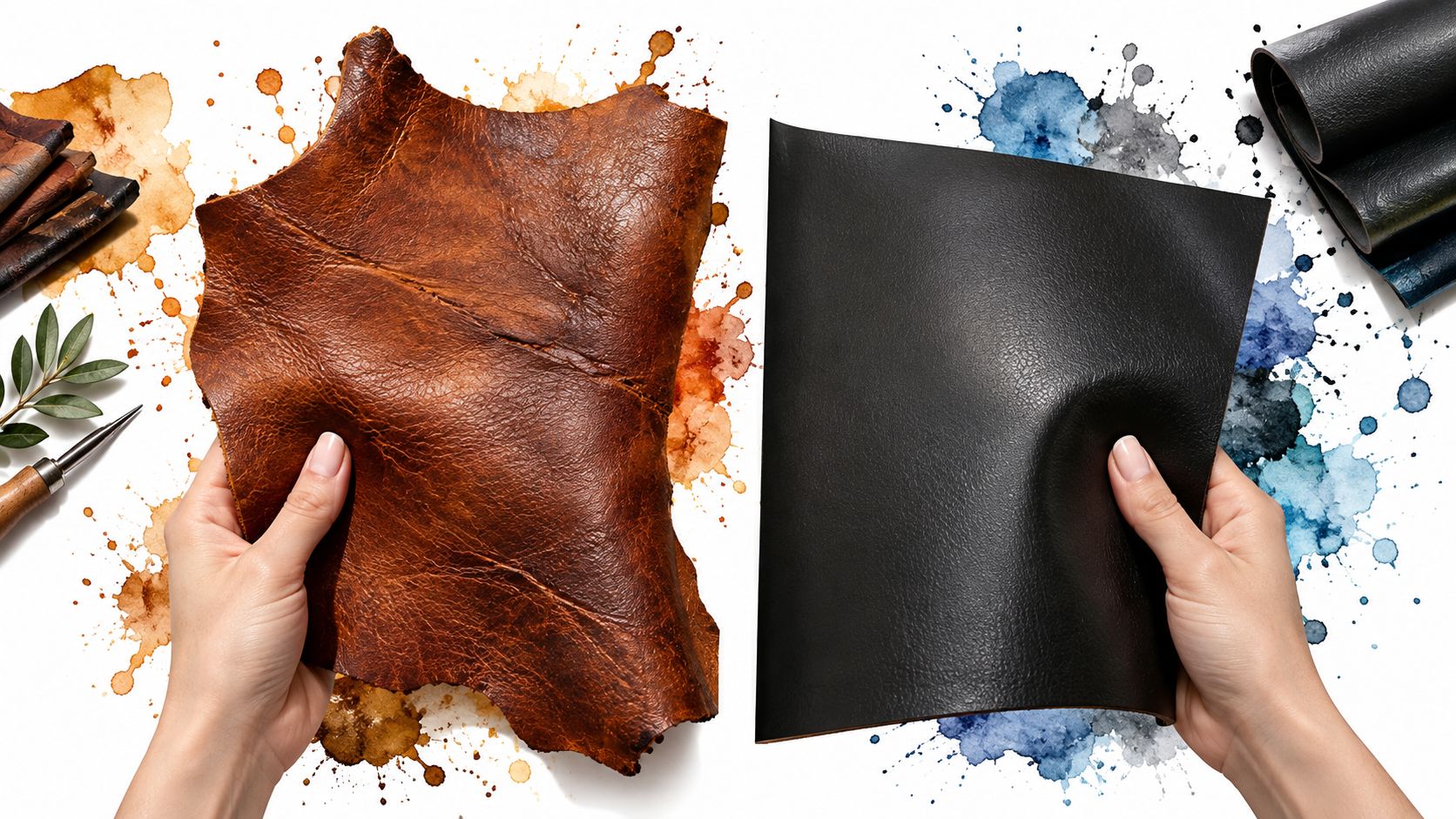
“American made” can describe where a product was substantially manufactured, but it doesn't automatically answer every sourcing question. Leather furniture can involve hides, tanning, frames, foam, suspension components, cutting, sewing, finishing, and final assembly. Some or all of those stages may involve different locations.
A simple analogy helps. A recipe lists its ingredients, while the kitchen determines where the meal is prepared. Furniture origin works similarly. A sofa may be designed, cut, sewn, or assembled in the United States while some materials come from elsewhere. That doesn't make the sofa deceptive, but it does mean shoppers should ask what the label covers.
The parts of the supply chain worth checking
Neutral industry commentary has pointed to sourcing transparency as an urgent need in the U.S. leather and hide industry. The same issue applies to furniture shoppers because the badge alone may not explain the origin of the hide, frame, cutting, sewing, or assembly. This discussion of leather furniture made in the USA is useful background for understanding why traceability deserves direct questions.
A practical origin review should separate the following stages:
- Leather sourcing: Ask where the hide originated and where it was tanned or finished.
- Frame production: Find out whether the frame was built domestically and which material it uses.
- Upholstery work: Confirm where cutting, stitching, cushioning, and upholstery took place.
- Final assembly: Ask where the completed furniture was assembled and inspected.
- Documentation: Request clear product information rather than relying only on a display card.
The goal isn't to demand that every component come from one country. The goal is to understand the actual supply chain so the buyer can evaluate craftsmanship, accountability, and expected service life with open eyes.
Why origin affects the buying experience
Domestic production can give manufacturers closer control over design changes, upholstery details, and communication. It can also support shorter, more understandable supply chains, although no origin label should be treated as a guarantee of superior construction by itself.
The American-made living room furniture collection offers a helpful starting point for shoppers who want to compare domestically made seating and ask detailed questions about materials and construction. A knowledgeable Consultant should be able to explain what is known, what varies by collection, and which specifications appear in the written product information.
How Leather Grades and Construction Determine Lifetime Value
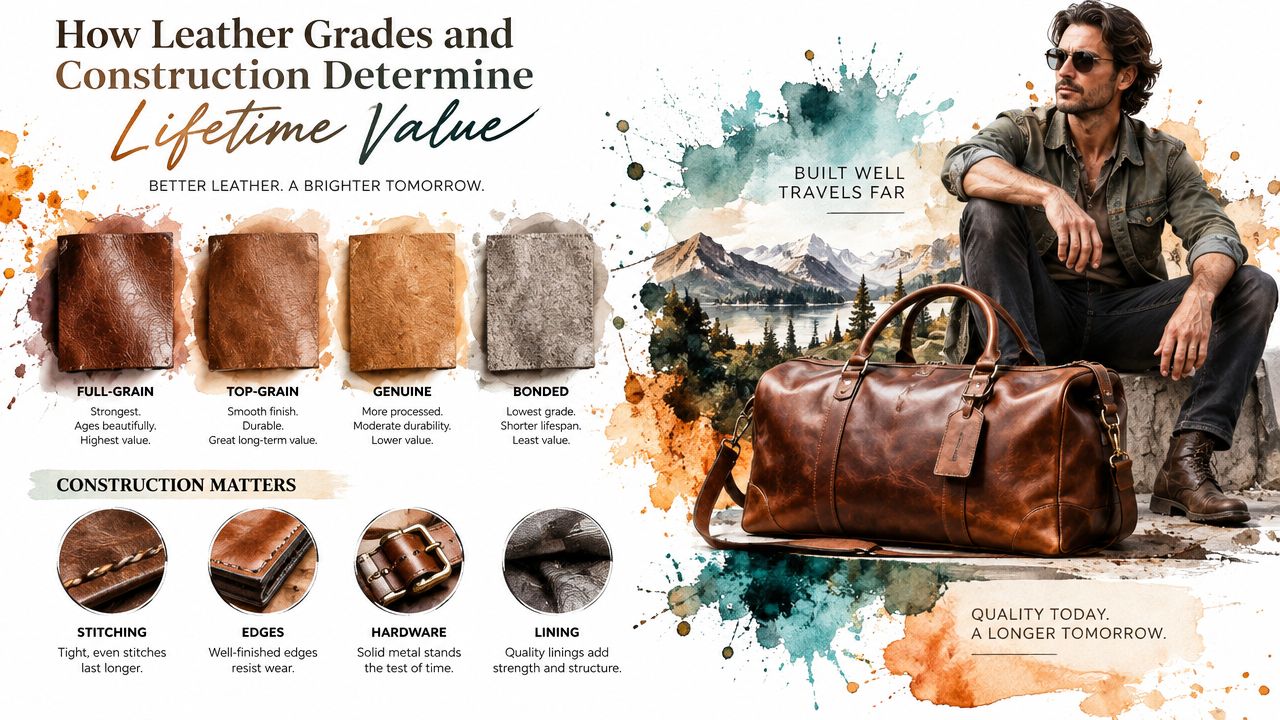
Leather quality starts with the portion of the hide used and how much of its natural structure remains. Full-grain leather retains the most natural grain. Top-grain leather has been lightly corrected for consistency while preserving a strong surface. Split leather comes from a lower layer of the hide, while bonded leather combines leather fibers with other materials and a surface coating.
These categories aren't interchangeable. Expert leather guidance cites full-grain lifespans of roughly 25 to 50+ years with proper maintenance and top-grain lifespans of around 15 to 25 years, as explained in this leather grade guide. Actual performance still depends on construction, use, sunlight, spills, and care.
Comparing grades in practical terms
| Leather Grade | Expected Lifespan | Abrasion Resistance | Best For |
|---|---|---|---|
| Full-grain | Roughly 25 to 50+ years with proper care | Often selected for strong natural structure and long-term use | Buyers prioritizing longevity and natural character |
| Top-grain | Around 15 to 25 years with proper care | Commonly chosen for a balance of durability and consistency | Active households seeking refined everyday seating |
| Split | Varies by finish and construction | Requires closer review of the protective surface | Budget-conscious choices where expectations are clearly understood |
| Bonded | Varies and may be shorter than higher-grade options | Surface coating can determine how wear appears | Occasional-use furniture with carefully managed expectations |
Abrasion testing adds another useful checkpoint. Upholstery leather may be tested with methods such as Wyzenbeek and Martindale. High-performing residential leather commonly reaches about 15,000 to 30,000 double rubs, while heavier-duty leather can exceed 30,000 double rubs, according to the International Leather Club's rub-rating explanation. These figures help indicate resistance to repeated seat and armrest wear, but they don't predict every aspect of comfort, fading, scratching, or finish performance.
Match protection to the household
A home with pets may need a finish that handles regular contact and practical cleaning. A busy family room may benefit from a more protective leather tier. A bright room may require a conversation about sunlight exposure, placement, and color stability.
Practical rule: Abrasion resistance is one signal, not the entire quality decision. Grain, frame, suspension, stitching, and care instructions belong in the same conversation.
The most durable leather still needs suitable construction beneath it. Stable frames, properly supported cushions, secure stitching, and serviceable mechanisms help keep the upholstery from carrying the entire burden of daily use. That combination supports lower long-term ownership costs because the buyer isn't replacing an entire piece when a weaker component fails early.
Why Craftsmanship and Domestic Production Stand Out in an Import Heavy Market
American furniture makers compete in a market with deep international sourcing. U.S. leather imports reached USD 955 million in 1995, up from USD 583 million in 1991. During that same period, upholstery leather imports rose by more than 200% and totaled USD 372 million in 1995, equal to 47% of the value of U.S. cattlehide leather imports and 39% of all U.S. leather imports, according to U.S. leather furniture market background from 6Wresearch.
More recent furniture shipment data shows the continuing import exposure. In the trailing twelve months from November 2023 through October 2024, U.S. leather furniture import data recorded 2,231 shipments, supplied by 417 foreign exporters to 401 U.S. buyers. China, Vietnam, and India together accounted for 74% of those shipments, as reported in the same 6Wresearch market overview. This context explains why domestic furniture typically differentiates itself through control, customization, service, and construction rather than volume.
What craftsmanship changes for the homeowner
A solid hardwood frame, carefully fitted upholstery, aligned seams, and properly supported cushions affect more than appearance. They can improve stability, preserve comfort, and make future service more practical. A manufacturer that controls more of the process can also respond more directly to design requirements and material questions.
Domestic production doesn't guarantee that every piece is perfect. It does give shoppers a stronger reason to ask who built the frame, where upholstery work occurred, and how the manufacturer handles quality checks and service.
Giorgi Bros. Furniture has served South San Francisco for 90+ years, since 1933. Its 50,000 square foot showroom gives Bay Area shoppers a place to sit on furniture, inspect seams, compare leather textures, and test comfort before committing to a custom order or floor model.
Touch remains part of the research
Online images can't show how a cushion responds under weight or how a leather finish feels against the hand. In a showroom, a shopper can check whether the seat feels supportive, whether arms return to shape, and whether the proportions fit the room.
The American-made furniture brands collection can help organize a showroom visit around construction, customization, and intended use. The best conversation focuses on evidence. A Consultant should explain the materials and options clearly, not turn the visit into a commission-driven presentation.
How to Verify Origin and Quality Before You Buy
A showroom visit becomes more useful when the questions are prepared in advance. The buyer doesn't need to speak like an upholsterer. A short, direct conversation can reveal whether a piece fits the home and whether its American-made claim has meaningful detail behind it.
Start with the frame and suspension
Ask what the frame is made from, how it is joined, and whether the manufacturer provides service information. Then ask about suspension and cushion construction. A comfortable seat can feel impressive for a few minutes, but the underlying support determines how it behaves through regular use.
Check the frame by pressing gently against the arms and back. Excessive movement may deserve further explanation. Sit in the normal position, not only on the edge, and notice whether the cushion supports the hips and lower back.
Inspect the leather and upholstery details
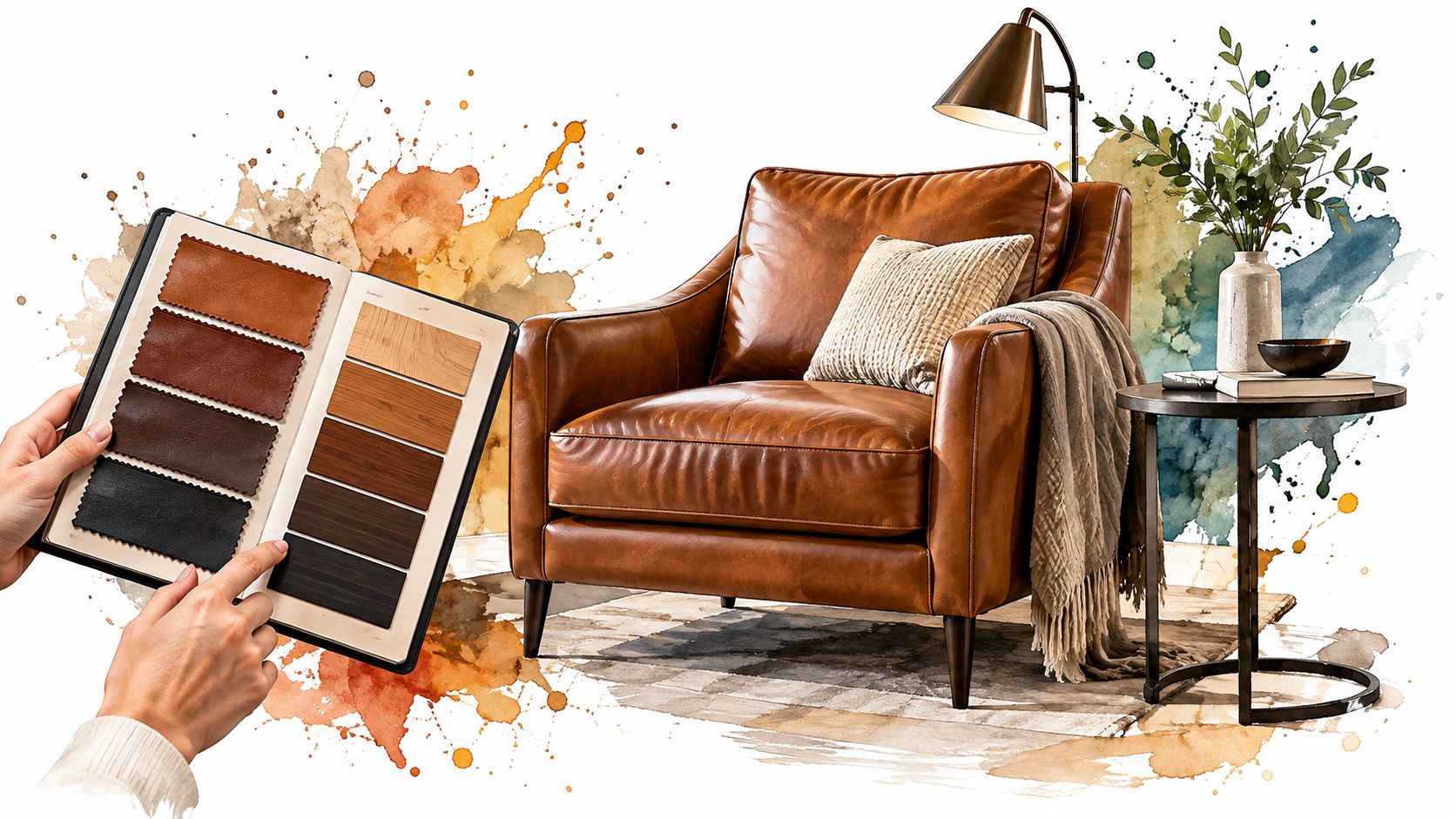
Run a hand across the leather and compare samples under the showroom lighting. Look for consistent stitching, clean seam alignment, secure welt details, and an upholstery fit that doesn't appear strained.
These questions can keep the discussion practical:
- Origin: Which stages happened in the United States?
- Grade: Is the upholstery full-grain, top-grain, split, bonded, or a combination?
- Protection: Which protection tier suits children, pets, heavy use, or sunlight?
- Care: Which products are approved, and which should be avoided?
- Service: What does the warranty cover, and who handles repair questions?
A broader origin-checking mindset can help with any purchase. The guide to Australian made products offers useful context on how shoppers can examine country-of-origin claims instead of treating a badge as a complete supply-chain explanation.
Let the Consultant translate the details
Giorgi Bros. Furniture uses non-commission Consultants and Design Experts to help customers compare options without pressure. That model supports better decisions because the conversation can stay focused on room dimensions, habits, comfort, maintenance, and budget.
A warranty matters, but it shouldn't replace inspection. Written coverage can clarify responsibilities, while hands-on testing reveals whether the furniture feels right for the people who'll use it.
Customization Options That Make Your Piece Truly Yours
Custom furniture changes the question from “Which sofa is available?” to “Which piece fits this room and routine?” Leather color is only one part of the decision. A custom order may involve the upholstery grade, cushion feel, dimensions, wood species, leg style, stitching, and finish.
That flexibility has practical value. A sectional can be configured around a room's circulation, while a chair can be sized for a particular reading corner. A dining table can be matched to the household's tolerance for dents, visible grain, and finish maintenance.

Wood species affect performance and appearance
Common custom options include oak, walnut, ash, acacia, rubberwood, pine, teak, cherry, and maple. Hardness offers one measurable way to compare them. A buyer's guide lists white oak at 1,360 lbf, walnut at 1,010 lbf, hard maple at 1,450 lbf, cherry at 950 lbf, and teak at 1,155 lbf on the Janka hardness scale, as detailed in this custom-furniture durability guide.
White oak and hard maple can suit tables and structural pieces that face frequent contact because they combine useful hardness with compatibility for oil and stain finishes. Walnut, cherry, and teak may appeal to buyers who place greater weight on grain character, color, or a particular design language.
Finishes create maintenance tradeoffs
Finish selection affects how the surface looks, feels, and resists daily use. Custom furniture sources identify options such as natural oil, lacquer, stain, distressed, hand-rubbed, and wax. Oil finishes can emphasize natural texture but may need reapplication every 1 to 3 years on a dining table, while lacquer and conversion varnish create a harder protective film, according to this guide to furniture durability and finishes.
The choice should follow the room:
- A busy dining area may benefit from a harder surface film.
- A quiet study may suit a hand-rubbed finish that emphasizes touch and grain.
- A household seeking easy visual continuity may prefer a consistent stain.
- A buyer comfortable with periodic upkeep may choose an oil finish for its natural appearance.
Leather customization follows the same principle. A soft, natural surface may develop character beautifully, while a protected finish may make more sense for frequent spills, pets, or intense daily traffic.
The custom furniture design service connects these decisions to the complete room. Full-service interior design support can help coordinate leather, wood, finishes, flooring, color, and scale so the final piece functions as part of the home rather than as an isolated purchase.
Caring for Your Investment and Visiting the South San Francisco Showroom
Good care starts with restraint. Leather usually benefits from regular dust removal with a soft cloth and from protection against direct, prolonged sunlight or nearby heat. Spills should be addressed promptly according to the manufacturer's instructions, rather than scrubbed aggressively.
Common household cleaners can damage leather finishes, so buyers should avoid unapproved products and test any recommended cleaner in an inconspicuous area. For stubborn stains, professional cleaning is the safer choice. The Eco Clean Solutions furniture care guide provides additional practical guidance for cleaning and maintaining leather furniture.
Protect the frame and finish as well
Wood needs attention, too. Use coasters and protective pads where appropriate, keep standing moisture away from finished surfaces, and follow the maker's instructions for oil, wax, lacquer, or other treatments. Avoid placing heavy objects in ways that create uneven stress, especially on tables and shelves.
Solid wood is often treated as a long-term purchase. One industry guide says solid wood furniture typically lasts 20 to 50+ years with basic care, while high-quality solid hardwood can last 100 years or more when properly maintained, according to this solid-wood longevity guide. The exact result depends on construction, environment, use, and repair.
Longevity supports sustainable value
Sustainable furniture buying isn't limited to recycled content. Repair, resale, durability, and longer service life also matter. A sustainability-focused review explains that quality furniture can be a sustainable choice because it often lasts longer and can be repaired or resold, while certain ecolabels test furniture for durability, safety, and quality to support a long life, as described in this guide to enduring furniture.
That's the buy-it-for-life logic in plain terms. A piece that remains useful avoids repeated replacement costs and reduces the number of manufacturing, shipping, and disposal cycles attached to the household.
Giorgi Bros. Furniture offers American-made leather seating, custom leather and fabric orders, wood species and finish selections, Amish Furniture, full-service Bay Area Interior Design, Premium Mattresses, and white-glove delivery priced by location rather than per piece. Visit Giorgi Bros. Furniture in South San Francisco to test investment pieces in person, or book a Design Consultation with non-commission experts, with flexible financing options available.