
A leather sofa can look perfect under showroom lighting and still be wrong for a Bay Area home. The test starts when it meets a narrow bungalow entry, a west-facing window, a shedding dog, children with wet hands, or a family that spends every evening stretched across the cushions. Learning how to choose leather furniture means judging the hide, finish, frame, comfort, proportions, care requirements, and long-term value together.
That process works best without pressure. A family-owned showroom with more than 90 years of history in South San Francisco can offer something a quick online purchase can't: a place to sit, inspect materials, compare construction, and ask direct questions before committing. Quality furniture is an investment piece, and the right choice can support comfort, design flexibility, and buy-it-for-life ownership.
Walking Into the Showroom With a Clear Plan
A shopper can walk into a showroom surrounded by brown, black, caramel, gray, and distressed leather, then forget the most important question: where will the furniture go? A sofa that feels generous in a large display room may block a hallway at home. A beautiful finish can look harsh beside existing wood, and a deep chaise can consume the traffic path through an open-concept room.
The strongest showroom visits begin before the front door. A shopper should bring:
- A room sketch: Mark wall lengths, windows, doors, stairs, vents, and the direction of foot traffic.
- Access measurements: Record door widths, hallway turns, ceiling height, elevator dimensions, and any tight landing.
- Room photographs: Include wide views and close-ups of existing wood species, flooring, rugs, wall colors, and fabric tones.
- Sun notes: Identify direct afternoon light, especially through west-facing windows.
- Household details: Note the number of residents, pets, children, guests, and the people who use the sofa most.
- Use notes: Separate daily lounging, reading, entertaining, movie nights, naps, and occasional seating.
Those details change the recommendation. A pet that climbs onto the arm creates different demands from a dog that stays on the floor. A compact den needs different proportions from a family room connected to a kitchen. A sofa placed beside bright glass needs a different finish strategy from one in a shaded interior.
Practical rule: A showroom visit is research, not a commitment.
Three tangible takeaways keep the visit productive:
- A printed room sketch with maximum sofa dimensions and delivery access.
- A priority list ranked by comfort, size, durability, and style.
- A budget ceiling that includes delivery, setup, protection, and related pieces.
A non-commission consultant can then evaluate the choices against the household rather than pushing a particular floor model. That no-pressure guidance matters because leather selection only makes sense after the buyer understands the piece's hide, construction, comfort, and care demands.
Understanding Leather Types and Finishes
At a Bay Area showroom, leather should be chosen against the room and the household, not by grade name alone. Separate hide construction, which describes the part of the hide retained, from surface finish, which describes how the leather is dyed and protected. That distinction shows whether a sofa can handle pets, daily lounging, bright windows, and the maintenance the household will provide.
Start with the hide category
Full-grain leather retains the hide's intact outer surface. Natural markings stay visible, and the material keeps its strongest fibers. Full-grain aniline can develop an attractive patina, but it also shows scratches, variation, and changes from use. Choose it for a lower-use reading chair or statement piece when those changes are part of the appeal.
Top-grain leather comes from the upper portion of the hide and receives light sanding or buffing to reduce imperfections. It remains a premium option, with a more consistent appearance than full-grain. For a busy household, protected top-grain usually offers a better balance of character, comfort, and daily practicality.
Corrected-grain leather receives more surface treatment to create consistent color and appearance. It can offer practical stain resistance and a uniform look, though it usually feels less natural and reveals less individual hide character.
Split leather comes from lower hide layers after the strongest top surface is separated. It can work in selected applications, but do not treat it as equivalent to full-grain or top-grain furniture leather.
Bonded leather combines leather fibers with a coating or backing material. It may look convincing at first, but its surface can peel or crack sooner than full-hide options. Ask the seller to identify the material precisely. “Leather” alone is not a sufficient specification.
Then identify the finish
Aniline leather uses transparent dye that preserves natural markings and creates a soft, varied appearance. Semi-aniline adds light protection while retaining visible character. Pigmented leather uses a more substantial protective surface, improving resistance to spills, fading, and everyday abrasion. It also looks more uniform and may feel less breathable.
Bay Area living makes the trade-off clear. Families, pet owners, and high-traffic rooms usually benefit from top-grain, semi-aniline, or pigmented leather. Direct sunlight, active pets, and frequent entertaining all favor a finish that is easier to maintain. A shaded room with lighter use can support a more vulnerable aniline hide.
For practical advice on protecting and maintaining brown leather furniture, see these care tips for brown leather. Use the guidance to judge whether the proposed finish fits your cleaning habits, not just its showroom appearance.
| Leather Type | Finish | Durability | Feel & Aging | Best For |
|---|---|---|---|---|
| Full-grain | Aniline or semi-aniline | Highest natural durability | Soft, varied, develops patina | Low-use statement pieces and careful owners |
| Top-grain | Semi-aniline or pigmented | Strong, practical performance | More consistent, ages with less variation | Families, pets, and daily seating |
| Corrected-grain | Pigmented | Moderate to strong protection | Uniform appearance and feel | Buyers prioritizing consistency |
| Split | Often coated | Depends heavily on coating and construction | Less natural surface character | Carefully specified value-focused pieces |
| Bonded | Coated composite | Shorter service expectations | Uniform at first, vulnerable to peeling | Temporary or tightly budgeted use |
Ask for the complete specification before placing a custom order. The seller should identify the hide type, finish, thickness, color-fastness, and abrasion result. ASTM D7255 and Martindale methods are common industry standards for measuring upholstery durability, but leather grades are not universally standardized. A leather grades guide can help you read the specification sheet. Price alone cannot establish quality. For a piece built to your home, insist on matching the material choice to the room's light, traffic, and care routine.
Inspecting Construction and Comfort
A sofa can feel impressive in the showroom and still disappoint at home if its frame, suspension, or proportions are poorly matched to daily use. In a Bay Area home, where seating may handle guests, pets, work breaks, and long evenings, inspect the structure before judging the leather's grain or color. Custom ordering makes this check even more important because the material, support, and comfort should be specified for the room.
Read the frame and joinery
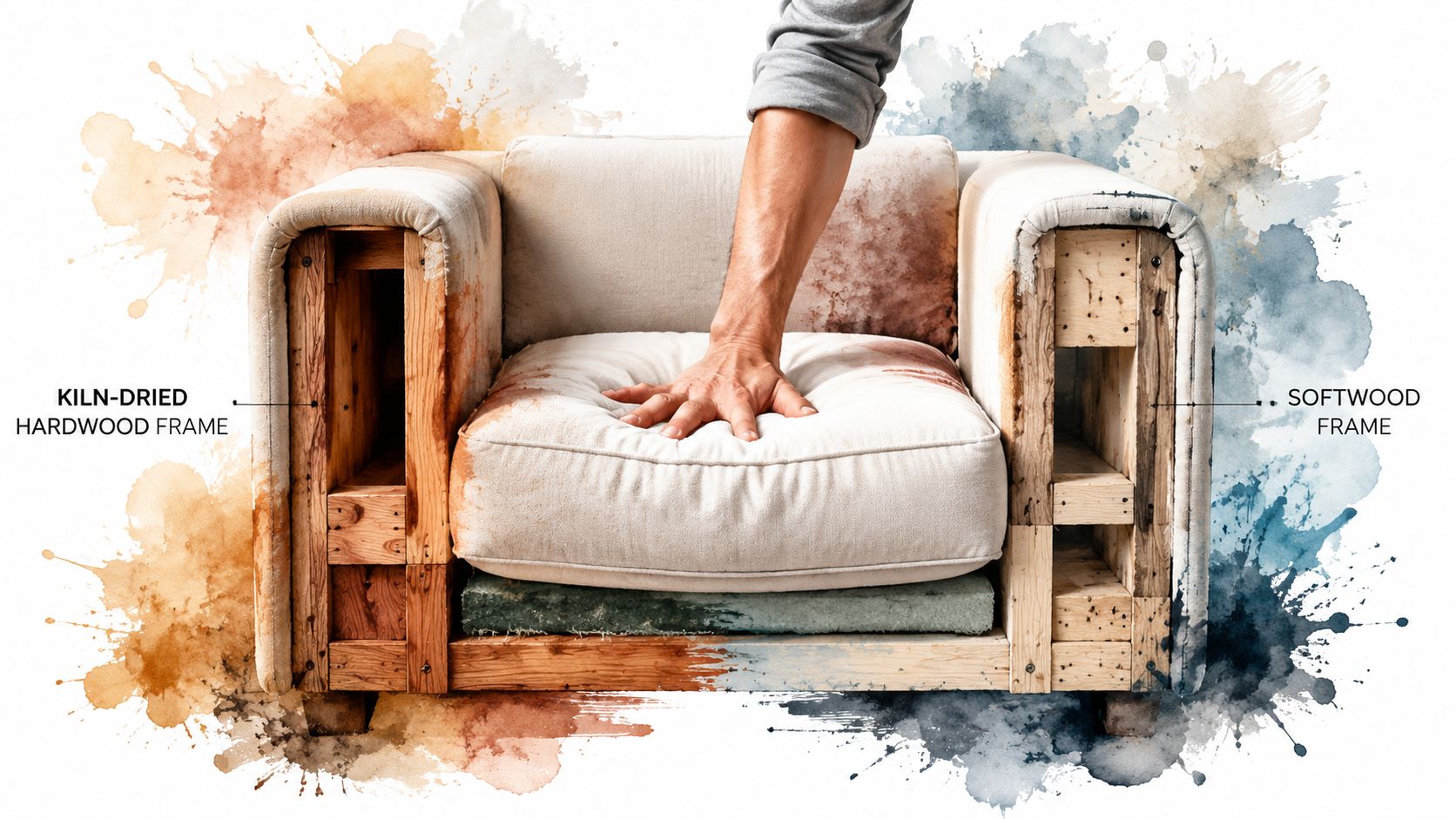
A kiln-dried hardwood frame usually provides a stable foundation because controlled moisture limits movement. Softwoods and engineered boards can also work in well-designed pieces, but the specification must be clear. A loose arm, shifting back, or creaking corner points to a construction problem, not a harmless showroom detail.
Ask how the corners and joints are assembled. Corner blocks, reinforced connections, dowels, and well-placed screws provide more useful evidence than a vague claim about quality. Staples can help secure upholstery, but they should not be the only visible sign of structural assembly. Push lightly against the arms and back. The frame should feel square, steady, and settled.
Compare suspension systems
Eight-way hand-tied suspension can distribute support well when it is correctly built. Sinuous springs can provide dependable comfort through a different construction method and often suit contemporary frames. Webbing may feel more flexible, while drop-in coils can create a firmer, resilient sit. The label does not decide comfort. Your body does.
Seat fill changes the experience just as much. High-resilience foam generally feels supportive and keeps its shape. Down and feather feel softer and shift more during use, while hybrid fills balance loft and structure. Test the seat in the posture you will use most. Upright reading calls for different depth, arm height, and back pitch than relaxed lounging. A sofa designed for back support should be judged by posture, not appearance alone.
Abrasion results help only when the testing method is identified. Upholstery leather may be evaluated with ASTM D7255 rotary abrasion testing, while ISO 17076-2 covers the Martindale ball-plate method. Industry guidance treats about 15,000 Wyzenbeek double rubs or 20,000 Martindale cycles as a low-traffic residential threshold, and about 30,000 double rubs or 40,000 cycles as a high-traffic or public-use threshold, as described in this upholstery performance reference. These methods are not interchangeable. The specification should show the test method, result, and intended use together.
Use a simple showroom test:
- Lift the front corner to sense weight and stability.
- Sit upright, then settle into your usual lounging position.
- Lean into the back and arms.
- Push gently against the frame to check movement.
- Read the underside tag for construction and testing details.
For a custom piece, record these findings beside the room's traffic and seating habits. That gives you a sound basis for choosing support, proportions, and materials that will serve the home for years.
Matching Size, Style, and Daily Life
A Bay Area home can make the wrong silhouette obvious fast. Measure the room, map the traffic, and decide what people will do there before comparing leather colors or finishes. Long-term value starts with a piece that fits daily movement, not with a higher place in a leather-grade hierarchy.
| Silhouette | Best Room Size | Household Fit | Primary Use |
|---|---|---|---|
| Sofa | Small to large rooms with flexible layouts | Couples, families, and frequent rearrangers | Everyday seating and entertaining |
| Sectional | Medium to large rooms with clear traffic paths | Larger households and frequent loungers | Movie nights and group lounging |
| Sofa-chaise | Medium rooms needing one extended seat | Couples or families wanting lounge comfort | Reading, television, and relaxed seating |
| Loveseat | Small rooms, bedrooms, and conversation areas | One or two regular users | Compact daily seating |
| Recliner | Rooms with usable clearance behind the back | Individual users prioritizing leg support | Reading and restorative lounging |
| Accent chair | Rooms needing an additional movable seat | Hosts and flexible households | Conversation and occasional seating |
Measure the full delivery route, not only the destination wall. Record the narrowest doorway, hallway turn, stair landing, and elevator opening. Recliners require clearance behind the back. Chaise ends need open space in front and along the side. Older South San Francisco bungalows often require more planning than newer open-concept lofts.
For a custom order, bring those measurements to the showroom and specify the room's real use. A deep sectional suits a family that spreads across cushions, but it can crowd a compact den. A tight-back mid-century sofa keeps the room visually clean and photographs well, yet its firmer support may disappoint someone who expects nap-level comfort. Choose proportions around the people who will use the piece most.
Sunlit rooms need a finish selected for their exposure. A lighter, protected pigment handles daily light with more confidence than a delicate, absorbent surface. Placement still matters, especially near west-facing windows.
Pets and circulation deserve equal attention. Households with cats should plan scratching deterrents and furniture placement before choosing a prized hide. Review this guide on how to stop cats scratching leather furniture as part of that setup.
Get the scale and traffic pattern right first. Then choose the finish, cushion feel, and construction package around the home's workload. A custom piece earns its value by fitting the room and the routine for years, not by looking impressive in the showroom alone.
Caring for Leather to Make It Last
Bay Area homes put leather through varied conditions. Marine-layer humidity, dry heating, and strong afternoon light can all affect a finish, so care should begin when the piece arrives. A custom order deserves a care plan matched to its specific finish, not a generic cleaning routine.
The first day
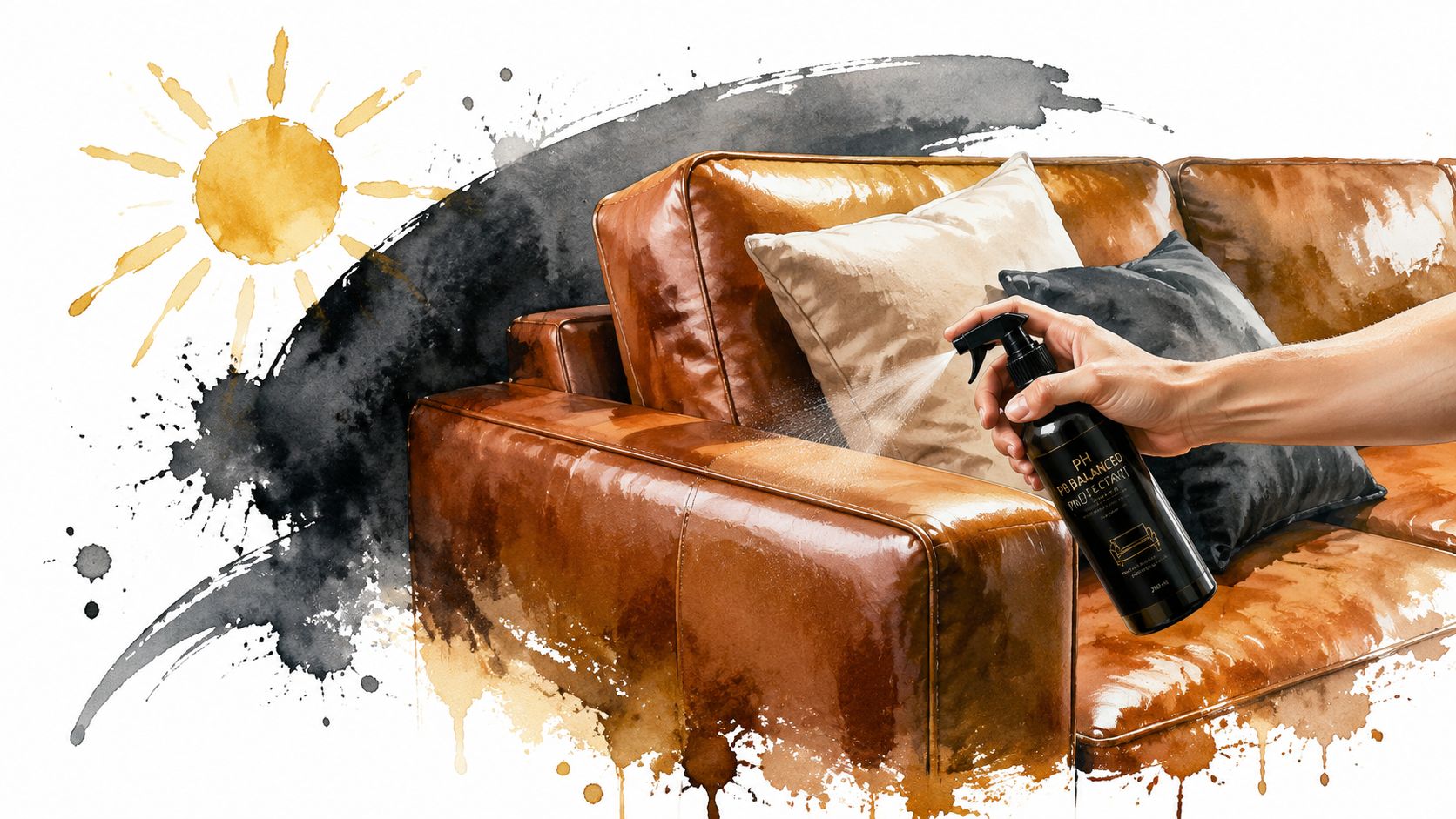
Use a pH-balanced leather protectant approved for the specified finish. Keep the sofa away from direct sun and heating vents, then rotate loose cushions so early settling does not concentrate in one spot. Before applying anything, have a leather consultant confirm whether the surface is absorbent. Aniline and other less-protected finishes need more caution than coated leather.
The first month
Vacuum crevices with a soft brush. Blot spills immediately, and do not rub them deeper into the grain. Household cleaners can strip natural oils or harm a protective coating. Water or a leather-specific cleaner is safer unless the manufacturer gives different written instructions.
Watch the room as closely as the sofa. Afternoon heat through a west-facing window can accelerate fading or surface dryness, while marine-layer humidity still calls for ventilation. Good placement reduces the work required from the finish and helps preserve the appearance you selected.
The first year and beyond
Condition the leather every six to twelve months, adjusting for household dryness and the manufacturer's directions. Watch for cracking, unusual stiffness, and dye transfer from dark denim. Deep or uncertain stains need professional treatment. Aggressive home experiments can enlarge the damaged area and make future repair harder.
Keep this checklist in a utility drawer:
- Protect: Apply an approved protectant after delivery.
- Position: Avoid direct sun and heating vents.
- Clean: Vacuum crevices gently.
- Blot: Address spills immediately.
- Condition: Follow the six-to-twelve-month schedule.
- Escalate: Call a professional for deep or uncertain stains.
Color change and patina are not automatically defects. Full-grain leather may become more expressive with age, while protected leather can retain a more consistent appearance. Planned aging differs from preventable neglect. For advanced repair questions, this guide on how to dye leather furniture offers additional context, but dye work should follow an honest assessment of the existing finish.
Budgeting Smart and Reading Warranties
A lower sticker price can become expensive if the sofa wears out before your room, layout, or household changes. Set the budget around service life, construction, repairability, and the conditions of Bay Area living. A custom piece deserves the same discipline. Pay for materials and build quality that fit your daily use, not for a leather grade that looks impressive on paper but does not suit the room.
Industry estimates place full-grain leather furniture lifespan at roughly 30 years or more, top-grain at about 20 years, corrected grain at around 12 years, and bonded leather at about 3 years. Bonded leather can peel or crack within 2 to 5 years. Well-maintained full-grain pieces may last 25 to 30 or more years, while top-grain pieces may last roughly 15 to 25 years. Treat these figures as planning guidance, not a promise. Sun exposure, household use, construction, and maintenance still shape the result.
Some research indicates full-grain leather retains approximately 90% of its initial tear strength after a decade of simulated daily use, compared to about 70% for top-grain. That supports choosing a stronger material when the furniture will face frequent use, pets, or repeated movement. The figures do not replace a hands-on inspection or a written warranty. Ask how the selected hide and finish will perform in your home.
Read the warranty line by line
A warranty should state what happens if the frame fails, suspension breaks, stitching separates, or the leather shows a manufacturing defect. It should define normal wear as well. Pet damage, dye transfer, commercial use, neglect, fading, and accidental stains commonly fall outside limited coverage.
For a custom order, request written specifications covering joinery, foam density, hide origin, finish, and the exact coverage period. Confirm whether labor, pickup, repairs, and replacement parts are included. A verbal promise carries less protection than terms attached to the order. Review the warranty information before signing, especially for a piece built to your measurements and finish selections.
Build a complete budget
A useful budget includes:
- Price per seat: Compare the cost with the number of people who will use the piece.
- Upgrade allowance: Reserve room for a better finish, stronger suspension, or improved cushion fill.
- Delivery contingency: Include delivery, setup, difficult access, and required service.
- Related pieces: Account for a matching ottoman, chair, care kit, or replacement cushion needs.
Some showrooms offer financing options, but a monthly payment should not justify an unsuitable sofa. Compare the complete written quote, including custom changes and delivery, rather than judging the monthly figure alone. The right purchase balances material performance, construction, warranty coverage, and the way your household will live with the furniture.
Making the Most of Your Showroom Visit
A focused showroom visit turns vague preferences into a defensible furniture decision. The consultant needs more than a color request. Room measurements, traffic notes, and three reference photos of the existing space reveal the scale, palette, lighting, and surrounding materials.
The shopper should sit in every serious candidate for at least five minutes. That time exposes pressure at the lower back, an arm that sits too high, a seat that pushes the knees upward, or an edge that feels uncomfortable. The test should include upright sitting, relaxed lounging, leaning, and getting up without using the arms.
Ask for the leather cutting from the specific hide lot intended for the order, not only a general showroom swatch. Natural leather can vary in grain, color, and markings. A sample helps, but the specification should state the hide type, finish, protection level, and whether the same leather covers every touch point.
Questions worth asking
A capable design consultant should be able to identify:
- Suspension: What system is used, and who manufactures it?
- Frame: Which wood species forms the main structure?
- Foam: What is the foam origin and specification?
- Customization: Can the piece change from fabric to leather?
- Details: Are contrast stitching, leg finishes, and wood species available?
- Timing: What is the custom-order lead time?
- Cost: Does the itemized quote include delivery, warranty, and customization?
Customization matters when the floor model is close but not right. Custom Furniture services can align fabrics, leathers, wood species, and finishes with an existing Bay Area Interior Design plan. An Amish Furniture piece, an American-made frame, or a leather order each deserves evaluation by its written construction details, not by a label alone.
Giorgi Bros. Furniture operates as a family-owned showroom in South San Francisco with non-commission design consultants, custom-order services, a large furniture selection, and a dedicated gallery for Premium Mattresses. The business has served the area since 1933, giving local shoppers a setting to touch, feel, and test investment pieces without sales pressure.
Schedule a follow-up call within 48 hours while the impressions remain fresh. That pause prevents a color decision made under showroom lighting from becoming a regret at home.
Visit Giorgi Bros. Furniture in South San Francisco to compare leather types, inspect sofa construction, and discuss custom fabrics, leathers, wood species, and finishes with non-commission Design Experts. Shoppers can also book a Design Consultation to match an investment piece to the room, the household, and a buy-it-for-life plan.