A mattress edge can make or break the whole bed, and most shoppers don't realize it until the moment they sit down to put on shoes and feel the side collapse under them. That sinking sensation seems small at first. Over time, it changes how safe the bed feels, how much sleeping space it offers, and how well it holds its shape.
That's why edge support deserves more attention than it gets in most mattress roundups. The best mattress edge support isn't just about a tidy spec on a product tag. It's about stability, daily function, and buying a mattress that still feels dependable years after the first night at home.
For Bay Area homeowners planning a larger bedroom refresh, mattress shopping also fits into the bigger picture of layout and comfort. During early planning, many readers find it helpful to explore CJMC Build's master suite designs to think through how bed size, circulation space, and furniture placement all work together.
Table of Contents
- The Unsung Hero of a Good Night's Sleep
- Why Strong Edge Support Is a Worthwhile Investment
- The Anatomy of Mattress Edge Support
- How to Test Edge Support in Our Showroom
- Choosing the Right Support for Your Lifestyle
- Experience True Quality at Giorgi Bros.
The Unsung Hero of a Good Night's Sleep
A weak mattress edge usually announces itself in ordinary moments. Someone sits down to lace a shoe, reaches for a nightstand, or scoots toward the side to make room for a partner. Instead of feeling level and supported, the perimeter dips. The sleeper starts adjusting around the bed instead of trusting it.
That's what makes edge support so important. It doesn't call attention to itself when it's working well. It lets the mattress feel solid, usable, and calm from the center all the way to the side.
In a long-standing home furnishings business, that distinction becomes easy to recognize. Giorgi Bros. Furniture was founded in 1933 and remains family-owned and operated in South San Francisco, a history noted in this company profile on PrivCo. That kind of longevity tends to teach a simple lesson. Small construction details often decide whether a purchase feels smart years later.
A feature shoppers feel before they can name it
Many people walk into a mattress gallery focused on softness or firmness. Those matter, but they aren't the whole story. A mattress can feel pleasant for a few minutes in the middle and still disappoint at the perimeter.
That confusion is common because edge support sits in the background. It affects:
- How secure the bed feels when sitting on the side
- How much usable surface the sleeper has
- How stable the mattress remains through everyday use
A supportive edge doesn't just help at bedtime. It supports every entry, exit, shift, and sit throughout the day.
For readers searching for the best mattress edge support, it helps to think less like a product shopper and more like a long-term homeowner. A mattress is one of those investment pieces used every single day. When the perimeter is strong, the whole bed feels more dependable.
Why this detail changes the buying decision
A bedroom should feel restful, but it also has to work. If the bed edge buckles, the mattress can feel smaller than it is. Couples drift inward. People with mobility concerns lose a stable place to sit. Even getting dressed becomes a daily annoyance.
That's why edge support isn't a bonus feature. It's part of the bed's structure. Once shoppers understand that, they stop asking which mattress looks best on paper and start asking which one stays level where real life happens.
Why Strong Edge Support Is a Worthwhile Investment
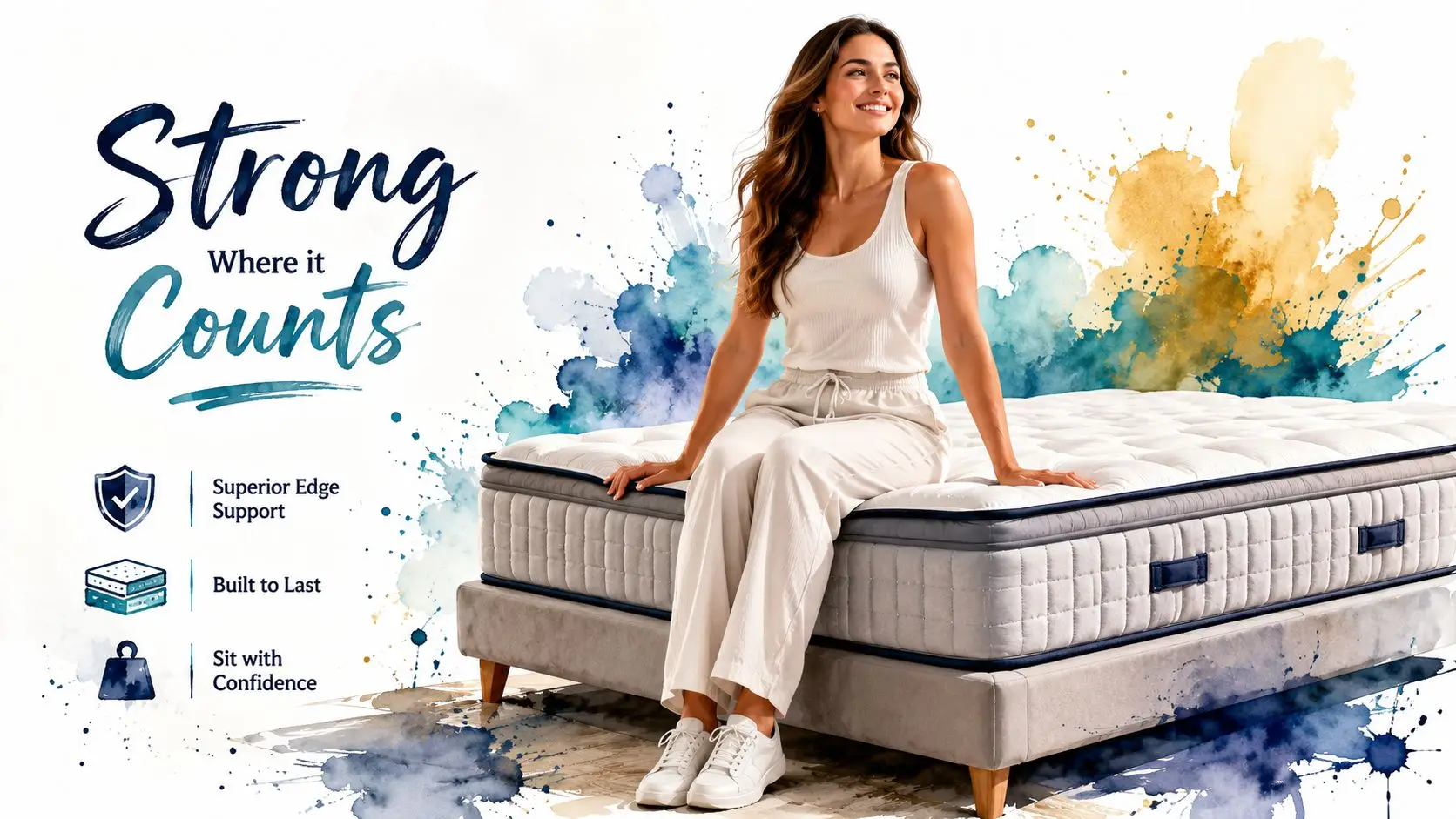
A mattress edge works like the border of a foundation. If that border stays stable, the whole surface feels more reliable. If it gives way early, comfort problems show up fast.
That's why strong edge support belongs in any serious buying decision. It protects the shape of the bed, helps people use more of the sleep surface, and creates a safer place to sit or shift positions.
Why edge support matters every day
The first benefit is durability. A mattress doesn't wear only in the center. People sit on the sides, get in and out from the same spot, and often sleep closer to the perimeter than they realize. A stronger edge handles that repeated load better.
The second benefit is usable space. On a bed shared by two adults, weak edges can make the mattress feel narrower because sleepers naturally move away from the collapsing sides. A stable perimeter helps the bed feel like its full size.
The third benefit is accessibility. Some sleepers need the bed edge to feel firm and level before standing up or lowering themselves down. In those cases, edge support isn't a luxury. It's part of how the bed functions safely.
Practical rule: If a mattress feels unstable when someone sits on the side in a showroom, that problem usually becomes more noticeable at home, not less.
Why this choice has to happen before purchase
Many buyers get caught off guard. Current guidance on edge support often skips a hard truth. Once the edge has sagged, it usually can't be meaningfully restored. According to Sleep Advisor's edge support guide, 42% of users ask how to “fix” sagging edges within 12 months of buying, and toppers or frame changes may offer temporary relief but don't restore true edge integrity.
That single fact changes the shopping mindset. The right question isn't how to repair edge support later. The right question is how to judge it before bringing the mattress home.
For older adults especially, that decision becomes more important over time. A related read on why a mattress matters more with age helps connect support, comfort, and long-term bedroom safety.
A mattress with better edge support also fits a buy-it-for-life way of thinking. Quality tends to reduce waste, reduce replacement frustration, and save money over the long run because the piece continues to do its job. That same principle guides well-made Custom Furniture, Amish Furniture, and other lasting home investments. Better construction up front usually means fewer compromises later.
The Anatomy of Mattress Edge Support
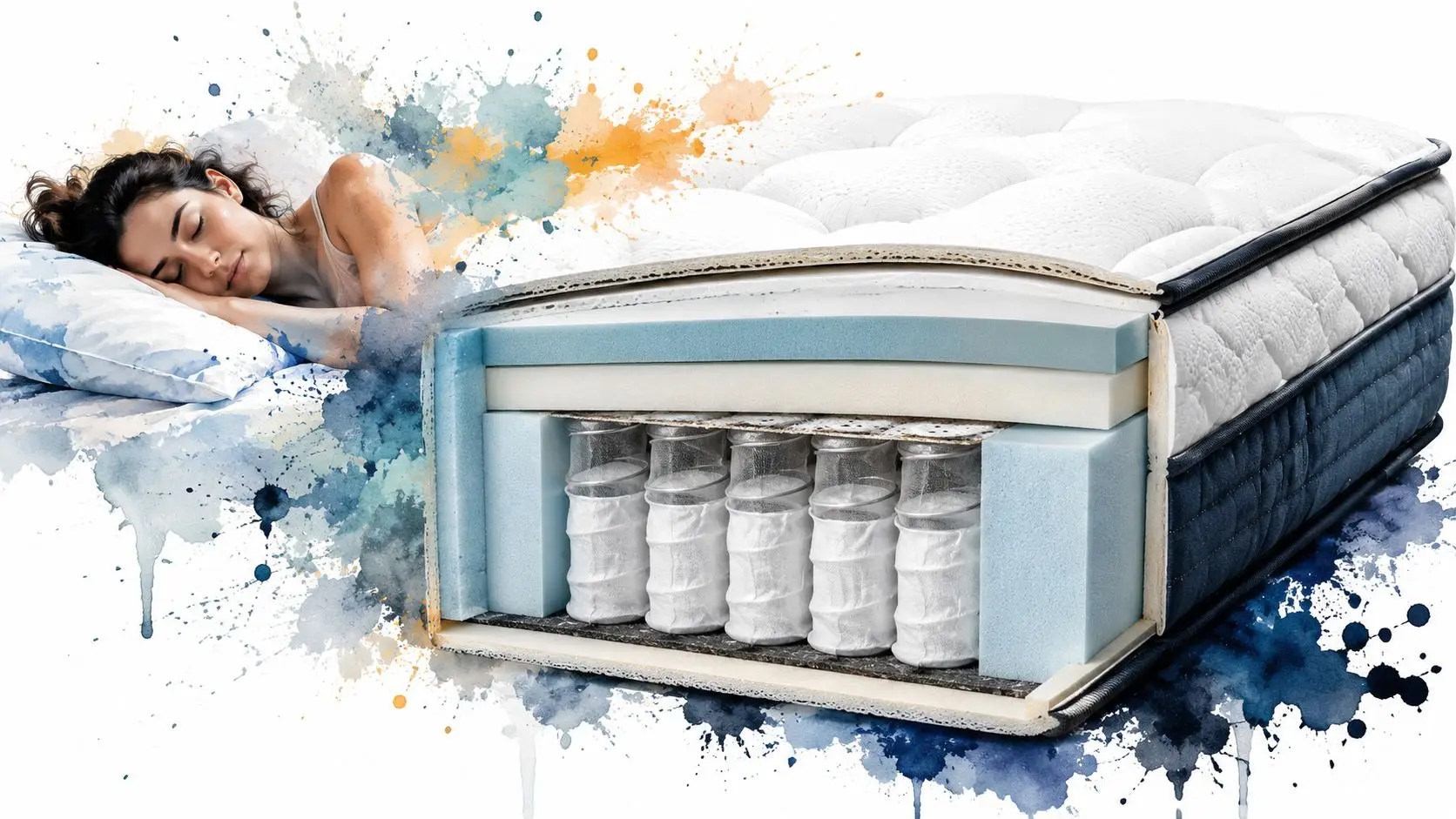
Good edge support starts inside the mattress. The outer feel matters, but the real story sits under the cover in the support core and perimeter design.
Research summarized by Sleep Foundation's edge support methodology indicates that innerspring and hybrid mattresses generally provide sturdier edge support than foam-only constructions because coil systems create more pushback when compressed near the perimeter. That pushback is what many shoppers feel as steadiness.
What creates a stable perimeter
The most common edge-support approaches fall into a few categories.
Coil-based support cores
Innerspring and hybrid builds rely on springs that actively resist compression. Near the edge, that resistance helps the mattress hold its shape when someone sits down or sleeps close to the side.Reinforced perimeter designs
Some mattresses strengthen the border with firmer components around the outside. That reinforcement can help the edge feel flatter and more dependable under weight.Foam-heavy constructions
All-foam mattresses can feel comfortable and pressure-relieving, but foam edges often compress more because they don't have the same active pushback as coils. Some brands counter that with denser perimeter foam, though the feel is still different.
A simple way to think about it is this. Coils push back. Foam absorbs. Both can be comfortable, but only one response tends to create the crisp, stable edge many shoppers want.
For readers comparing mattress categories more broadly, this guide to memory foam vs innerspring gives useful context on how these constructions differ in feel and function.
A mattress can feel plush on top and still have a supportive edge underneath. Surface comfort and perimeter stability aren't the same thing.
Mattress Construction and Edge Support
| Construction Type | Typical Edge Support Method | Best For… |
|---|---|---|
| Innerspring | Coil support through the perimeter or reinforced border design | Sleepers who want strong pushback and a more stable sitting edge |
| Hybrid | Coil core with comfort layers, often paired with perimeter reinforcement | Shoppers who want a blend of contouring comfort and sturdier edge performance |
| All-foam | Dense foam perimeter or firmer outer foam rails | Sleepers who prioritize a foam feel and are willing to judge edge stability carefully in person |
The table helps simplify the jargon, but real-world testing still matters. Two hybrid mattresses can feel very different at the edge. One may stay nearly level when weight is applied. Another may compress more than expected.
That's why the phrase best mattress edge support shouldn't be treated like a fixed label. It's a performance trait created by design choices, not a marketing slogan. The strongest candidates usually combine thoughtful perimeter reinforcement with a support core that resists collapse when real body weight reaches the edge.
For Bay Area Interior Design projects, that engineering matters more than people expect. A beautiful bedroom loses some of its comfort when the bed itself feels unstable. The most satisfying rooms usually combine style, proportion, and pieces that perform well every day.
How to Test Edge Support in Our Showroom

Testing edge support in person is one of the smartest things a shopper can do. Product descriptions can point in the right direction, but the body notices details that spec sheets can't fully explain.
That hands-on approach becomes easier in a large showroom environment. Giorgi Bros. operates a 50,000 square foot full-service showroom in South San Francisco with a dedicated sleep gallery that lets customers touch and test quality before purchase. For anyone comparing premium mattress brands, that in-person experience turns a confusing category into something much clearer.
The Sit Test
Start with the move people make every day. Sit on the side of the mattress as if putting on socks or getting ready for bed. Let body weight settle naturally.
What to watch for:
Depth of sink
A supportive edge will compress some, but it shouldn't feel like it's folding away underneath the hips.Level feeling
The body shouldn't slide outward or feel pitched off the side.Ease of standing
Standing up from the seated position should feel controlled, not wobbly.
A mattress that passes this test tends to inspire confidence quickly. If the edge feels mushy in the first few seconds, that usually tells the truth.
The Lie-Down Test
Next, lie near the outer third of the mattress. Not in the exact center. Not halfway hanging off. Close enough to mimic real sleep when a partner shares the bed or when someone stretches out.
The goal is to check whether the edge remains usable as sleep space. A better edge won't make the sleeper feel trapped in the middle. It will let the body relax near the side without the sensation of rolling off.
Sleepers don't need a rigid border. They need a perimeter that stays supportive enough to feel secure.
The Transition Test
This final step often reveals the difference between decent and excellent edge support. Move from sitting to lying down, then back up again. Shift positions. Scoot toward the side and away from it. Change directions the way people do at home without thinking.
Pay attention to these cues:
- Smooth movement means the mattress responds without collapsing under changing pressure.
- Stable transitions suggest the perimeter holds up during the moments when balance matters most.
- Consistent feel from one side to the other usually signals better overall construction.
This test also helps shoppers judge whether a mattress will suit an adjustable lifestyle, shared sleeping, or daily routines that require frequent sitting at the bedside.
A good showroom experience should never feel rushed. That's especially true in Furniture South San Francisco, where many shoppers are furnishing whole rooms and trying to balance comfort, aesthetics, and long-term value. Non-Commission Sales Staff and Design Experts add the most value when they give people room to test, compare, and ask practical questions without pressure.
Choosing the Right Support for Your Lifestyle
The right edge support depends on how the bed gets used. Two people can test the same mattress and need very different things from the perimeter. That isn't indecision. It's normal.
Industry testing for 2026 has shown that some premium mattresses with full edge support have earned a perfect 5 out of 5 in edge support evaluations, according to Mattress Nerd's 2026 mattress guide. That matters because it confirms edge support can be measured and compared, not just described vaguely.
Couples who use every inch of the bed
For couples, edge support often translates into practical square footage. A mattress may technically be wide enough for two adults, but if the sides compress too much, both sleepers drift inward. The bed feels smaller than it should.
In those cases, shoppers should favor a perimeter that stays composed when one person lies near the border and the other changes position. The more secure the edge feels, the easier it is for each person to claim their own zone without feeling crowded.
Sleepers who need a stable sitting edge
Some buyers care less about sleeping at the perimeter and more about sitting on it. That group often includes people who read in bed, get dressed at the bedside, or want a firmer base before standing.
For them, the target isn't softness. It's dependable support with enough comfort on top. A mattress that scores well in edge testing often feels more trustworthy in these daily movements.
The best choice is the one that supports the sleeper's routine, not the one with the most dramatic showroom first impression.
Homes with adjustable bases and custom priorities
Adjustable bases add another layer to the decision. The mattress needs enough flexibility to move with the base, but enough structure to avoid feeling unstable at the sides. Firmness also changes how edge support is perceived, which is why shoppers often benefit from a broader mattress firmness guide when narrowing the field.
This is also where customization matters. In a full-home furnishing project, the bed rarely exists in isolation. Buyers may be coordinating bedroom proportions, upholstery textures, wood tones, and long-term comfort preferences alongside other Custom Furniture decisions. For homeowners refining a whole-room concept, outside inspiration like Task Masters Inc. interior design can be helpful when thinking about how sleep products fit into a larger design plan.
A one-size-fits-all answer rarely serves real households well. The better approach is to match edge strength to lifestyle, body movement, and bedroom habits, then judge comfort on top of that foundation.
Experience True Quality at Giorgi Bros.
Finding the best mattress edge support comes down to one practical idea. A mattress should feel dependable where real life happens. At the side of the bed. During entry and exit. During shared sleep. During the years after the showroom visit is over.
That's why edge support belongs in a buy-it-for-life mindset. Better construction tends to serve the sleeper longer, reduce compromise, and support a more sustainable approach to the home. The same thinking guides people who choose long-lasting investment pieces, whether they're shopping for Premium Mattresses, Amish Furniture, or custom pieces for a full room.
A smarter way to shop for long-term comfort
A strong mattress decision usually happens in person. Shoppers can sit, lie down, shift positions, and compare how each edge responds under normal use. They can also see how the mattress fits with adjustable sleep setups by reviewing options like the best adjustable base for a mattress.
Just as important, the shopping environment matters. Giorgi Bros. employs non-commission design consultants who provide stress-free, no-pressure guidance with “best price first” transparency. That approach supports a calmer, more informed purchase, especially for Bay Area homeowners trying to furnish thoughtfully instead of rushing into a short-term fix.
The showroom experience also extends beyond what sits on the floor. Custom order services allow shoppers to tailor pieces through choices in wood species, finishes, designer fabrics, and high-grade leathers, including American Leather. That broader commitment to customization reflects a more personal approach to Bay Area Interior Design, one built around fit, function, and lasting value.
For households balancing comfort with budget, it also helps to know that Financing options are available. A quality mattress and well-made furnishings aren't just purchases for today. They're long-term decisions that shape daily living.
A visit to Giorgi Bros. Furniture gives Bay Area shoppers the chance to test mattress edge support the right way, in person and without pressure. Explore 50,000 square feet of inspiration in South San Francisco, compare Premium Mattresses, review Custom Furniture options, and speak with Design Experts who aren't working on commission. For a more guided experience, book a Design Consultation and build a bedroom that feels comfortable, functional, and made to last.