
You've found a mattress that feels comfortable in the showroom, but there's still a practical question: how thick should it be once it's on the bed frame? A mattress can look beautifully substantial yet sit too high for the room, bend poorly on an adjustable base, or leave too little cushioning for the sleeper using it. The right choice balances comfort, body support, bed height, foundation mechanics, and long-term value.
For homeowners planning a bedroom in South San Francisco or anywhere in the Bay Area, mattress thickness belongs in the same conversation as the frame, nightstands, lighting, and upholstery. Giorgi Bros. Furniture has helped families make those decisions for more than 90 years, with a family-owned, non-commission approach that keeps the focus on a well-matched sleep sanctuary rather than a rushed purchase.
Why Mattress Height Impacts Your Daily Comfort
A mattress that's only slightly too tall or too low can create daily friction. Someone with a high frame and a deep mattress may have to climb onto the bed, while a low-profile combination can make sitting down and standing up feel awkward. The problem often becomes obvious at night, when the sleeper reaches for the edge, or in the morning, when tired legs and stiff joints meet an inconvenient height.
Mattress thickness also changes the visual balance of a bedroom. A tall upholstered headboard can look proportionate with a deeper mattress, while a slim frame may appear crowded when the mattress rises far above the rails. In a carefully planned bedroom, the mattress is part of the room's vertical composition, not an isolated rectangle.
Start with the finished bed height
The useful measurement is the distance from the floor to the top of the mattress. Add the frame, foundation or slats, and mattress together before choosing a new sleep surface. Then sit on the edge. Ideally, the feet should rest comfortably on the floor without the knees rising sharply or the legs dangling.
This simple test matters for anyone who finds transfers difficult, but it also helps every sleeper create a natural landing point. A mattress can have excellent internal construction and still feel wrong if the finished bed height doesn't suit the person using it.
Practical rule: Judge the complete sleep system, not the mattress in isolation.
A nightstand adds another proportion to check. The top should remain easy to reach from the pillow and sitting position, so the finished mattress height should be considered alongside normal nightstand height. Readers also benefit from broader guidance on evening routines and a restful bedroom environment through these SEYANTE sleep hygiene tips.
Thickness can support comfort by allowing room for a thoughtfully built comfort system, but it doesn't guarantee a better night. The construction, firmness, materials, sleeper profile, and base all matter. That's why the strongest mattress thickness guide begins with the person and the bedroom, then uses measurements to narrow the options.
Decoding the Standard Mattress Thickness Categories
A mattress may look tall in a showroom, yet that height alone cannot tell you how it will perform in your bedroom. Mattress thickness means the uncompressed height of the mattress, from its lower support structure through the comfort layers and cover. It describes the vertical stack of materials, not whether the mattress is firm, soft, durable, dense, or well made. Sleep quality depends on how that construction works with the sleeper and the bed beneath it.
Sleep Foundation groups mattresses into three broad profiles. Low-profile mattresses measure 8 inches or less, with many designs falling between 4 and 8 inches. Standard mattresses measure 10 to 12 inches, the most common range. Thick or deep mattresses measure 12 to 14 inches. These categories provide a useful starting point, not a quality ranking. See the guidance on how thick a mattress should be for the category definitions.
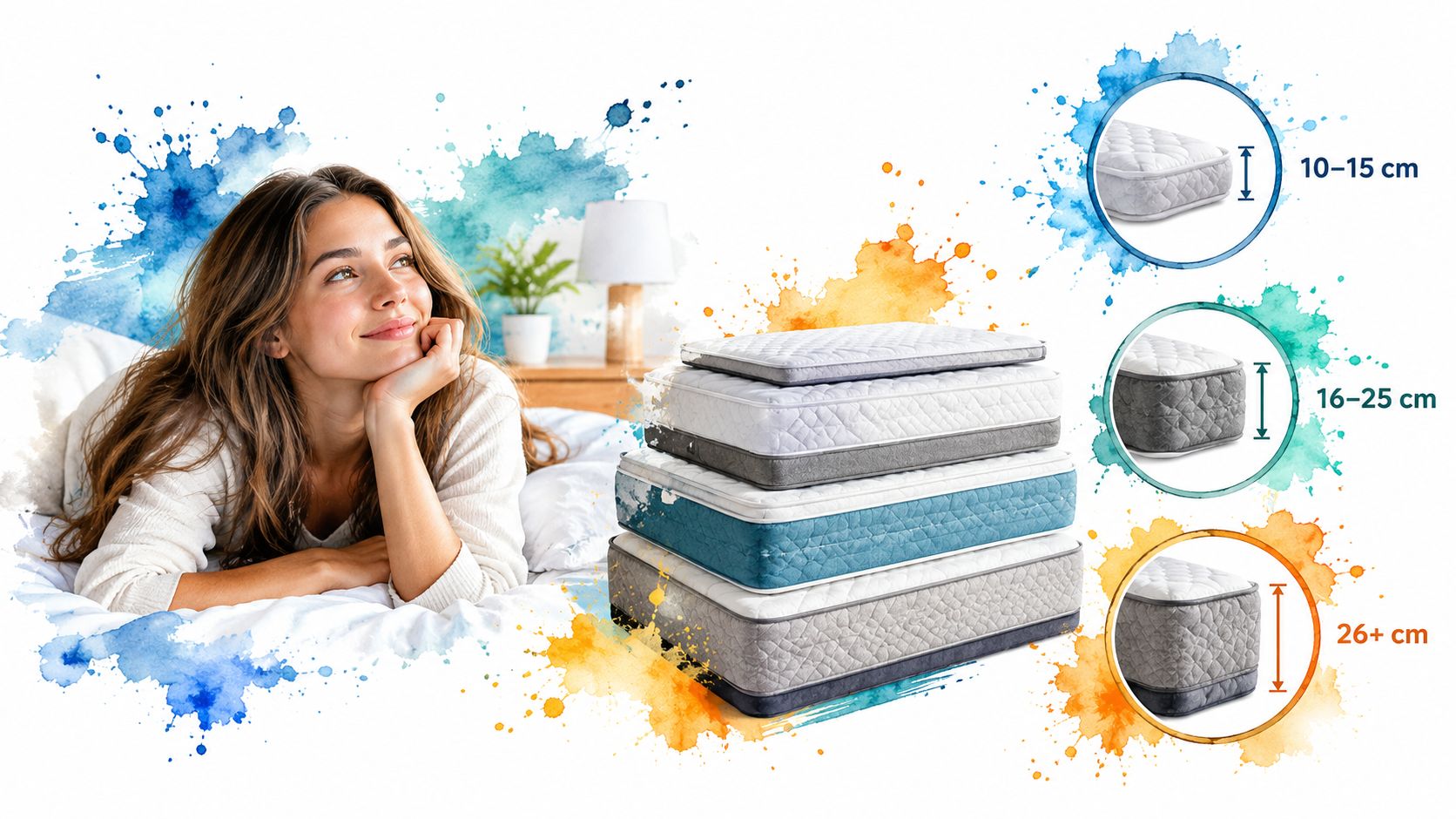
What each profile is designed to do
Low-profile mattresses fit rooms and bed systems where clearance, weight, or a lower overall profile matters. They can suit compact spaces and specialized configurations. Their limited vertical space may leave less room for layered cushioning and support.
Standard mattresses provide a flexible starting point for many bedrooms. The 10- to 12-inch range gives manufacturers room to balance comfort layers with a stable support structure, while fitting many conventional frames and bases.
Thick or deep mattresses allow more space for layered comfort and pressure relief. They may suit sleepers who prefer a substantial feel, but their added height changes the proportions of the entire bed. Headboard visibility, sheets, nearby furniture, and the base all deserve a compatibility check.
Most mattresses made today measure between 10 and 15 inches, according to Sleep Foundation's overview of mattress construction. That relatively narrow real-world band explains why two models can look similar from the side while using different internal layers. A few inches may affect feel, support, and how the finished bed relates to the room.
Read the specification, then examine the full system
A taller mattress may contain more comfort material, though added height can also come from its support design or cover. A shorter mattress can still feel supportive when its layers are carefully engineered. Read the specifications beside an in-person comfort test and the bed frame's requirements.
Use a mattress comparison chart to place thickness beside construction and other specifications. The practical choice is the mattress that works with the sleeper, the base, and the bedroom for years, rather than the tallest option on display.
Matching Thickness to Body Type and Sleep Position
After a long day, a side sleeper may feel pressure at the shoulders and hips, while a back sleeper usually spreads weight across more of the mattress. Body weight changes that loading pattern further. Two people can share one mattress and still experience different support because their bodies compress its layers differently.
Use the ranges defined earlier as a starting point rather than a rulebook. Back sleepers in the typical adult weight band often fit the standard profile, while side sleepers seeking more pressure relief and sleepers over 230 pounds may benefit from the deeper profile. A mattress guide for different body types can help connect thickness with posture, build, and support needs.
Mattress Thickness by Sleeper Profile
| Sleeper Profile | Practical Starting Point | Primary Benefit |
|---|---|---|
| Back sleeper in the typical adult weight range | Standard profile | Balanced support and comfort |
| Side sleeper needing more pressure relief | Deeper profile | More cushioning at shoulders and hips |
| Sleeper over 230 pounds | Deeper profile | More support and weight distribution |
| Sleeper seeking a lower bed profile | Slimmer profile | Reduced finished height and a streamlined look |
This table acts as a filter, not a prescription. Firmness still changes the experience. A soft, deep mattress may let a lighter sleeper sink farther than expected, while a firmer mattress at the same height may feel steadier. Thickness describes the available vertical structure, but it cannot predict the exact sensation.
Where added depth helps
Extra depth earns its place when it improves contact between the body and the support system. Side sleepers often need sufficient comfort-layer depth to cushion wider areas such as the shoulders and hips. A heavier sleeper may also need stronger construction so the support core does not become noticeable too quickly.
Recent independent testing found that mattresses measuring 12.0 to 13.9 inches represented 41.5% of tested models, while models measuring 14 inches or more represented 22.9%. The thicker group showed slightly higher average performance in that testing, although the relationship was not linear. These findings support comparing construction and results, not choosing the tallest mattress on display.
A taller mattress can create useful space for comfort layers, but height alone is not a measure of quality.
Very tall models can add weight, cost, and installation complexity without addressing a specific comfort need. For some sleepers, the deeper profile will provide a better balance of cushioning and support. For others, the standard profile will preserve easier proportions and a more manageable finished bed height. The durable choice matches the sleeper's pressure points and loading pattern with the room's overall design, rather than treating thickness as a score.
Ensuring Compatibility with Bed Frames and Bases
A mattress has to move, rest, and align correctly with the foundation underneath it. Compatibility problems often appear after delivery, when a deep mattress meets a low rail, an adjustable mechanism, or bedding that wasn't sized for the finished profile.
Adjustable bases require special attention because the mattress must flex at hinge points. Adjustable bases generally perform best with mattresses around 8 to 14 inches thick, and many experts cite 25 to 36 centimeters as an effective operating band. Staying within that range helps preserve flexibility. Very thick mattresses can reduce articulation, while very thin mattresses can compromise comfort-layer depth, as outlined in this adjustable-bed compatibility guide.
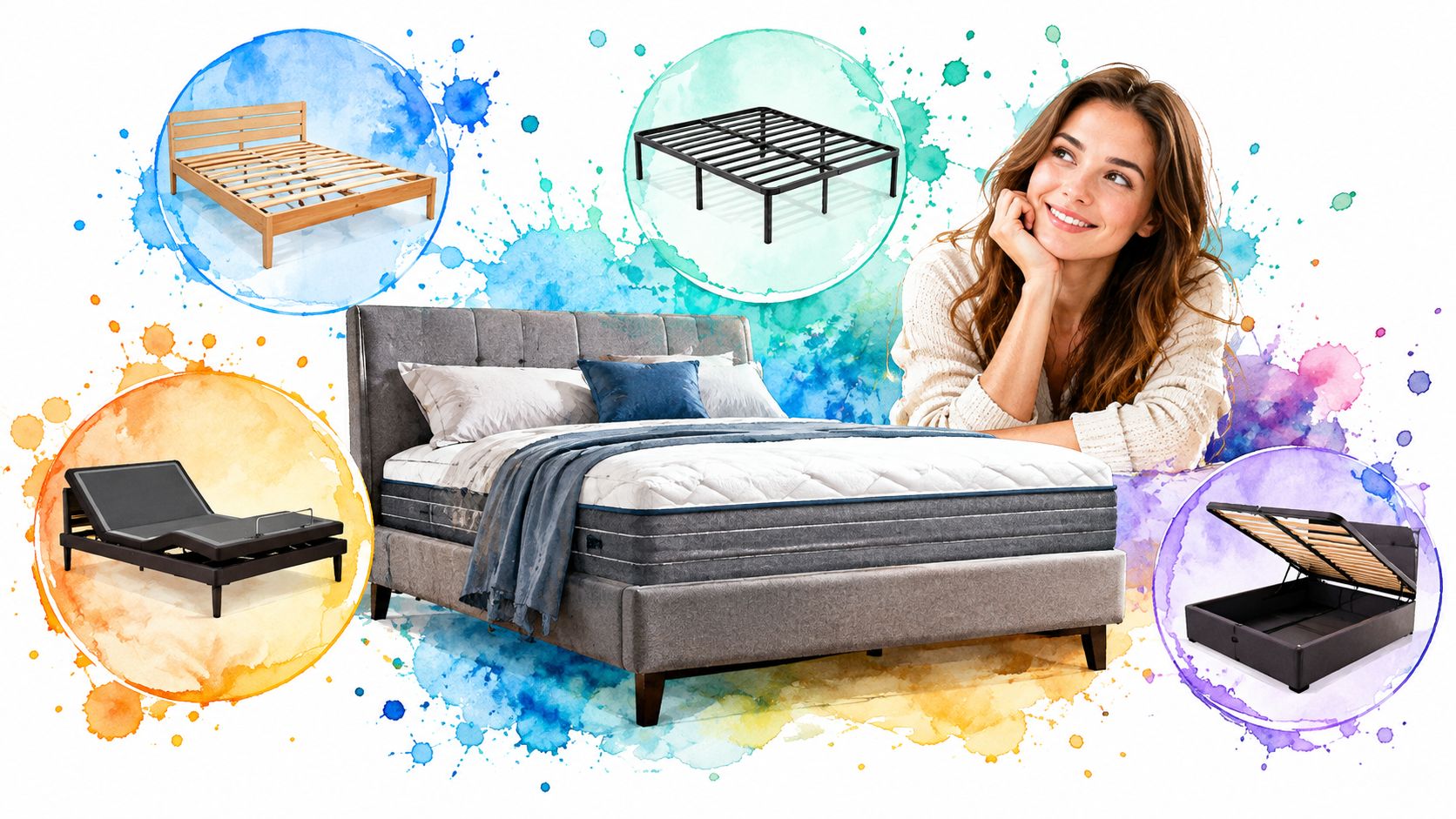
Compare the main foundation situations
With a standard frame or platform, a mattress around 9 to 12 inches is commonly considered a safe fit for standard sheets and many platforms. The frame's slat spacing, center support, rail height, and manufacturer requirements still need confirmation. A mattress should sit securely without drifting or pressing awkwardly against the headboard.
With an adjustable base, the mattress must bend without fighting the motorized movement. A deep profile may look luxurious but can limit the range of motion. The base and mattress should be evaluated as one system, not selected independently.
With a tall frame, even a standard mattress can produce a high finished bed. That may suit a grand bedroom, but it can overpower a low headboard or make entry uncomfortable. With a low platform, a thin mattress may create a minimalist look, but the total height could sit too close to the floor for the sleeper.
Measure before ordering
A careful checklist prevents avoidable surprises:
- Measure the foundation: Record the height from the floor to the top of the support surface.
- Measure the mattress opening: Confirm the frame's interior dimensions and required clearances.
- Check rail coverage: Make sure the mattress won't rise so far above the rails that the frame loses visual support.
- Confirm bedding depth: A very thick mattress may require appropriately deep fitted bedding.
- Review movement requirements: For an adjustable base, confirm the mattress is intended to articulate with that mechanism.
A comparison of adjustable bases and box springs can clarify which foundation better suits the room and the sleeper. The goal isn't to fit the mattress inside the frame. The goal is to preserve comfort, movement, appearance, and dependable operation.
The Buy-It-For-Life Approach to Sleep Investments
A mattress can look impressive in a showroom and still be a poor long-term choice. A sleeper may need generous cushioning, while the room may need a lower visual profile and the bed frame may require a particular support setup. Thickness earns its place when it helps those parts work together.
The vertical stack may include a comfort surface, transition materials, a support core, and a cover. Layer count alone does not reveal material density or workmanship. A well-designed mattress uses its height with purpose, giving each material a job in pressure relief, stability, or movement control.
That approach reflects a buy-it-for-life mindset. A mattress is used every night, so repeatedly replacing one that does not fit can waste resources and interrupt daily routines. Lasting value comes from fit, construction, care, and compatibility. The tallest profile is not automatically the wisest investment.
Look inside the height
Evaluate the mattress by asking practical questions:
- What creates the height? Does the added space improve comfort, support, or both?
- How does the surface respond? Does it cushion pressure while keeping the body from sinking too far?
- What supports the center? A stable core helps maintain alignment and makes the edge easier to use.
- How will the mattress age? Materials and construction deserve as much attention as the first impression in a showroom.
- Does the foundation match? Even a well-made mattress can perform poorly on an unsuitable base.
A premium mattress and a hand-built dining table share an important principle: their value depends on construction that remains useful over time, not decorative excess. The same custom-order options that shape a dining table can shape a bedroom built around lasting proportions. Fabrics, leathers, wood species, and finishes should support the room's character without making the bed feel oversized or out of place.
A replacement plan belongs in that decision. Once an old mattress no longer serves the bedroom, a local bulk mattress pickup guide can explain disposal logistics and help prevent a heavy item from being left to chance.
Spend on function, not theater
Extra height makes sense when it supplies comfort depth a sleeper needs or supports the complete bed design. It adds little when its only purpose is to suggest luxury. Choose the profile that suits the sleeper, frame, room proportions, and expected use.
Giorgi Bros. Furniture offers custom-order options that can support a bedroom design built around lasting proportions. The mattress should complement that setting, allowing the bed, surrounding furniture, and room scale to feel considered together.
Navigating the Showroom with Design Experts
A showroom test should feel like a fitting, not a performance. The sleeper needs time to notice how the mattress supports the shoulders, hips, back, and legs in the position used most often. A few minutes standing beside a display rarely reveals whether the surface will feel balanced after a full night.
A non-commission environment changes the conversation. Non-Commission Sales Staff and design consultants can focus on questions instead of pushing a particular profile. Giorgi Bros. Furniture, a family-owned Furniture South San Francisco destination with more than 90 years of local history, provides a dedicated sleep gallery where shoppers can compare premium mattresses in person.
Use a simple testing sequence
- Describe the current problem. Is the existing bed too high, too low, too firm, or too soft? Does the sleeper wake with pressure at a particular area?
- Name the usual sleep position. A side, back, stomach, or combination sleeper will load the mattress differently.
- Test the edge. Sit down, stand up, and notice whether the height supports an easy transition.
- Lie in the usual position. Give the body time to settle instead of judging the first few seconds.
- Compare nearby profiles. Test a standard thickness beside a deeper option, then identify whether the added height creates a real comfort benefit.
- Check the base. If an adjustable base is part of the plan, test articulation with the mattress rather than assuming compatibility.
Bring the bedroom into the decision
The consultant should know the frame height, foundation type, preferred bedding, headboard scale, and nightstand height. Those details help translate a mattress specification into the finished bedroom. They also prevent a comfortable mattress from creating an awkward room or a difficult daily routine.
Design check: The right mattress should feel supportive in the body and proportionate in the room.
A full-service Bay Area Interior Design consultation can place the mattress within a larger plan for upholstery, wood finishes, lighting, and circulation. The process remains no-pressure. A shopper can compare options, ask about construction, and leave with a clearer decision even when the final purchase comes later.
The best test isn't the tallest mattress or the softest first impression. It's the one that makes the sleeper feel supported, lets the base work properly, and fits the room's intended character.
Finalizing Your Sleep Sanctuary Investment
The final choice should answer three questions. Does the mattress support the sleeper's body and preferred position? Does its thickness work with the frame or adjustable base? Does the complete bed height feel comfortable and visually balanced?
A standard 10- to 12-inch profile is a practical starting point for many adults, while a deeper 12- to 14-inch design can make sense for side sleepers or sleepers over 230 pounds, based on the guidance cited earlier. A low-profile option may be more appropriate when clearance or bed height is the priority. None of those categories replaces an in-person test.
The purchase also deserves a clear delivery plan. Giorgi Bros. Furniture operates its own white-glove delivery service across much of the Western United States, with location-based flat rates rather than per-piece fees. The team unpacks, delivers, sets up furniture in the home, and removes packaging materials. Outside the direct service area, a trusted deluxe nationwide carrier network and in-store pickup options provide additional pathways.
Flexible financing options may be available for qualified purchases, and the team can explain current terms directly. Clear guidance matters because a sleep system is more than a quick household transaction. It is an investment piece used night after night, and choosing well can support comfort, room harmony, and a more sustainable buy-it-for-life approach.
For homeowners searching for Premium Mattresses, Custom Furniture, or thoughtful Furniture South San Francisco expertise, the process should remain personal and unhurried. A design consultant can help connect mattress thickness with the frame, nightstands, headboard, and the rest of the bedroom.
Giorgi Bros. Furniture offers premium mattresses, adjustable bases, custom order services, non-commission design guidance, and white-glove delivery for a complete bedroom plan. Visit Giorgi Bros. Furniture in South San Francisco or book a Design Consultation to test mattress profiles and create a sleep sanctuary that fits both the body and the room.