A Bay Area homeowner can get the room right and still feel something's missing. The sofa may be comfortable, the rug may be well chosen, and the lighting may be practical, yet the space still lacks that calm, finished confidence that comes from modern Art Deco furniture.
That gap usually appears when a home leans too far into trend pieces. A smarter move is to choose investment pieces with strong geometry, durable materials, and a clear point of view. In a family business that has served South San Francisco since 1933, the advice stays simple, buy once, buy well, and choose pieces that still make sense years from now.
Embracing Timeless Glamour in Your Home
A home feels settled when the furniture has presence, not noise. That is why modern Art Deco furniture works so well for discerning homeowners who want elegance without fuss, it gives a room structure, shine, and a sense of order that never feels stiff.
Start with one disciplined focal point
The best Art Deco rooms do not try to impress with quantity. They rely on a strong anchor, then let the rest of the room support it. A low, sculpted sideboard, a sleek sofa, or a mirrored cabinet can carry that role if the surrounding pieces stay restrained.
That approach matters in the Bay Area, where homes often need furniture that earns its footprint. A piece with bold lines and a quiet finish can make a room look curated instead of crowded. It also makes the rest of the buying process easier, because every additional item has to justify itself.
Think in terms of lifetime value
Quality furniture is not a decorative shortcut. It is a long-term decision that pays off in daily use, easier upkeep, and fewer replacements over time. That is the heart of the buy-for-life mindset, and it fits naturally with a family-owned Furniture South San Francisco showroom that has guided homeowners through changing styles for decades.
Practical rule: Choose the most permanent piece first, then build the room around it. Softer layers can change later, but the core furniture should stay relevant for years.
No-pressure guidance makes that choice better, not slower. A good Design Expert will help a homeowner separate passing fashion from lasting form, especially when the goal is a room that feels personal rather than staged.
The Enduring Allure of Art Deco
Art Deco made a prominent debut. It was formally named and globally introduced at the Exposition Internationale des Arts Décoratifs et Industriels Modernes in Paris in 1925, which remains the key milestone for the style's rise, and during its heyday from 1920 to 1940, it represented luxury and faith in technological progress while evolving from ornate forms into more simplified shapes by the 1930s (Rau Antiques).

What made the style matter then
Art Deco fit an era that wanted elegance without looking backward. Its appeal came from the combination of luxury materials, machine-age confidence, and crisp visual rhythm. The style signaled progress, but it still felt rich and deliberate.
That tension is why the style still reads as current. A well-made piece can look glamorous without becoming fussy, especially when the design pares back ornament and keeps the geometry clean. For Bay Area homeowners, that balance matters. The room should feel composed, not ceremonial.
What “modern” means here
Modern Art Deco is not a museum copy. It keeps the symmetry, the refined materials, and the strong lines, then strips away excess so the piece can live comfortably in today's homes. The result is a furniture language that feels perfectly suited, not theatrical.
That distinction helps buyers make better decisions. If a piece only looks Art Deco because it is shiny, it is missing the point. The style needs structure, proportion, and a confident silhouette. Anything less becomes costume furniture.
The strongest modern interpretations keep the historic spirit while fitting modern routines. They work in open-plan living rooms, compact bedrooms, and dining areas that need polish without bulk. That is why the style keeps its place in serious interiors.
Key Characteristics of Modern Art Deco Furniture
The style is recognizable once the eye knows what to look for. Rectilinear shapes, symmetry, and recurring motifs like zigzags, chevrons, and sunburst patterns define the look, while the palette often includes muted yet bold tints such as red, green, orange, yellow, white, and black (Art Deco).

Read the form before you read the finish
The first sign of good Art Deco furniture is balance. The piece should feel centered, intentional, and slightly architectural. Even when the lines curve, they should do so in a controlled way, never loosely or romantically.
A second sign is repetition. The same shape appears again in the legs, drawer fronts, handles, or trim, which gives the piece its disciplined rhythm. That repeated geometry is what keeps the style from drifting into generic glam.
Materials should look layered, not random
Art Deco furniture works because its materials create contrast. Woods, metals, glass, and textiles each have their own role, but the piece still feels unified. That mix of surface and structure is the style's visual signature.
A useful internal reference for shoppers comparing forms and silhouettes is the modern furniture classics collection, because the best Art Deco-inspired pieces still need clean proportions first. After that, the detailing can speak.
A good Art Deco piece should look composed from every angle, not just from the front. If the back, sides, and edges feel unresolved, the design is doing too little.
Use color with restraint
The palette should support the architecture of the room, not dominate it. Black and white can sharpen the geometry, while deeper accents bring contrast and warmth. The point is not saturation for its own sake, it is clarity.
That is why the style still translates so well into modern interiors. It has enough visual power to stand alone, but it does not need a room full of accessories to make sense. One good piece can carry the whole arrangement.
Styling Art Deco for Modern Bay Area Homes
Compact homes need discipline, not compromise. A Bay Area room can absolutely hold Art Deco energy, but the scale has to be controlled and the layout has to breathe. Sources on the style emphasize matched pairs and centered anchor pieces to preserve its identity, and they also note that 48% of Bay Area homeowners now live in homes under 1,200 sq ft, which makes careful sizing a real design issue (Pretty Wild World).
Living room choices that hold the room together
The living room should start with one strong anchor. A sofa with a crisp silhouette, a pair of side chairs, or a centered coffee table can establish the Art Deco rhythm without crowding the floor plan. The rest of the room should echo that line, not fight it.
Mirrored or polished surfaces help a smaller room feel open, but they work best in moderation. One reflective cabinet or table can brighten the room without turning it into a showroom display. The ultimate goal is to create depth, not glare.
Bedroom and dining room decisions
Bedrooms should feel restful first. That means keeping the symmetry, but softening the overall effect with upholstery, lower profiles, and fewer competing shapes. A matched pair of bedside tables is usually enough to signal the style clearly.
Dining rooms can handle a stronger statement. A centered table, balanced seating, and a cabinet with stepped geometry can give the room enough formality to feel special without becoming heavy. The room should look deliberate from the doorway and comfortable once seated.
For readers who want to see how another design city frames room-by-room styling, 8 interior designer Chattanooga styles offers a useful reminder that good interiors always start with proportion, not clutter. The principle carries across regions, even when the look changes.
Design rule: In a compact home, one oversized mistake is harder to recover from than three modest choices. Scale the first piece correctly, then let the style build from there.
A useful internal guide for this kind of planning is the modern living room ideas resource, especially when the room has to balance elegance with daily use. Art Deco works best when the layout feels calm enough to let the geometry register.
Materials Finishes and Craftsmanship
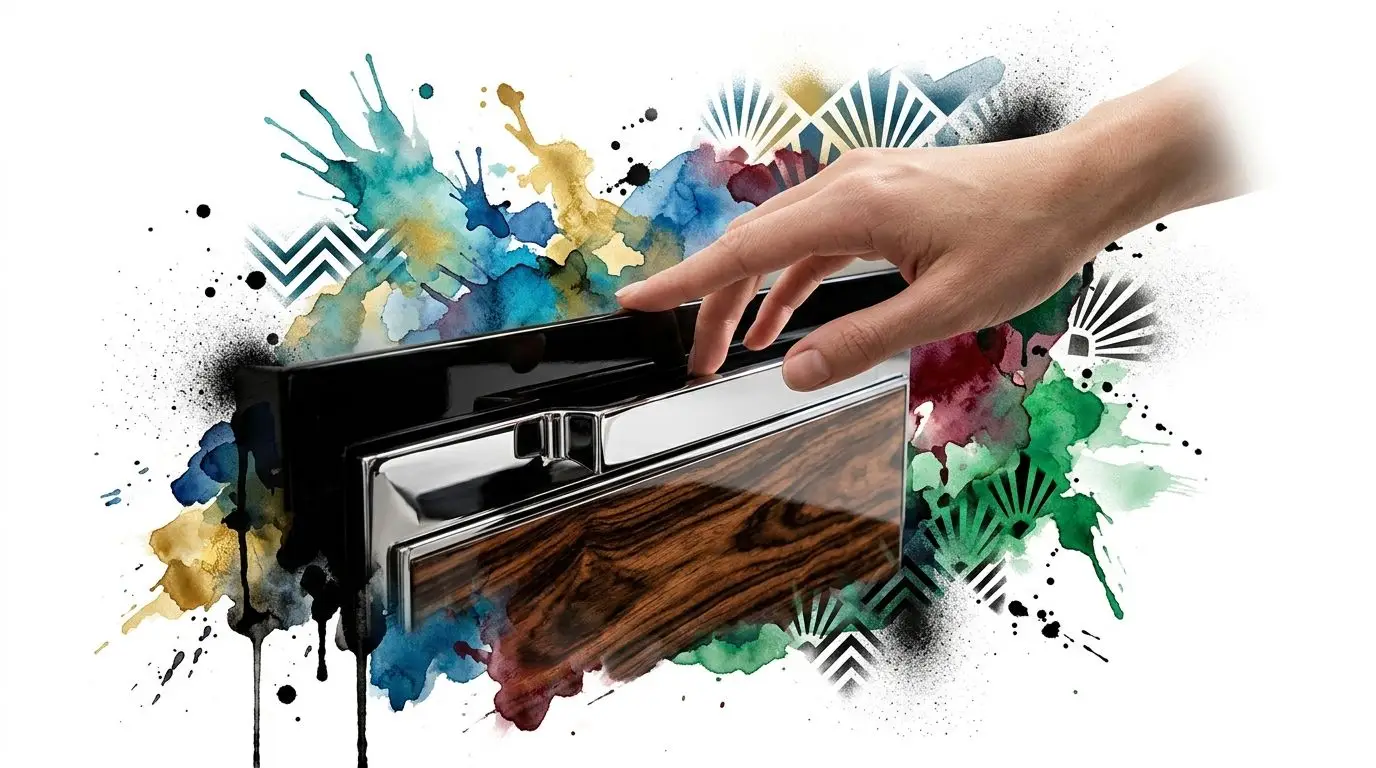
The surface is only convincing when the structure underneath is sound. Modern Art Deco furniture often uses high-density wood veneers over stable substrates, then receives a 5-to-7-layer lacquer finish cured to create a hard, mirror-like gloss that suits the style's polished character (Carrocel).
What good construction looks like
A beautiful finish means little if the piece flexes, gaps, or wears unevenly. The best Art Deco-inspired furniture feels dense, stable, and precise at the joints. Drawer movement should feel smooth, doors should align cleanly, and surfaces should read as intentional rather than merely glossy.
That is where material choice matters. Rich veneers can deliver the look, but the underlying structure has to support daily use. A well-built piece should survive routine living without losing its shape or sheen.
Sustainable customization can still honor the style
There is a real opportunity here for homeowners who want the drama of Art Deco without leaning on exotic materials. Sustainable custom ordering lets the design stay true to its geometry while using more responsible woods, finishes, and upholstery choices. For homeowners comparing ethical options, the sustainable furniture materials guide is a practical place to think through those tradeoffs.
Fabric matters too. Upholstery can carry the color story without overpowering the room, and a curated textile can give a piece the right balance of softness and structure. The Art Deco selection from The Fabric Company is a useful example of how pattern and palette can support the look without turning it gaudy.
Why craftsmanship protects the investment
The right finish is not just about appearance, it protects the piece. Better materials hold their form longer, age more gracefully, and make upkeep simpler. That is why serious buyers should care about the joinery, substrate, finish schedule, and upholstery method before they fall in love with the silhouette.
A piece that looks expensive but wears quickly is a bad buy. A piece that stays elegant through years of use is an investment piece.
Investing in Custom Art Deco Pieces
Furniture should earn its place over time. Custom orders using premium wood species and high-grade leathers can extend the functional lifespan of a piece by 30–50% compared with standard factory finishes, according to a 2023 Forest Products Laboratory study on material longevity (Yelp business page referencing the study).
Why custom is the stronger choice
Custom buying gives the homeowner control over proportion, finish, and feel. That matters in Art Deco, because the style depends on exact relationships between line, scale, and surface. When those relationships are right, the piece settles into the room instead of overpowering it.
The same logic applies to lifespan. Better materials and precise construction reduce the need for replacement, which is both practical and sustainable. That is the part many shoppers miss; the true cost is not the sticker price, it is how often the piece has to be replaced.
How a no-pressure process helps
A non-commission environment changes the conversation. It lets the homeowner ask sharper questions about wood species, fabrics, leathers, and finishes without feeling pushed toward the quickest decision. That kind of guidance is especially valuable for Custom Furniture, because the best results usually come from careful refinement, not impulse.
The process should feel measured and clear. A homeowner brings the space, the inspiration, and the practical constraints. The Design Experts help translate those needs into a piece that feels personal and durable.
Financing can support the right decision
A lifetime piece does not need to be rushed. Financing options are available, which makes it easier to choose quality construction and the proper finish without sacrificing the room's overall plan. That is a smarter use of budget than buying twice.
For homeowners comparing the path to a custom order, the guide to choosing a custom wood furniture maker is worth reading before making decisions on wood, upholstery, or finish. The right maker will respect the style and the home.
Buy the piece that solves the room and stays useful after the trend cycle passes. That is how a custom purchase becomes a long-term asset instead of a short-lived indulgence.
Caring for Your Investment Pieces
Good furniture stays beautiful when it gets simple, regular care. Lacquered surfaces should be dusted gently and wiped with a soft, dry or slightly damp cloth, never with harsh cleaners that can cloud the finish. Metal accents need occasional polishing, but only with products suited to the specific metal so the shine stays clean instead of streaked.
Upholstery deserves the same consistency. Vacuuming with a soft brush attachment keeps grit from settling into seams, and prompt spot cleaning helps prevent stains from becoming permanent. For families who want support with that upkeep, the upholstery cleaning services resource is a practical starting point.
Wood should be protected from avoidable abuse, not treated like a delicate object. Coasters, felt pads, and good placement away from direct heat or harsh sun do more than people think. They preserve the finish and keep the piece looking settled in the room.
A lifetime piece rewards steady care. That is the point of buying well, the furniture should work hard, age gracefully, and keep its character without demanding constant attention.
A CTA for Giorgi Bros. Furniture. Visit the South San Francisco showroom to compare finishes, touch the materials, and see how modern Art Deco furniture, Custom Furniture, and Amish Furniture can work in a Bay Area home. Book a Design Consultation to get no-pressure guidance, ask about Premium Mattresses, and review Financing options are available with a Non-Commission Sales Staff that knows how to plan for life, not just for today.