
A lot of Bay Area homeowners arrive at the same point. The walls are painted, the floors are finished, the dining table is chosen, and the room still feels a little flat. It needs one element that softens the space, catches light, and gives the home a sense of calm without looking staged.
That's where Oyster Shell Chandeliers often enter the conversation. They don't read like a hard-edged statement fixture. They read like natural sculpture. The shells add movement, texture, and a quiet glow that works especially well in homes that lean coastal, collected, or clean-lined contemporary.
They also raise smart questions. Are they durable enough for a coastal climate? Are the shells ethically sourced? Will the fixture still feel right years from now, or is it a short-lived trend? Those are the questions that matter to families who buy carefully and want investment pieces that last.
The Allure of Coastal Lighting in Bay Area Homes
A Bay Area home often asks for balance. Many interiors want warmth without heaviness, texture without clutter, and a connection to nature without turning every room into a beach theme. Oyster shell chandeliers solve that problem well because they bring in an organic material while still feeling refined.

In a dining room with linen textures and oak finishes, the fixture can act like jewelry. In a living room with plaster walls and soft upholstery, it can keep the space from feeling too polished. That mix is a big reason these chandeliers appeal to homeowners drawn to Bay Area Interior Design. The look feels relaxed, but it doesn't feel casual in a careless way.
There's also a timelessness to natural materials. Oyster shells don't have the sharp, dated look that some trend-driven fixtures get after a few seasons. They age more like woven grass, stone, or wood. Their beauty comes from variation, not precision, so the fixture tends to stay interesting over time.
Why the style fits this region
Bay Area homes often sit between influences. Some lean traditional. Some feel modern. Many combine both. Oyster shell chandeliers have enough softness to bridge those styles.
A few common examples make that easier to see:
- In a coastal-inspired home, the shells reinforce an airy, layered look without requiring obvious nautical décor.
- In a contemporary room, the texture offsets clean architecture and prevents the space from feeling cold.
- In an older home, the natural finish helps a new fixture feel less abrupt against established character.
Oyster shell chandeliers work best when the room already values texture. Think wood grain, woven rugs, matte finishes, and fabrics with depth.
That's also why many homeowners researching Furniture South San Francisco or planning a remodel end up looking at lighting as part of the whole room, not as an afterthought. A statement fixture changes how every other piece is seen.
A guide with local perspective matters here. Giorgi Bros. Furniture was founded in 1933 and is headquartered in South San Francisco, California, giving it a 93-year heritage as of 2026 according to PrivCo's company profile for Giorgi Bros. Furniture. That kind of continuity shapes a practical point of view. Good design isn't about chasing novelty. It's about choosing pieces with staying power, much like the ideas behind coastal design style for Bay Area homes.
What Defines a Quality Oyster Shell Chandelier
A family hangs a chandelier over the dining table, loves it for the first month, and then starts noticing small problems. A few shells sit unevenly. The frame sways more than expected when a nearby door shuts. In a home near the coast, moisture begins to test every weak connection. That is usually the moment people realize they were not just buying a look. They were buying construction quality.
A well-made oyster shell chandelier has three jobs. It must hold its shape, protect the natural shell material, and age gracefully in a real home. Beauty matters, of course, but long-term performance is what separates a lasting fixture from one that becomes fragile decoration.
The shell is only one part of the story. The hidden frame, the way each shell is attached, and the finish used on the metal all affect how the chandelier handles everyday movement and changing humidity. In Bay Area homes, especially those closer to salt air, those details matter even more because corrosion and adhesive failure usually begin where the eye does not look first.
What to inspect before buying
A good inspection works like checking the foundation of a house before admiring the paint color. Start with the structure.
- Frame quality: Look for a substantial metal frame with a finish suited to moisture, such as powder-coated or properly protected steel or iron. A weak armature can twist over time, which puts stress on the shells and attachment points.
- Attachment method: Ask how the shells are secured and whether the spacing is consistent by hand, not just attractive in a front-facing photo. Quality assembly shows up in repetition, balance, and clean transitions from strand to strand.
- Shell condition: Natural variation is part of the appeal, but the shells should still appear thoughtfully selected. Excessively thin, chalky, or poorly matched shells tend to age less gracefully.
- Finish consistency: Turn the fixture over mentally and ask whether it would still look considered from the side and below. Good workmanship reads clearly from every angle.
One more point deserves attention. Ethical sourcing is part of quality. For a buy-for-life customer, a natural material carries more value when the maker can explain where the shells come from and how they are processed, rather than treating the material as a decorative mystery.
Why construction matters in daily use
Chandeliers live with constant small stresses. Floors shift a little. Doors close. Air circulates. Seasons change indoor humidity levels. A quality fixture is built to absorb those minor interruptions without loosening, yellowing, or developing gaps in the shell pattern.
That principle shows up in furniture as well. Homeowners asking are dovetail drawers worth it are really asking whether unseen construction details justify the investment. The same question belongs here. A chandelier may win attention with shimmer and texture, but its long-term value comes from the joinery, finish, and assembly choices hidden underneath.
Shoppers who already appreciate contemporary furniture styles with clean lines and lasting materials often respond well to this way of judging lighting. The lesson is the same. Quiet craftsmanship usually lasts longer than flashy first impressions.
Practical rule: If the product description talks at length about style but says little about frame material, finish protection, shell sourcing, or assembly method, ask more questions before you bring it home.
For families furnishing a home for the long haul, that is the true standard. A quality oyster shell chandelier should still feel sound, balanced, and beautiful years after installation, not just on the day it is unboxed.
Exploring Styles from Coastal to Contemporary
Oyster shell chandeliers cover more stylistic ground than many shoppers expect. Some look breezy and casual. Others feel formal. Some belong over a farmhouse table, while others fit a crisp, architectural room with very little ornament.
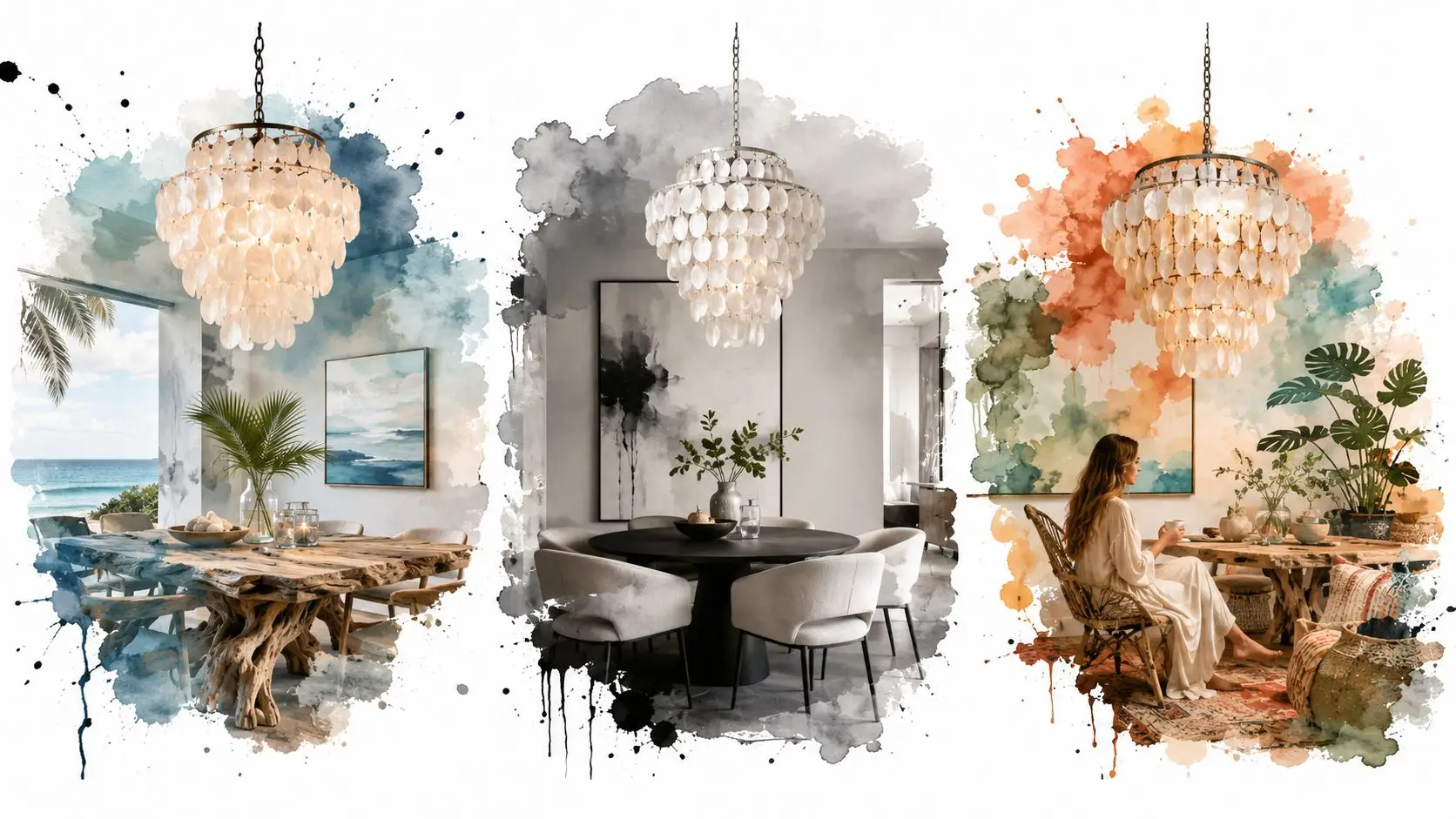
That range is why it helps to sort them into a few broad style families rather than thinking of them as one narrow category. A homeowner can then judge the fixture by shape, silhouette, and mood, not just by the shell material.
Coastal style feels relaxed and layered
This is often the first version that comes to mind. The frame is often soft in shape, the shells may hang in loose strands or overlapping tiers, and the overall effect is airy.
It pairs well with:
- Light woods and painted finishes
- Slipcovered or casual upholstered seating
- Natural rugs, woven accents, and soft neutrals
These chandeliers work especially well in breakfast areas, dining rooms, and bedrooms where the goal is serenity rather than drama.
Contemporary style feels cleaner and more edited
Some oyster shell chandeliers use tighter geometry and more controlled forms. The shell remains the star, but the silhouette is less free-flowing. The result feels calmer and more architectural.
A contemporary version often suits homes with:
| Room characteristic | Good chandelier direction |
|---|---|
| Clean furniture lines | More structured shell placement |
| Minimal décor | Stronger fixture shape as focal point |
| Mixed materials | Simpler form that lets texture do the work |
For homeowners exploring contemporary furniture styles, this can be the bridge between organic texture and a modern room.
Vintage or bohemian style leans decorative
These fixtures tend to have more romance. They may feel fuller, more cascading, or slightly more ornate. They can be beautiful, but they require balance. If the room already has a lot happening, a highly decorative chandelier can tip it into visual clutter.
A better fit might be a room with simpler supporting pieces, where the chandelier gets space to be expressive.
The best style match isn't the one that grabs the most attention in isolation. It's the one that makes the whole room feel more settled.
That's one reason no-pressure guidance matters in the design process. The showroom maintains a non-commission environment for its design consultants, ensuring a no-pressure, stress-free shopping experience where customers receive expert guidance without sales incentives influencing recommendations. A homeowner choosing between coastal softness and contemporary restraint benefits from that kind of neutral perspective, especially when the chandelier has to work with dining furniture, rugs, art, and scale already in the room.
Sizing and Placing Your Chandelier for Maximum Impact
A beautiful chandelier can still look wrong if it's the wrong scale or hung in the wrong place. That's where many buyers get stuck. The fixture may seem perfect in a photo, then feel too small once it arrives, or too low once it's installed.
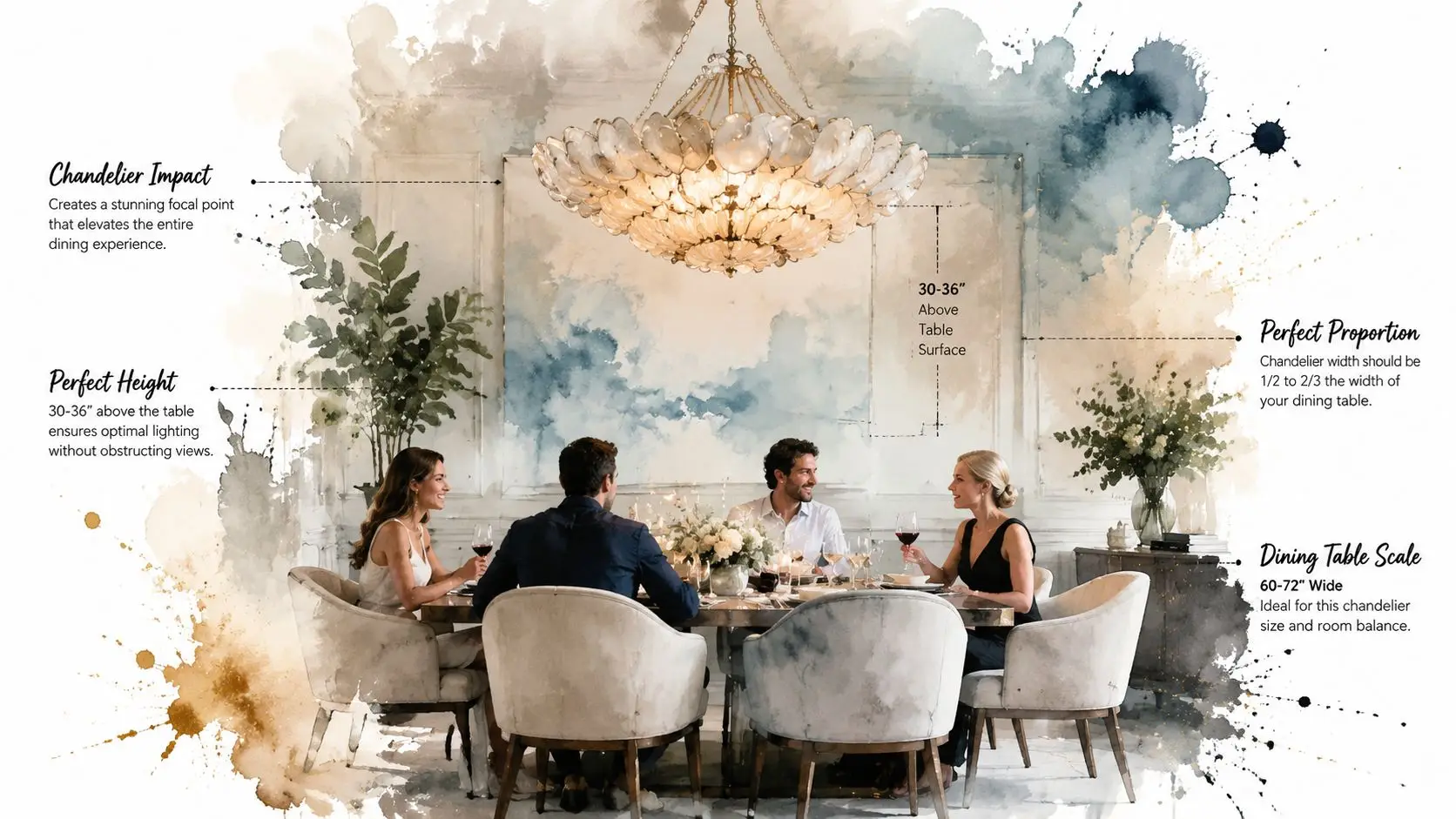
Scale is easier to judge in person than on a screen. The company operates a 50,000-square-foot full-service showroom in South San Francisco that houses extensive selections, enabling customers to physically test quality and visualize scale before purchase. That kind of in-person comparison matters because a chandelier has presence. Height, width, density, and visual weight all affect how it reads in a room.
A simple way to think about size
Instead of chasing perfect formulas, it helps to ask three practical questions.
What anchors the fixture?
Over a dining table, the table usually sets the visual field. In an entry, the room volume matters more.How open is the fixture?
A loose, airy oyster shell design can often be a little larger without feeling heavy.What else competes for attention?
A bold sideboard, large art, or strong ceiling detail may call for a more restrained chandelier.
Placement mistakes that change the whole room
A few common errors show up again and again:
- Too high over a table: The chandelier loses intimacy and starts to feel disconnected from the dining area.
- Too low in a walkway: The fixture becomes an obstacle instead of a focal point.
- Too small for the ceiling height: The room swallows it.
- Too dense for the space: The fixture blocks sightlines and makes the room feel crowded.
For rooms with complex layouts, it helps to map the fixture against furniture placement before making a final choice. That's where room layout planning ideas can help a homeowner see the chandelier as part of the room composition rather than as an isolated object.
A chandelier should feel centered in the life of the room, not merely centered on the ceiling.
Installation also deserves care. These fixtures are decorative, but they're still hardwired overhead pieces that need proper handling. Anyone weighing height, support, and hanging method may benefit from a practical guide to professional light fixture installation, especially when the fixture is more delicate than a standard metal pendant.
For shoppers building a room around Custom Furniture, this matters even more. The chandelier doesn't just need to fit the ceiling. It needs to relate to the table, the chairs, the sideboard, and the paths people use every day.
Lighting Bulbs and Technical Considerations
A well-made oyster shell chandelier can look beautiful in the showroom and disappointing at home for one simple reason. Light changes how the shells read.
Shells are a natural material, so they do not react to illumination the way glass or polished metal does. The bulb's color temperature, brightness, and beam spread all shape what you notice first. Texture, translucency, warmth, and even minor variations in the shell surface become more or less visible depending on the light you choose.
As noted earlier, shell preparation affects how well the fixture holds its color over time. That is one reason a buy-for-life shopper should pay attention to both construction and bulb selection. The chandelier and the bulb work together as one system, much like a fabric shade and lamp base need to suit each other to produce good light.
Bulb choice shapes the mood
Warm bulbs usually flatter oyster shells best. They bring out softness and depth, which helps the fixture feel settled and welcoming in dining rooms, bedrooms, and living areas. Cooler bulbs can make shell layers look crisper, but they may also pull the fixture toward a sharper, less relaxed look.
Dimming matters just as much as color temperature.
A chandelier over a dining table may need brighter light during homework, projects, or large family meals, then a gentler glow later in the evening. A compatible dimmer gives you that range without forcing the fixture to do one job all the time.
Bulb shape also deserves a quick check. Exposed bulbs that extend too far beyond the shell frame can distract from the fixture itself and create glare at eye level. Smaller bulbs, or bulbs tucked neatly within the body of the chandelier, usually keep the focus on the shells and produce a calmer effect.
Technical details that affect long-term performance
Heat should stay modest. Even though many homeowners now choose LEDs for efficiency and longevity, the safer approach is still to avoid high-output bulbs that create unnecessary heat in a delicate natural fixture. Oyster shell chandeliers are decorative pieces with wiring, suspended components, and repeated points of attachment. Over time, excess heat and vibration can put stress on those connections.
Humidity is another part of the equation, especially in coastal homes. Salt air, damp conditions, and frequent temperature swings can be hard on metal fittings, socket parts, and chain finishes long before the shells themselves show obvious wear. For that reason, it helps to look for corrosion-resistant hardware and a finish that can handle marine-adjacent conditions.
Professional installation is often the wiser choice. The concern is not only safety at the ceiling box. It is also balance, wire tension, fixture support, and keeping the shell strands from twisting or rubbing in ways that can lead to chipping later.
For rooms that need both beauty and function, living room lighting ideas that balance fixture, bulb, and atmosphere can help you judge the chandelier as part of the whole lighting plan, not as an isolated accent.
Soft, warm, controllable light usually shows shell texture more gracefully than a brighter bulb alone.
Sustainability and Caring for Your Natural Fixture
Oyster shell chandeliers often get presented as if they're automatically sustainable because they use a natural material. That assumption deserves a closer look. Natural doesn't always mean responsibly sourced, and decorative shell products can raise real sourcing questions.
A key concern involves windowpane oyster shells used in decorative applications. According to Marine Conservation Philippines' oyster survey overview, there's a critical gap in existing content around the sustainability and ethical sourcing of these shells, which are exported from places like the Philippines where the species is under survey for conservation concerns. For a homeowner trying to furnish responsibly, that's not a small detail. It changes the buying conversation.
What an ethical buyer should ask
A conscientious buyer doesn't need a perfect supply-chain dossier, but a few questions are fair and useful.
- What species is being used? Different shell types don't carry the same sourcing story.
- How were the shells obtained? Decorative shells marketed as abundant “found” material may still come through complex export channels.
- Can the seller explain sourcing clearly? Vague language usually isn't reassuring.
That mindset aligns with a buy-it-for-life approach. The most sustainable room isn't the one filled with disposable décor labeled natural. It's the one built slowly, with lasting materials and fewer replacement cycles.
Simple care that protects the fixture
Daily care doesn't need to be complicated, but it should be gentle.
- Dust lightly: Use a soft, dry cloth or a very gentle duster. Rough handling can chip thin shell edges.
- Skip harsh cleaners: Strong chemical sprays can damage finishes, adhesives, or the shell surface.
- Check movement occasionally: If strands or shell panels seem loose, address the issue early rather than waiting for more stress on the fixture.
- Keep heat in mind: Bulb choice and fixture design both affect long-term appearance.
A natural fixture lasts longer when care is light, regular, and respectful of the material.
Homeowners looking deeper into responsible interiors often benefit from broader reading on sustainable furniture materials. The same principle applies here. A well-sourced chandelier that's cared for properly supports a home that values craftsmanship, longevity, and fewer throwaway purchases.
Styling Your Chandelier with Custom Furniture
An oyster shell chandelier looks best when the furniture beneath it supports the same mood. If the fixture is soft and organic, the room should echo that idea somewhere else. That might mean a dining table with visible grain, upholstered chairs with texture, or a living room that mixes structured seating with natural accents.
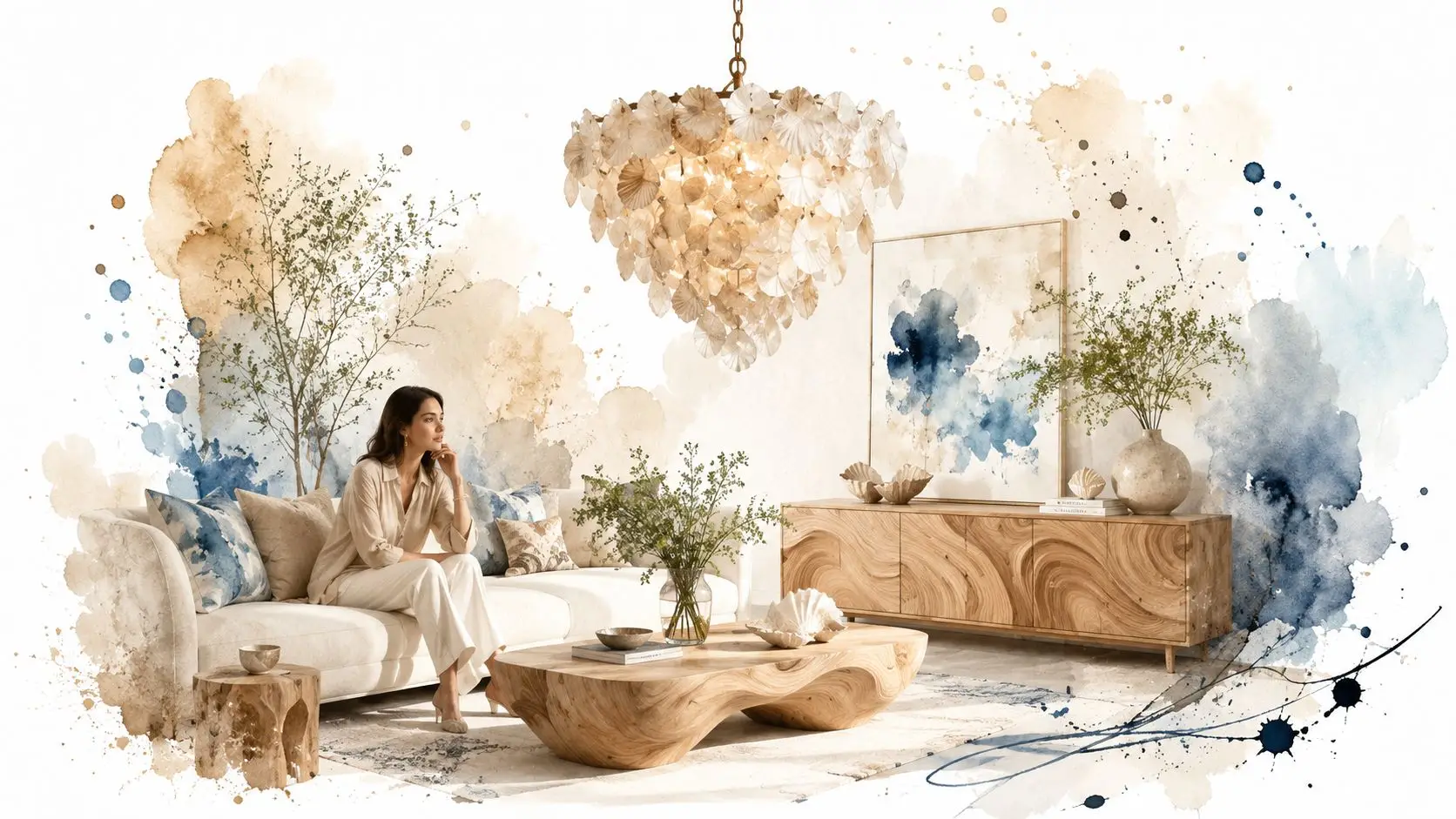
A coastal chandelier above a substantial dining table can feel grounded and serene. A more structured shell chandelier can sharpen a contemporary room that uses clean-lined case pieces and restrained upholstery. In either case, the best result comes from coordination, not matching.
That's where customization makes a difference. Giorgi Bros. specializes in custom order services offering extensive customization options including wood species, finishes, high-grade leathers, and designer fabrics, allowing customers to tailor furniture to their unique vision. For homeowners investing in Custom Furniture, that flexibility helps the chandelier feel integrated into the room rather than added at the end.
A few pairings that tend to work well
- Soft shell chandelier with solid wood dining furniture: The contrast between delicate light and grounded furniture creates balance.
- Cleaner chandelier silhouette with crisp upholstery: This keeps a contemporary room from becoming too stark.
- Natural shell texture with greenery: For homeowners who like a layered interior, Little Green Leaf's houseplant decorating guide offers helpful ideas for adding living texture without overwhelming the room.
A well-planned room also respects how people live. Families need surfaces that wear well, layouts that function, and materials that still look good years later. That's why investment pieces matter. The right chandelier isn't only decorative. It helps set the tone for a home built around comfort, longevity, and thoughtful choices.
For Bay Area homeowners looking for Furniture South San Francisco, thoughtful Bay Area Interior Design guidance, and Custom Furniture that supports a buy-it-for-life home, Giorgi Bros. Furniture offers a family-owned, non-commission experience rooted in craftsmanship since 1933. Visitors can explore 50,000 square feet of inspiration, compare scale in person, browse Amish Furniture, test Premium Mattresses, and work with Design Experts in a no-pressure setting. Financing options are available for those planning larger projects. Visit the South San Francisco showroom or book a Design Consultation to create a room where every piece feels considered, lasting, and right at home.