
A lot of homeowners are looking at a round scalloped mirror for the same reason. The room feels finished, but not complete. A wall above a dresser looks flat. An entry console needs something softer than rectangular art. A bathroom vanity needs a mirror with personality, but not something so ornate that it takes over the space.
That's where this shape earns its keep. A round scalloped mirror can brighten a room, soften hard lines, and act like functional wall décor at the same time. The key is choosing one with the right scale, the right frame, and the right long-term practicality. A beautiful mirror should work for daily life, not just for the photo.
For Bay Area homeowners, that matters even more. Rooms often need pieces that are visually light, durable, and flexible enough to move from one home to another. A well-chosen mirror can do that for years.
Table of Contents
- Beyond the Trend Why a Scalloped Mirror Is a Timeless Choice
- How to Choose Your Perfect Mirror Size and Material
- Styling Your Scalloped Mirror Room by Room
- How to Hang Your Mirror Safely and Securely
- Caring for Your Investment Piece for Years to Come
- Find Your Forever Mirror at Giorgi Bros
Beyond the Trend Why a Scalloped Mirror Is a Timeless Choice

A round scalloped mirror may feel current, but it doesn't come from nowhere. Decorative mirrors have a very long history. Mirrors were first made from polished copper in Mesopotamia and Egypt between about 4,000 and 3,000 BC, while polished-stone mirrors were used in Central and South America around 2,000 BC, as outlined in this history of mirrors and their evolving style.
A shape with real history
That long timeline matters. It tells buyers that a mirror isn't just a finishing touch invented by social media. It's one of the oldest decorative objects in the home, and the round format connects naturally to older convex and sunburst traditions that later evolved into cleaner, more graphic silhouettes.
The scalloped edge adds just enough ornament without making the piece fussy. That balance is why this shape has staying power. It offers detail, but it still reads clean from across the room.
A good round scalloped mirror works like a bridge piece. It can soften a tailored room or sharpen up a casual one.
That versatility is one reason the look has moved into mainstream retail. A consumer roundup featured more than 23 scalloped-mirror options, and major home retailers are actively selling round scalloped designs in varied finishes and sizes, which signals broad adoption rather than a narrow niche, as noted in this scalloped mirror roundup.
Why the style still works now
Its appeal is practical. Round mirrors break up straight lines from case goods, mantels, headboards, and tile grids. Scallops introduce texture without the visual weight of a thick carved frame. That combination gives a room softness and structure at the same time.
For homes that lean personal rather than formal, this mirror shape also pairs well with sentimental elements. A gallery wall might include family photos, original art, and even something tactile and custom, like a design your own picture blanket, because the mirror's curved edge keeps the arrangement from feeling rigid.
A timeless piece isn't one that never becomes popular. It's one that still makes sense after the trend cycle passes. A quality round scalloped mirror does exactly that.
How to Choose Your Perfect Mirror Size and Material
The wrong mirror usually isn't ugly. It's just off. Too small over a dresser, too bulky in a narrow hallway, too delicate for a substantial vanity. Choosing well starts with proportion, then moves to material.
Start with scale, not style
A mirror should relate to what sits below it and to the breathing room around it. If the mirror is meant to anchor furniture, it needs enough presence to look intentional. If it's meant to open up a tight wall, it needs enough visual air around the edges so the scallop shape can read clearly.
Before buying, it helps to map the wall and surrounding furniture first. A practical measuring approach is the same one used for larger investment pieces. This guide to measuring furniture for your home gives a sensible way to think through width, clearance, and overall fit before anything goes on the wall.
Simple Sizing Guide for Round Mirrors
| Placement | Ideal Mirror Diameter | Tip |
|---|---|---|
| Entry console | Choose a size that feels centered over the console without reaching edge to edge | Leave enough wall showing around the mirror so the scalloped outline stands out |
| Bedroom dresser | Use a diameter that has visual weight equal to the dresser below | If the dresser is substantial, a timid mirror will disappear |
| Living room mantel | Pick a size that can anchor the fireplace wall, not just decorate it | Round shapes help offset the horizontal line of the mantel |
| Dining room sideboard | Choose a mirror large enough to reflect light and act as a focal point | Metallic or beveled finishes usually read dressier here |
| Bathroom vanity | Select a diameter that serves everyday use, not just decoration | Check frame depth and wall clearance before finalizing |
Practical rule: If a mirror looks right only when photographed straight on, it probably isn't the right scale for the room.
Then choose the frame material
Once the size feels right, the frame determines how the mirror will age.
- Wood frames feel warmer and more rooted. They often work well with traditional, transitional, and custom furniture interiors. They're especially useful when a homeowner wants the mirror to tie into bedroom or dining investment pieces.
- Metal frames usually read cleaner and crisper. They suit rooms that need a bit of polish without extra bulk.
- Painted finishes can be charming, but they deserve a little more scrutiny. In busy family spaces, chips and wear can become part of the look. In formal rooms, they can bother owners who prefer a neater finish.
Material also affects maintenance, which matters for a buy-it-for-life purchase. A mirror in a powder room lives a different life from one in a bedroom. A sunny wall, humid bath, or frequently dusted hallway all ask different things from the finish.
For homeowners building a cohesive room, custom ordering can make the difference between “close enough” and “it belongs here.” Matching a mirror frame to existing wood tones, finishes, or other Custom Furniture pieces creates a more settled home. That's especially helpful when the room includes handcrafted dining or bedroom furnishings in a specific species or stain.
Styling Your Scalloped Mirror Room by Room
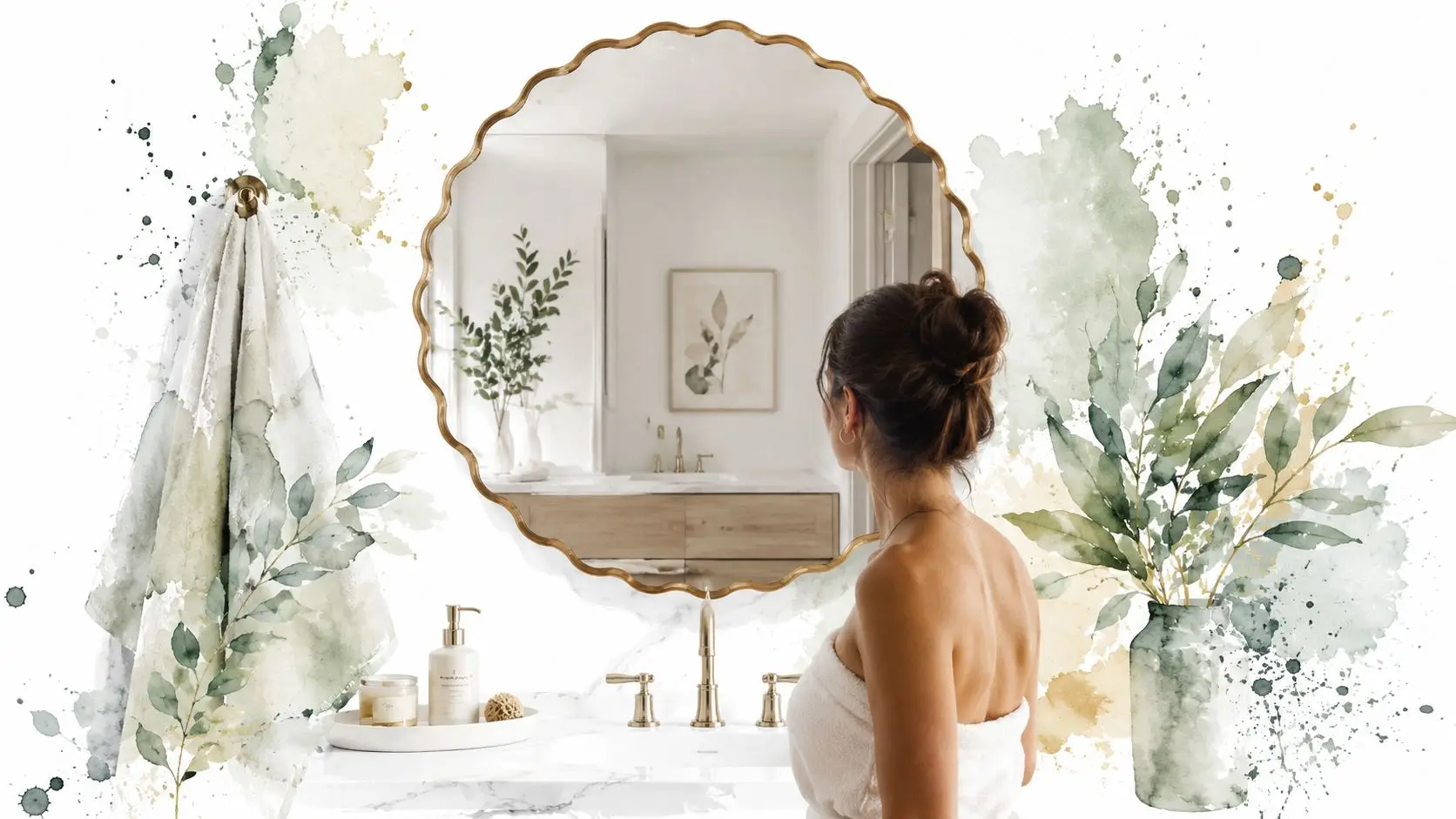
A lot of online advice stops at “it looks pretty over a console.” That doesn't help much when a homeowner is deciding whether a round scalloped mirror should act as wall art, a daily-use mirror, or both. Public coverage often misses those practical placement questions, even though retail listings show details like dimensions and frame depth. That gap is especially noticeable when buyers are deciding how a 28-inch scalloped mirror behaves in a small entry, over a dresser, or above a vanity, as discussed in this retail listing for a 28-inch round scallop mirror.
Entry, living, and dining spaces
In an entryway, this mirror does two jobs well. It gives a quick visual check on the way out, and it makes a narrow wall feel less boxy. A smaller round scalloped mirror can be especially effective in compact foyers because the curved perimeter keeps the vignette from feeling cramped. Homeowners working with a tighter footprint may also like this article on transforming small rooms with clever decor, because the same principles apply to mirror placement.
In a living room, a scalloped mirror often belongs above a mantel, a console, or a sofa table. The trick is to let it anchor the grouping rather than float alone. If the room already has a lot of square furniture, this shape introduces relief. For larger seating areas, this living room furniture layout guide can help homeowners think through how the mirror interacts with the whole arrangement, not just one wall.
The dining room is where reflective value becomes part of the mood. A mirror across from a light source adds life in the evening, and a scalloped edge keeps the room from feeling too formal. Gold or beveled versions tend to suit dining spaces because they hold their own next to wood case goods and overhead lighting.
Bedrooms and bathrooms
Over a dresser, a round scalloped mirror creates a softer focal point than a rectangular mirror. That matters in bedrooms, where too many sharp lines can make the room feel busy. A wood frame often looks calmer here than a glossier finish.
Bathrooms require a stricter eye. A decorative mirror can absolutely work as a primary vanity mirror, but only if the diameter, depth, and mounting height support everyday use. Some scalloped designs are better treated as accent mirrors because the frame steals too much reflective area or projects too far from the wall.
A vanity mirror has to earn its place every morning. If the shape is charming but the function is frustrating, it won't stay charming for long.
How to Hang Your Mirror Safely and Securely
A round scalloped mirror should be hung like a serious wall object, not like lightweight art. That's the safest approach, and it usually gives the cleanest final result too.

Treat it like a load-bearing object
Commercial product specifications show why this matters. 42-inch round scalloped mirrors are commonly listed at about 40 lb, with frame depths ranging from 0.05 in to 1.5 in, according to this product specification for a gilded scallop mirror. That combination of weight and stand-off means the hardware has to support both the load and the way the mirror projects from the wall.
A safe workflow is straightforward:
- Confirm the finished weight before choosing hardware.
- Find studs when possible or use a hollow-wall anchor rated for the full load.
- Mark both hang points with a level so the mirror won't rotate.
- Pre-drill if the wall material calls for it.
- Set the top hardware first, then lower the mirror carefully onto the lower support.
For homeowners who prefer to leave installation to professionals, this furniture installation service overview is a practical reference point for what full-service setup can include.
Mistakes that cause trouble
The biggest mistake is using a single centered hook. On a heavier round scalloped mirror, that increases the chance of subtle rotation. Because the scalloped perimeter disguises minor tilt at first glance, the mirror can look “almost right” while still hanging crooked.
The second common problem is ignoring frame depth. A beveled or recessed frame can sit unevenly if the wall isn't perfectly flat or if the hardware doesn't account for projection. That's where careful bracket choice matters more than people expect.
For readers who like step-by-step wall-mounting visuals, The Sofa Cover Crafter's installation guide is about shelves, but the basic habits of measuring, leveling, and anchoring are useful here too.
Two-point hanging usually gives a round scalloped mirror the stability that a single hook can't.
Caring for Your Investment Piece for Years to Come
A buy-for-life mirror needs simple habits, not fussy rituals. The challenge with this shape isn't the glass alone. It's the edge detail, the finish, and the room it lives in.
Independent retail pages confirm that scalloped round mirrors are sold in multiple materials and finishes, but they don't do much to compare maintenance burden, longevity, or climate suitability. That leaves buyers to sort out practical care on their own, especially because scalloped edges collect dust and materials age differently in humid bathrooms or sunlit rooms, as seen in this marketplace view of scalloped round mirrors in varied materials.
Cleaning the glass and the frame
The safest cleaning routine is gentle and consistent.
- Dust first: A dry, soft cloth removes loose buildup from the frame before any glass cleaner is used.
- Spray the cloth, not the mirror: That helps reduce the chance of moisture slipping behind the frame edge.
- Work the scallops by hand: A tight fold in the cloth usually reaches those curves better than broad wiping.
- Match the cleaner to the material: Wood, painted, and metal frames don't all tolerate the same products equally well.
For seasonal upkeep throughout the home, this fall furniture maintenance checklist is a useful reminder that long-term care works best when it becomes routine rather than reactive.
What helps a mirror age well
Placement has a lot to do with longevity. Bathrooms expose frames to moisture. Bright rooms can be hard on some finishes over time. A hallway mirror may need frequent touch-ups because hands, coats, and bags pass by it every day.
A few sensible choices usually pay off:
- Choose durable finishes for active rooms: Decorative detail is lovely, but a family bath may need sturdier materials than a guest bedroom.
- Keep dust from settling into the profile: Scalloped edges reward light, frequent dusting better than occasional deep cleaning.
- Watch the wall itself: Moisture, surface irregularities, and temperature swings can all affect how a mirror sits and ages.
A lasting mirror is part design choice, part maintenance choice. Buyers who think about both usually stay happier with the piece.
Find Your Forever Mirror at Giorgi Bros

A round scalloped mirror earns its place when it does more than follow a look. It should fit the wall, support the way the room is used, and still feel right after furniture changes, paint updates, and the normal rhythm of family life. That's what makes it an investment piece instead of a short-term decorative purchase.
Why this piece fits a buy-for-life home
Homes built thoughtfully tend to mix function with warmth. A scalloped mirror does that well. It reflects light, softens stronger lines, and adds detail without demanding a full room redesign around it.
That's also why it suits homeowners who care about sustainability and long-term value. Buying once and buying carefully often costs less over time than replacing trend pieces again and again. The same thinking that guides Amish Furniture, heirloom dining sets, and durable bedroom collections applies here too.
A better way to shop for mirrors
Since 1933, families in South San Francisco have shopped for home furnishings with a more grounded goal in mind. They want pieces that last, advice that isn't pushy, and options that can be customized to the room they're building. In a showroom setting, the difference becomes obvious. Frame depth, finish tone, reflective clarity, and scale are easier to judge in person than on a screen.
For buyers considering a round option, this round mirror product page is one factual example of the type of mirror offered within the broader bedroom mirror assortment. Beyond mirrors, homeowners can also work with Non-Commission Sales Staff, explore custom orders in fabrics, leathers, wood species, and finishes, and coordinate the mirror with larger Custom Furniture plans for the whole room.
A home doesn't come together from pressure. It comes together from good decisions, made carefully.
Bay Area homeowners who want practical guidance, quality craftsmanship, and a no-pressure shopping experience can visit Giorgi Bros. Furniture in South San Francisco. The showroom offers 50,000 square feet of inspiration, custom order options, Premium Mattresses, and experienced design consultants who help clients choose investment pieces that fit their homes for the long haul. For personalized help with mirror placement, room coordination, or a full furnishing plan, book a Design Consultation or stop by the showroom to see the materials in person.