
A Bay Area homeowner often reaches the same point in a remodel or refurnishing project. The walls are painted, the flooring is in, and the room still doesn't feel right. Most of the time, the missing piece isn't color. It's seating.
That confusion makes sense. “Types of seating” sounds simple, but the choice affects how a room works every day. A sectional changes conversation. A dining chair shapes how long people linger at the table. A recliner can turn one neglected corner into the most-used seat in the house. Good seating doesn't just fill space. It supports routines, guests, comfort, and the way a home grows with a family over time.
For households looking at furniture in South San Francisco or planning a larger Bay Area interior design project, it helps to think in layers. Start with the main seats. Add the personal ones. Then judge every piece by comfort, material, size, and long-term usefulness.
Table of Contents
- The Mainstays of Comfort Sofas Sectionals and Loveseats
- The Individual Retreat Recliners Accent Chairs and Sleepers
- The Gathering Spots Dining Chairs Benches and Barstools
- The Finishing Touches Ottomans Stools and Outdoor Seating
- Beyond the Label Sizing Materials and True Comfort
- Choosing for a Lifetime A Guide to Quality and Customization
- Bring Your Vision to Life at Our South San Francisco Showroom
The Mainstays of Comfort Sofas Sectionals and Loveseats
The living room usually starts with one decision. What will carry the room every day? For most homes, that answer is a sofa, a sectional, or a loveseat.
How each piece shapes the room
A sofa is the classic anchor. It works well when a room needs balance and flexibility. A standard sofa can face a fireplace, sit across from a pair of chairs, or float in the middle of an open plan without taking over. It suits households that want one strong seating line and the freedom to rearrange around it later.
A sectional changes the whole conversation pattern of a room. The idea that seating arrangement influences interaction is well established. In instructional settings, rows support individual focus, while cluster and semi-circle arrangements better support discussion, as explained in this research summary on seating and student achievement. That same principle carries into the home. A U-shaped or L-shaped sectional naturally gathers people together and can make a large room feel connected.
A loveseat has a narrower job, but it solves real problems. It can soften a compact apartment, fit a sitting room, or pair with a full sofa in a larger living area. It also helps when a homeowner wants more seating without the visual weight of another full-size piece.
Practical rule: The larger the seat, the more strongly it controls traffic flow, conversation, and how open the room feels.
For readers comparing shapes, this sofa buying guide for the living room gives useful next-step questions about scale, use, and layout.
A simple fit check before ordering
Many sizing mistakes happen because people measure the wall and stop there. Seating needs more than wall width. It needs breathing room.
A quick check helps:
- Measure the footprint: Note the width and depth of the piece, not just the wall behind it.
- Trace the traffic path: People should be able to walk through the room without turning sideways around furniture.
- Check the visual weight: A sectional may fit on paper and still make the room feel crowded if the arms are thick or the back is tall.
- Think about daily posture: Movie-night lounging, upright conversation, and formal entertaining all ask different things from the main seat.
A sofa usually works best when the room needs structure without rigidity. A sectional fits homes where everyone gathers in one place. A loveseat makes sense when space is limited or when the room needs a supporting player instead of another anchor.
The Individual Retreat Recliners Accent Chairs and Sleepers
Some seating serves the room. Other seating serves the person. That's where recliners, accent chairs, and sleepers come in.

Where a single seat earns its place
A recliner used to be treated like a compromise. Comfort was high, but style often lagged behind. That's no longer the case. Today's recliners can look sleek and custom-fit, which means a homeowner doesn't have to choose between visual calm and physical ease.
For households that want support first, this helpful look at recliners for back support can narrow the search.
An accent chair does a different job. It adds contrast, color, texture, or shape. One swivel chair can loosen up a square room. A wingback can bring height to a low-profile arrangement. A pair of upholstered chairs can turn an empty corner into a conversation area.
The common mistake is treating accent chairs like decorations. They still need to be used. If the seat is too shallow, too upright, or too delicate for the household, it becomes a place to set laundry instead of a real seat.
A good accent chair should look intentional from across the room and feel welcoming when someone actually sits in it.
When flexibility matters most
A sleeper earns its keep in homes where space does double duty. A family room may also host overnight guests. A home office may become a guest room on holidays. In those situations, a sleeper isn't a backup plan. It's smart planning.
A useful way to judge these pieces is by the problem they solve.
| Seating type | Best for | Watch for |
|---|---|---|
| Recliner | Personal comfort, reading, recovery, TV viewing | Wall clearance, seat depth, arm height |
| Accent chair | Extra seating, visual variety, conversation zones | Comfort, scale, fabric durability |
| Sleeper | Guests, dual-purpose rooms, compact homes | Mattress feel, opening space, daily sit comfort |
Some rooms need one special chair more than they need another sofa. A recliner by a window can become the seat used every evening. A sleeper in a den can preserve flexibility without dedicating a full guest room. These are the pieces that make square footage work harder.
The Gathering Spots Dining Chairs Benches and Barstools
A dining room often reveals whether seating was chosen for looks alone or for real life. The difference becomes obvious about twenty minutes into a meal, when one chair still feels supportive and another starts sending people to the living room early.
A dinner table works like a seating system
Dining seating works best when it's treated as a group, not as isolated pieces. Event design has long recognized that seating formats are built around the experience they're meant to support. In that world, banquet seating uses round tables that typically seat 8 to 10 people to encourage dining and conversation, as described in this guide to seating arrangement types. That same thinking helps at home. Shape, spacing, and orientation all influence whether a table feels stiff or welcoming.
A dining chair is the standard choice because it gives each person a defined place and stable support. It suits formal dining rooms, everyday kitchens, and mixed-use spaces. Upholstered seats often feel warmer and more inviting for long dinners, while wood seats can look lighter and wipe down easily.
A bench changes the mood right away. It feels more relaxed and communal. It can slide under the table when not in use, which helps in tighter breakfast areas. It also makes room for different body positions, especially with children who don't always sit squarely through a full meal.
A dining bench can save visual space, but it won't suit every household. People who prefer firm back support often do better with a chair at least on one side of the table.
For readers choosing fixtures around the dining area, these expert chandelier tips for homeowners offer practical guidance on how overhead lighting and table size work together.
This collection of modern dining room chairs is also useful for comparing silhouettes, upholstery choices, and wood finishes in one category.
Breakfast corners and island seating
Kitchen seating has its own rules. Barstools and counter stools need the right relationship to the surface height, or the whole setup feels awkward. Too tall, and shoulders rise. Too low, and knees crowd under the counter.
Three details matter most:
- Foot support: A rung or footrest helps a stool feel stable during longer meals or homework sessions.
- Back shape: Backless stools tuck away neatly, but stools with backs support longer sitting.
- Traffic space: Stools need room behind them for someone to sit down and stand up without blocking the kitchen.
A family breakfast spot asks for durability and ease. A bar area may lean more decorative. The strongest choice is usually the one that handles both. That's the heart of good seating selection. It has to look right at first glance and still feel right after the coffee, the meal, and the conversation.
The Finishing Touches Ottomans Stools and Outdoor Seating
Large seating pieces get the attention, but smaller pieces often do much of the daily work. They catch tired feet, hold a tray, offer a spare perch, and make a room feel complete instead of halfway done.
Small pieces that solve daily problems
An ottoman may be the most flexible seat in the house. It can serve as a footrest in front of a chair, extra seating when guests drop by, or a soft coffee table with a tray on top. In family rooms, storage ottomans are especially helpful because they hide throws, remotes, and small clutter without adding another cabinet.
This lift-top ottoman guide gives a helpful look at how one piece can combine storage, surface space, and seating.
A stool has a lighter touch. It can tuck beside a fireplace, sit next to a vanity, or move where needed when the house is full. Small stools also break the habit of overfurnishing. Instead of adding another bulky chair, a stool gives a room flexibility without visual heaviness.
A few strong uses stand out:
- At the end of a chair grouping: A stool gives one more person a place to sit without changing the layout.
- Beside a tub or entry: It creates a landing spot for towels, bags, or a quick seat.
- In layered rooms: It adds shape and function where a side table alone might feel too hard or formal.
Outdoor seating deserves the same standards
Outdoor furniture shouldn't be treated like an afterthought. If a home uses a patio, deck, or garden area often, those seats deserve the same care as indoor seating. Comfort still matters. Materials still matter. So does the intended use.
A deep outdoor lounge chair suits slow evenings and conversation. A more upright dining seat fits meals and gatherings. The best outdoor choices are the ones that reflect how the household spends time outside, not just what looks appealing in a catalog.
Outdoor seating lasts longer when buyers match the material and construction to the weather, the sun exposure, and the amount of use, not just the style of the cushion.
These finishing pieces may look secondary, but they often determine whether a room feels settled, useful, and easy to live in.
Beyond the Label Sizing Materials and True Comfort
A chair can be called a dining chair, lounge chair, or accent chair and still feel completely wrong. The label only names the category. Comfort comes from geometry, materials, and construction.
Why dimensions matter more than names
Ergonomics references point to specific dimensions that affect comfort. One guide notes a seat depth around 16.5 inches for fixed seats and a backrest angle around 100 to 110 degrees, which helps show that comfort can be evaluated in measurable terms, not just by style name, as outlined in this discussion of ideal chair angles.
That matters because many shoppers describe discomfort in vague ways. They say a chair feels “off” or a sofa feels “too deep.” Usually, the body is reacting to one of a few factors:
- Seat depth: Too deep, and shorter users can't rest against the back comfortably. Too shallow, and the seat may feel perch-like.
- Back angle: Too upright feels formal and rigid. Too reclined can make conversation and dining harder.
- Seat height: If feet don't rest comfortably, posture changes quickly.
- Arm height: Arms that sit too high can push the shoulders up. Arms that sit too low may offer little support.
Comfort check: A seat should support the body without forcing it into effort. Knees, hips, back, and shoulders should all feel settled within a few moments.
For readers comparing textiles and wear characteristics, this guide to upholstery materials is a useful companion.
What to inspect under the fabric
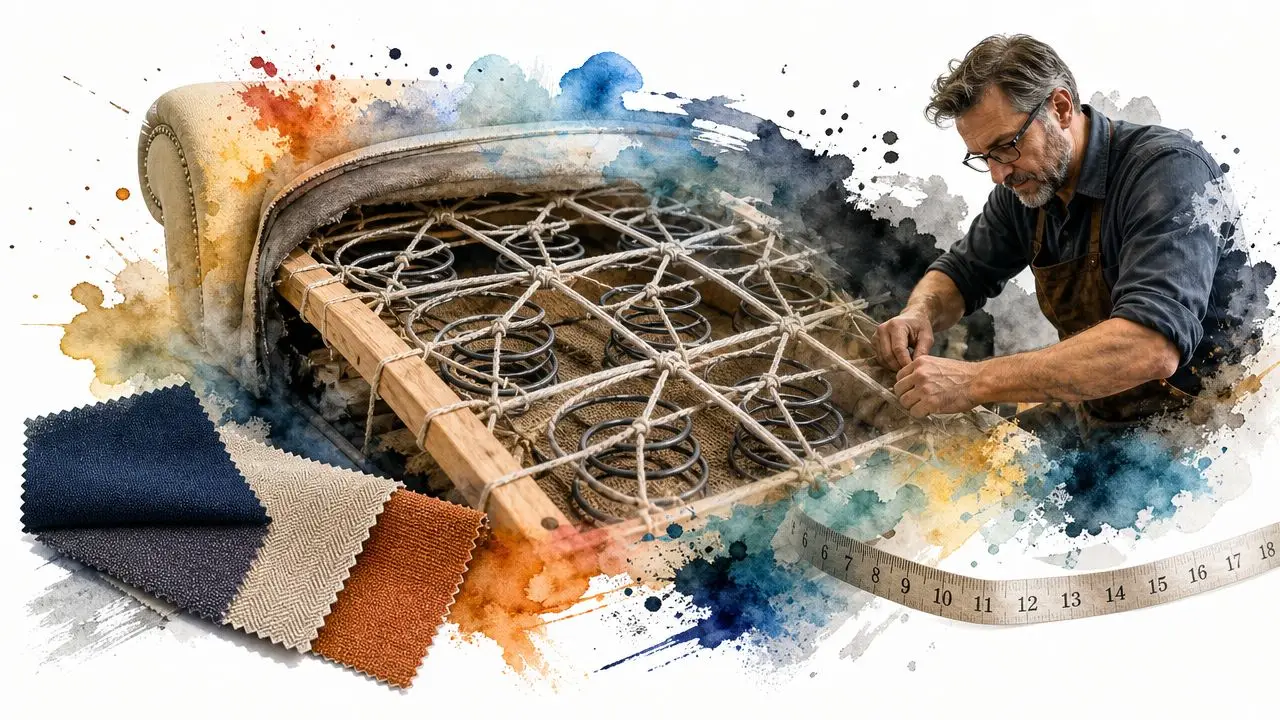
Materials tell only part of the story. Construction matters just as much. In fixed audience seating, industry specifications focus heavily on row spacing, geometry, and engineered consistency because seating performance depends on precise fit and structure, as described in this seating specification reference from Steelcase. Home furniture isn't the same category, but the lesson carries over. Good seating isn't accidental.
When judging an investment piece, buyers should look past the cover fabric.
| What to inspect | Why it matters |
|---|---|
| Frame material | A well-built frame supports long-term stability |
| Cushion feel | The seat should recover shape and support the intended posture |
| Joinery and tailoring | Tight seams and clean lines often reflect better workmanship |
| Fabric or leather choice | Surface material affects maintenance, aging, and daily feel |
A soft chair isn't always a comfortable chair. An oversized sofa isn't always relaxing. The best seating usually combines thoughtful dimensions, supportive cushioning, and durable materials in a way that fits the task. Reading, dining, working, and lounging each ask something different from the body. That's why true comfort starts with use, not with category names.
Choosing for a Lifetime A Guide to Quality and Customization
A few years from now, the right seat should still feel like it belongs in your home and in your life. That is the essential test of value. A well-chosen piece does more than fill an empty corner. It supports daily routines, adapts to family changes, and stays worth caring for.

Buy for life starts with better questions
Long-term furniture shopping works a lot like planning a good kitchen. You do not start with color alone. You start with how the space needs to work every day, then choose materials and details that can hold up to real use.
The same idea applies to seating. Before choosing a sofa, chair, or bench, it helps to ask a few plain questions.
- Will this piece still suit the household a few years from now? A chair that is easy to sit down in and rise from often serves a family longer than one chosen mainly for a dramatic shape.
- Will the materials age with grace? Some leathers soften and gain character. Some fabrics disguise everyday wear better than delicate textures.
- Is the frame and shape worth keeping if the surface is refreshed later? A well-made piece can often earn a second life through reupholstery instead of replacement.
Comfort over time also includes usability. Federal accessibility guidance for seating points to details such as arm support, seat dimensions, and ease of transfer, with a seating accommodation guide offering a useful reference point. In a home, those ideas become practical. Can a grandparent get out of the chair without strain? Will a teenager curl up in it for reading? Does it work for guests of different ages and abilities?
Those questions turn furniture shopping from a style exercise into a quality decision.
A family-owned showroom such as Giorgi Bros. Furniture can be a helpful place to compare those details in person, especially when weighing custom furniture, Amish furniture, and seating meant to stay in the home for many years.
Customization makes a piece worth keeping
Customization often decides whether a piece becomes part of the family or ends up replaced too soon. Size, cushion feel, arm height, fabric, leather, wood tone, and finish all shape how well the furniture fits the room and the people using it.
That matters in Bay Area homes, where one room may serve several purposes in the same week. A breakfast nook may need fabric that forgives spills. A living room chair may need firmer support for easier standing. A sofa may need a particular depth so one person can lounge while another sits upright with good back support. Small choices like these work like tailoring in clothing. The closer the fit, the longer the piece tends to stay useful.
There is also a practical side to long-term ownership. Well-made seating is easier to justify maintaining. Replacing cushions, renewing upholstery, or refinishing wood makes sense when the bones are good and the proportions are timeless. Giorgi Bros. has served South San Francisco since 1933, and that history reflects an approach many families still trust. Choose carefully, buy better, and keep pieces that deserve a long life.
That approach usually creates less waste, too.
If a move is part of the plan, this guide on furniture moving for Sydney homes offers a helpful reminder to ask how larger seating pieces will be protected, taken apart if needed, and set back up in the new space.
The furniture that serves a home best is often the furniture chosen slowly, built well, and customized enough to keep earning its place year after year.
Bring Your Vision to Life at Our South San Francisco Showroom
Reading about seating helps. Sitting in it helps more.
What a no-pressure visit should feel like
A showroom visit should answer the questions that photos can't. Does the seat feel supportive after more than a minute? Is the arm at a comfortable height? Does the leather feel supple or slick? Does the bench look inviting but sit too firm for a long dinner? Those answers only become clear in person.
That's especially true in a large Bay Area interior design project, where several rooms need to work together. A household may want living room seating, dining chairs, custom furniture for a specific floor plan, or premium mattresses for a refreshed bedroom at the same time. Seeing materials and proportions side by side makes coordination much easier.
At a family-owned business with roots in South San Francisco going back to 1933, the experience should feel calm and informed. The right consultants listen first. They ask about daily routines, room dimensions, comfort preferences, and long-term plans. They don't rush the process.
Why testing furniture in person still matters
A 50,000-square-foot showroom gives shoppers a chance to compare many types of seating in one place, from sectionals and recliners to dining chairs, benches, stools, and bedroom pieces. That matters because comfort is relative. One sofa may feel perfect until someone sits in a second option and notices better back support, better depth, or better cushion recovery.
There's also the question of customization. What's on the floor is often only the starting point. Many pieces can be ordered in different fabrics, leathers, wood species, and finishes, which is especially helpful for buyers looking for investment pieces instead of quick replacements. For households drawn to Amish furniture or other long-lasting styles, that flexibility supports a more personal and lasting result.
A no-pressure environment matters too. Non-Commission Sales Staff and Design Experts can guide without pushing. That makes it easier to test carefully, compare objectively, and choose what fits the home rather than what feels rushed. Financing options are available, which can help families invest in better-made pieces on a practical timeline.
A strong seating choice should still make sense years from now. The right showroom visit helps turn that idea into something concrete.
For Bay Area homeowners ready to compare types of seating in person, Giorgi Bros. Furniture offers a warm, no-pressure place to explore living room seating, dining pieces, custom furniture, Amish furniture, and premium mattresses in South San Francisco. Visit the showroom to touch the materials, test the comfort, and speak with Design Experts who can help shape a room around real life, or book a Design Consultation for personalized guidance.