
You're standing in front of a bookshelf that looked perfect in the showroom. Now it's holding a growing collection of novels, art books, family albums, and a few objects that somehow make every shelf heavier. One board has begun to bow. Another shows small dents near the edges. The finish still matters, but the wood underneath determines whether the piece remains useful and beautiful for years.
Choosing wood for bookshelf construction is therefore more than a color decision. Species, density, hardness, joinery, shelf design, finish, and room conditions all influence how a bookcase performs. For Bay Area homeowners, the right choice can turn a storage purchase into an investment piece that serves the home for decades instead of becoming a replacement project.
Why Your Bookshelf Wood Choice Matters More Than You Think
A bookshelf carries a quiet kind of weight. A few paperbacks create one demand, while dense reference books, oversized volumes, and decorative objects create another. If the shelf material lacks the necessary stiffness or the construction doesn't distribute the load properly, the first warning may be a shallow curve across the board. Later, the shelf can look tired even when the rest of the room still feels fresh.
Dents tell a similar story. Softer wood can show marks where books are slid, stacked, or shifted. A hard object placed on the shelf can leave a small depression that catches light every time someone walks past. Solid hardwoods generally offer better resistance to this daily wear, but species differ widely, so “wood” alone isn't a sufficient specification.

Wood remains the furniture benchmark
Wood has stayed the leading material in the global bookcases and shelving market, with 44.2% of market share across applications and regions. The broader category was valued at $15.8 billion in 2025 and is projected to reach $24.5 billion by 2034, representing a 4.8% CAGR, according to the timber and wood species guide. Those figures don't mean every household needs solid hardwood, but they do show why wood remains the commercial reference point for finish quality, warmth, and load-bearing performance.
That preference also has a long history. Furniture makers and homeowners have valued wood across generations because it can be shaped, finished, repaired, and integrated into many design styles. A well-selected bookcase can feel at home beside traditional furnishings, modern upholstery, or a layered Bay Area Interior Design scheme.
Look beyond the first impression
A glossy finish can make almost any display piece attractive at first glance. The better question is what happens after regular use. Readers comparing options can learn more from this guide to choosing hardwood for longevity and style and then ask practical questions about shelf thickness, supports, finish protection, and the expected load.
Practical rule: Choose the wood and construction for the heaviest realistic use, not the lightest arrangement on moving day.
That approach prevents a common regret. A bookshelf shouldn't only match the room when it's empty. It should still look composed when it's full, used, and part of everyday life.
Understanding What Makes Wood Strong Enough for Books
Wood strength sounds technical until it's connected to familiar experiences. Density describes how much material is packed into a given volume. A denser board often feels more substantial in the hand and tends to resist everyday compression better than a much lighter board.
Janka hardness provides another useful lens. It measures the force needed to create a standardized indentation in wood. In practical terms, a higher value generally points to better resistance against dents from books, objects, and routine handling. Hardness doesn't tell the entire story, though. Shelf span, board thickness, grain direction, supports, and joinery also influence whether a shelf stays straight.
A simple way to read the numbers
A neutral timber reference lists Norway spruce at 405 kg/m³ density and 1,680 N Janka hardness, while European beech reaches 710 kg/m³ and 6,460 N, and European ash reaches 680 kg/m³ and 6,580 N. English oak is listed at 675 kg/m³ and 4,980 N, with beech, ash, and oak identified as typical furniture species in the bookshelf market reference.
The spread matters. Norway spruce and European ash are both wood, but they won't respond identically when a shelf receives years of handling. The difference between about 1,680 N and 6,580 N illustrates why a species decision should account for use, not just tone or grain.
Hardness isn't the same as stiffness
A very hard surface can resist dents, but a long shelf can still sag if its design doesn't support the load. Stiffness describes how strongly a board resists bending. Think of a ruler held at both ends. A thin ruler bends easily across a gap, while a thicker or better-supported ruler stays straighter.
For a bookshelf, the practical questions include:
- Book weight: Will the shelf hold light paperbacks, dense hardcovers, or large reference volumes?
- Shelf span: How far must the board travel between side panels or center supports?
- Board design: Does the shelf have enough thickness and a stable edge?
- Support layout: Can adjustable shelves and fixed dividers reduce the unsupported distance?
Readers comparing familiar hardwoods can also review oak and maple furniture for a broader discussion of how those species differ in furniture applications. The goal isn't to memorize test values. It's to understand that hardness, density, and stiffness answer different questions, and a reliable bookcase needs the right combination.
Best Solid Wood Species for Bookshelves Compared
Solid hardwood gives homeowners a wide design vocabulary. Oak can support a traditional room with pronounced grain. Maple brings a cleaner, lighter presence. Walnut adds depth, while cherry develops a warmer character as it ages. The strongest choice depends on the bookcase's workload, the desired finish, and how closely the piece needs to coordinate with the rest of the home.
A useful species reference groups oak, maple, cherry, and walnut among strong furniture woods. It describes maple as especially dense and abrasion-resistant, while walnut is recognized as a durable hardwood suited to furniture use in the wood species library. Those broad distinctions help narrow the field, but samples remain important because each species accepts stain and reflects light differently.
Solid Wood Species for Bookshelves at a Glance
| Wood Species | Hardness and Durability | Look and Grain | Best For |
|---|---|---|---|
| Oak | Strong, durable, and well suited to regular wear | Pronounced grain with a warm, established character | Library walls, family rooms, and traditional interiors |
| Maple | Dense and abrasion-resistant, with a smooth working surface | Light, restrained grain that suits clean interiors | Modern offices, minimalist rooms, and frequently used shelves |
| Cherry | Durable furniture hardwood with a naturally warm presence | Rich reddish-brown tones that can deepen visually with age | Formal studies, dining-adjacent libraries, and heirloom designs |
| Walnut | Durable, furniture-friendly hardwood with strong visual appeal | Deep brown color and expressive grain | Statement bookcases, offices, and layered interiors |
| Ash | High hardness in the cited timber comparison, with strong daily-use potential | Open grain and a lighter, energetic appearance | Contemporary shelving and pieces needing visual movement |
| Beech | High density and hardness in the cited comparison | Even, relatively calm grain suited to many finishes | Heavy-use shelving and custom painted or stained designs |
Match the species to the room
Oak and ash work well when grain should remain visible and contribute to the room's texture. Maple makes sense when the bookcase needs to feel bright and quiet rather than visually heavy. Cherry offers warmth without requiring a dramatic grain pattern, while walnut can become the room's central wood note.
A custom order makes these distinctions more useful. The homeowner can select a species that suits the expected wear, then choose a finish that connects it to flooring, tables, cabinetry, or existing Amish Furniture. Giorgi Bros. Furniture offers custom order services for wood species and finishes, along with fabrics and leathers for broader furnishing projects.
Choose for handling as well as style
Hardwoods such as oak, maple, and walnut are commonly used for daily-use furniture because they're dense, sturdy, and resistant to routine dents. A protective finish also helps raw wood withstand moisture, stains, and scuffs while bringing out its grain, as described in this hardwood shelf lifespan and care guide.
The best choice is the one that fits both the room and the household. A walnut bookcase can feel too visually rich in one setting and exactly right in another. A maple case can provide a clean backdrop for colorful books, while oak can make a quieter collection feel more architectural.
Solid Wood Versus Plywood and MDF for Bookshelves
Species selection answers one question, but construction type answers another. Solid wood, hardwood plywood, and MDF can all appear in shelving, yet they behave differently when exposed to weight, moisture, edge wear, and future refinishing.
Solid wood offers a natural surface through the board, so small marks can often be addressed through careful repair or refinishing. It also supports the buy-it-for-life approach that makes sense for a heavily used bookcase. A strong hardwood frame and shelves can remain useful through changing rooms and changing tastes.
Hardwood plywood provides a layered construction that can offer practical dimensional stability. It's often useful for backs, cabinet components, or areas where movement needs careful control. A well-designed piece can combine solid wood where touch and wear matter with plywood where stability and structure matter.
MDF deserves a realistic humidity conversation
MDF can provide a smooth surface and a consistent base for paint. It may suit a sheltered, controlled interior when the design and finish are appropriate. Moisture changes the calculation, however. Independent material guidance notes that MDF can warp when moisture content rises past roughly 7–9%, or when one face absorbs more moisture than the other. The same guidance warns that unsealed MDF near humid areas can bow within weeks. Those figures and conditions are detailed in this MDF warping guide.
That doesn't make MDF automatically unsuitable. It means the buyer should ask where the bookcase will live, whether every vulnerable surface is sealed, and how the shelf will be supported. A damp-adjacent location demands more attention than a stable interior wall.
For a broader comparison of furniture board construction, solid wood versus particle board offers useful context. Homeowners can also consult this overview of cabinet material considerations from Trademaster Construction when comparing engineered panels and solid components.
Value means more than the initial price
A lower initial cost can lose its advantage if a shelf bows, chips, or can't accept future repair. Solid wood and quality plywood may require a more deliberate investment, but they can offer better long-term adaptability when construction and finish are sound.
MDF remains reasonable for the right application, particularly when a smooth painted finish matters and humidity is controlled. The decision should rest on location, load, finish, and expected lifespan, not on a simple claim that one material works everywhere.
Finishing and Construction Details That Protect Your Investment
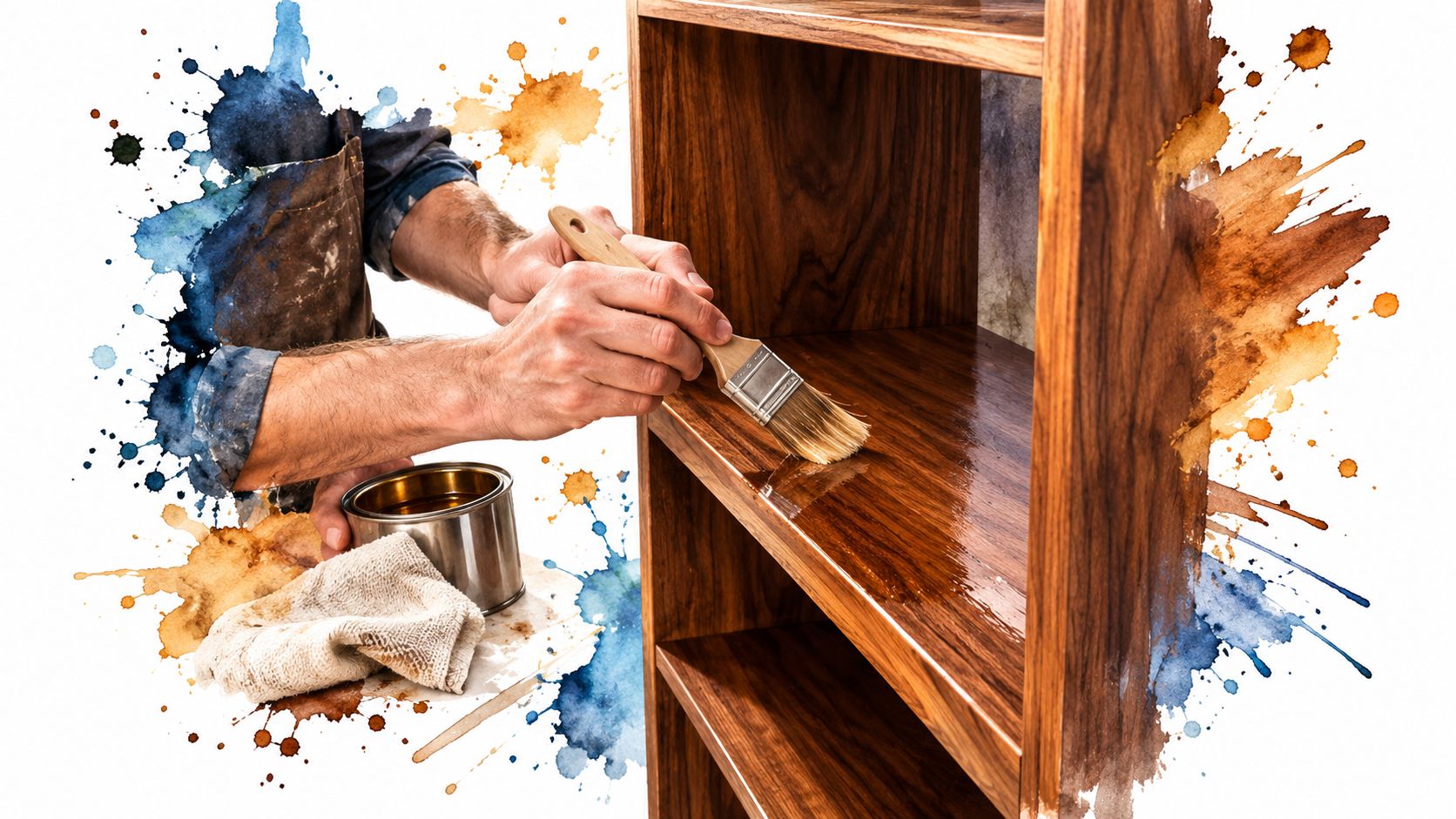
A good wood choice needs good protection. Finish creates a barrier against moisture, stains, and scuffs while emphasizing the grain beneath it. It also changes how the shelf feels in the room, since the same species can appear softer, richer, lighter, or more dramatic depending on the finish.
Construction carries the load
Shelf engineering deserves as much attention as surface appearance. A bookcase may benefit from fixed shelves, center supports, a properly proportioned frame, and adjustable shelves that let the owner distribute weight thoughtfully. The design should also keep the case square and secure, particularly when it's tall or heavily loaded.
Joinery matters because joints connect the parts that carry the load. Mortise-and-tenon construction, well-fitted dados, reinforced corners, and properly attached backs can help a bookcase remain stable as the wood responds to seasonal changes. Readers interested in the broader language of wood joinery techniques can use that resource to become more comfortable discussing construction quality.
A mortise-and-tenon joint guide can also help homeowners recognize why a joint's design matters more than decorative appearance alone.
Maintain the surface without making care difficult
Simple habits preserve an investment piece:
- Dust gently: Use a soft, dry cloth that won't drag grit across the finish.
- Address spills promptly: Moisture shouldn't sit on a shelf or collect at an edge.
- Control the room: Avoid placing wood directly beside persistent humidity or intense heat.
- Manage sunlight: Strong, direct exposure can alter the appearance of wood and finish over time.
- Load evenly: Keep heavier books distributed rather than concentrated at one point.
A hardwood shelf care guide reports that a well-maintained hardwood shelf can last 30 to 100+ years, with dense species such as oak, maple, and walnut at the upper end of that range. That lifespan supports a practical sustainability argument. A piece that remains useful for generations can reduce the need to replace furniture as styles or household needs change.
Choosing Sustainable Wood and Custom Options for Your Home
Responsible sourcing gives the buy-it-for-life idea a wider meaning. Longevity can reduce replacement demand, but the material should also come from a source that respects legal and sustainable forestry practices. FSC labeling gives buyers a concrete way to evaluate this question. The Forest Stewardship Council states that FSC labeling indicates materials originate from sustainable and legal sources, as explained in this sustainable furniture certification guide.
The label doesn't answer every question about a bookcase. Buyers can still ask about the species, finish, construction, repair options, and expected use. Together, responsible sourcing and durable construction create a more complete sustainability standard than appearance alone.
Customization solves practical problems
A custom bookcase can fit the wall, ceiling height, reading habits, and visual rhythm of a specific room. The homeowner can select:
- Wood species: Choose the grain and hardness that suit the room and expected handling.
- Finish: Coordinate tone and sheen with existing furnishings.
- Dimensions: Adapt width, height, and shelf arrangement to the available space.
- Construction details: Specify supports, adjustable shelves, backing, and hardware.
- Related furnishings: Extend the palette through custom fabrics, leathers, and wood finishes.
Custom Furniture becomes more than a decorative preference. A properly fitted case can use wall space efficiently and remain relevant if the household changes. Selecting one finish across a room can create cohesion, while mixing complementary species can add depth without requiring every piece to match exactly.
See and compare materials in person
Giorgi Bros. Furniture's 50,000 square foot showroom in South San Francisco gives Bay Area homeowners a place to see furniture materials at full scale and compare finishes by touch and sight. The team's non-commission Consultants and ASID design professionals can discuss wood species, finish choices, room proportions, and complete furnishing plans without tying guidance to a commission.
That environment supports a calmer decision. Homeowners can bring measurements, photos, and a list of the books the case must hold. A no-pressure conversation often reveals that the right solution isn't the most elaborate one. It's the one that balances durability, repairability, responsible sourcing, and a finish the household will still enjoy years from now.
Bring Your Ideal Bookshelf to Life in South San Francisco
The clearest decision path starts with use. Consider the weight and size of the collection, the shelf span, the room's humidity, and the amount of handling the bookcase will receive. Then compare hardwood species by hardness, grain, and finish potential before evaluating solid wood, plywood, or MDF construction.
A quality finish and sound joinery protect the investment, while thoughtful dimensions prevent a beautiful piece from becoming awkward in the room. Buyers who want a long-term solution should also ask about responsible sourcing, repairability, and whether the design can adapt as the home changes. That's the practical meaning of buying for life. The initial choice carries more weight, but the furniture can provide value through many years of use.
Giorgi Bros. Furniture has served South San Francisco and the Greater Bay Area for over 90 years, with a family-owned, non-commission environment built around no-pressure guidance. Homeowners can explore custom wood species and finishes, including options associated with Simply Amish, while also considering complete room plans, premium mattresses, and other quality furnishings. Flexible financing options are available, and white-glove delivery is offered across much of the Western United States with location-based flat rates rather than per-piece fees, plus a nationwide carrier network beyond the team's direct delivery area.
For homeowners evaluating a maker or showroom, this guide to choosing a custom wood furniture maker provides another helpful way to frame the conversation. The right consultant should make the specifications easier to understand, not pressure the buyer into a decision.
Giorgi Bros. Furniture offers custom bookcases and shelving guidance with wood species, dimensions, and finish choices suited to Bay Area homes. Visit Giorgi Bros. Furniture in South San Francisco to see materials in person, or book a Design Consultation with the team's non-commission Consultants and ASID design experts.