
A lot of Bay Area households are standing in the same spot right now. The TV got bigger, the soundbar showed up, a game console moved in, the router landed wherever it fit, and suddenly the old console looks too small, too shallow, and too messy for the room. In one corner of the decision sits a hefty oak credenza that could last for decades. In the other sits a slim media wall that looks clean in photos but may or may not work once cords, speakers, and daily life enter the picture.
That's the question with home entertainment furniture. It isn't just about style. It's about how a household watches, listens, charges, stores, hides, vents, and lives.
That practical shift matters because this is no small category. The global entertainment furniture market was estimated at USD 23.17 billion in 2023 and is projected to grow at a 6.5% CAGR from 2024 to 2030, according to Grand View Research's entertainment furniture market report. Buyers aren't treating these pieces like throwaway accessories anymore. They're buying them as core furnishings.
For Bay Area homeowners, that should change how the purchase gets made. A good media console or entertainment center has to fit the room, support the equipment, and still look right after the next TV upgrade. That's why this category deserves the same attention as dining tables, bedroom casegoods, and other investment pieces.
Giorgi Bros. Furniture has been part of Furniture South San Francisco since 1933, and that long view still matters. No-pressure guidance, a non-commission environment, and a buy-it-for-life mindset tend to lead to better choices than rushing into whatever happens to be sitting in a carton somewhere. In Bay Area Interior Design, the pieces that age best are usually the ones chosen slowly.
What Home Entertainment Furniture Actually Does for a Living Room
A living room in Redwood City tells the story. One partner wants a warm, substantial wood piece with doors that hide the clutter. The other wants something visually lighter because the room opens to the dining area and kitchen. Behind the current console, charging cords are tangled, the kids' tablet cables slip to the floor, and the streaming box runs hotter than it should.
That's normal. Most households don't outgrow their entertainment furniture because they stopped liking the style. They outgrow it because the piece stopped doing its job.
It's a workhorse, not a prop
Home entertainment furniture anchors seating. It balances the wall. It hides equipment that nobody wants to stare at. It gives remotes, controllers, and media a place to live. It also takes abuse from daily use, sunlight, pets, and impatient cable installs.
Practical rule: If a piece only solves the photo problem and not the wiring, storage, and heat problem, it's the wrong piece.
That's why the decorative-only approach falls short. A good console has to handle both the visible room and the invisible mess behind the doors. In open-plan homes, it often has to do that while also helping the living area feel grounded instead of floating.
The buying decision is bigger than one wall
Bay Area homes ask different things from this furniture. A compact condo may need a low-profile console that keeps the room open. A hillside home with a large family room may need a longer, heavier piece that stands up to a bigger screen and more seating. A new build may need cleaner lines, while an older home may look better with a furniture-grade cabinet that feels collected rather than built by algorithm.
The smartest place to start is with function first, then form. Buyers comparing silhouettes and finishes should also study entertainment center design ideas that account for real room use. The right answer usually becomes obvious once the room's actual habits are on the table.
The Four Main Types of Home Entertainment Furniture Explained
A family buys a handsome cabinet, gets it home, and realizes it fits the screen but not the receiver, game console, router, or soundbar. Now cords spill out the back, doors stay cracked for heat, and the piece that looked right in the showroom starts failing in real life.
That problem usually starts with choosing the wrong category.
These four types cover almost every setup. The trick is knowing which one matches how your household watches, listens, stores, and lives.
TV consoles
A TV console is the standard choice for a reason. It sits low, runs fairly long, and handles the basics well. One screen, a soundbar, a streaming box, maybe a game console. Done.
This is the right pick for many primary living rooms, especially in open layouts where a bulky cabinet would make the wall feel heavy. Choose a console if you want the furniture to support the room without turning the television wall into a giant block of storage.
The limitation is straightforward. A console works best when your equipment count stays modest.
Media walls
A media wall gives the television area more authority. It usually includes taller storage, more visual presence, and enough capacity to hold a mix of equipment, books, and closed storage without looking pieced together.
This type earns its keep in a larger family room or any space where the TV wall has to do more than hold a screen. It can organize a busy household, reduce clutter, and make a long blank wall feel finished.
It also asks more from the room. If the space is tight or the architecture is already busy, a media wall can feel overbuilt fast.
Credenzas
A credenza is the sleeper choice. It often works better than a standard TV stand in homes where the screen matters, but should not dominate the whole room.
Use a credenza in multipurpose spaces, dining-living combinations, guest rooms, or bedrooms. It brings better furniture presence than many basic consoles and usually gives you useful storage without screaming "media setup."
The trade-off is function. Some credenzas look great but are less forgiving once you add larger components, heavier wiring, or several devices that need airflow.
AV cabinets
AV cabinets are built for equipment first. They tend to be deeper, more enclosed, and better suited to households with receivers, turntables, multiple consoles, dedicated speakers, or older components that still deserve a place.
If your setup is gear-heavy, this category saves headaches. You get more room for device stacking, better odds of proper ventilation, and a cabinet that does not force you to improvise every connection.
They are rarely the lightest-looking option in the room. That is the price of function, and in many homes it is worth paying.
Comparing the Four Main Types of Home Entertainment Furniture
| Furniture Type | Best For | Typical Depth | TV Size Range | Component Capacity |
|---|---|---|---|---|
| TV console | Everyday living rooms with one main screen | Shallow to medium | Small to large | Light to moderate |
| Media wall | Primary viewing rooms and long walls | Medium | Medium to very large | Moderate to high |
| Credenza | Multipurpose rooms and secondary TV areas | Medium | Small to medium | Light to moderate |
| AV cabinet | Equipment-heavy setups and serious media rooms | Deeper | Medium to large | High |
Here is the recommendation I give most often. Buy for the system you have now, plus a little room for the system you are likely to have in a few years. Families add soundbars, gaming gear, better speakers, and charging storage over time. Furniture that barely works on day one usually becomes a nuisance long before it wears out.
Sizing and Layout That Make a Room Feel Right
Too many people size the piece to the TV and stop there. That's how a screen ends up balanced on something that looks fine in isolation and wrong in the room.
Start with the room, not the screen
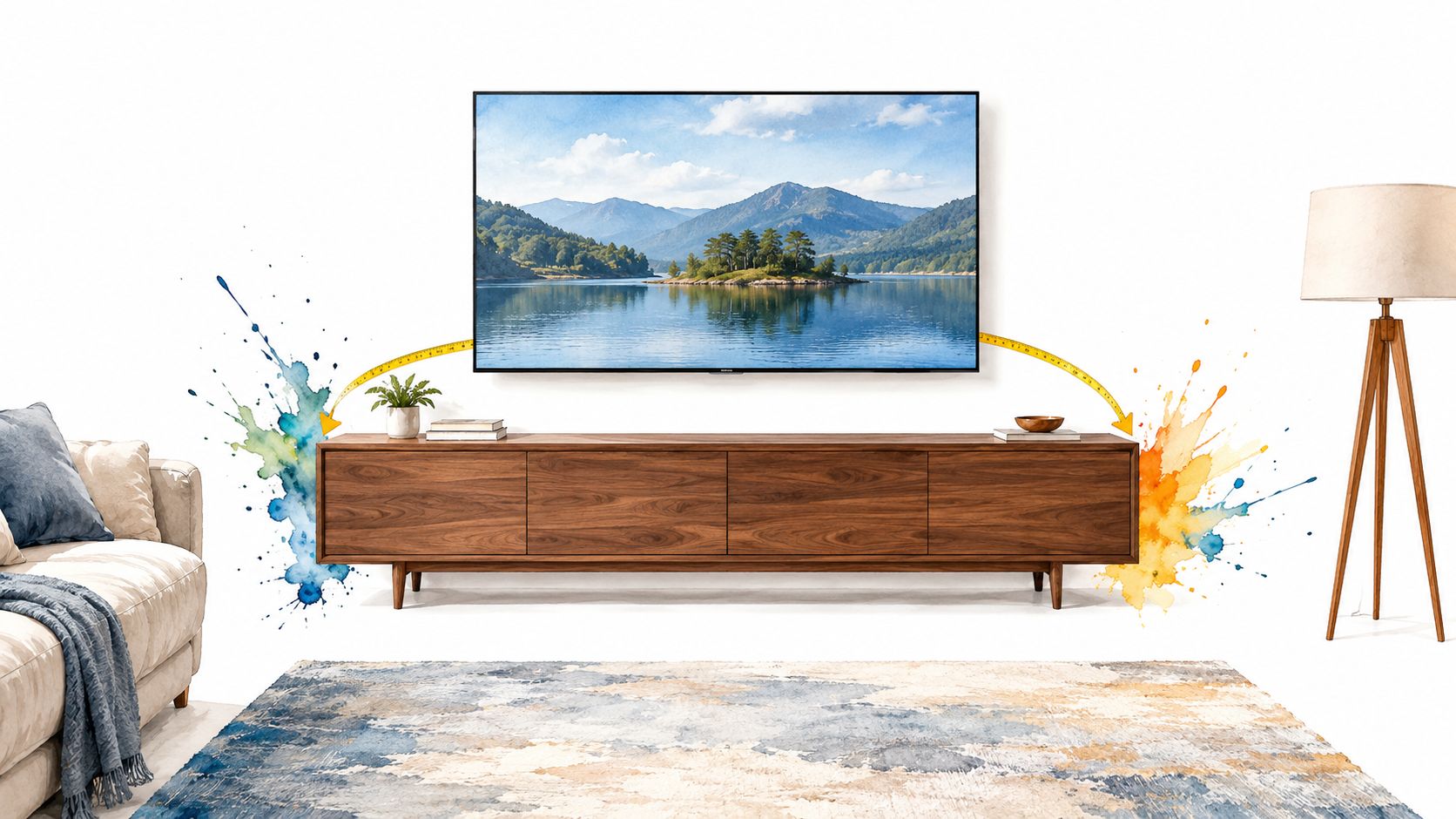
A console usually looks better when it runs longer than the television. A practical working rule is to target a piece that lands around 1.5 to 2 times the TV width, then check it against the wall, sofa, and circulation path. That usually creates a calmer, more grounded composition.
If the room is small, don't force a giant cabinet just because the screen is large. If the room is long and open, don't choose a narrow stand that leaves the whole wall feeling top-heavy and unfinished.
Proportion beats raw size
A 65-inch screen doesn't automatically belong on a huge cabinet. In a modest room, an oversized piece can crowd the walkway, pinch the seating area, and make everything else feel underscaled. In a great room, the opposite problem shows up. A small stand under a large screen leaves the wall visually stranded.
A few checks help:
- Wall balance: The furniture should support the visual width of the screen, not disappear under it.
- Sofa relationship: If the seating is broad and chunky, a tiny console usually looks accidental.
- Clearance: Leave enough space for side tables, traffic flow, and any swing doors or drawers.
The right scale makes the room feel composed even when the TV is off.
Height matters more than shoppers think
A low console often feels better in rooms with open sightlines, lower ceilings, or modern seating. A taller media wall can work when the wall is large, the ceilings are generous, or the room needs more vertical presence.
Bay Area great rooms create a special challenge because the entertainment wall often faces a kitchen island or dining area. In that setup, the furniture has to hold its own from multiple angles. Thin pieces can look skimpy from across the space. Overbuilt pieces can feel heavy if they interrupt the room's openness.
A good layout answers three questions at once. Does the wall feel balanced, does the seating feel properly oriented, and can people move through the room without negotiating around the furniture? If one of those fails, the piece is the wrong size.
Materials and Finishes That Age Well Over Decades
A media cabinet takes more abuse than shoppers admit. It carries a heavy screen, collects dust, gets wiped with the wrong cloth, absorbs heat from components, and takes hits from remotes, toys, and moving gear. If the material is weak or the finish is fussy, the piece starts looking tired long before the room does.
Solid hardwood is still the right answer for households buying once and expecting the piece to stay put for years. Oak, walnut, and maple each age in their own way, but all three can pick up patina instead of just damage. That matters in a living room, because entertainment furniture is used daily, not admired from across the room like a side table.
Veneer also deserves a fair hearing. A well-made veneer over a stable core can be an excellent choice on wide case pieces where wood movement needs to stay under control. The catch is simple. Good veneer performs well. Cheap substrate fails at the edges, swells from moisture, and shows every corner bump.
Finish matters as much as species.
High-gloss looks sharp in a showroom and high-maintenance in a family room. It shows fingerprints, dust, and fine scratches fast. Satin, matte, lightly textured, and softly sealed finishes age with a lot more grace, especially in Bay Area homes where sunlight can expose every flaw by midafternoon.
Customization should solve wear problems, not just color-match a rug. If your room gets strong natural light, skip fragile dark gloss. If kids are constantly touching cabinet fronts, choose a finish that hides oils and small scratches. If you want a wood piece to live through speaker swaps, console changes, and one or two moves, pay attention to how the surface can be maintained later. This guide to wood finishes that hold up over time is a useful starting point for that decision.
How Common Entertainment Furniture Materials Age Over 10+ Years
| Material | Aging Behavior | Repairability | Best-Fit Household |
|---|---|---|---|
| Solid hardwood | Develops patina, may show honest wear | High | Long-term homeowners, families, buyers who want refinishing potential |
| Quality veneer over stable core | Holds a clean appearance if well built | Moderate | Design-focused rooms needing broad surfaces and visual consistency |
| MDF with painted finish | Can show seam telegraphing and edge wear over time | Low to moderate | Low-impact rooms where paint color is the main priority |
| Metal accents | Can hide wear well if brushed or powder-coated | Moderate | Households wanting a tougher, lower-fuss mixed-material look |
One more point gets ignored in showrooms. Entertainment furniture is rarely a purely decorative purchase. It is a working piece that has to look good while living beside heat, wires, fingerprints, and constant daily use. Buy materials and finishes with that reality in mind, and the piece has a chance to look settled and intentional ten or fifteen years from now instead of worn out at year five.
Cable Management, Ventilation, and Device Density
A media cabinet can look perfect on the sales floor and still fail the first weekend it's in your home. You set the TV, slide in the receiver, game console, router, and streaming box, then start fighting a nest of cords, hot shelves, and doors that make remotes unreliable. That is not a styling problem. It is a performance problem, and it decides how satisfied you will be with the piece five years from now.
Wires need a planned route
Good cable management starts with access and ends with serviceability. One small hole in the back panel does not solve much. You want cables separated, labeled if possible, and easy to reach when one device gets replaced or reset.
Look for furniture with:
- Rear cutouts in the right places: Cords should exit without bending hard against the back.
- Removable or accessible back panels: Setup gets easier, and future changes do not turn into a half-day project.
- Space for a power strip: Plugs should not steal shelf depth from the equipment.
- Enough slack for service loops: You should be able to pull a component forward without unplugging the whole system.
This matters more in real homes than in showrooms. Families add soundbars, charging docks, modems, subwoofer receivers, and backup devices over time. The cabinet becomes an equipment hub, not a pretty box under a screen.
Heat exposes bad furniture fast
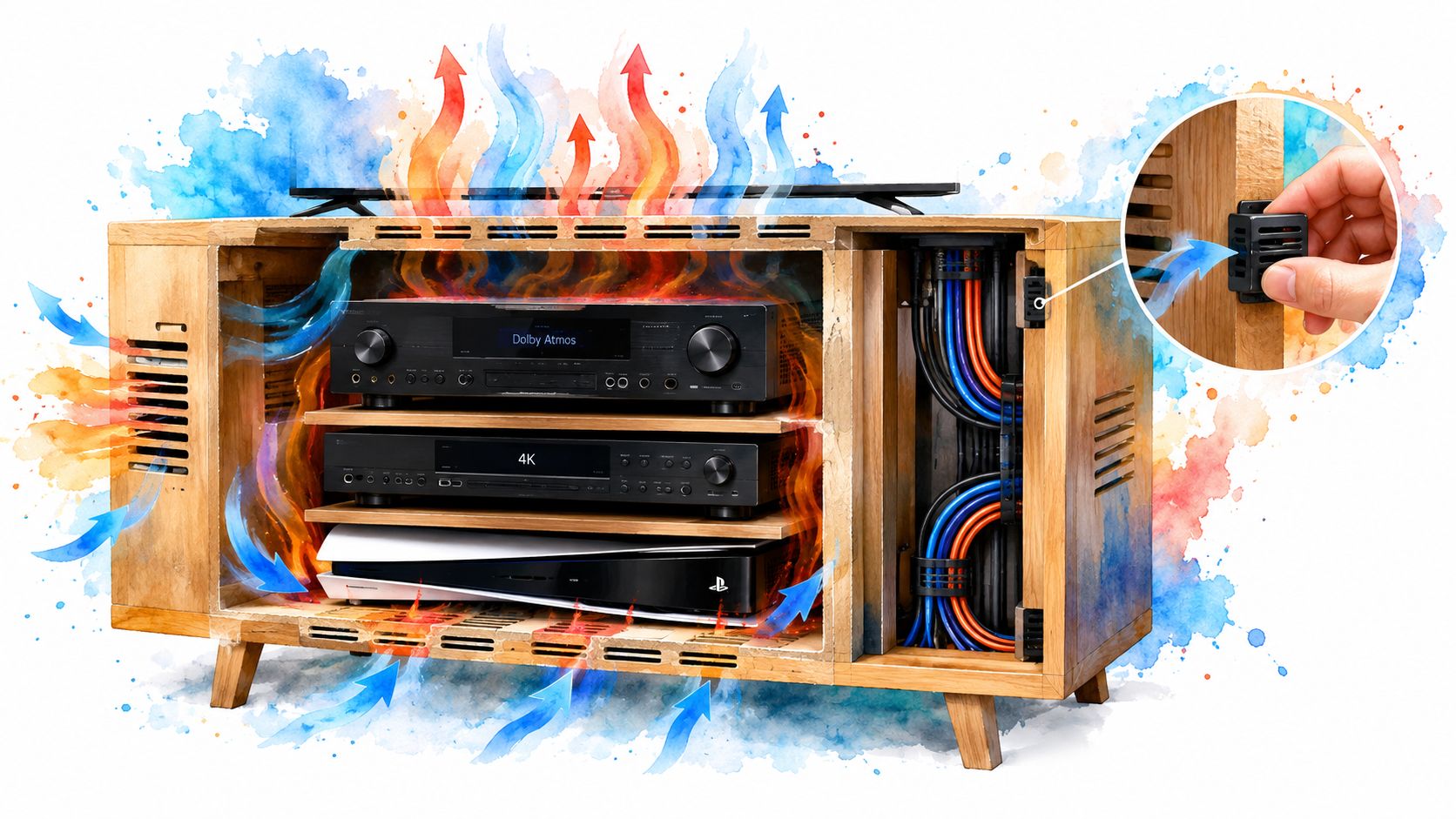
Electronics hate trapped heat. Receivers run warm. Consoles need room to breathe. Routers and streaming devices add to the load. Stack them tightly in a shallow cabinet with a mostly closed back, and you create a slow-cooking box for expensive gear.
Check the inside dimensions before delivery, not after. If a shelf barely fits the component and leaves almost no air behind it, the piece is undersized for modern use.
The right details are simple. Vented backs help. Open space behind devices helps. Shelves that do not crowd components help. Some heavy-use setups benefit from fan kits, but passive airflow should already be built into the furniture. If the cabinet works against airflow, the design is wrong.
Device density always increases
Buy for the setup you will have next, not only the one you have now. Households rarely keep the same equipment list for long, especially once kids start gaming, speakers get upgraded, or internet hardware changes.
Use this checklist:
- Depth: Enough for the deepest component, plus breathing room for cables.
- Shelf height: Enough for the tallest box, plus open air above it.
- Door style: Friendly to remote signals if components sit behind closed fronts.
- Access to outlets and reset buttons: You should not have to unload a shelf to restart one device.
- Space for one or two additions: Leave room for growth.
Multi-use rooms need even more discipline. If the same wall has to handle media storage and pet needs, this practical guide to hiding dog crate in shared furniture can help you plan a setup that serves the household without adding visual clutter.
Stock pieces often fall apart on these details. That is why buyers comparing standard sizes with custom builds should look closely at custom TV stand options. Cable routing, airflow, and realistic component fit are often the exact reasons a custom piece stays useful long after the showroom appeal wears off.
Why Customization Changes How Long a Piece Lasts
A family buys a media cabinet that looks good in the showroom, gets it home, and starts making compromises on day one. The drawers clear the baseboard by half an inch. The center shelf is wrong for the receiver they add two years later. The finish fights the rest of the room. That is how a short-term purchase happens.
Customization gives the piece a longer working life because it starts with the room and the household, not a standard factory size. Home entertainment furniture gets used hard. It stores expensive electronics, takes daily wear, and has to keep up as screens, speakers, and routines change. If the dimensions and layout are right from the start, the piece keeps serving the house instead of becoming the next thing to replace.
Fit is what extends lifespan
Longevity usually comes down to fit. Not showroom fit. Real fit.
Bay Area homes are full of awkward conditions that stock sizes handle poorly: uneven alcoves, older baseboards, shallow walls, fireplaces, and open-plan rooms where the media piece has to share visual space with everything else. A custom build can correct proportions, add needed storage, and make the furniture look settled instead of squeezed in.
Sometimes the fix is small. Two extra inches of depth can protect cord bends and give doors room to close properly. A lower overall profile can keep the wall from feeling top-heavy. More width can make the entire room look calmer.
The inside matters as much as the outside
A piece lasts longer when the interior is planned with the same care as the facade. Shelf spacing, drawer placement, door style, back-panel access, and hardware quality all affect whether the furniture still works after the household adds new gear or changes how the room gets used.
Material choices matter too, and they should be chosen for wear, repairability, and maintenance. In a custom order, that can mean a wood species that can be touched up years later, a finish that hides everyday fingerprints, or an interior color that makes components and remotes easier to find. Those are practical decisions, not decorative extras.
Custom order takes longer. It usually saves money later.
Floor stock wins on speed. Custom wins on staying power.
That trade-off matters most for households planning to stay put. If the piece is going to anchor the room for years, it should match the architecture, support the equipment plan, and hold up to real use. Replacing an almost-right cabinet in five years costs more than ordering the right one once.
At Giorgi Bros. Furniture, shoppers can work through custom furniture design services to specify dimensions, wood species, finishes, leathers, fabrics, and storage details. That process is slower, but it usually produces a piece that survives remodels, rearrangements, and equipment changes because it was built around the way the household lives.
Choosing Home Entertainment Furniture You Will Not Regret
Saturday night tells the truth. If the room turns into a mess of remotes, hot equipment, crowded walkways, and a cabinet that looked better in the showroom than it does at home, the problem was never just style. Home entertainment furniture is a long-term household tool. Buy it like one.
Regret usually starts with a rushed decision. Shoppers measure the TV, glance at the wall, and stop there. The better approach is to judge the piece by how it will handle movie nights, game days, music, charging cords, equipment changes, and the plain wear of daily life over many years.
A buy-it-for-life checklist
Use this in the showroom.
- Time horizon: If the piece is meant to stay through remodels, school years, and layout changes, buy better construction now.
- Equipment plan: Leave room for the next version of the setup, not only the components sitting in the house today.
- Room balance: Check the relationship to seating, windows, traffic flow, and the full wall. TV size is only one measurement.
- Daily use: Decide whether the piece needs to hide clutter, display objects, handle gaming gear, or do all three.
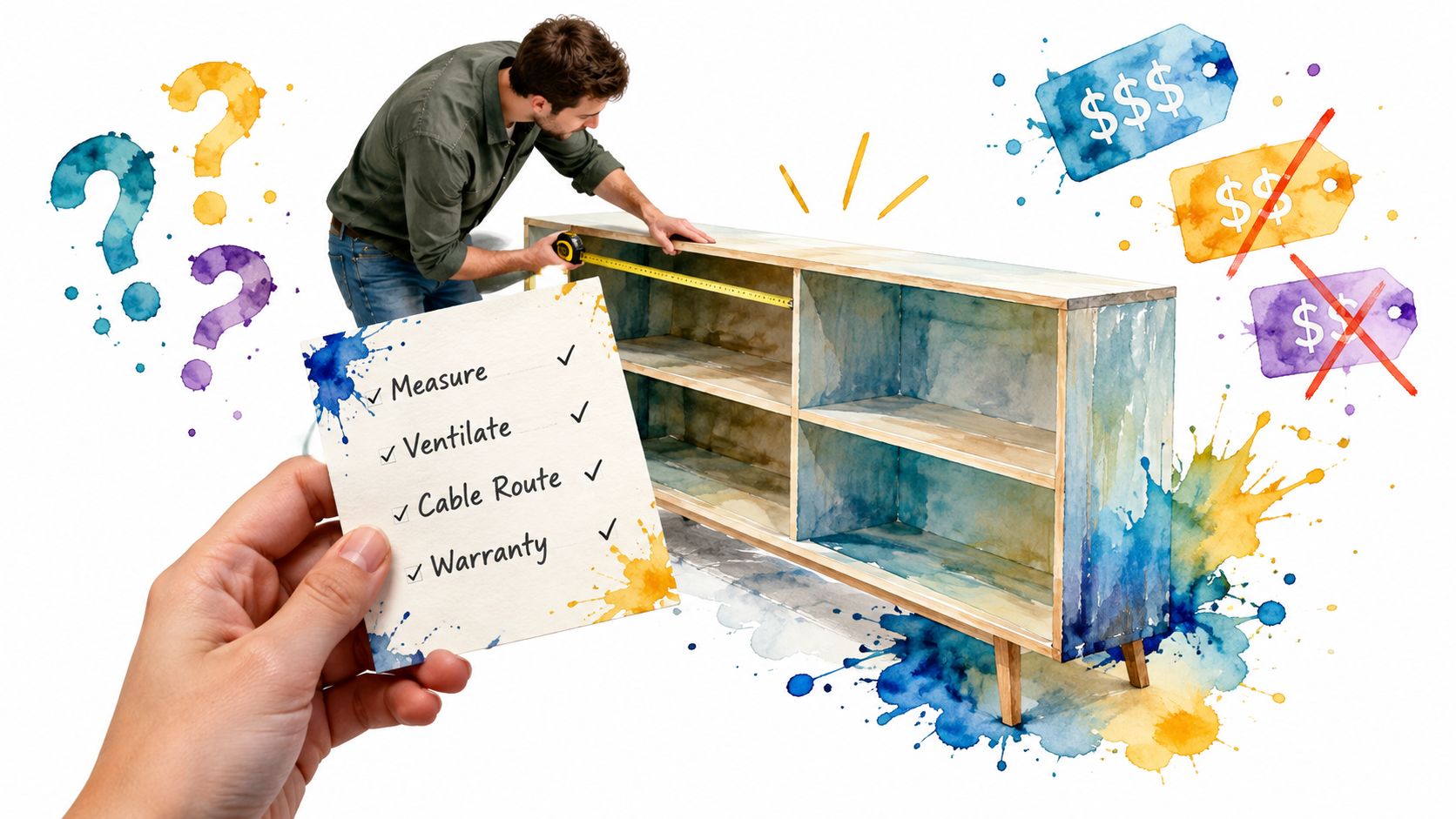
- Serviceability: Confirm cord access, ventilation, and enough interior clearance before it arrives.
- Adaptability: A lower, cleaner profile usually gives a room more freedom to change over time.
Rooms are changing. Families still watch plenty of TV, but they also want the same space to work for conversation, reading, music, and everyday downtime. That is why a well-proportioned credenza or console often lasts longer than a fussy media unit built around one moment in tech. It gives the room more than one job.
A smart purchase keeps working after the first setup is old news.
If the entertainment wall is part of a larger project, this step-by-step remodeling guide can help with sequencing, measurements, and install planning before furniture shows up. That kind of planning matters because once a large cabinet is in the house, every bad assumption gets expensive fast.
Delivery matters too. Large entertainment furniture should be brought in, placed properly, and set up with care, especially when stairs, tight turns, delicate finishes, or heavy stone tops are involved. Giorgi Bros. offers white-glove delivery for exactly that reason. A substantial piece should arrive ready to work in the room, not stranded at the curb or shoved into place.
Price deserves a longer view. Long-lasting furniture built for years of real use often costs less than replacing an almost-right piece after a few frustrating years. Buy for the way the household watches, listens, charges, stores, and lives. That is how you end up with home entertainment furniture you still respect a decade from now.