A living room does a lot of jobs in the Bay Area. It hosts guests, handles weeknight downtime, and often becomes the one place where a homeowner wants the room to look finished without making it feel formal. That is exactly where a bar cabinet in the living room earns its keep, because it adds storage, surfaces, and presence without turning the room into a dedicated entertaining zone.
The right piece should feel like an anchor furniture decision, not a seasonal accessory. Families who buy for the long run usually regret the flimsy option first, then end up replacing it later. A better cabinet should hold its place, work hard, and still look appropriate when the rest of the room changes around it.
Why a Bar Cabinet in Your Living Room Is Worth the Space
A good bar cabinet solves a familiar problem. The room needs to function as a gathering place, but the bottles, glassware, and serving tools have nowhere deliberate to go. Rolling carts can help for a while, but they rarely feel settled, and they tend to look temporary the moment the room gets more refined.
That is why closed storage matters. The history of this furniture category explains the design logic clearly. Related liquor cabinets trace back to 18th-century Europe, where aristocrats used cabinets to secure and display imported spirits, and liquor-specific cabinets became common in the early 1920s in the United States after Prohibition began in 1920 pushed alcohol storage into discreet furniture with hidden compartments, mirrored interiors, bottle racks, and concealment features (history of bar furniture). The point is simple. A living room bar cabinet still works best when it hides the clutter and presents the ritual.
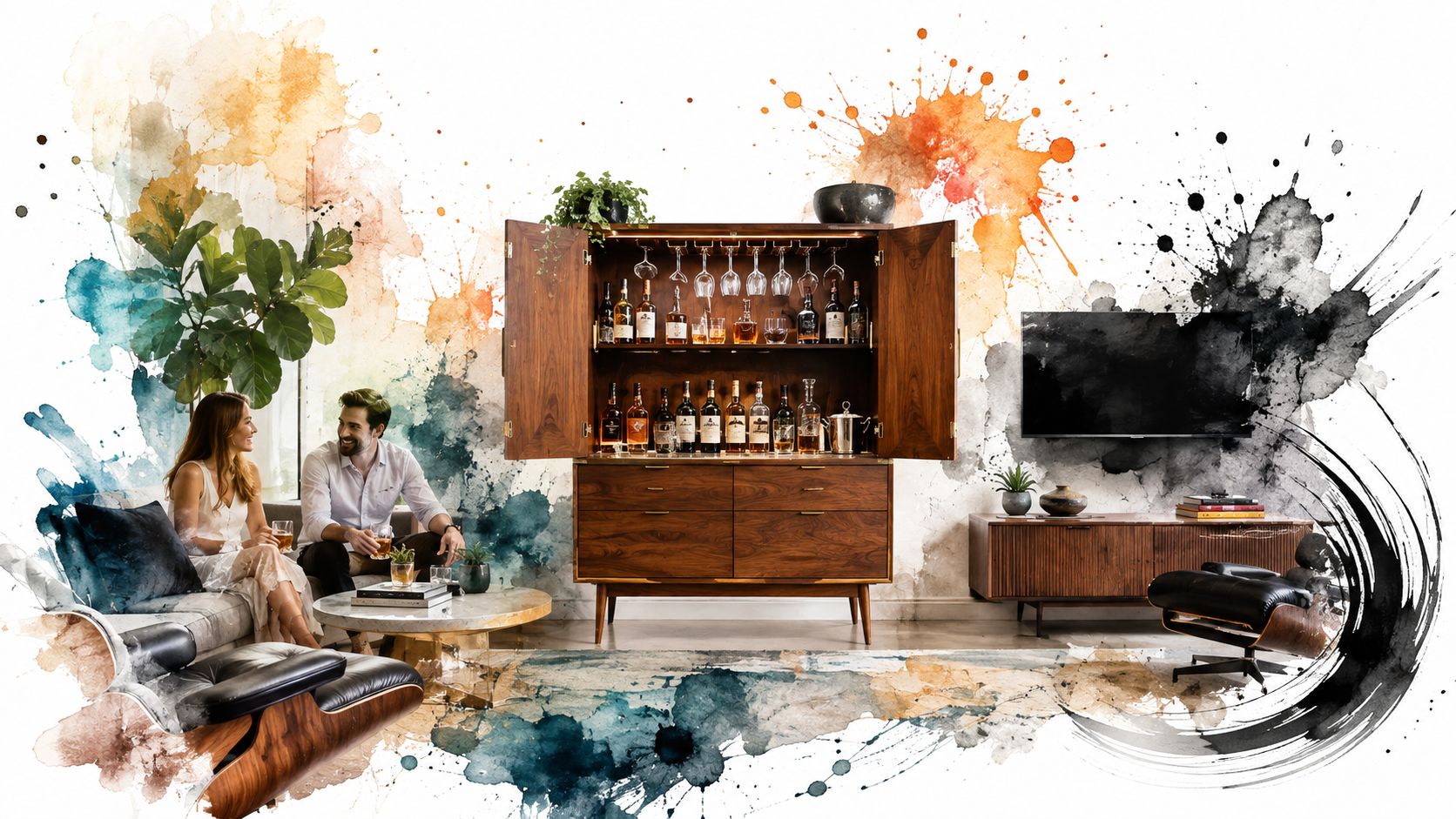
By the 1950s and 1960s, bar furniture became more decorative and visible, reflecting postwar entertaining culture and the home cocktail hour (history of bar furniture). That shift still makes sense today. A well-chosen cabinet can stand beside a sofa grouping, visually balance a media wall, and signal that the room is meant to be lived in, not just looked at.
Practical rule: if the piece doesn't improve the room when the doors are shut, it's the wrong cabinet.
A family-owned, non-commission showroom mindset fits this purchase well. The right cabinet should be chosen once, then kept for years, not swapped out because the first one was too trendy or too small. That buy-it-for-life thinking is the correct lens here, because quality furniture is an investment piece, and the room feels more deliberate when the storage earns its footprint over time.
Sizing Your Bar Cabinet the Right Way
A living room bar cabinet should feel like a compact case piece, not a pantry. The common market footprint sits around 36–40 inches wide, 16–18 inches deep, and 37–42 inches high (bar cabinet dimensions). Those proportions make room for glassware, bottles, and tools without taking over the circulation space a main living area needs.
Depth is the first measurement I watch. Once a cabinet goes past roughly 18 inches, it starts to project too far into walk paths and makes the room feel crowded. Height matters too, because a top in the 37–42 inch range sits comfortably for standing service and buffet-style use. That is the right scale for a room where people move through the space, not just around the furniture.
Before you buy, measure the wall the right way. Use how to measure furniture as a checklist, then account for baseboard return, outlets, vents, and any trim that affects a flush fit.
A clean measuring habit saves regret.
- Measure the wall first: Confirm the open span where the cabinet will live, then subtract baseboard return, outlets, or vents that could interfere with a flush fit.
- Protect the walkway: Keep about 36 inches of clear circulation space where people will pass through most often. That clearance keeps the cabinet from feeling like a barrier and keeps the room easy to use (small-space planning guidance).
- Think about stools carefully: If seating is part of the plan, allow roughly 24 inches per stool so the setup does not pinch elbow room or block adjacent furniture (small-space planning guidance).
The room size sets the limit. For smaller spaces, the whole setup can work in as little as 2–3 feet of width. For a more statement-oriented arrangement, a larger layout may stretch to 6–8 feet depending on the room size (living room bar ideas). If the room is tight, keep the cabinet compact and wall-hugging. If the room is generous, let the piece read like furniture, not a compromise.
A bar cabinet also has to earn its footprint over time. That is where the buy-it-for-life mindset matters. Choose the size that fits the room now, but also fits the way you entertain, store, and live with the piece for years. A well-sized cabinet feels settled, deliberate, and worth keeping. If you want a bar system that stays orderly once it is filled, use tips that help you elevate your home bar cart and apply the same logic to cabinet storage.
Before anyone steps into a showroom, the wall length, clear walkway, and intended use should already be on paper. That is how you buy a cabinet that belongs in the room instead of crowding it.
Cabinet, Cart, or Built-In
The right choice depends on how permanent the room should feel. A cabinet gives the strongest visual anchor and the most concealed storage. A cart stays flexible and light. A built-in works best when the architecture already gives you a clean opening, especially in a room with a niche or a bookcase that can be converted.
Homeowners often spend too much time worrying about mobility and not enough time thinking about presence. A bar cabinet in the living room is increasingly treated as permanent anchor furniture rather than a movable accessory, because it carries more visual weight and hides more storage than a cart (bar cabinets replacing carts). That does not make carts irrelevant. It means the cabinet is the stronger long-term choice when the room has enough wall space to support it.
| Option | Typical Footprint | Best For | Watch Out For |
|---|---|---|---|
| Bar Cabinet | About 2 to 4 feet of wall space | Homeowners who want hidden storage and a finished look | Needs measured clearance and a wall that can handle visual weight |
| Bar Cart | Smaller, movable footprint | Frequent rearranging and casual entertaining | Can read as temporary and usually stores less |
| Built-In | Varies by opening or niche | Rooms with a remodel plan, a dedicated storage wall, or an existing opening | Less flexible if the room layout changes |
If the room is rented or likely to change, a freestanding cabinet is usually the smarter move. If there is a good wall niche or a bookcase that can be converted, a built-in-style solution can save space and blend naturally into the room. Current design approaches also favor multifunctional bar units disguised as shelving, which keeps the room cohesive without shouting “bar” at first glance (trending bar cabinet designs).
A cart still has a place when you want mobility, not a permanent footprint. Good cart organization matters because a messy one looks improvised fast, so use a practical guide to elevate your home bar cart and keep the bottles, glassware, and tools in order rather than scattered. That advice is useful when you are still deciding whether to stay mobile or commit to a case piece.
The blunt recommendation is simple. Choose a cabinet when the room needs permanence, a cart when flexibility matters most, and a built-in when the architecture already gives you the right frame. For homeowners who want a bar piece that belongs for the long run, a well-made cabinet is the buy-it-for-life answer, especially when you compare cabinet construction against other casework choices like solid wood versus veneer.
Construction Details That Actually Matter
A cabinet can look polished and still age badly if the structure is weak. Start with the parts that hold weight and survive daily use. Solid-wood doors, soft-close hardware, adjustable shelves, and a stable base matter more than finish drama.
Good product specs often show a support range around 100 to 115 lb for mid-size units, along with engineered or honeycomb-core panels that cut weight without giving up stiffness. Some systems also meet CARB2 low-formaldehyde standards, which belongs in the conversation because enclosed living rooms should not load up on avoidable emissions. Those details are not flashy, but they separate a cabinet that stays true from one that starts to sag after regular use, as outlined in modern bar unit construction details.
Showroom check: open the doors, press on the shelves, and listen to the hinges. A solid piece feels controlled, not hollow.
A quick mental checklist works better than memorizing spec sheets:
- Doors: Look for solid-wood construction or clearly stated quality materials, not vague panel language.
- Hardware: Soft-close hinges and drawer runners reduce impact stress and keep daily use quieter.
- Shelving: Adjustable shelves make the cabinet useful as bottle sizes and glassware change.
- Base and frame: A rated support range around 100 to 115 lb gives a better sense of load confidence than styling alone (modern bar unit construction details).
Materials deserve the same scrutiny as the frame. The surface can look expensive while the underlying structure is doing all the hard work, which is why a clear guide to solid wood vs veneer helps before you commit. The point is simple. You do not need every piece to be all-solid wood, but you do need to know exactly what is carrying the load.
A good cabinet should feel calm when the doors close and sturdy when the shelves fill up. If it wobbles in the showroom, it will feel worse at home. That is the kind of mistake a long-term living room anchor should never make.
Placement, Lighting, and Styling
Placement starts with the seating plan, not with the cabinet. Put the piece along a wall that keeps the main traffic path open, close enough to the sofa or lounge chairs to serve the room, but far enough away that conversation does not feel cramped. A bar cabinet should look built into the room plan, not like it was left in the nearest empty corner.
Lighting decides whether the cabinet reads as storage or as a focal point. Harsh overhead light flattens the finish and makes the piece look utilitarian. A warm lamp nearby brings out the grain, the hardware, and the glassware without crowding the room. If the whole living room needs a warmer feel, put your living room in the best light is the right kind of guide to consult before you start moving furniture.
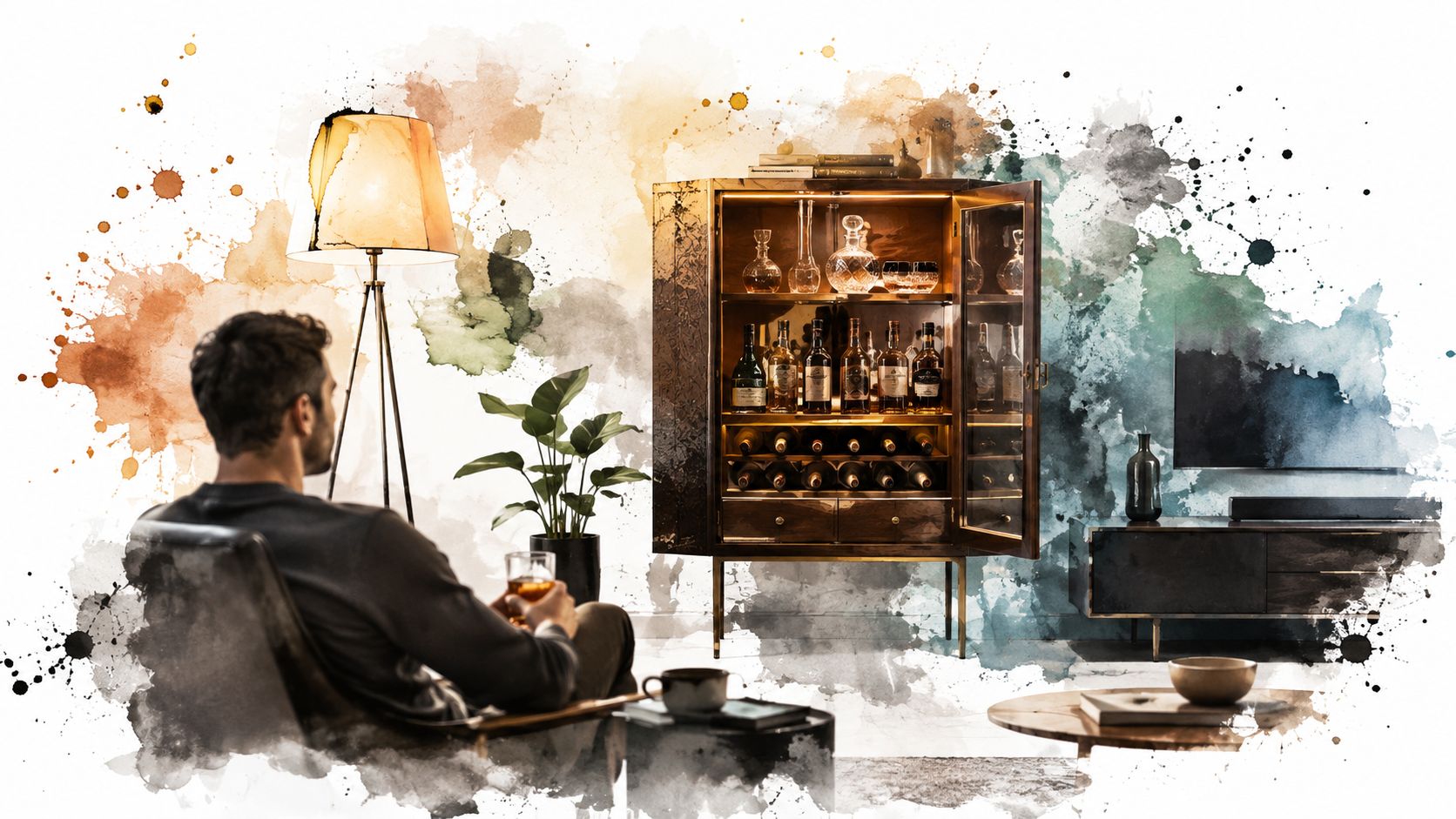
Treat the top as a serving surface, not a catchall. Use one tray, a few pieces with purpose, and barware that looks deliberate even when the doors are shut. If the cabinet has mirrored backs or glass inserts, keep the interior tidy so the reflection helps the room. If the interior is opaque, let the surface styling do the work.
Wall balance matters just as much as the cabinet itself. The art above or beside it should support the scale of the piece, not fight it. A useful reference on proportion and visual weight is how to choose wall art. Pick artwork that gives the cabinet room to breathe.
Put the cabinet where the room already wants a pause, then let the lamp and artwork do the rest.
Place the cabinet first, light it second, then style it last. That order keeps the room calm and avoids a staged look.
Why Custom Order Changes Everything
A living room bar cabinet works best when it feels built for the room, not dropped into it. Stock furniture asks the room to adjust. Custom Furniture lets the cabinet match the architecture, the seating layout, and the finishes already in view. That is the right approach for a piece that will sit in sight every day. It is about fit, and fit is what keeps the cabinet from looking temporary.
A good showroom process makes that decision much easier. In a family-owned setting with non-commission sales staff and no-pressure guidance, the focus stays on the room and the way you live in it. Giorgi Bros. Furniture has served South San Francisco since 1933, and that kind of history matters because long-term furniture choices deserve steady advice, not a rushed pitch. The showroom format also lets shoppers touch, feel, and test pieces in one visit, with choices that include wood species, finishes, high-grade leathers, and designer fabrics.
A custom bar cabinet should speak the same design language as the rest of the living room. Mid-century walnut calls for different lines and hardware than traditional oak. A painted finish needs a quieter profile than open-grain wood. The point of custom order is simple, the cabinet should echo the room instead of interrupting it. For homeowners ready to start that process, the custom order starting point lays out the practical first decisions.
The showroom experience also keeps buyers from making the most expensive mistake in this category, choosing a piece that almost fits and then living with the compromise for years. Quality furniture belongs in the buy-it-for-life mindset. The value shows up later when the cabinet still suits the room, still stores what it should, and still looks right after the first wave of use. Financing options are available, which makes a better-built piece easier to plan around without forcing a rushed decision.
A custom cabinet is the right move when the room has a clear style, the homeowner knows what materials they want, and the piece is expected to stay useful for the long haul. That is the test. If the cabinet is going to anchor the living room, it should be made to do that job properly.
Care and Maintenance for the Long Run
A well-built cabinet stays attractive when the owner keeps the routine simple. Dust first, clean second, inspect third. That order protects the finish and hardware before wear shows up. It fits the buy-it-for-life mindset, and it is the smarter sustainable choice because one well-kept piece lasts longer than a string of replacements.
Solid wood needs steady attention to humidity and surface cleaning. Painted finishes need a softer touch so the sheen stays even. Glass and mirrored backs need streak-free cleaning, but not harsh products that can cloud the edges. Metal hardware benefits from a quick wipe-down so oils do not build up around pulls and hinges. Seasonal care is where wood furniture protection matters most, because it helps preserve long-term value without turning maintenance into a project.
A practical seasonal routine keeps the cabinet honest.
- Dust weekly: Use a soft cloth on shelves, tops, and hardware so grit does not scratch the finish.
- Check humidity: Stable indoor conditions help wood stay straight and reduce seasonal movement.
- Test the hardware: Tighten loose pulls, check hinge alignment, and confirm drawers still close cleanly.
- Clean glass carefully: Use a non-abrasive cleaner on mirrors or glass backs, then dry the edges to avoid spotting.
A cabinet that gets light upkeep after entertaining will age better than one that is only cleaned when something spills.
The same standard applies to what goes inside it. Bottles and glassware should not sit with sticky residue or damp bases. The cabinet is furniture, not a service station, and treating it that way keeps the interior surfaces in better shape. Buyers who want their living room to stay polished for years should think in maintenance routines, not rescue plans.
Bringing It All Together at the Showroom
A strong plan gets better when it meets real furniture. Measurements, room sketches, finish samples, and storage needs all become easier to judge once the doors open in front of a person instead of on a screen. That's especially true for a bar cabinet in living room placement, because proportions, drawer feel, and visual weight are hard to estimate from photos alone.
Bay Area homeowners who want a long-term answer should visit a showroom where they can compare case pieces, ask direct questions, and see how materials behave in person. Giorgi Bros. Furniture in South San Francisco combines Furniture South San Francisco access with Bay Area Interior Design guidance, Custom Furniture options, Amish Furniture choices, and a dedicated sleep gallery that also carries Premium Mattresses. The same no-pressure environment that helps with larger room decisions also makes it easier to choose a cabinet that fits the living room without overbuying or underbuying.
The advantage of shopping in person is that the buyer can confirm scale, feel hardware quality, compare finishes, and settle on a cabinet that works as an investment piece instead of a trend piece. The room gets a more permanent anchor, and the decision gets simpler.
Giorgi Bros. Furniture offers custom order options, non-commission consultants, and a South San Francisco showroom where you can compare materials, finishes, and living room storage pieces in person. If you're planning a bar cabinet in your living room, visit Giorgi Bros. Furniture or book a Design Consultation and get clear, no-pressure guidance on a piece that's meant to live with your room for years.