
Mid-century modern furniture spans about 1933 to 1965, with some guides using a broader 1945 to 1970 window for its peak. So if a homeowner is standing in front of a walnut credenza or a low-slung lounge chair and wondering what makes it “mid-century,” the short answer is this, it's a historically bounded style built around simple, functional, less formal design.
That usually matters most in the showroom, where the line between a true period look and a piece that only borrows the vibe can feel blurry. A family looking for Furniture South San Francisco often wants the same thing, a room that feels timeless without becoming fragile, trendy, or hard to live with.
A Working Definition of Mid-Century Modern Furniture
A homeowner usually spots the style first, then tries to name it. A credenza has tapered legs. A chair sits lower than expected. The wood looks warm, the shape looks clean, and nothing feels fussy.
That look has a real definition. Mid-century modern furniture sits within a broader design movement from about 1933 to 1965, with some references using a wider 1945 to 1970 window for its peak. Britannica describes it as part of a postwar shift in furniture, architecture, and graphic design (Britannica). In plain terms, it is furniture made to feel lighter, more useful, and less formal than earlier traditional pieces.
What the phrase really covers
The term does not describe one chair shape or a single wood finish. It describes a full design language that showed up across furniture, architecture, and graphic design, then spread strongly in North America, Brazil, and Europe. That broad reach is one reason the style still feels familiar even when it appears in a newer home.
A useful working definition is this, mid-century modern furniture is furniture designed in the mid-20th century that emphasizes function, clean lines, and visible materials rather than decoration for decoration's sake. That makes it easier to separate the movement from just “anything retro-looking.”
Practical rule: if a piece feels honest about how it is built, and the shape serves the body or the room, it is probably moving in a mid-century direction.
For shoppers comparing styles, contemporary furniture styles helps show where modern homes often overlap with mid-century cues. The two can live side by side, but the difference usually shows up in the details. Mid-century pieces tend to keep the structure visible, while newer interpretations may soften the lines or simplify the form even more.
A second question comes up in real buying conversations, whether the piece is an original, a reproduction, or a modern custom build inspired by the era. Authentic mid-century furniture usually carries the habits of its time, such as restrained ornament, wood that is meant to be seen, and proportions that were drawn for compact postwar rooms. Reproductions can still be worthwhile, especially when the size or condition of originals is not practical, and American-made custom craftsmanship often fits the modern interpretation of the style by keeping the same clean outline while using sturdier construction or updated finishes.
The shopper's job is not to memorize design history first. It is to learn the visual cues that separate a real period piece from a piece that merely borrows the look.
How a Postwar Movement Became a Design Classic
A homeowner walking into a showroom today may hear “mid-century modern” used as if it has always been a finished category. It was not born that way. The style grew out of postwar life, when families wanted rooms that felt open, easier to furnish, and less weighed down by bulky cabinetry. New materials like metal, glass, plastic, and fiberglass helped designers make pieces that were lighter and more flexible than older heavy furniture.
From postwar need to lasting label
The design was already taking hold in the late 1940s and 1950s, when suburban growth and the demand for affordable, fashionable furniture pushed it into ordinary homes. The phrase “mid-century modern” came later, when design historian Cara Greenberg coined it for her 1984 book Mid-Century Modern: Furniture of the 1950s (Heywood-Wakefield).
That label changed how people talked about the style. Before that, “modern” could mean almost anything new. Once the term had a name, collectors, retailers, and homeowners could point to a shared group of features instead of relying on a vague impression. For shoppers trying to separate a true period piece from a later tribute, that shared language matters just as much as the look itself. It also helps explain why modern furniture classics from the era still sit comfortably beside newer custom pieces in many homes. A reproduction may echo the outline, while American-made custom work often keeps the same clean attitude but uses sturdier joinery or updated finishes.
The timeline shoppers can remember
A few landmark pieces make the timeline easier to hold onto. The Tulip Chair arrived in 1955, Arne Jacobsen's Egg Chair debuted in 1958, and Herman Miller's Action Office helped shape later modern office design in the 1960s. Those milestones show how the style developed in stages. It was not one sudden look, but a sequence of ideas that kept refining the same goal, making everyday living feel lighter and more thoughtful.
The resale market shows the same long reach. A George Nelson Marshmallow Sofa introduced in 1956 sold for $66,000 in 1999, which reflects how the style moved from postwar practicality into collectible design.
The long-term appeal comes from a simple promise. Good design can stay useful after trends move on.
The Defining Features You Can Spot
Shoppers do not need a design degree to recognize strong mid-century modern furniture. They need a few steady clues and a little patience. The style is less about ornament and more about how shape, materials, and structure work together in plain view.
The visual signals that show up first
The clearest signs are clean lines, organic or geometric silhouettes, and tapered or splayed legs that lift the piece visually off the floor (Archetype Forms). Those legs do real work. They make a cabinet feel lighter, a chair feel less blocky, and a room feel less crowded.
The next clue is the material mix. Hallmark woods and surfaces include teak, walnut, rosewood, molded plywood, tubular steel, fiberglass, glass, and plastic (Povison; Evolution Home). Many authentic-looking pieces pair a warm wood with one cooler material, such as chrome or molded plastic, because the style favors contrast without visual clutter. That mix is one reason the furniture can feel both simple and finished at the same time.
Why the shapes look the way they do
The shape follows the build. Thin wood veneers could be pressed into compound curves, which let designers create seats and backs that flowed as one ergonomic form. Exposed frames and raised bases reduced visual bulk, which mattered in the smaller postwar homes the style was built for (Archetype Forms).
That is why a shell chair feels so different from a heavy upholstered armchair. The shell chair shows its logic. It curves where the body curves, and the structure stays visible.
A showroom shopper can use a simple test. If the piece feels engineered for sitting, storage, or surface use, and the decoration stays restrained, it is speaking the mid-century language. An Eames-style lounge shell usually shows that logic in the seat. A Wegner-inspired tapered-leg dining chair shows it in the legs and the profile.
For a useful shopping reference on seating shapes, modern couch styles helps readers compare low-profile silhouettes across different modern looks.
Buyer's cue: visible grain, tapered legs, and mixed materials usually tell more truth than a “retro” label does.
A fast way to scan a piece
- Legs and base: Look for outward-angled or tapered legs rather than thick block feet.
- Surface and grain: Warm wood grain should stay visible, not buried under heavy ornament.
- Materials: Expect wood paired with chrome, glass, molded plastic, or fiberglass in a believable way.
- Shape: The form should feel shaped by use, not covered with decoration.
If a reader wants to see how these traits show up in the wild, the best vintage shops in Brooklyn can be a helpful browsing example of how the style gets presented in resale settings, even when the end goal is buying new.
How to Tell Authentic Pieces From Reproductions
Shoppers usually get stuck at this point. A piece can look mid-century modern from across the room and still be a reproduction, a style-inspired remake, or a later alteration. The difference matters because value, durability, and provenance all depend on it.
What to check before you pay
Authenticity often starts with paperwork or marks, then moves to construction. Maker's labels, model numbers, stamps, and documented provenance are the first clues, while leg shapes, drawer pulls, shelf construction, and overall workmanship help confirm whether the piece fits the era. Reproductions can still be good furniture, but they usually won't show the same construction logic or period-specific details.
The easiest mistake is focusing only on style cues. Tapered legs alone don't prove anything. The core question is whether the piece was built with the same care and materials that define the movement.
Authentic vs Reproduction Quick Checklist
| Clue | Authentic Period Piece | Reproduction or Knock-Off |
|---|---|---|
| Labels and stamps | Maker's marks, model numbers, or period documentation | Missing, vague, or generic labeling |
| Joinery and hardware | Detailed workmanship, era-consistent pulls and joints | Simplified joinery, generic hardware |
| Leg shape | Well-proportioned tapered or splayed legs | Legs that mimic the look but feel clumsy or overly thick |
| Grain and materials | Visible wood grain and believable mixed materials | Surface-only effect, thin visual imitation |
| Structure | Balanced, intentional construction | Shape copied without the same structural logic |
What quality still looks like in a reproduction
A good reproduction doesn't need to pretend it's vintage. It needs to be honest about its build. Strong pieces still show clean lines, visible grain, and a thoughtful mix of materials, but they'll usually come without maker's marks from the period and with more contemporary hardware or construction details.
Practical rule: if the seller can't explain who made it, how it was built, or what materials are actually inside it, the buyer should slow down.
For a deeper look at structure and surfaces, solid wood vs veneer is useful context when comparing authentic-looking furniture options.
Styling Mid-Century Modern in Real Homes
Mid-century modern works because it doesn't ask a room to become a museum. It asks a room to feel calm, practical, and well-proportioned. That makes it especially useful in Bay Area homes, where rooms often need to do more than one job.
Room by room, keep the anchor simple
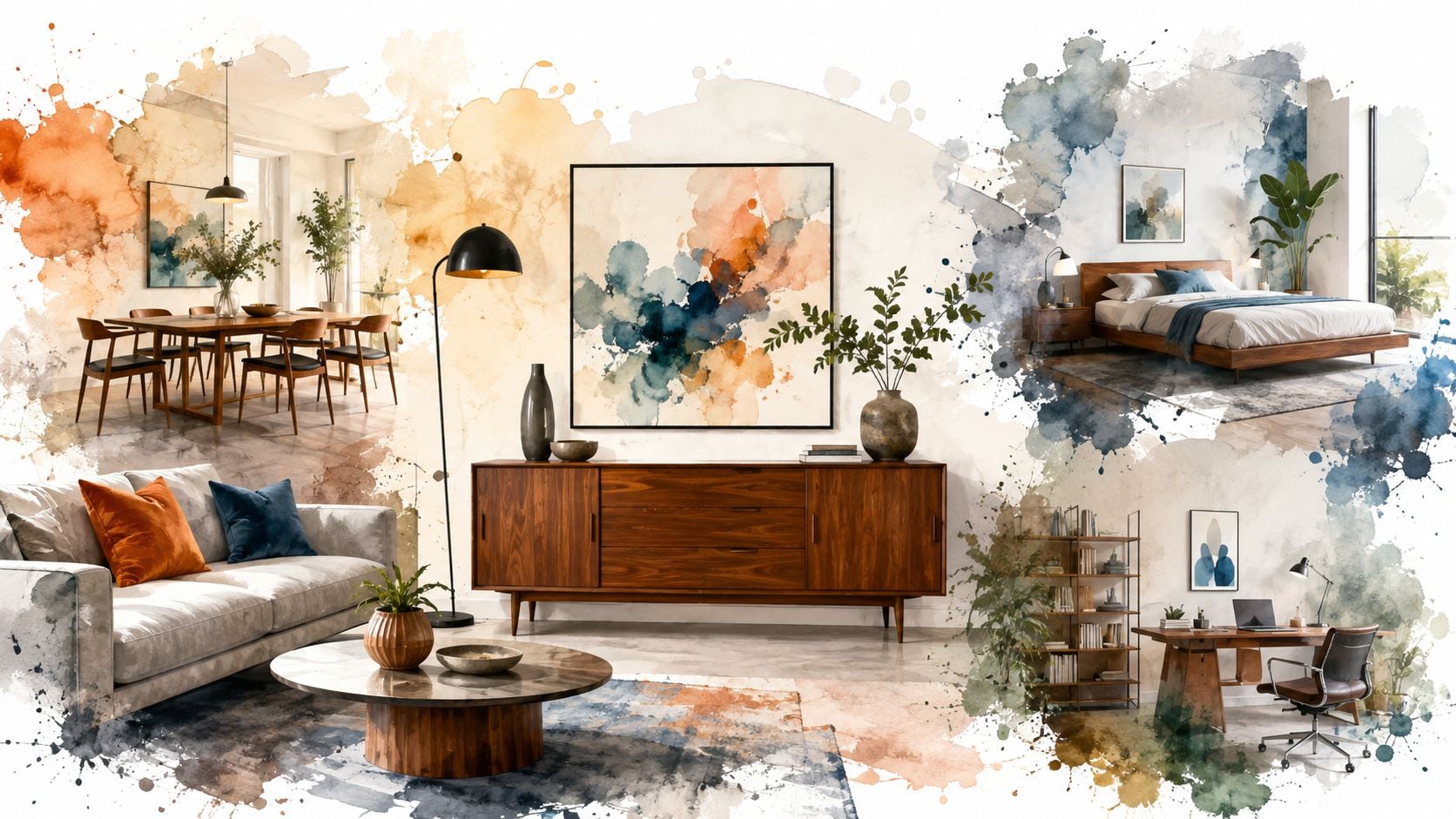
A living room often works best with one strong anchor, like a walnut credenza or a low sofa with tapered legs. A dining room can center on a tapered-leg dining table with warm wood and simple chairs. A bedroom usually needs less visual weight, so a platform bed with clean lines often does the job. A home office can stay true to the style with a Parsons-style desk and a restrained lamp.
The supporting pieces matter just as much. Use warm wood tones, matte metal, wool or leather textures, and a palette built around mustard, burnt orange, olive, and cream. Those choices keep the room grounded without making it feel themed.
How custom craftsmanship fits the style today
American-made and custom-order pieces can keep the spirit of the style intact while adapting it to a home's size and color needs. That's where Custom Furniture becomes practical, not decorative. A family-owned showroom can tailor fabrics, leathers, wood species, and finishes so a homeowner gets the right tone and scale without losing the clean profile the style depends on.
A designer's eye can also help a room feel less crowded. That matters in smaller homes, because the style's human-scaled proportions already work well in compact spaces. In larger homes, the same proportions prevent a room from feeling empty or overfurnished.
A bonsai-inspired arrangement can be a useful guide for restraint, and bonsai interior inspiration offers a good visual reminder that small, controlled forms can give a room clarity without adding clutter.
Choosing well-built furniture for the long term is a buy-for-life decision. It cuts waste, reduces replacements, and keeps a room from turning into a cycle of disposable upgrades.
Caring for Wood, Leather, and Upholstery
The style lasts when the materials get routine care. That's the part many buyers miss. Mid-century modern furniture can look effortless in a room, but the wood, leather, and fabric stay beautiful only when they're treated like investment pieces.
A small habit beats a big repair
Teak, walnut, and rosewood do best with regular dusting, careful conditioning when appropriate, and protection from direct sun. Leather stays healthier when it's conditioned on a sensible schedule, kept away from heat sources, and blotted quickly if spills happen. Upholstery lasts longer when it's vacuumed with attachments, cushions are rotated, and the cleaning code is checked before any spot treatment.
A monthly five-minute routine is realistic. Dust the wood surfaces, glance for dry spots or fading, and check the cushions for uneven wear. That's usually enough to catch small issues before they become visible damage.
Know when the piece needs a pro
Some problems are maintenance, and some are repair. If a joint loosens, a veneer edge lifts, or a cushion no longer holds its shape, a professional can usually do more than a home kit can. The same goes for reupholstering, especially when the frame is worth preserving.
For wood-specific care, wood furniture protection is a practical reference for readers who want a longer life from natural finishes.
Leather deserves its own routine
Leather needs a little more attention than many shoppers expect. It dries out near vents, sunlight, and heat, so placement matters as much as cleaning. For a broader maintenance approach, this complete leather care guide can help readers think through conditioning, spill response, and long-term upkeep.
The main idea is simple. A well-made piece doesn't ask for constant work, but it does reward consistency.
Buying Mid-Century Modern Furniture as an Investment
Smart buying starts with the question, “How long should this piece serve the home?” That's where quality furniture stops being a transaction and becomes an investment. A good mid-century modern piece should fit the room now and still make sense years later.
Think in tiers, not in labels
Vintage originals can bring history and provenance, but they also demand careful checking. Quality reproductions can deliver the silhouette and the function without the collector premium. Custom American-made furniture sits in a different lane, where a buyer can choose fabrics, leathers, wood species, and finishes while keeping the core mid-century profile intact.
A showroom visit helps because a homeowner can touch the structure, test the scale, and compare finishes in person. Online photos can't show how a chair sits, how a drawer feels, or how the wood grain changes in daylight.
Giorgi Bros. Furniture offers that kind of in-person guidance in a 50,000 square foot showroom in South San Francisco, along with non-commission design consultants and custom order options for wood species, finishes, leathers, and fabrics. The point isn't pressure. It's clarity.
What good value looks like
A piece earns its place when it balances build quality, comfort, and long-term usefulness. That's especially true for Amish Furniture and other American-made options, where craftsmanship often matters as much as style. Financing options are available, which can make it easier to choose the piece that will last instead of settling for the quickest one.
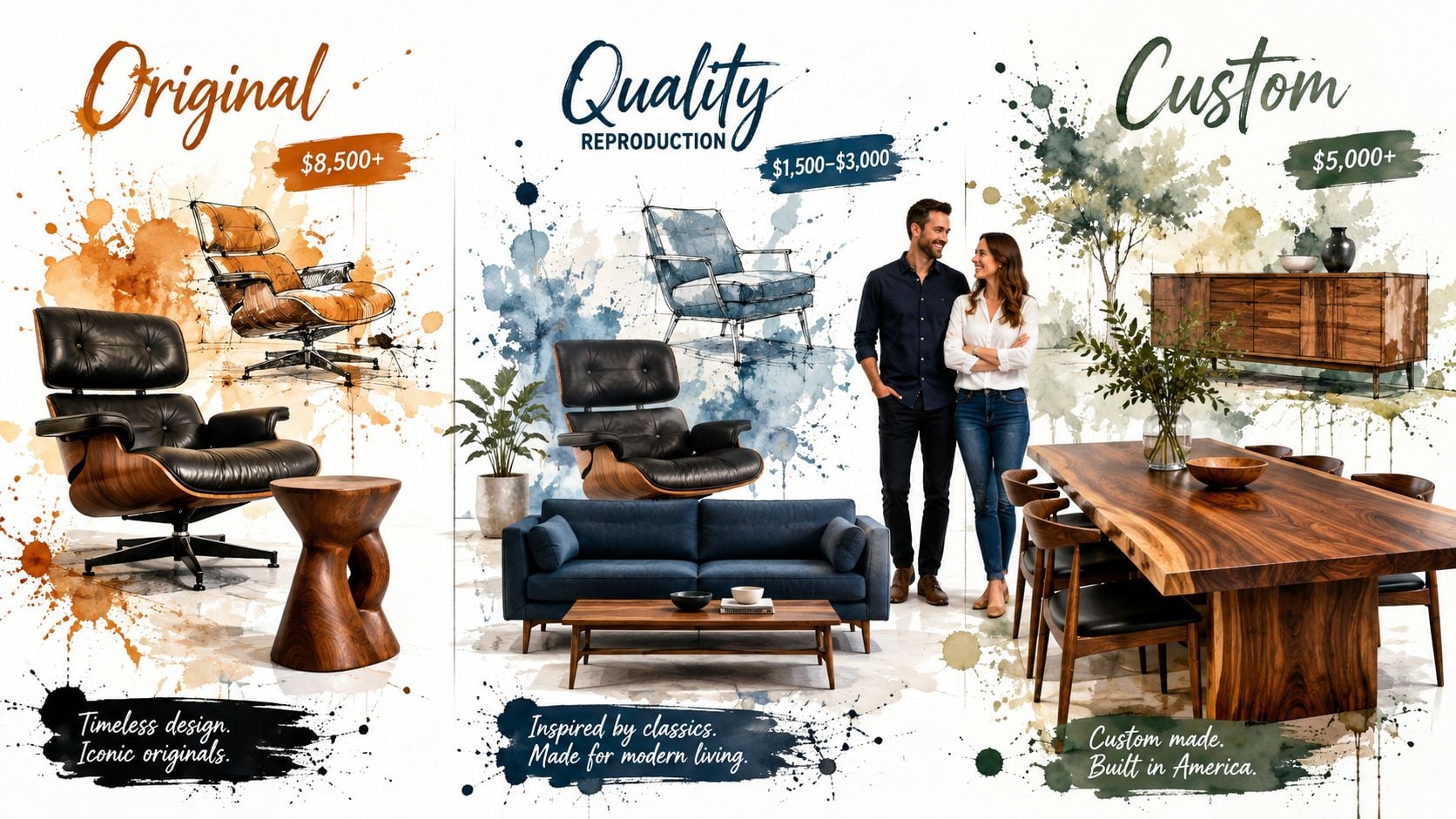
Best-price-first guidance matters here. A buyer should know what a piece is built to do, how long it should last, and what kind of care it needs before money changes hands.
Common Questions About Mid-Century Modern Furniture
People usually ask three things in the showroom. Can it fit with other styles, can it work in small rooms, and how should a buyer think about price? The answer to all three is yes, as long as the proportions stay clean and the mix stays deliberate.
A mid-century piece can sit beside farmhouse, traditional, or contemporary furniture if the room shares one or two repeating elements, such as warm wood, simple lines, or a restrained palette. In small apartments, the style works because it stays visually light. In larger homes, it needs a few stronger anchors so the room doesn't feel sparse.
Giorgi Bros. Furniture helps Bay Area homeowners choose Custom Furniture with no-pressure guidance, from mid-century modern accents to full-room solutions that fit the home and the budget. Visit Giorgi Bros. Furniture to explore the South San Francisco showroom or book a Design Consultation when it's time to choose pieces that can live well for years.