
You've found the sofa that looks right in the showroom. Then the questions start. Will it clear the front door? Is the seat deep enough for the tallest person in the house, but not so deep that someone shorter loses back support? Will the fabric handle everyday use, and can the frame be repaired instead of replaced?
Custom sofa design answers those questions before the order is placed. The best result is more than a beautiful silhouette. It's an investment piece built around the room, the people using it, the delivery route, and the years ahead.
Why Custom Sofa Design Starts Before the Showroom
A sofa can look perfect in a photograph and fail in the room. A curved arm may consume the clearance beside a doorway. A chaise may interrupt the main walkway. A deep seat may invite lounging but leave shorter users without enough back support. These are design failures, not bad luck.
Custom sofa design should begin with room use, body support, and long-term wear, not with fabric swatches. Made-to-order construction can address unusual dimensions, preferred proportions, upholstery, and the household's routines. Set the brief around actual activities, such as reading, entertaining, movie nights, naps, or a combination of them. Record the requirements before aesthetics start driving the decision.

The commercial market supports that level of attention. A market analysis estimated the U.S. custom home furniture market at approximately $8.2 billion in 2024, with a projection of $13.7 billion by 2033 and a projected compound annual growth rate of 5.9% from 2025 through 2033. Those figures cover custom home furniture broadly, not sofas alone, but they place made-to-order furnishing within a substantial and expanding market. (Market analysis of the U.S. custom home furniture market)
The same analysis reported average U.S. household spending of $2,130 on furniture and home furnishings in 2024, a 6.2% year-over-year increase. That spending context reinforces a practical point: a sofa affects the room around it. Its scale, upholstery, finish, and proportions influence how other furnishings fit and function.
Showroom rule: Approve a sofa for measured comfort, room fit, and expected wear, not for photographs alone.
Giorgi Bros. Furniture has served South San Francisco since 1933, for more than 90 years. The family-owned showroom offers ready-to-view furnishings and custom order services covering fabrics, leathers, wood species, and finishes. Its custom furniture design services give Bay Area homeowners a route beyond the pieces currently displayed on the floor.
A design team can also prepare a digital or full-scale representation before production. The guide to concept-to-export modeling explains how a concept can move toward a finished object. Use that kind of review to check proportion, clearances, and function while revisions remain manageable. A lifecycle decision made early costs less effort than correcting a sofa after fabrication or delivery.
Mapping Your Room and Your Body Before Anything Else
The most expensive sofa mistake is often a measurement mistake. A strong worksheet records not only the wall where the sofa will sit, but also every point the piece must pass before it reaches that wall.
Start with the home's route:
- Record the room: Measure the usable wall, nearby openings, ceiling height, and the clear circulation path around the sofa.
- Measure the entry: Capture the front door opening, interior doors, hall turns, stair width, stair landing, and elevator opening where applicable.
- Mark fixed obstacles: Note railings, low ceilings, radiators, built-ins, columns, and wall clearances.
- Account for movement: Recliners and sleeper mechanisms need operating space. A chaise orientation can change the walking route even when the sofa's outside dimensions stay similar.
- Test the layout: Use painter's tape, cardboard, or a digital plan to mark the proposed footprint before selecting a frame.
Furniture returns are frequently connected to fit rather than taste. One benchmark attributes approximately 58% of furniture returns to size or space mismatch, compared with roughly 44% for color or material mismatch and about 31% for transit damage. (Furniture return benchmark data) The figures apply to furniture returns broadly, but the lesson is especially relevant for custom orders, where a mismatch may be difficult or impossible to reverse.
Measure the people who will sit there
Room dimensions only describe the container. The occupants determine comfort.
A reliable design process records seated popliteal height for seat height, buttock-to-popliteal length for seat depth, hip breadth for usable width, and shoulder height for back-support geometry. It should also record footwear, preferred posture, and activities. Someone who sits upright for conversation needs a different relationship between seat depth and back support than someone who lounges with legs tucked under.
| Measurement | What It Captures | Why It Matters |
|---|---|---|
| Seated popliteal height | The distance from the floor to the underside of the knee | Helps establish a comfortable loaded seat height |
| Buttock-to-popliteal length | The seated length from the back of the pelvis toward the knee | Helps prevent excessive depth or inadequate thigh support |
| Hip breadth | Usable seated width | Helps size individual seats and shared seating areas |
| Shoulder height | Upper-body support position | Guides back geometry and cushion placement |
| Preferred posture | Upright sitting, lounging, reading, or napping | Connects dimensions to real use rather than an average catalog body |
Furniture dimension mismatches are associated with discomfort and musculoskeletal symptoms, while anthropometric alignment has a significant positive relationship with subjective comfort. (Review of furniture dimensions, anthropometry, and comfort)
Create a full-scale mock-up and test it for at least 10 to 15 minutes in each intended posture before approving the frame. The finished seat height must account for cushion compression. The relevant measurement is the loaded, finished height, not the bare frame.
For room planning beyond the sofa footprint, Giorgi Bros. Furniture's living room furniture layout guidance can help homeowners organize seating, passageways, and focal points. For a listing or renovation presentation, virtual staging for listings can also help visualize furniture relationships before a final arrangement is chosen.
Choosing a Frame and Suspension That Hold Up
The visible upholstery gets attention, but the frame and suspension determine whether the sofa still feels composed years later. Buyers should evaluate them as a layered system, because a strong frame cannot compensate for a poorly matched suspension or cushion package.
Start underneath the upholstery
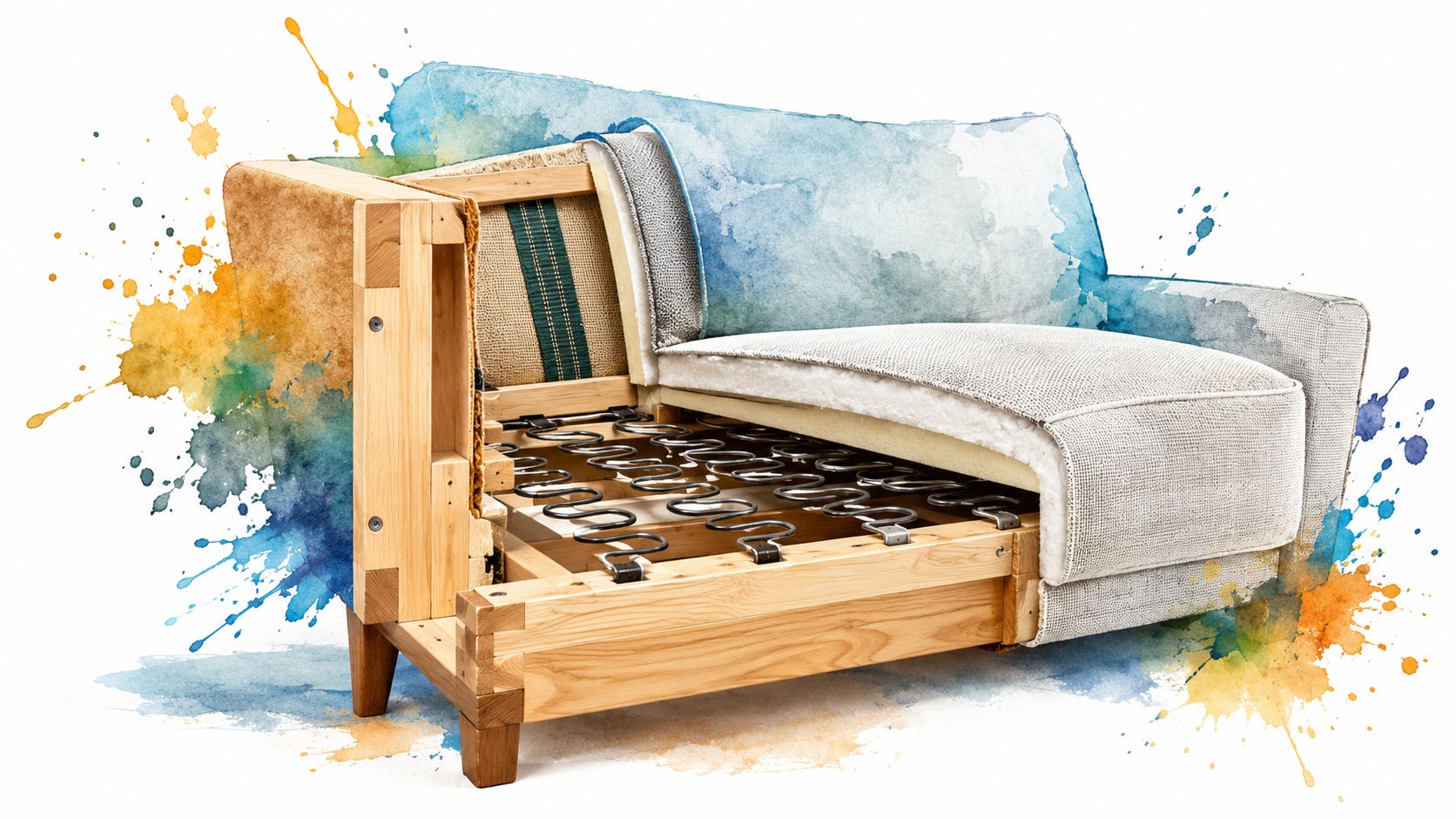
Kiln-dried hardwood is commonly selected for a durable frame because controlled drying helps reduce moisture-related movement. Engineered wood and softwood can perform well when properly specified, but the construction details matter more than a material label alone. Ask how rails meet, whether corners are blocked, how joints are reinforced, and whether the frame is designed for the sofa's intended load.
Mortise-and-tenon construction is one example of a traditional jointing approach worth understanding. Giorgi Bros. Furniture provides background on mortise-and-tenon joints, including why a joint's geometry matters more than a vague promise of “solid construction.”
Suspension changes the feel beneath the cushion:
- Eight-way hand-tied springs can offer a responsive, supportive foundation when properly built and matched to the frame.
- Sinuous wire creates a practical continuous support system and can suit many contemporary silhouettes.
- Webbing can provide a controlled, flexible seat when the weave, tension, and installation are appropriate.
- Serpentine systems use shaped wires to distribute support across the seat, with performance depending on spacing, gauge, and attachment.
No suspension type automatically wins. Upright conversation often benefits from controlled support and a more stable cushion. A lounge sofa may call for a softer initial feel, but excessive softness can make standing difficult and cause the seat to lose its intended height.
Match cushions to the activity
Cushion fill should follow the main use. Dense foam can provide a more predictable sit, while down or fiber wrapping adds a softer surface feel. Loose back cushions invite adjustment and provide a relaxed appearance, but they require regular reshaping. Tight backs keep a cleaner profile and reduce daily fluffing, though they may feel more structured.
A bench cushion avoids a center crack and creates a continuous lounging surface. Separate cushions make removal, rotation, and localized servicing easier. Neither choice is universally better. The right decision depends on whether the household values uninterrupted lounging, individual seat definition, easy maintenance, or a custom look.
Ask for the cushion specification in writing. The approval record should identify the core material, wrapping, expected feel, and whether the finished seat height has been measured under load. A showroom test is useful, but it should support the documented design rather than replace it.
Selecting Fabrics and Leathers That Fit Real Life
A pale, loosely woven fabric may look perfect under showroom lights and fail quickly in a busy family room. Choose upholstery from the room's actual conditions first: pets, meals, concentrated seating, children, cleaning habits, and sunlight all affect the specification. A formal, lightly used room can support a different material from a sofa used every evening.
Abrasion testing offers a useful screening point, not a complete durability forecast. Independent textile guidance identifies approximately 15,000 Wyzenbeek double rubs as a typical benchmark for general contract upholstery and 30,000 double rubs for heavy-duty upholstery. Comparable Martindale benchmarks are about 20,000 cycles and 40,000 cycles, respectively. Upholstery testing guidance from Haworth Wyzenbeek and Martindale use different procedures, so their results should not be compared directly. Results above 100,000 Wyzenbeek double rubs have not been shown to indicate proportionally longer service life.
Specify the whole performance profile
Ask for the test method, report, cleaning code, warranty limitations, and intended-use category. Review these properties alongside the abrasion rating:
- Seam slippage: Matters with loose weaves and heavily used seat areas.
- Pilling: Shows how the surface may respond to clothing and repeated friction.
- Tensile strength: Indicates how the material handles applied stress.
- Lightfastness: Matters in bright rooms and beside large windows.
- Cleanability: The care code must match the household's ability and willingness to maintain the sofa.
- Pattern repeat: Affects yardage, cutting, and visual alignment across cushions and arms.
A rub count has meaning only beside fiber content, weave, finish, cushion construction, body oils, pets, and maintenance. A fabric with a moderate rating and a realistic care routine can serve better than a harsher material chosen for an impressive figure.
Before a consultation, review Giorgi Bros. Furniture's guide to upholstery fabric types to learn the main material categories. Use that vocabulary to describe your priorities, then have the consultant narrow the samples by traffic, cleaning needs, and appearance.
Leather requires the same practical review. Full-grain surfaces retain more of the hide's natural character and may develop a visible patina. Corrected or heavily finished surfaces offer a more uniform appearance and can conceal some natural variation. Finish affects how marks, color shifts, and wear will show, so judge full-size or representative samples rather than relying on grade names alone.
Approval standard: The selected upholstery should have a documented test method, rating, cleaning code, warranty limit, and intended-use category.
Trim, Legs, and Finishes That Change the Whole Look
Small details control whether a sofa feels bespoke, relaxed, traditional, or architectural. They also influence how the piece works once it enters the room.
Welt, or piping, outlines cushions and arms. Matching welt creates a quiet, integrated finish. Contrast piping emphasizes the shape and can make a simple sofa more graphic. Topstitching produces a cleaner, more contemporary line, while nailheads introduce a more formal furniture language. Skirts soften the base and hide the legs, but they can make the sofa appear visually heavier.
Arm shape deserves practical attention. A broad arm can provide a useful perch, but it consumes seating width. A narrow track arm preserves usable room for occupants and often suits tighter floor plans. A rounded arm softens the silhouette, while a squared profile creates a sharper edge. The best choice balances appearance with how people lean, reach, and move around the piece.
Legs change both proportion and maintenance. Taller legs expose more floor and can make a substantial sofa feel lighter. Shorter legs create a grounded, relaxed look. The visible wood should coordinate with the room's other investment pieces, not compete with them.
Treat wood as part of the upholstery decision
Custom orders make it possible to coordinate wood species and finishes with the approved fabric or leather. A warm wood tone can support a textured neutral, while a darker finish may sharpen a pale upholstery. The finish should also suit the room's existing materials and the intended design direction.
Giorgi Bros. Furniture's 50,000-square-foot Showroom gives Bay Area homeowners a place to touch fabrics, sit on different cushion constructions, compare arm profiles, and view wood finishes under real lighting. That tactile process matters because a swatch alone cannot show how upholstery changes across a curved arm or how a finish looks beside a finished cushion.
Bring the room's paint, flooring, and existing furniture notes to the appointment. The consultant should evaluate trim, legs, and finish with the entire composition in mind. Customization works best when the details reinforce one another instead of creating a pile of unrelated options.
Lead Times, Costs, and Delivery Logistics Worth Tracking
A custom sofa is a project. The design approval is only one milestone, followed by material allocation, frame production, upholstery, inspection, transit, and delivery scheduling. A clear record prevents a buyer from confusing a production estimate with a guaranteed arrival date.
Before approving the order, request a written project sheet that records:
- Production window: Confirm when the manufacturer expects construction to begin and what conditions could affect timing.
- Upholstery queue: Ask whether fabric or leather availability creates a separate wait.
- Transit stage: Identify when the piece leaves production and who receives it during the next stage.
- Delivery pricing: Confirm whether delivery is charged as a flat rate by location rather than a surcharge for each piece.
- White-glove scope: Establish whether the team unpacks, places, assembles, inspects, and removes packaging.
- Service area: Determine whether the address falls within direct delivery coverage or uses a trusted carrier network.
- Access responsibility: Record who verifies doors, stairs, elevators, turns, and placement conditions.
A realistic schedule should leave room for inspection and delivery coordination. Rushing the design to meet a room deadline can create worse delays if a fabric is unavailable or the finished dimensions fail the delivery route.

Giorgi Bros. Furniture offers furniture delivery with assembly through its own delivery service across most of the Western United States. The team uses location-based flat rates rather than per-piece fees, provides white-glove placement and setup, and removes packaging materials. Orders outside the direct service area can move through a deluxe nationwide carrier network.
Keep the final approval simple
A one-page checklist should include the approved drawing, overall and usable dimensions, cushion configuration, upholstery identification, wood species, finish, trim, delivery route, price, financing options if selected, and the name of the delivery contact. The buyer and consultant should review every line before the order is released.
Financing options are available, but the payment structure shouldn't distract from the specification. A sofa that arrives at the right time but fails the room, comfort, or care requirements is still a poor purchase.
Designing for Longevity and the Showroom Next Step
A buy-it-for-life sofa needs more than a durable-looking fabric. Its frame, cushions, upholstery, legs, and hardware should be serviceable enough to support repair, renewal, or reupholstery as household needs change.
The waste figures make the point. The U.S. Environmental Protection Agency reported that furniture and furnishings generated 12.1 million tons of municipal solid waste in 2018, compared with 2.2 million tons in 1960. The same report found that 80.1% of furniture and furnishings were landfilled and 19.5% were burned for energy recovery. (EPA furniture and furnishings waste data)
Longevity turns quality into both an environmental and financial decision. A structurally sound sofa that can be reupholstered avoids replacing the entire frame when the color no longer suits the room. Renewed cushions, replaceable legs, accessible hardware, and documented fabric information all make future service more realistic.
Ask for repairability before ordering
Furniture guidance from the European Environment Agency identifies repair, maintenance, refurbishment, and reuse as ways to extend useful life. In Sweden, 2,726 tonnes of furniture were reused in 2021, while France's extended-producer-responsibility system supports second-hand markets and refurbishment before recycling. (European furniture reuse and waste-prevention information)
A European Parliament briefing on right-to-repair policy describes furniture rules that provide for design for disassembly and envision spare parts being available to customers for at least five years. Those rules concern European regulatory frameworks, not every sofa sold globally, but the design principles are useful anywhere. (European right-to-repair briefing)
Ask the manufacturer or consultant:
- Can the covering be removed without damaging the frame?
- Can cushions, webbing, legs, or hardware be replaced independently?
- Will the fabric or leather identification remain available for future matching?
- Can the frame be accessed for inspection or repair?
- Which maintenance and reupholstery services are available after delivery?
The European Environmental Bureau reports that approximately 10 million tonnes of furniture enter the European market each year, with about the same quantity discarded by businesses and consumers. It also reports that improved refurbishment and remanufacturing could create up to 157,000 jobs and save about 6 million tonnes of carbon-dioxide equivalent in the European Union. (European furniture circular-economy criteria)
Those figures don't turn every custom sofa into a sustainable product automatically. Made-to-order production may reduce overproduction, but the stronger argument comes from service life. Durable construction, appropriate upholstery, repair access, and a design that can adapt to changing interiors preserve materials, labor, and household value.
Giorgi Bros. Furniture's family-owned, non-commission environment supports the right kind of decision-making. Its Consultants and ASID interior designers can help Bay Area homeowners compare custom fabrics, high-grade leathers, wood species, finishes, cushion styles, and dimensions without pressure. The showroom also offers custom reupholstery and broader interior design support, including flooring and carpeting, for clients planning a whole-home project.
Visit the South San Francisco Showroom to sit, measure, and compare before committing. A proper design consultation should leave the buyer with a comfort brief, a fit plan, a materials record, and a delivery checklist, not just a fabric sample.
Giorgi Bros. Furniture offers custom sofa design, bespoke fabrics and leathers, selected wood species and finishes, and no-pressure guidance from non-commission Consultants in a 50,000-square-foot South San Francisco Showroom. Visit Giorgi Bros. Furniture or book a Design Consultation to build an investment piece that fits the room, supports the household, and can serve for life.