
You're standing in a showroom with two gray table lamps that look almost identical from across the room. One feels elegant, the other slightly oversized, but the difference won't become obvious until the lamp sits beside your sofa, on your nightstand, or behind your desk. Gray is an easy finish to like, but the right choice depends on measurement, light quality, material, and long-term usefulness, not color alone.
Gray table lamps belong to a durable global category rather than a fleeting décor niche. The broader table and floor lamps market has been estimated at USD 26.41 billion in 2026 and is projected to reach USD 33.08 billion by 2031, with a 4.62% CAGR, according to market data on table and floor lamps. The same source describes table and floor lamps as the fastest-expanding product placement segment in the wider lamps and lighting market, with a projected 5.05% CAGR to 2031. That steady demand reflects how homeowners use portable lighting to refine interiors, improve comfort, and complete furnishing projects.
For a Bay Area homeowner, the practical decision is simple. Pick the lamp that fits the surface first, produces the right light second, and supports the room's materials third. A well-made gray lamp can become an investment piece, especially when it works with changing furniture, finishes, and room layouts.
Right Sizing for a Real Room
At the showroom, place the two lamps on comparable tables rather than judging them on a display pedestal. The lamp that looks modest beside a large occasional table may overwhelm a real nightstand. Three measurements will settle the decision before color or styling enters the conversation.
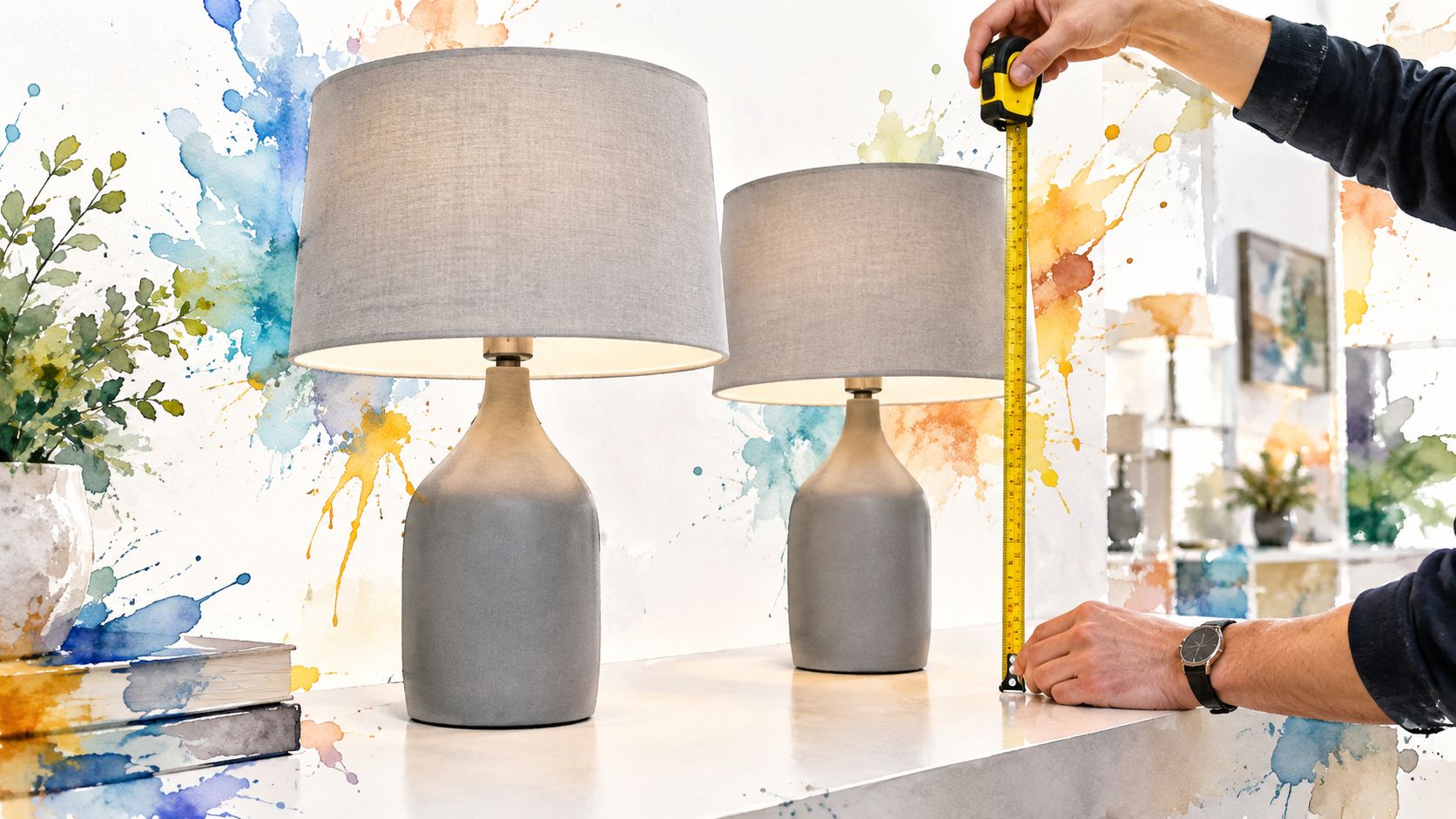
Start with the tabletop
Measure the table's depth and width. The base should take up roughly one-third of the tabletop, leaving usable space for a book, a glass, a phone, or a charger. A broad base can look substantial and well made, but it becomes a poor choice if it forces everything else to the edge.
Industry sizing guidance also recommends that a lamp occupy no more than about one-third of the tabletop, while the shade diameter should generally measure about 1.5 to 2 times the base width, as outlined in this table lamp size guide. Treat that as a starting point, then check how the shade relates to the table edge.
Measure the seated eye line
Sit in the chair or on the bed where the lamp will be used. The bottom of the shade should sit close to eye level, keeping the bulb below the direct line of sight. General guides place many table lamps around 24 to 34 inches high, with the combined table-and-lamp height often landing near 58 to 64 inches. For a bedside table, a lamp commonly falls between 24 and 30 inches. A living room side table often suits a lamp between 28 and 34 inches.
Check the silhouette
The shade should not overhang the table. A narrow surface needs a controlled profile, while a deep side table can support more visual weight. For broader living-room layout decisions, the living room furniture layout guide helps place the lamp in relation to seating, walking paths, and surrounding case goods.
Practical rule: If the lamp blocks the seat's view, crowds the tabletop, or makes the table look smaller, the scale is wrong even if the finish is perfect.
Choosing the Right Gray Finish
Gray isn't one material or one mood. A ceramic gray lamp feels grounded and tactile, while a metal lamp can feel precise and architectural. The finish should respond to the room's furniture, not compete with it.
Four finishes with distinct jobs
Ceramic and stoneware are the strongest choices for primary bedrooms and formal living rooms. Matte ash, charcoal glaze, and softly varied gray surfaces add visual warmth and enough weight to keep the lamp from feeling temporary. Ceramic also works well beside painted furniture and upholstered headboards because its surface has presence without demanding high contrast.
Metal belongs on modern desks, minimalist sideboards, and transitional office furniture. Brushed nickel, pewter, and oxidized steel introduce a cooler note. Choose metal when the room already has clean lines, restrained ornament, or hardware that needs a quiet visual connection.
Glass is the smart answer for small nightstands and tight reading corners. Smoke, mercury, and clear seeded glass let the shade carry the design while the base recedes. This makes the lamp easier to live with when the table must also hold books, a clock, or personal items.
Stone earns its place on larger surfaces. Concrete, marble, and travertine bases anchor sideboards, generous end tables, and console tables. Their natural variation pairs particularly well with mid-century and modern farmhouse rooms, where texture matters as much as color.
| Finish Family | Best Room Match | Design Tone |
|---|---|---|
| Ceramic or stoneware | Primary bedroom, formal living room | Warm, substantial, tactile |
| Metal | Desk, minimalist sideboard, transitional office | Cool, structured, architectural |
| Glass | Small nightstand, compact reading corner | Light, quiet, understated |
| Stone | Large side table, console, sideboard | Grounded, natural, sculptural |
A finish should also sit comfortably beside the wood already in the room. Before committing to a gray lamp near custom case goods, review the principles in this guide to choosing the right wood finish. The goal isn't to match every surface. It's to make the lamp feel intentionally related to the furniture.
Picking the Right Bulb and Wattage
A bulb box gives more useful information than a generic “soft white” label. Read Kelvin, lumens, and watts as three separate measurements.
Kelvin describes color temperature. Lower numbers create warmer light, while higher numbers look cooler and more neutral. Lumens describe brightness. Watts tell you how much power the bulb uses, not how bright it will appear.

Match the bulb to the task
For bedside reading, choose a warm bulb between 2200 and 2700 Kelvin with roughly 400 to 800 lumens. That range produces a comfortable pool of light without turning the bedroom into a workroom. A darker gray base often benefits from a lighter linen shade because the shade helps distribute the glow.
A desk needs sharper illumination. A bulb between 3000 and 3500 Kelvin and approximately 800 to 1100 lumens keeps the work surface clear without the clinical quality associated with very cool light. The shade still matters, so brightness alone won't solve glare caused by poor positioning.
For living room ambient pairs, 2700 Kelvin and about 500 to 700 lumens usually create a softer background glow. Use matching bulbs in both lamps so the pair reads as one lighting composition.
Avoid the common electrical mistakes
Don't exceed the lamp's listed wattage. A compatible LED can produce useful brightness while using fewer watts, but the fixture's socket rating still controls what belongs in it. Also confirm whether the bulb and fixture support dimming. A dimmable LED paired with a non-dimming setup won't deliver the control the shopper expects.
Dimmers and smart-home controls add flexibility, particularly in rooms that shift from daytime work to evening relaxation. The practical guidance in this article about lighting temperature, mattresses, and bedding working together reinforces the larger point. Light should serve the room's use, not just fill it.
Shade Shape and Light Quality
The base attracts attention, but the shade controls the lamp's behavior. It determines where the light travels, how much glare reaches the eye, and whether the lamp produces a broad wash or a focused pool.
A drum shade spreads light evenly and works well for living room ambience. Its simple profile suits a gray ceramic base and keeps the overall silhouette calm. An empire shade sends light upward for general illumination and downward for reading, making it a reliable choice beside a chair or bed. A bell shade narrows the beam more deliberately, so it works best when the lamp needs to illuminate a specific spot.
Choose the fabric with intent
Linen softens the glow and flatters gray surfaces, especially matte ceramic and textured stone. Cotton keeps the shade crisp and modern, making it a natural partner for metal bases or clean-lined desks. Silk introduces sheen, but it requires care because heat and time can cause it to yellow near bulbs.
Shade construction changes the impression as well. A hardback shade has a firm, clean silhouette and suits a gray ceramic lamp when the room needs structure. A softback shade offers more fabric character and works well with a metal body when the goal is to soften an otherwise technical finish.
The shade should make the lamp useful before it makes the lamp fashionable.
Keep the shade diameter in proportion to the base. A practical guide is to choose a shade approximately 1.5 to 2 times the base width, then confirm that it remains no wider than the supporting table. The bottom edge should conceal the bulb from seated eye level. If glare appears whenever someone sits down, the shade is too short, too narrow, or positioned too high.
Where to Place Each Lamp
Placement starts with the activity at the surface. A nightstand supports reading and personal items. A desk supports focused work. A console introduces people to the home. The same gray lamp can succeed in one location and fail in another because the eye line and clearance change.
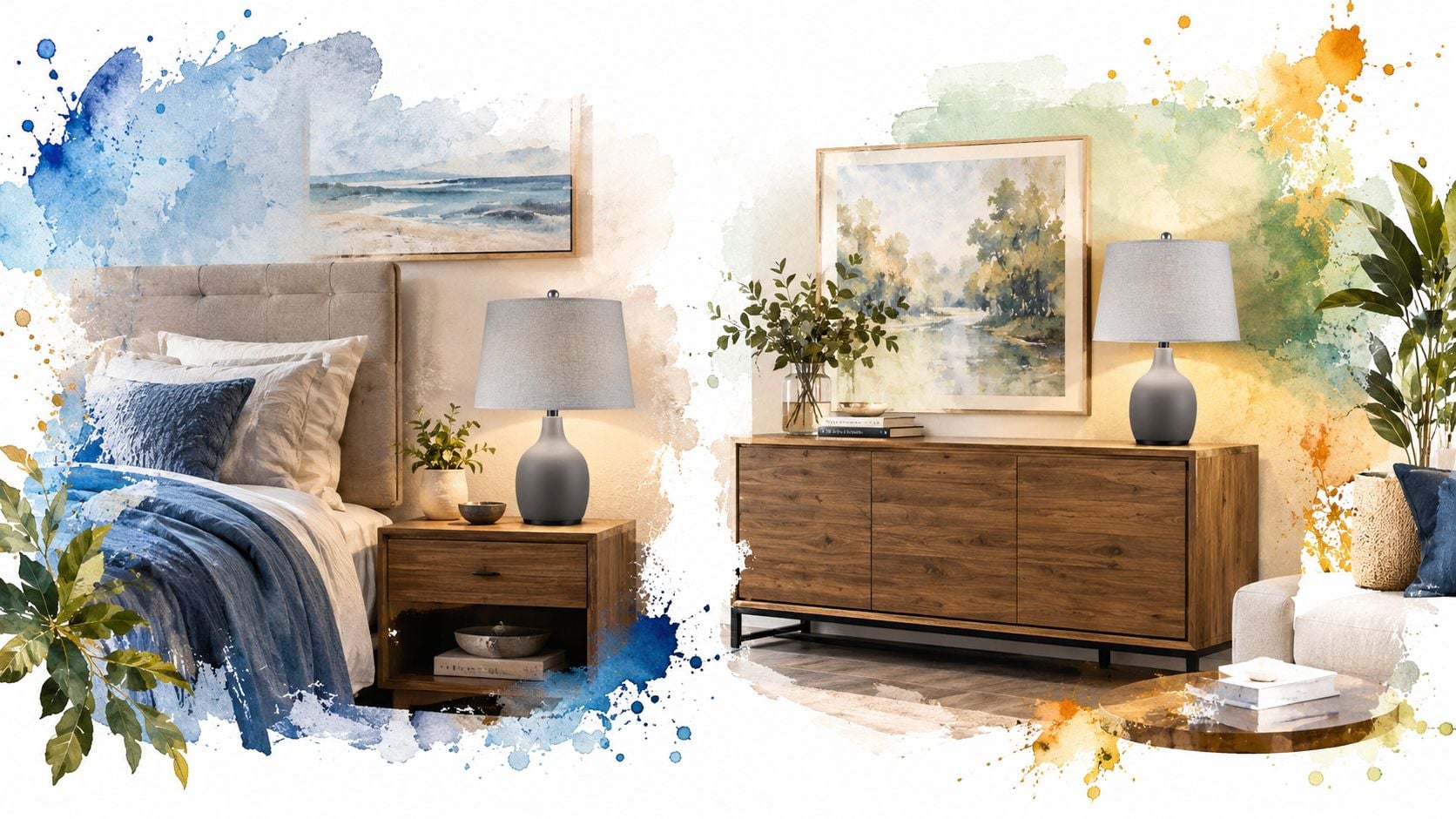
Nightstands need controlled height
For bedside use, position the lamp so the shade bottom sits near seated eye level while reading. The bed height, mattress thickness, and nightstand height all affect the result, so shoppers should measure from the floor to the top of the mattress and then test the lamp while seated.
Matching lamps create balance when the room has two nightstands, but matching doesn't mean oversized. Each lamp still needs enough tabletop clearance for the items used every night.
Sideboards benefit from measured symmetry
A pair of gray lamps can frame a sofa or sideboard effectively when the furniture is broad enough to support them. Keep the lamps visually balanced across the surface, then leave breathing room near artwork, mirrors, and decorative objects. The lamps should reinforce the wall composition rather than sit like unrelated objects.
Desks need task control
Place a desk lamp opposite the writing hand when possible. That reduces shadows across the work surface. Keep the shade below the direct line of sight, and make sure the arm, base, and cord don't interfere with the chair or keyboard area.
Consoles can carry more height
A console table in an entryway can support a taller table lamp with a more assertive base, particularly when the wall above it has artwork or a mirror. Center the lamp on a narrow table, but center it within the larger wall composition when the console sits beneath a substantial piece of art.
Cord reach matters in every room. Route the cord along the wall edge, keep it away from walking paths, and maintain clearance from fabric that could catch or obscure it. A lamp standing alone needs a stronger silhouette. A lamp sharing the surface with books, trays, or vases needs a quieter base and more remaining tabletop.
For additional placement guidance, use this resource on putting a living room in the best light. It supports the same practical principle. Place light where people use the room, then balance the composition around it.
Pairing Gray Lamps With the Rest of the Room
Gray lamps work because they can either connect materials or create deliberate contrast. The key is identifying the undertone before choosing the shade and surrounding accents.
Cool gray with blue or green undertones pairs naturally with navy, white, and pale oak. This combination feels crisp and controlled. It suits a modern bedroom, a calm office, or a living room with restrained upholstery.
Warm gray with greige or taupe undertones works better beside walnut, brass, and earthy textiles. That palette feels richer and more settled. A warm gray lamp beside reddish or honey-toned wood can prevent the room from becoming visually cold.
Contrast decides whether the lamp leads
A charcoal lamp against a pale wall reads as architecture. It creates a defined vertical mark and can anchor a room that otherwise lacks contrast. A soft dove-gray lamp against the same wall nearly disappears, which is useful when the sofa, rug, or artwork should remain the focal point.
Pattern changes the recommendation. A solid gray base gives a patterned sofa or rug room to lead. A textured stone base or crackle glaze adds quieter interest when the rest of the room is busy, but it shouldn't be paired with several competing textures on the same surface.
Customization makes this decision more precise. Custom furniture manufacturers commonly offer choices across wood species, stains, finishes, upholstery materials, fabrics, leathers, and paints, as shown by documented customization menus for made-to-order furniture from custom furniture design services and custom furniture specifications. That same mindset applies to the lamp pairing. The right room may need a different shade fabric, base tone, height, or silhouette than the floor model.
Giorgi Bros. Furniture offers custom order services alongside showroom furniture, so a homeowner furnishing a whole room can coordinate gray lighting with selected wood species, finishes, fabrics, or leathers rather than treating the lamp as an isolated purchase. For a broader approach to layering materials, consult this guide to layering furniture and decor.
Buying Gray Table Lamps the Smart Way
A smart purchase survives the move from showroom lighting to home lighting. Before choosing a pair, verify the lamp on the actual table or a comparable surface. Online photography can hide proportions, socket construction, switch placement, and cord length.
Use a decision-grade checklist
- Confirm scale: Measure the table, seated eye line, shade diameter, and available footprint before approving the silhouette.
- Inspect the finish: Look at the gray surface under warm and cool room light. Check whether the finish is matte, reflective, mottled, or deliberately distressed.
- Examine the shade: Look for an even profile, secure attachment, and enough height to hide the bulb from seated eye level.
- Check bulb compatibility: Review the socket rating, permitted wattage, bulb shape, and dimming compatibility.
- Test the controls: Operate the switch in person. A pull chain, rotary switch, touch control, or inline switch creates a different daily experience.
- Measure the cord: Confirm that the cord reaches the outlet without crossing a walkway or pulling the lamp toward the table edge.
Before pairing: Live with one lamp in the room first. A pair multiplies a mistake, while a single lamp exposes the issue early.
Shopping paths carry different trade-offs. Outlet stores may offer attractive pricing but limited returns and fewer matching pieces. Online retailers provide broad selection, yet photos can distort scale and return policies may include restocking fees. A showroom lets the shopper compare the lamp against sample tables, touch the finish, test the switch, and judge the shade at seated eye level.
A showroom consultation becomes more useful when the shopper arrives prepared. Bring room photos, table measurements, outlet locations, and photographs of nearby furniture. A consultant can shortlist gray lamps in stock and identify when a custom shade fabric, base finish, or cord length would solve a room-specific problem.
Long-term value matters too. Table lamps remain part of a growing global furnishing category, while portable lamps also face commodity pricing pressure and direct-import competition, according to analysis of the table lamp market. Paying more makes sense when the lamp has durable materials, repairable components, LED compatibility, a replaceable shade, and a finish that can work through future room changes. A cheaper lamp that becomes unusable after a move is not a lower-cost purchase over its full life.
For homeowners building a sustainability-minded interior, this eco friendly home decor guide offers useful perspective on buying fewer, more durable pieces. The same buy-it-for-life logic supports quality furniture, custom upholstery, Amish Furniture, and lighting that can stay in service as the home evolves. Giorgi Bros. Furniture has remained family owned and operated in South San Francisco since 1933, when Alfred and Guido converted their father's grocery store into the business, according to the company's family history. That history reflects a practical approach to furnishing. Quality furniture is an investment, and careful guidance helps protect it.
Evaluate the lamp at home across a two-week window before ordering a matching pair. Check it in morning light, evening light, while seated, and while using the surface. If the scale, glare, switch, or cord still feels wrong, change the single lamp before committing to two.
Giorgi Bros. Furniture offers gray table lamps, custom furniture, unique finishes, fabrics, leathers, wood species, and non-commission design guidance for Bay Area homes. Visit Giorgi Bros. Furniture in the South San Francisco showroom with room photos and measurements, or book a Design Consultation to evaluate the right lamp scale and finish alongside the rest of the room.