Can a mattress label explain how well someone will sleep if it says nothing about the materials underneath? That's the missing question in many pillow top vs Euro top mattress comparisons. The visible top offers a useful clue, but a comfortable, lasting fit depends on how the cushioning, support system, and sleeper work together.
For Bay Area households, an in-person comparison can make those differences easier to understand. A little construction knowledge helps shoppers separate immediate softness from the support they'll need after settling into bed.
Why the Pillow Top vs Euro Top Mattress Label Matters Less Than You Think
A pillow top and a Euro top describe how the upper cushioning attaches to the mattress, not a complete comfort or quality grade. Neither term identifies every material inside, explains the support core, or guarantees a particular feel.
A pillow top uses a distinct cushion sewn onto the upper surface, with visible separation beneath it. A Euro top integrates the added cushioning beneath the outer cover, flush with the mattress edges. Euro tops generally use denser, somewhat firmer materials and usually offer stronger edge support, but these are tendencies rather than universal rules, as explained in the comfort-top construction comparison.
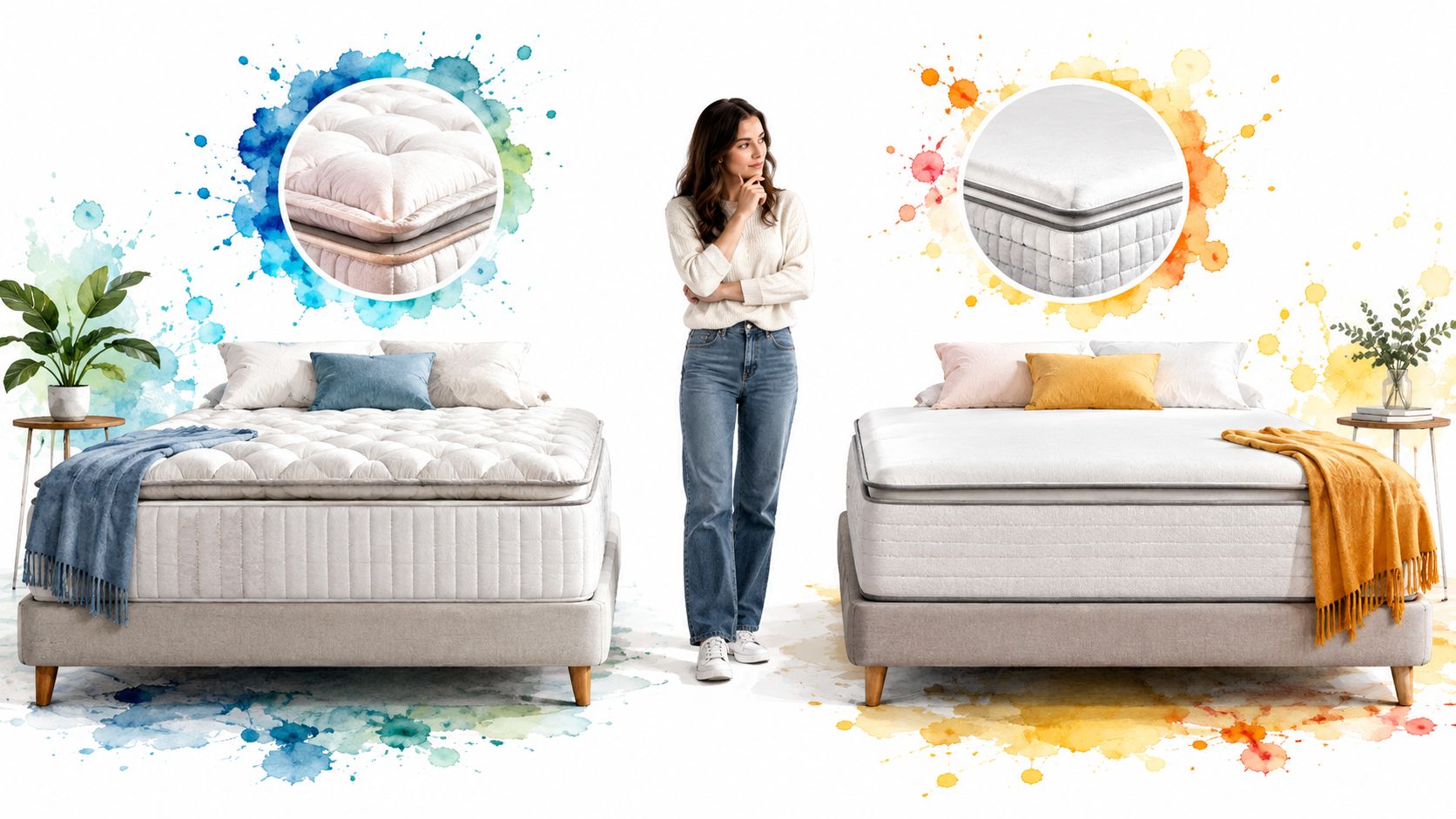
The better starting point
The useful question isn't just which top feels softer. It's whether the entire mattress provides comfortable cushioning without allowing unwanted sinking.
Consider a shopper comparing a plush pillow top with a firm Euro top. Any preference could reflect their different firmness levels rather than their attachment methods. Comparing models with similar overall firmness makes the distinction more meaningful.
| Starting question | More useful follow-up |
|---|---|
| Which top looks more comfortable? | What materials create the cushioning? |
| Which mattress feels softer? | Does that softness remain comfortable in the sleeper's usual position? |
| Which label suggests better quality? | What supports the comfort layers underneath? |
A local, no-pressure approach
The family-owned South San Francisco showroom's history dates to 1933, with more than 90 years of service to local families. Its non-commission approach gives shoppers room to ask questions instead of making a decision from a label.
Practical rule: Treat the top style as an introduction to the mattress, not its report card.
That approach also keeps the decision manageable. Construction explains the visible difference; materials explain much of the performance. Sleep position, body weight, foundation support, and personal preferences help determine whether that performance suits a particular household.
How Pillow Top and Euro Top Construction Actually Differ
The easiest place to identify these constructions is the mattress sidewall. Looking from the side reveals whether the upper cushion stands apart from the mattress body or continues into a squared-off profile.
The raised cushion of a pillow top
A pillow top has a gusseted cushioning panel. A gusset is the fabric section that gives the cushion depth, allowing it to look raised rather than flat.
A simple visual analogy is a duvet resting above a bed. The pillow top isn't loose like a duvet, but its separate outline creates a similar layered appearance. The visible seam and gap help distinguish the added cushion from the main mattress body.
The fitted profile of a Euro top
A Euro top resembles cushioning enclosed within a fitted outer shell. The upper padding reaches toward the perimeter without an open gap beneath a separate pad.
That integrated shape explains the tailored appearance. It also allows cushioning to extend more continuously toward the sides, which can produce a more consistent edge feel, as described in this pillow-top and Euro-top construction explanation.
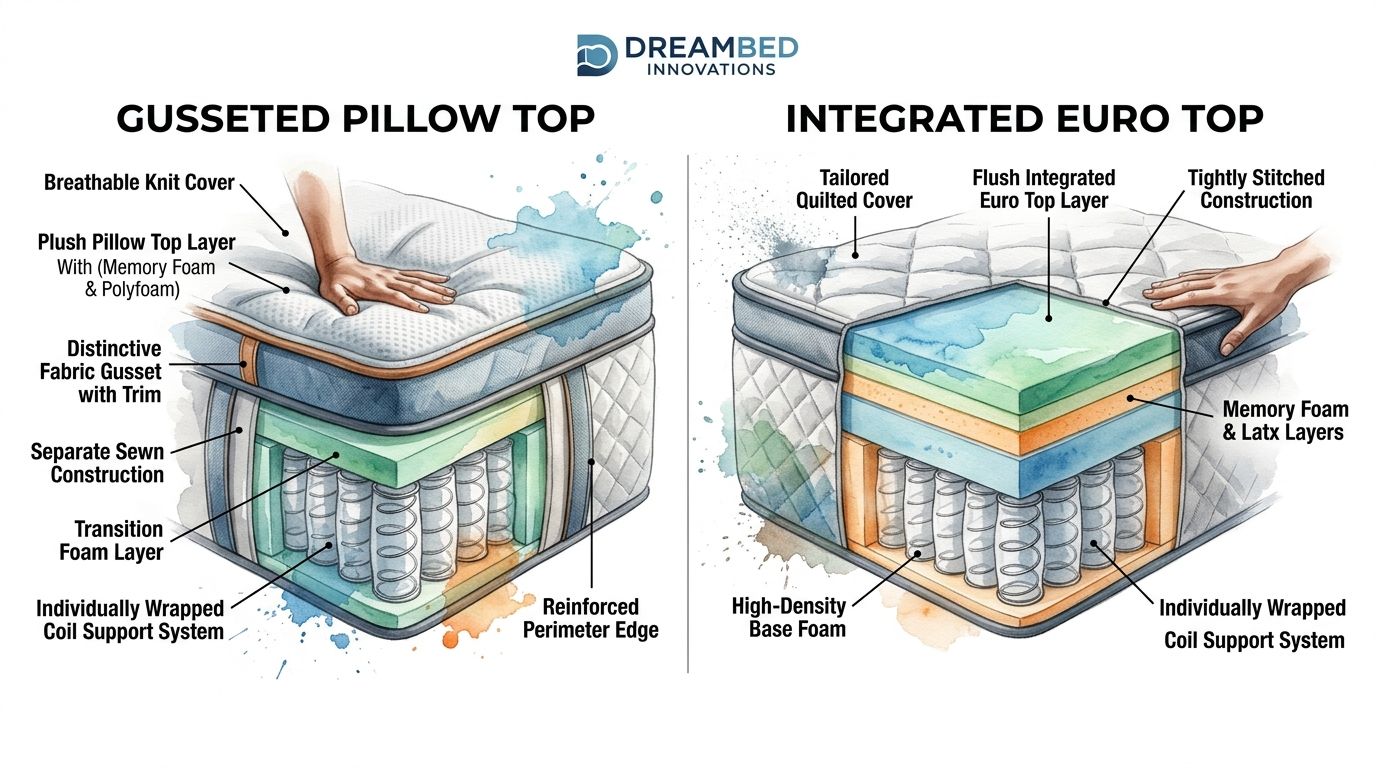
Neither profile identifies the full contents of the cushion. Foam, fiber, and blended upholstery can produce different experiences even when the exterior looks similar. For background reading before discussing material specifications, the Lewis and Sheron Textiles foam guide offers a companion resource on foam quality.
A mattress comparison chart can help organize model details before a showroom visit. The useful exercise is to match each visible construction feature with an actual specification, rather than assuming that a thicker-looking top contains better materials.
One common misunderstanding deserves attention: a separately attached cushion doesn't automatically mean a removable cushion. Shoppers should ask whether the upper upholstery is serviceable or replaceable instead of assuming it functions like a detachable topper.
Feel, Edge Support, and Heat Compared Side by Side
Initial softness is easy to notice. The harder task is separating that first impression from perimeter stability, partner disturbance, and temperature comfort.
Pillow Top vs Euro Top at a Glance
| Attribute | Pillow Top | Euro Top |
|---|---|---|
| Initial surface feel | Often emphasizes pronounced cushioning | Often combines cushioning with a more structured feel |
| Edge behavior | Separate padding can permit more edge compression | Integrated upholstery generally distributes loading more uniformly |
| Surface stability | Added panel can be more susceptible to shifting | Flush construction offers a more unified upholstery package |
| Motion isolation | Requires examination of the materials and core | Requires the same examination, rather than an assumed advantage |
| Heat comfort | Cannot be determined from the top label | Cannot be determined from the top label |
The structural reasons behind the feel and edge distinctions appear in this comparison of attachment methods and support retention. The same comparison identifies comfort-layer thickness, material density, support core, foundation, and sleeper characteristics as more informative than the label alone.
What matters during everyday use
A sleeper who enjoys pronounced cushioning may appreciate a pillow top's welcoming surface. Another may prefer the sensation of cushioning over a more contained, uniform platform. Neither preference establishes that one mattress provides better underlying support.
Edge support deserves its own test. Couples who occupy the outer portions of the bed should lie near the perimeter, not merely sit in the center. Someone who regularly sits at the side should evaluate that position separately, using the mattress edge-support guide to prepare questions.
Partner disturbance also requires a separate comparison. A sewn edge doesn't reveal the whole motion-isolation story. The practical test is for both partners to lie down while one changes position, then repeat the exercise on the alternative mattress.
A soft surface, a stable edge, and low partner disturbance are separate qualities. Shoppers shouldn't expect a single label to confirm all of them.
Heat deserves similar caution. Foam density, quilting, fiber type, moisture movement, bedroom conditions, bedding, and individual temperature regulation all matter. A plush appearance alone doesn't establish that a mattress will sleep hot, and a squared-off profile doesn't establish that it will stay cool.
For a hot sleeper, the useful conversation concerns the actual fiber content and heat-management features. Broad cooling language should lead to questions about construction, not end the discussion.
Durability and Cost Expectations Over Time
Durability comparisons become misleading when an estimated lifespan turns into a promise. Mattresses wear under different bodies, foundations, room conditions, and usage patterns.
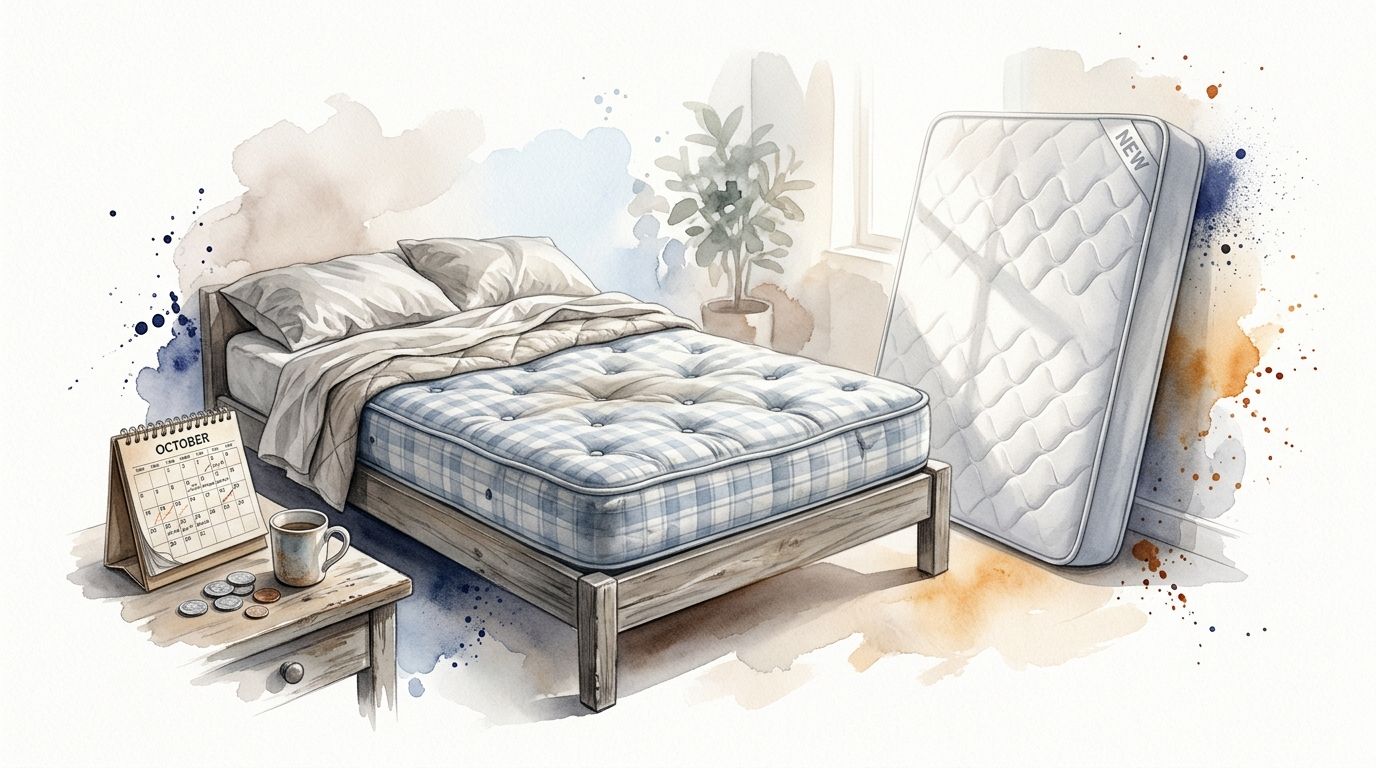
Published comparisons commonly suggest approximately 5–7 years of useful service for many pillow-top mattresses and 8–10 years for many Euro-top models. Those figures are benchmarks, not guarantees, as presented in this mattress longevity comparison.
What the wear pattern means
Repeated loading can flatten softer, separately attached padding or leave uneven impressions. More integrated upholstery generally distributes compression more consistently, but it can still soften, compress, or lose perimeter stability.
A historical consumer dataset summarized in the longevity comparison reported significant sagging or compression within three years among at least 30% of pillow-top owners, compared with about 17% of non-pillow-top owners. That dataset isn't presented as peer-reviewed or independently validated, so it should be treated cautiously rather than as a universal failure rate.
The comparison group matters, too. Non-pillow-top doesn't mean Euro-top exclusively. The figures therefore don't establish a direct failure-rate comparison between these particular constructions.
Comparing cost without guessing
No reliable price advantage follows from the silhouette alone. A sensible cost discussion starts with the actual models, their specifications, and their written terms.
- Compare documented materials. Request the comfort-layer composition and density rather than accepting premium-sounding upholstery names.
- Review the foundation requirements. Include any necessary base or support changes in the purchase decision.
- Read the warranty exclusions. Ask how the manufacturer distinguishes covered defects from ordinary changes in comfort.
- Check maintenance expectations. Confirm the permitted rotation schedule and any restrictions before purchase.
The mattress maintenance guide provides a useful starting point for discussing care with a Consultant.
Long-term savings remain conditional. A higher initial price may make sense if the mattress retains suitable comfort longer, but an uncomfortable mattress doesn't become good value just because its upholstery remains intact. Useful service life means comfortable service, not just continued ownership.
Which Top Style Suits Your Sleep Position and Room Setup
Sleep position helps narrow the search, but it shouldn't assign someone to a construction automatically. The better recommendation starts with where pressure develops and how the sleeper settles into the mattress.
Match cushioning to the person
For a side sleeper, shoulder and hip comfort deserve close attention. A pillow top may be a useful starting point when pronounced surface cushioning feels appealing, while a suitably cushioned Euro top may provide the preferred balance.
Stomach and combination sleepers should watch for excessive pelvic sinking and difficulty changing position. A more structured Euro top may be worth testing, but the recommendation still depends on the complete mattress rather than the seam.
The mattress firmness guide can help shoppers describe the desired feel more clearly. Firmness and top construction aren't interchangeable terms.
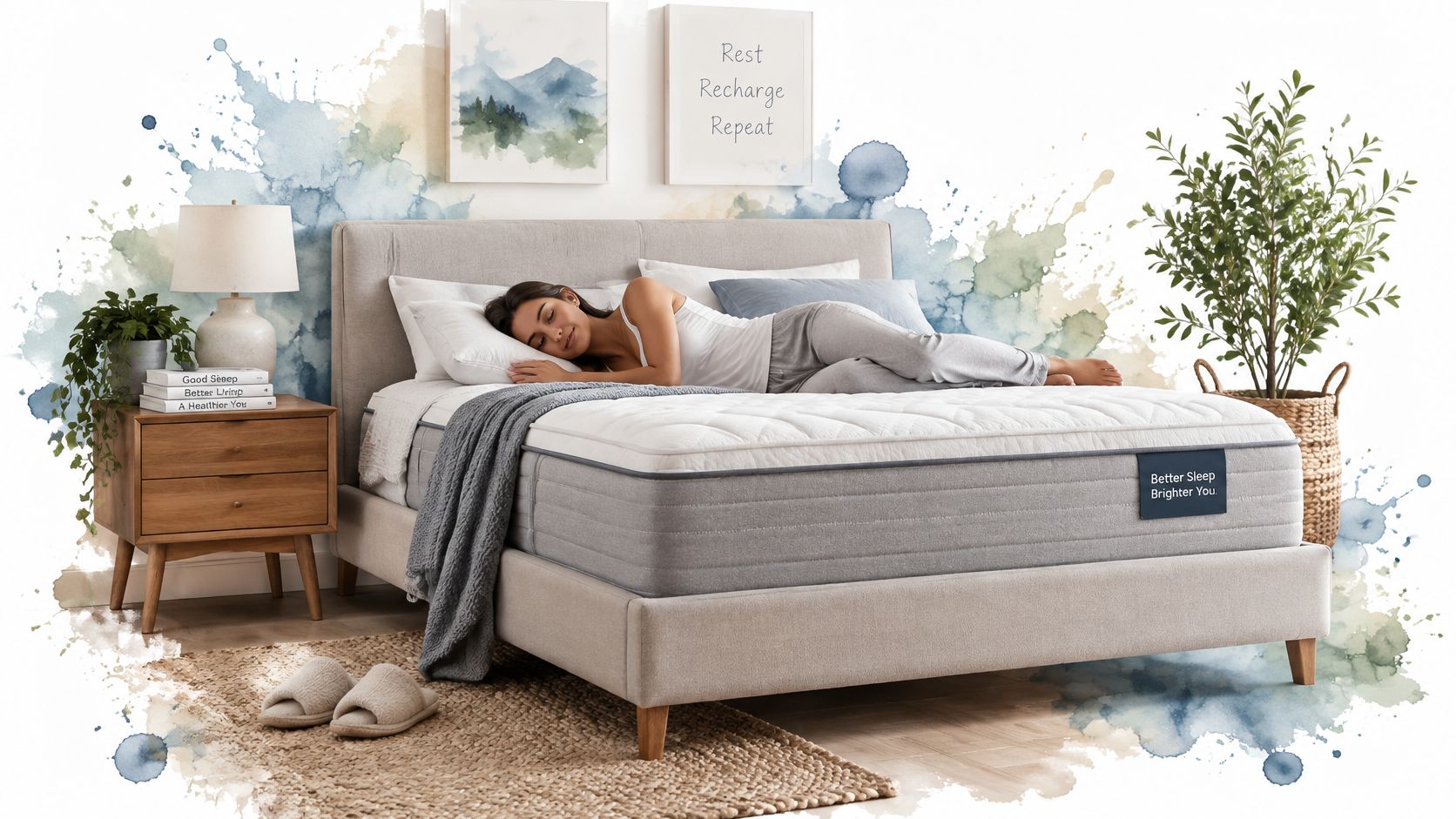
Pillow fit belongs in the evaluation, especially for side sleepers. The SunnyBay neck pillow fitting advice offers additional reading before testing the mattress and pillow together.
Account for shared use and body weight
Couples should test simultaneously rather than approving a mattress separately. That allows each partner to judge personal comfort while experiencing the other person's movement and position.
Heavier sleepers should request specific information about comfort-layer resilience and the support system. Greater compression makes material selection especially relevant; choosing a Euro top by name alone isn't an adequate substitute.
- For hot sleepers, prioritize identifiable breathable materials and heat-management features.
- For different sleep positions, test each partner's usual posture rather than searching for a universal firmness.
- For frequent position changes, assess how readily movement occurs after settling into the surface.
Fit the mattress to the room
Both constructions may appear in adjustable-base-compatible models, but compatibility must be confirmed for the exact mattress and base. A flush Euro top may flex more predictably at the hinge, while a thick gusseted pillow top may show more surface shifting. The safest approach is to operate the intended pairing in the showroom and obtain manufacturer confirmation.
Bay Area delivery planning also deserves attention. Shoppers should document narrow doorways, stair turns, and the intended placement before ordering. Mattress weight and profile belong in that discussion, along with bed-frame access and any white-glove setup requirements.
How to Evaluate Both Constructions in a Showroom
A repeatable comparison helps shoppers avoid choosing whichever mattress feels most inviting after a brief sit. Preparation doesn't need to be complicated: note the usual sleep position, areas of pressure, preferred feel, and any existing base.
Make the comparison fair
Start with pillow-top and Euro-top models at similar overall firmness. Comparing an especially plush model with a firm alternative mostly tests a firmness preference, not the value of their different construction.
A practical showroom sequence gives each mattress the same opportunity:
- Settle into the usual position. Allow at least ten minutes as a testing routine rather than making a decision from the first impression.
- Check posture with help. A companion can observe the ear, shoulder, and hip relationship while the sleeper notices tension or pressure. This is a comfort check, not a medical assessment.
- Change positions naturally. Test the positions used during the night, including the effort required to turn.
- Evaluate the perimeter. Sit at the edge, then lie near it, because those positions load the mattress differently.
- Observe surface recovery. Press into the upholstery and notice its response, without treating a hand test as proof of long-term durability.
Ask for specifications that explain the feel
The premium mattress selection provides a starting point for exploring Premium Mattresses, but the model-level information should guide the final comparison.
Request foam or latex density, total comfort-layer thickness, transition-layer details, the coil or foam support core, and foundation requirements. Ask which components can be serviced and whether any upper layer is replaceable.
Questions about compression, rotation, and serviceability are central to this discussion of pillow-top mattress construction. They're more useful than assuming that either exterior shape eliminates wear.
Showroom reminder: A Consultant should be able to connect the stated specification with the sensation the shopper notices.
The South San Francisco team's Non-Commission Sales Staff, including Design Consultants and ASID interior designers, can help shoppers work through those questions without pressure. Shoppers furnishing an entire bedroom can also discuss custom orders for fabrics, leathers, wood species, and finishes.
That makes the visit useful beyond the sleep surface. Mattress selection and surrounding furniture can be considered together without confusing upholstery customization with changes to a mattress's internal construction.
Long-Term Value and the Buy-It-for-Life Mindset
A mattress isn't a literal lifetime product. The useful part of a buy-it-for-life mindset is choosing carefully, maintaining the item appropriately, and planning responsibly for its eventual replacement.
The environmental stakes are tangible. A government review of mattress recovery reports that approximately 75%–90% of mattress components, including steel, wood, cotton, and foam, are recyclable, yet fewer than 10% of used mattresses are recovered for reuse or recycling nationally.
Value starts with suitability
Buying a mattress that remains comfortable may reduce replacement frequency. That can support lower long-term spending and less discarded material, although neither outcome is guaranteed by a particular top style.
A useful comparison considers purchase price alongside likely usable life, warranty terms, required maintenance, and repairability. An impressive warranty length shouldn't replace a close reading of what the manufacturer covers.
| Value consideration | Question to resolve |
|---|---|
| Comfort retention | Do the materials suit the sleeper's needs? |
| Serviceability | Can a worn component be repaired or replaced? |
| Ownership requirements | What base and maintenance does the manufacturer require? |
| End-of-service planning | What responsible recovery options are available locally? |
Plan for the whole bedroom
The same approach applies to surrounding Investment Pieces. Solid wood furniture, custom finishes, and reupholstery services give homeowners practical subjects to discuss when planning for continued use rather than frequent room replacement.
For a Bay Area Interior Design project, the relationship between the bed frame, mattress, bedside furniture, and circulation space matters as much as a coordinated appearance. Custom Furniture and Amish Furniture options can be considered according to construction, fit, and the household's plans.
Financing options are available, and shoppers can ask about current manufacturer-authorized savings alongside transparent everyday pricing. The relevant comparison is the complete purchase commitment, not just the immediate payment.
For households researching furniture in South San Francisco, a quality-focused showroom visit offers room to discuss those trade-offs. Buying for the long term doesn't require buying everything at once. It requires understanding which materials and services justify the investment.
Your Next Step Toward the Right Mattress
The top-panel label identifies a construction method, not a complete performance rating. The stronger decision comes from matching the materials and support system to the sleeper, then confirming the result through a fair comparison.
A focused visit starts with a short checklist:
- Bring sleep details. Note usual positions, pressure concerns, and existing base information.
- Compare equivalent firmness. Test both constructions under similar conditions.
- Request specifications. Review comfort materials, support construction, and written care requirements.
- Confirm logistics. Check adjustable-base approval, access measurements, and setup arrangements.
The South San Francisco sleep gallery offers an opportunity to compare models with non-commission Consultants. White-glove delivery is priced flat per location rather than per piece; the team can confirm Bay Area arrangements and carrier support where needed. A Design Consultation can also help coordinate a full bedroom or larger home project.
Giorgi Bros. Furniture offers a dedicated sleep gallery, custom-order furniture, and no-pressure guidance for comparing mattress construction and materials. Visit Giorgi Bros. Furniture in South San Francisco to test pillow-top and Euro-top models, or book a Design Consultation to plan a bedroom around lasting comfort.