A Bay Area shopper may compare two leather sofas that look equally refined in a showroom, then discover that they behave very differently at home. One may show natural marks and grow more distinctive with use; the other may keep a more even appearance and prove easier to wipe clean. The choice between a full grain vs top grain leather sofa isn't a simple contest between premium and budget. It's a decision about surface, finish, household habits, and the kind of aging the owner wants to live with.
Why Leather Sofa Choice Matters
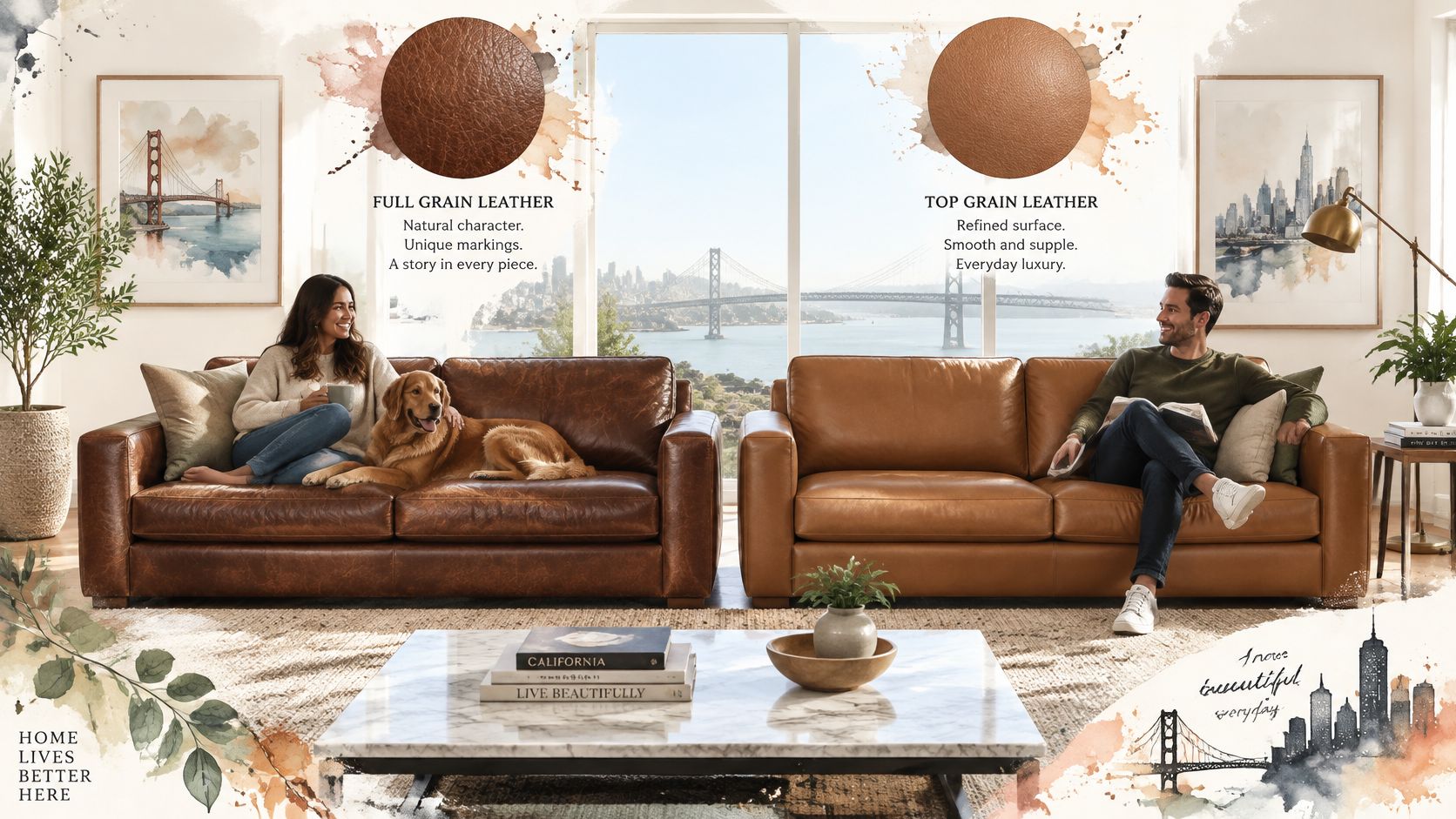
Consider a family furnishing a living room in San Francisco. They like the rich color of a full-grain sofa, but they also want the seating to handle daily use by children and a dog. Across the showroom, a top-grain option looks smoother and more uniform. Both feel inviting, yet those similar first impressions don't tell the family how each sofa may change with handling, sunlight, cleaning, or years of use.
The leather surface is only part of the decision. Natural markings, protective finishes, cushion design, seam construction, sunlight exposure, and repair options all affect how a sofa looks and performs. A relaxed family room may welcome variation and patina. A coordinated formal living room may call for consistent color and a finish that's simpler to maintain. Neither preference is wrong, but the sofa should suit the room and the people who use it.
Think beyond the showroom appearance
At Giorgi Bros. Furniture, a family-owned South San Francisco showroom serving the Greater Bay Area for over 90 years and family-owned since 1933, the useful conversation starts with how a sofa will be used, not with a label alone. A shopper considering a comfortable leather couch should also consider the seat support, room conditions, cleaning routine, and whether visible changes in the leather will feel like character or wear.
The right sofa is the one whose look and care needs fit its home. Full grain can suit someone who appreciates an evolving surface. A carefully specified top grain can be a better practical fit for someone who values visual consistency and straightforward routine care. Quality furniture is an investment, and choosing with long-term use in mind can help keep that investment useful instead of treating it as a short-term purchase.
Understanding Full Grain and Top Grain
Both full-grain and top-grain leather generally refer to leather made from the hide's outer grain layer. The distinction is how much the surface has been altered. Full grain retains the complete natural grain after hair removal, while top grain is generally leather from that same grain-bearing layer that has been sanded, buffed, corrected, embossed, or coated for a more consistent appearance (leather specification guidance).
That means “top grain” doesn't automatically identify a lower anatomical layer or tell a shopper exactly how much correction or finishing the leather has received. The term alone also doesn't establish a universal quality ranking. A retailer should be able to describe the specific leather article and its finish, not just repeat a broad grade label.
Read the surface, not just the label
Full-grain leather keeps natural features such as pores, scars, wrinkles, insect marks, and brands. Those variations aren't necessarily defects. They can be evidence that the grain surface wasn't mechanically corrected to create a more uniform look. A top-grain sofa may have fewer visible variations, depending on how it was treated and finished.
“Corrected grain” describes surface treatment, not a wholly different part of the hide. For shoppers, the practical questions are whether the original grain remains intact, whether the surface has been corrected, and whether pigment or another protective finish has been applied. These details help explain differences in appearance, hand feel, and care.
A useful question for the showroom: “What was done to this leather's surface, and what finish is on it?”
Clear terminology also supports better care. A guide to leather types and cleaning needs can help shoppers understand why cleaning advice should match the particular leather and finish, rather than assuming that every leather sofa needs the same treatment. Ask for the sofa's care instructions alongside its specification, so the material's character and its maintenance needs are both understood before purchase.
Compare Appearance Aging and Everyday Care
The most visible difference is often the surface. Full grain keeps natural variation, while corrected or coated top grain can look more even from cushion to cushion. A uniform top-grain sofa may provide more consistent color and appearance, while full-grain leather retains natural markings that can become part of its patina over time (leatherworking terminology).
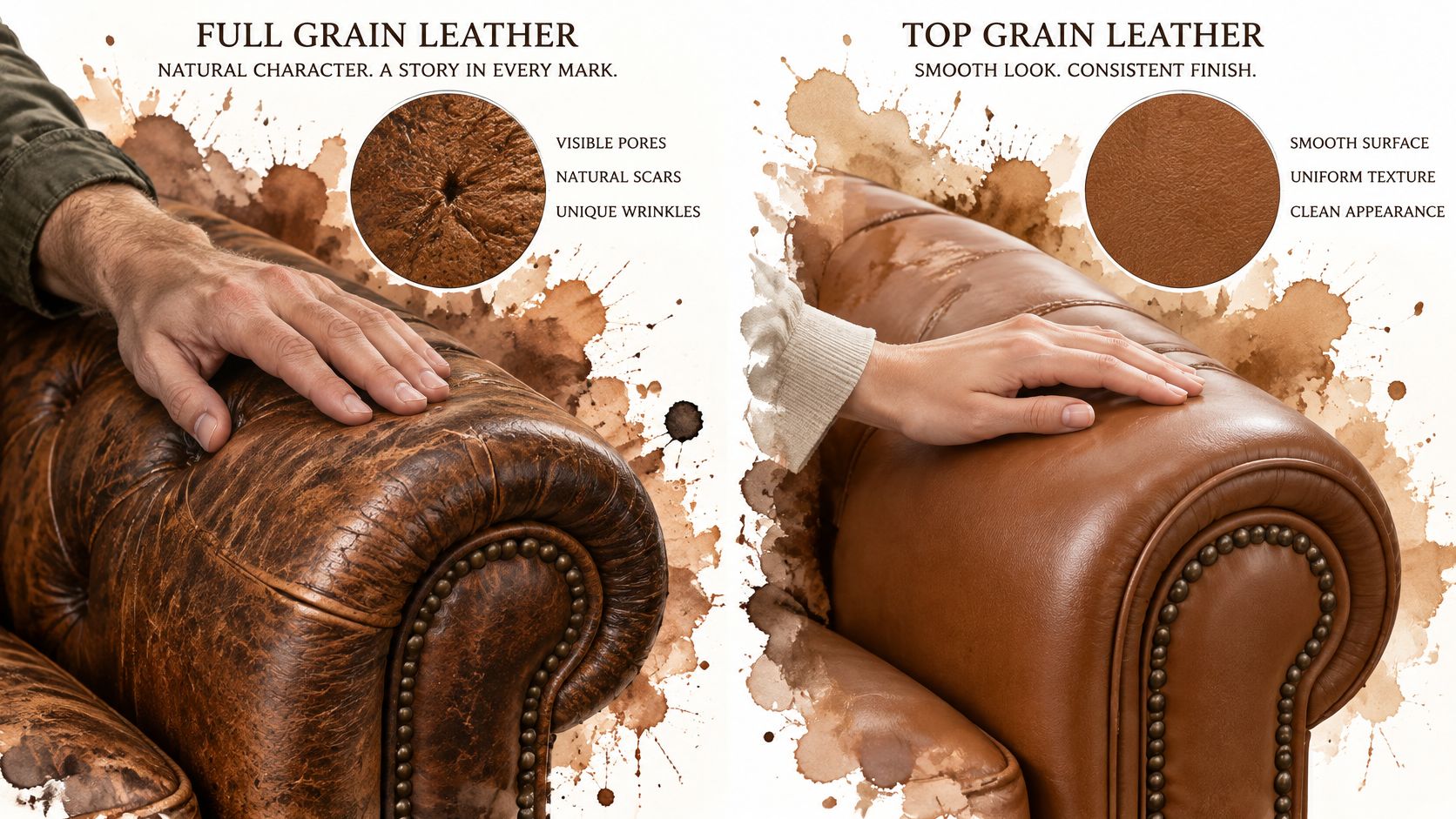
A full-grain sofa can suit a room where marks and color variation feel natural rather than distracting. Handling and body oils can contribute to a visible patina, giving the surface a more individual look over time. A top-grain sofa may better suit a room planned around coordinated colors and a consistent finish, especially if the leather has a protective coating.
Compare the day-to-day experience
Appearance: Full grain shows more of the hide's original character. Corrected top grain can appear smoother and more uniform, though the result depends on its treatment.
Aging: Full grain can develop a patina. A more heavily finished top grain is designed to hold a more consistent appearance, but the exact aging behavior depends on its finish.
Cleaning: A protective top-grain finish can make routine wiping easier. That doesn't make the sofa maintenance-free, and care instructions should match the specific product. For product-specific guidance, consult Giorgi Bros. Furniture's information on leather sofa cleaner and conditioner.
Touch and feel: Surface correction and coating affect how leather feels, so grade alone won't predict whether a sofa feels supple, smooth, or more textured. Try the specific sofa in person.
Price: Don't assume the label alone determines price or value. The hide, finish, design, construction, and customization options all shape what a sofa offers.
For a busy Bay Area family room, a consistent finish may be easier to live with if small marks would bother the household. In a quieter room where natural variation is part of the design, full grain may be more satisfying. Ask about the finish itself, not just the grade.
Assess Durability Beyond the Leather Label
Full grain isn't an automatic guarantee of a more durable sofa. Performance depends on surface preservation, leather quality, tanning, thickness, finish, seams, cushions, frame and suspension construction, household use, and care. Sunlight and humidity matter too. A sofa placed near a bright window may experience different wear from one in a shaded room, while pets, children, and frequent seating can put extra demands on upholstery.
When comparing leather, ask for test results rather than treating a grade as a promise about lifespan. Upholstery assessments can include abrasion, flexing, tear strength, colorfastness, ultraviolet exposure, and finish adhesion. Abrasion testing simulates friction from contact with clothing, skin, and nearby materials. The test method matters, so ask which standard was used. Leather testing may include tensile and tear methods as well as Martindale abrasion testing (leather testing overview).
Treat supplier figures as specifications, not promises
Published supplier guidance gives indicative figures of approximately 1.2–1.4 mm thickness and at least 40,000 Martindale cycles for some full-grain upholstery specifications, compared with roughly 1.0–1.3 mm and 25,000–35,000 cycles for some corrected top-grain specifications. These figures aren't guaranteed outcomes for every sofa or leather grade (supplier upholstery guidance). Protective coatings can improve stain and abrasion resistance, but may also change breathability and hand feel.
| Decision Criterion | Full-Grain Leather | Top-Grain Leather | Buyer Question |
|---|---|---|---|
| Surface | Retains natural grain and markings | May be corrected or finished for consistency | Has the grain been altered or coated? |
| Appearance | More visible variation | Can look more uniform | How much variation should be expected? |
| Care | Depends on the particular finish | A protective finish may simplify routine cleaning | Which care instructions apply to this leather? |
| Wear evidence | Label alone doesn't establish performance | Label alone doesn't establish performance | What abrasion, tear, and finish results are available? |
| Construction | Frame, seams, cushions, and suspension still matter | Frame, seams, cushions, and suspension still matter | What components can be repaired or replaced? |
For a high-use sofa, ask for the abrasion-test method, tear strength, finish adhesion, and lightfastness results. Also ask about the seams, cushion construction, warranty, and care instructions. A well-specified top-grain sofa can be a stronger practical fit than a poorly specified full-grain one, especially when the household needs a protective finish and the sofa will see steady use.
Match Leather to Household Use
Choose for the room people use, not for an imagined ideal home. In a high-use family room, the appeal of top grain may be its more consistent appearance and, where the finish is protective, easier routine cleaning. That can make it a practical premium choice for households with children, pets, or frequent visitors. It won't make the leather scratch-proof or remove the need to follow care instructions.
A sunny living room calls for attention to placement and lightfastness, whichever grade is chosen. Ask how the leather handles light and whether the manufacturer provides results for colorfastness or ultraviolet exposure. A quiet reading room may be a better setting for someone who values a naturally varied surface and is comfortable with patina becoming part of the sofa's look.
Let household priorities decide
A coordinated formal room often benefits from a more uniform color and surface. A relaxed living room may feel more welcoming when natural marks are visible. Neither choice is more refined. The question is whether the leather's appearance will still feel right after regular use.
For pet households, prioritize the finish, color, cleaning instructions, and the household's tolerance for scratches. Leather isn't a scratch-proof surface, so choosing full grain because it has a strong reputation for quality may be the wrong move. For more options to consider around animal-friendly furnishings, see this guide to pet-friendly furniture fabrics.
Full grain is not automatically best for every sofa. Thickness, tanning, surface finish, construction, cushion design, sunlight exposure, and maintenance all affect performance (sofa leather selection guidance). A useful showroom discussion should connect those details to the household: how often people sit on the sofa, where it will be placed, what kinds of marks are acceptable, and how much care feels realistic.
Think about ownership as a whole, too. A sofa's frame, cushions, and repair options can matter more to long-term value than the leather label. That's why the right recommendation may be full grain for one room and a carefully finished top grain for another.
Customize the Sofa for Long-Term Ownership
A leather choice works best when it's part of a complete sofa specification. The shade and finish should suit the room, while the frame, cushion design, and proportions should suit the people who'll use it. Custom options can make that fit more precise. Giorgi Bros. Furniture offers custom ordering for leather, fabric, wood species, and finishes, allowing shoppers to coordinate upholstery with the rest of a room rather than settling for what happens to be on the floor.
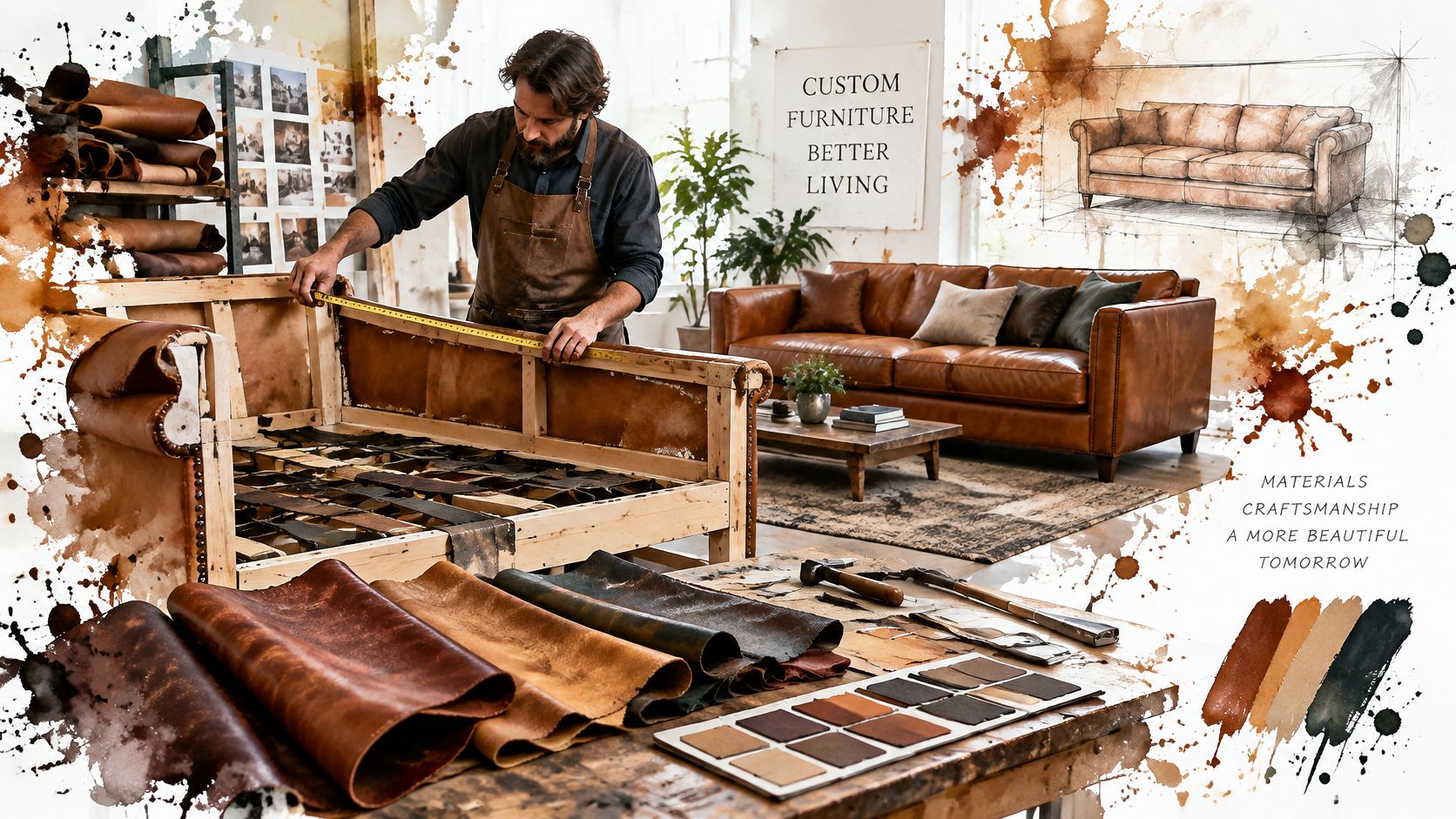
A buyer who wants natural character can ask for a full-grain leather with markings that feel right for the design. Someone who prefers an even look can compare corrected top-grain options and ask how the finish affects touch, color, and cleaning. Seat depth, cushion support, and wood finish deserve the same attention as the hide. These choices shape how the sofa feels in the room and during daily use.
Plan for care and repair
A buy-it-for-life mindset starts before the sofa arrives. Ask whether cushions can be replaced, whether matching upholstery may be available later, and whether the frame or suspension can be serviced. Find out whether custom reupholstery is an option if the surface eventually needs attention. A sofa that can be maintained and repaired may offer better long-term value than one that looks impressive but is difficult to service.
A sofa with a durable protective finish, replaceable cushions, a strong frame, and an accessible reupholstery pathway could remain useful longer than a higher-grade sofa that's poorly constructed or difficult to service (leather product lifecycle reporting). That's a practical argument for judging the whole piece, not just the upholstery. Long-term ownership can reduce the pressure to replace furniture when one component needs attention, and it aligns with the idea of investing in quality for more than today.
Giorgi Bros. Furniture offers custom orders and reupholstery services, with custom sofa design as one way to explore a sofa made for the room. Ask for clear details about the leather article, finish, cushions, frame, care, and future repair options. A well-chosen sofa should fit the home now and remain serviceable as needs change.
Choose the Right Leather for Your Home
Choose full grain if natural variation is part of the appeal and the sofa's surface can change with use without looking less attractive. It's a strong fit for buyers who value an intact grain and a patina-led look. Choose top grain when visual consistency and a more practical cleaning routine matter more, especially if the specific leather has a protective finish suited to an active household.
Neither label tells the complete story. Confirm the finish, thickness, testing, construction, and care requirements before making a decision. Then consider the room's light, expected use, and whether future repairs or reupholstery are realistic. For another way to think through upholstery priorities, compare leather versus fabric upholstery.
Take this checklist to the showroom
- Finish: Is the leather aniline, semi-aniline, pigmented, embossed, or otherwise coated?
- Thickness and testing: What are the leather thickness and available abrasion, tear, finish adhesion, and lightfastness results?
- Construction: How are the frame, seams, suspension, and cushions built?
- Coverage: Which parts of the sofa use the specified leather?
- Room conditions: How much sunlight will reach the sofa, and where will it sit?
- Care: What cleaning routine does the manufacturer recommend for this exact finish?
- Ownership: What does the warranty cover, and can cushions or upholstery be repaired or replaced?
Giorgi Bros. Furniture's 50,000-square-foot South San Francisco showroom gives Bay Area shoppers room to compare furniture in person, while design experts and non-commission consultants can offer no-pressure guidance. For home planning across the Bay Area, a Design Consultation can help connect leather, finish, room proportions, and long-term ownership priorities.
Visit Giorgi Bros. Furniture in South San Francisco to compare leather finishes, explore custom sofa options, and talk through the care and construction details that matter for your home. The showroom's non-commission consultants can help clarify the trade-offs without pressure, or shoppers can book a Design Consultation to plan a leather sofa around their space and household.