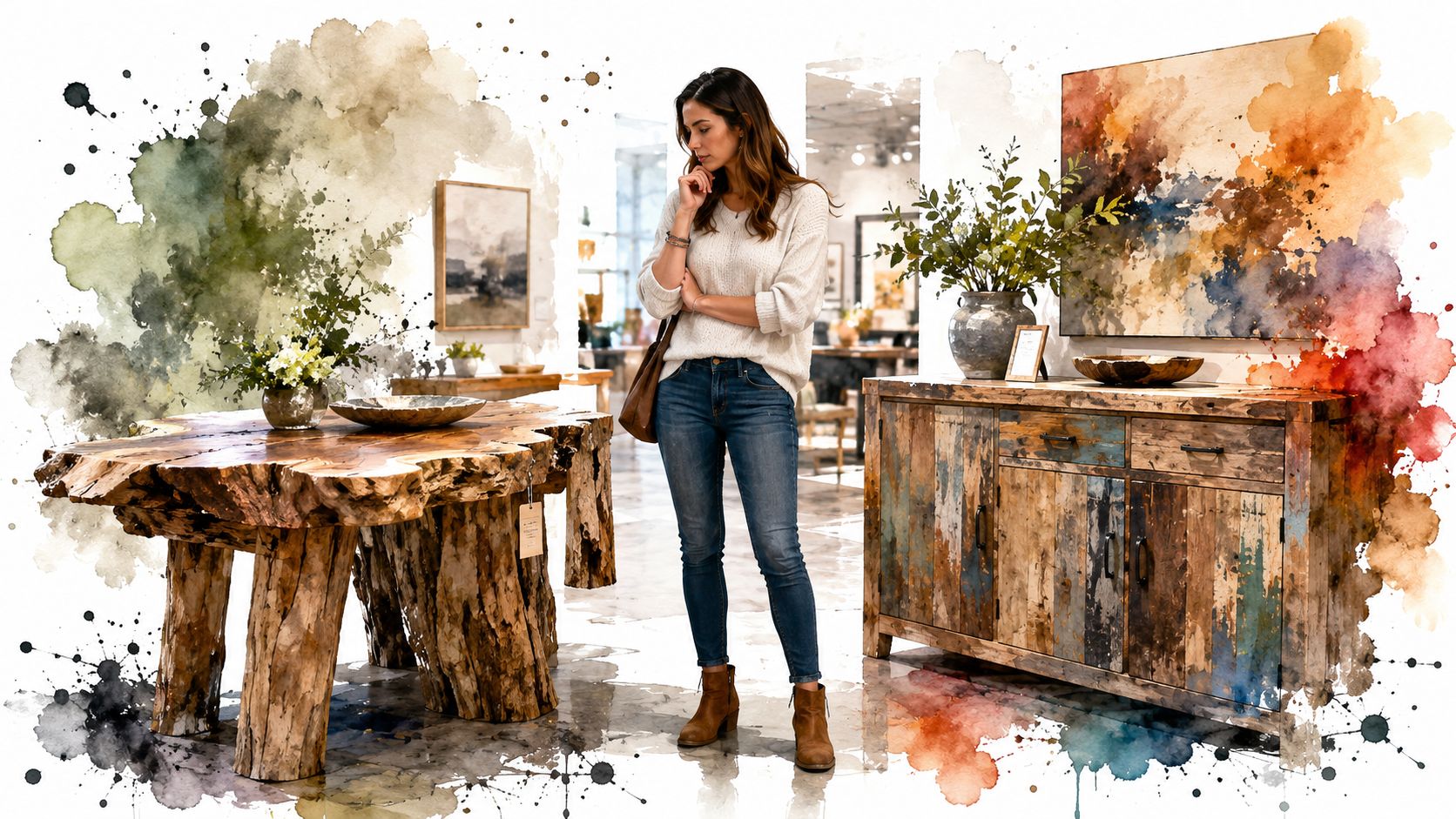
A shopper can walk into a South San Francisco showroom thinking “rustic” means one thing, then stop in front of two pieces that look completely different. One might feel rough-hewn and camp-like, while another reads as clean, warm, and modern. That confusion is normal, because rustic furniture style is less a single look than a long craft tradition built around natural materials, visible structure, and a dislike of over-processing.
That tradition has deep roots. It reaches back through Romantic-era Europe, a mid-18th-century English pattern book, Victorian popularity between 1840 and 1890, and later American revivals tied to the Great Camps tradition and anti-industrial taste movements Britannica on rustic style, Smithsonian object record, early English rustic pattern book history. For a Bay Area home, that history matters less as trivia than as a buying filter. A good rustic piece should answer a simple question, does it look like it was built from natural material with purpose, or just styled to look that way?
Defining Rustic Furniture Style
A buyer standing between a live-edge table and a twig-inlaid chair is looking at two expressions of the same idea. Rustic furniture style uses natural materials, visible structure, and a deliberately unpolished character so the material's origin stays easy to read. It is closer to a craft language than a surface treatment, which is why wood, metal, bark, roots, and other natural forms can all belong to it.
How the style formed
The style did not appear all at once. It moved through Romantic-era idealism, which valued nature and simpler living, then through a documented English design channel in 1754 when Edwards and Darly's A New Book of Chinese Designs became the first English pattern book to feature rustic furniture designs. Print culture mattered because it turned a nature-based idea into a recognizable design category, the same way a showroom sample helps a shopper understand a material family before choosing a piece.
The next turn came with the Victorian-era popularity window. Later, the Arts and Crafts reaction against industrial production gave rustic furniture a practical moral argument, not just a decorative one. In America, the style revived by about 1840, expanded in the late 19th century, and later resurfaced through Great Camps settings such as Camp Pine Knot and Camp Sagamore rustic furniture history overview. For a shopper, that history matters less as trivia than as a filter. A piece should answer a simple question, does it look like it was built from natural material with purpose, or was it shaped to imitate that feeling?
Practical rule: if the piece hides every trace of material and joinery, it is drifting away from rustic and toward a mass-market look.
The showroom takeaway is straightforward. Real rustic furniture is a craft tradition, not a paint effect. If a piece cannot show what it is made of, how it is joined, and why its form feels tied to nature, it is probably not rustic in the meaningful sense.
Hallmark Materials and Construction Techniques
A shopper can spot authentic rustic furniture by paying attention to what the eye cannot ignore. The first clue is material honesty. Rustic pieces usually rely on solid wood, bark, roots, twigs, or similar natural elements, and the form keeps irregularities visible instead of sanding them into sameness. That approach is part of what gives the style its grounded character.
Five Details That Signal Authentic Construction
Visible grain and solid stock. Grain should read as real wood, not a printed surface. Rustic styling depends on the material itself carrying the character, so the wood has to look and feel like wood.
Hand-hewn or intentionally varied surfaces. Light tool marks, texture, and natural edges can belong in the design. The finish should feel deliberate, like a cabinetmaker chose to preserve the surface history, not like the piece was left rough by accident.
Exposed joinery. Mortise-and-tenon and dovetail work show that a piece was built to hold together over time, not just to photograph well. These joints also make repair more practical later, which matters in furniture meant to age with a home.
Thick tops and load-bearing frames. A rustic dining table can be specified with a 1 1/2-inch tabletop thickness, 72 × 30 × 30-inch dimensions, and a 350 lb chair weight capacity, which shows how the style often favors mass and stability rustic dining table specification.
Natural accents that read as part of the structure. Branches, twigs, burls, and antlers belong when they support the design language. They miss the mark when they look pasted on as decoration, because rustic furniture works best when the decorative idea and the structure point in the same direction.
For a closer look at how those choices get translated into a finished piece, the custom wood furniture maker process is a useful starting point for comparing grain, proportions, and joinery before ordering. That kind of review helps a shopper see why one table feels settled in a room while another feels like a prop.
A rustic piece should feel sturdy in the hand and grounded on the floor. If it wobbles, flexes, or uses thin parts to imitate heft, the look is doing the work that the structure should have done.
The showroom takeaway is that rustic craftsmanship is about service life, not just surface character. Heavy frames, thick tops, and honest joinery usually tell the buyer more than a distressed finish ever will. In a well-made piece, the visual weight matches the actual weight, and the form makes sense from every angle.
Wood Species, Finishes, and Upholstery Choices
The material list shapes how a rustic piece lives in a home. Quarter-sawn white oak gives a tighter, more controlled grain pattern. Hickory leans more rugged, cherry warms and deepens over time, walnut reads richer and darker, and reclaimed barnwood brings age and history into the piece. Each one changes the final mood, and each one ages differently.
Matching wood, finish, and use
A custom-order desk or dining table needs a finish that fits the way the household uses it. Hand-rubbed oils work well when the goal is a softer, more natural feel that can deepen with time. Catalyzed conversion varnishes suit high-use surfaces because they create a tougher protective layer. Painted or milk-painted finishes fit an Americana direction when the buyer wants color without losing rustic character.
The easiest way to choose is by use case. A family dining table needs a surface that can handle daily wiping and constant contact. A bedside chest can lean more toward warmth and visual texture. A reclaimed top can carry more variation, while a cleaner hardwood surface can feel calmer in a smaller room.
For a shopper comparing wood behavior across flooring and furniture, the Savera Wood Floor Refinishing guide on types of wood flooring is a practical parallel, because the same grain and hardness questions matter in both places. A matching furniture finish resource is also useful when the goal is to coordinate rather than guess, so the best wood finishes for furniture can help narrow down the finish family before a custom order is placed.
Upholstery should support the frame, not fight it. Top-grain leather gives rustic silhouettes a clean, durable counterpoint. Wool blends soften the look while keeping texture. Performance linens work especially well in Bay Area homes because they keep the piece relaxed without making it fragile.
Consultant's shortcut: choose one strong visual hero, then quiet the other surfaces. A bold wood species pairs best with a calmer fabric, and a heavily textured fabric usually needs a more restrained frame.
The showroom takeaway is that rustic custom work is a three-part decision, wood, finish, and upholstery. When those three choices line up, the piece feels intentional instead of themed.
Traditional Rustic vs Modern Rustic
Buyers often use “rustic” as if it covers one narrow look, then find out the room wanted something else. Traditional rustic leans into the older camp and lodge feel, with heavier logs, twig work, and a more literal nature reference. Modern rustic keeps the organic character but pares down the silhouette, softens the finish, and fits more easily beside contemporary furniture.
Which version fits the room
Room size and ceiling height change everything. A larger family room can carry the visual weight of traditional rustic pieces without feeling crowded. A smaller Bay Area living room usually does better with modern rustic, because sleeker lines preserve breathing room.
The next question is what already lives in the space. If the home already has clean-lined seating, glass, or lighter contemporary case pieces, modern rustic tends to bridge the styles without forcing a theme. If the home already leans warm, layered, and textural, a more traditional rustic anchor can work without looking disconnected.
Maintenance tolerance matters too. Traditional rustic often embraces more surface irregularity, which can be beautiful but less forgiving in busy households. Modern rustic usually trims away some of that visual noise, so everyday care feels easier and the room reads calmer.
For shoppers trying to refine the palette, the modern rustic materials and colors guide is useful as a style reference point, especially when the goal is a softer, more contemporary finish direction. A related comparison between forms can also help separate the look from more industrial-leaning choices in a rustic versus industrial furniture styles guide.
The wrong choice doesn't just look different, it changes the room's scale. Too much traditional rustic in a compact space can feel heavy. Too little structure in a large room can make everything look under-furnished.
The showroom takeaway is straightforward. Traditional rustic suits rooms that can hold weight. Modern rustic fits homes that need warmth without visual overload.
Room-by-Room Styling Examples
A good rustic piece earns its keep by solving real layout problems. In the living room, a chunky wood coffee table gives an upholstered sofa a grounded center, while a live-edge accent shelf can add character without crowding the floor plan. In a Bay Area home with mixed furniture, that combination keeps the room warm but still open.
The dining room asks more from the furniture. A trestle table or pedestal table gives room for chairs, elbows, and holiday serving pieces, and bench seating can make the whole setup feel flexible for weeknights and larger gatherings. Rustic tables work here because the structure looks honest, and the weight reads as stable instead of fragile.
The bedroom needs a quieter hand. A solid-wood bed frame brings the rustic language into the room without forcing it, and breathable natural-fiber bedding helps the frame stay visually calm. Nightstands should match actual lamp height, not just look proportional in a photo, because the eye reads awkward bedside scale immediately.
Outdoor-adjacent spaces and mudrooms bring the idea full circle. Rustic furniture originally made sense because it was durable, so a piece in a mudroom or covered outdoor area should still feel ready for real use. The showroom often treats these areas as stress tests, not decoration zones.
For buyers who want to tailor these room choices, Giorgi Bros. Furniture's custom order options cover fabrics, leathers, wood species, and finishes. That matters when the room needs the right scale more than the right trend.
| Room | Anchor Piece | Suggested Material | Finish Direction | Giorgi Bros. Category |
|---|---|---|---|---|
| Living Room | Coffee table or accent shelf | Solid hardwood, live-edge wood | Hand-rubbed or lightly distressed | Custom Furniture |
| Dining Room | Trestle or pedestal table | Oak, hickory, reclaimed wood | Durable protective finish | Amish Furniture |
| Bedroom | Bed frame and nightstands | Solid hardwood | Warm natural finish | Custom Furniture |
| Mudroom or Outdoor-adjacent Space | Side chair or small bench | Rustic wood or weather-ready materials | Easy-care surface | Custom Furniture |
The showroom takeaway is simple. Start with the room's job, then choose the rustic piece that supports that job instead of fighting the rest of the home.
Sustainability, Craftsmanship, and Buy-for-Life Value
Rustic furniture makes the strongest case when it's treated as an investment piece. Solid wood can be repaired, refinished, and used for years with care, while strong joinery helps the furniture stay serviceable instead of disposable. That matters for buyers who want less replacement churn and more permanence.
Reclaimed, distressed, and genuinely built to last
Not every weathered-looking piece is made the same way. Genuine reclaimed wood comes from material already in circulation, while artificial distressing is a finishing technique that creates a storied look without changing the underlying structure. That distinction is important because the visual effect can be similar even when the provenance is not. The practical question is whether the buyer wants age, the look of age, or a combination of both distressed furniture explanation.
Craftsmanship matters here too. Amish and American-made lines carry a reputation for careful construction, and that aligns with the kind of rustic furniture that can hold up to daily family use. A guide to handcrafted accessories offers a similar lens on value, because the buyer is really comparing how much labor, structure, and finish quality went into the final object. The Pandemonium Millinery quality guide makes that same basic point in a different product category, quality shows up in the details buyers can feel.
The long-term math is simple. One well-made dining table can stay in the home through moves, remodels, and changing styles. Three weaker tables can cost more over time, even if each one looked cheaper at the start. The value is not just in durability, it's in not needing to start over every few years.
For shoppers who want to understand material choices before ordering, the sustainable furniture materials guide helps frame the environmental side of the decision. Giorgi Bros. Furniture's 90-plus year family-owned history in South San Francisco and non-commission design consultants support that kind of buy-for-life thinking with no-pressure guidance and custom order services rather than fast turnover.
Bottom line: the best rustic furniture doesn't just look authentic on delivery day. It should still make sense after years of family use, changing decor, and normal wear.
The showroom takeaway is that sustainability, repairability, and craftsmanship all point in the same direction. Quality rustic furniture is a slower purchase, but it's often the smarter one.
Care, Maintenance, and Visiting the Showroom
A rustic piece stays handsome when the household treats it like a living material. Natural-finish tops do best with a sensible oiling routine, and wood should stay away from extreme dryness or excess moisture. Keeping indoor humidity in a moderate range, lifting furniture instead of dragging it, and rotating upholstery exposure all help the piece age evenly and avoid unnecessary stress wood furniture protection guide.

A showroom visit should start with touch, not just sight. Run a hand along the top, check the edge profile, and look at how the joints meet. Then ask a design consultant about wood species, finish direction, and upholstery options, because those choices will shape the piece's lifespan far more than a trend label ever will.
Giorgi Bros. Furniture's 50,000-square-foot showroom gives Bay Area shoppers space to compare textures, test scale, and talk through custom order choices without pressure. That makes it easier to separate a pretty surface from a real investment.
Giorgi Bros. Furniture offers a family-owned, no-pressure showroom experience in South San Francisco with custom order options in wood species, finishes, fabrics, and leathers. Shoppers who want rustic furniture style that fits a Bay Area home can visit Giorgi Bros. Furniture to explore pieces, compare materials, and book a Design Consultation with a non-commission Design Expert.