
A valance can give a window a finished top edge without covering the glass with floor-length panels. Why can a room feel unfinished even after the furniture and trim are in place? Often, the window needs a clear visual frame. Homeowners who compare decorative floor molding styles know how a small architectural detail can change a wall; a valance adds a similar finishing line above the window.
These window treatments valances ideas cover eight styles Bay Area homeowners can identify before a design consultation: box pleat, balloon, swag, cascade, ascot, lambrequin, scallop, and rod-pocket gather. Start by measuring the window and noting where the drapery track or blind headrail sits. Those details help determine which styles will fit and how much of the glass they will cover.
A lined valance mounted securely above the frame can stay useful as room colors and accessories change. Giorgi Bros. Furniture is a family-owned showroom serving the Greater Bay Area for over 90 years, with custom Hunter Douglas window treatments, including shades, blinds, shutters, and drapery. For window treatments, the team discusses the project details, measures the windows, and then provides a quote.
Each style below is matched with a room scenario, fabric direction, and way to coordinate it with drapery or blinds.
1. Tailored Box-Pleat Valance
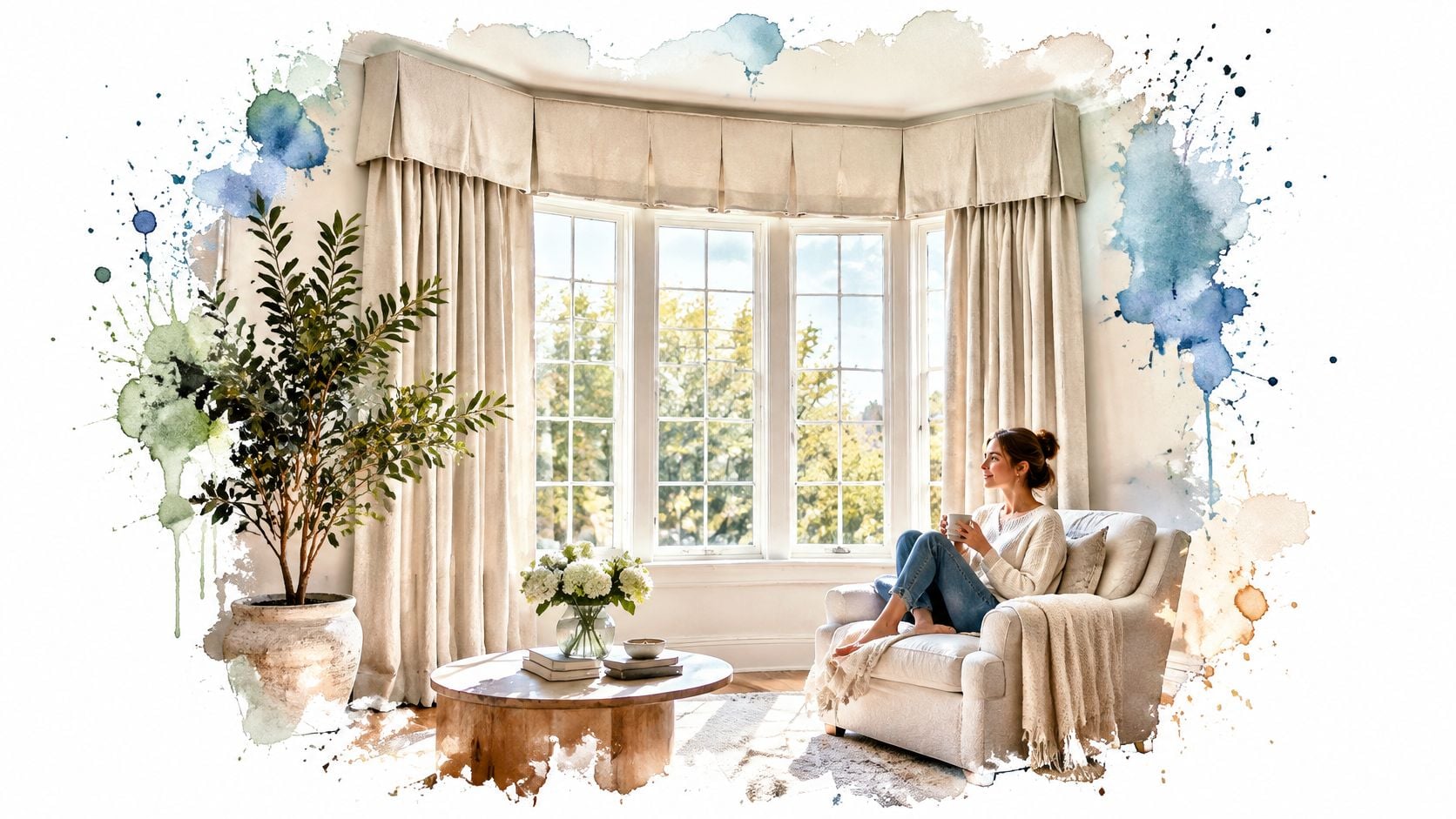
Crisp pleats give a box-pleat valance a clear, architectural top line. In a South San Francisco living or dining room, it suits a bay window with linen drapes, especially when you want a composed finish rather than soft, billowing folds. Use the same fabric for the valance and drapes to unify the window, or repeat the dining-room tablecloth fabric above the window to connect the two surfaces without introducing another pattern.
Board Height and Cloth That Holds a Pleat
Mount the board about 4 to 6 inches above the frame so the pleats have room without crowding the glass. Choose a substantial textured cotton blend to help the folds hold their shape; a limp weave can sag and lose definition. Echo the fabric in one cushion or another small accent, rather than repeating it across several pieces.
Pair the valance with a shade that handles light and privacy. The U.S. Department of Energy fact sheet on cellular shades says appropriate window attachments can save roughly 15% of a household's annual heating, ventilation, and air-conditioning energy use compared with vinyl blinds. Before choosing the layer beneath the valance, review the difference between shades and blinds.
Practical rule: If a pinched pleat won't stand, choose a heavier fabric.
2. Balloon Valance
A bedroom with sheer panels can take a soft balloon valance, especially when the room needs a gentle finish rather than a crisp, structured line. Light floral cotton or linen suits the look; pair it with blackout or privacy panels below for practical coverage.
Allow enough fabric for the rounded pouches to form. As a working guideline, make each pouch about 8 to 12 inches deep, adjusting for the window's scale and the fullness you want. A short drop leaves the folds shallow; too much fullness can crowd a small window.
Fullness Without a Hazard
The decorative valance should not be expected to darken the bedroom. Put blackout or privacy panels behind it, and keep cords and loops out of a child's reach. Cordless shades underneath provide light control without adding an accessible loop.
Window-covering cords and loops are a recognized safety concern. The U.S. Consumer Product Safety Commission's window-covering safety report discusses safety devices and their limitations. A balloon valance can conceal hardware, but it should not conceal a reachable cord.
For anyone sewing one, understanding dressmaking pattern formats helps clarify how the pattern allows for the fabric needed to form the pouches.
3. Swag Valance
In a formal dining room, a swag valance can frame a tall window and give the drapery a clear focal point. A traditional living room can use the same curved line above a pair of panels. Choose a fabric with enough body to hold its shape, such as a medium-weight woven fabric, and support the arc on a decorative rod or cornice.
The history of the window valance traces elaborate cornices and pelmets to the Baroque and early Georgian period, spanning approximately 1643 to 1730, and notes that Victorian valances often used layered fabrics, swags, and jabots. Reserve a swag for rooms that need a formal focal point.
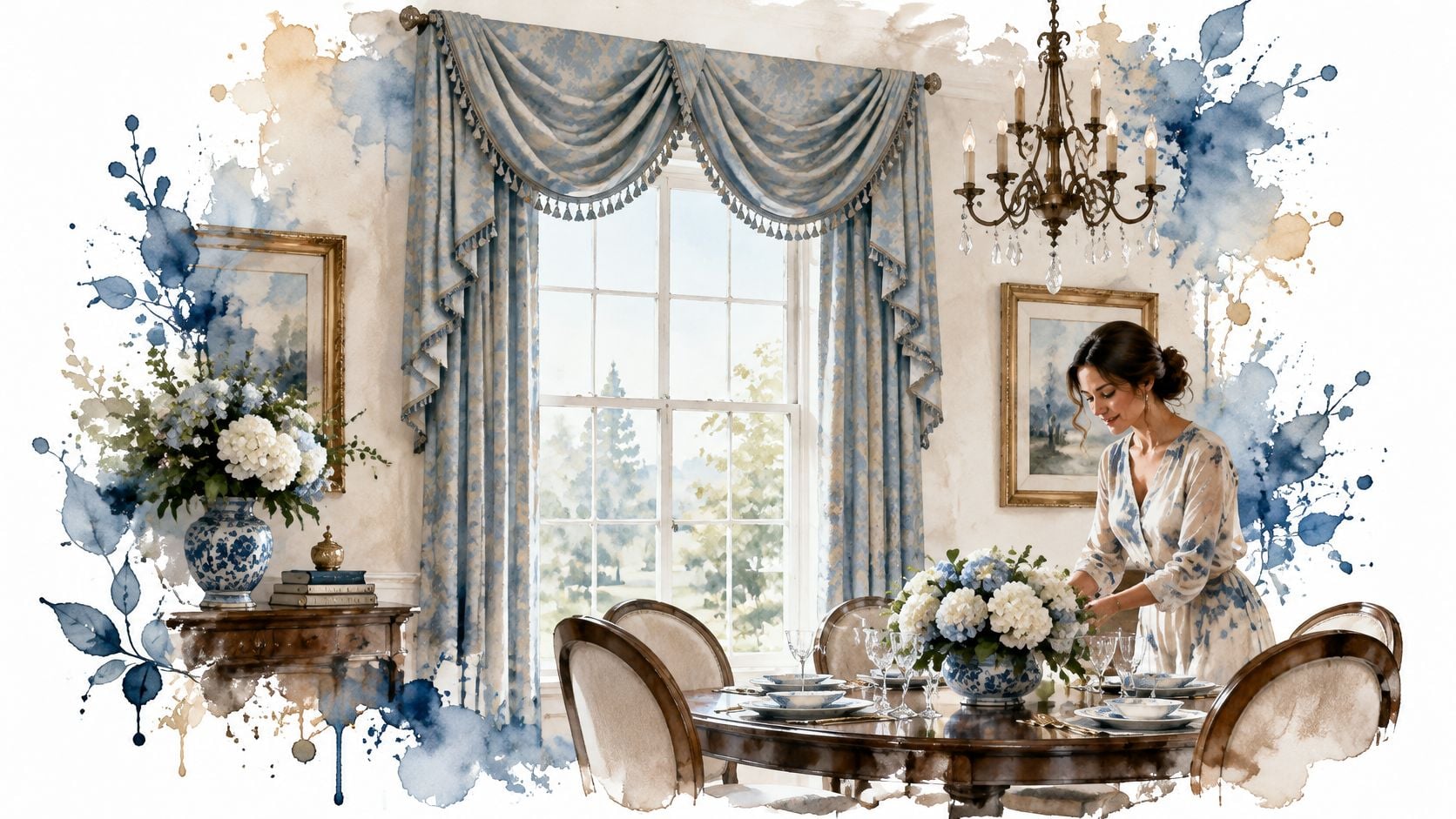
Keep the side tails in proportion to the window width so they don't crowd the glass. A very lightweight fabric may lose the curve; a heavier fabric holds it better but can make the treatment feel imposing. For wide openings, check that the swag clears the moving panels. The same planning applies to window treatments for sliding doors: a low-hanging fold can catch on a panel as it opens.
4. Cascade Valance
A family room with a wide picture window can feel stark at the top; a cascade adds a soft, angled frame without making the room formal. In a bedroom, a linen cascade can give a standard-height window more visual presence. Choose a solid or quiet pattern so the descending folds stay distinct, and keep the drop in proportion to the wall.
A light- to medium-weight fabric usually gives the folds enough definition without making the top treatment feel heavy. Pair it with blinds for a clean, practical layer, or with drapery for a softer finish. An asymmetrical cascade can suit a corner window, provided its longer side does not crowd the wall.
Clearance for What Sits Underneath
The 2025 window treatment trends article reports growing interest in motorized treatments, layered sheers and drapery, ceiling-mounted tracks, and integrated designs. A cascade can conceal a track, but plan its projection and access before choosing the shape. If the fixed fabric face blocks the motor, routine service becomes harder.
Include the cascade in the full window treatment plan, alongside the shade or drape beneath it. Check that the working layer can operate freely and be removed for cleaning.
5. Ascot Valance
A den or sitting room can carry an ascot's dressed-up, slightly playful look, especially above woven shades or simple drapery. Its crossed center and rounded tails suit traditional and English-country rooms; a small floral version can also work above a cottage bedroom window.
Keep the fabric light enough for the shape to fall cleanly. Choose one accent color from the room, then keep trims restrained. A large rosette, heavy fringe, and busy print can crowd a short window.
How Much Face the Cloth Should Claim
Proportion decides whether the crossed panels frame the window or block too much of it. On a small cottage window, scale down the tails and any center ornament so they do not dominate the glass. For a wider den window, the ascot can have more presence, provided it leaves enough clearance for the covering beneath.
Pair it with a working shade or drapery for light control and privacy. Giorgi Bros. offers custom Hunter Douglas window treatments, including shades, blinds, shutters, and drapery. Discuss the project details first; a professional then measures the windows and provides a quote. For a shaped top above a motorized or layered treatment, plan clearance so the lower covering remains easy to operate.
6. Lambrequin Valance
Deep green velvet can give a formal living room a strong focal point when shaped into a lambrequin, a structured fabric face with curves, points, or ornamental edges. Braid or fringe can finish the outline, but use it selectively: too much trim can make an already sculptural shape feel crowded. A dining-room bay can also suit a lambrequin, especially when its trim picks up a wood tone or upholstery color already in the room.
The shape should follow the window casing, ceiling height, and view from the doorway. A broad, elaborate outline can overwhelm a narrow window, while a shallow profile may disappear against a tall wall. Sketch the face to scale before choosing fabric.
A Board You Can Recover Later
A lambrequin needs a firm backing to hold its outline. A stable board with a fabric face attached so it can be removed makes future changes simpler: the shape stays in place while the cloth or braid can be replaced. Ask how the board will mount and how the face will be secured before settling on the design. For a room with velvet drapery, a lighter-weight face fabric can keep the window treatment from feeling too heavy.
7. Scalloped Valance
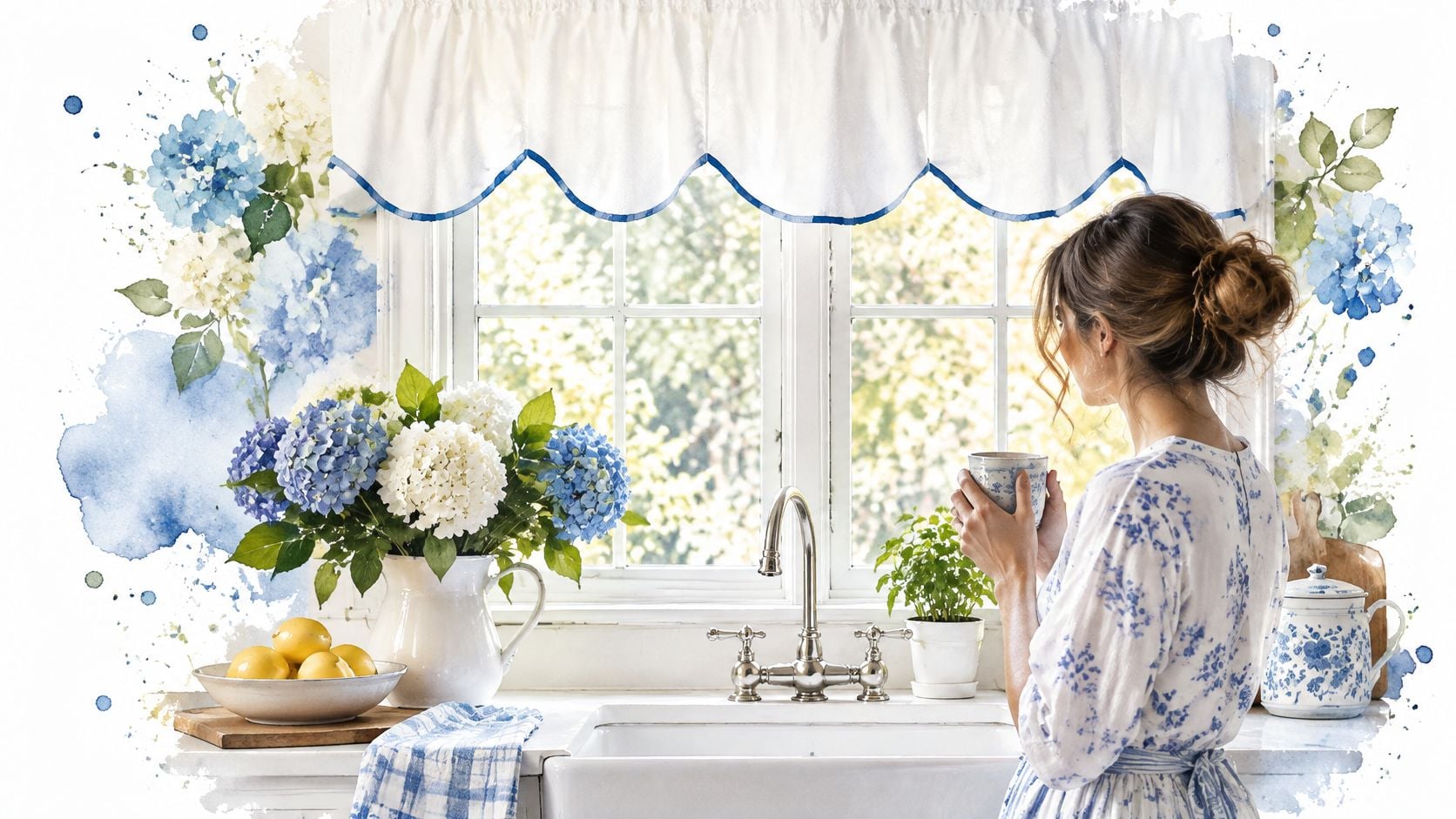
A kitchen window above the sink is a natural place for a scalloped valance: its curved edge softens the view without taking over the room. Crisp cotton or a light cotton blend keeps the shape neat. Blue piping on white cloth gives the wave definition; a pastel fabric can suit a child's room without relying on a novelty print. Keep the trim in step with the room's existing colors, and choose shallow scallops if the window already has strong details.
Cloth Quality at the Curve
Check the piping seams and the fabric's weight before choosing a cloth. The curves need enough body to hang evenly, while a heavy lining can make a small valance look stiff. Light-filtering panels or blinds underneath provide practical window coverage; the scalloped top adds a softer finish. In a kitchen, choose a fabric that can be cleaned without losing its shape, and make sure the scallops are evenly spaced so the edge reads as intentional.
8. Rod-Pocket Gathered Valance
A gingham rod-pocket valance suits a kitchen that needs a simple, washable finish. The fabric slides onto a rod through a sewn pocket, forming soft gathers. Cotton or a cotton blend keeps the look relaxed; for a large family-room window, choose a fabric with enough body to hold its folds without looking stiff. In a formal dining room, this casual heading can feel out of place.
Set the valance above blinds or drapery when you need a working window layer. For a family room, consider how the fabric will coordinate with the room's living room window treatments before choosing a pattern or color. A shaped finial adds a finished detail to a plain rod.
Fullness, Rod Size, and Depth
Measure the rod before ordering or sewing the valance. As a general guideline, use fabric about two to three times the finished width for a gathered look. Less fullness leaves the pocket looking stretched; more creates denser folds. Match the pocket opening to the rod's actual diameter, and choose a depth that provides the coverage you want without crowding the window. Washable fabric is a practical choice in kitchens and bathrooms, where grease, steam, or humidity can affect the treatment.
8 Valance Styles at a Glance
| Style | Overall Look | Best Rooms | Formality Level | Installation Complexity |
|---|---|---|---|---|
| Tailored Box-Pleat Valance | Crisp, structured pleats and clean lines | Living rooms, dining rooms | Polished, moderately formal | High; precise measuring and board mounting |
| Balloon Valance | Soft, rounded, billowing folds | Bedrooms, nurseries, sitting areas | Casual to moderately formal | Moderate; gathering and shaping required |
| Swag Valance | Graceful draped curve, often with side tails | Dining rooms, formal living rooms | Formal and elegant | High; careful draping and measuring required |
| Cascade Valance | Layered folds falling in a gentle waterfall | Bedrooms, family rooms | Relaxed to moderately formal | Moderate to high; layered panels need careful placement |
| Ascot Valance | Crossed panels with a decorative center detail | Sitting rooms, dens, cozy bedrooms | Polished and decorative | Moderate; panels and center detail require arranging |
| Lambrequin Valance | Stiff, sculpted shape with ornamental edges | Formal living rooms, dining rooms | Very formal and dramatic | High; typically custom-built |
| Scalloped Valance | Repeating rounded, wave-like lower edge | Kitchens, children's rooms, traditional spaces | Casual to moderately formal | Moderate; scallops need precise cutting |
| Rod-Pocket Gathered Valance | Simple fabric with soft, even gathers | Kitchens, bathrooms, family rooms | Casual | Low; slides onto a rod |
Bring Your Favorite Valance Style to Life in the Bay Area
A valance should suit the window, the room, and the fabric beneath it. Before choosing a style, consider how much visual weight the window can carry and whether the valance will sit above drapery or blinds. Fabric weight and lining affect how the topper hangs, how it coordinates with the window treatment, and how it can be cared for.
In South San Francisco homes, a sofa or dining-chair fabric may already set the room's palette. Bring a swatch when considering a valance so the colors and textures can be compared together. For a cohesive room, coordinate the window fabric with nearby furniture finishes and upholstery, while letting each material keep its own texture and character.
Durability depends on practical choices as well as appearance. A maintainable fabric and hardware that can be serviced can help a window treatment remain useful longer. Choose a fabric and lining with the room's cleaning needs in mind, and confirm that the mounting approach suits the window.
Giorgi Bros. Furniture offers custom-made Hunter Douglas shades, blinds, shutters, and drapery. After discussing the project details, the team measures the windows and provides a quote. Installation is performed by a certified Hunter Douglas expert. The family-owned, full-service showroom in South San Francisco spans 50,000 square feet and has served the Greater Bay Area and Western United States for over 90 years.
For a useful first conversation, bring the window measurements, photos of the room, and fabric swatches for nearby upholstery or flooring. The team can discuss how the window treatment fits the room and review custom options without pressure. Customers can also browse catalogs online and schedule a time to speak with a designer, or visit the showroom in person.
Giorgi Bros. Furniture also offers custom furniture, premium mattresses, stylish flooring, and elegant window treatments. For a room that needs more than a window update, the showroom provides custom reupholstery and design consultation. Flexible financing options are available through in-store financing. Visit Giorgi Bros. Furniture to explore the showroom or arrange a design consultation.