The navy swatch looks right beside the rug, and the sofa will be the first thing guests see. Then the practical questions arrive: will the sunny arm fade, will the favorite seat wear thin, and will the fabric survive a household that uses its living room?
For Bay Area homes, the brightest window and the heaviest-used seat should guide the choice, not the swatch alone. A useful search for upholstery fabric navy blue starts with color, but a lasting purchase requires a closer look at fibers, abrasion, dye stability, and care.
Navy Blue Upholstery Fiber Types Compared
Navy blue upholstery fiber types and performance
| Fiber | Stain resistance | Abrasion strength | Best fit |
|---|---|---|---|
| Solution-dyed acrylic | Good | High | Sun-exposed living rooms |
| Performance polyester | Excellent | High | Family sofas and sectionals |
| Microfiber blend | Very good | High | Daily-use seating in pet homes |
| Cotton blend | Fair | Moderate | Low-traffic accent chairs |
| Linen blend | Fair | Moderate | Reading corners and relaxed styles |
| Wool blend | Good | Good | Formal living room sofas |
| Faux leather (PVC and polyester) | Excellent | High | Wipeable seating for kids and pets |
These are shopping expectations, not certified ratings for every fabric in a fiber family. Construction, finishing, and the exact blend can change the result substantially.
A navy sofa may look equally convincing in cotton or polyester on delivery day. The difference becomes clearer after prolonged sitting, spills, and exposure to daylight.
Match the fiber to the household
Solution-dyed acrylic is a sensible starting point near bright glazing because the color is incorporated during fiber production. Performance polyester is another practical family-sofa candidate, but the word performance doesn't establish how the fabric was dyed. Its stain and fading claims still need documentation.
Microfiber blends offer a close surface that generally suits daily seating. They aren't claw-proof, and some show handprints or changes in nap that make navy appear lighter in patches.
Cotton and linen blends provide a softer, naturally textured look for a quiet reading corner. They're less forgiving of spills without an appropriate finish, while pilling risk depends on yarn and construction rather than natural fiber content alone.
Wool blends bring resilience and natural soil resistance to a formal sofa. Faux leather offers a wipeable surface for children and pets, but scratches, coating damage, and an uncomfortable feel against bare skin remain genuine trade-offs.
Confirm the composition
The FTC's textile-labeling guidance generally excludes the outer coverings of upholstered furniture from mandatory textile fiber-content labeling. Ask for the composition in writing rather than assuming a missing label settles the question.
The guide to upholstery fabric types helps narrow the material choices. A useful shortlist includes a daily-use option, a daylight-oriented option, and, where appropriate, a more decorative fabric for occasional seating.
Abrasion Ratings That Predict Real Wear
A saturated navy can conceal a small mark while offering little protection against friction. Abrasion resistance measures wear, not how forgiving the color looks.
In the Wyzenbeek test, cotton duck rubs back and forth across the textile. Each complete back-and-forth movement counts as a double rub.
American Leather's upholstery rub-test guidance identifies approximately 15,000 double rubs for general contract or low-traffic private use and 30,000 for heavy-duty use, while cautioning that results above 100,000 haven't been shown to predict proportionally longer fabric life. The following household matches apply those benchmarks as selection guidance, not lifespan promises.
Double rub benchmarks by household use
| Household use | Wyzenbeek double rubs | What it means |
|---|---|---|
| Formal living room sofa, light use | 15,000 | Suited to low-traffic private spaces |
| Accent or reading chair | 15,000 | Light, occasional sitting |
| Family room sofa or sectional | 30,000 | Daily use with kids and guests |
| Dining chairs used every day | 30,000 | Frequent friction from sitting and standing |
| Pet-heavy household | 30,000 | Heavy-duty benchmark recommended |
| Any use above the heavy-duty level | 100,000+ | Not shown to predict proportionally longer life |
Judge the busiest seat
Consider a formal living room used mainly for evening guests. A well-constructed fabric meeting the lighter benchmark may suit that room without paying more for a larger number.
A family sectional has a different job. Children slide across cushions, a dog uses the same landing spot, and adults repeatedly settle into the corner seat. Daily dining chairs also deserve the heavier benchmark because sitting, shifting, and standing create repeated friction.
Practical rule: Specify for the hardest-working seat, not the average amount of time the room gets used.
The test doesn't reproduce seam stress, edge wear, pilling, soiling, pet claws, or sunlight. A high result can't rescue weak seams or establish resistance to fading.
The performance fabric furniture guide provides context for balancing those needs. On the specification sheet, confirm both the test method and result. A Martindale cycle count isn't interchangeable with a Wyzenbeek double-rub count.
Colorfastness and Fading Tests for Sunny Rooms
A navy sofa sits beside large glass doors, with a white throw resting on its arm. That arrangement raises separate concerns: dye transfer onto the throw and color loss on the sunlit upholstery.
Crocking means surface color rubs onto another material. Fading means light changes the dye itself, potentially leaving the sofa structurally sound but visibly uneven.
James Dunlop Textiles' colorfastness guidance describes ISO 105-X12 testing with a standardized white cloth under dry and wet conditions, graded from 1 to 5, with practical upholstery targets of grade 4 dry and grade 3 wet. Moisture makes wet rubbing more demanding because it can mobilize poorly fixed dye.
Cimmino's textile guidance describes controlled xenon-light testing under ISO 105-B02 and related methods against the Blue Wool scale of 1 to 8, with 5 or higher a sensible target for bright rooms and 6 or higher for sustained direct sunlight.
Colorfastness tests and benchmarks for navy upholstery
| Test | What it measures | Benchmark |
|---|---|---|
| ISO 105-X12 dry crocking | Dye transfer from dry contact | Grade 4 or higher |
| ISO 105-X12 wet crocking | Dye transfer when damp | Grade 3 or higher |
| ISO 105-B02 lightfastness | Fading under controlled xenon light on the Blue Wool scale of 1 to 8 | 5 or higher for bright rooms, 6 or higher for direct sun |
| Dye-lot consistency | Color match between production runs | Request actual lot results before approval |
| Warranty terms | Coverage for fading and cleaning damage | Confirm coverage, exclusions, and separate warranty terms in writing |
Approve the actual navy fabric
Sunlight rarely reaches every part of a sofa equally. Cushion fronts, exposed arms, and sheltered backs can develop different shades, making fading particularly noticeable across a solid navy surface.
Request results for the actual production dye lot, fiber, and finish, not merely the collection. A test result for another colorway doesn't establish the same performance for navy.
Giorgi Bros. Furniture states that fabrics and leathers aren't guaranteed against wear, fading, color fastness, or damage from cleaning. Fabric and leather warranties are sold separately from the furniture and vary in terms.
Before approval, obtain the written test documentation and warranty terms, then compare them with the room's actual daylight exposure.
Matching Weave and Weight to Sofas and Chairs
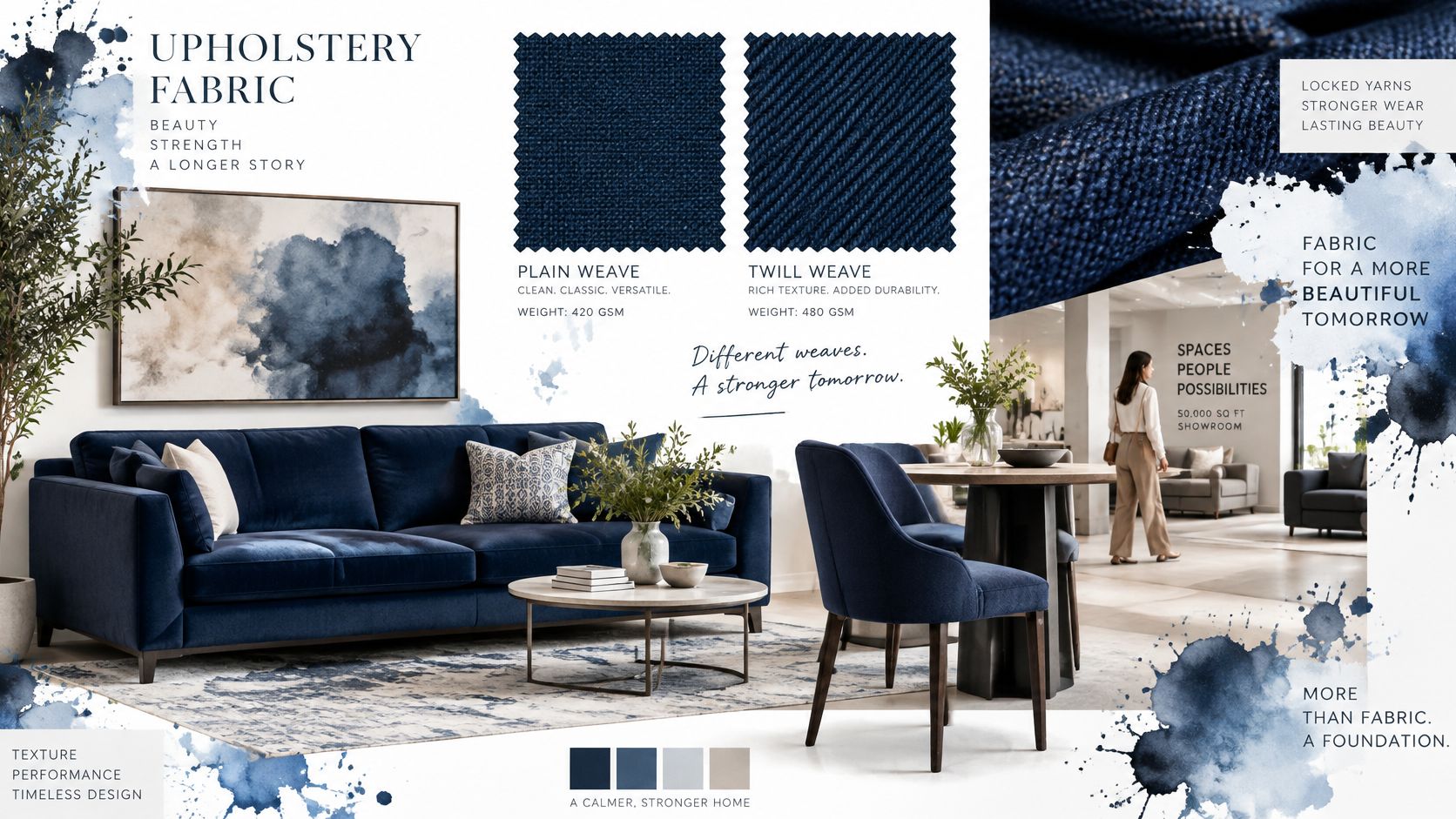
Weave comes before weight. A heavy cloth with loose loops can snag more readily than a lighter, tightly constructed upholstery fabric.
Choose a surface that suits the seat
Tight plain weaves and twills are dependable starting points for sofas and dining chairs. Closely interlocked yarns leave fewer loose elements for clothing hardware or claws to catch, although the finished fabric still needs an appropriate abrasion result.
Herringbone and jacquard can provide a more refined appearance. A dense herringbone works well on a formal sofa; a jacquard with long surface floats needs closer inspection before use on a busy dining seat.
Bouclé and loose chenille offer softness and texture, but their raised yarns can snag or pill. They make more sense on a lightly used accent chair than on the household's favorite lounging corner.
Velvet creates a rich navy surface, yet pile direction can produce dramatic shade changes. Crushing and pressure marks aren't necessarily dye failure, and an everyday velvet needs documented seating performance and suitable backing, not merely a performance label.
Read the weight alongside the construction
Heavier upholstery cloth often holds its shape well across seat cushions. Weight alone doesn't establish strength, however, and fabric used on backs, pillows, or arms must still suit the stresses at those locations.
A navy velvet accent chair beside a heavier twill sofa gives the room texture without asking the decorative fabric to handle every task. For removable-cover ideas, explore sofa cover styles from Casamé Home, while checking fit and care separately from the underlying upholstery.
A hands-on inspection should include:
- Weave density: Gently flex the sample and inspect gaps between yarns.
- Weight: Request grams per square meter from the specification sheet.
- Pile: Brush the surface in opposite directions to reveal shading.
- Backing: Inspect stability and confirm suitability for the intended application.
On upholstered products, a 2"-3" variance from stated manufacturer measurements is common and acceptable, with the amount varying by manufacturer. Allow for that tolerance when planning a navy sofa for a tight Bay Area room or narrow entry.
Match the weave to the busiest seat, then compare documented weight across the remaining options.
Pairing Navy Upholstery with Wood, Metal and Neutrals
Navy takes its name from British naval uniforms, and its indigo roots give seating a visual association with authority and permanence, as JSTOR Daily's color history explains.
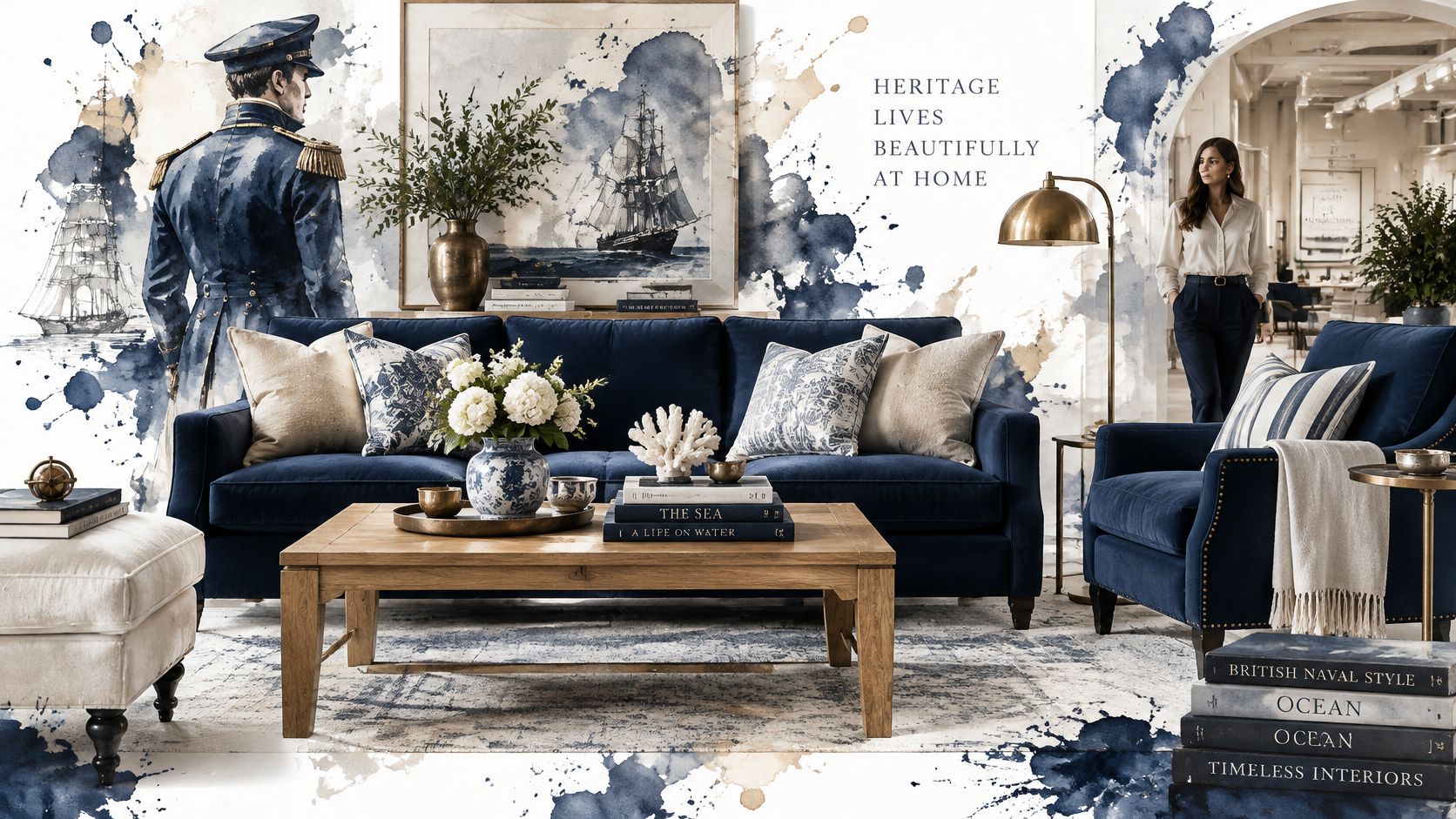
For a welcoming living room, place a navy sofa beside a camel leather chair and a soft ivory rug. White oak keeps the arrangement light; walnut adds depth without requiring another large block of dark upholstery.
Brass or bronze accents introduce warmth, while ivory or oatmeal walls soften the contrast. A navy dining chair beside a walnut table can feel equally settled, particularly when the chair's fabric has a subtle texture.
Check undertones before choosing finishes
A warmer navy often sits comfortably beside brown wood. A cool, blue-gray navy can look austere beside steel and brilliant white, especially in a room with cool daylight.
Saturated navy, ink, and near-black aren't interchangeable. Hold samples vertically as well as horizontally, then view them during the hours the room is used. Lamplight may warm the pairing, while daylight can make its blue or gray undertones more apparent.
The guide to colors that go with cherry wood is useful when existing wood furniture must stay.
Let the navy furniture anchor the room, while rugs, pillows, and wall colors remain easy to change.
Charcoal or burgundy can work as a supporting dark tone, but small doses usually provide enough contrast. Bring the navy swatch to a daylight window alongside the proposed wood and metal samples before committing to the finishes.
Why Navy Upholstery Is a Lifetime Investment
A sofa earns its keep from the heaviest seat in the house, the spot that takes daily use while a Bay Area window pours light on one arm. The U.S. Environmental Protection Agency's durable-goods report defines that category as products expected to last at least three years, including furniture, furnishings, carpets, and rugs; it reports 12.1 million tons of furniture-and-furnishings waste in 2018, or 4.1% of municipal solid waste, with 80.1% landfilled.
Those figures describe the broader waste stream, not the footprint of a particular sofa. They explain why keeping a sound frame in service matters.
Consider the ownership cost
A clearly hypothetical illustration makes the trade-off easier to see. A $3,000 navy sofa used for 15 years averages $200 per year before maintenance; a $1,000 sofa replaced every four years has an annualized purchase cost of $250.
These figures are illustrative, not a guarantee of product lifespan or pricing. Actual replacement timing, repairs, and reupholstery costs change the outcome.
A sagging seat shows the difference. Re-coring worn cushions and re-covering a solid frame renews comfort for a fraction of what a full replacement costs, while a weak frame leaves no repair worth doing. I judge navy as a long service color only when the piece underneath deserves that second round of work.
Long-view test: A quality frame should remain worth keeping when the original upholstery no longer suits the room.
A buy-it-for-life approach does not promise that the original fabric will last forever. It favors a repairable frame, maintainable cushions, and upholstery that can eventually be replaced without discarding the whole piece.
Before choosing a sofa for long service, consider:
- Repairability: Can worn cushions or support components be serviced?
- Recoverability: Is the frame sound enough to justify future upholstery work?
- Cleanability: Does the care method fit the household's habits?
- Adaptability: Will the shape still work if the room's palette changes?
Navy supports that approach when it belongs on furniture selected for long service, rather than being the sole reason for the purchase. Judge the textile by maintenance needs and the option to re-cover, not just its first impression.
Cleaning Codes and Everyday Care for Navy Upholstery
Cleaning codes for navy upholstery
| Code | Cleaner allowed | What to do |
|---|---|---|
| W | Water-based cleaner | Use a water-based solution and test on a hidden area |
| S | Solvent cleaner only | Use a solvent product and avoid water |
| W/S | Water or solvent | Test both on a hidden area before choosing |
| X | Vacuum or dry brush only | Don't wet the fabric; clean with dry methods only |
The cleaning code belongs on the label or specification sheet and should guide the first spot treatment. For a plain-language reference, Top Cleaners explains sofa care labels, including the distinction between water-based and solvent cleaning.
A permitted cleaner still needs a hidden-area test. Use a concealed seam, allow it to dry completely, and check for a ring, texture change, or transferred navy dye before treating a visible area.
Build a repeatable care routine
Vacuum a family sofa weekly with a soft brush attachment, paying attention to cushion seams where abrasive grit collects. Rotate loose cushions monthly where the design allows, and blot fresh spills with a clean absorbent cloth rather than rubbing them outward.
Pilling needs a fabric-specific approach. A guarded fabric shaver can remove surface fuzz from an approved tight weave, but aggressive shaving can cut bouclé loops or damage loose chenille.
For sun-exposed seating, consider a placement change that reduces sustained direct exposure. Cushion rotation may distribute wear, but it won't make a poorly lightfast dye resistant to sunlight.
Keep these details together:
- Care code: Record the manufacturer's instructions and restrictions.
- Product used: Retain the cleaner name and spot-test result.
- Treatment date: Note professional cleaning and significant spill treatments.
For PVC-and-polyester faux leather, use a soft damp cloth and mild soap only when the manufacturer permits it, then dry the surface fully. Avoid assuming that all coated upholstery tolerates the same cleaner.
The information on upholstery cleaning services can help with maintenance planning. Proper care preserves the textile's useful life; when the surface eventually wears out, a sound frame may still justify reupholstery rather than replacement.
Confirm Your Navy Fabric at the South San Francisco Showroom
Navy shifts under store lighting, daylight, and lamplight. A swatch that looks rich and even in hand can read flat or purple once it covers a full sofa, which is why the window direction and the hardest-used seat should settle the choice before an order is signed.
The 50,000-square-foot showroom in South San Francisco gives shoppers one place to compare texture, pile movement, seat comfort, and finish pairings side by side, with custom furniture options across fabrics, leathers, finishes, sizing and style plus custom reupholstery, flexible in-store financing, and no-pressure help from non-commission design consultants. Bring room photographs, a current fabric sample, and notes on where direct sun hits the proposed seat.
Start the visit with use, not color preference alone:
- Show the exposure: mark which cushions receive sustained afternoon sun.
- Describe actual use: name the seat with the most sitting, pet contact, or food traffic.
- Bring finish samples: include flooring, wood tones, or rug colors where practical.
- Request written confirmation: ask for available abrasion results, lightfastness ratings, dye-lot details, and fabric or leather warranty terms, which are sold separately and vary in coverage.
The guide to avoiding color mismatch when ordering online explains why that physical comparison matters more than a screen image. Homeowners across the Bay Area can work through these decisions with the showroom team, beginning with household needs rather than only what is on display.
For larger investment pieces, confirm fiber, abrasion, and lightfastness in writing before approval. A family-owned showroom serving the region for more than 90 years supports that slower process, and the right navy should suit room light and daily wear as convincingly as it suits the palette.
Bring room photographs and finish samples to Giorgi Bros. Furniture, then book a design consultation or visit the South San Francisco showroom this week.