
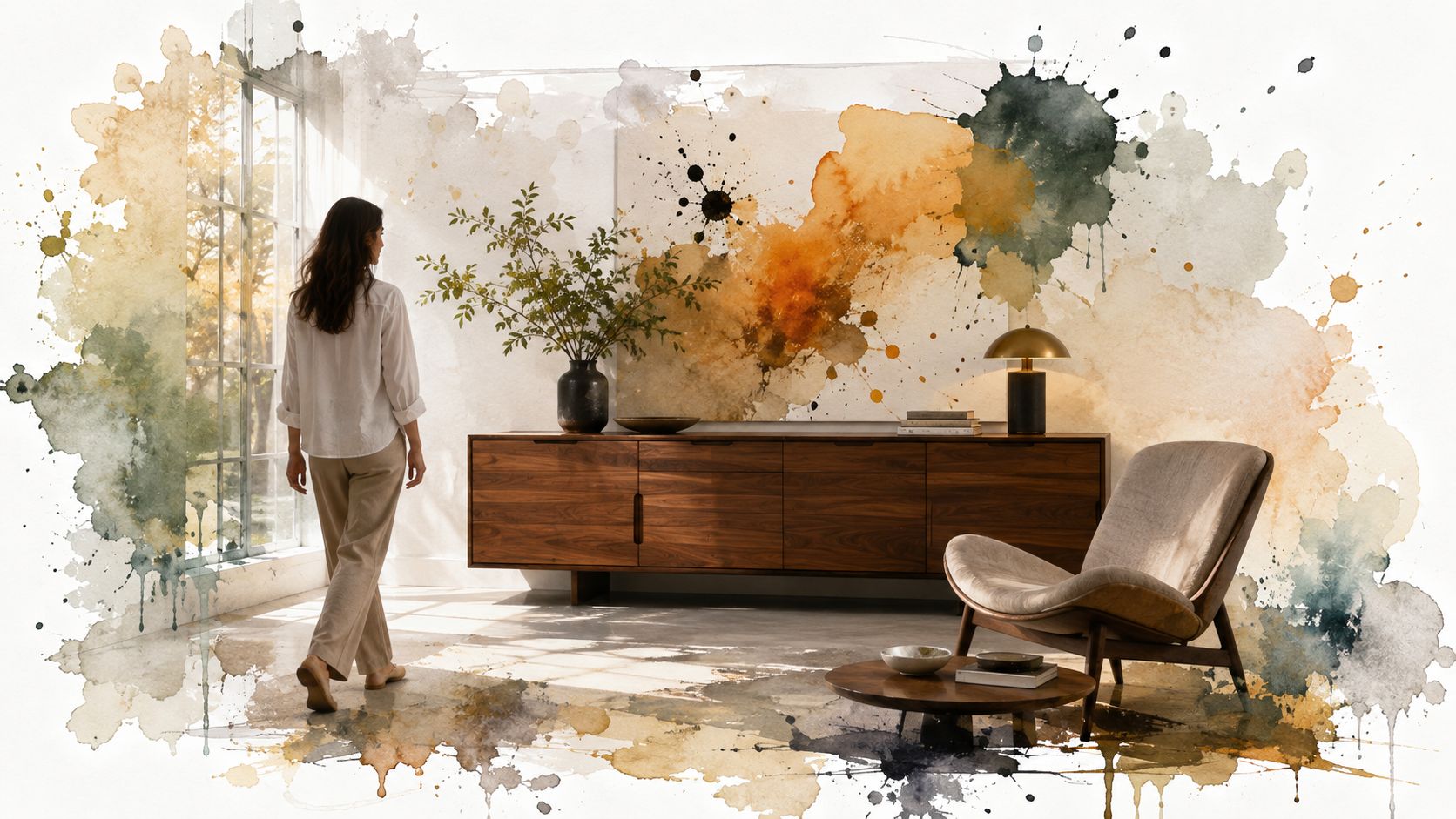
A living room can feel instantly familiar when a walnut credenza sits beneath a favorite print, a curved lounge chair faces the window, and a teak dining table gives the room quiet structure. The appeal isn't nostalgia alone. Mid-century modern furniture works because it looks deliberate without making the home feel staged.
For Bay Area homeowners, that balance matters. Victorian flats, Eichler-inspired homes, compact Oakland condos, and open-plan houses all benefit from furniture that keeps sightlines clear while adding warmth. The right investment piece can serve a room for decades, adapt to changing tastes, and cost less over its useful life than furniture that must be replaced repeatedly.
Why Mid-Century Modern Furniture Still Captivates Homeowners
A well-made mid-century modern room doesn't demand attention. It earns it. The tapered legs create visual lightness, the wood brings warmth, and the upholstery or molded shell adds just enough shape to keep the room from feeling flat. A credenza can hide daily clutter, while a lounge chair gives a corner a clear purpose.
The style generally belongs to the 1945 to 1969 period, although many historians describe 1947 to 1965 as its golden age. Its roots reach back to 1930s Bauhaus and International Style thinking, then expanded after World War II as new materials, postwar housing demand, and mass production made furniture desirable. This historical overview of mid-century modern furniture places the style within a specific industrial and social moment, not a decorative trend.
Why the style fits Bay Area living
California homes often blur the boundary between inside and outside. Mid-century modern furniture supports that relationship with low profiles, open bases, natural wood, and silhouettes that don't block daylight or garden views. A teak dining table can feel comfortable beside large glass doors, while a walnut sideboard can anchor a smaller room without visually closing it in.
The style also tolerates personality. A restrained sofa can share space with contemporary art, a vintage textile, or an ornate architectural detail. In a San Francisco flat, a clean-lined chair can calm decorative trim. In a modern condo, a sculptural table can keep the room from becoming anonymous.
A response to disposable furnishing
Fast furniture often looks acceptable at first and disappointing soon after. Hardware loosens, surfaces wear through, and proportions that seemed convenient become frustrating. Mid-century modern design offers a different relationship with ownership. Purposeful form, honest materials, and repairable construction make a piece easier to live with and easier to pass along.
That buy-it-for-life mentality also supports sustainability. Buying fewer, better-made investment pieces reduces the need for repeated replacement and keeps useful furniture in service. A family-owned, non-commission showroom can make that decision easier because design consultants can focus on fit, construction, and long-term use rather than rushing a transaction. Giorgi Bros. Furniture has served South San Francisco for more than 90 years, with roots reaching back to 1933, and its modern furniture classics provide a useful starting point for shoppers defining the look.
The Design Philosophy Behind the Movement
A mid-century modern room earns its place through use. The movement began with a practical question: how should furniture serve modern life? Designers reduced unnecessary ornament and concentrated on function, comfort, efficient production, and clear form. Britannica places the broader design period at about 1933 to 1965, while furniture references often date its core commercial period from about 1945 to the late 1960s. Herman Miller's mid-century modern furniture guide helps distinguish early modernist roots from the postwar furniture era.
Charles and Ray Eames made that philosophy tangible through molded plywood. Their process layered veneer with glue five to eleven times, crossing the grain direction to create strong, lightweight shells with compound curves. Material, manufacturing method, and the body's need for support shaped the chair together, so the form carried its construction logic rather than hiding it. The Eames Institute's account of molded plywood explains why construction remains central to understanding the period.

Materials became part of the design
Postwar designers selected materials that made furniture lighter, more flexible, and more accessible. Molded plywood, fiberglass, bent steel, cast aluminum, and plastics appeared alongside teak, walnut, oak, and rosewood. Designers paired natural woods for warmth with metals and molded materials for structural efficiency, letting material choice serve form and function at the same time. A material guide to mid-century modern furniture describes this balance between natural woods and manufactured elements.
Hans Wegner's Wishbone Chair shows the approach clearly. Its sculptural back, woven seat, and restrained wood frame combine Danish craftsmanship with an uncomplicated, almost architectural silhouette. George Nelson, Eero Saarinen, and other designers treated furniture as part of a larger living environment, where scale, movement, and conversation mattered as much as appearance.
California's Case Study Houses reinforced the same priorities. Furniture needed to suit open, light-filled rooms, support informal living, and preserve a visual connection with the outdoors. For Bay Area homes, that remains useful guidance. Choose pieces that make daily movement easier and keep a room open without sacrificing comfort.
Judge every piece by the problem it solves. A credenza should provide useful storage without making the room feel closed in. A lounge chair should support the body without appearing bulky. A finish should reveal the character of the wood instead of disguising it. Current furniture design trends can help shoppers compare current interpretations with the movement's original principles. That test separates lasting design from fast-furniture styling that copies a silhouette without respecting materials or construction.
Identifying Authentic Mid-Century Modern Pieces
Style alone doesn't prove age or quality. A new chair can borrow tapered legs and a curved shell, then use weak hardware and poor substrates underneath. Authentic mid-century modern furniture deserves closer inspection, especially when a seller presents a piece as vintage or collectible.
Start with proportion. Look for slim tapered legs, low profiles, clean edges, organic curves, and restrained ornament. The silhouette should feel balanced from every angle. A cabinet that looks right from the front but becomes bulky or unfinished at the sides deserves caution.
Examine the materials before the label
Teak, walnut, rosewood, oak, molded plywood, fiberglass, bent steel, and cast aluminum appear frequently in authentic examples. Veneer isn't automatically a defect. Designers used thin veneer to make desirable woods more practical for production, and quality veneer can be carefully matched across doors and drawers. The question is whether the substrate, edge treatment, and grain alignment show competent construction.
A buyer should inspect:
- Wood grain: Matching grain across doors or drawer fronts suggests deliberate fabrication. Abrupt, artificial-looking patterns can indicate a modern decorative surface.
- Edges and corners: Quality pieces use cleanly finished edges, not swollen particleboard or peeling laminate.
- Hardware: Brass patina, consistent wear, and period-appropriate fittings can support an age assessment.
- Joinery: Dovetails, dowels, mortise-and-tenon joints, machine screws, and other mechanical systems each tell part of the construction story.
- Finish: A naturally worn surface differs from factory-applied distressing. Uneven handling wear usually appears where hands, knees, or objects would have touched.
The comparison of solid wood and veneer furniture helps clarify why veneer should be judged by its quality and application, not rejected automatically.
Verify the maker and the build
Look underneath drawers, behind doors, beneath upholstery, and along the rear edge for a maker's label, stamp, or serial marking. Manufacturer records, catalogs, and known dimensions can help verify pieces associated with established design houses and Danish makers. Dimensions matter because a reproduction may copy the appearance while getting the proportions subtly wrong.
Common warning signs include particleboard beneath a thin decorative veneer, visibly weak joints, modern Phillips-head screws in a piece represented as vintage, and upholstery that hides rather than complements the frame. Reupholstery can remove labels, so missing identification isn't conclusive. In that case, material quality, construction, dimensions, and wear patterns must carry more weight.
Look underneath first. The underside often reveals more about a piece's age and quality than its polished front.
Buyers should also separate authenticity from condition. An original piece with a loose joint or tired finish may still be worth restoring, while a new imitation can be structurally poor despite looking pristine. A careful inspection protects resale value, restoration choices, and the basic satisfaction of owning an authentic piece.
Styling Mid-Century Modern Furniture in Bay Area Homes
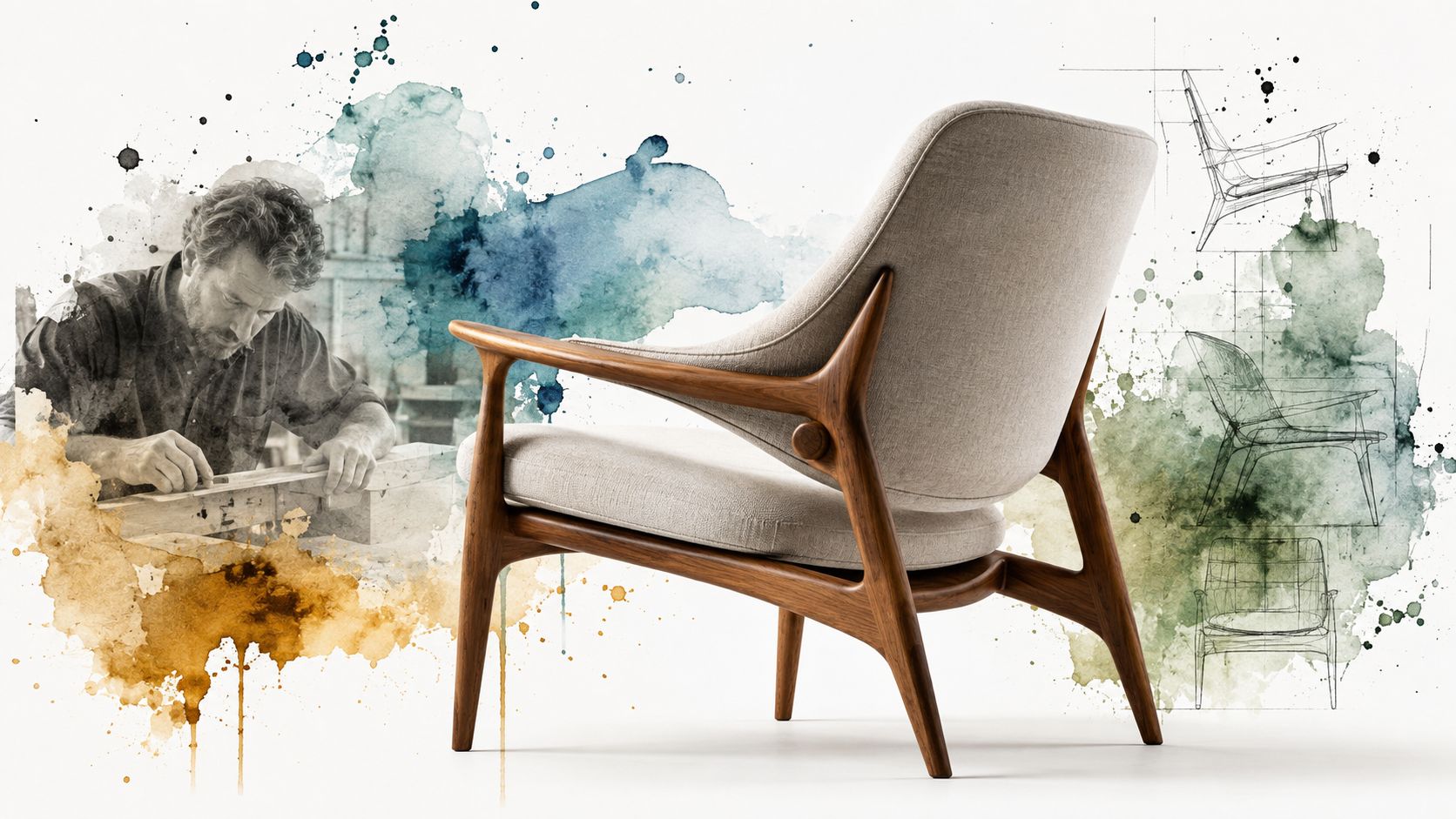
Start with the room's strongest feature. In a narrow San Francisco living room, that might be a walnut credenza beneath tall windows. In an open Oakland condo, it could be a sculptural lounge chair that defines the seating area without blocking movement. A well-chosen anchor gives the rest of the room direction and keeps fast-furniture clutter at bay.
The remaining pieces should support that anchor rather than compete with it. Choose raised case goods and furniture with visible space beneath. The open gap preserves sightlines and helps compact rooms feel less congested. Nesting tables, slim consoles, and storage with sliding or hinged doors add function without visual noise.
Keep small rooms visually open
In an open-plan living area, use a lounge chair to establish a reading or conversation zone without constructing a wall. A modular shelving system can separate functions while remaining flexible. Leave clear paths, and arrange seats so people face one another. Mid-century planning treated furniture as part of social life, and that principle still works in Bay Area homes.
Buy fewer pieces, then place them carefully. Quality wood, sound proportions, and durable upholstery will serve the room longer than a quick succession of disposable replacements.
Warm the palette and mix the eras
Walnut and teak pair naturally with wool rugs, brass accents, natural fibers, and contemporary art. Earthy colors such as terracotta, sage, rust, and warm cream make the room more welcoming than an all-gray scheme. The 2026 mid-century modern trend coverage from OhMidMod highlights curved silhouettes, mixed materials, and natural textures as a shift away from an austere, museum-like interpretation of mid-century modern. Use that direction selectively. Choose pieces that feel good in the room, not pieces that merely imitate a decade.
Natural light needs planning. Strong sun can alter wood finishes and fade textiles, so account for exposure when placing furniture and selecting upholstery. Bay Area coastal conditions also favor durable fabrics and finishes over delicate surfaces that require constant worry.
For a bedroom, combine a restrained wood bed, a simple nightstand, and one curved chair. That arrangement adds warmth without turning the room into a period set. The guide to mid century bedroom aesthetics offers ideas for balancing clean silhouettes with layered texture. The result should feel lived in, adaptable, and built to remain useful as the room changes.
Choosing Between Vintage Reproductions and Custom Options
The right source depends on the buyer's priorities. Vintage offers history and character. A licensed reproduction offers predictable specifications and current support. Custom furniture offers control over dimensions, materials, and finish, which can matter more than a famous name in a difficult Bay Area room.
| Category | Price Range | Lead Time | Customization | Warranty |
|---|---|---|---|---|
| Authentic vintage | Varies by maker, condition, and provenance | Depends on sourcing and restoration | Limited, except for upholstery or restoration | Depends on seller or restorer |
| Quality reproduction | Varies by manufacturer and design | Depends on current availability | Usually limited to listed finishes and fabrics | Often available through the manufacturer or retailer |
| Custom commission | Varies by materials, labor, and scope | Depends on design and production schedule | High, including dimensions, wood species, fabrics, leathers, and finishes | Depends on the maker or retailer |
Match the category to the room
Vintage makes sense when historical character matters and the buyer accepts inspection, potential repair, and less predictable availability. The piece should have credible construction and, when relevant, a maker's mark or documentation. Restoration should be considered carefully because aggressive refinishing can alter a collectible piece.
Reproduction works when a specific design language matters but the room requires reliable sizing, fresh upholstery, or consistent availability. Buyers should still inspect joinery, substrate, hardware, and finish. A recognizable silhouette doesn't guarantee quality.
Custom is the most practical choice when standard dimensions don't fit. A narrow credenza for a compact flat, a dining table sized to an unusual room, or a chair upholstered in a particular fabric can justify the process. A reputable provider should explain the wood species, joinery, finish schedule, upholstery construction, and care requirements before production begins. Giorgi Bros. Furniture offers custom-made wood furniture with choices that include wood species and finishes, giving Bay Area homeowners a way to pursue mid-century proportions without accepting an unsuitable off-the-floor size.
Financing options are available for qualified purchases, but financing shouldn't turn a weak piece into a sensible investment. The construction still comes first. Non-Commission Sales Staff and design consultants should help buyers compare fit, durability, and long-term usefulness without steering them toward a particular category.
The Buy-It-for-Life Investment Mentality
Quality furniture changes the economics of furnishing a home. A well-built walnut table can be repaired, refinished when appropriate, and adapted to changing interiors. A disposable particleboard table often becomes difficult to repair once edges swell, hardware fails, or the surface wears through.
The exact cost-per-year depends on the purchase price, service life, restoration needs, and resale value, so buyers shouldn't accept a simple promise that every vintage piece will appreciate. What remains reliable is the underlying logic. A durable piece spreads its value across years of use, while a short-lived replacement repeats the material, manufacturing, transport, and disposal cycle.
Mid-century modern furniture supports that model because the style remains adaptable. A dining table can move from a first apartment to a family home. A credenza can shift from media storage to dining-room storage. A lounge chair can remain useful even when the surrounding palette changes.
Sustainability starts with ownership behavior
Sustainability isn't just a material label. It also means buying less often, maintaining what already exists, and choosing construction that can be repaired. Teak, walnut, rosewood, molded plywood, fiberglass, steel, and aluminum each require different care, but a thoughtfully made piece gives its owner something worth preserving.
Buyers should ask three questions before committing:
- Can the piece serve more than one room or life stage?
- Can a restorer repair its joints, finish, veneer, or upholstery?
- Will the design still work if the room's color palette changes?
A family-owned showroom with a no-pressure process can help answer those questions before purchase. The purpose isn't to fill a room quickly. It's to build a home from investment pieces that earn their place through comfort, construction, and continued use.
Caring for Your Mid-Century Modern Investment Pieces
Care begins with identifying the finish. Lacquered wood usually needs a lightly damp cloth followed by immediate drying. Teak-oil finishes require more deliberate maintenance, and product instructions matter. Harsh chemical cleaners and silicone-heavy polishes can complicate future refinishing, so they should be avoided. The wood furniture protection guide offers a useful reference for protecting wood surfaces.
Keep wood away from prolonged direct sun when possible. Bay Area light, temperature changes, and shifts in indoor humidity can stress veneer and finishes. Use coasters, lift objects instead of dragging them, and address spills promptly without saturating the surface.
Watch for early warning signs:
- Veneer lifting: Stop moisture exposure and seek professional advice before the lifted area expands.
- Loose joints: Don't keep rocking or loading the piece. A restorer can evaluate the structure before a small failure spreads.
- Cloudy finish: Avoid aggressive rubbing or random polish. The correct treatment depends on the finish.
- Faded upholstery: Reupholstery may preserve the frame while giving the piece a fresh, durable life.
- Metal wear: Clean polished or painted frames gently and avoid abrasive products.
Molded plywood and fiberglass need soft cloths and mild cleaning methods. Leather benefits from appropriate conditioning rather than household chemicals. Before refinishing an important vintage piece, an appraiser or qualified restorer should assess whether conservation, repair, or refinishing best protects its value.
Giorgi Bros. Furniture can connect customers with local restoration specialists and provide in-house care consultations at its South San Francisco showroom. Its design consultants can also help shoppers select fabrics, leathers, wood species, and finishes for custom furniture intended to last.
Giorgi Bros. Furniture offers mid-century modern-inspired pieces, custom order services, design consultations, premium mattresses, and financing options through a family-owned, non-commission showroom in South San Francisco. Visit Giorgi Bros. Furniture to inspect materials in person, discuss a custom furniture plan, or book a no-pressure Design Consultation for a Bay Area home.